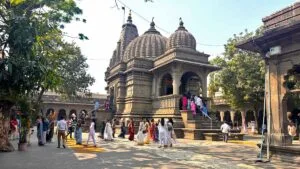
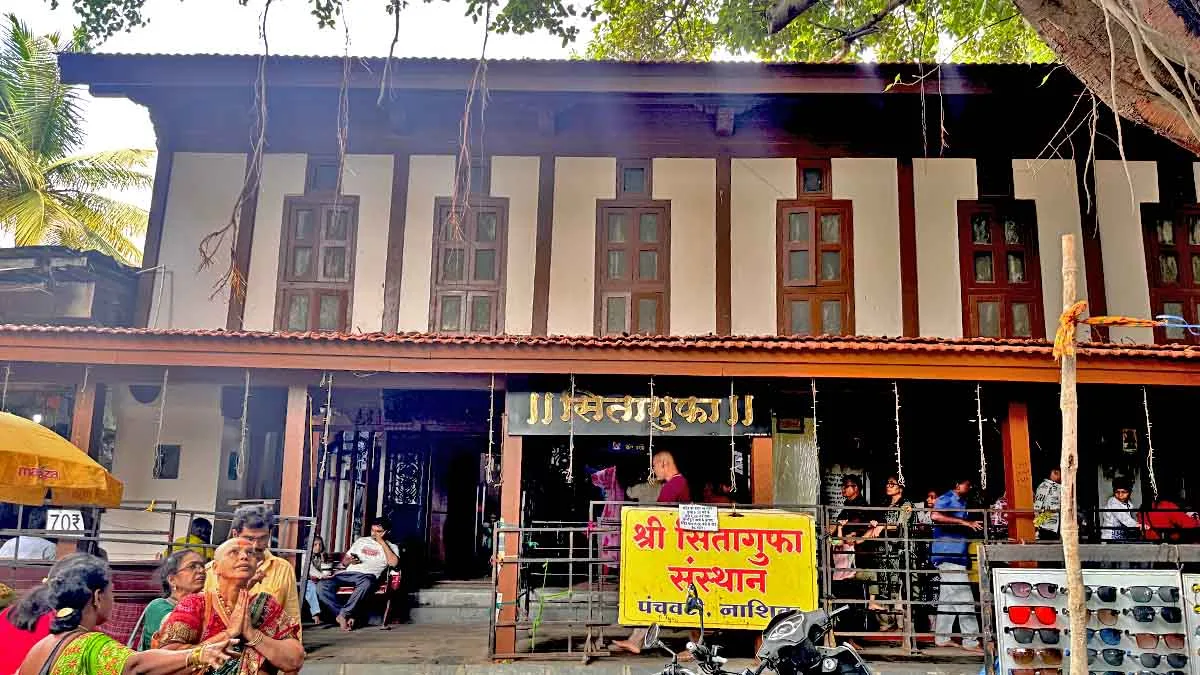
Sita Gufa is one of the most visited temples in the ancient and culturally significant Panchavati region of Nashik city in Maharashtra and holds immense importance as being one of the places in Nashik associated with the Ramayana.
It attracts thousands of pilgrims daily from across the country and abroad throughout the year. In this comprehensive guide, we explore the history, significance, location, darshan timings, and travel details of Sita Gufa to help you plan your visit seamlessly.
Sita Gufa and its Significance
Sita Gufa, also spelled as Sita Gumpha, located at a 1-minute drive from Panchavati Karanja (main traffic circle of Panchavati) in Nashik city, is believed to be the place where Mata Sita lived with Lord Rama and Lakshmana during their exile.
It is located right under the shadows of the five Vat Vrikshas (sacred banyan trees) which gave this place its name Panchavati. The word “Gufa” means cave, and this narrow cave shrine is a major destination in the Ramayana circuit of Nashik.
How to Reach Sita Gufa in Nashik
Sita Gufa is located near Shri Kalaram Temple in the Panchavati region of Nashik city of the state of Maharashtra. This location is easily accessible through the Mumbai Agra Highway and is about 10 kms from the Nashik Road railway station.
Sita Gufa Quick Details
- Entry Fee: Free
- Darshan Timings: 6:00 AM to 9:00 PM (all days)
- Location: 1-minute drive from Panchavati Karanja
- Parking: Open space available opposite Kalaram Temple nearby
Sita Gufa : Distance from major landmarks
- Panchavati Karanja – 1 minute drive
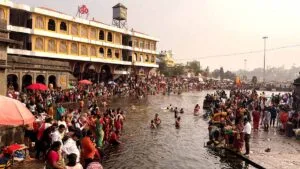
- Ramkund Ghat – 2 minute drive
- Tapovan – 11 minute drive
- Mumbai Agra Highway – 15 minute drive
- Nashik Road Railway Station – 30 minute drive
- Trimbakeshwar – 1 hour drive
- Shirdi – 2 hour drive
Sita Gufa is also included in most guided pilgrimage tours across Panchavati making it easier for visitors to experience the entire Ramayana trail in Nashik in one day.
Shriram’s Dharma Yuddha at Dandakaranya
According to traditional beliefs, Ma Sita used to worship the ancient underground Shiva Lingam housed within the depths of this cave shrine. While it is also the spot from which Ravana finally abducted her following the tragic golden deer incident, scriptural history notes that this sacred cave served a vital strategic purpose earlier in the exile.
It was right here inside this protective stone cave that Ma Sita took safe refuge and shelter under the watchful guard of Lakshman while Shri Rama single-handedly engaged in a fierce battle against the massive demonic forces who attacked their dwelling.
According to the Valmiki Ramayana Aranya Kanda Chapter 24, Shri Rama instructs Lakshmana to take Sita to a mountain cave, screened by trees and difficult of access, for safe refuge and stand guard outside the cave, before engaging Khara’s demonic army single-handed.
Defeat of Khar and Dushan and the Rakshasa Hordes
Khar and Dushan were the fierce, high-ranking military commanders of Ravana’s formidable, 14,000-strong Rakshasa army permanently stationed in this specific Panchavati frontier.
This entire region along the holy banks of the Godavari River was once a dense, wild sector of the legendary Dandakaranya forest. It was precisely at this geographic junction that Shriram launched his righteous campaign against the tyranny and anarchy prevalent in this lawless wilderness.
Vanquishing the 14,000 demons of Janasthana, Shri Rama sounded the definitive bugle of a Dharma Yuddha (righteous war), setting off a grand geopolitical chain of events that directly triggered the destruction of the tyrannic regime of Bali and his vanara forces in Kishkindha, and ultimately culminating in the absolute destruction of Ravana’s empire in Lanka.
As detailed in the Valmiki Ramayana Aranya Kanda Chapter 30, immediately following the defeat of the rakshasa army led by Khara, Sita emerges out of the cave, safely escorted by Lakshmana, and happily reunites with Shri Rama.
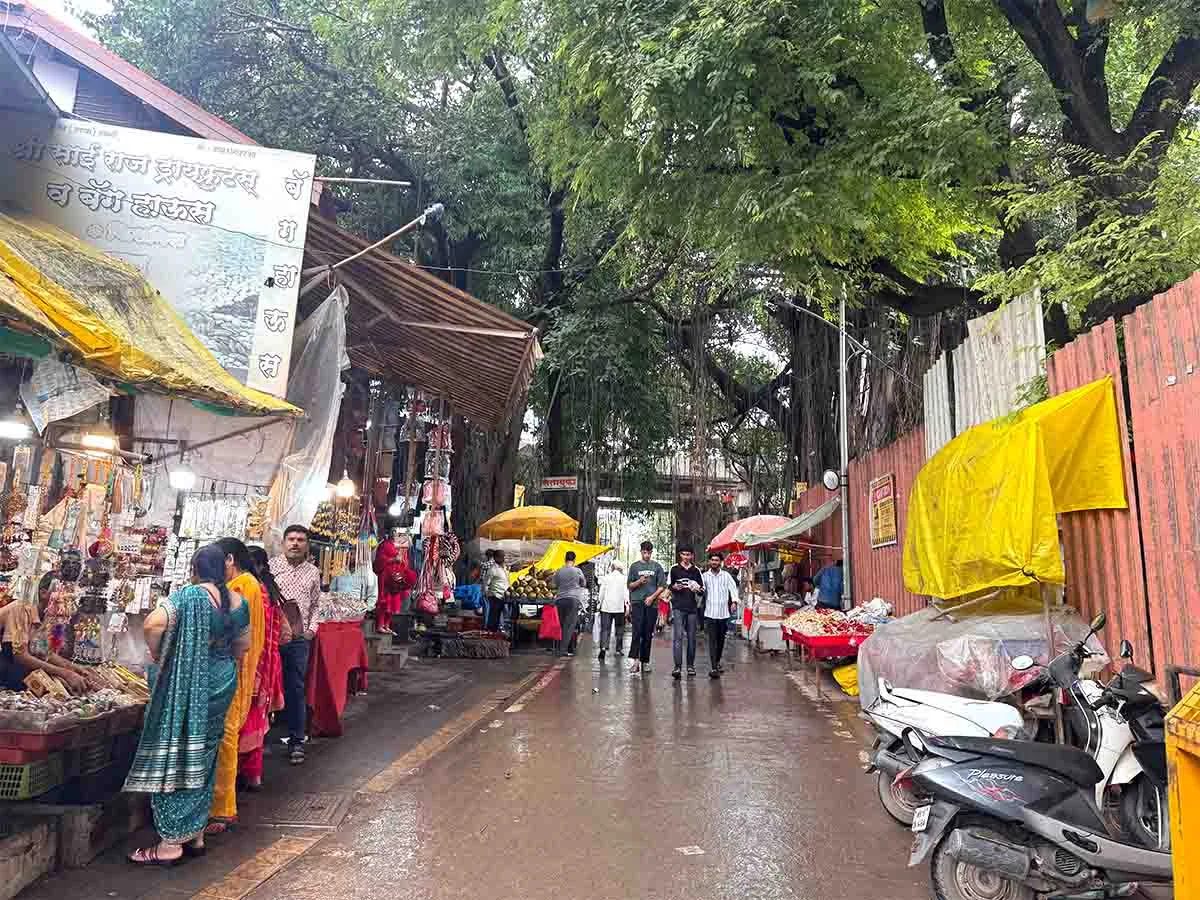
The site is not only a pilgrimage for devotees but also a major attraction for lovers of history and mythology. It is believed that the existence of such caves and their connection to ancient texts highlights the deep-rooted oral traditions and cultural continuity of Sanatana Dharma.
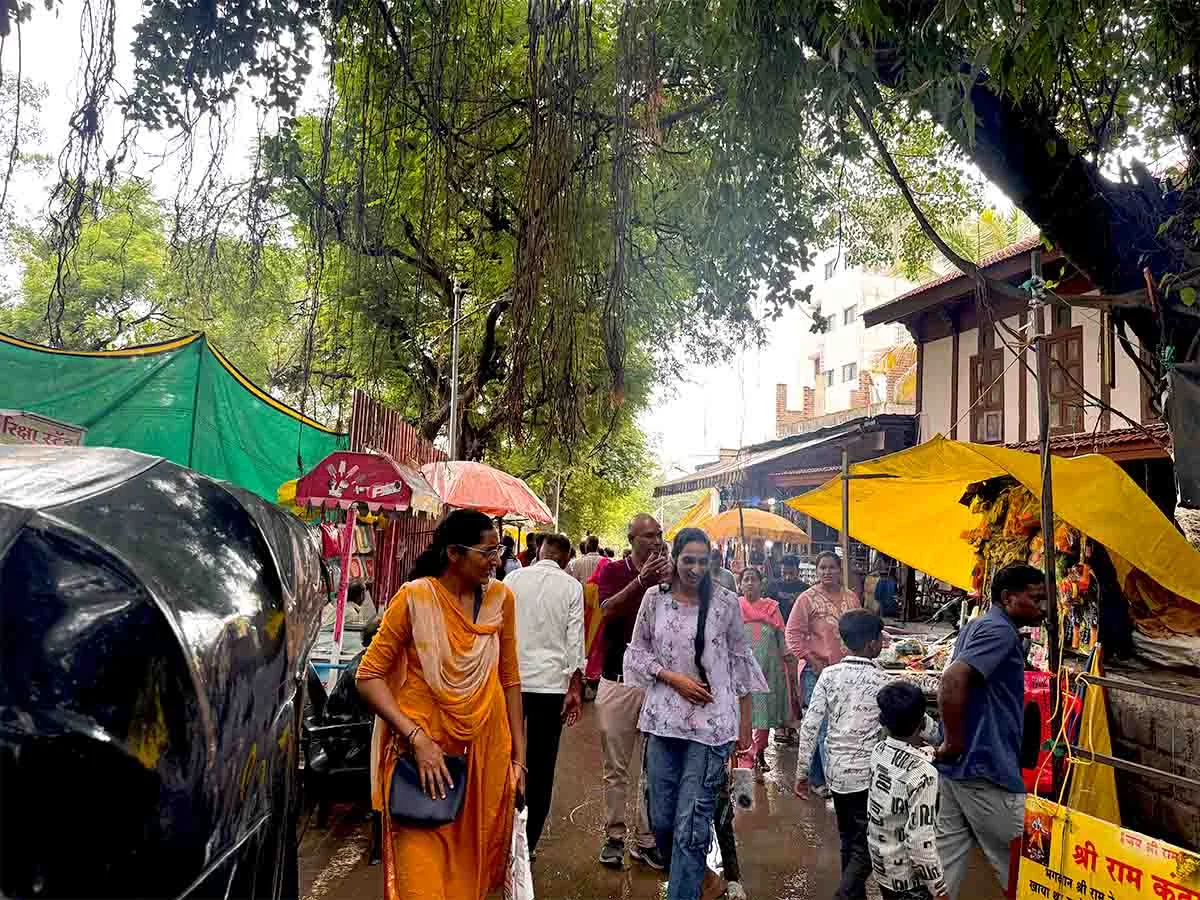
Although with large numbers of devotees entering the cave and the congested space creating some inconvenience, visitors often describe the experience as “stepping into a living chapter of the Ramayana.”
The dimly lit interiors, echo of chants, and ancient idols create an atmosphere of spiritual bliss at least for some of those precious moments.
Sita Gufa Video
Sita Gufa Temple Darshan: Complete step by step guide
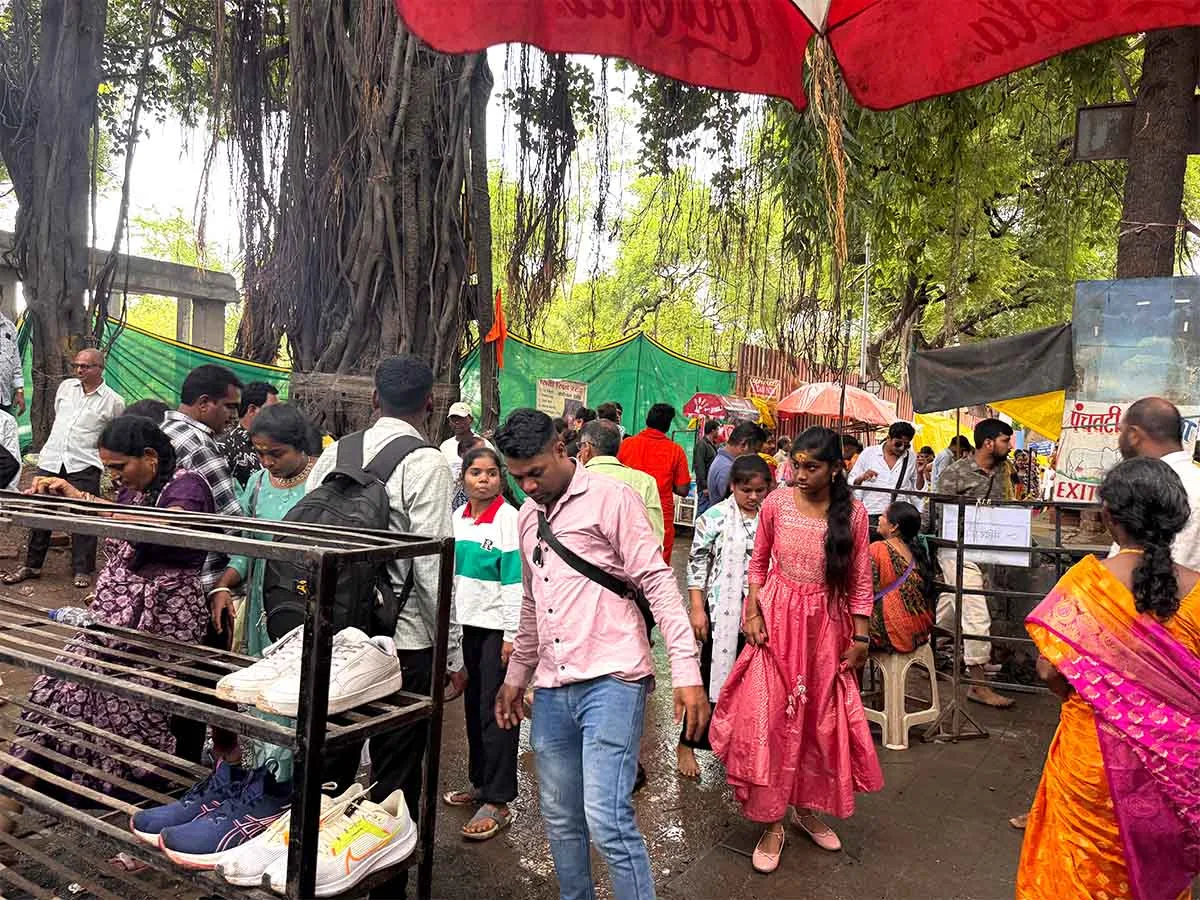
To manage shifting crowd sizes and regulate the continuous flow of devotees, the temple administration has installed heavy steel guide railings directly outside the main entrance plaza.
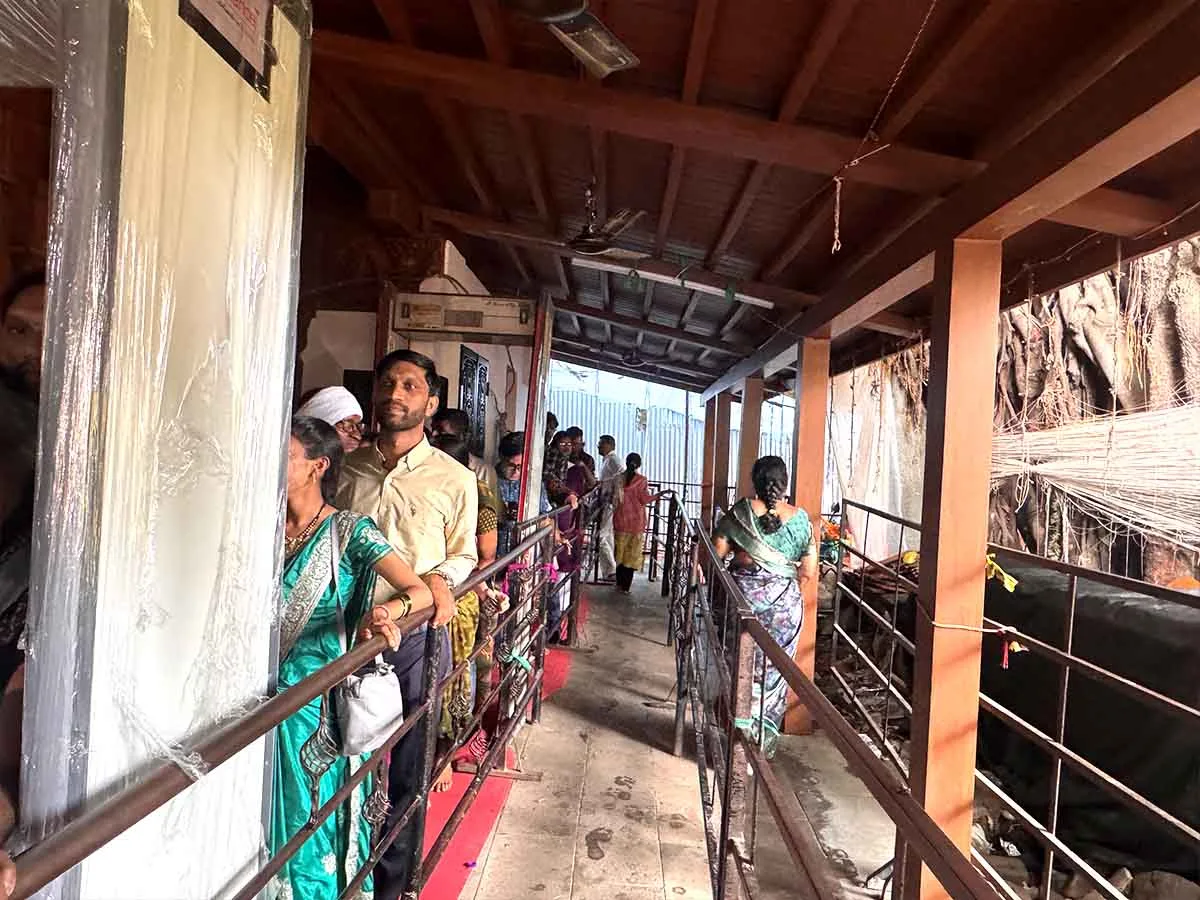
Because the number of visiting pilgrims varies constantly throughout the day, your queue wait times will fluctuate significantly depending on whether you arrive during peak morning ritual hours or quieter afternoon slots.
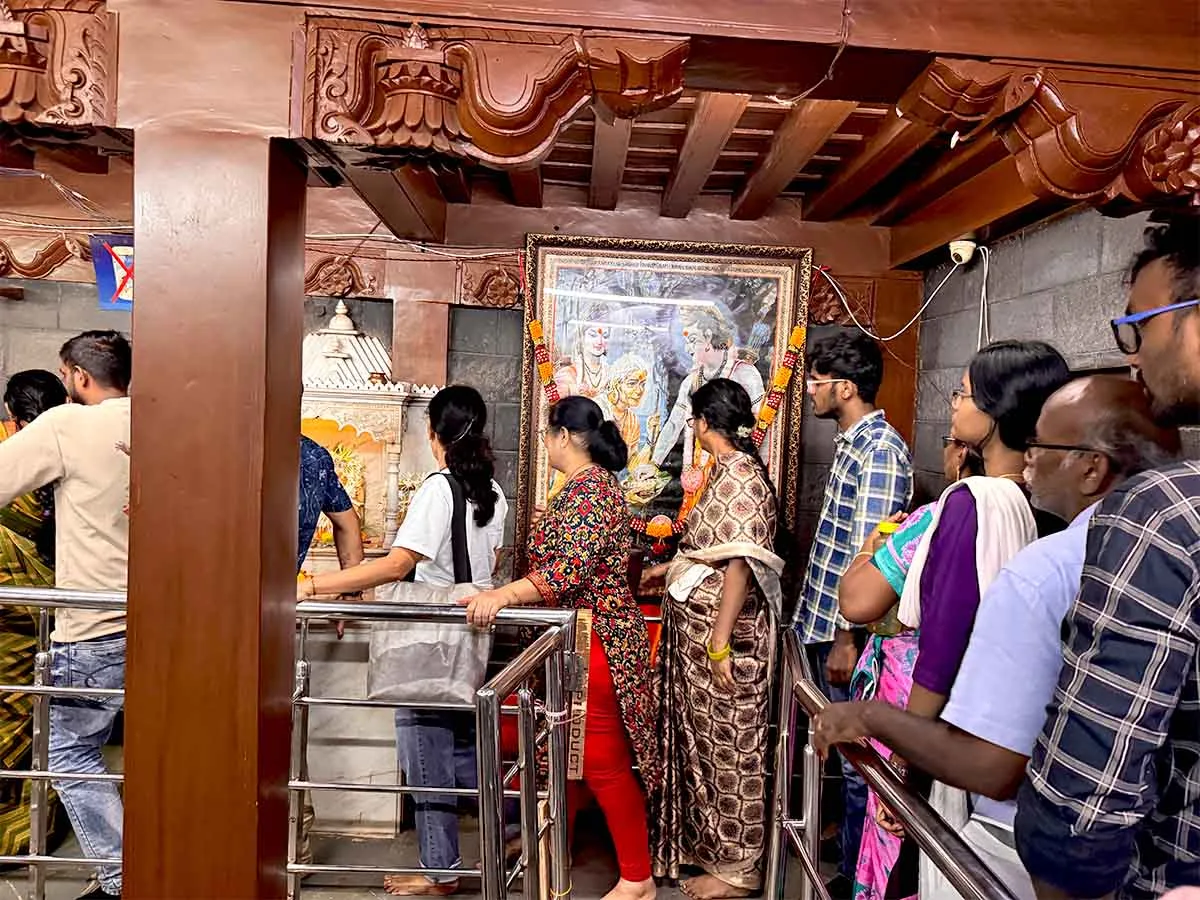
The Entry Portal and the Historic Shabari Art
Passing through the external security queue brings you directly into an intimate, street-level greeting room. The hand-carved, traditional wooden entry portal features elaborate traditional engravings, preparing your mind for the ancient architecture ahead.
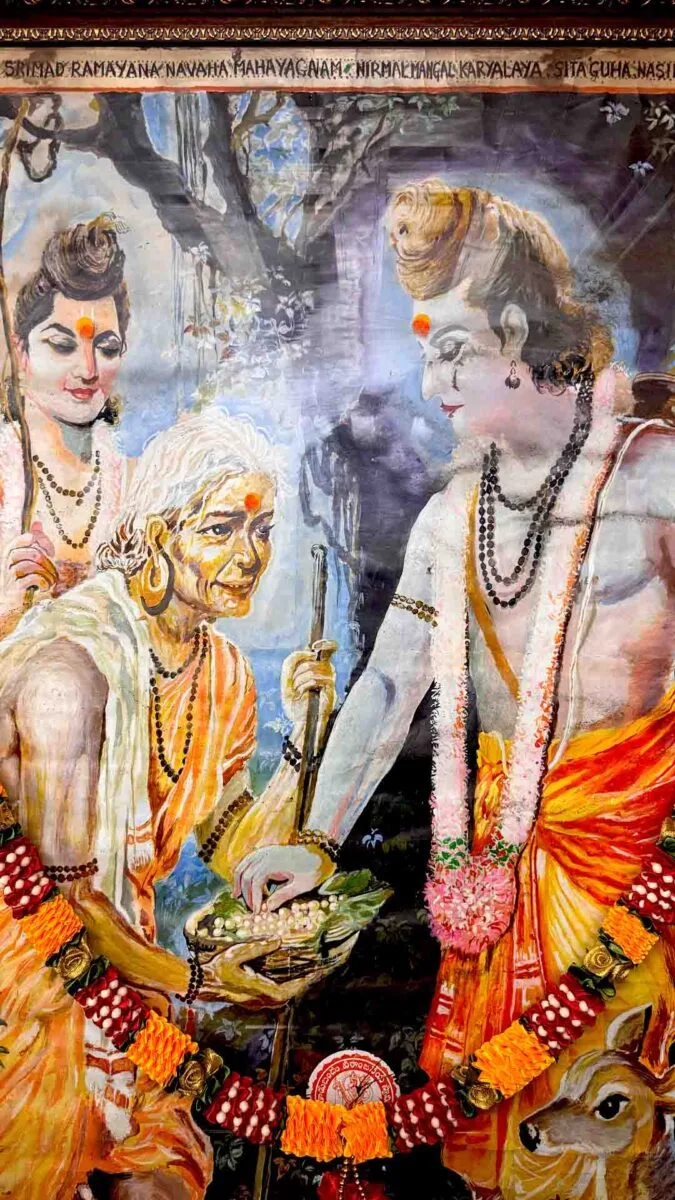
The true visual highlight of this room is a large, highly distinct portrait painting depicting a classic scene from the Aranya Kanda: Lord Shriram gracefully accepting wild forest fruits from the devout Bhil ascetic, Mata Shabari. Executed in a rich, old antique Maharashtrian art style, this evocative painting instantly sets a deeply spiritual, historic tone for the pilgrimage.
Descending into the Subterranean Chambers
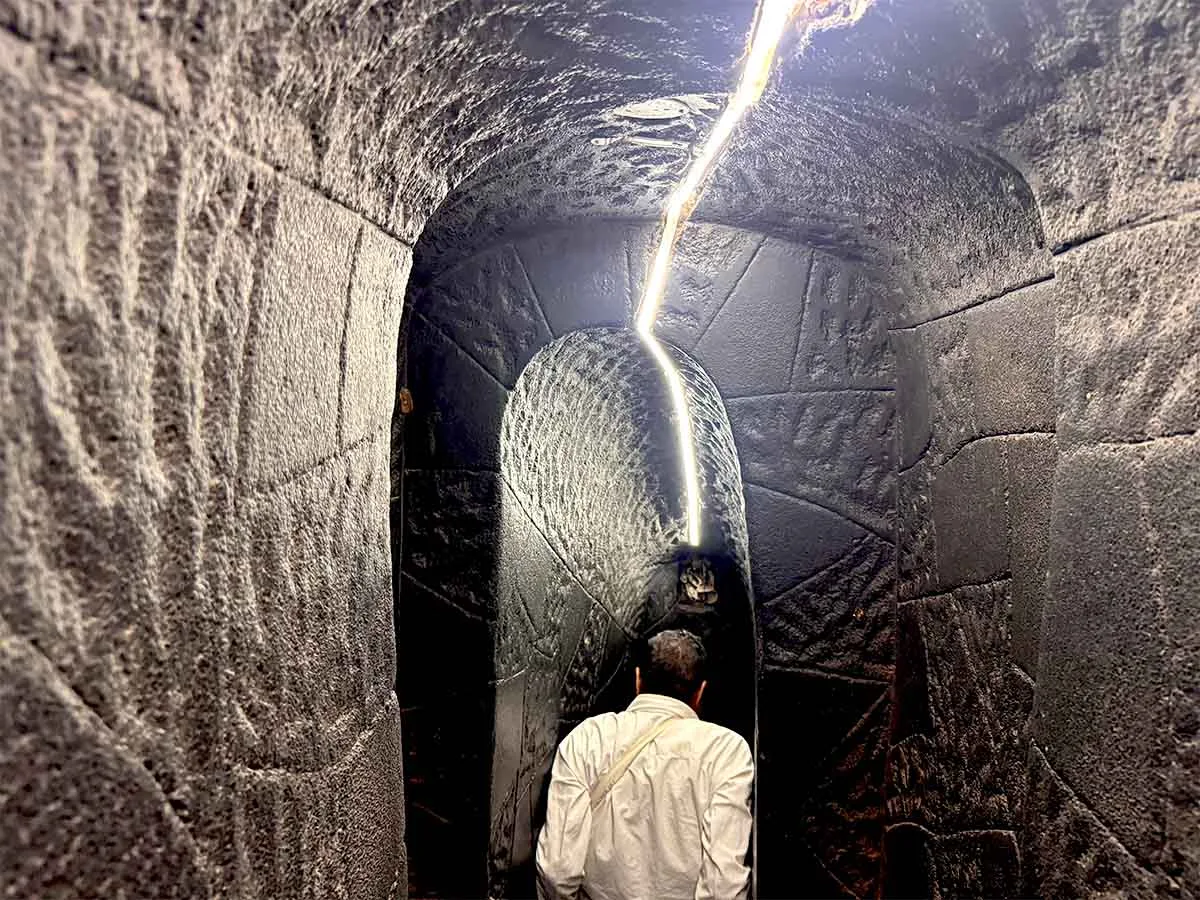
Directly beneath this artwork lies the narrow mouth of the ancient cave shrine. To enter the underground network, you must completely sit down or drop to a low crouching position.
Holding onto the smooth, polished stone sides, you carefully descend a short flight of eight to ten steep, narrow black basalt steps to enter the lower level. The cave structure is systematically divided into four small separate underground chambers:
The First Chamber (The Transition Room): Reaching the bottom of the entry stairs brings you into the first subterranean room. This rock-walled space is completely empty, serving as a vital physical buffer zone to let your eyes adjust to the dim, serene lighting of the lower earth.
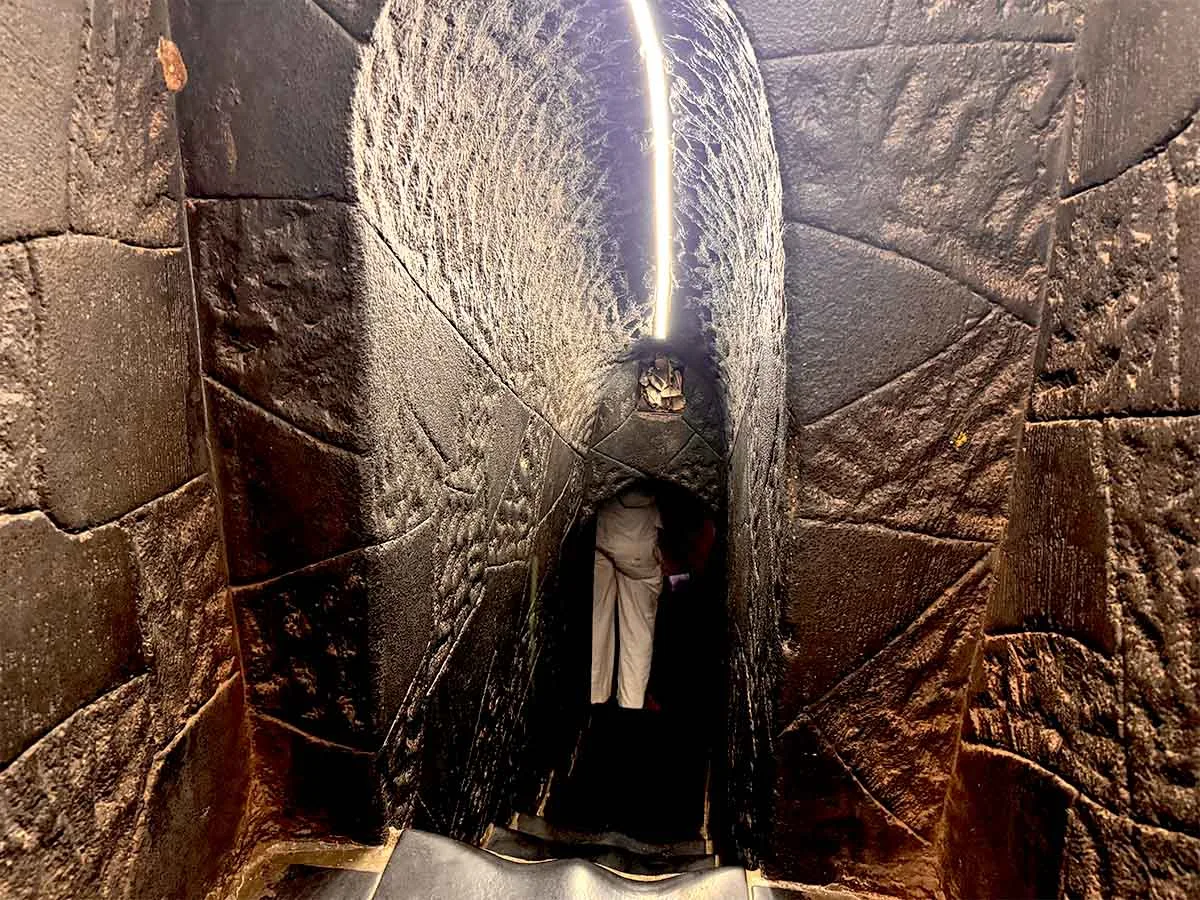
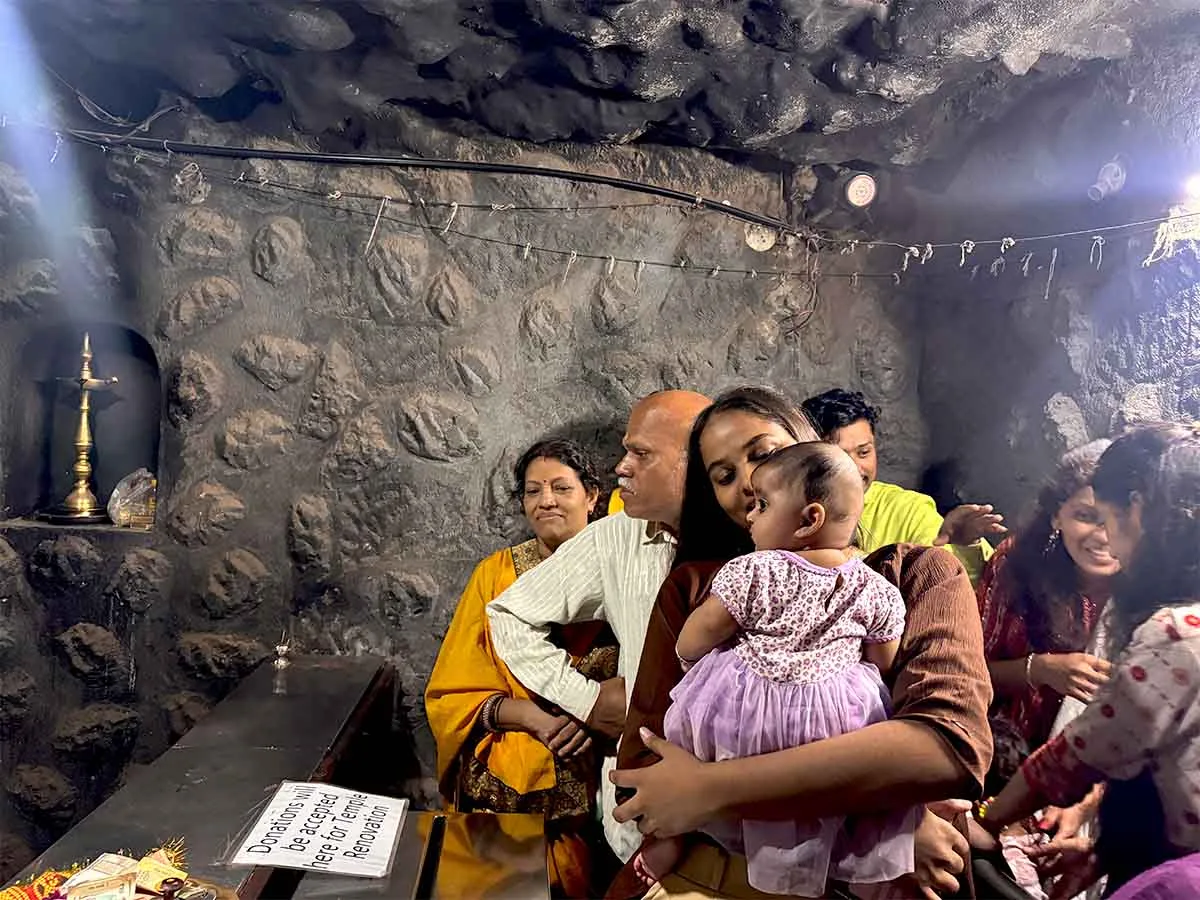
The Second Chamber (The Ramayana Sanctuary): This is the primary devotional sanctuary housing the sacred, beautifully adorned stone idols of Mata Sita, Shriram, and Lakshman. Devotees pause briefly along the protective railings here to take their primary darshan and offer prayers.
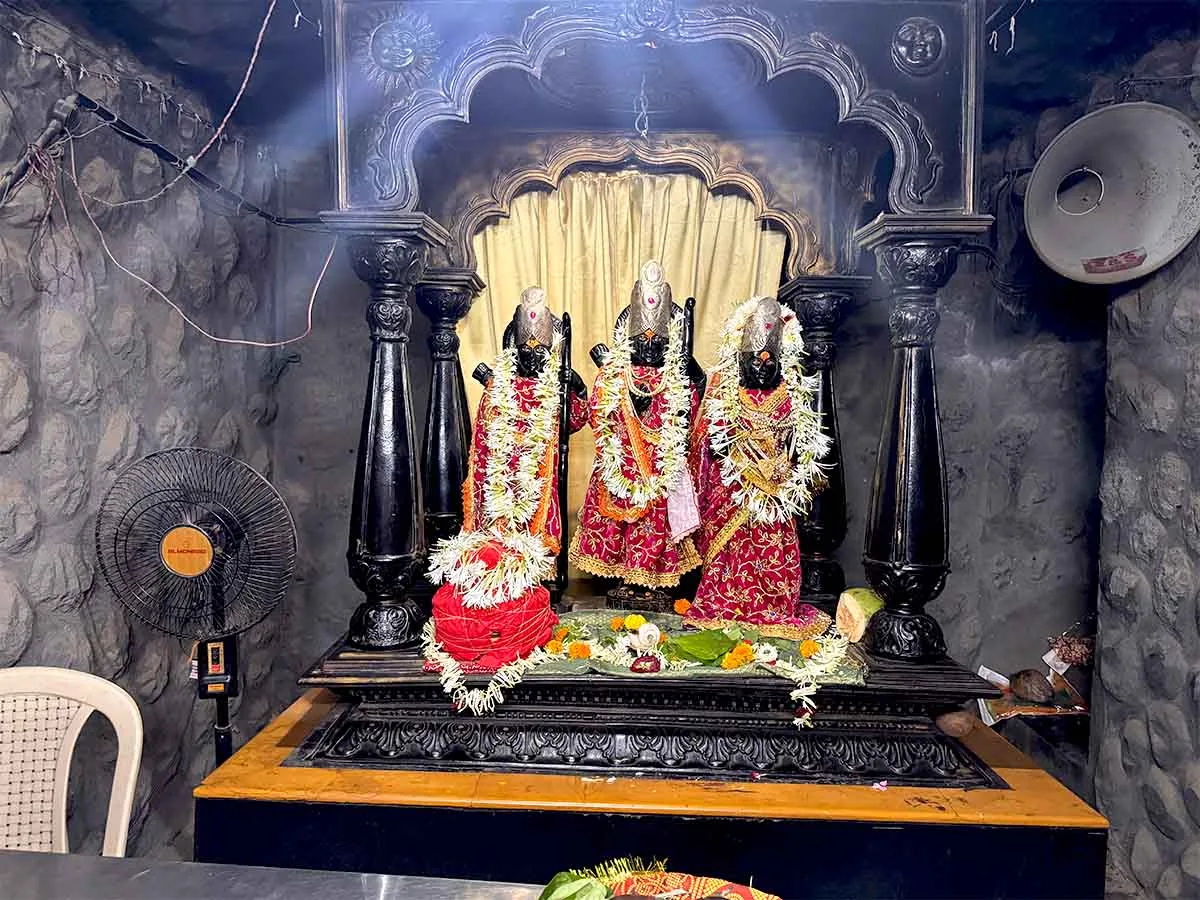
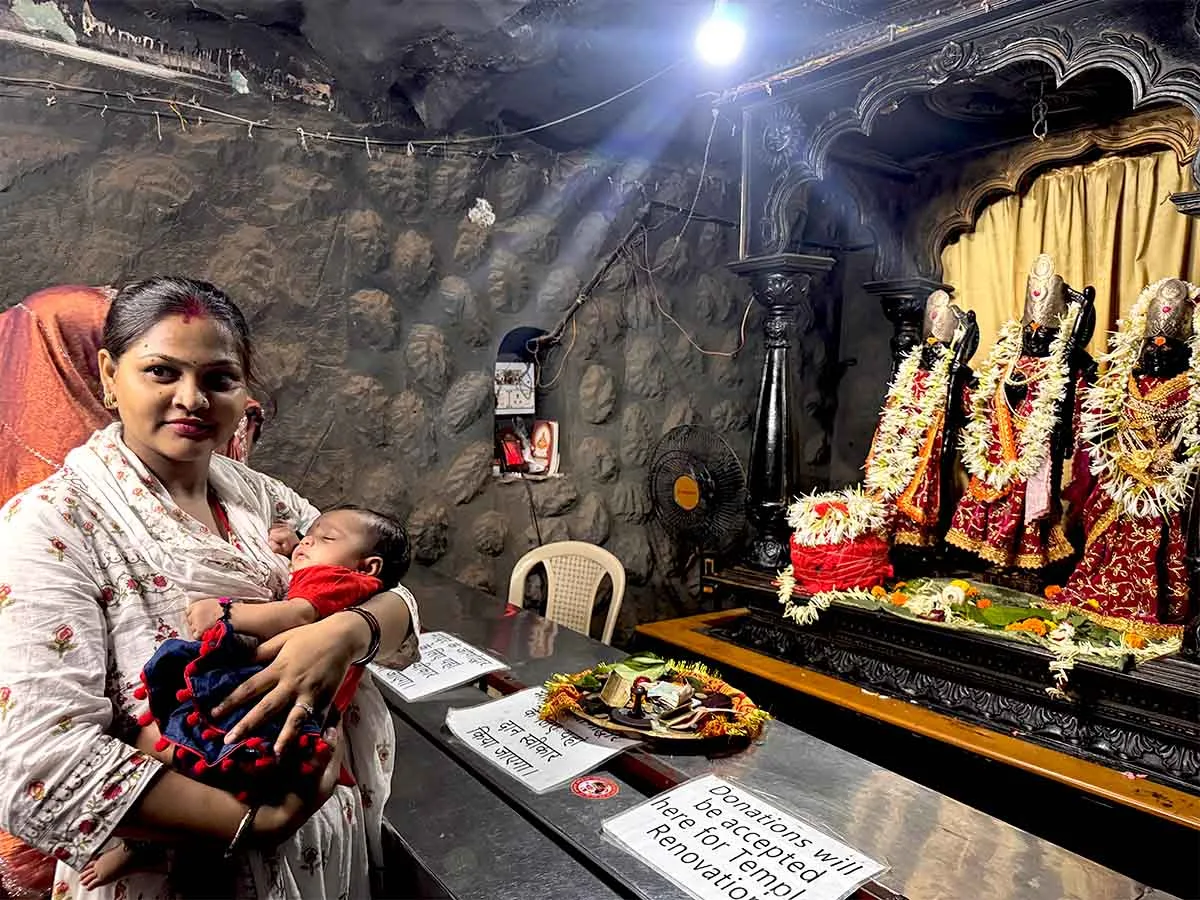
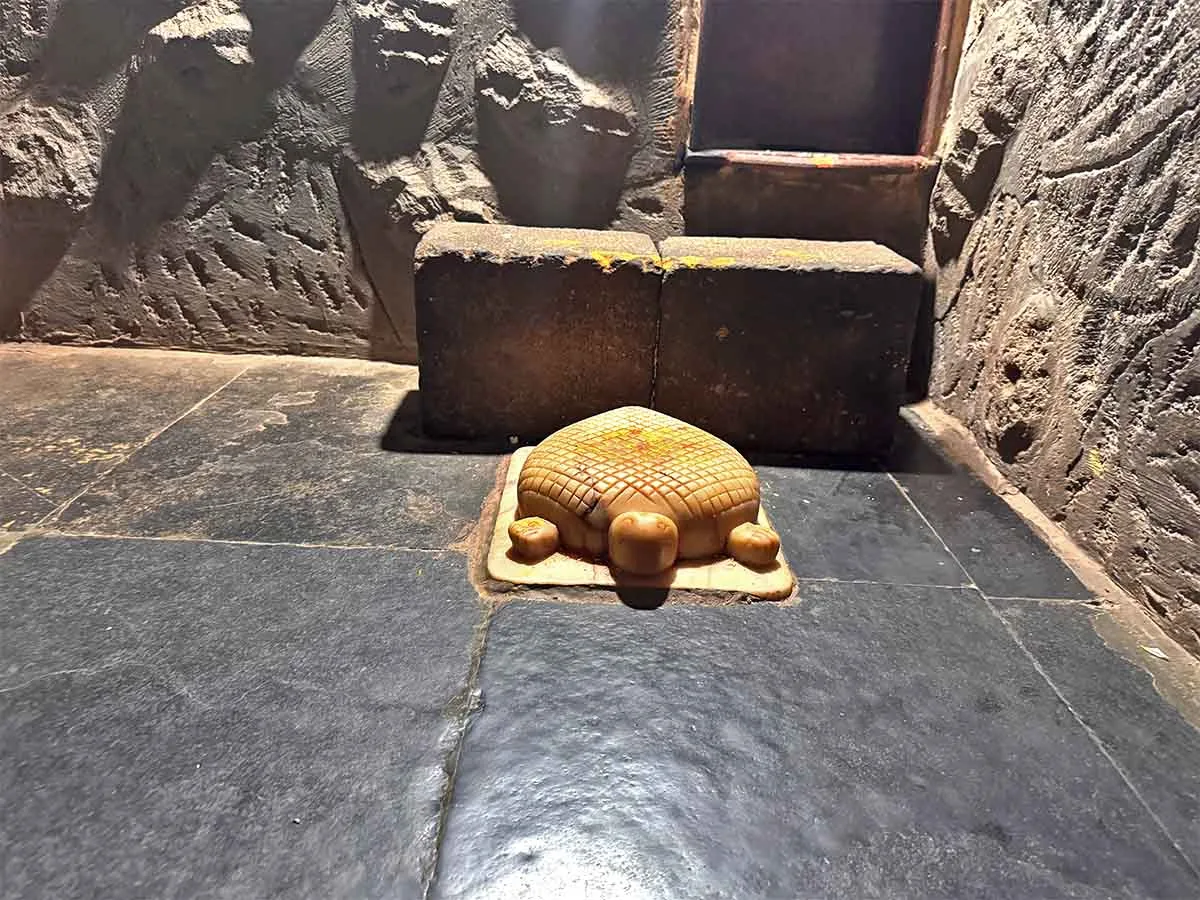
The Third Chamber (The Sacred Kurma): Kept completely empty to maintain a steady, disciplined walking flow and prevent bottlenecks beneath the earth, this room houses a highly unique spiritual asset: a pristine, hand-carved marble Kurma (tortoise) statue sitting silently on the dark stone floor, symbolizing steady spiritual grounding.
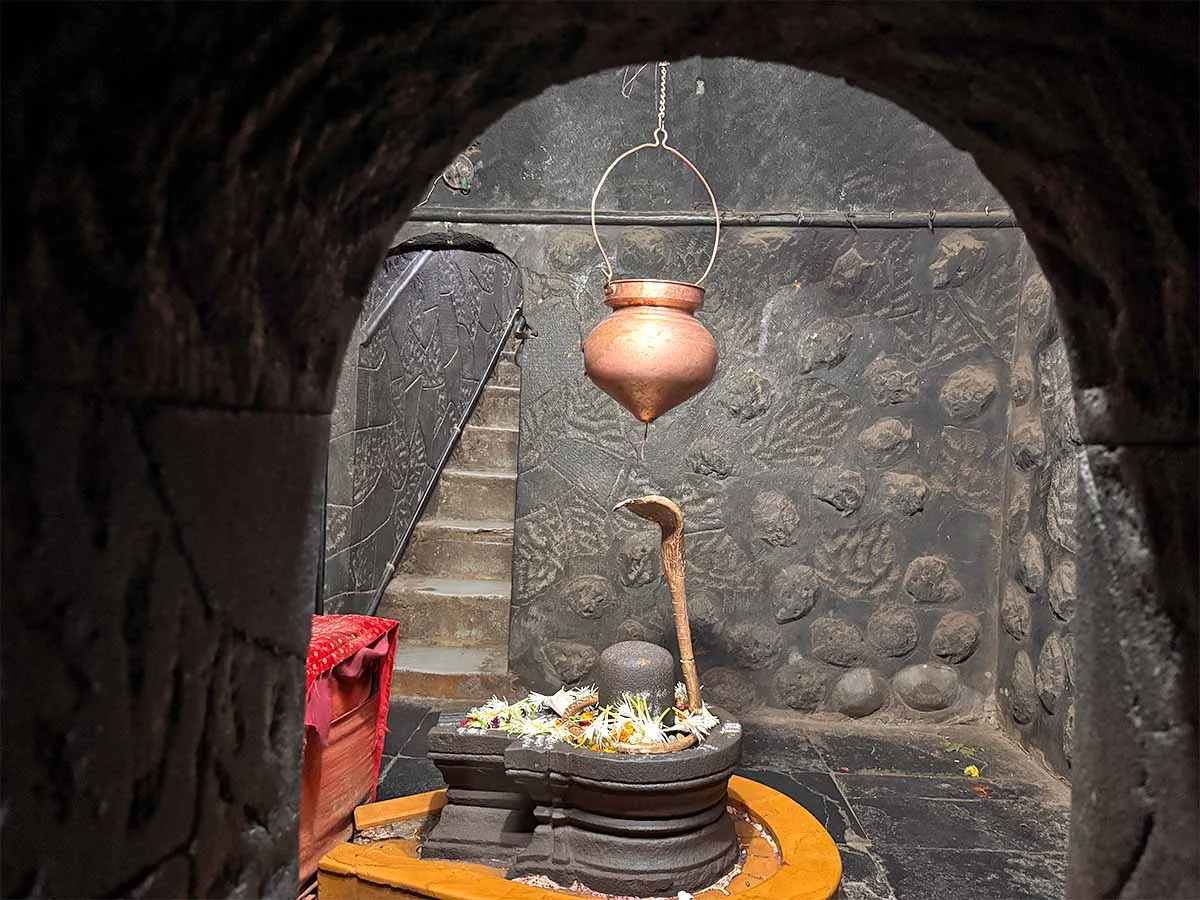
The Fourth Chamber (The Sacred Shiva Lingam Spot): Looking through the majestic low stone archway reveals a deep sanctuary housing a highly revered, beautifully polished Shiva Lingam resting beneath a traditional suspended copper water vessel (lota).
While the active stone lingam currently on display is a modern installation, it sits precisely on the ancient, sanctified spot where scripture records Ma Sita carved her original altar to worship Mahadev during her forest exile.
The Upright Return to the Light
After taking your final blessings at the Shiva Lingam altar, the exit route leads you toward a final flight of upward-climbing stone stairs. A fascinating architectural detail of the cave’s natural engineering occurs right at this exit lane: the solid rock ceiling height suddenly expands dramatically.
The moment you step onto the bottom exit stair, you can instantly stand up completely straight and climb the remaining steps while walking normally, emerging back out into the broad daylight of the main Panchavati heritage plaza.
Important note
The cave is narrow and involves climbing down a few steps in a seated position, so senior citizens or those with mobility issues, obese individuals or people with any kind of medical condition, should take caution.
Vat Purnima at Sita Gufa
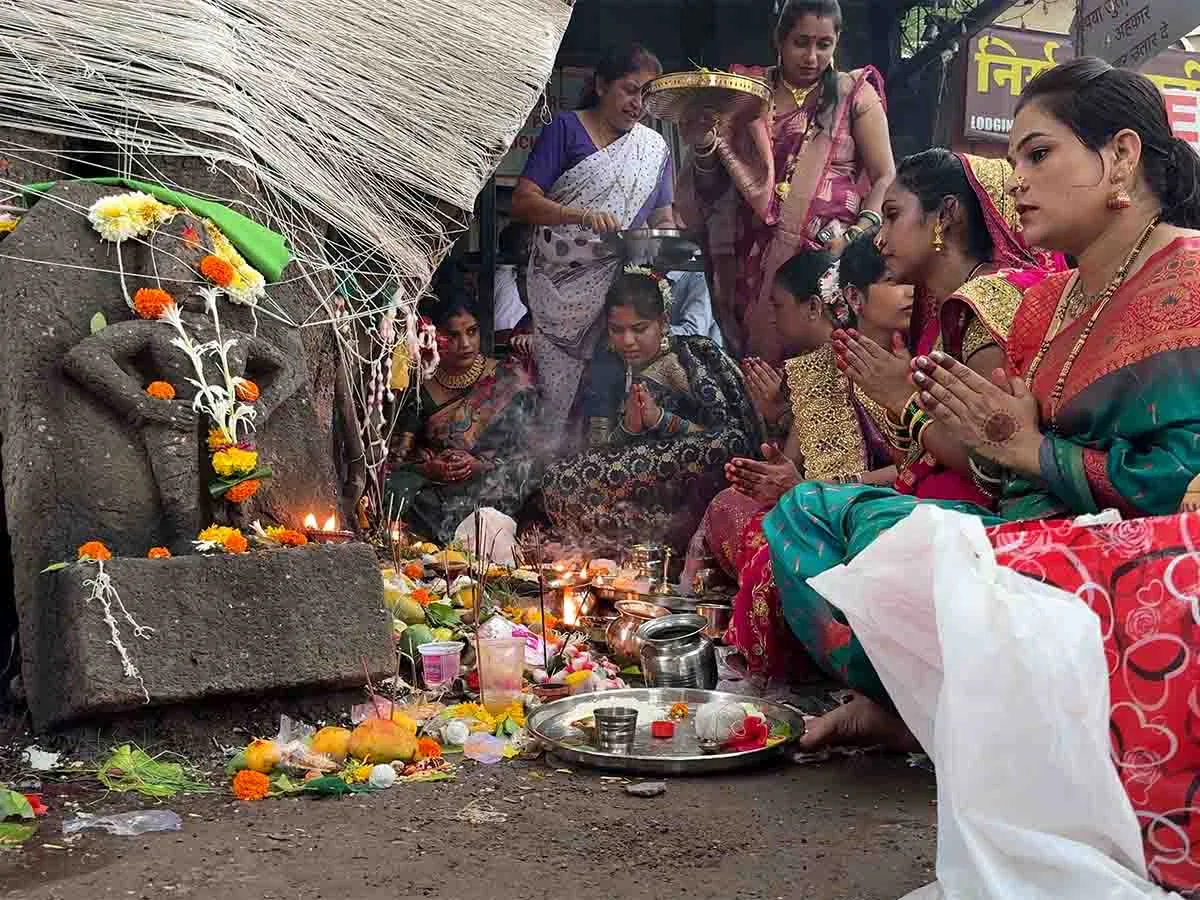
One of the most significant events at Sita Gufa is the Vat Purnima festival, celebrated with deep devotion by married Hindu women.
The temple is surrounded by the five old Vat Vrikshas (banyan trees), making it a sacred place to perform the rituals associated with this vrat.
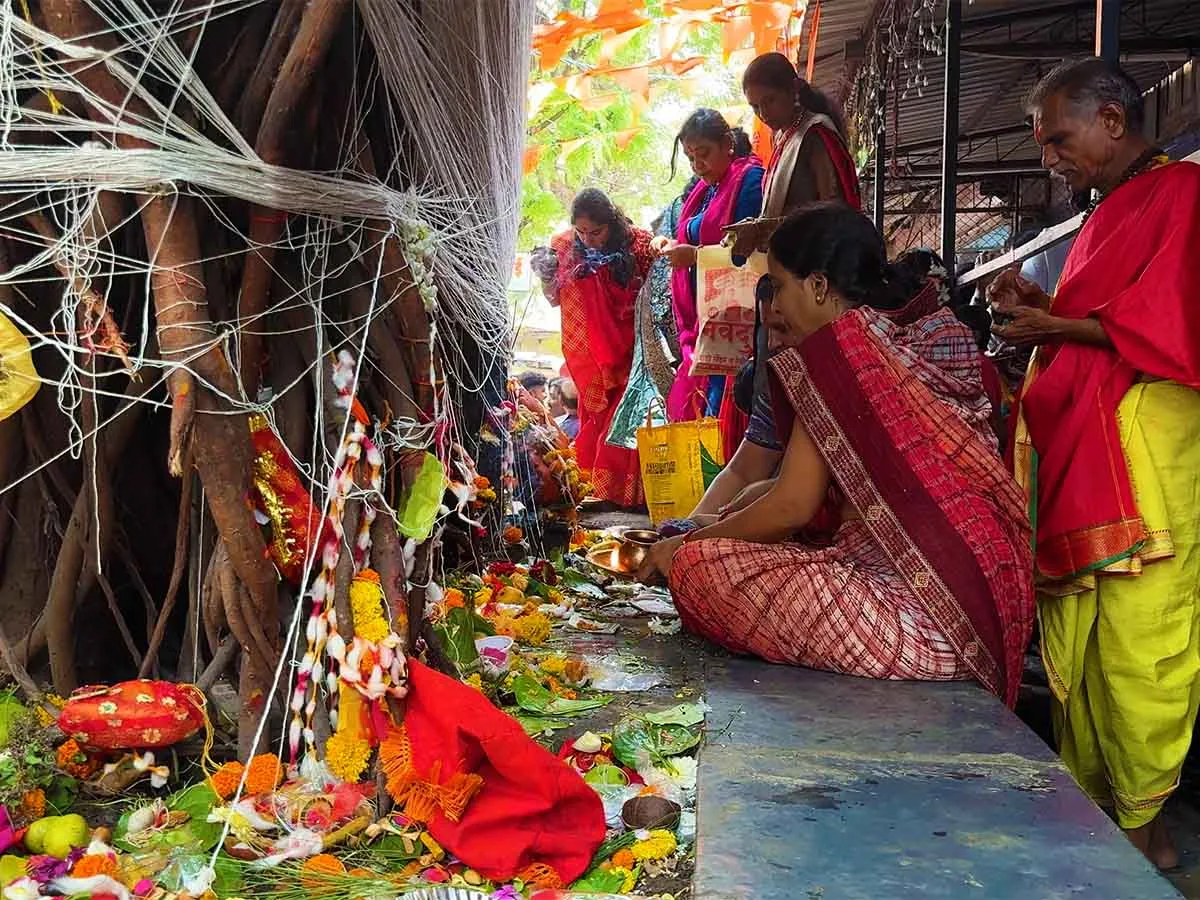
On Vat Purnima, from early morning till late evening, hundreds of women visit the temple to observe fasts and perform puja for their husband’s health and longevity.
They tie sacred threads around the banyan trees, offer prayers, and perform rituals deeply rooted in the story of Sati Savitri and Satyavan and the divine virtue of Sita Mata.
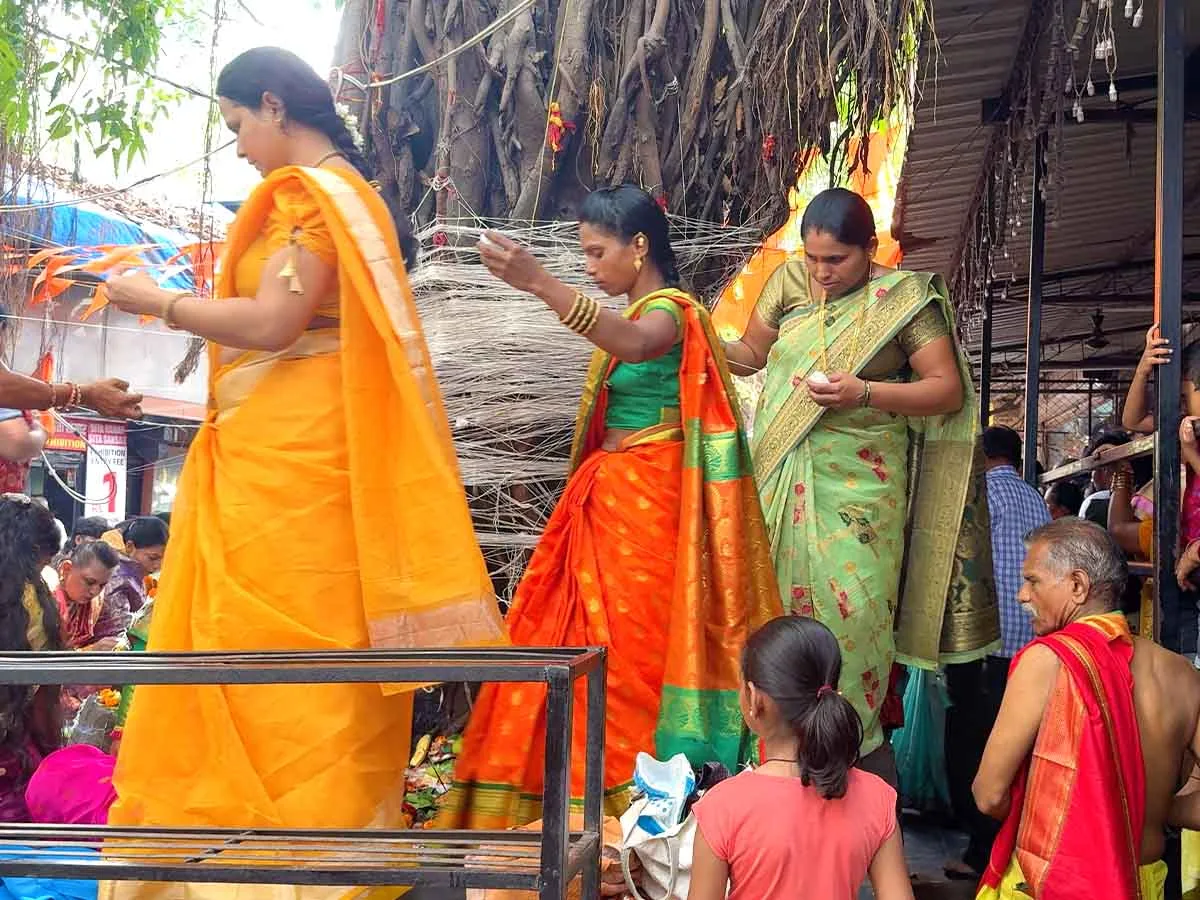
The entire atmosphere becomes spiritually vibrant, with devotional songs, traditional attire, and collective chanting.
It is one of the busiest and holiest days at the temple, offering a beautiful blend of culture, feminine devotion, and community celebration right outside the sacred cave temple.
Other Cultural Attractions Nearby
Ramkund – The sacred bathing ghat on the banks of the Godavari where Lord Rama used to bath.
Kalaram Temple – A grand black stone temple dedicated to Lord Rama located in the vicinity of Sita Gufa.
Tapovan – A dense forest near Panchavati during the Ramayan era in which great Rishis used to meditate. (Tap means meditation and Van means forest)
Kapaleshwar Temple – One of the major Shiva temples in Nashik with a history older than the Ramayan itself.
Sundarnarayan Temple – Dedicated to Shri Hari Vishnu, this temple is undergoing renovation currently.
Tips for Devotees Visiting the Temple
- Visit early morning to avoid crowds.
- Dress modestly and be prepared for a 10-15 minute queue.
- No footwear allowed inside the temple premises.
- Elderly devotees may take support from the temple volunteers if needed.
Ram Kal Path Project and Current Status
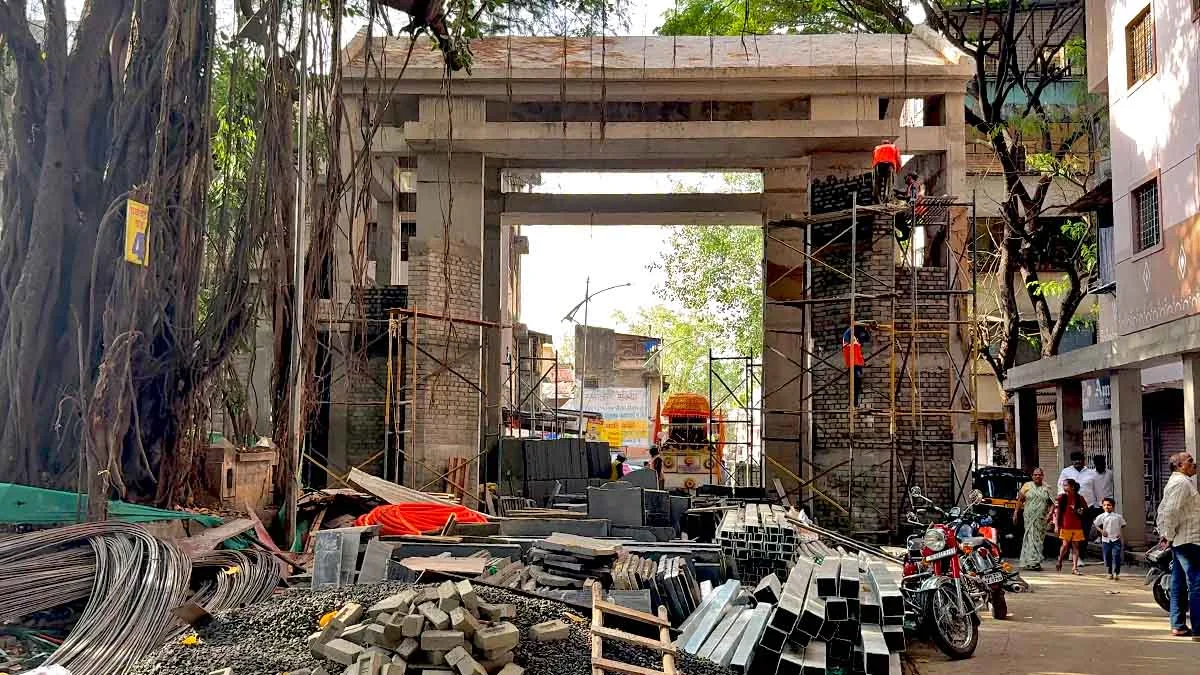
As the spiritual corridor in the city undergoes massive changes as per the Nashik Kumbh Mela preparations ahead of the upcoming Simhastha Kumbh, the entire courtyard layout outside the temple has been completely transformed under the ₹111 Crore Ram Kal Path Project.
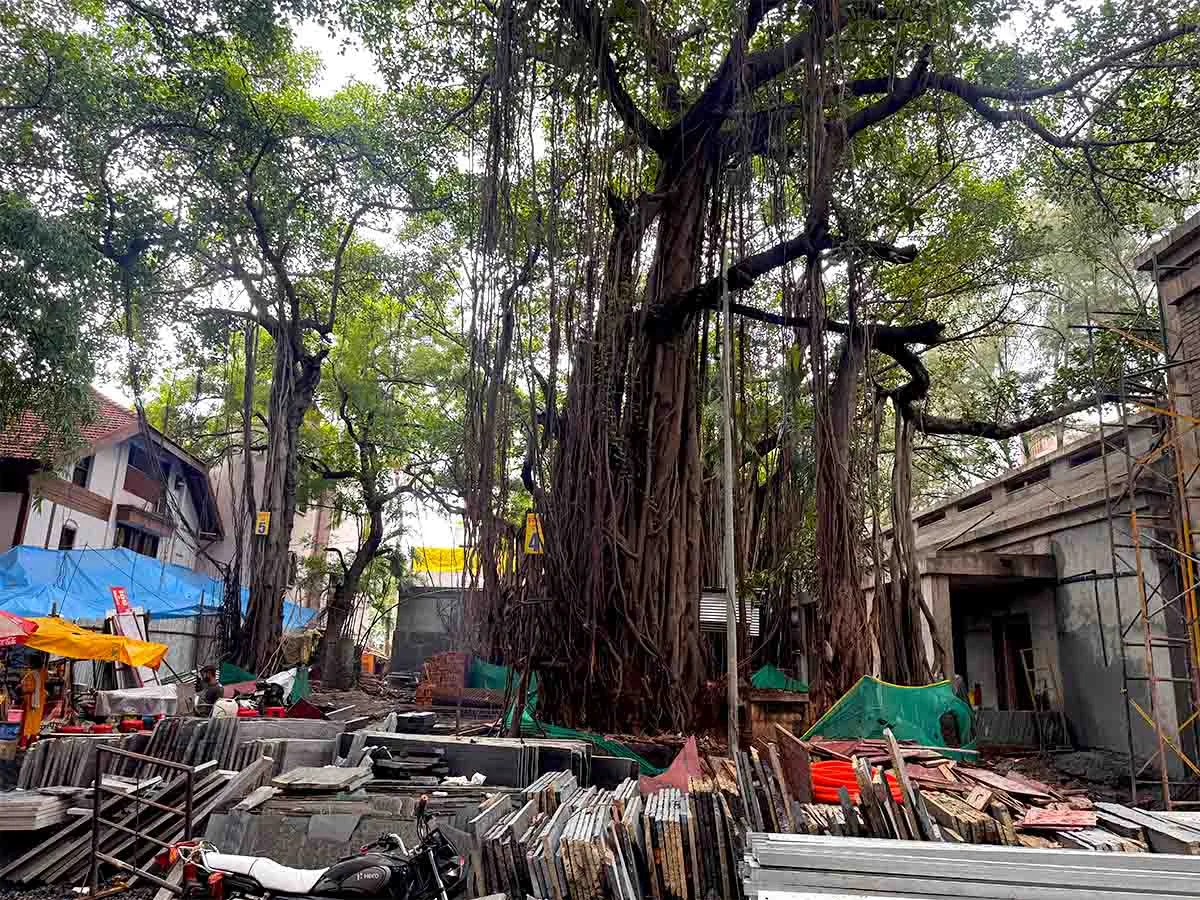
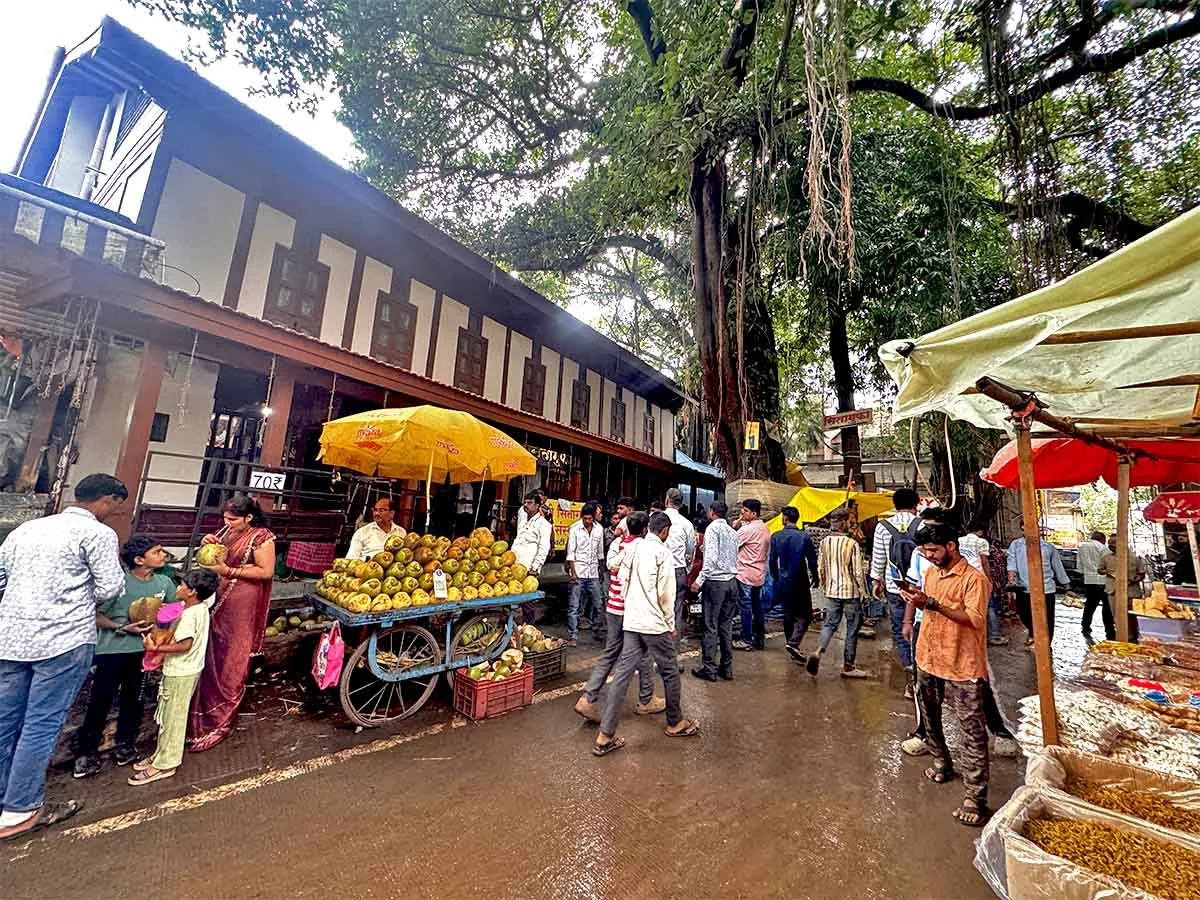
During your Sita Gufa temple visit, you will observe that the brick walls previously enclosing three of the five ancient Vat Vrikshas (banyan trees) have been pulled down to build a magnificent new heritage entrance arch and an expansive pilgrim plaza designed for enhanced crowd safety.
Following a brief temporary closure for these civic updates, the temple has officially reopened for daily darshan, providing a streamlined pedestrian walking path connecting directly down to the holy banks of Ramkund Ghat.
Lost Opportunity of Establishing a Tranquil Forest Setting near Sita Gufa Temple
A universally disappointing characteristic of almost all historic urban Hindu temples across our ancient cities is the severe lack of wide open spaces and spacious layouts.
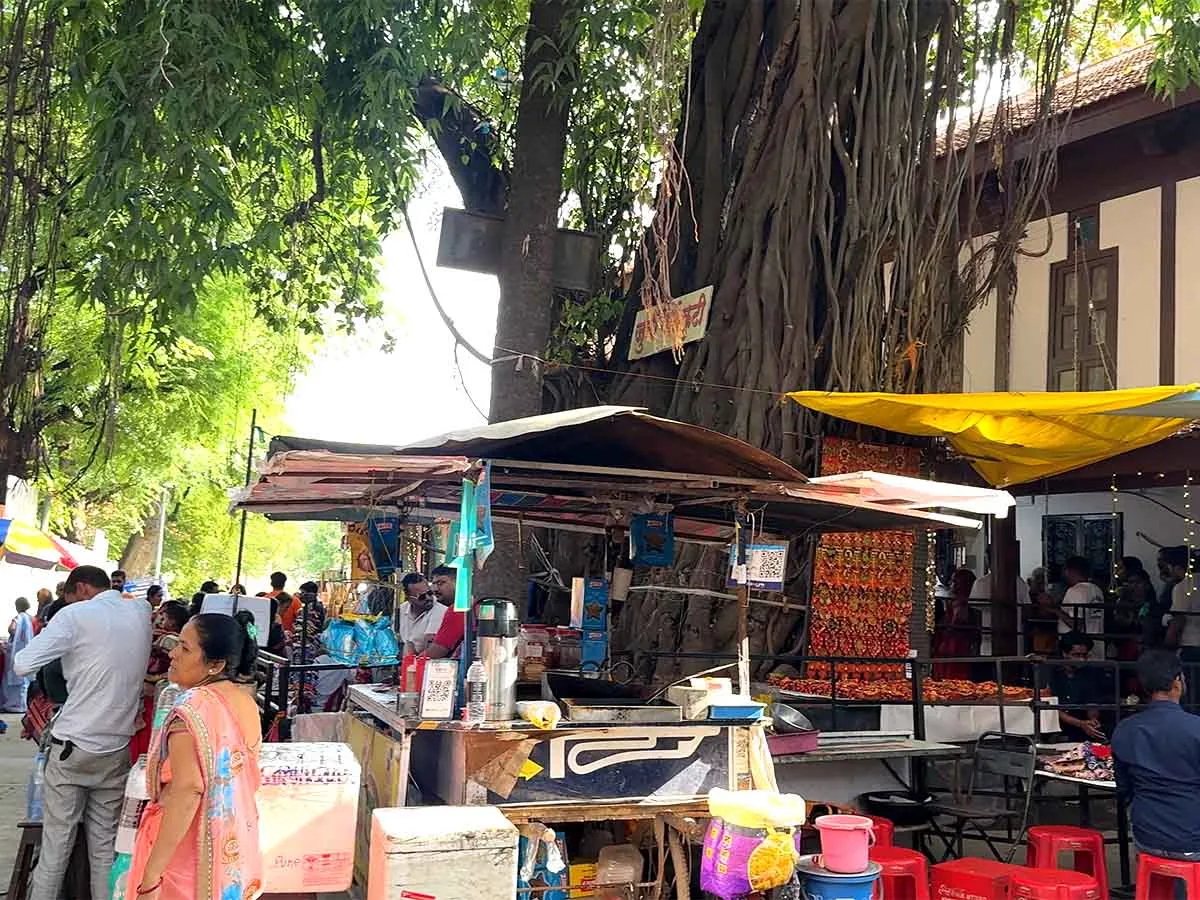
Over decades of unchecked development, tight commercial stalls and concrete structures have closely crowded these sacred temples, leaving almost no breathing room for incoming devotees.
At this present moment while writing this article in July 2026, a rare, breathtaking sight has been exposed directly in front of the Sita Gufa Temple. Following the demolition of the roadside shops in front of the temple, a massive expansive public ground has been revealed to the open air for the first time in generations.
Standing beneath the ancient canopy of sacred trees, this newly cleared earth offers a fleeting glimpse of what a truly community-focused pilgrimage site could become.
This vast area could easily be developed as a quiet, meditative green plaza – a calm sanctuary filled with grass lawns and shaded benches where lakhs of exhausted devotees could sit in silent contemplation, experiencing the temple grounds in their true, peaceful, and natural scriptural state.
Instead of seizing this ultimate, once-in-a-lifetime opportunity to return old Panchavati’s environment back to its original, serene, and tree-lined forest setting, we are witnessing the tragic erasure of its living history.
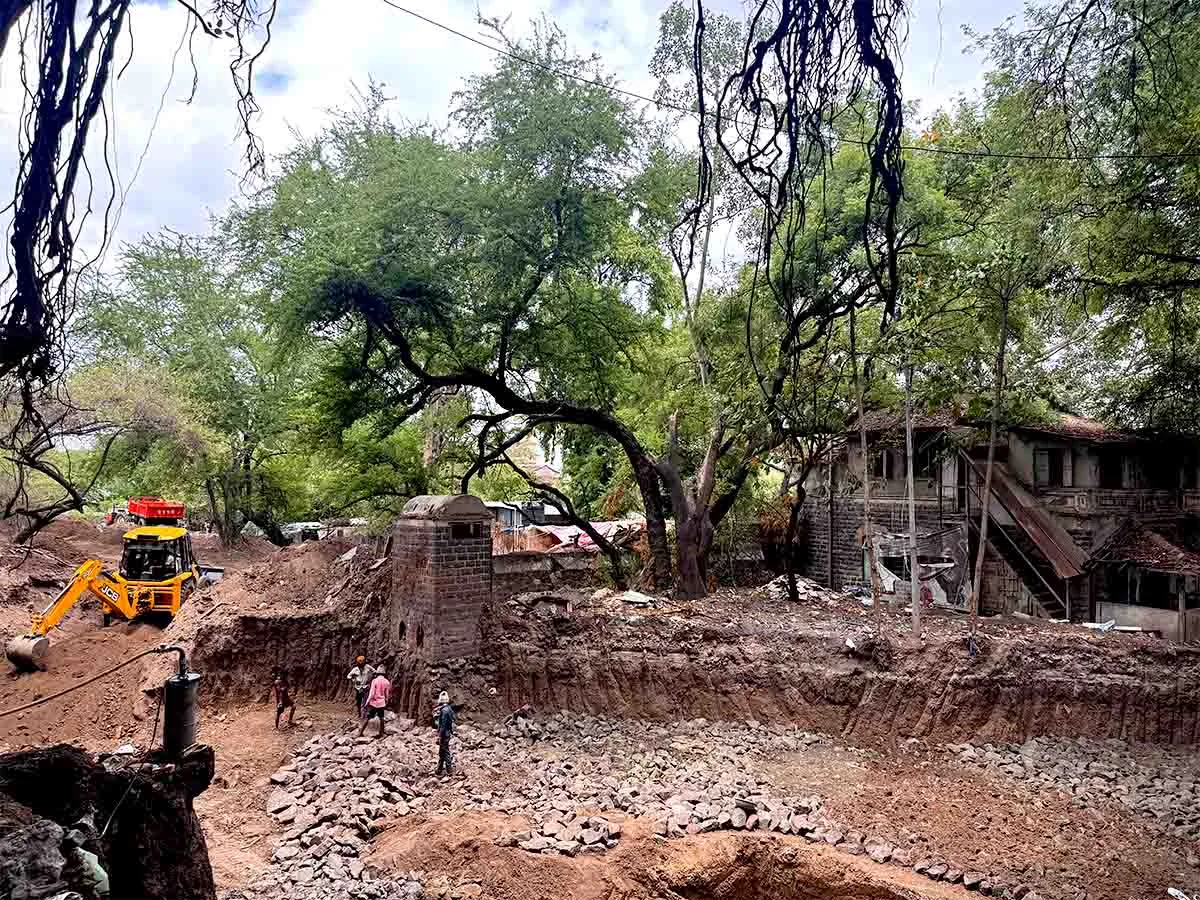
Even as the line of shops have been leveled to reveal this beautiful open arena, heavy engineering vehicles, excavators, and foundation stone piles are already actively reshaping the dug-up earth.
Rather than restoring a fragment of the sacred, ancient Dandakaranya wilderness right where the five holy trees stand, permanent concrete administrative structures are slated to rise rapidly, permanently consuming the entire open space.
It is a deeply heartbreaking reality where shortsighted commercial zoning and petty administrative greed continuously defeat greater community thoughts, spiritual comfort, and the preservation of natural, sacred ecosystems.
New constructions over this cleared earth would permanently lock out the beautiful dream of ever experiencing Mata Sita’s exile refuge in its true, ancient, and deeply spiritual natural state.
Sita Gufa: The Eternal Echoes of a True Tirthasthan
Descending into Sita Gufa is a profound transition from the noisy outside world into the raw, underground silence of a true Sanatana Dharma Tirthasthan. Crawling through these ancient stone chambers to reach the sacred Shiva Lingam is an intimate, physically humbling encounter with the very roots of the Ramayana.
Emerging from the narrow exit stairs back into the light leaves an unforgettable spiritual imprint, proving that you have stood at the exact location where cosmic righteousness was protected and set into motion.
True Tirthasthan preservation should ideally honor this natural sanctity by surrounding the five ancient banyan trees with a quiet, meditative green plaza – allowing pilgrims to experience the calm, serene forest atmosphere of the original Dandakaranya exile.
While new constructions here may permanently alter the physical courtyard layout outside, it can never crowd out the eternal spiritual echoes of Mata Sita’s devotion. For the conscious devotee, looking past the modern clutter allows them to connect deeply with the timeless, unyielding spirit of old Panchavati in its truest cultural state.
Sita Gufa FAQs
What is the historical significance of Sita Gufa?
Sita Gufa is believed to be the place where Sita lived during exile and was abducted by Ravana. It holds immense value in the Ramayana and is part of Nashik’s sacred Panchavati area.
What are the darshan timings at the temple?
The temple is open daily from 6:00 AM to 9:00 PM.
Where is Sita Gufa located?
It is situated in Panchavati, Nashik, near Kalaram Temple and Ramkund.
How far is Sita Gufa from Nashik Railway Station?
Approximately 10 km from Nashik Road Railway Station.
Is photography allowed inside the cave?
No, photography is not permitted inside the cave, however, some devotees manage to sneakily capture those moments within the cave for cherished memories.
What is the entry fee?
There is no entry fee. It is free for all visitors.
Can elderly people visit the temple?
Yes, but they should be cautious as the entrance involves steep and narrow steps.
What is the importance of Panchavati in the Ramayana?
Panchavati is where Sita, Rama, and Lakshmana lived during their exile. It is a witness to many major events that took place in the Ramayan.
Are there guided tours available?
Yes, many local guides and autorickshaw operators offer nominally priced tours around Panchavati and Tapovan, covering the sites in Nashik related to the Ramayana.
Is Sita Gufa mentioned in Valmiki Ramayana?
While the exact name isn’t mentioned, the events that are believed to have occurred here are described in the Aranya Kanda of the Valmiki Ramayana.