Nashik News: The historic Panchavati region is currently witnessing its most significant physical transformation in decades as the ₹111 Crore Ram Kal Path Project reshapes the ancient landscape of the cultural core of Nashik city.
To document the true ground reality of this massive infrastructure overhaul ahead of the upcoming Nashik Simhastha Kumbh Mela 2027, I personally walked the entire length of this proposed cultural corridor to track all the changes firsthand and here is my on-the-ground report.
This independent report captures the exact updates with original photography along the narrow lanes of the route from the ancient cave site at Sita Gufa down to the holy waters of Ramkund Ghat on the banks of the Godavari.
Sita Gufa: Ancient Cave Temple Related To The Ramayana
Ram Kal Path Project Nashik
The strategic layout of the Ram Kal Path Project is specifically engineered to handle intense pedestrian crowd pressure by widening the historic pilgrim corridor to a uniform width of 15 meters wherever possible.
Managed under central and state government heritage development funds and being implemented by the Nashik Municipal Corporation (NMC), the civil works focus heavily on creating a continuous, obstacle-free walking surface with high-durability traditional paving stones.
Beyond simple road widening, the project introduces a unified architectural façade policy, making all prominent public storefronts to adopt classic Maratha-style design elements, stone archways, and warm, heritage-themed color palettes.
By installing modern underground utility lines, high-intensity street lighting, and clear multilingual signposts, the corridor aims to turn a collection of disjointed alleys into a world-class spiritual walkway that preserves the ancient aesthetic of Panchavati.
Sita Gufa to Kalaram Mandir: The Creation of a Heritage Plaza
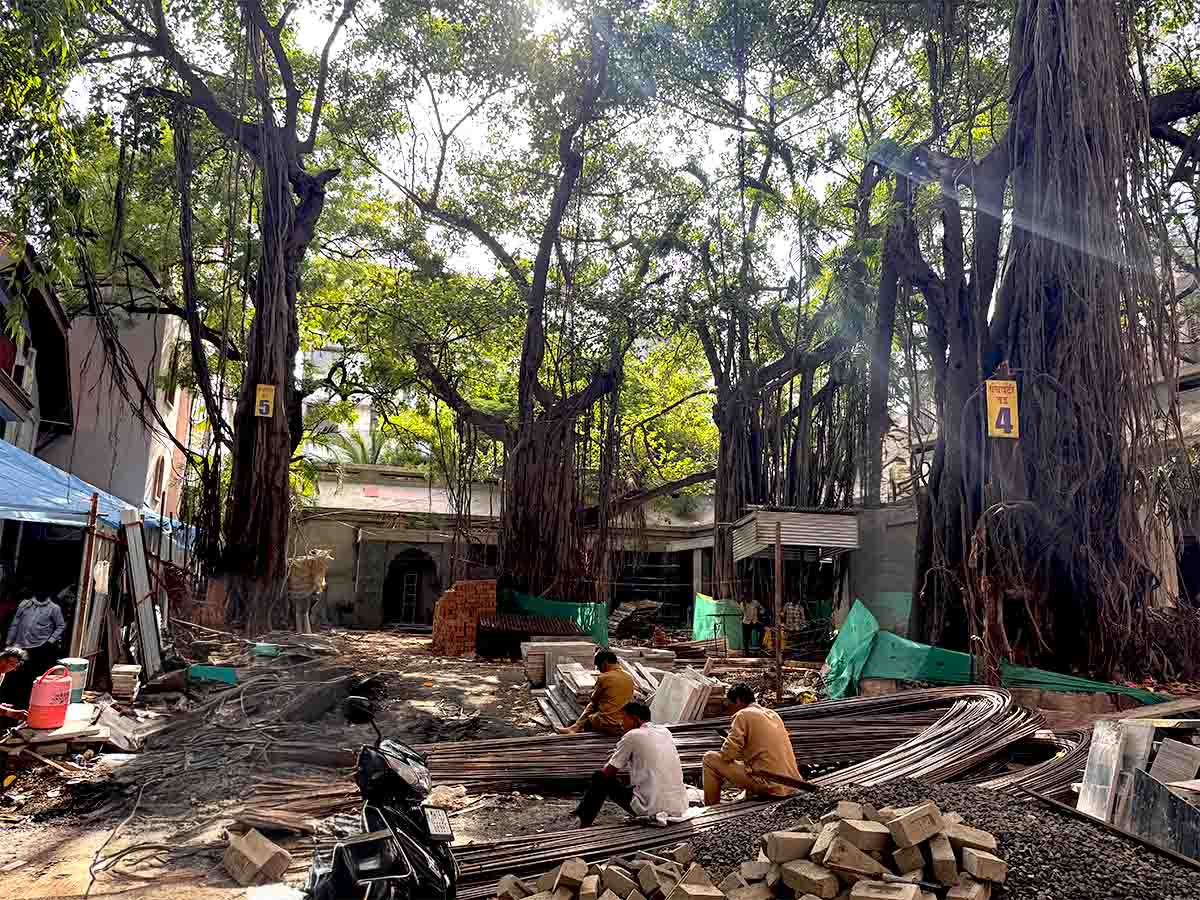
The historic Ram Kal Path Project begins its massive 1.5-kilometer spiritual corridor directly from the vicinity of the Sita Gufa Temple. This specific location holds immense civilizational value, standing precisely where the five ancient Vat Vrikshas still thrive – the very trees that gave this sacred region the name Panchavati.
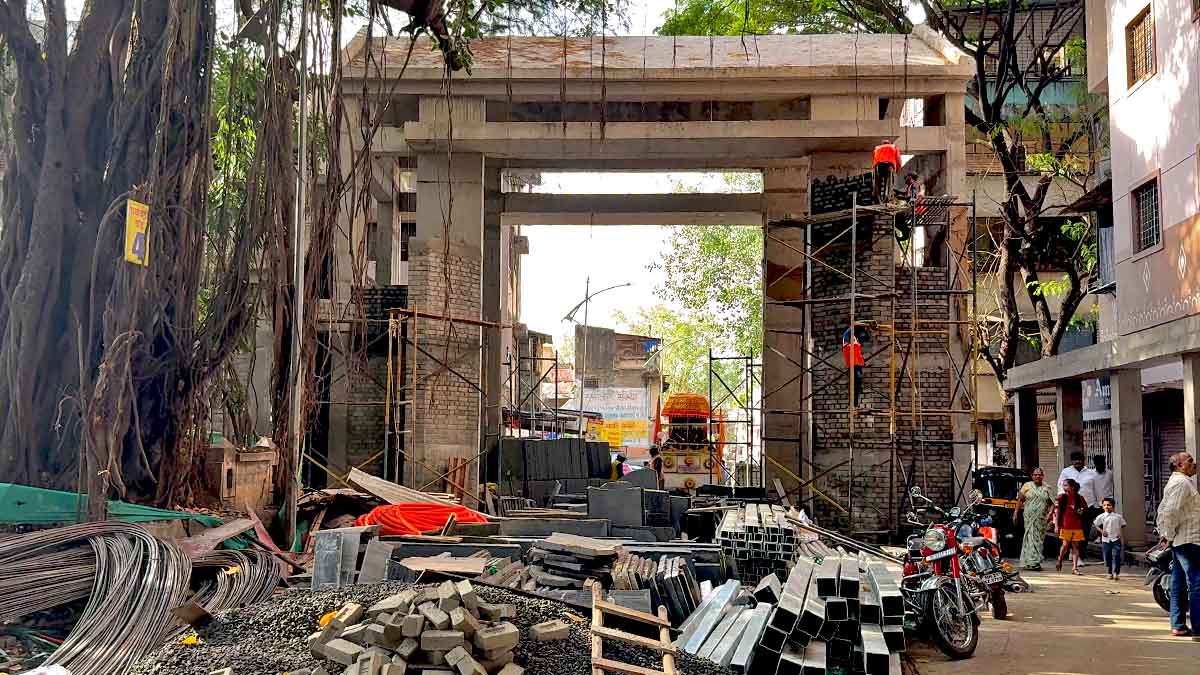
As part of the sweeping Nashik Kumbh Mela preparations, the ground reality here has completely transformed. A magnificent, large entrance arch is currently under active construction, and the heavy concrete wall that previously enclosed three of the five sacred banyan trees has been completely pulled down.
The Sita Gufa temple structure itself has received extensive façade beautification, completely changing the visual gateway for incoming pilgrims.
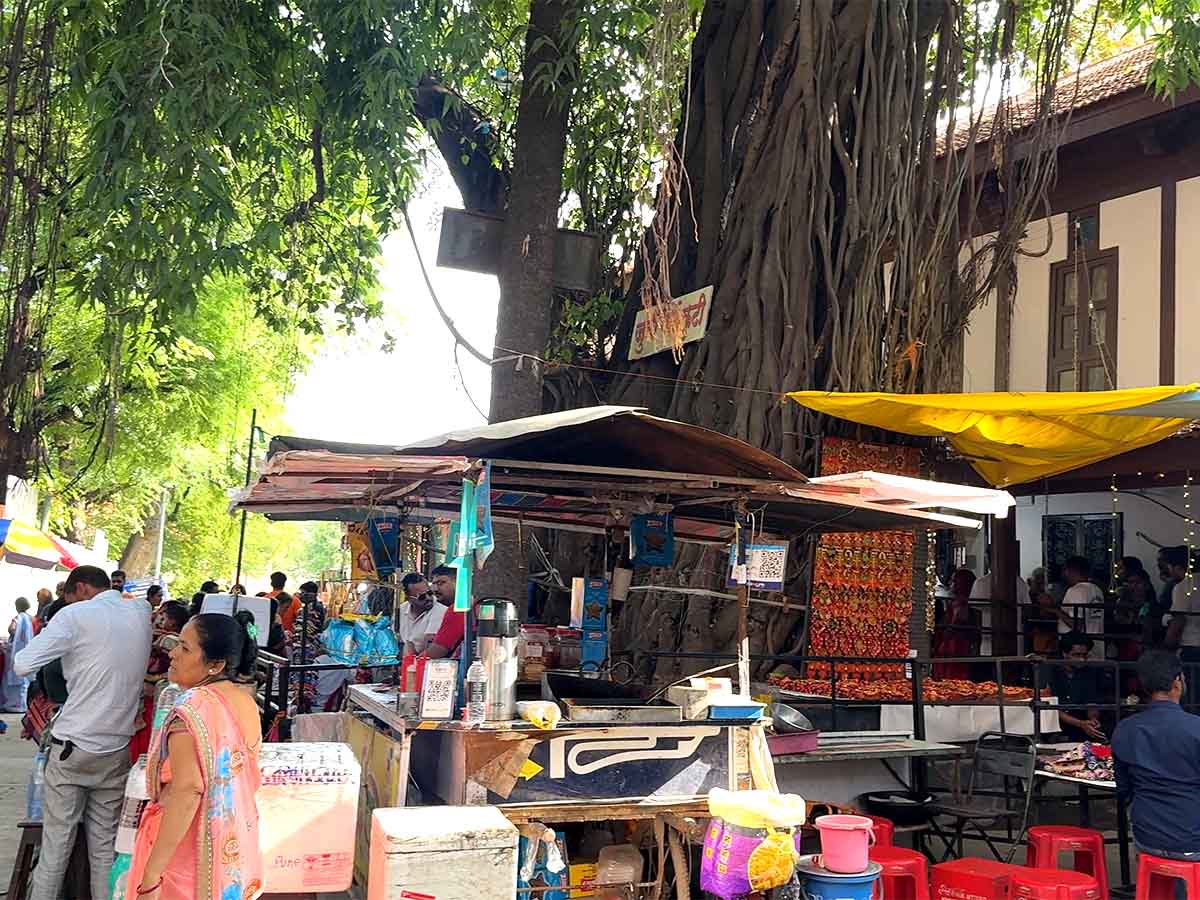
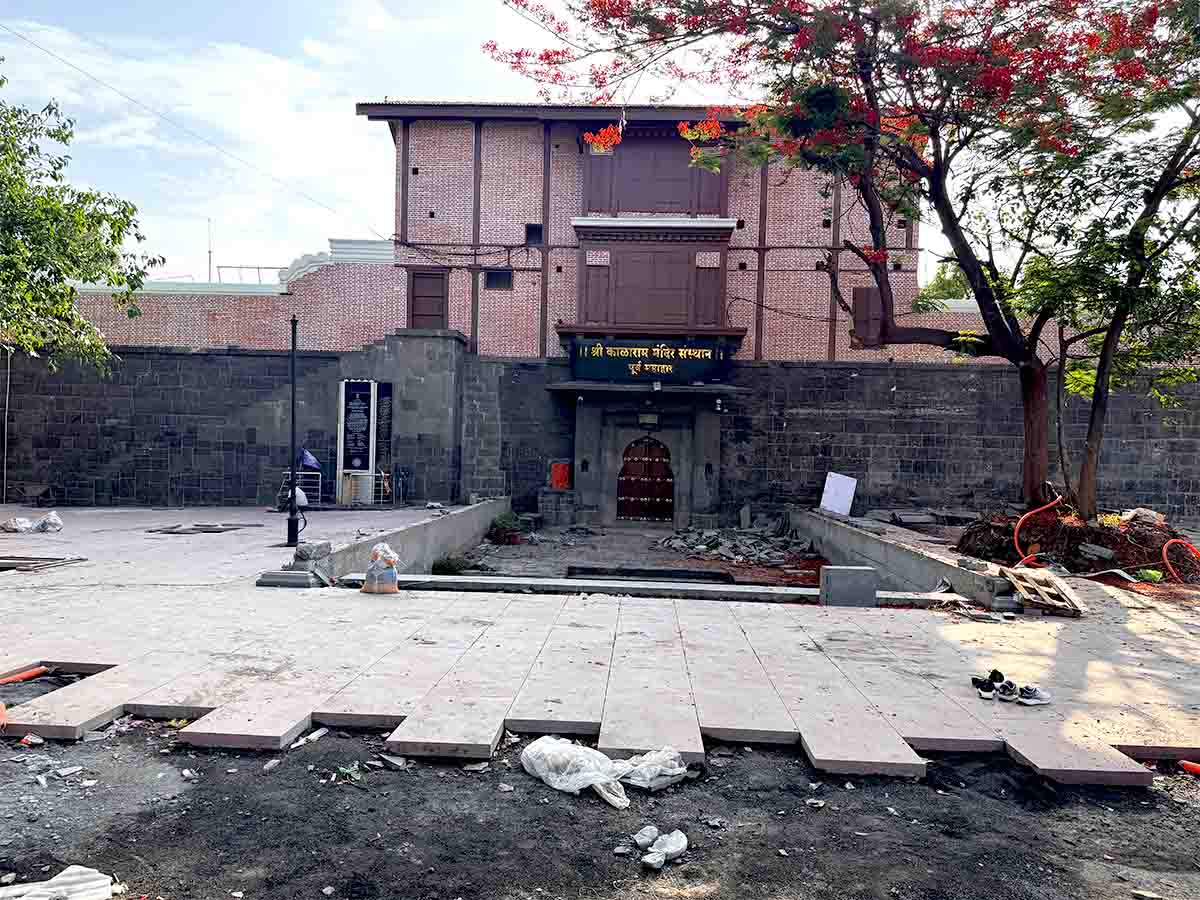
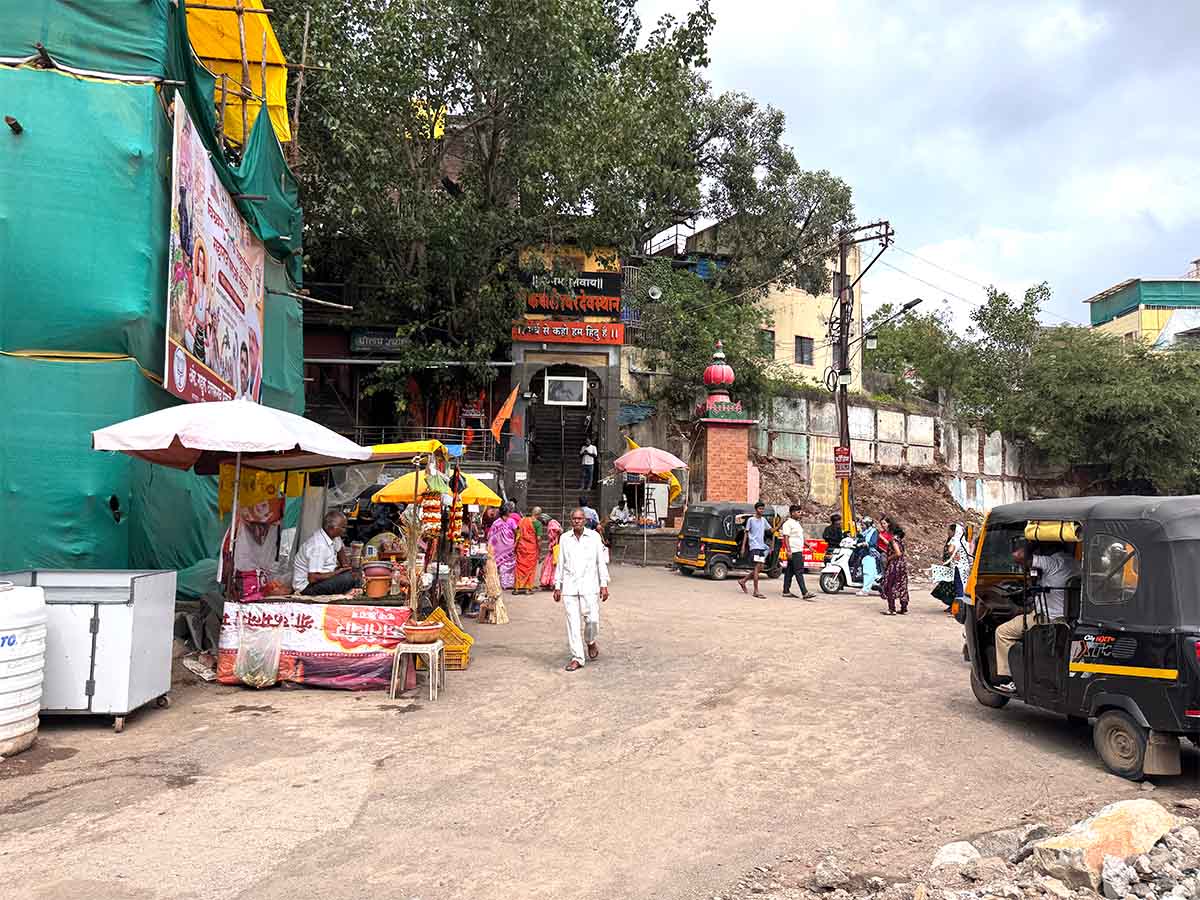
The old shops that tightly lined the front of the temple have been systematically removed, revealing a massive, newly opened plaza space. While it currently looks like an expansive open area, active construction equipment on site suggests this area will eventually house structured pilgrim utility buildings.
Moving forward from this zone along a completely flat surface, you instantly reach the primary entrance plaza of the iconic Kalaram Temple. Here too, dozens of old houses and commercial shops have been demolished to clear a broad open courtyard.
While the main entrance of the Kalaram Temple remains temporarily closed to the public, devotees are being smoothly routed through two active side entrances as the heritage corridor continues to take shape.
The Descent to Vitthal Mandir: Heritage Facing the Red Marking
Leaving the flat plaza of Kalaram Temple’s main gate, the corridor begins its physical transition toward the Godavari riverbanks, and it is here that the downward slope officially begins. Walking just fifteen seconds down this descending lane brings you to one of the active side entrances of the Kalaram Temple.
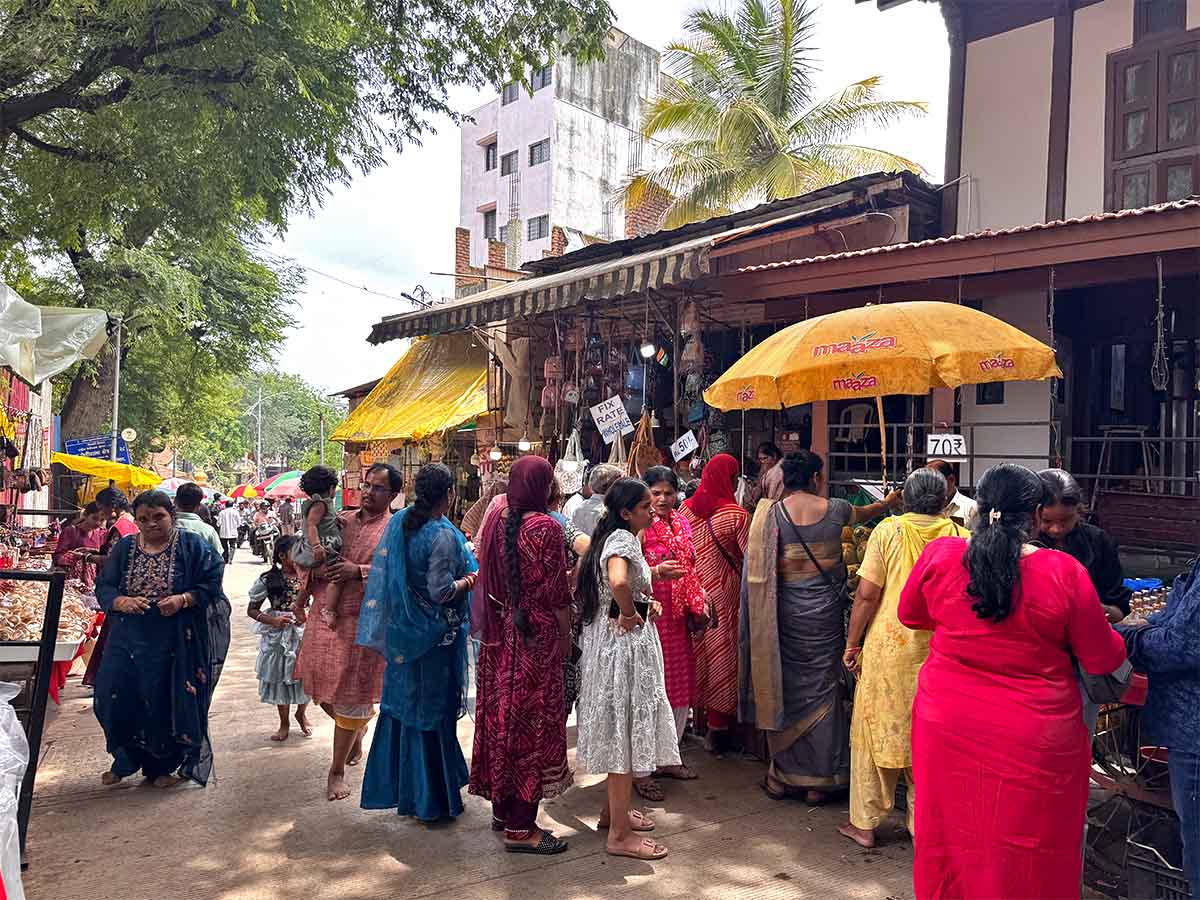
Kalaram Temple Nashik: Shriram Temple in Nashik Related To The Ramayana
Standing directly in front of this entrance is the ancient Shri Vitthal Mandir, and nearby is a magnificent, traditional Maharashtrian style Wada. This historic structure is a truly unique and impressive architectural structure, serving as a living testament to Nashik’s old-world charm.
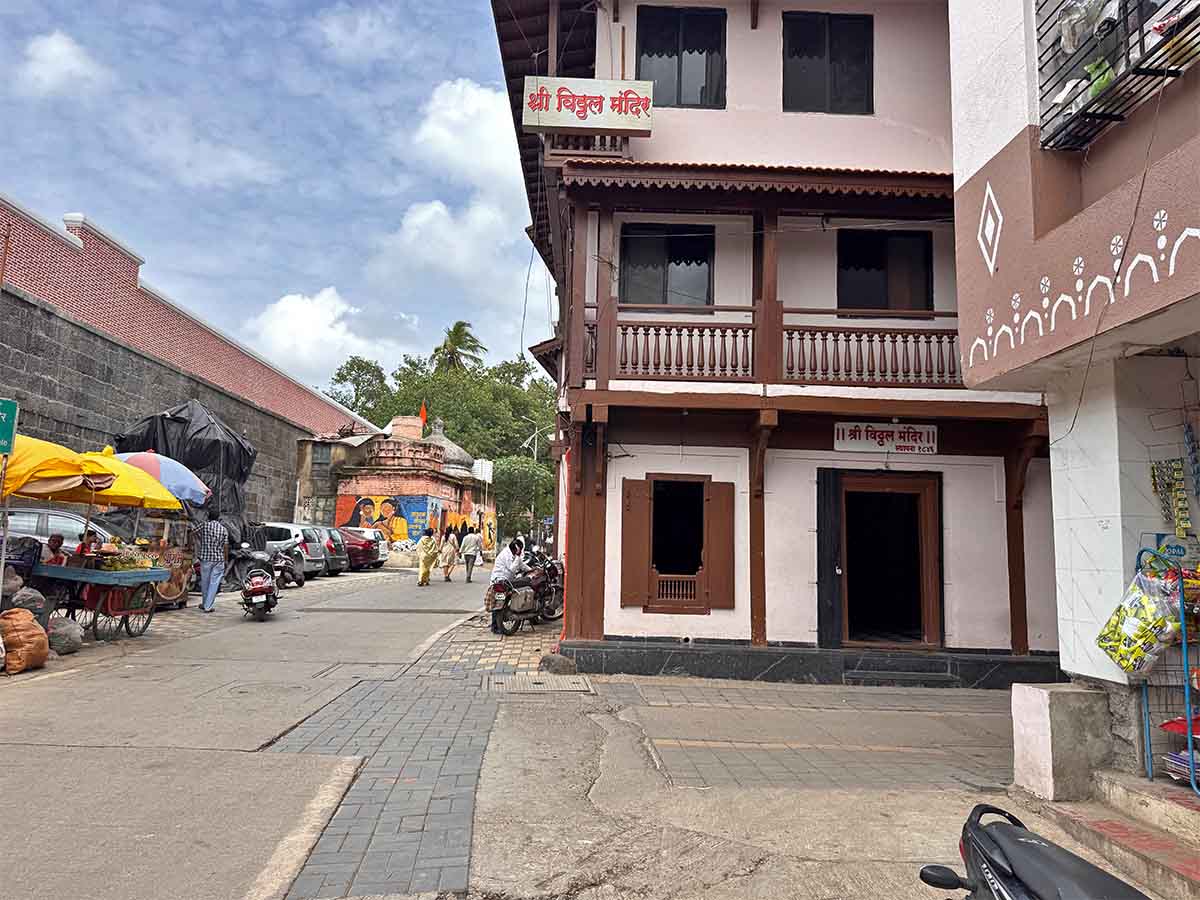
However, a closer look reveals ominous red markings painted across its traditional walls. In major city infrastructure drives, these markings typically indicate structures slated for partial or full demolition to facilitate road widening updates. It raises a poignant question for local heritage lovers about how much of old Panchavati’s original architectural soul will survive the upcoming redevelopment push.
Sardar Chowk: The Unresolved Bottleneck and the Memory of 2003
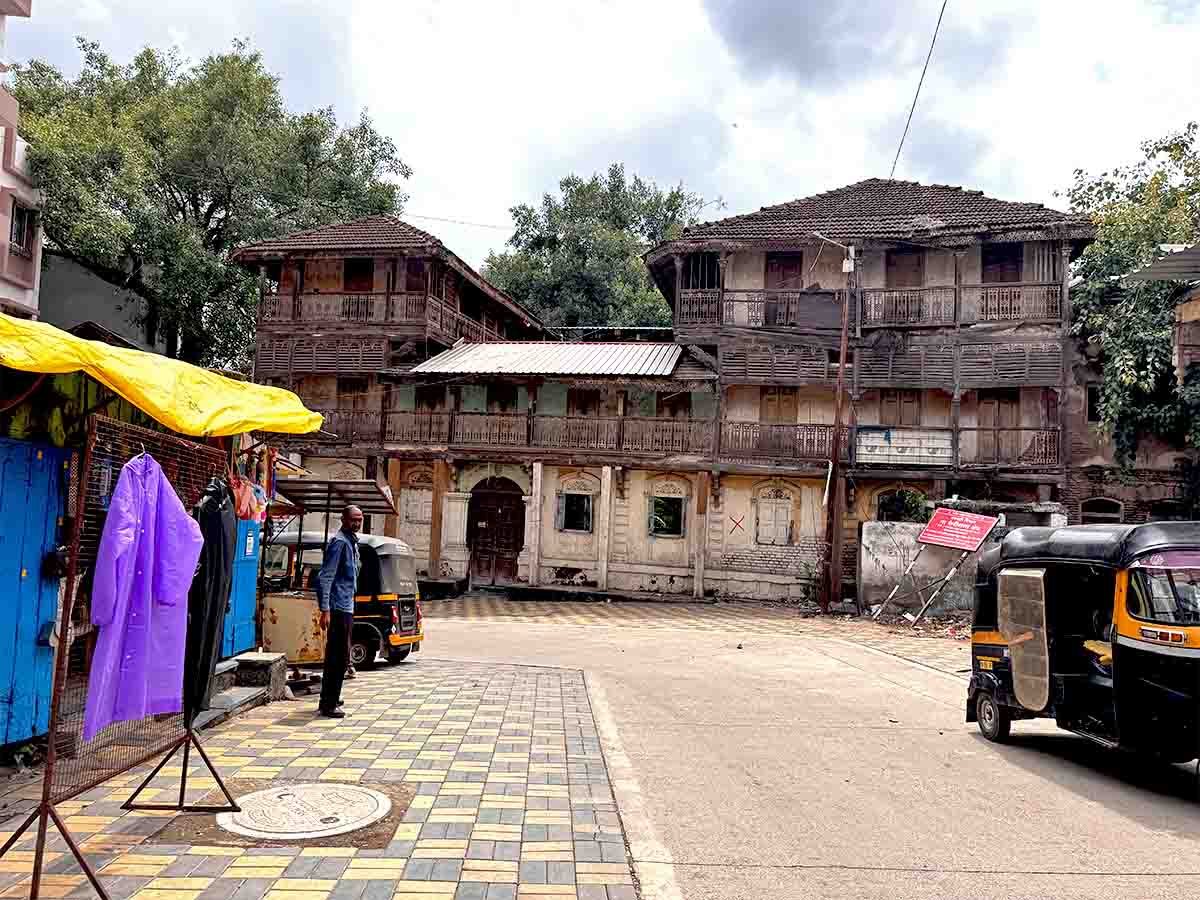
Continuing past the Vitthal Mandir and the old Wada, the downward slope continues for another thirty seconds through a highly confined, narrow lane before leveling out onto a completely flat surface. This precise spot is Sardar Chowk, a major T-shaped intersection hemmed in by massive traditional Wadas and smaller old-style houses.
For those tracking Nashik Kumbh Mela preparations, Sardar Chowk holds a deeply solemn historical weight; this exact narrow flat lane termination is the site where the tragic stampede occurred during the 2003 Simhastha kumbh mela.
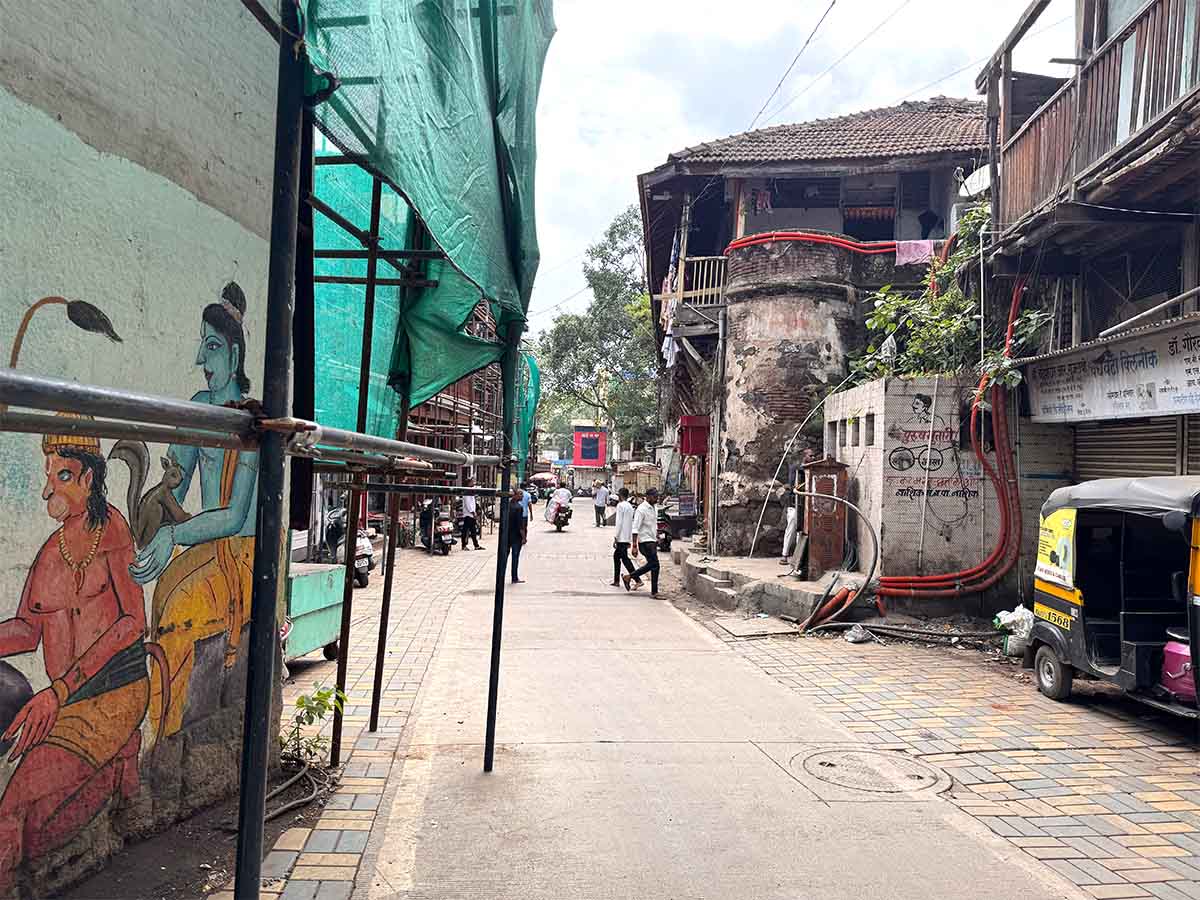
Despite the passage of over two decades, the ground reality reveals that this critical lane remains terrifyingly narrow to this day. Ahead of the upcoming mega-event traffic surges, this bottleneck represents a vital crowd-pressure point.
At the intersection, taking a left turn leads toward the historic Naroshankar Mandir, but the primary pilgrim route turns right, guiding pedestrians on a brief two-minute walk toward the central bathing ghats.
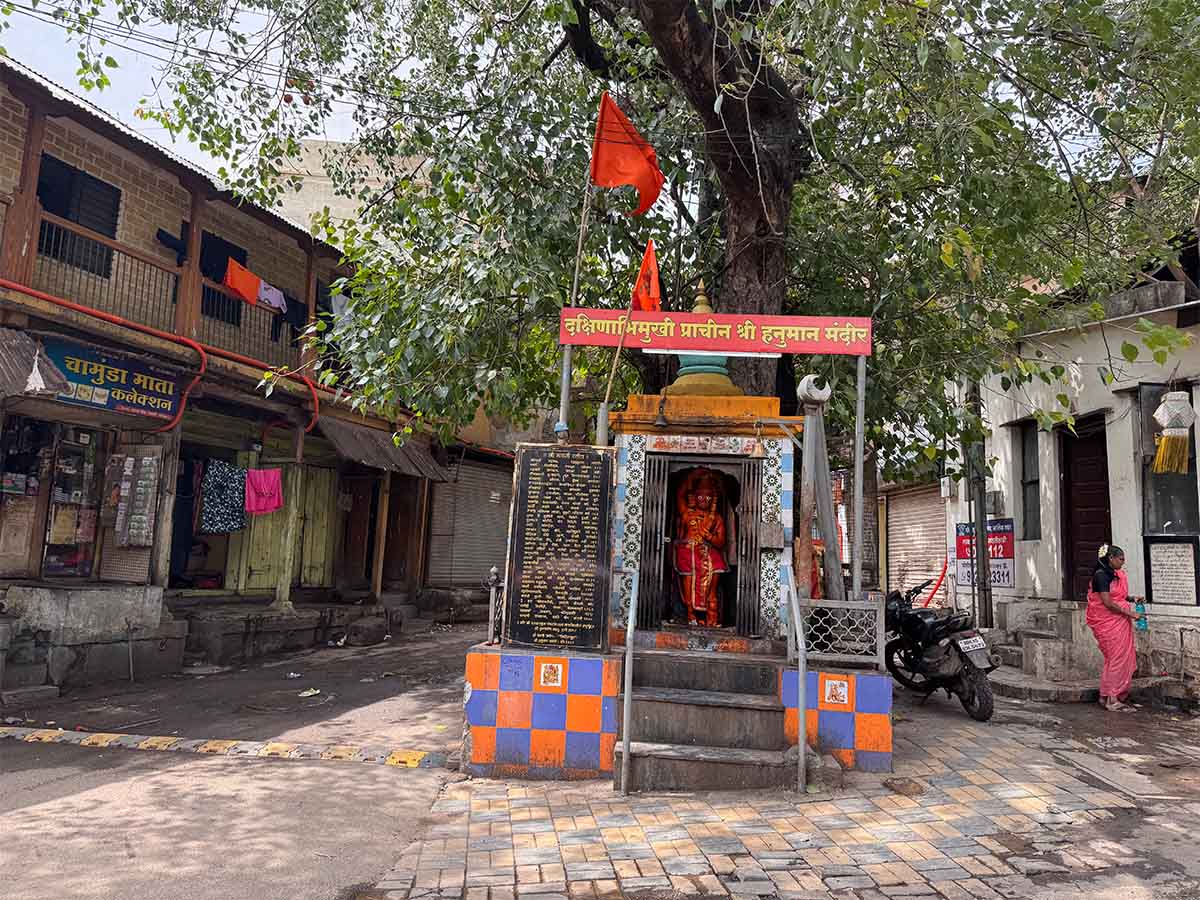
The Altered Landscape of Ramkund: Disappearing Steps and Lost Legacies
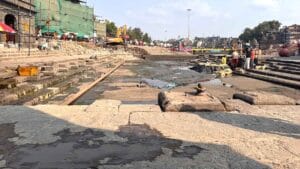
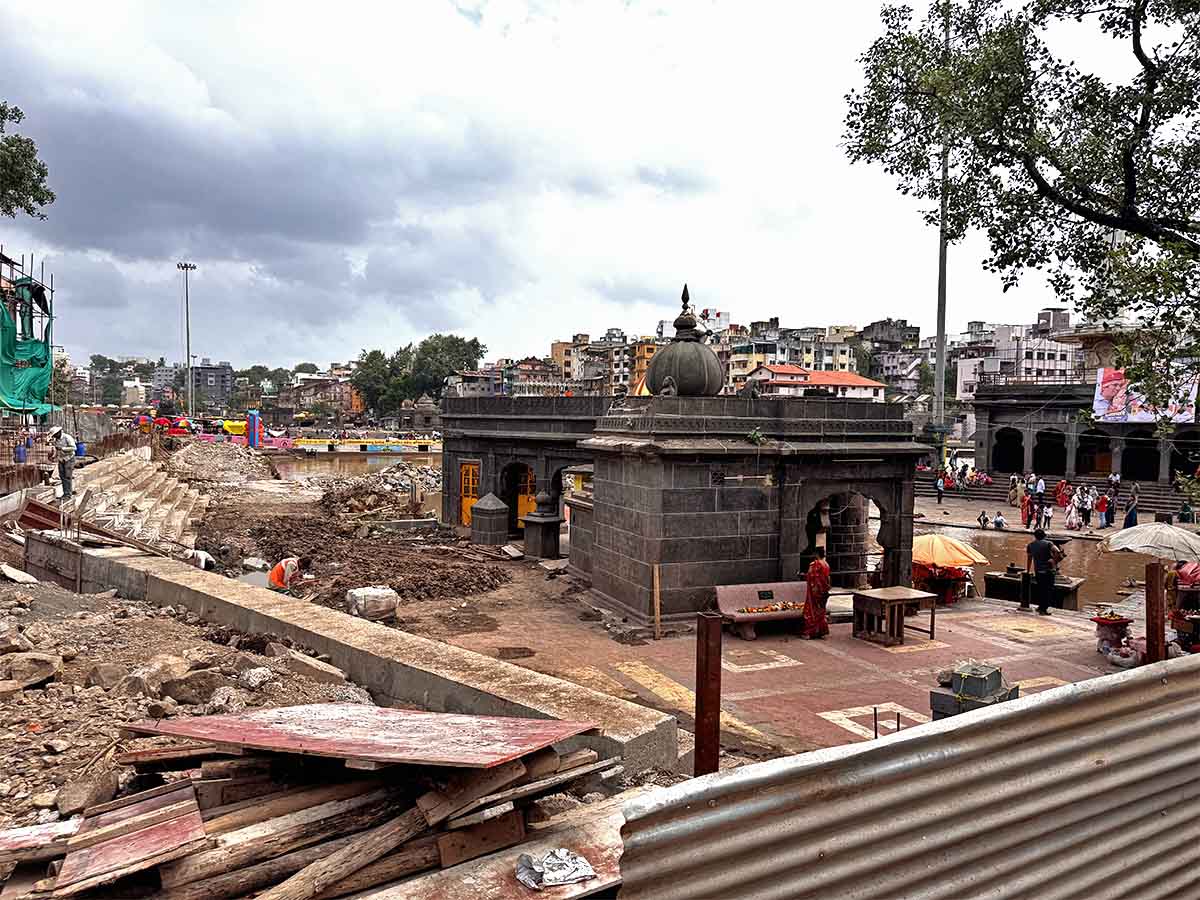
Turning right at the Sardar Chowk intersection and completing the final two-minute flat walk brings you directly to the spiritual heart of the city: the main bathing pools of Ramkund. Stepping onto the banks today reveals a landscape that has been profoundly and permanently altered.
As part of the sweeping Godavari riverfront beautification drive, the traditional steps leading down into the holy waters have been entirely demolished and the old riverbank changing room building is completely gone.
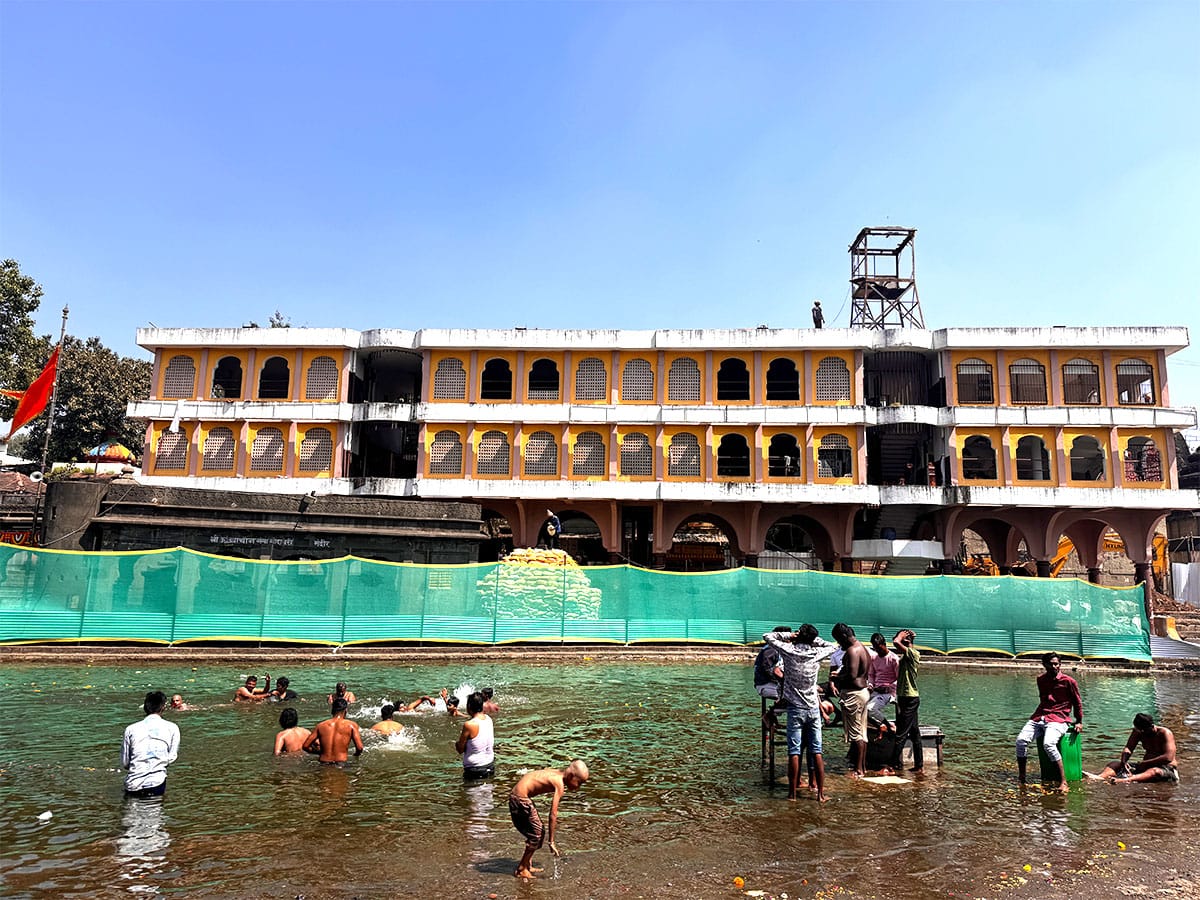
Major structural engineering overhauls are actively underway across the entire basin, replacing the aged masonry with broad concrete steps, streamlined safety railings, and heavy crowd-control barriers designed to manage high-intensity festival days safely.
However, alongside these necessary safety upgrades, the transformation has brought a deep sense of cultural nostalgia and loss for local residents. The vibrant, colorful stalls that tightly lined the approach next to the Kapaleshwar Temple have been completely leveled.
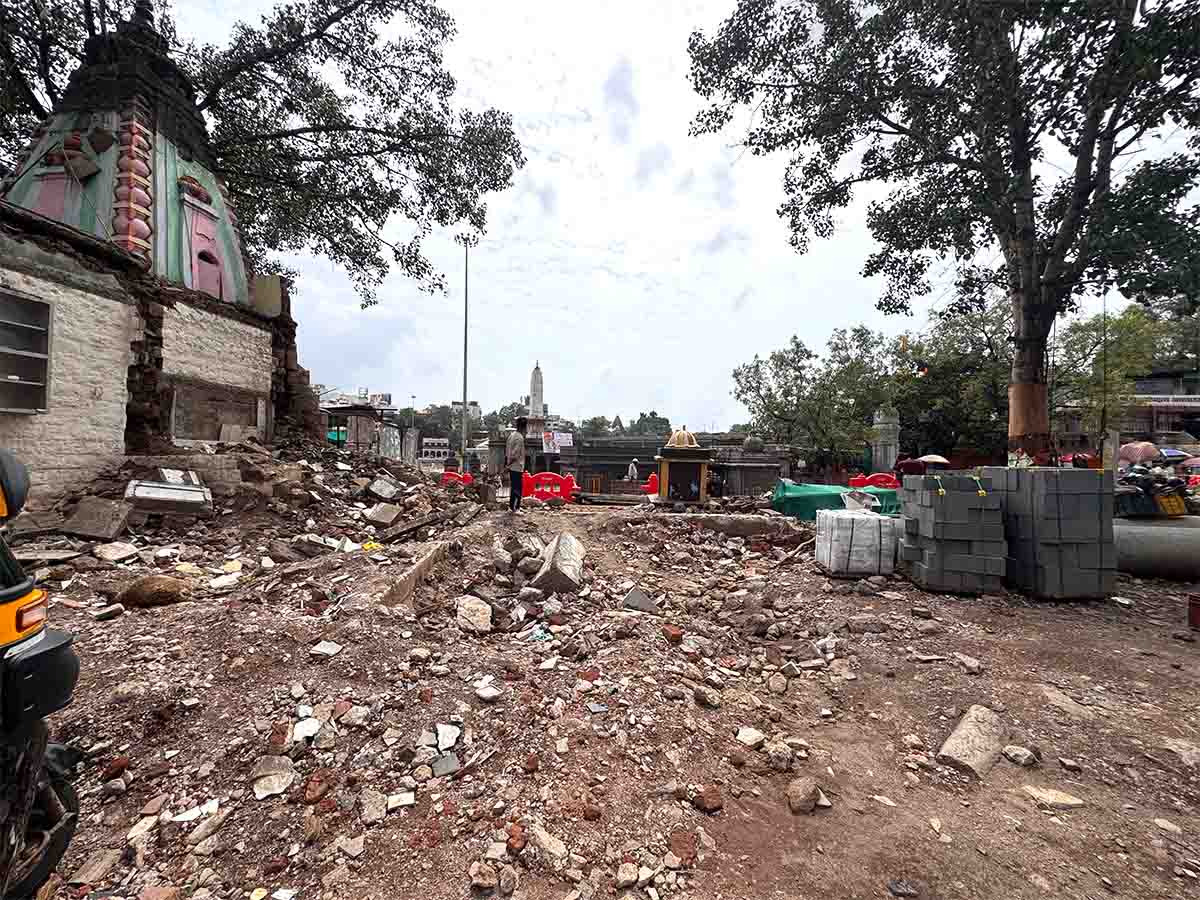
These legacy shops, many over 50 years old, were famous for selling brass idols, traditional puja items, and intricate copper utensils, creating a lively, historic atmosphere that defined the Ramkund experience for generations.
Most notably, the legendary Pande Mithai shop – a historic culinary institution loved by locals and pilgrims alike – has been completely removed from the riverfront.
While the new wide-open concrete vistas will undoubtedly ease pilgrim walking movements during future congregations, the disappearance of these multi-generational establishments has permanently altered the visual and emotional soul of the holy ghats.
Ram Kal Path: Embracing the Future While Honoring Our Roots
Navigating the active construction zones of the Ram Kal Path corridor from Sita Gufa to Ramkund offers an undeniable look at a historic city caught in a massive state of transition. At present, the visual landscape can admittedly feel unsettling and deeply bittersweet.
The sight of centuries-old traditional Wadas marked with red paint, the leveled storefronts of multi-generational local merchants, and the completely stripped riverbanks of Ramkund inevitably stir a sense of profound cultural nostalgia and temporary loss.
For residents and pilgrims who have loved the colorful, intimate, and bustling energy of old Panchavati for decades, watching these physical memories disappear under heavy engineering machinery is a difficult reality to absorb.
Yet, looking beyond the dust, detours, and temporary disruptions reveals a deeply optimistic vision for the future of our sacred city. Even though it feels incredibly sad right now to witness the leveled heritage sites and the completely altered landscape in the Ramkund vicinity, we can hold onto a strong, reassuring hope that something magnificent is rising from this disruption.
By replacing congested, hazardous bottlenecks with wide, structurally engineered pedestrian plazas, the project ensures that millions of incoming global devotees can navigate our holy sites with absolute dignity, safety, and ease during peak festival cycles.
Ramkund Nashik: Sacred Ghat On The Banks Of The Godavari
The uniform traditional facades and heritage stone archways promise to elevate old Panchavati into a world-class cultural precinct that proudly showcases our civilizational roots to international audiences.
These extensive transformations represent a vital, necessary evolution that will safely secure Nashik’s spiritual infrastructure for generations to come, paving the way for a beautiful revitalization that will honor our ancestors while safely welcoming the modern world.
While the immediate losses are heavy, this massive civic renewal paves the way for a beautiful, revitalized temple city-one that seamlessly blends the grand utility of modern engineering with the timeless, eternal spirit of Sanatana Dharma.