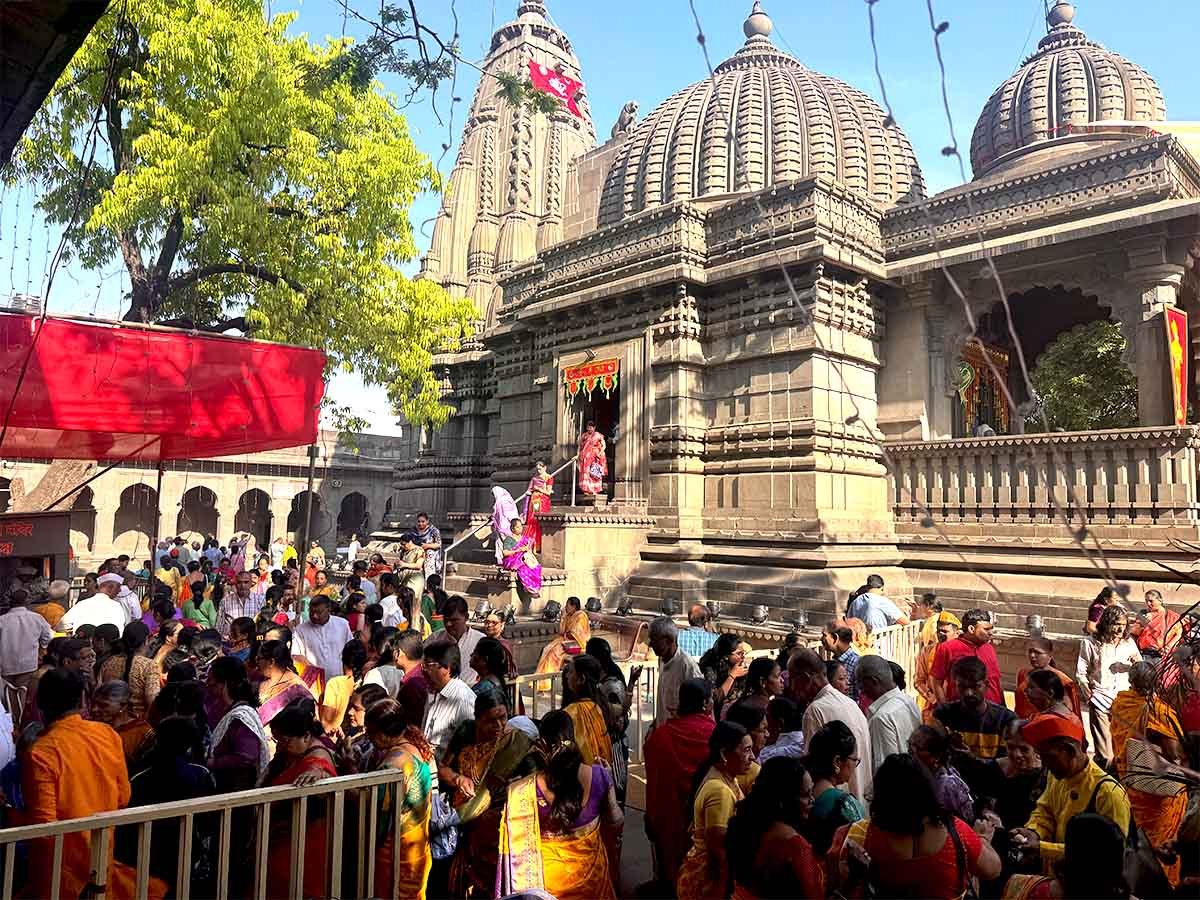
Kalaram Mandir Nashik, also known as Shri Kalaram Temple Nashik, is one of the most sacred and culturally significant Shriram temples in Maharashtra.
Located in the ancient region of Panchavati in current Nashik City, this popular temple is dedicated to Prabhu Shriram, whose unique black stone idol gives the temple its name.
From its majestic Hemadpanthi-style architecture to its spiritual aura and grand celebrations like Ram Navami and Navratri, Kalaram Mandir continues to attract thousands of devotees and pilgrims every year.
Whether you’re looking for Kalaram Mandir timings, the fascinating story behind the black idol, or simply want to browse Kalaram Temple photos, this guide offers a complete spiritual and cultural overview of one of Nashik’s holiest landmarks.
This article is part of our Temples in Nashik series exploring popular temples in Nashik city and surrounding regions.
Kalaram Mandir Nashik: distance from major landmarks
- Sita Gufa – 1 minute walk
- Ramkund – 1 minute drive
- Panchavati Karanja – 2 minute drive
- Tapovan – 11 minute drive
- Mumbai Agra Highway – 15 minute drive
- Nashik Road Railway Station – 30 minute drive
- Trimbakeshwar – 1 hour drive
How to Reach Kalaram Mandir Nashik
From Nashik Road Railway Station, Kalaram Mandir is roughly 30 minutes by road. Auto-rickshaws and cabs are readily available at the station, and most drivers are familiar with the temple as a landmark destination.
Visitors arriving via the Mumbai-Agra Highway can expect a further 15-minute drive into central Panchavati. Once in the Panchavati area, the temple is best reached on foot from nearby landmarks like Panchavati Karanja traffic junction or Ramkund Ghat, both a short walk away.
Kalaram Mandir Nashik – Quick Details
- Address: Shri Kalaram Mandir, Panchavati, Nashik, Maharashtra 422003
- Timings: 6:00 AM – 10:00 PM (daily)
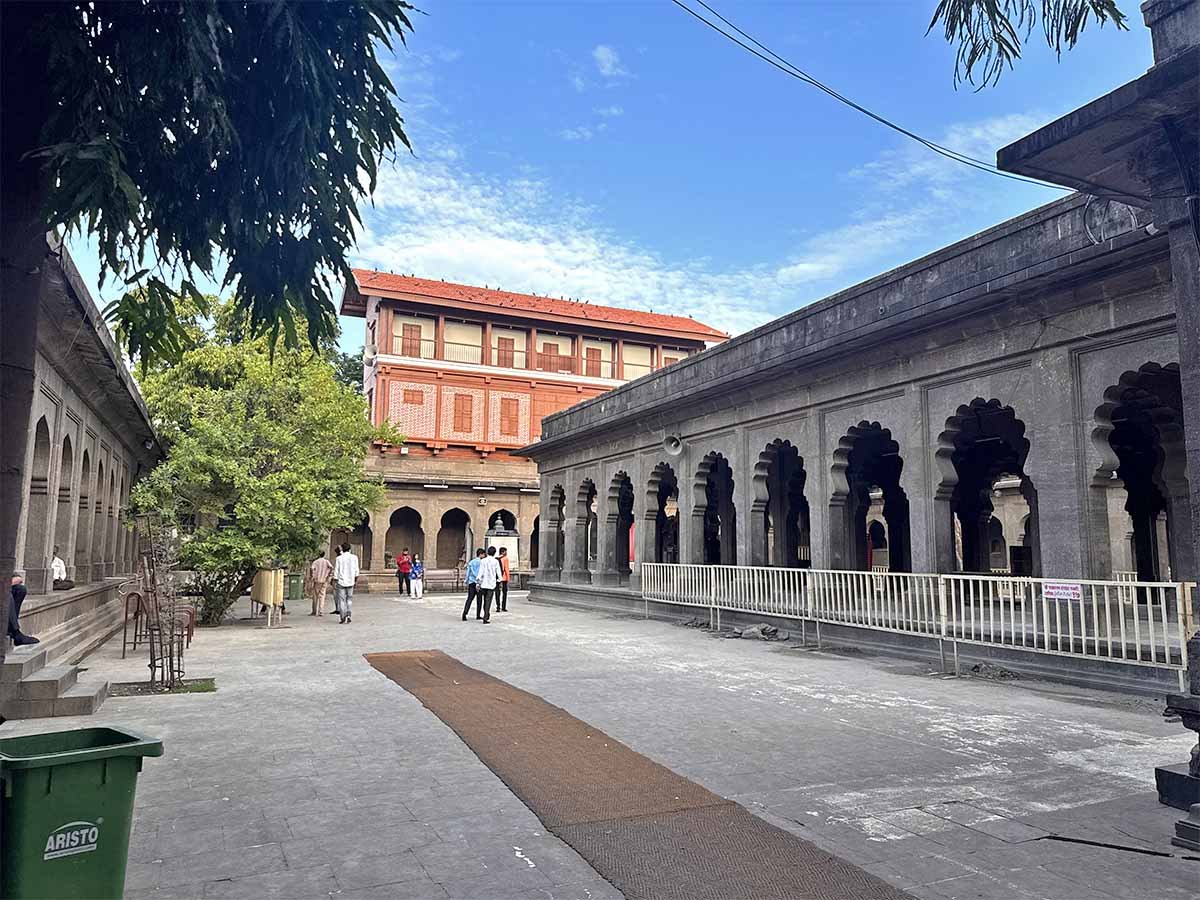
- Architecture: Hemadpanthi style stone structure
- Photos: Allowed in the courtyard, not inside the main temple.
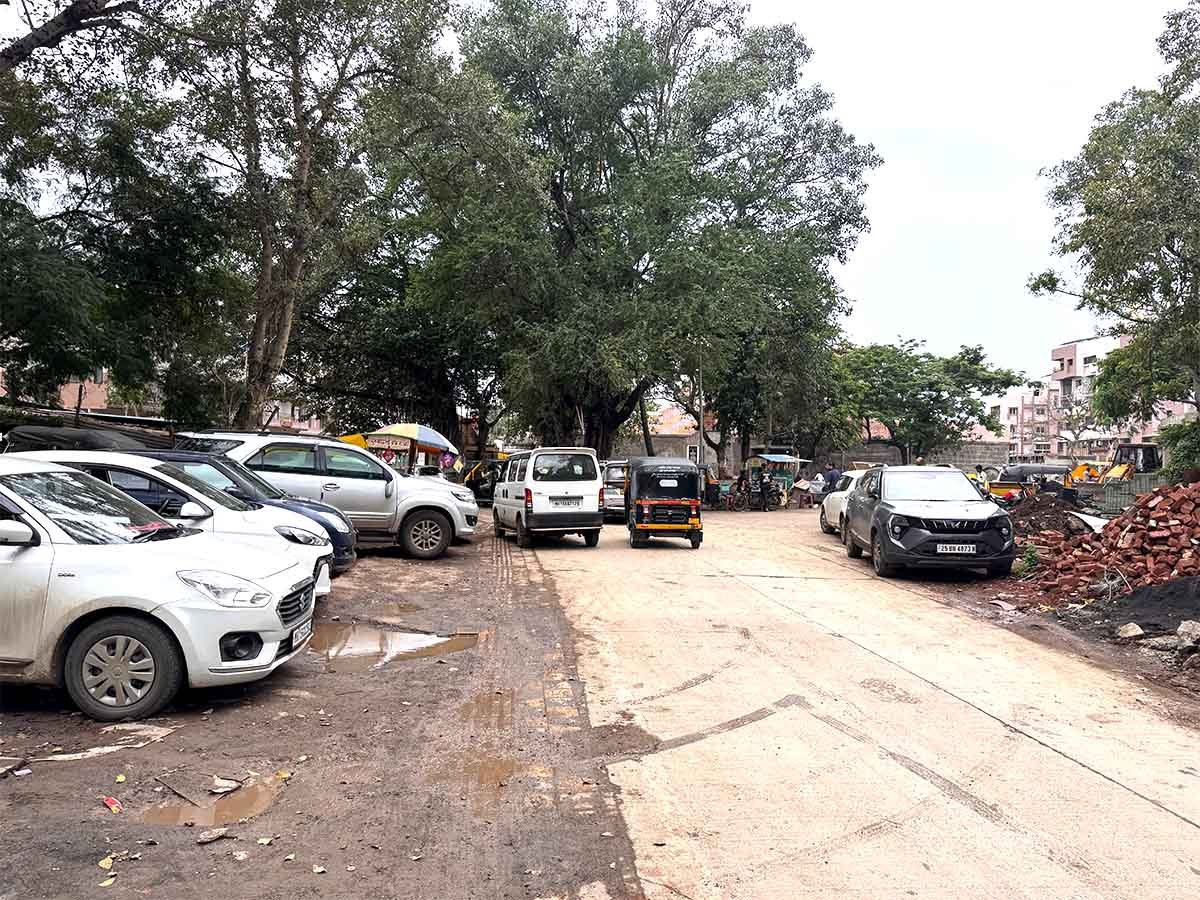
- Parking: Open space is available in front of the main entrance and is used for parking vehicles.
- Construction: Spanned several years from 1788 to 1792 CE under the patronage of Sardar Rangrao Odhekar.
Kalaram Temple Nashik: Daily Aarti & Pooja Schedule
Kalaram Mandir Nashik follows a daily schedule of aarti and pooja rituals, starting with the Kakad Aarti before dawn and closing with evening Kirtan. Here is the complete schedule so you may plan your visit accordingly.
- Kakad Aarti : 5.30 am to 6.30 am
- Sanai Vaadan : 7:00 am to 8:00 am
- Mangal Aarti : 8:00 am to 10:00 am
- Mahapooja : 10:30 am to 1:00 pm
- Bhajan : 3:00 pm to 5:00 pm
- Shej Aarti : 7:00 pm to 8:00 pm
- Kirtan : 8:00 pm to 10:00 pm
You may like to refer to Shri Kalaram Sansthan Nasik’s Aarti & Pooja Timings page on the official temple trust website.
History & Story of Kalaram Mandir Nashik
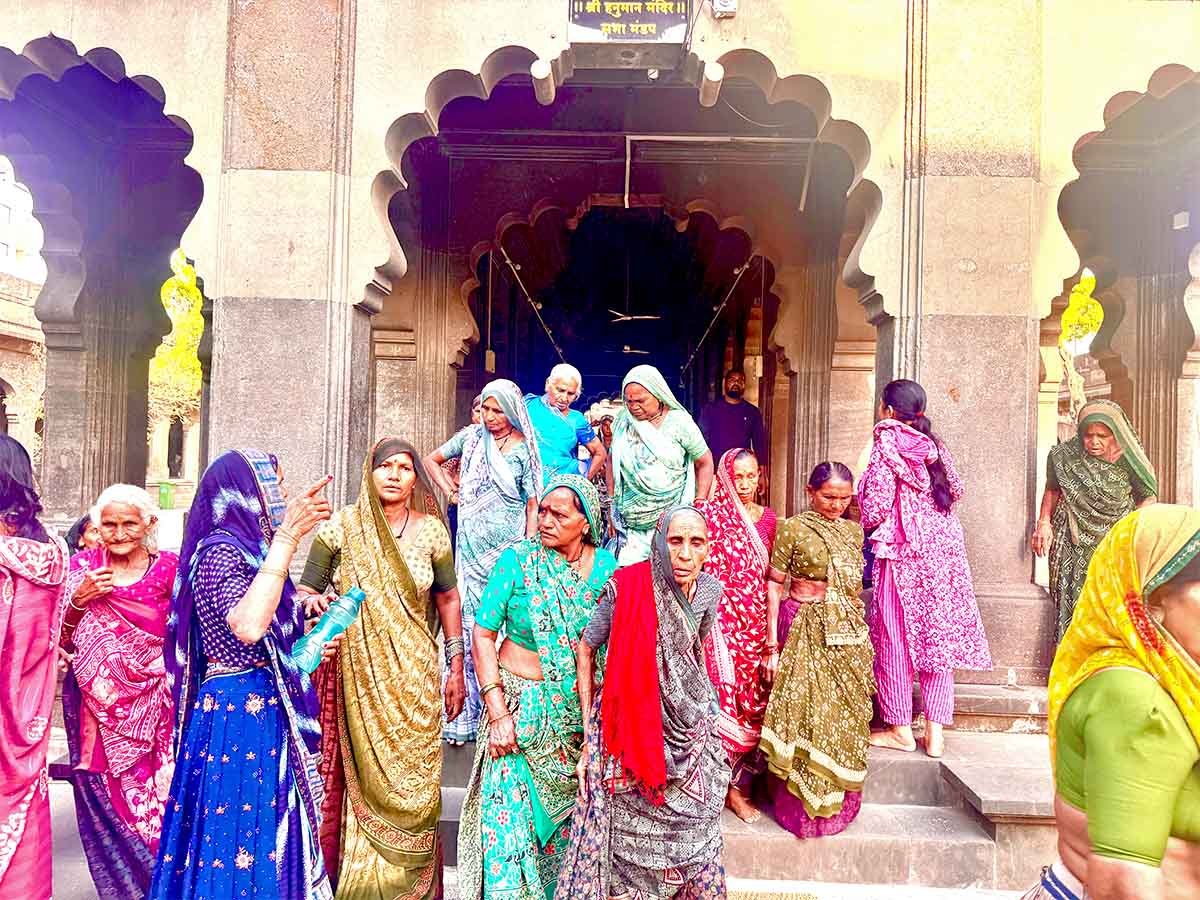
Built between 1788 and 1792 CE by Sardar Rangrao Odhekar, an official in the Peshwa administration of the Maratha Empire, the Kalaram Mandir story begins with a dream. Odhekar saw images of black idols of Shriram, Sita, and Lakshman submerged in the Godavari River.
The idols were retrieved and a grand temple was constructed to house it. This black stone idol of Shriram, standing in an upright posture alongside Sita and Lakshman, makes this temple distinct across India.
Crafted entirely in black basalt stone, the temple remains an enduring symbol of devotion, resilience, and Sanatan values.
Kalaram Temple Nashik – Spiritual Significance of the Site
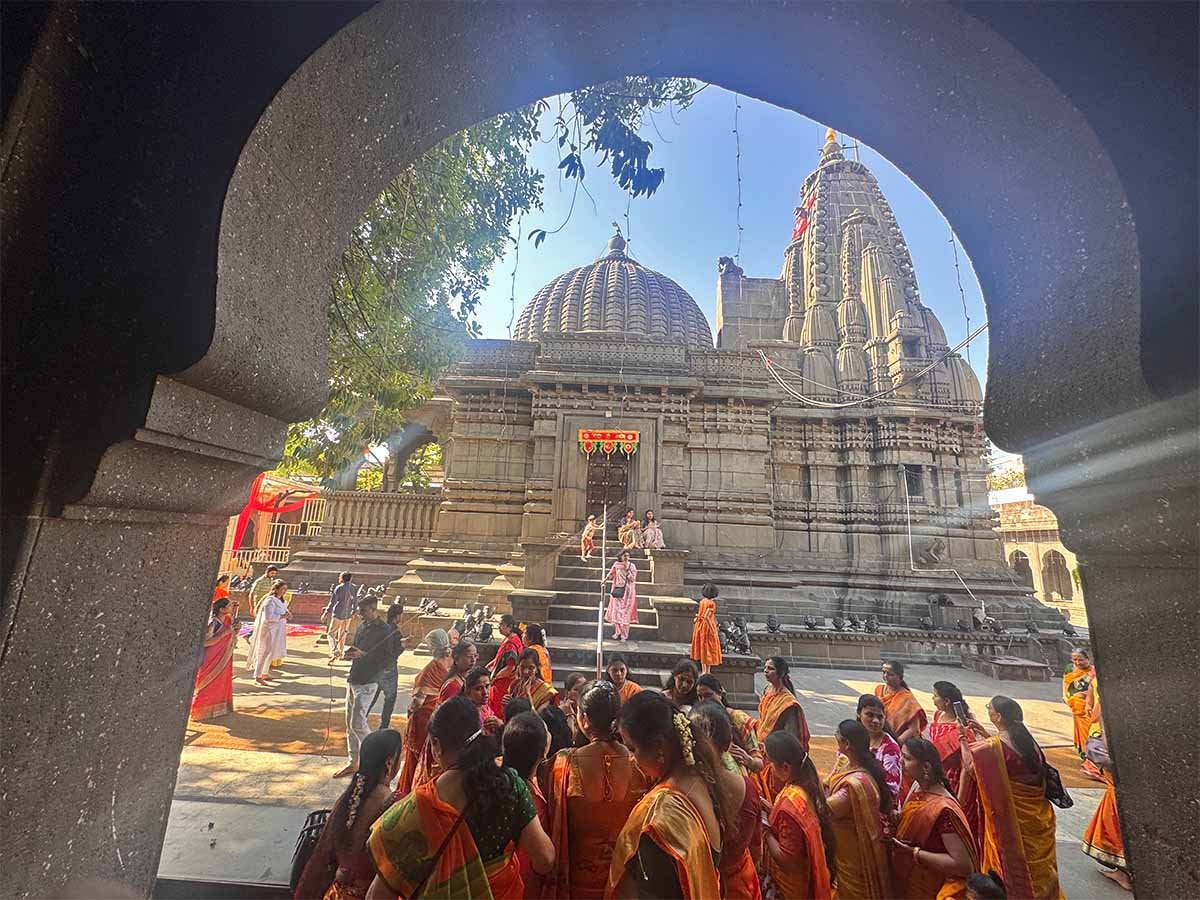
The exact site where the temple was built is believed to be the place where Mata Sita and Prabhu Shriram used to perform their daily pooja rituals, yagyas and meditation while living in exile in Panchavati on the banks of the Godavari river.
Goreram Temple: the Parnakuti
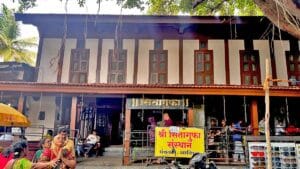
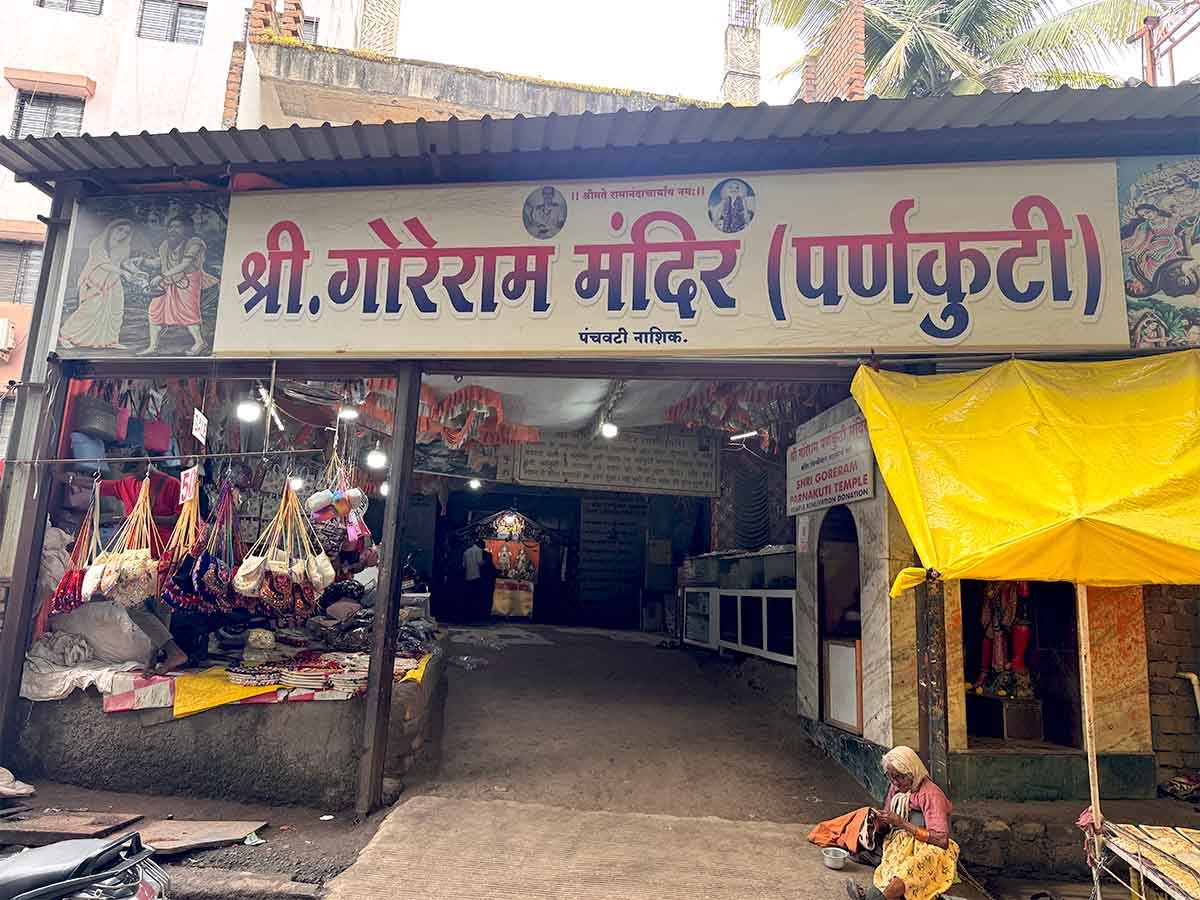
A few steps from Kalaram Mandir and besides Sita Gufa sits Goreram Temple, whose fair-complexioned idols of Ram, Sita, and Lakshman give it its name (Gore Ram meaning fair complexioned Ram).
The temple’s signage identifies the site as the Parnakuti or the leaf-hut dwelling where the exiled Rama, Sita, and Lakshman are believed to have lived during their years in Panchavati.
Unlike Kalaram Temple’s grand Hemadpanthi structure, Goreram remains a modest, makeshift shrine – easy to overlook, but carrying real devotional and traditional significance as part of the same Ramayana geography.
Kalaram Temple and its Cultural Symbolism
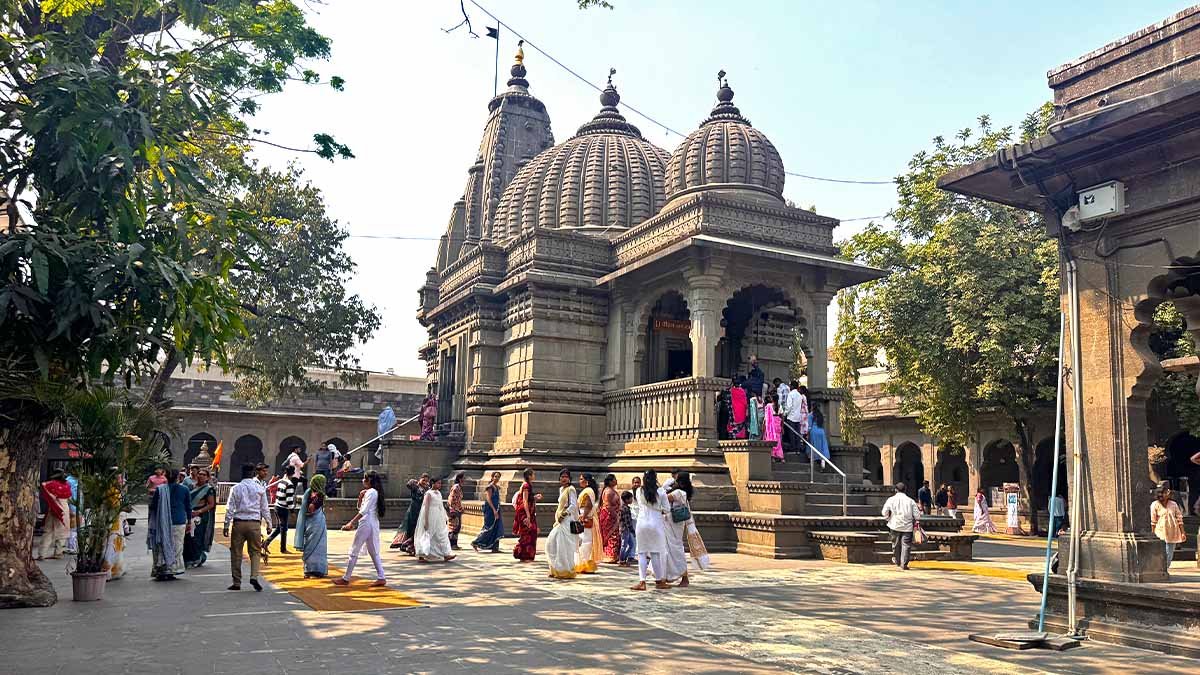
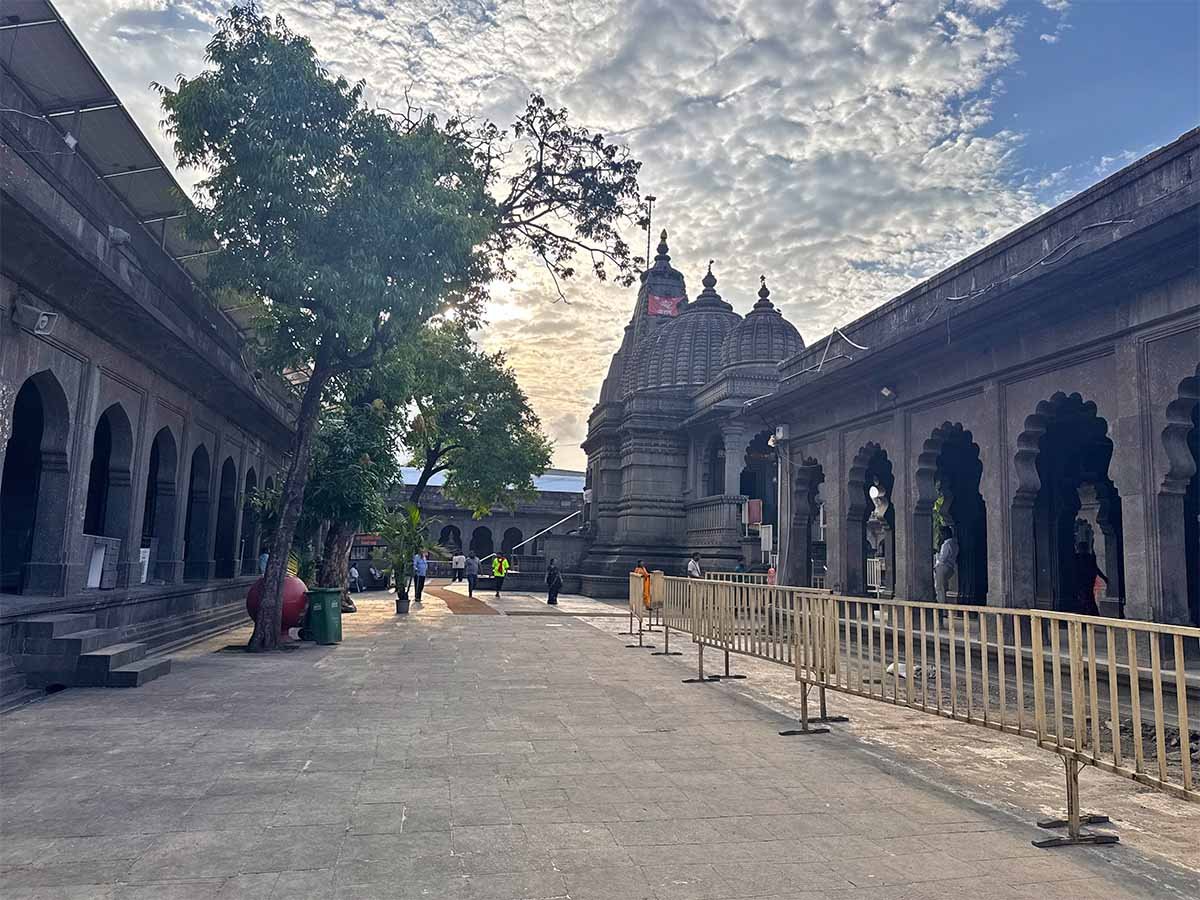
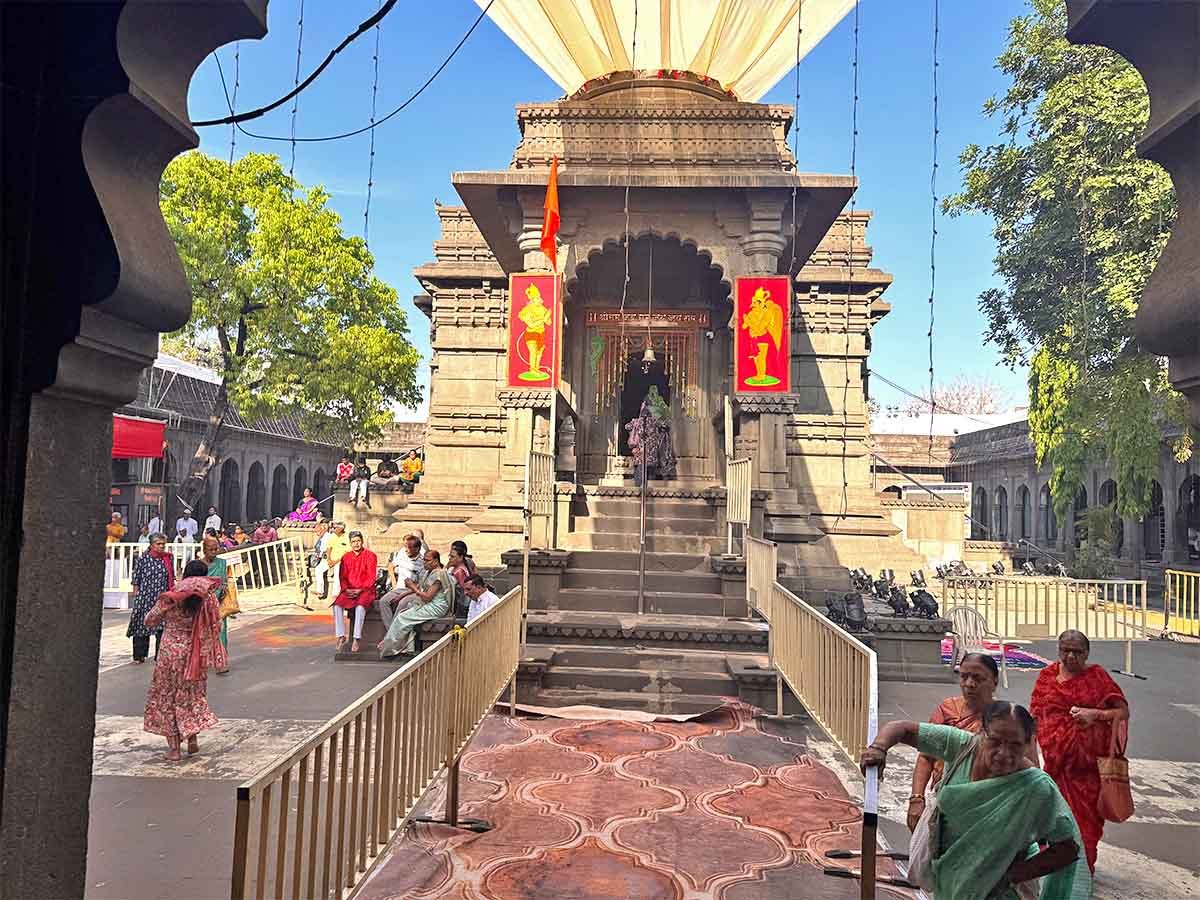
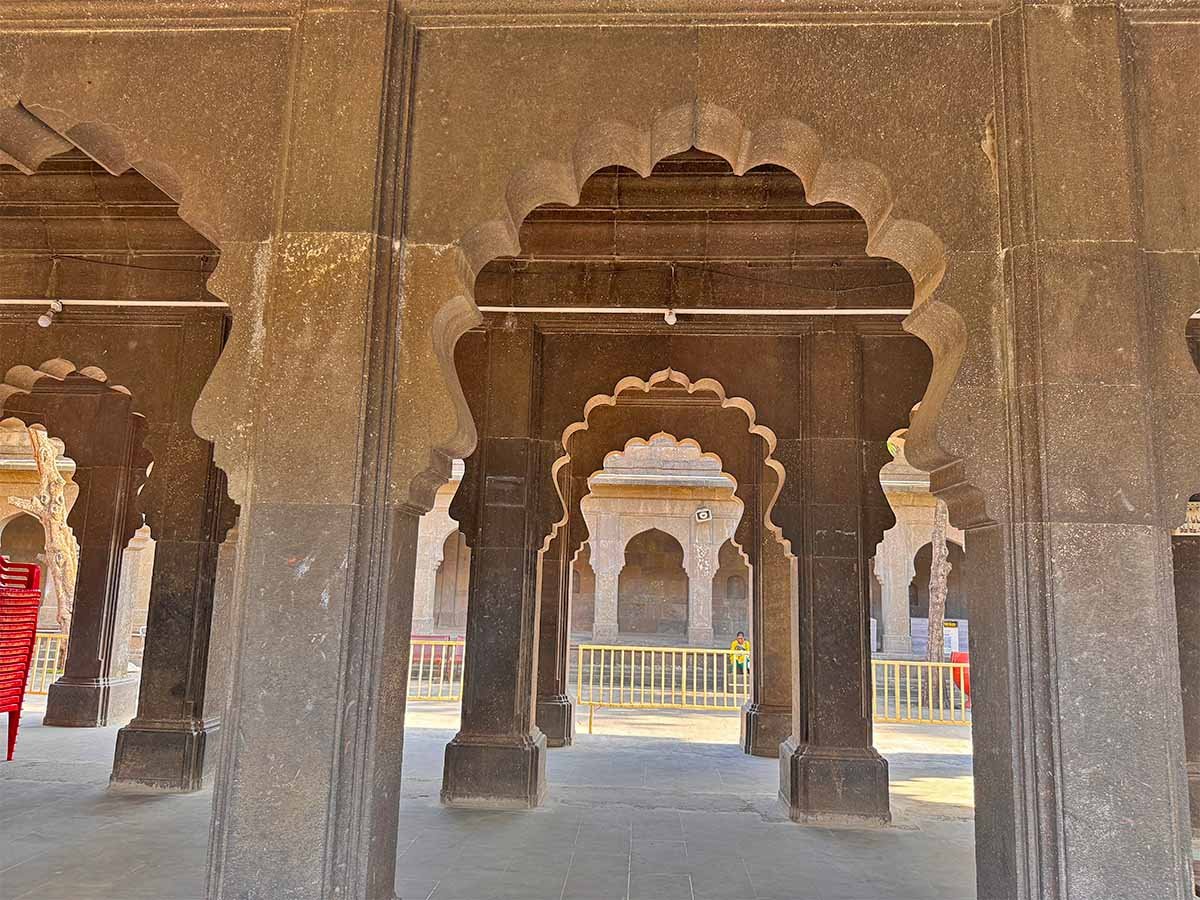
Shri Kalaram Temple Nashik, measuring 70 feet at its highest point – which is the gold plated Shikhar (spire) – is constructed entirely out of finely carved black basalt stone and stands on a perfectly square plinth, reflecting the precision and sanctity of Vedic architecture.
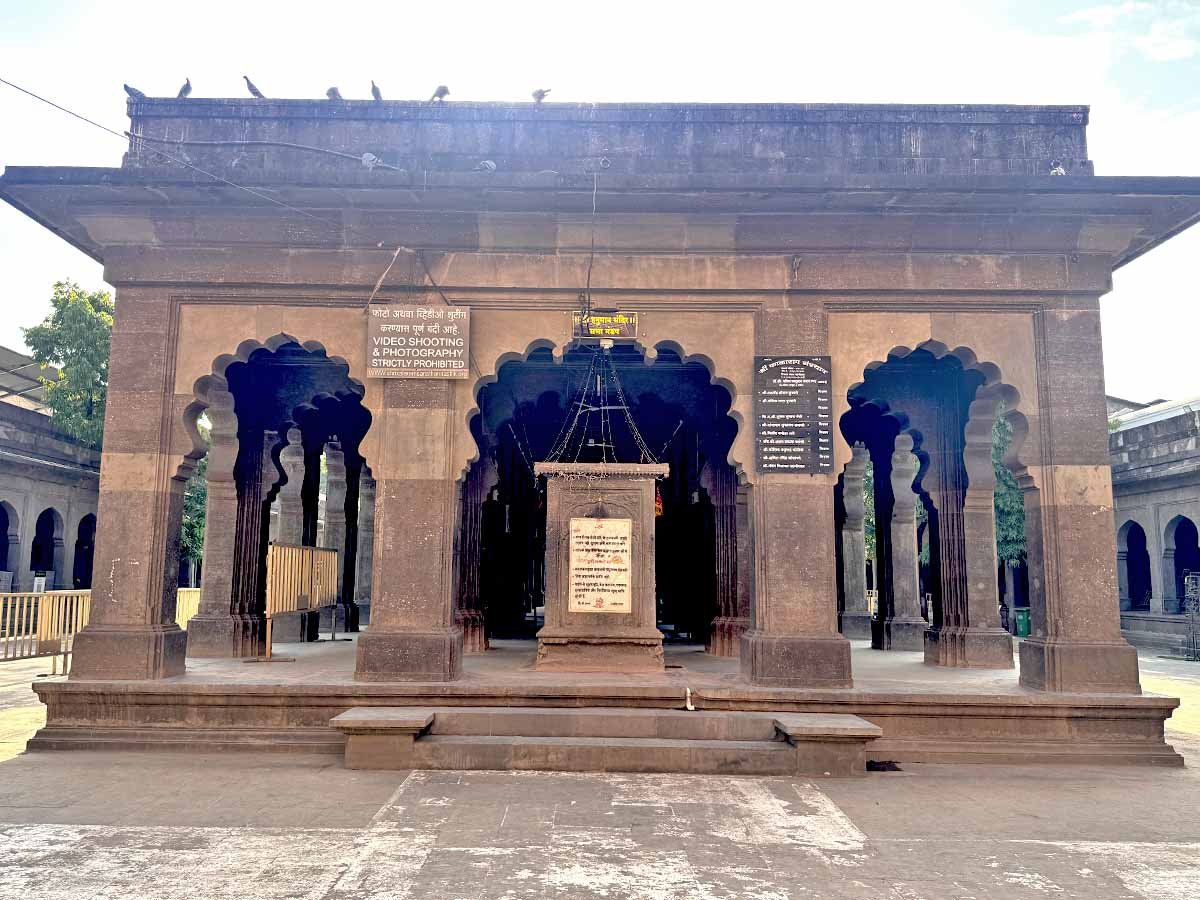
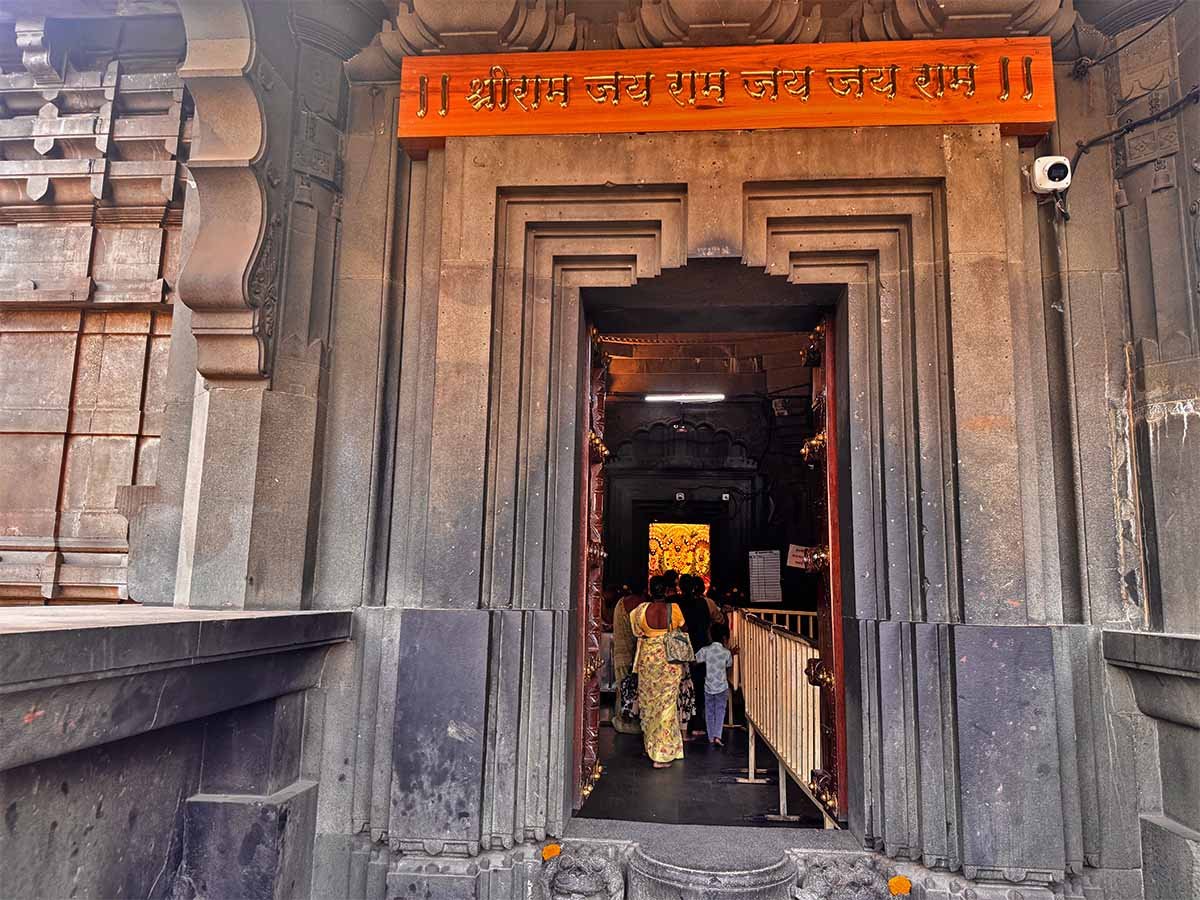
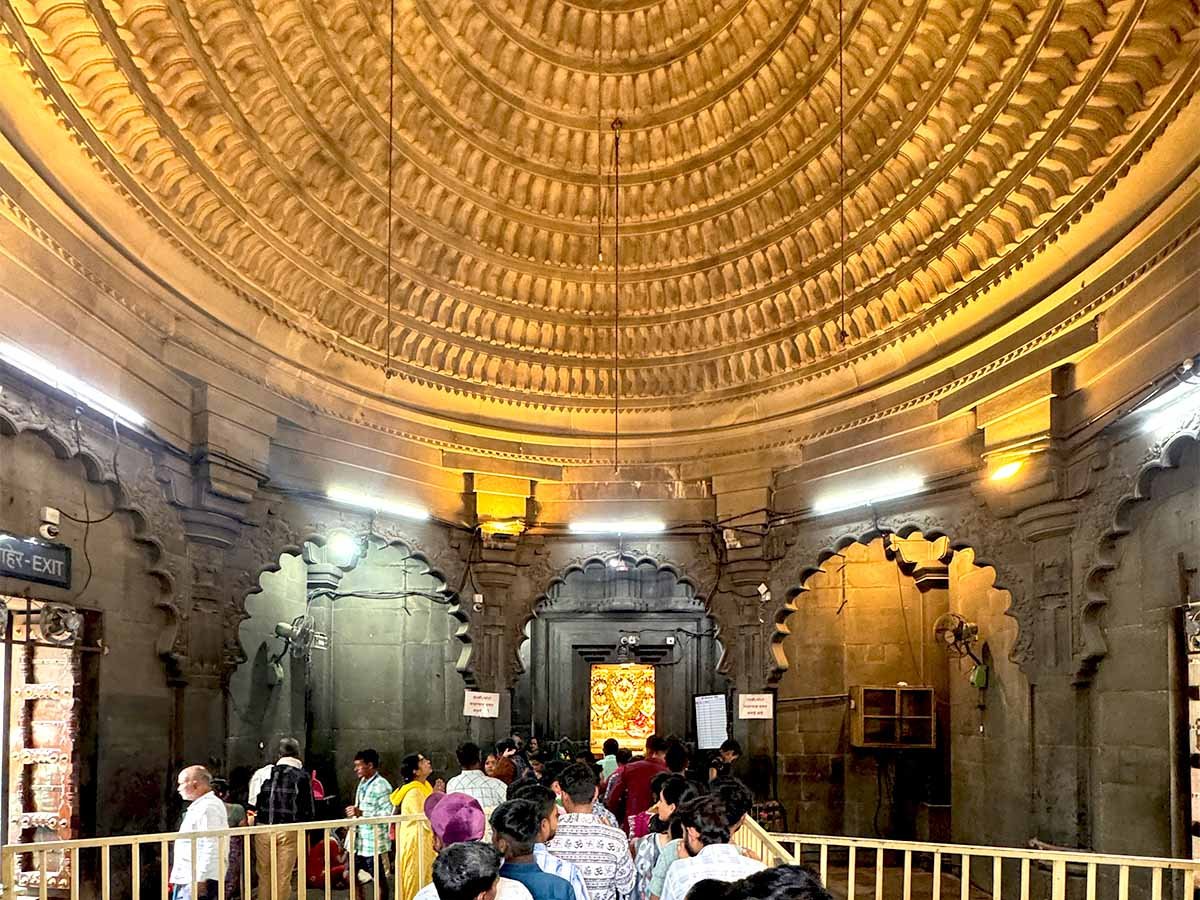
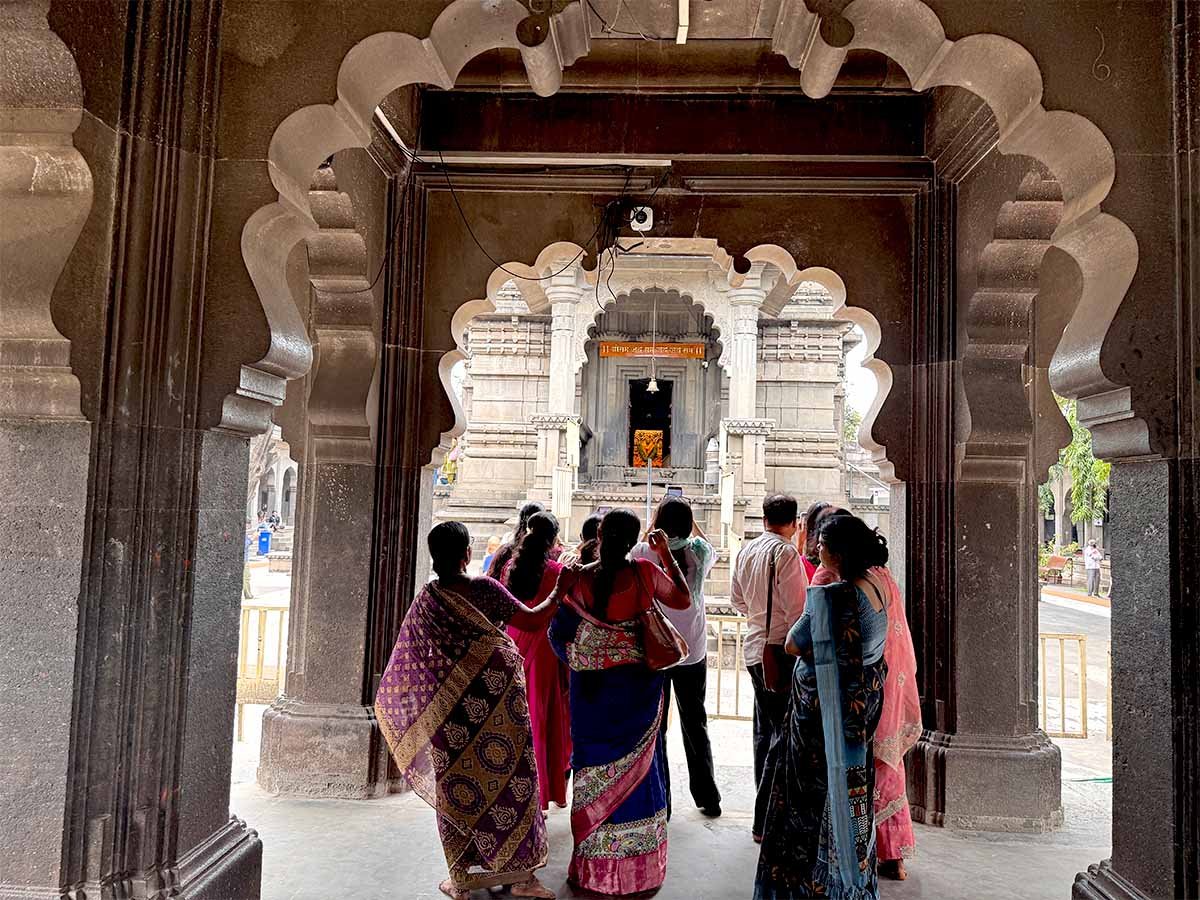
As soon as we enter the temple premise through the main entrance, we come across the beautiful Sabha Mandap which is the venue for daily bhajans and religious discourses.
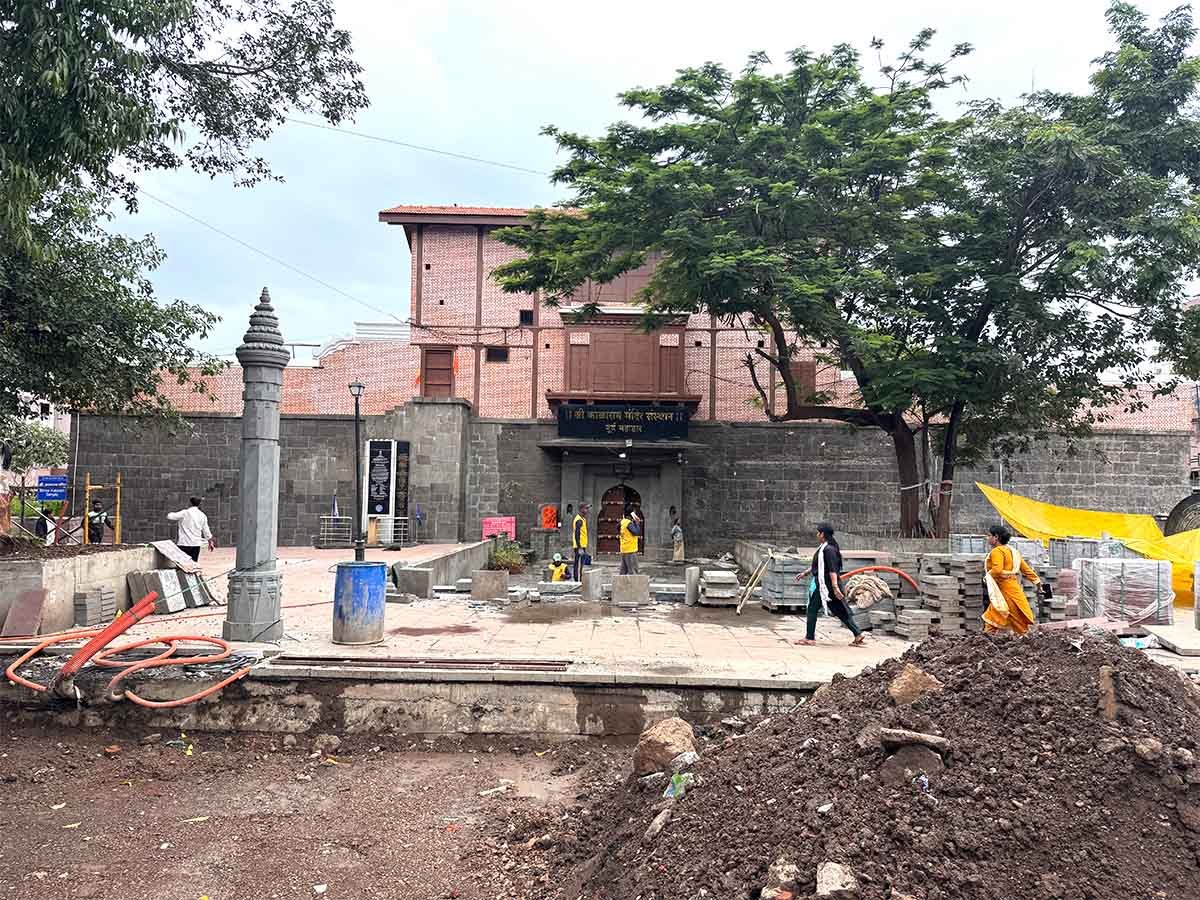
Note: As of writing this article in September 2026, the main entrance is temporarily closed due to the civic works going on in preparation of the Nashik Simhastha Kumbh Mela 2027. Two side entrances to the temple remain open throughout the day.
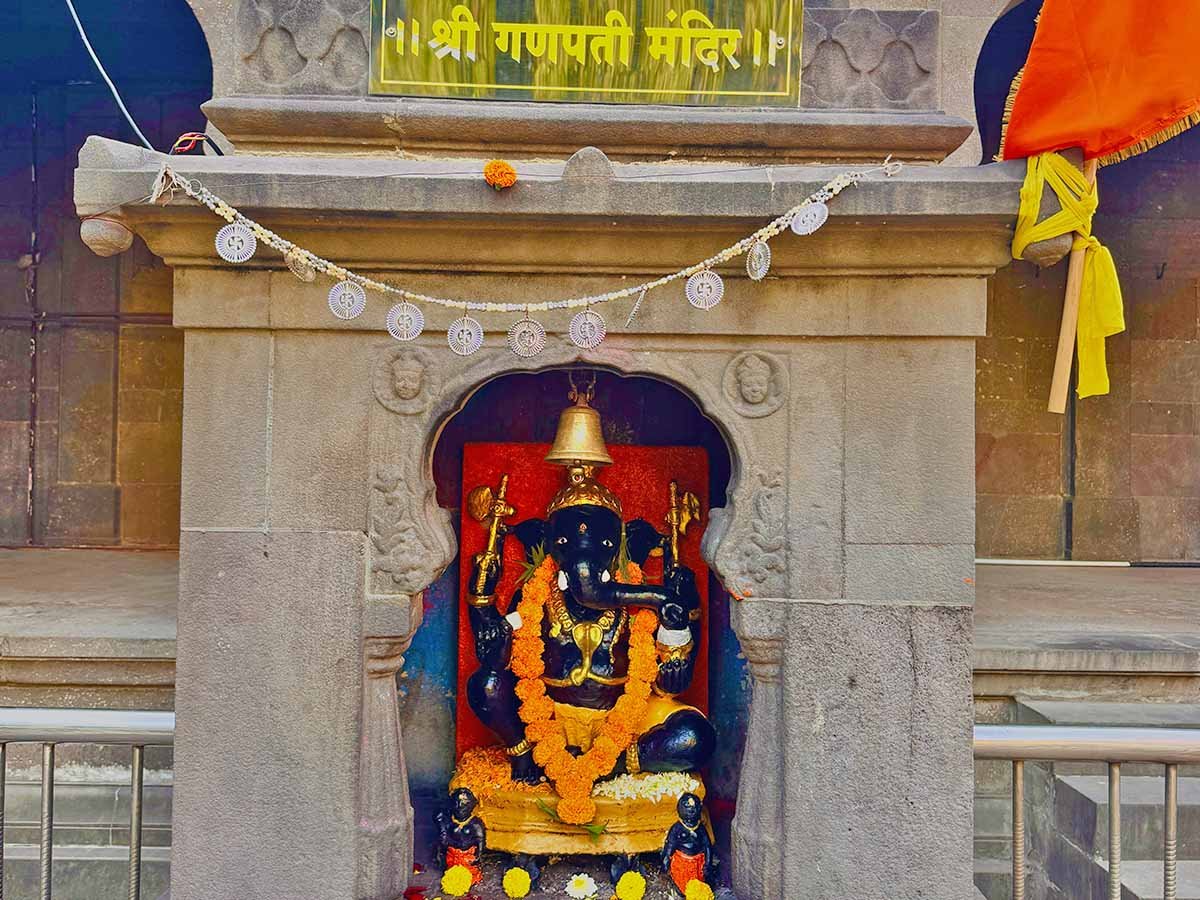
The Mandap houses a small shrine of Hanumanji whose gaze is fixed at the feet of Shriram’s idol in the main temple. The Sabha Mandap includes 40 pillars which correspond to the 40 chaupais (verses) of the Hanuman Chalisa.
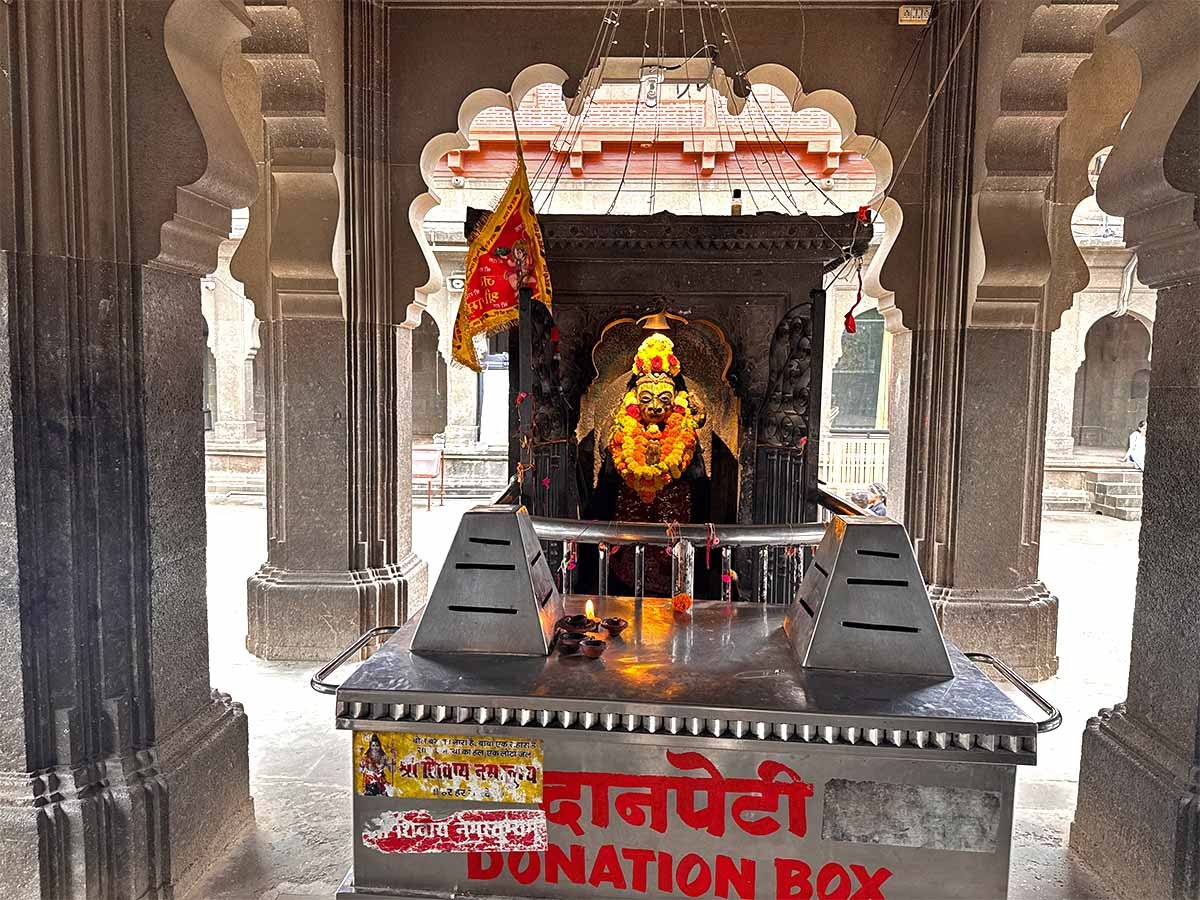
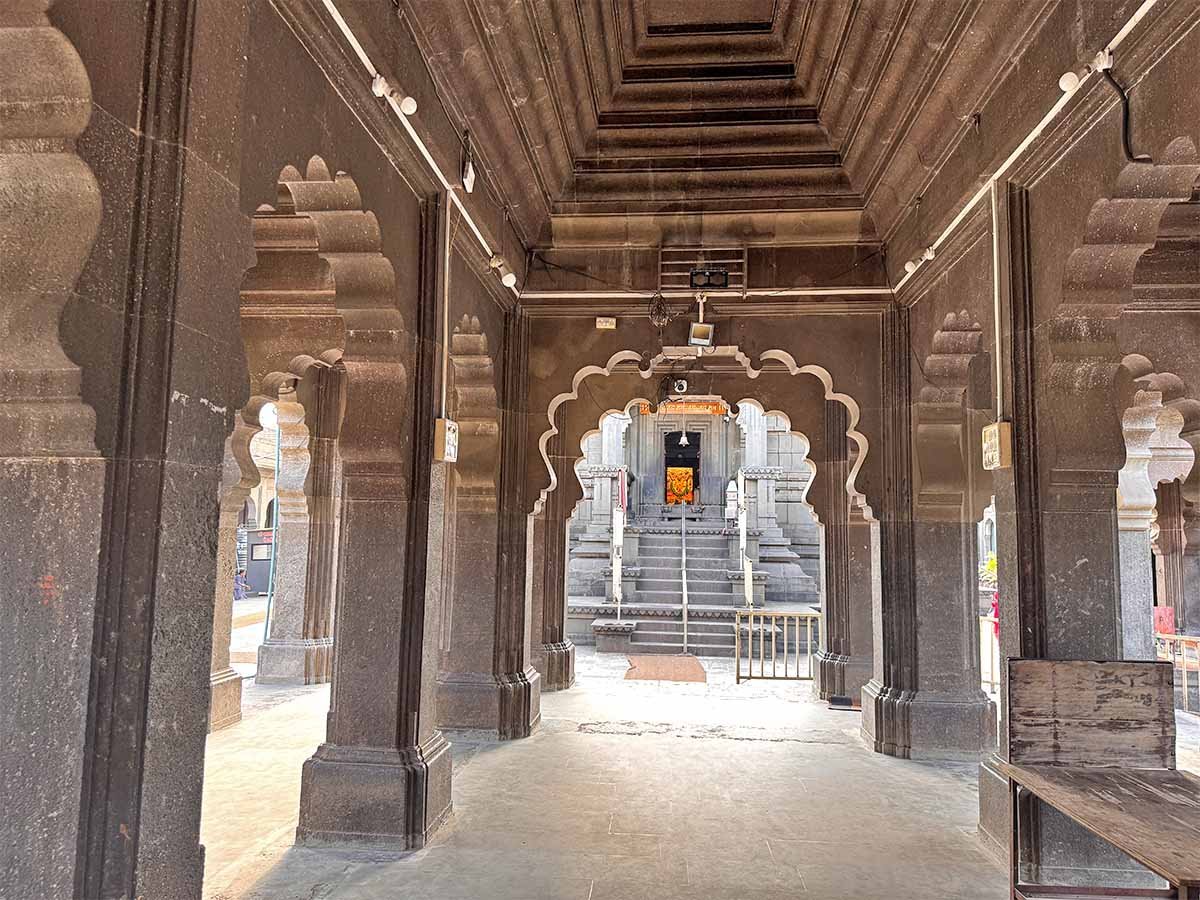
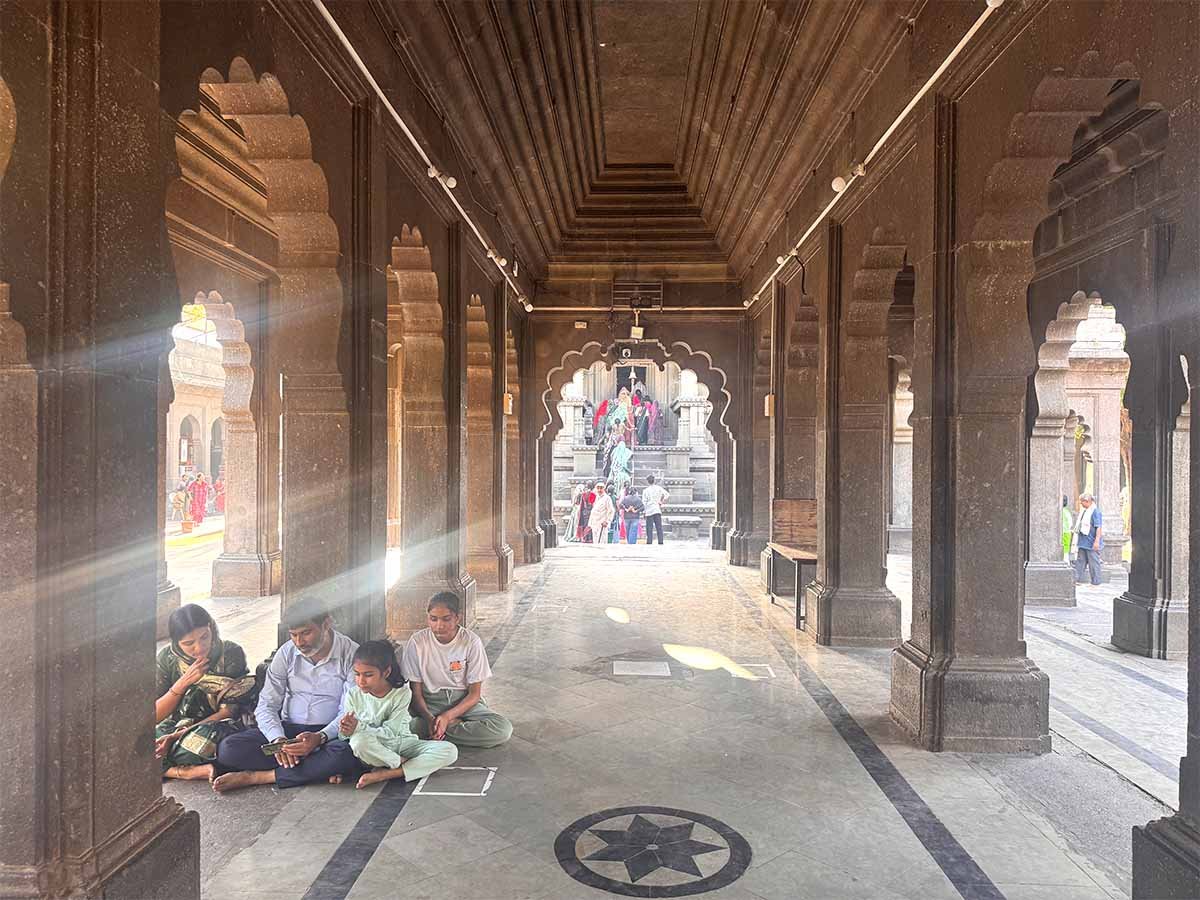
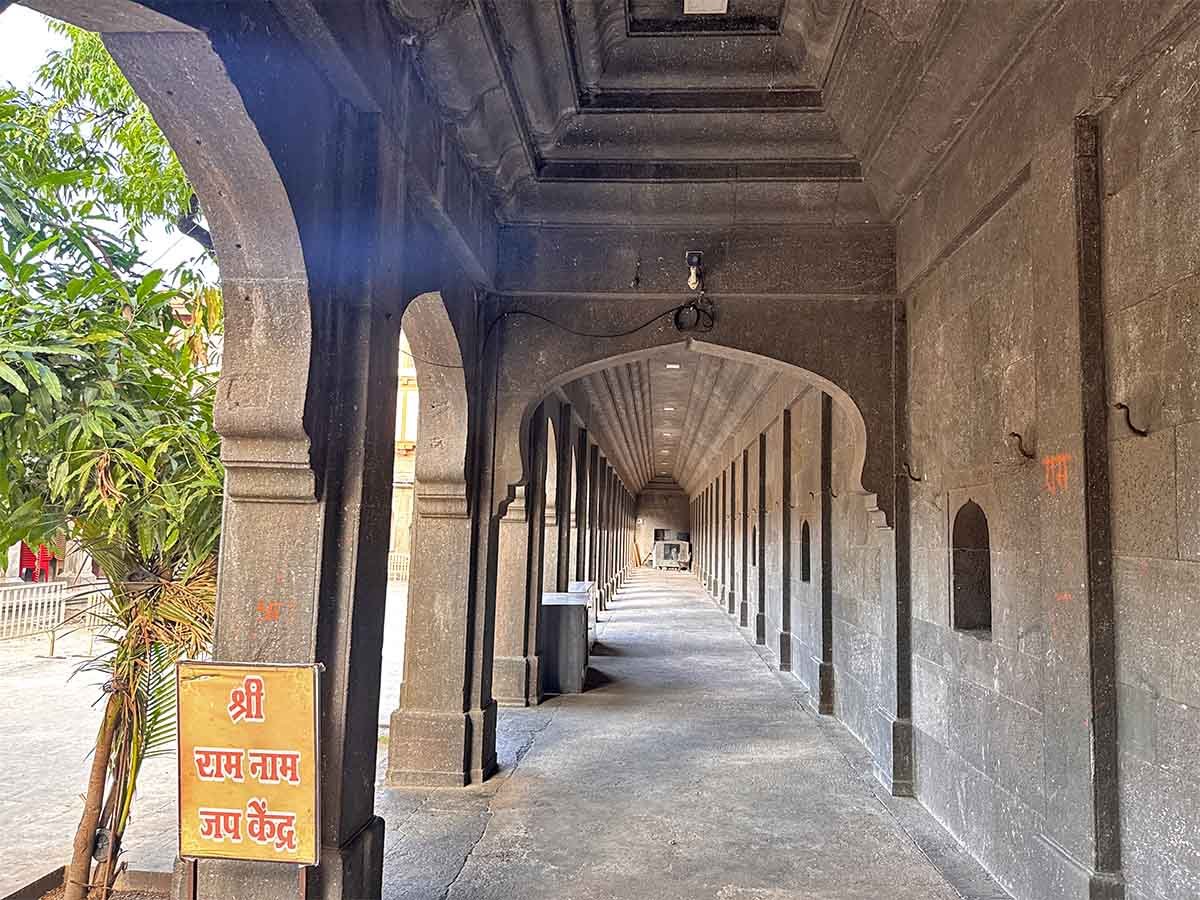
Surrounding the temple on all four sides are 6 to 8-foot-wide sheltered corridors, thoughtfully designed to provide space for pilgrims to rest, meditate, or take shelter – reinforcing the temple’s role not just as a site of worship but as a true dharma sthala.
One of the most spiritually significant elements of the structure is its 96 intricately carved pillars, which local tradition associates with the 84 lakh (8.4 million) yonis or life forms every soul is believed to pass through before attaining human birth. While the confirmed count on-site is 96 rather than 84, this popular association remains widely held among devotees and continues to carry symbolic weight, regardless of the numeric discrepancy.
To reach the Garbha Griha (sanctum sanctorum), devotees must ascend 14 stone steps, representing the 14 years of exile endured by Mata Sita and Shriram – a reminder of the trials they faced before the eventual restoration of dharma through Ram Rajya.
Every element of the temple’s design is infused with meaning, making a visit to Kalaram Temple Nashik a deeply symbolic and reflective experience.
Shri Kalaram Temple: Tips for Visitors
- Dress Code: Modest, traditional wear is ideal
- Footwear: Leave outside the temple premises
- Parking: Available nearby, but crowded on festival days
- Queue System: Queues during major festivals
- Phones/Cameras: Avoid photography inside the sanctum
- Accessibility: Elderly-friendly with support from temple staff
Best Time to Visit Kalaram Mandir
- Chaitra Navratri (March-April): Peak celebrations and best ambiance
- Shardiya Navratri (Sep-Oct): Celebrated with devotion
- Winter Season (Nov-Feb): Pleasant weather for relaxed darshan
- Early mornings or evening aartis are best for peaceful darshan
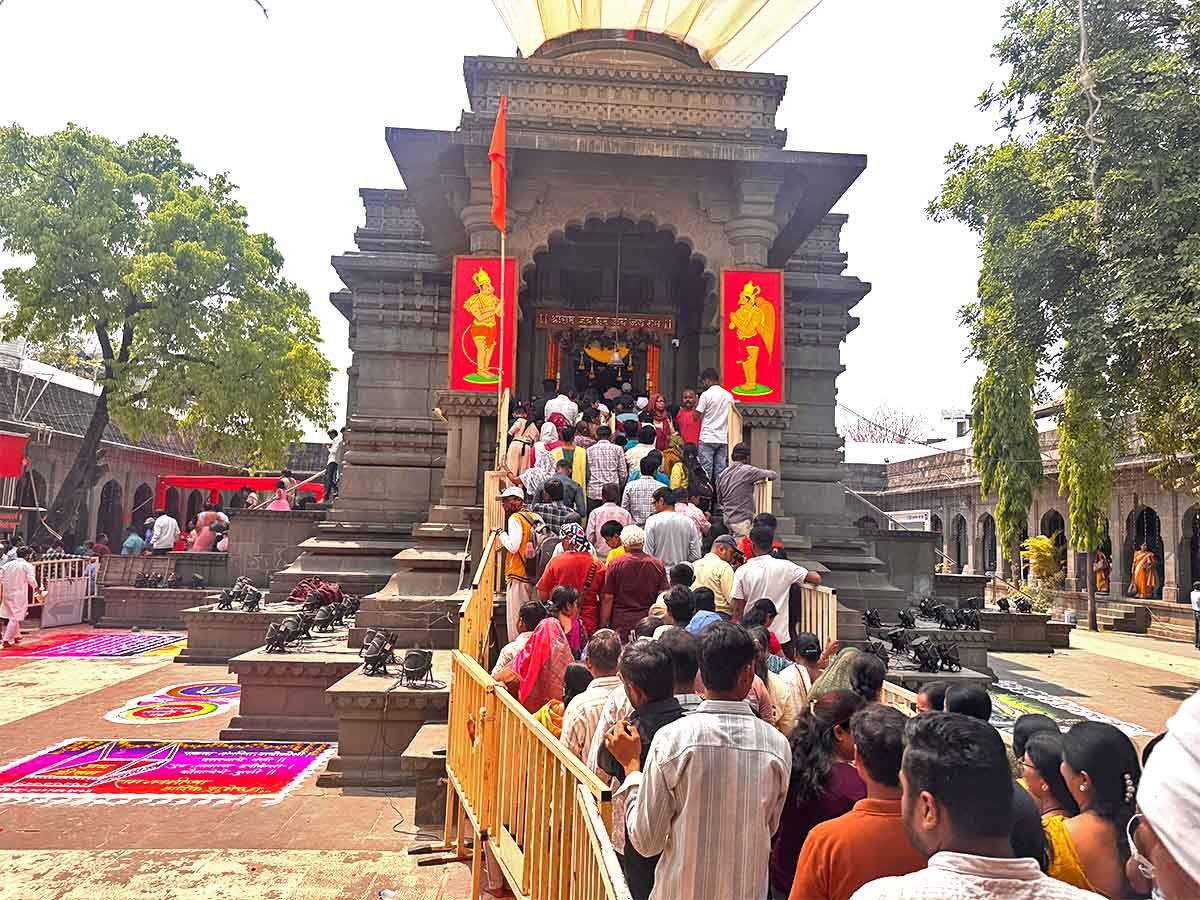
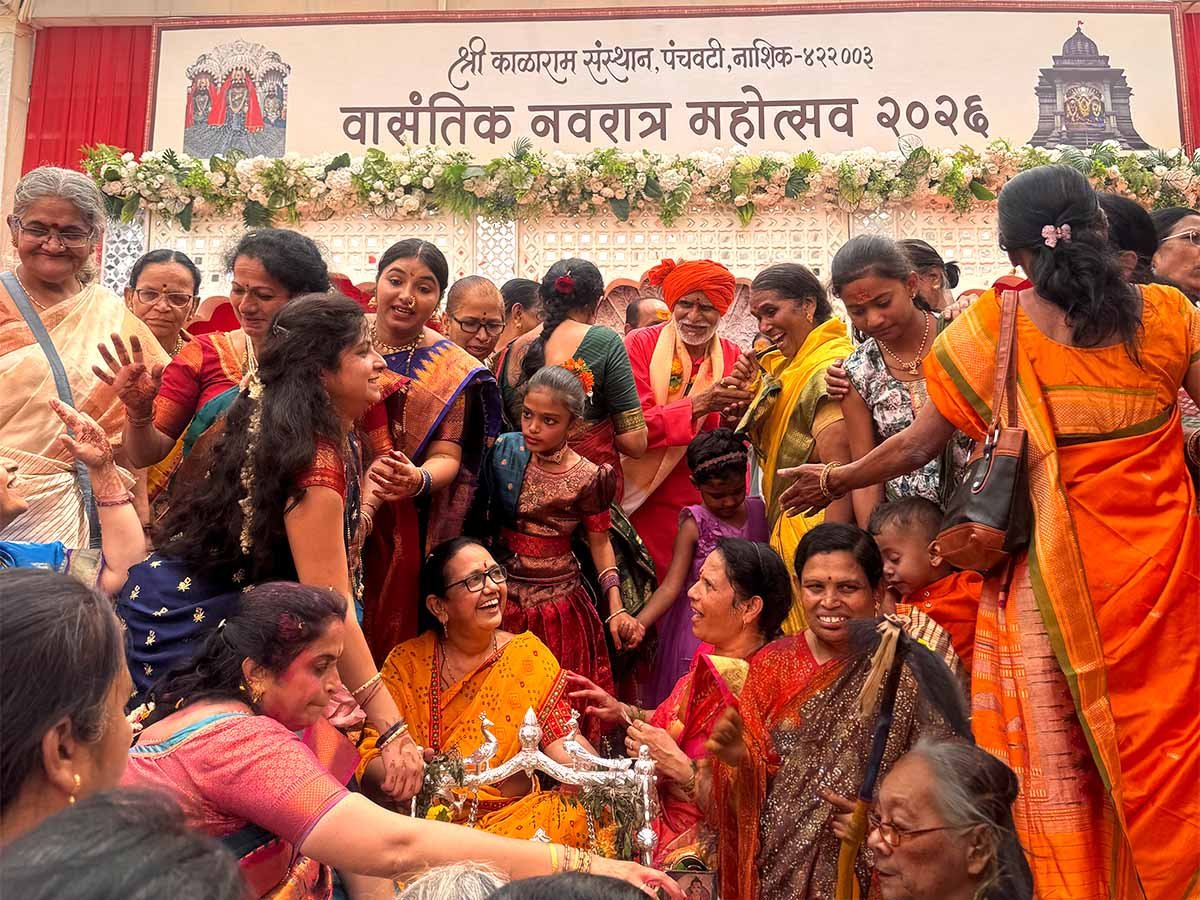
Vasantik Navratri Mahotsav – Spring Festival heralding the birth of Shriram
The Chaitra Vasantik Navratri Mahotsav held in March-April is one of the most spiritually vibrant times at Kalaram Mandir Nashik. It corresponds with the first nine days of the Hindu New Year, starting with Gudi Padwa and culminating with the birth of Shriram on Ram Navami.
On the eleventh day of Chaitra month (Ekadashi), the highly anticipated Shriram Rath Yatra winds through the old settlements of Panchavati, drawing thousands of local devotees who line the narrow lanes to witness the procession.
Technically falling just after the nine days of Navratri proper, in local tradition and lived practice, the Rath Yatra is still considered part of the Vasantik Navratri Mahotsav – its natural and popular closing chapter.
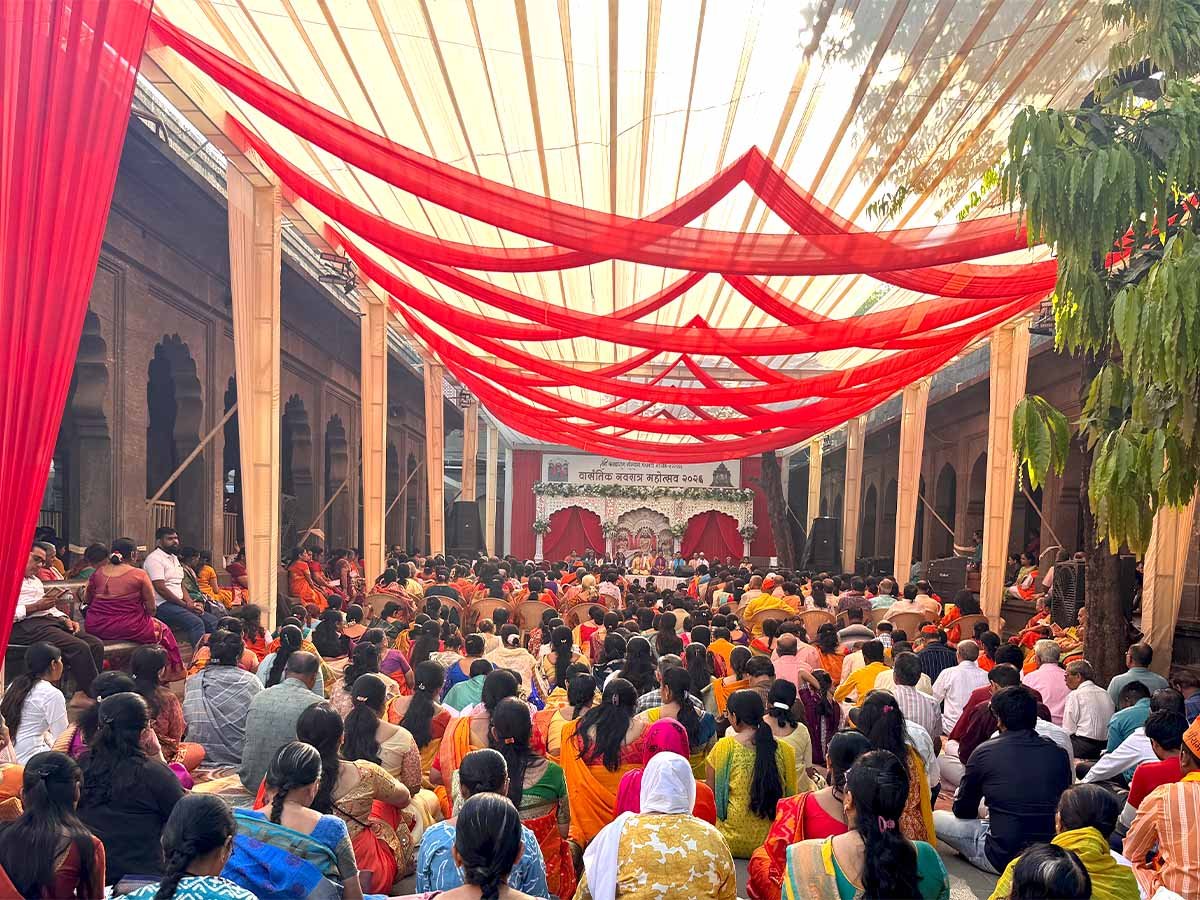
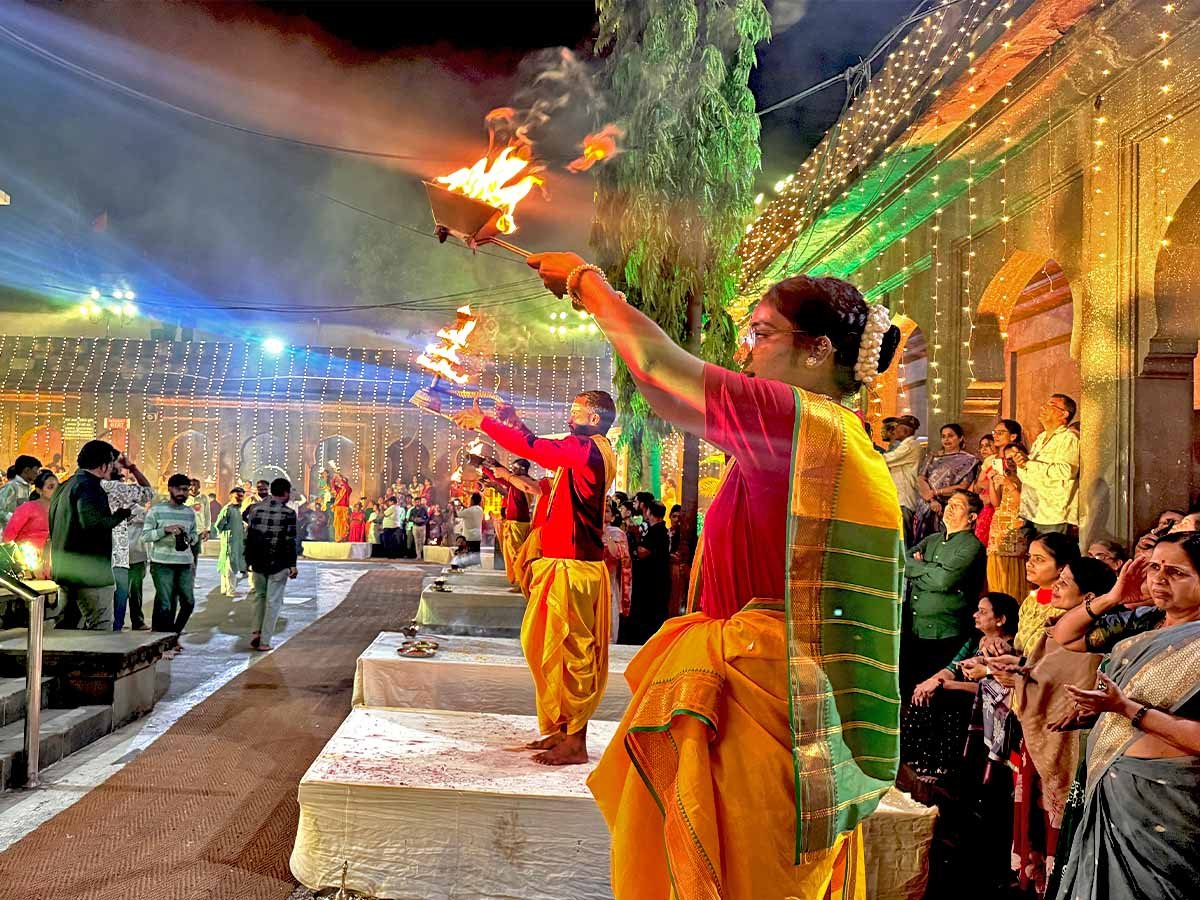
Festival Highlights:
- Daily Bhajans and Kirtans by renowned artists
- Indian classical music and dance performances in the evenings
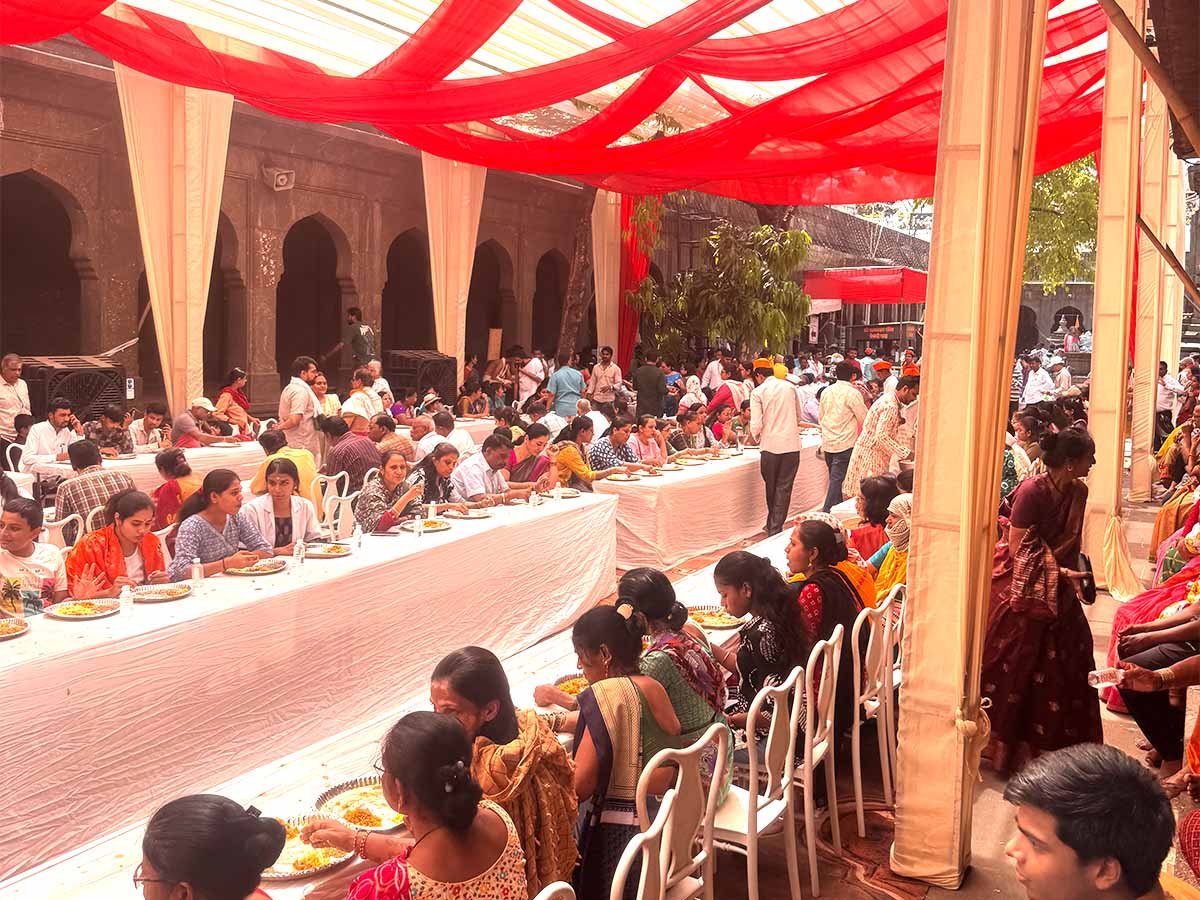
- Saptami Mahaprasad: a grand food distribution attended by thousands
- Ram Janmotsav on Navami: chanting, and rituals celebrating the birth of Shriram
- Religious discourses on the Ramayana and Sanatan Dharma
Having personally attended the event for three consecutive years, I can say that the Vasantik Navratri Mahotsav is a culturally satisfying and reassuring experience.
A Deeper Meaning Behind the Name “Kalaram”
While most believe that the name Kalaram Mandir refers merely to the black stone idol, a far deeper interpretation reveals Lord Ram’s cosmic role.
According to tradition and regional lore, during his exile at Chitrakoot, Shriram learned from sages and devotees about the anarchy, violence, and fear spreading across Central India – especially the Dandakaranya forest.
This region, now part of central India, was tormented by rakshasa forces aligned with Ravana. Shriram decided to enter into this troubled territory and eventually reached Panchavati – the very site of the present Kalaram Temple Nashik.
This pattern of adharmic rule through brute force would recur again later in Rama’s exile, when the vanara king Bali’s tyranny over Kishkindha met a similar reckoning – but it was here, in Dandakaranya, that Rama’s transformation into the destroyer first began.
Here, he manifested not just as a compassionate avatar, but as Kaal-Ram, the divine Kaal (time/death) destined to destroy Adharma. Kaal-Ram doesn’t just signify the black colour of the idol; it symbolises the arrival of righteous force to end tyranny.
Thus, the name Kalaram is not simply descriptive of the colour of the idol – it is profoundly symbolic of Ram’s role as the Kaal (destroyer) of evil, the divine avatar who ends fear, restores balance, and upholds Sanatana Dharma.
As detailed in the Aranya Kanda Chapter 34 of the Valmiki Ramayana, Shurpanakha herself reports to Ravana that the fourteen-thousand-strong army, including Khara and Dushana, was annihilated in “ardhādhika muhūrtena” – roughly ninety minutes – a scale and speed of destruction unlike anything else Shriram does in the epic.
For the full account of this battle and Mata Sita’s refuge during it, see our Sita Gufa article.
Kalaram Mandir Nashik Temple Entry Satyagraha 1930
Beyond its spiritual significance, Kalaram Mandir holds an important place in India’s social reform history. On 2 March 1930, Dr. B.R. Ambedkar led the Kalaram Mandir Nashik Temple Entry Satyagraha, a sustained, non-violent campaign demanding temple entry for Dalits, who were barred from the premises under the caste restrictions of the time.
The movement drew thousands of participants and continued for several years, becoming one of the defining temple-entry struggles of India’s independence era alongside the Mahad Satyagraha.
A pivotal moment came on Ram Navami, 9 April 1930, when the annual chariot procession became the site of direct confrontation between satyagrahis and opponents of temple entry – remembered as a turning point in the movement’s visibility nationally.
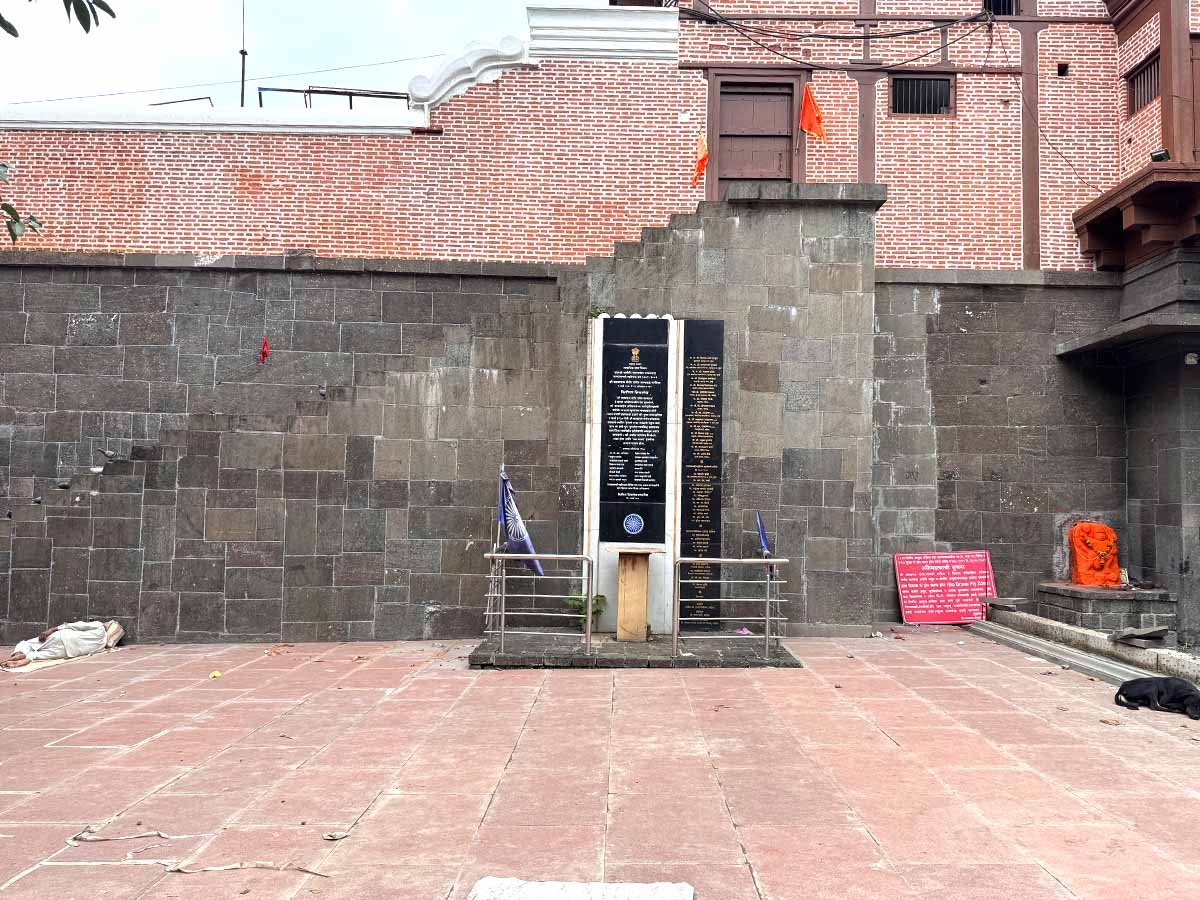
The campaign continued until 1935, and remains a significant chapter in the broader history of India’s social reform movements. A memorial plaque now stands near the temple’s main entrance, commemorating the Satyagraha and those who took part in it.
Shri Kalaram Temple Nashik: Nearby Attractions
Pilgrims often combine their visit to Kalaram Temple with these spiritually significant sites. All are located close to each other, making Panchavati a complete Ramayana trail in Nashik.
- Sita Gufa – Mata Sita used to worship Mahadev inside this cave
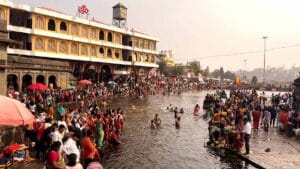
- Ramkund – Shriram used to bathe here on the banks of the Godavari
- Kapaleshwar Mandir – A major Shiva temple in Nashik
- Tapovan – ancient forest and the site of Shurpanakha’s encounter with Lakshman
Kalaram Temple Nashik: History and Legacy
More than two centuries after Sardar Rangrao Odhekar’s dream first brought the black idols of Shriram, Sita, and Lakshman to the temple site in Panchavati, Kalaram Mandir remains a living part of Nashik’s daily life – not a monument frozen in history, but a temple where the Kakad Aarti still opens every morning at 5:30, where thousands still gather each Chaitra for the Vasantik Navratri Mahotsav, and where the memorial near the entrance still quietly holds the memory of a struggle for human dignity fought on this same ground.
Whether you come as a pilgrim, a history enthusiast, or simply someone drawn to Panchavati’s layered past, Kalaram Mandir offers something rare: a single site where devotion, architecture, mythology, and social history sit side by side, each still visibly, tangibly present.
Before you plan your visit, here are answers to some of the questions visitors ask most often.
|| जय मा सीता जय श्रीराम ||
Kalaram Mandir Nashik FAQs
Why is it called Kalaram Mandir?
The name refers to the temple’s black stone idol of Shriram – “Kaal” meaning black, though a deeper reading connects it to Shriram’s role as Kaal (destroyer) of the adharmic forces that once terrorized Dandakaranya, as explored above.
What are the Kalaram Mandir timings?
The temple remains open daily from 6:00 AM to 10:00 PM, with no midday closure. See the full Daily Aarti & Pooja Schedule above for specific ritual timings.
Where is Kalaram Mandir located?
Kalaram Mandir is located in Panchavati, Nashik 422003 on the northern bank of the Godavari River, within Nashik city in the state of Maharashtra, India.
How far is Kalaram Mandir from Ramkund and Sita Gufa?
Sita Gufa is roughly a 1-minute walk away, and Ramkund is about a 1-minute drive. See the full Distance from Major Landmarks table above for other nearby points.
How do I reach Kalaram Mandir from Nashik Road Railway Station?
It’s approximately a 30-minute drive by cab or auto-rickshaw, and city buses too are available from outside the station.
How many pillars does Kalaram Mandir have?
The temple complex has 96 pillars along its four sides, plus 40 additional pillars within the independently standing Sabha Mandap. Popular tradition associates the pillar count with the 84 lakh yonis concept, though the confirmed count is 96.
What architectural style is Kalaram Mandir built in?
The temple follows the Hemadpanthi architectural style, constructed entirely from black basalt stone.
What was the Kalaram Mandir Satyagraha?
On 2 March 1930, Dr. B.R. Ambedkar led the Kalaram Mandir Satyagraha, a non-violent campaign demanding temple entry rights for Dalits, who were barred from the premises under the caste restrictions of the time. The campaign continued until 1935 and remains a significant chapter in India’s social reform history.
Is Goreram Temple part of Kalaram Mandir?
No, Goreram Temple is a separate, modest shrine a few steps away, identified by its signage as the Parnakuti – the leaf-hut dwelling site associated with Rama, Sita, and Lakshman’s exile in Panchavati.
Can we take photos inside the temple?
Photography is allowed in the courtyard but not inside the sanctum (garbhagriha) where the black idol resides.
When is the best time to visit Kalaram Mandir?
Early mornings or evening aarti times offer the most peaceful darshan. For festival ambiance, the Chaitra Vasantik Navratri Mahotsav (March-April) is the most vibrant time to visit.