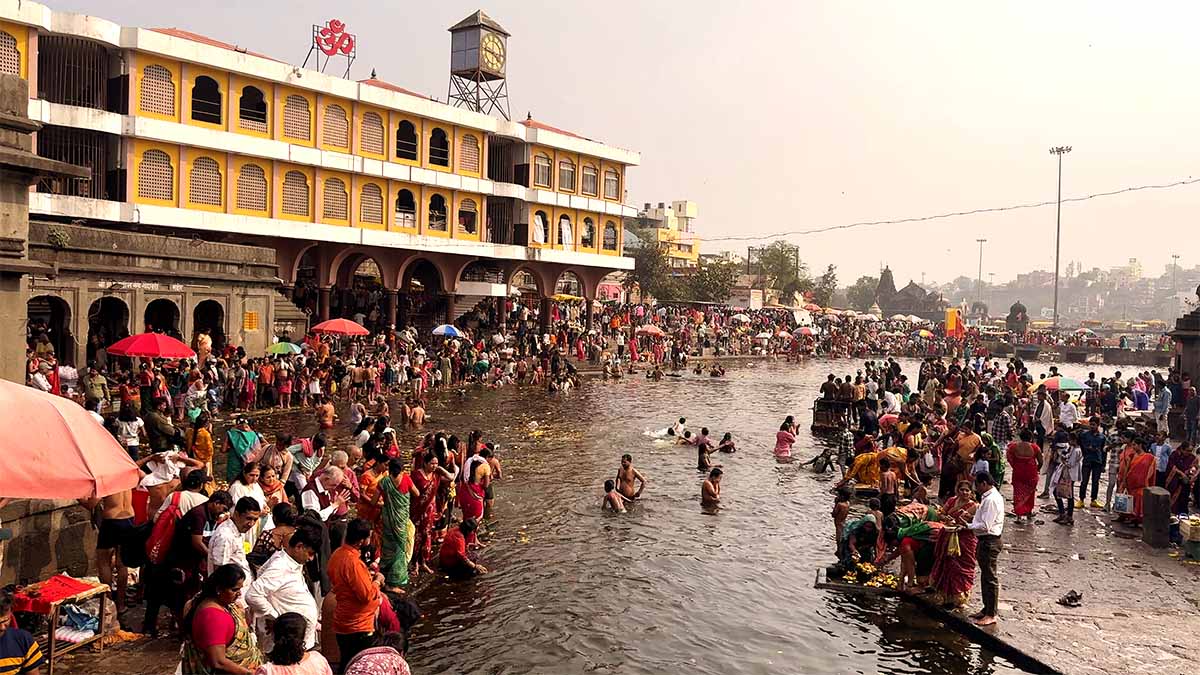
Ramkund Nashik is a sacred ghat on the banks of the Godavari River where Prabhu Shri Ram used to bathe while living in exile in the spiritually significant region of Panchavati during the Ramayana era or Treta Yuga.
Located in the ancient city of Nashik in Maharashtra, it has been revered for centuries by saints, pilgrims and devotees and is the most important Hindu religious destination visited daily by thousands of devotees from across the country and from abroad as well.
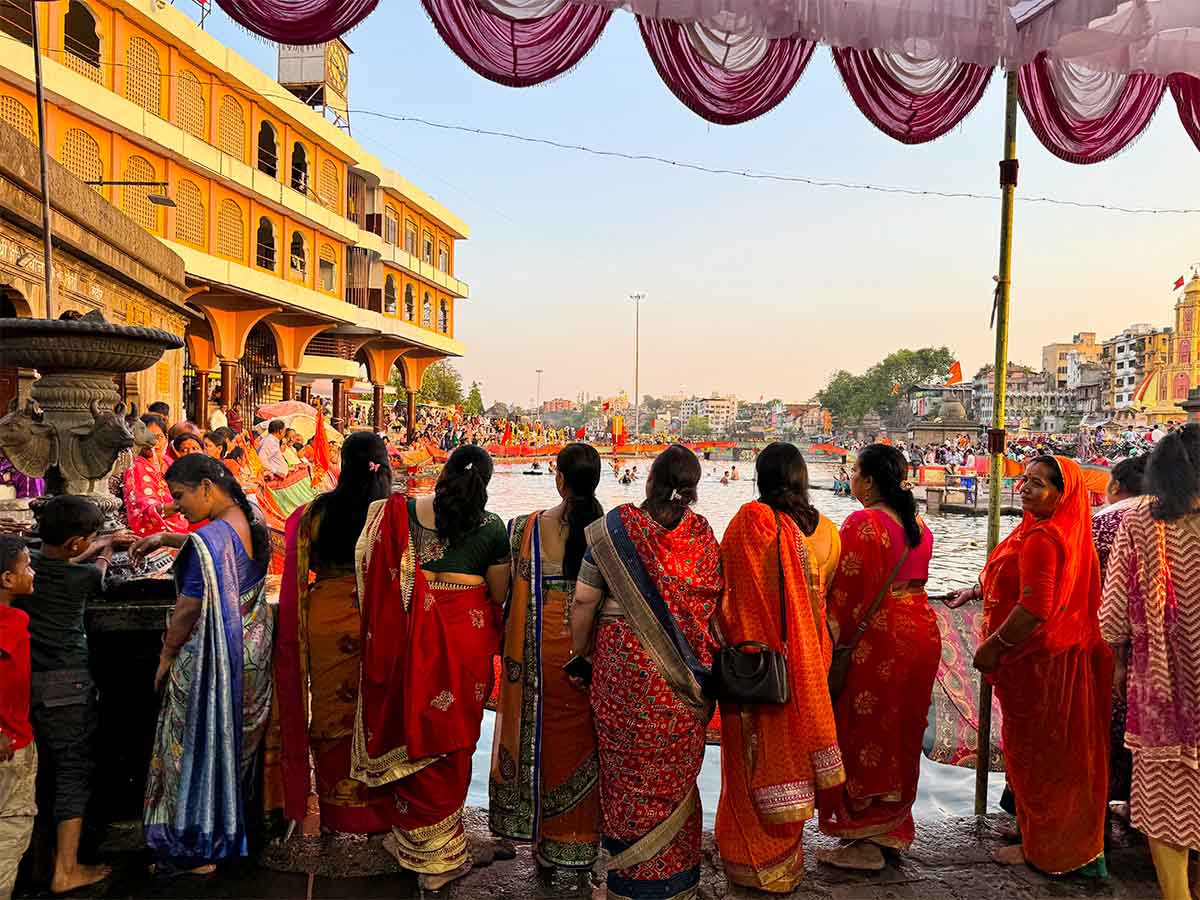
In this comprehensive guide, we explore Ramkund Nashik and its connection with Shriram and the Ramayana, its history and architecture, rituals performed, festivals celebrated, nearby temples and its enduring spiritual legacy.
If you are in Nashik for pilgrimage, Ramkund should be at the topmost position on your Places to Visit in Nashik and Things to do in Nashik lists.
Ramkund and the Ramayana
The origins of Ramkund date back to the Treta Yuga and are linked with the epic narrative of the Ramayana. During their fourteen-year exile, Prabhu Shri Ram, Mata Sita and Lakshman spent a significant part of their time in the sacred region of Panchavati on the banks of the Godavari.
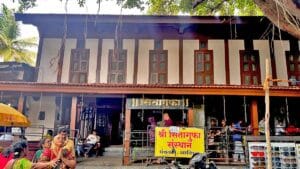
The name Panchavati literally means “a garden of five banyan trees” (Panch meaning five and Vati meaning garden). According to tradition, these sacred trees gave the region its name and they can still be seen standing strong near the Sita Gufa Temple, a 10-minutes walk from Ramkund.
Also read Sita Gufa Nashik: Sacred cave temple in Panchavati where Ma Sita used to worship during exile
It is also believed that Shri Ram performed the Varshik Tithi Shraddha of his father, King Dasharatha, on the banks of the Godavari here, an event that has contributed to the site’s immense religious significance for centuries.
Like Ramkund there are Sitakund and Lakshmankund, believed to be the bathing ghats of Mata Sita and Lakshman. The location of these three ghats with Sita kund on the left, Ramkund in the centre and Lakshmankund on the right – reflects the traditional depiction of the divine trio.
History, Construction and Architecture of Ramkund
During the Ramayana period, the spot where Prabhu Shri Ram used to bathe would indeed have been a natural riverbank of the Godavari. The stone ghat and rectangular kund seen today were constructed in the late 17th century to preserve the sacred site and make it more accessible to devotees.
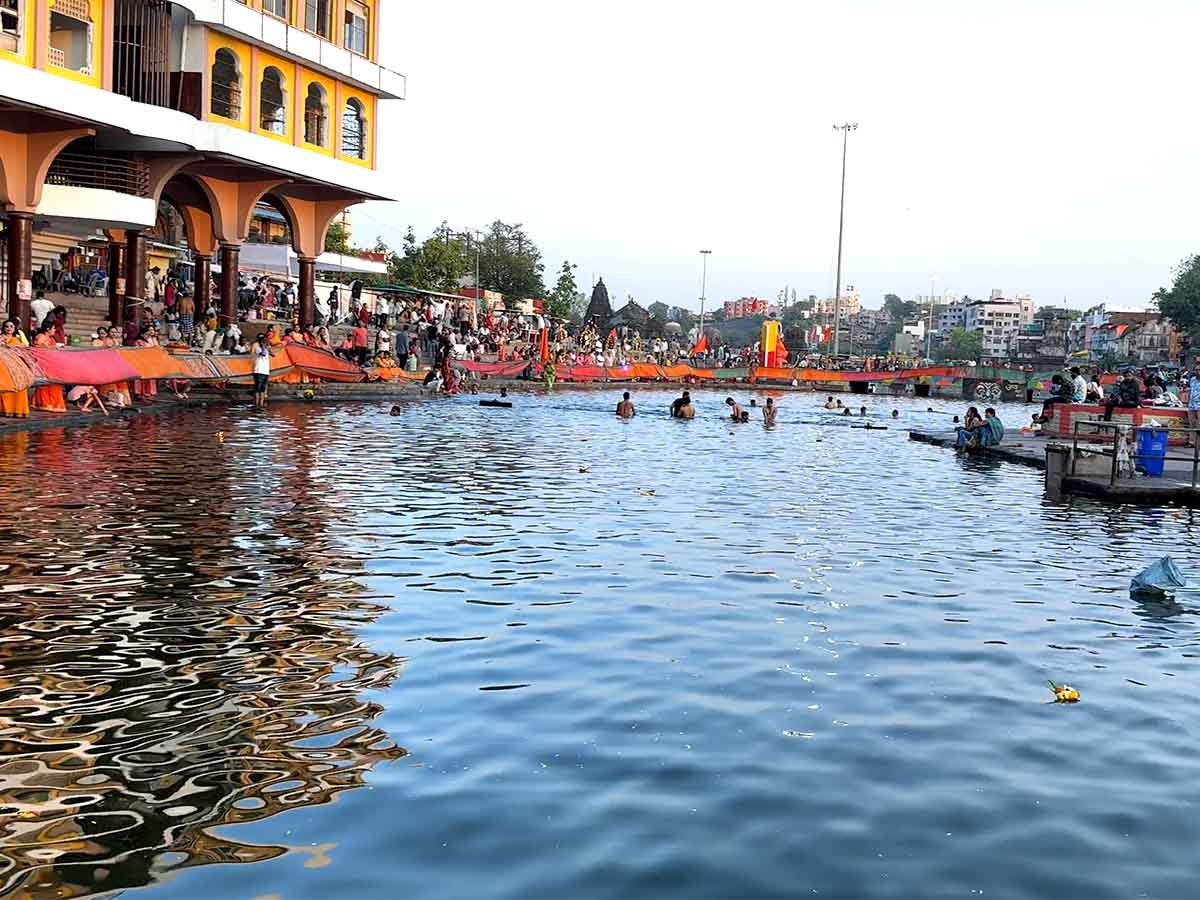
The present-day Ramkund, the rectangular stone tank measuring approximately 27 metres by 12 metres, with well-crafted masonry steps descending into the sacred waters of the Godavari River, was commissioned in 1696 by Sardar Chitrarao Khatavkar, a high official in the Maratha Empire.
The site is revered as the exact location where Lord Rama bathed during his exile, as documented by the Nashik District Government Website.
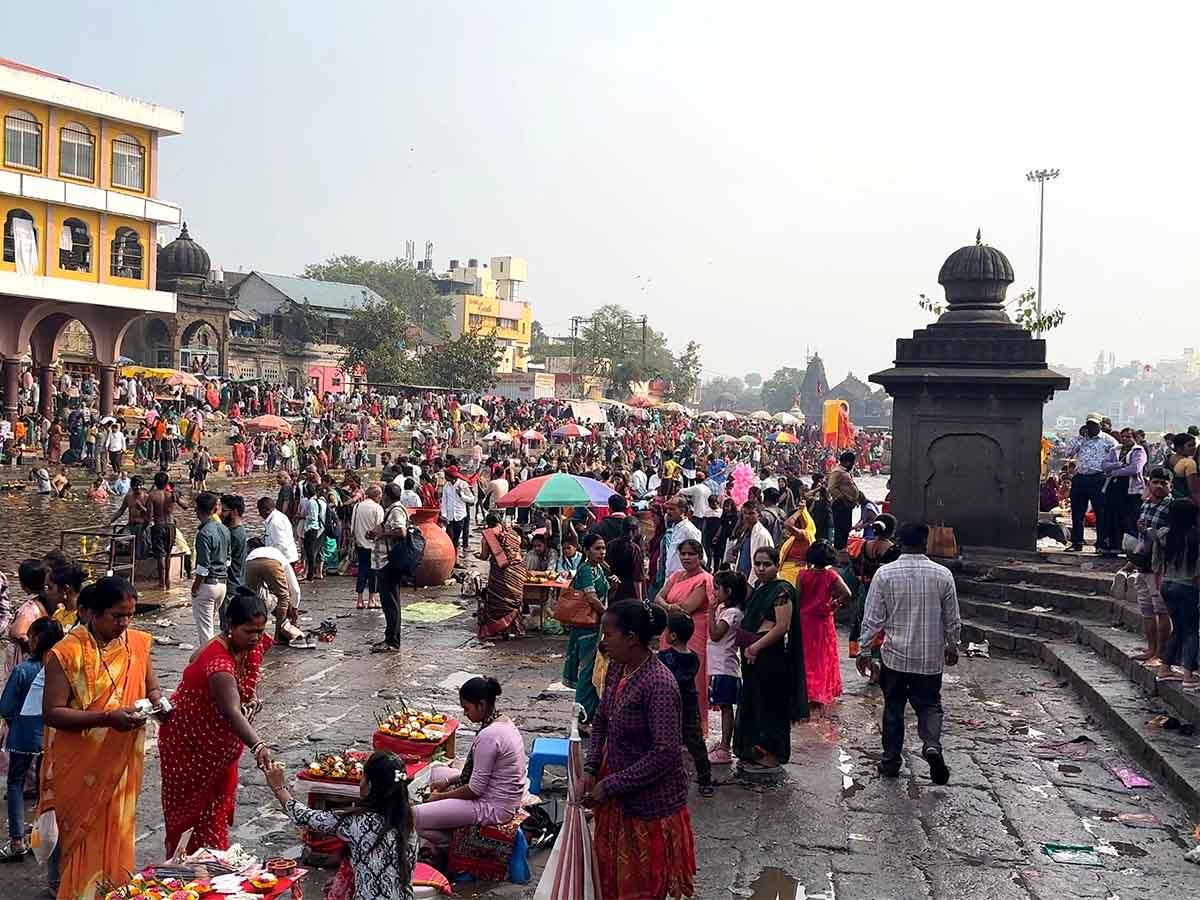
Designed to facilitate ritual bathing and religious ceremonies for devotees, it remains one of the finest examples of traditional riverfront architecture in Panchavati.
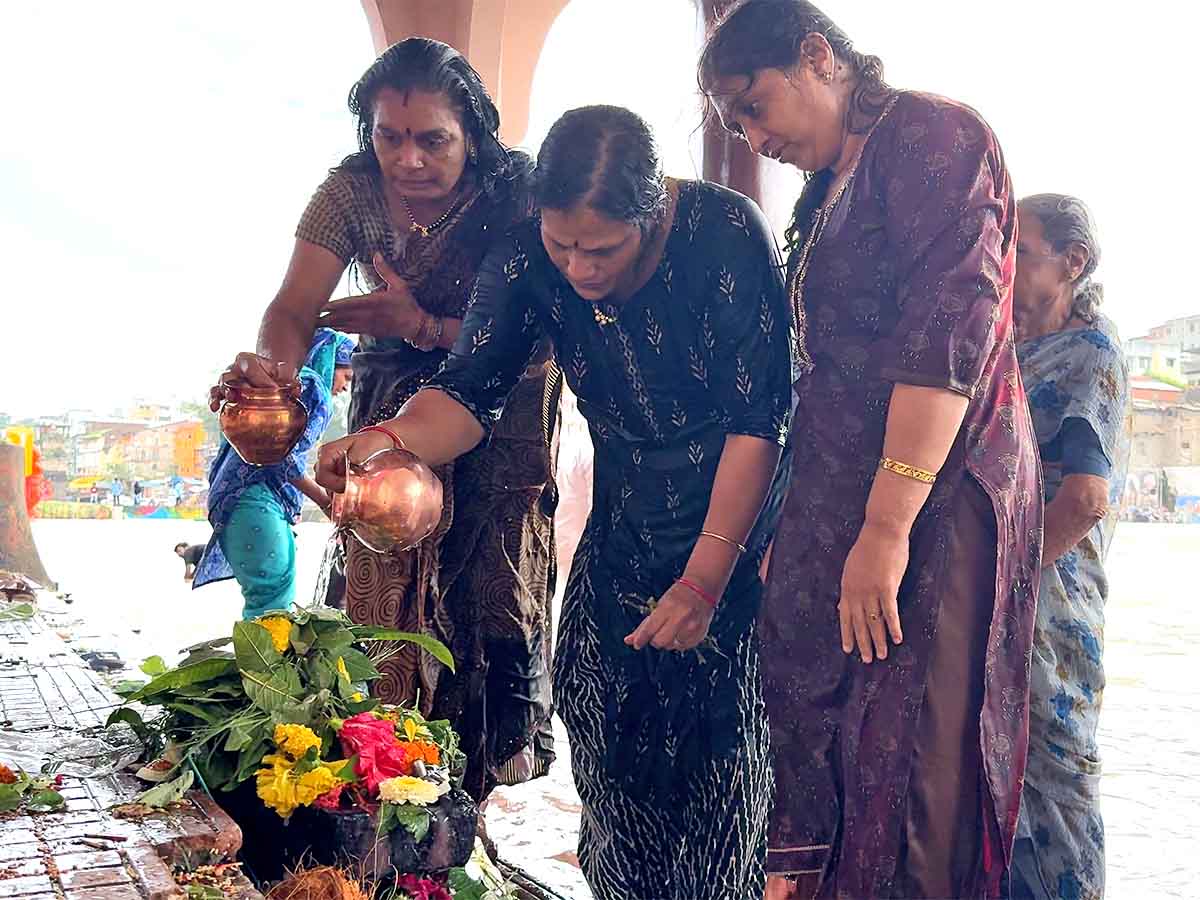
During the 18th century, the Ramkund precinct received further patronage under the Peshwa era, with Maharani Ahilyabai Holkar who carried out the restoration of the ghat and also constructed several beautiful temples and more ghats along the banks of the Godavari.
Much of the architectural character that visitors experience today reflects these efforts to preserve Nashik’s sacred heritage.
The Sacred Godavari River
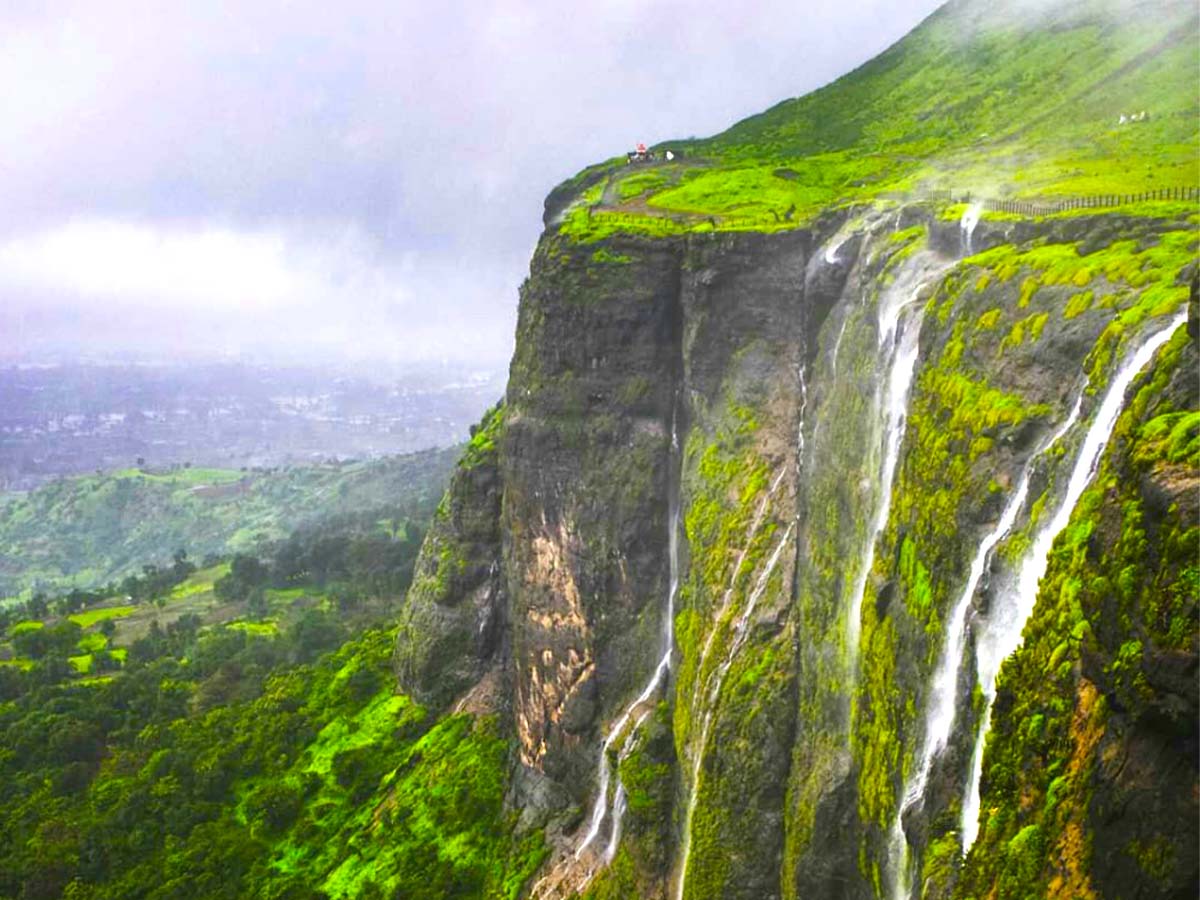
Flowing gently past the stone steps of Ramkund is the Godavari, revered across Bharat as the Dakshin Ganga or the Ganga of the South. Rising from Brahmagiri Parvat near Trimbakeshwar, about 30kms from Nashik, the river is regarded as a living embodiment of divine grace and purification.
According to sacred tradition, the great sage Rishi Gautam and his wife Devi Ahilya performed intense tapasya on Brahmagiri for the welfare of humanity.
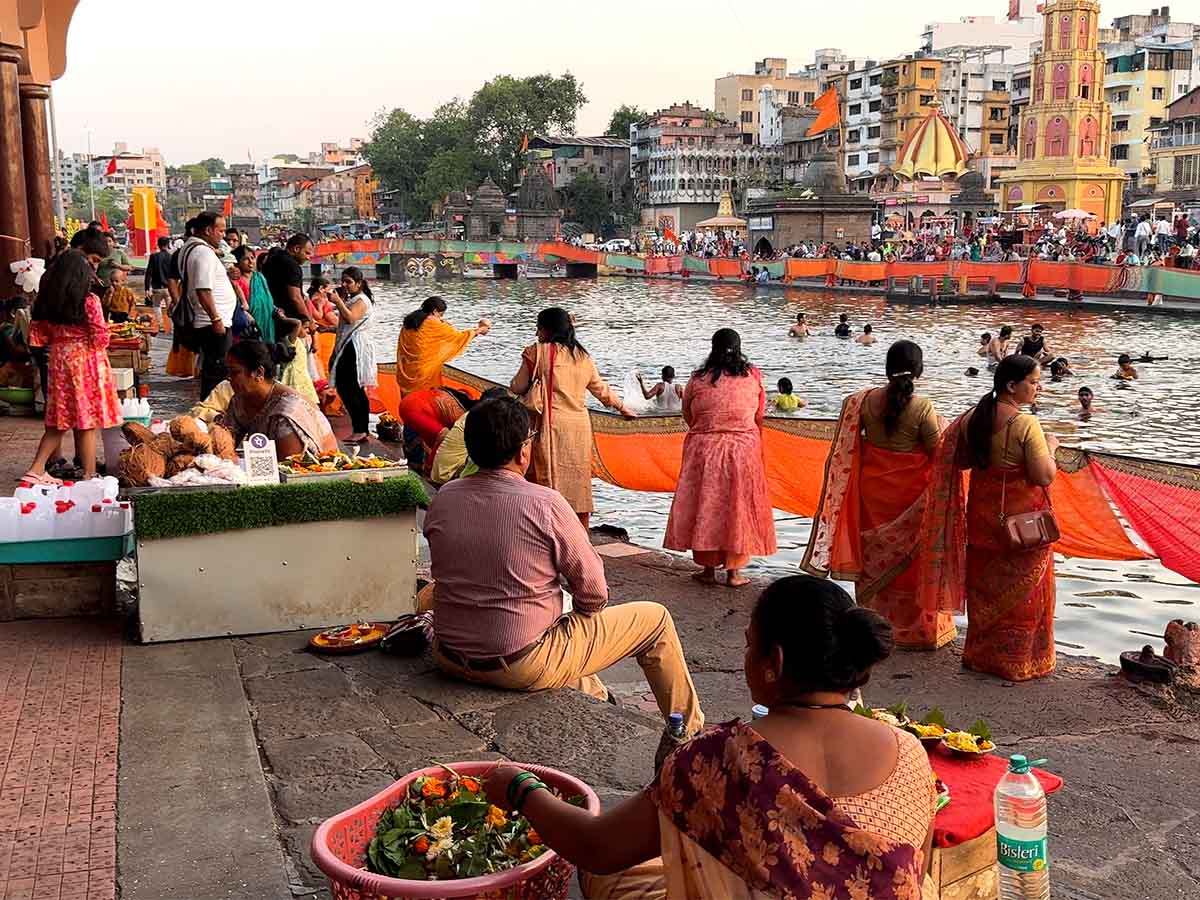
Pleased by their devotion, Lord Shiva granted their wish and caused the holy Ganga to manifest in the south as the Godavari, blessing the region for generations to come. Hence the river is also lovingly known as Gautami Ganga.
From its birthplace near Trimbakeshwar, the Godavari flows into Nashik and through the sacred landscape of Panchavati, where it embraces Ramkund before continuing its long southeasterly journey across peninsular India before finally meeting the sea.
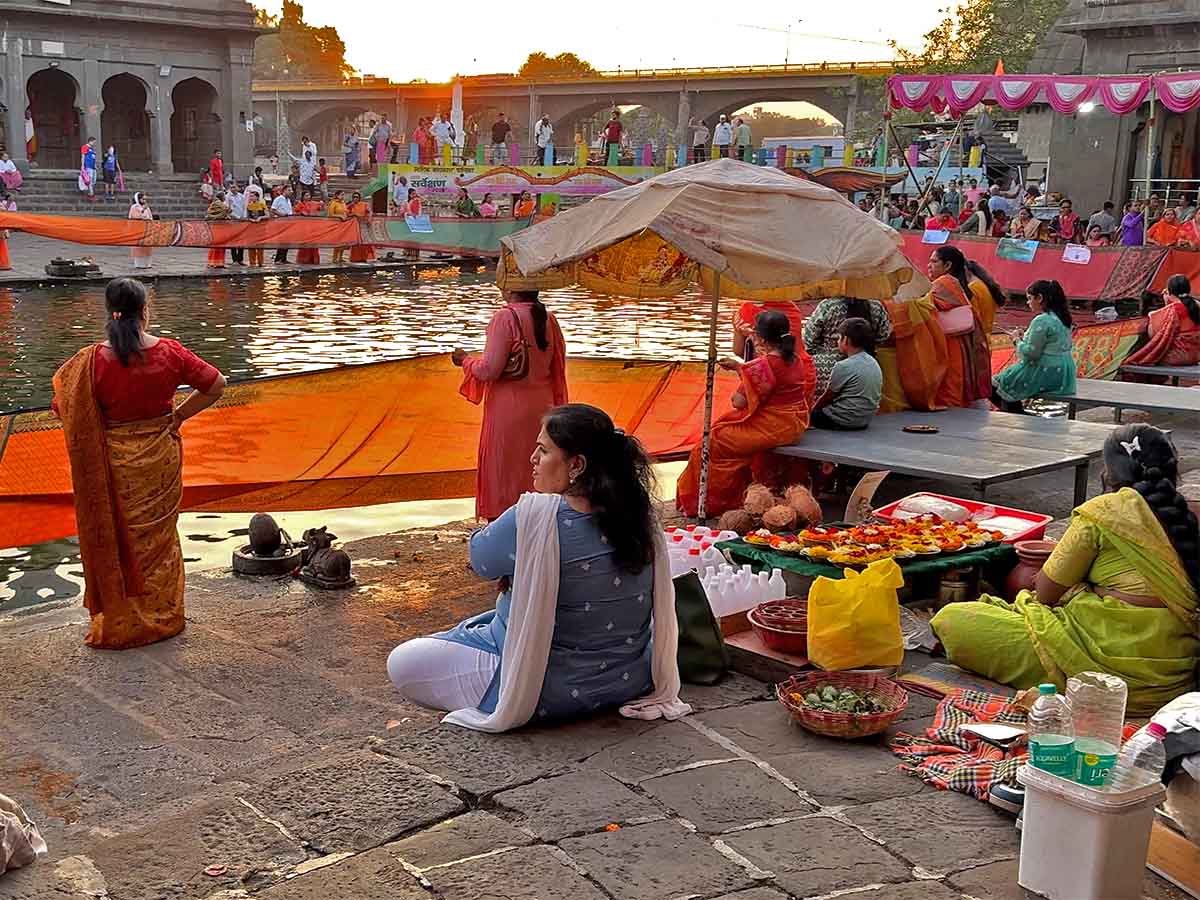
For countless devotees, every dip in its waters is an act of Dharma and every prayer offered on its banks a tribute to one of Hinduism’s holiest rivers.
Ramkund Nashik Video
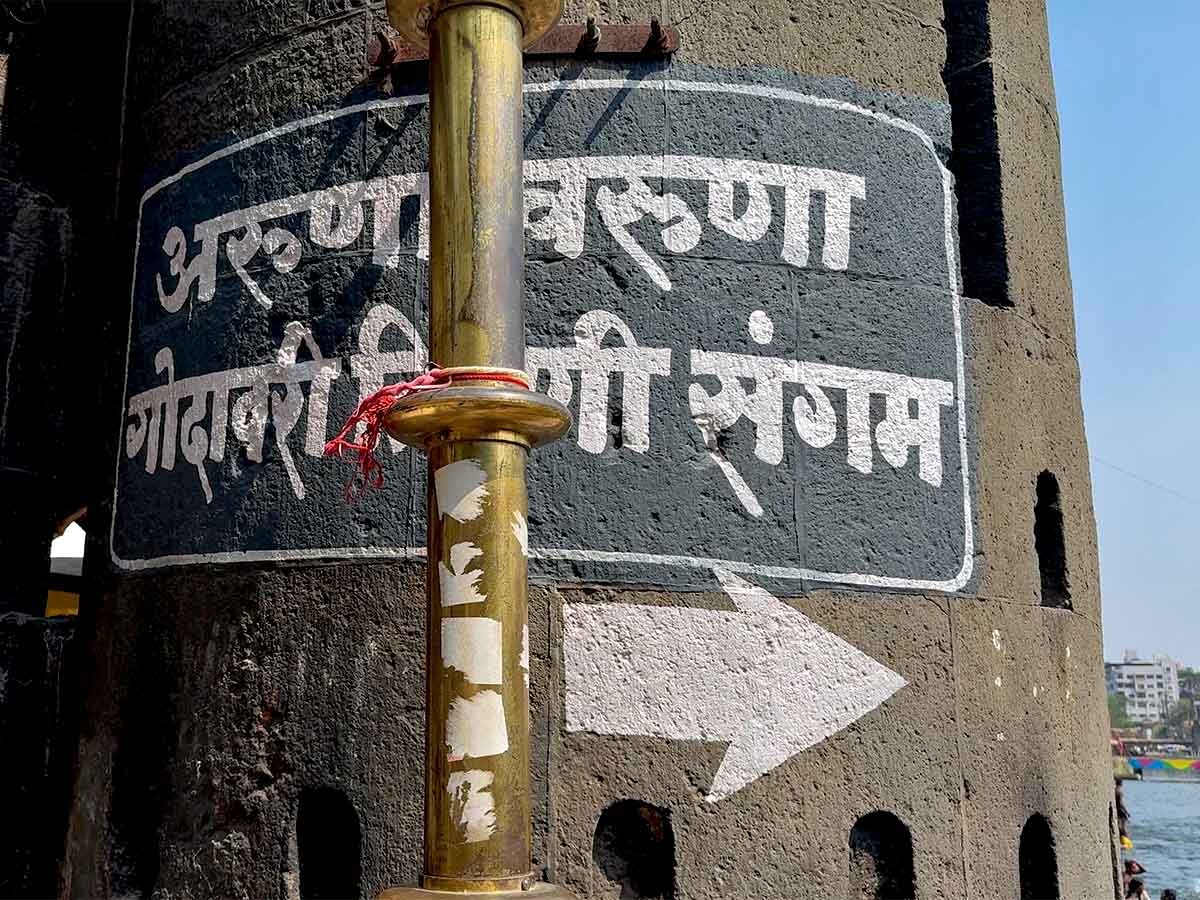
Aruna, Varuna and Godavari Triveni Sangam
Ramkund is also revered as the sacred confluence of three rivers where the invisible streams of Aruna and Varuna merge with the Godavari at this very spot, transforming Ramkund into one of the holiest tirthas in Panchavati – the Triveni Sangam.
The Godavari changes its course and takes a rightward turn at Ramkund, a rare feature regarded in Hindu tradition as highly auspicious, which adds further to its spiritual aura. Such a sacred bend in the river is believed to amplify the sanctity of the place, making it especially suitable for prayer, meditation and acts of religious merit.
It is this extraordinary union of sacred geography and living tradition that has elevated Ramkund into the cultural heart of Nashik. For centuries, saints and pilgrims have gathered on these ghats to offer worship, perform ancestral rites and immerse themselves in the eternal flow of the Dakshin Ganga.
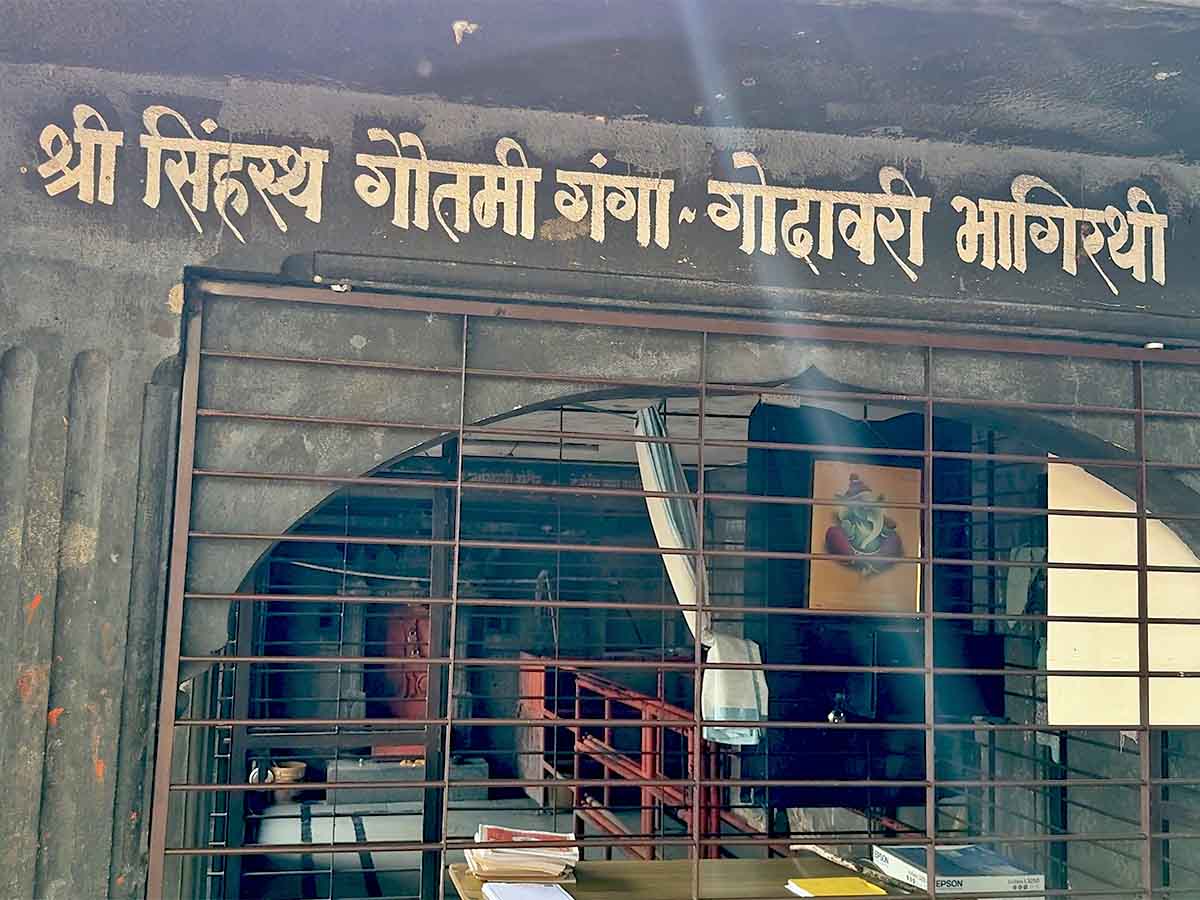
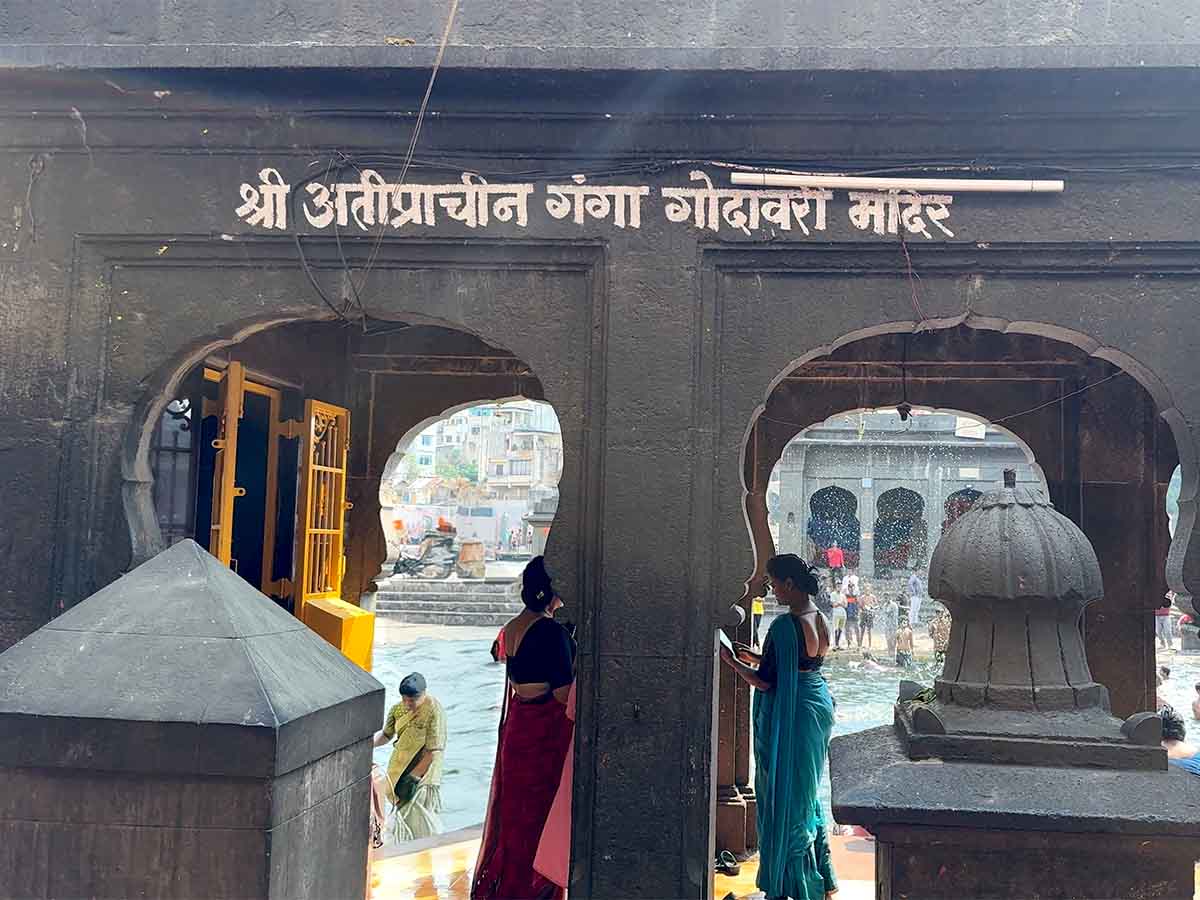
Ganga Godavari Mandir – A Temple That Opens Only Once in Twelve Years
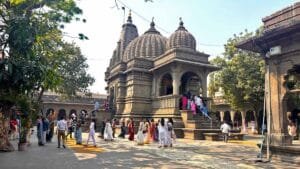
Standing on the banks of Ramkund is the revered Ganga Godavari Mandir, one of the most unique temples in Nashik and a symbol of the city’s deep connection with the sacred Godavari River.
According to local tradition, the temple enshrines Goddess Godavari, who is worshipped with the same reverence accorded to Maa Ganga. Unlike most temples, however, its doors remain closed for almost the entire twelve-year cycle and are ceremonially opened only during the Simhastha Kumbh Mela.
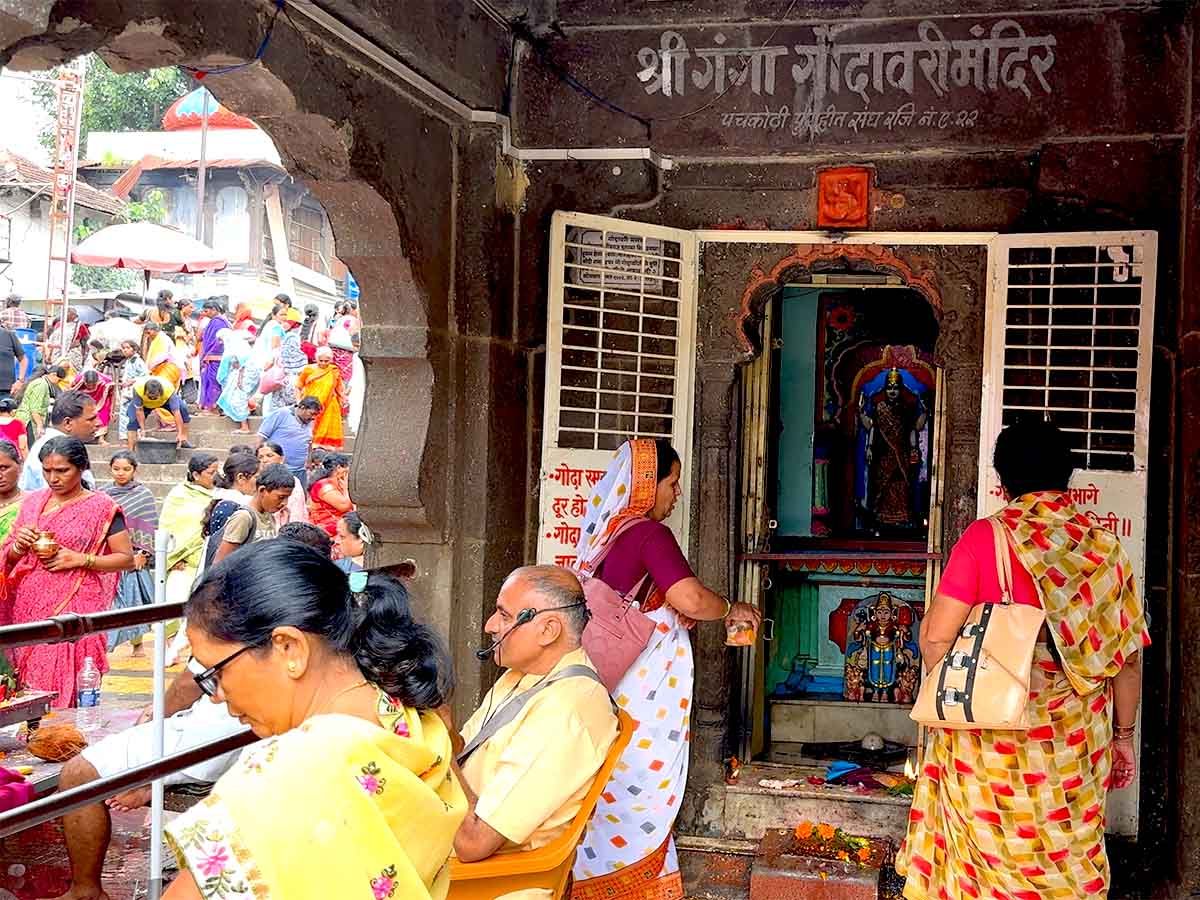
This rare opening marks one of the most anticipated moments of the Kumbh celebrations, drawing thousands of devotees eager to seek the blessings of the river goddess and witness rituals that can be experienced only once every twelve years.
Puranic References
Ramkund occupies a prominent place in several ancient legends preserved in local tradition and the Puranas. Over the centuries, stories connected with Shiva and Vishnu have further enhanced the sanctity of this sacred stretch of the Godavari, making it one of Panchavati’s most spiritually significant sites.
Kapaleshwar Mahadev
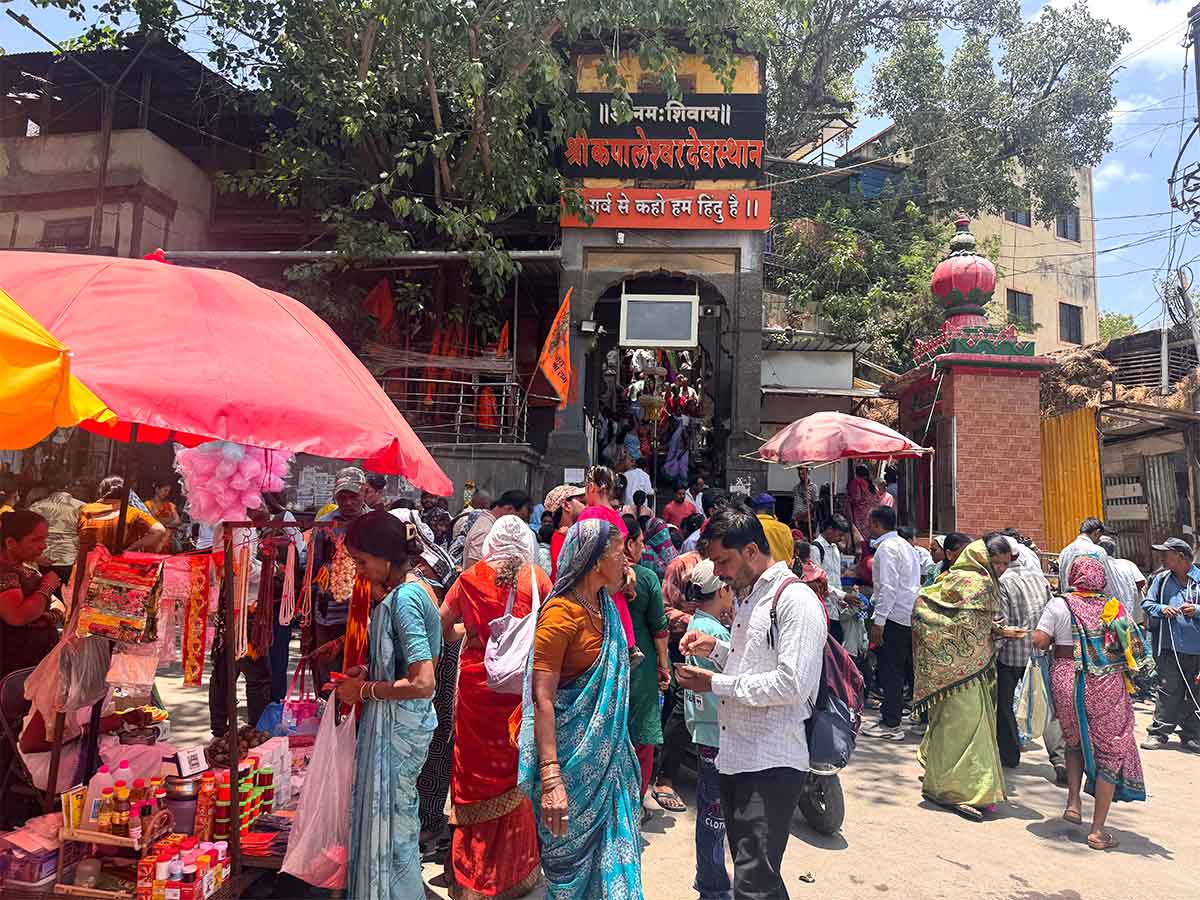
According to local tradition rooted in the Puranas, in the very ancient period before Ramayana, Lord Shiva on the advice of Nandiji, once bathed here and was absolved of the sin of Brahmahatya. He then established himself on a nearby hillock as Kapaleshwar Mahadev.
As a mark of respect, Bholenath exempted Nandiji from his customary role of standing guard before the Shiva Linga, making Kapaleshwar one of the very few Shiva temples without a Nandi idol facing the sanctum.
Sundar Narayan
Another enduring tradition connects Ramkund with Shri Vishnu. It is believed that after bathing in the Godavari here, Narayana regained his divine radiance and came to be worshipped as Sundar Narayan.
The historic Sundar Narayan Temple standing near Ramkund on the opposite bank continues to commemorate this belief and remains one of Panchavati’s most important shrines.
Together, these enduring traditions enrich the spiritual landscape of Ramkund and Panchavati, where legends associated with Brahma Muhurta rituals, Shri Ram, Mahadev and Narayana continue to inspire devotion across generations.
Rituals Performed at Ramkund Nashik
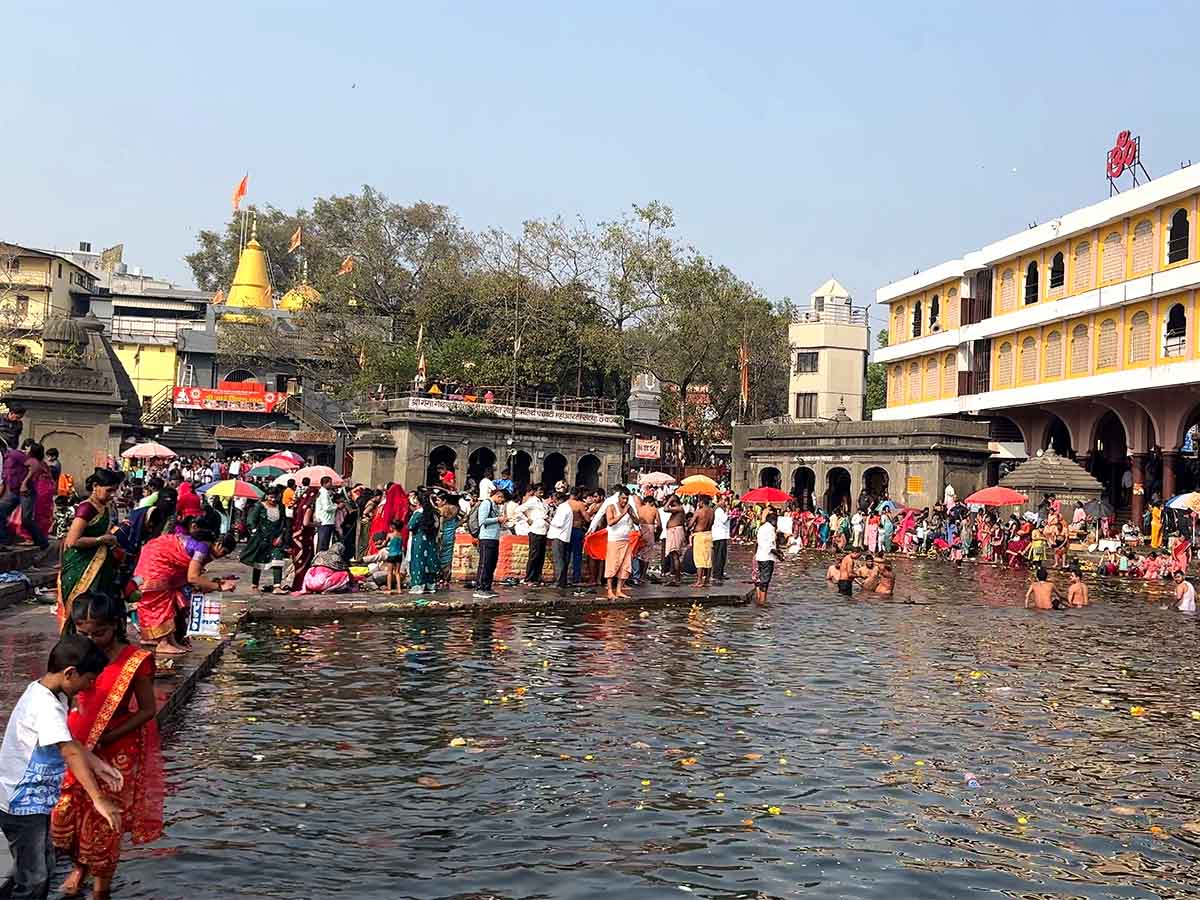
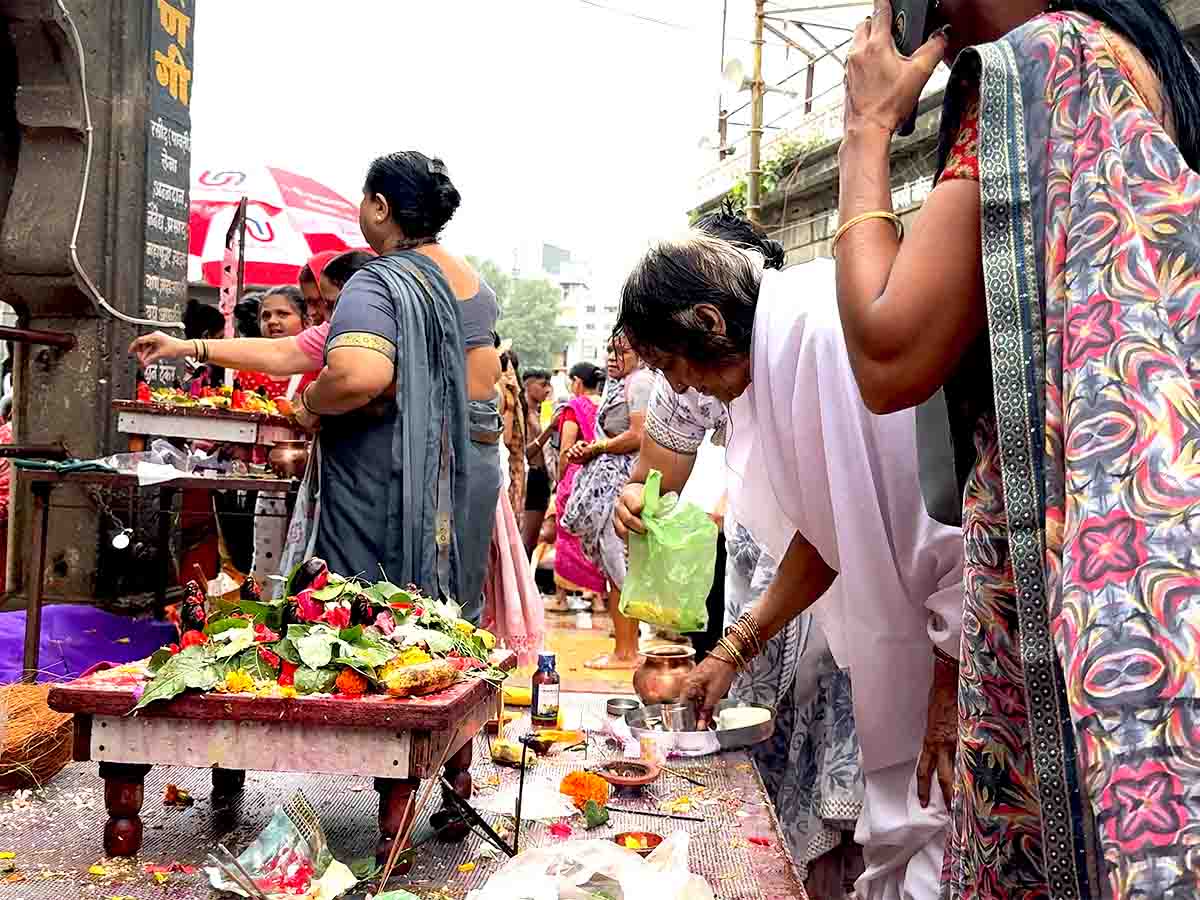
Ramkund has been one of the most important centres for Hindu religious observances on the banks of the sacred Godavari. Hundreds of devotees arrive here daily to take a holy dip, offer prayers, perform religious rites and seek blessings for the peace and salvation of their ancestors.
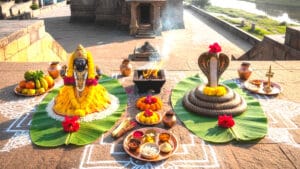
As per traditional beliefs, Prabhu Shri Ram himself performed the Shraddha of his father, King Dasharatha, at this very spot. As a result, Ramkund has become one of the most revered destinations in India for ancestral rites, attracting families from across the country throughout the year.
Pitru Paksh
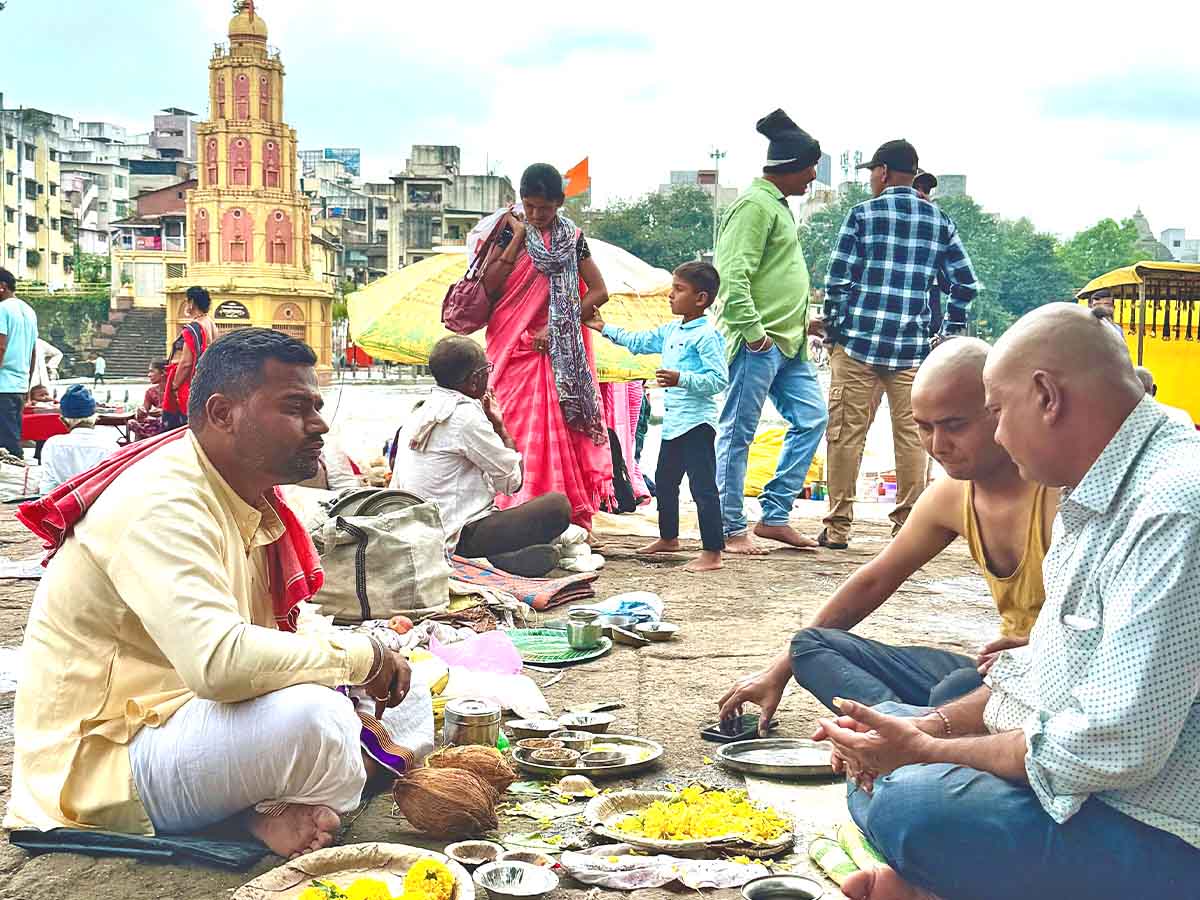
The ghats witness their largest gatherings during Pitru Paksha, the sacred fortnight dedicated to honouring and remembering one’s ancestors.
Observed during the Krishna Paksha (waning phase) of the Hindu month of Bhadrapada-typically falling between September and October in the English calendar-it is considered the most auspicious period for performing Shraddha, Pind Daan and Tarpan.
Pitru Paksha: Sacred Fortnight for Remembering and Honouring Ancestors
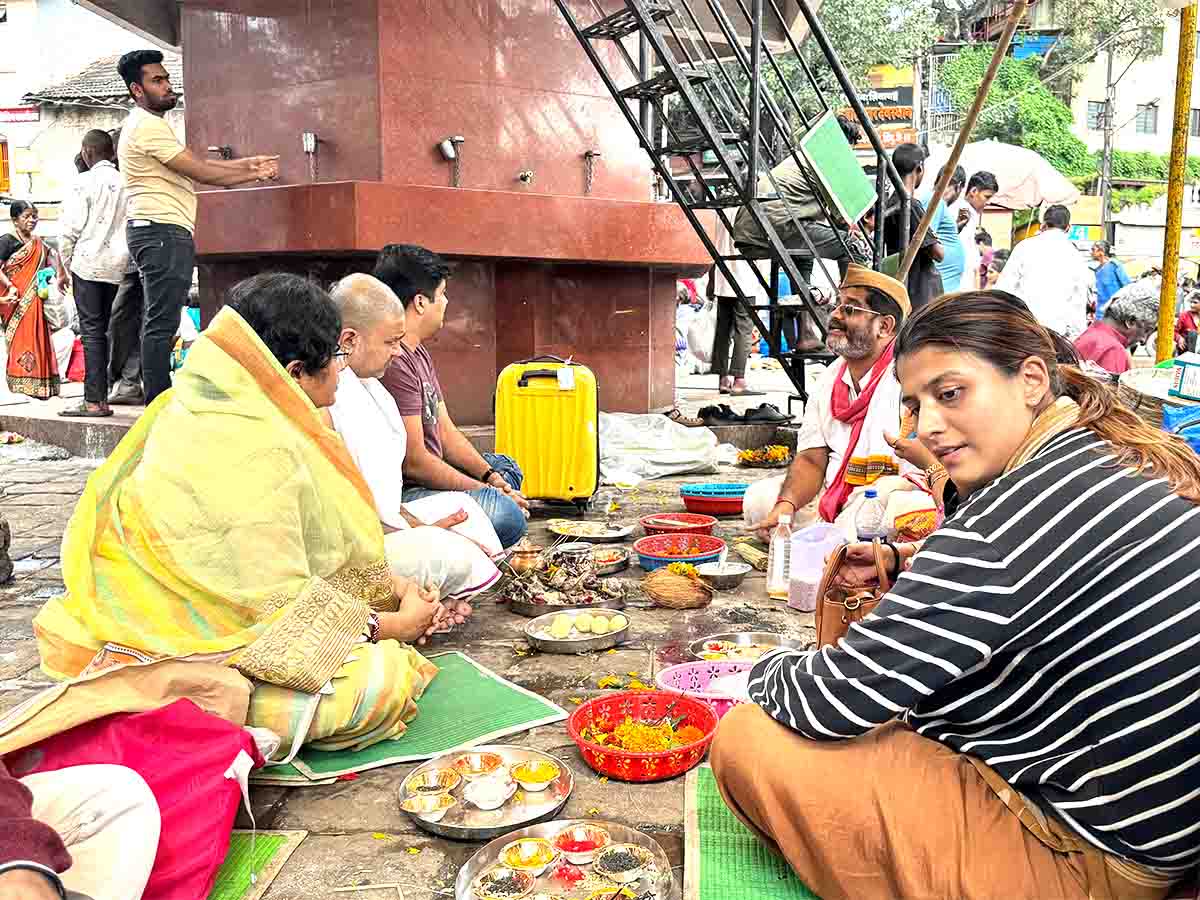
During these fifteen days, thousands of devotees from across Maharashtra and India arrive at Ramkund to pay homage to their departed family members through Vedic rituals conducted by experienced priests.
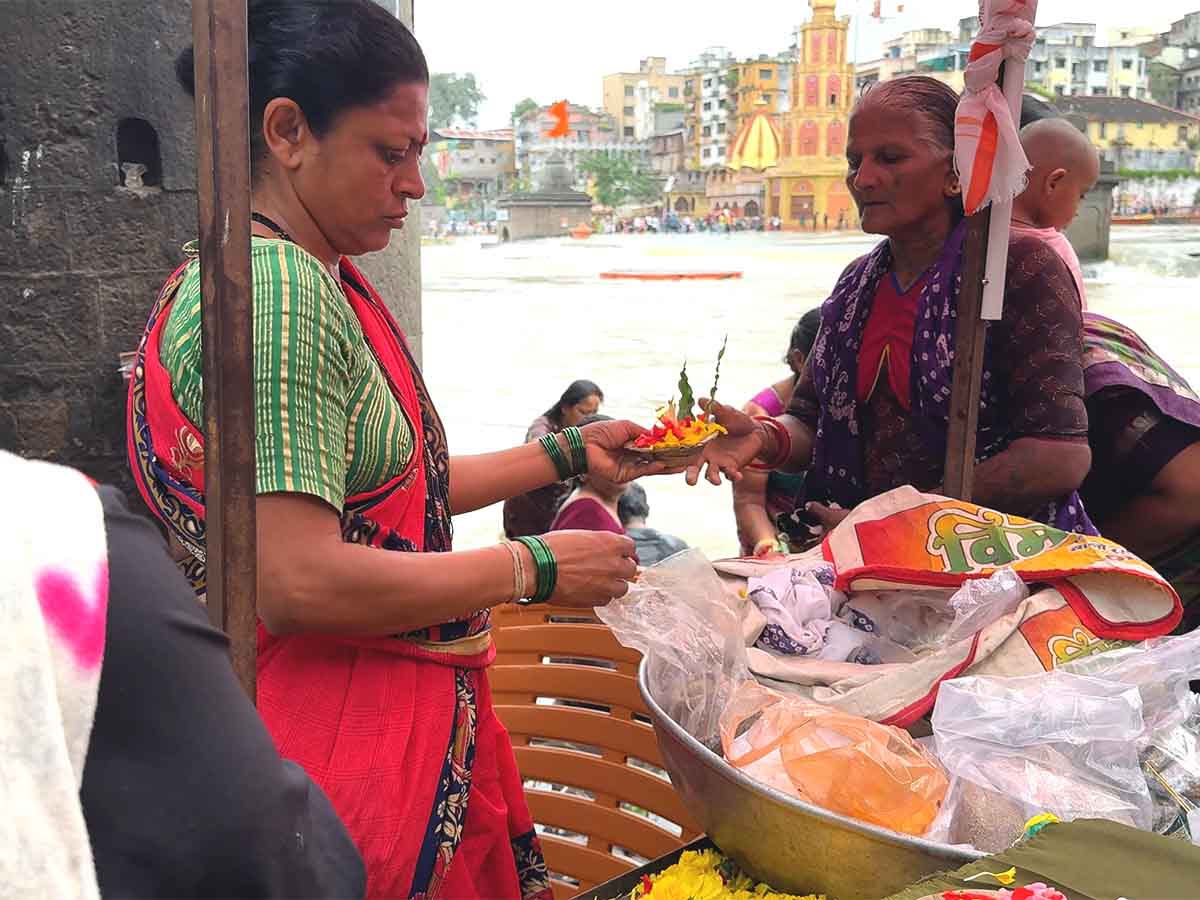
Asthi Vilay Tirth at Ramkund Nashik
Within the Ramkund precinct lies the sacred Asthi Vilay Tirth, where the mortal remains of the departed are immersed in the holy waters of the Godavari.
Local tradition holds that bones immersed here dissolve with remarkable rapidity, a phenomenon devotees attribute to the extraordinary sanctity of the site. It is believed that this is due to the sacred Triveni Sangam of the Godavari, Aruna and Varuna rivers at Ramkund, together with the distinctive flow and current of the river at this point.
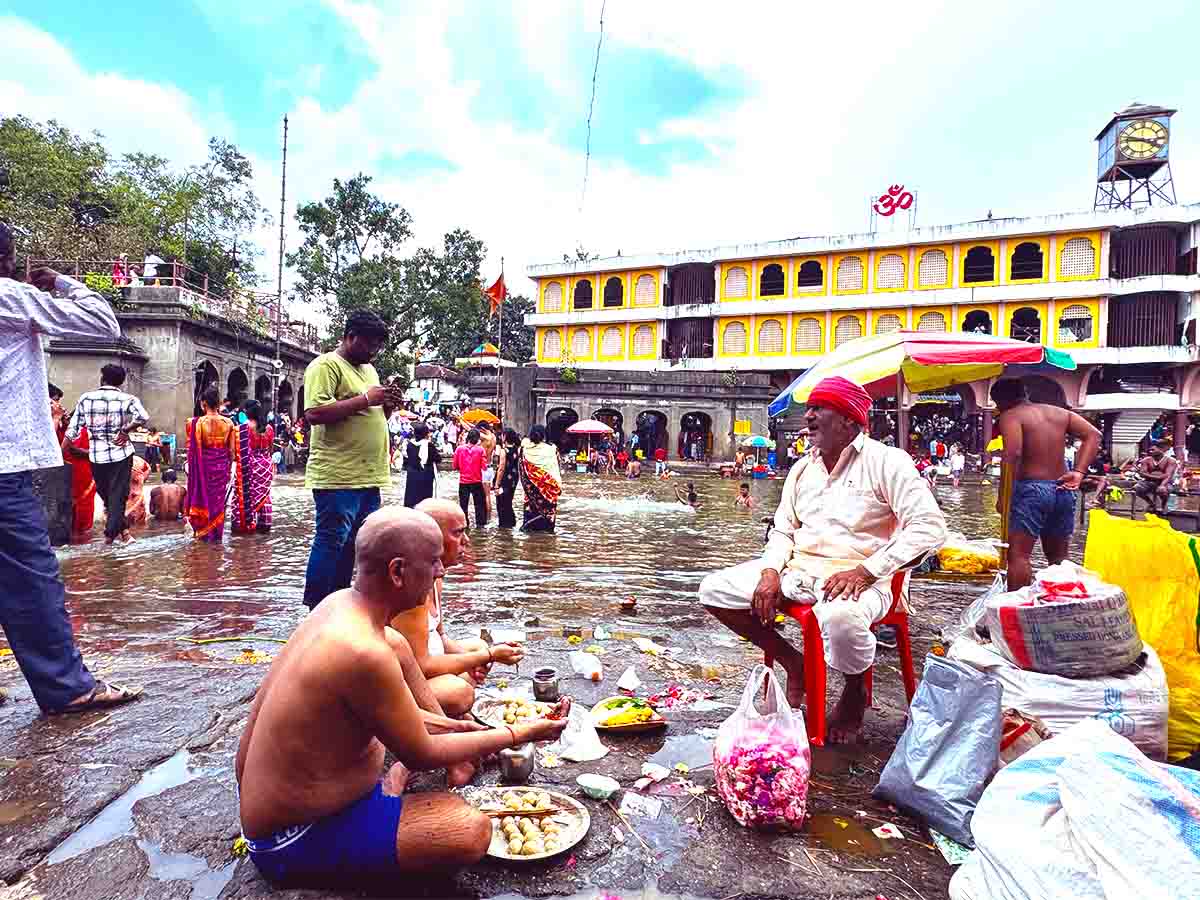
Asthi Vilay Tirth has for generations been regarded as one of the most auspicious places for Asthi Visarjan, reinforcing Ramkund’s enduring status as a foremost centre for ancestral worship and remembrance.
The sacred waters of the Godavari have also received the mortal remains of some of India’s most revered personalities. A portion of Mahatma Gandhi’s ashes was immersed at Ramkund in 1948, an event remembered through the construction of the marble Gandhi Chhatri and Gandhi Jyot memorial on the riverbank.
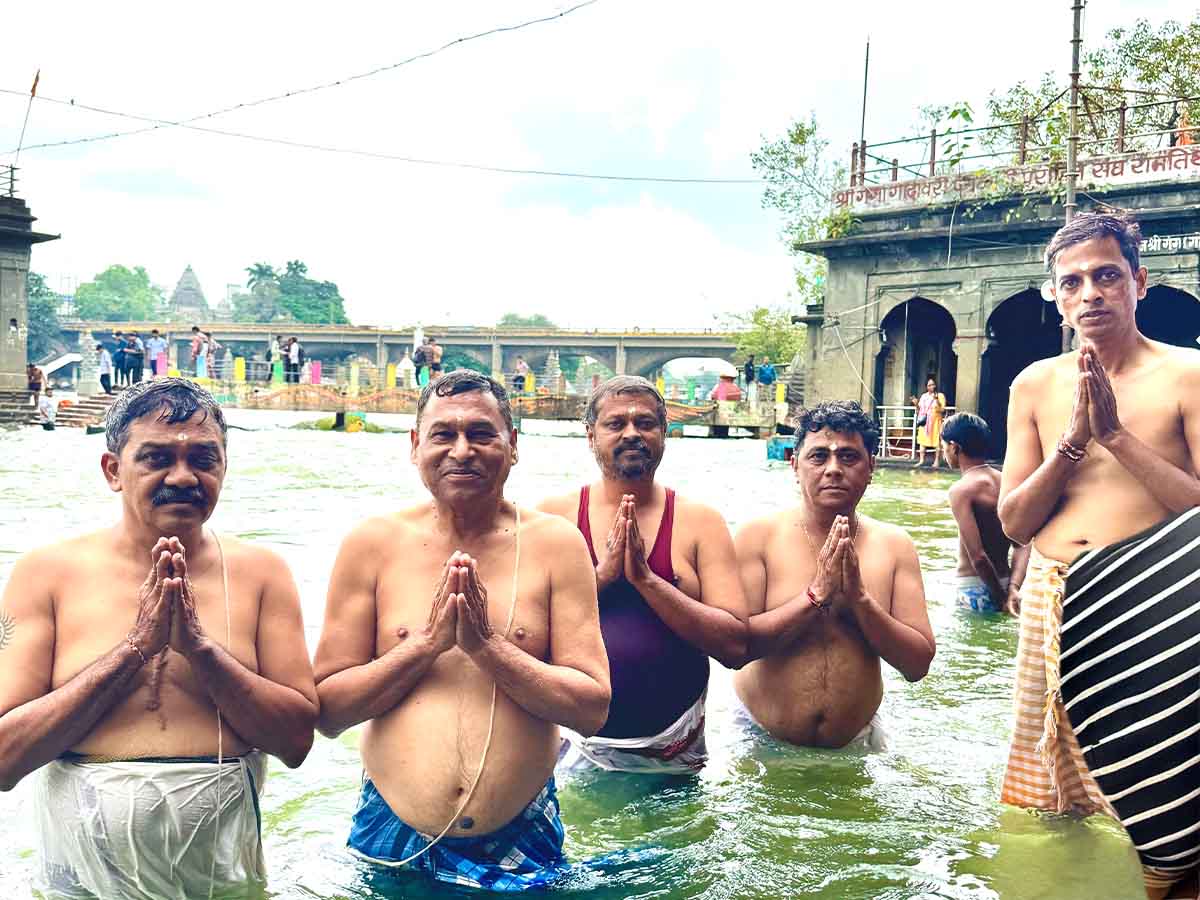
In the decades that followed, the ashes of leaders such as Pandit Jawaharlal Nehru, Indira Gandhi, and renowned singer Lata Mangeshkar were likewise immersed here, reflecting the enduring belief in Ramkund as a sacred gateway for the soul’s final journey.
Ramkund During the Simhastha Kumbh Mela
Every twelve years, Ramkund becomes the spiritual heart of the Simhastha Kumbh Mela, one of the world’s largest religious gatherings.
Held under auspicious astrological alignments associated with Jupiter’s transit into the zodiac sign of Leo (Simha), the festival attracts millions of pilgrims, saints and devotees to Nashik.
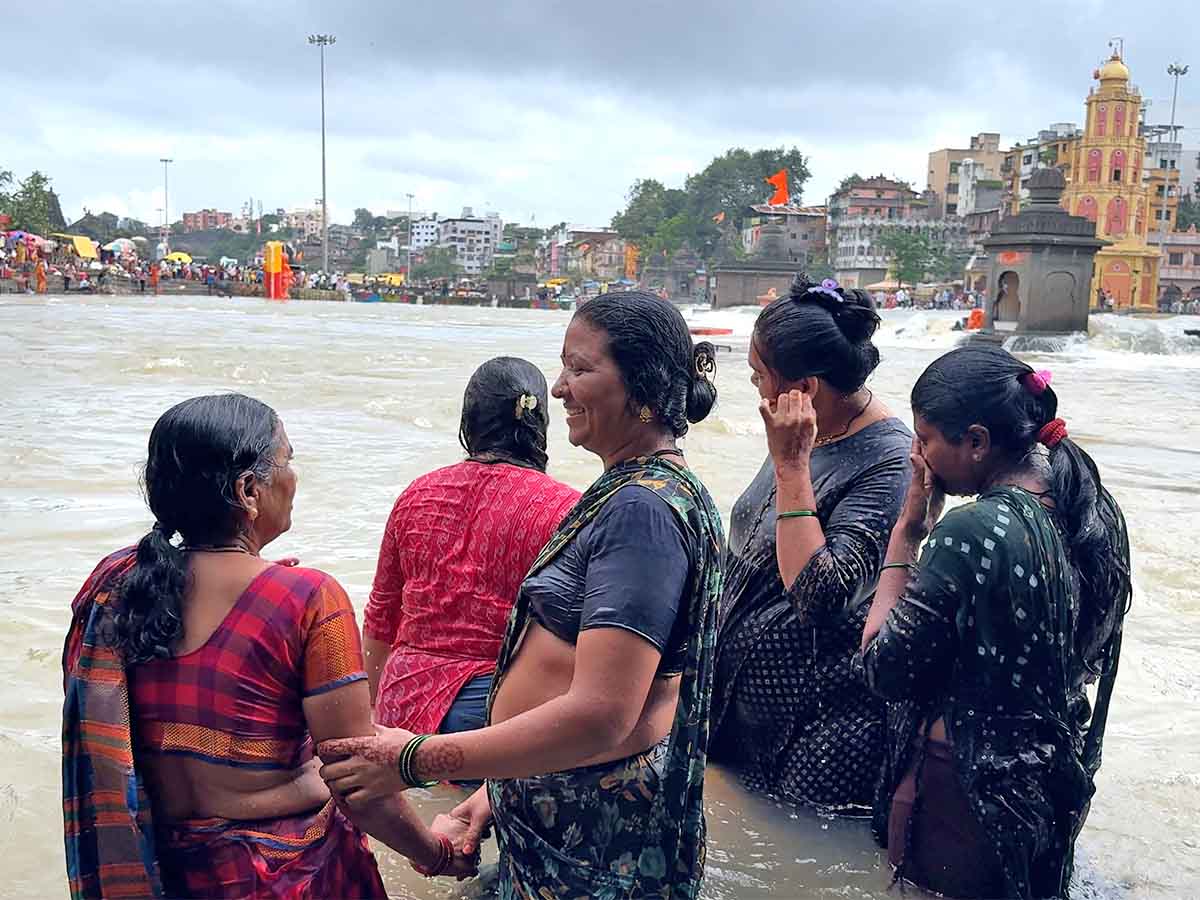
At the centre of these celebrations is Ramkund, where devotees take the sacred Shahi Snan (Royal Bath) and holy dip in the Godavari, believing it to bestow immense spiritual merit.
The ghats come alive with grand processions of Akharas, revered saints and Naga Sadhus, creating an atmosphere of extraordinary devotion and spectacle.
A unique highlight of the Simhastha Kumbh is the ceremonial opening of the Ganga Godavari Mandir, whose doors remain closed for most of the twelve-year cycle and are opened only during the festival. Thousands of devotees seize this rare opportunity to offer prayers to Goddess Godavari.
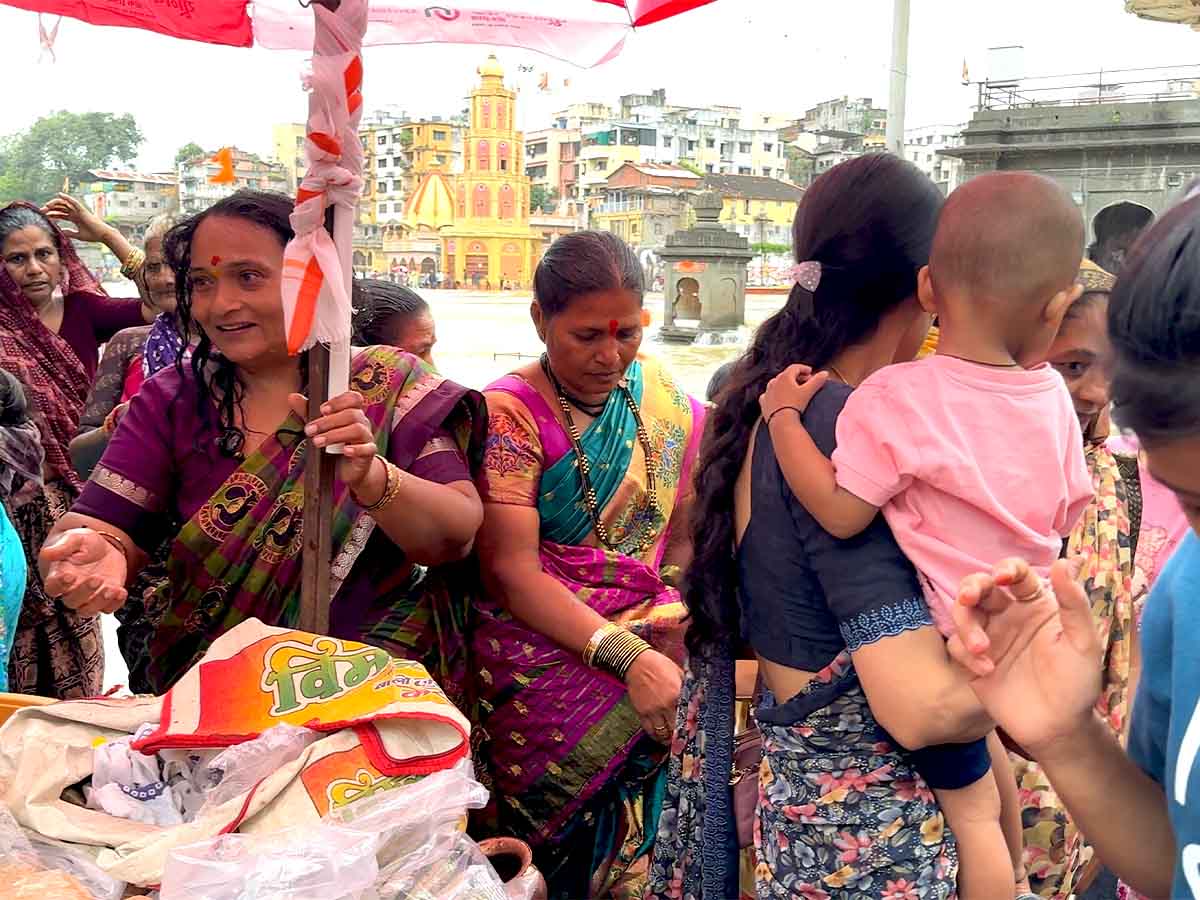
With its ancient Ramayana associations, sacred Godavari waters and centuries-old traditions, Ramkund stands at the very centre of the Simhastha Kumbh, reaffirming its place as one of India’s foremost pilgrimage destinations.
Simhastha Kumbh Mela (Nashik-Trimbakeshwar):
- Ceremonial commencement: 31 October 2026 (Dhwajarohan / Flag Hoisting)
- 1st Amrit Snan: 2 August 2027
- 2nd Amrit Snan: 31 August 2027
- 3rd Amrit Snan: 11 September 2027 (Ramkund, Nashik – Vaishnava Akharas)
- 3rd Amrit Snan: 12 September 2027 (Kushavarta, Trimbakeshwar – Shaiva Akharas)
- Flag Lowering: 24 July 2028
Shri Ganga Godavari Panchkothi Purohit Sangh
- Office: Near the main entrance to Ramkund, Panchavati
- Contact: 0253 – 2517139
For generations, the Shri Ganga Godavari Panchkothi Purohit Sangh has served as the traditional custodians of the sacred Ramkund Tirth and its associated religious practices.
Comprising hereditary priests with deep roots in Nashik’s spiritual heritage, the Sangh continues to preserve centuries-old customs while assisting pilgrims in performing Vedic rituals on the banks of the Godavari.
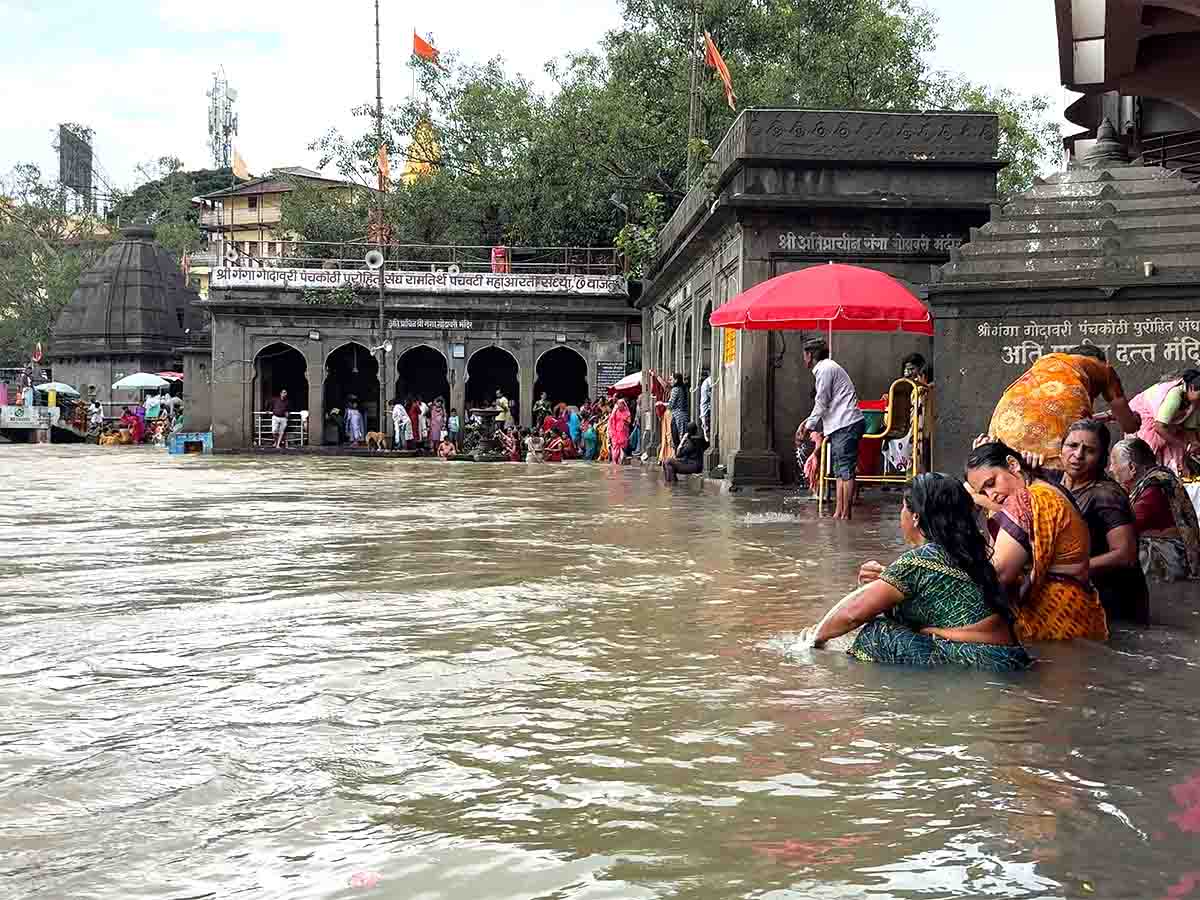
A modest office of the Sangh is located near the main entrance to Ramkund, where devotees can seek guidance and arrange ceremonies such as Shraddha, Pind Daan, Tarpan, Asthi Visarjan and other religious observances.
Throughout the year – and especially during Pitru Paksha – priests associated with the Sangh help families perform these rites according to established traditions and scriptural procedures.
The Sangh also conducts the Prachin Ganga Godavari Aarti at Ramkund. Unlike the larger public ceremonies held elsewhere along the riverfront, this traditional aarti is performed at the sacred tirth itself in a simple and devotional manner, preserving the spiritual character and age-old customs of the site.
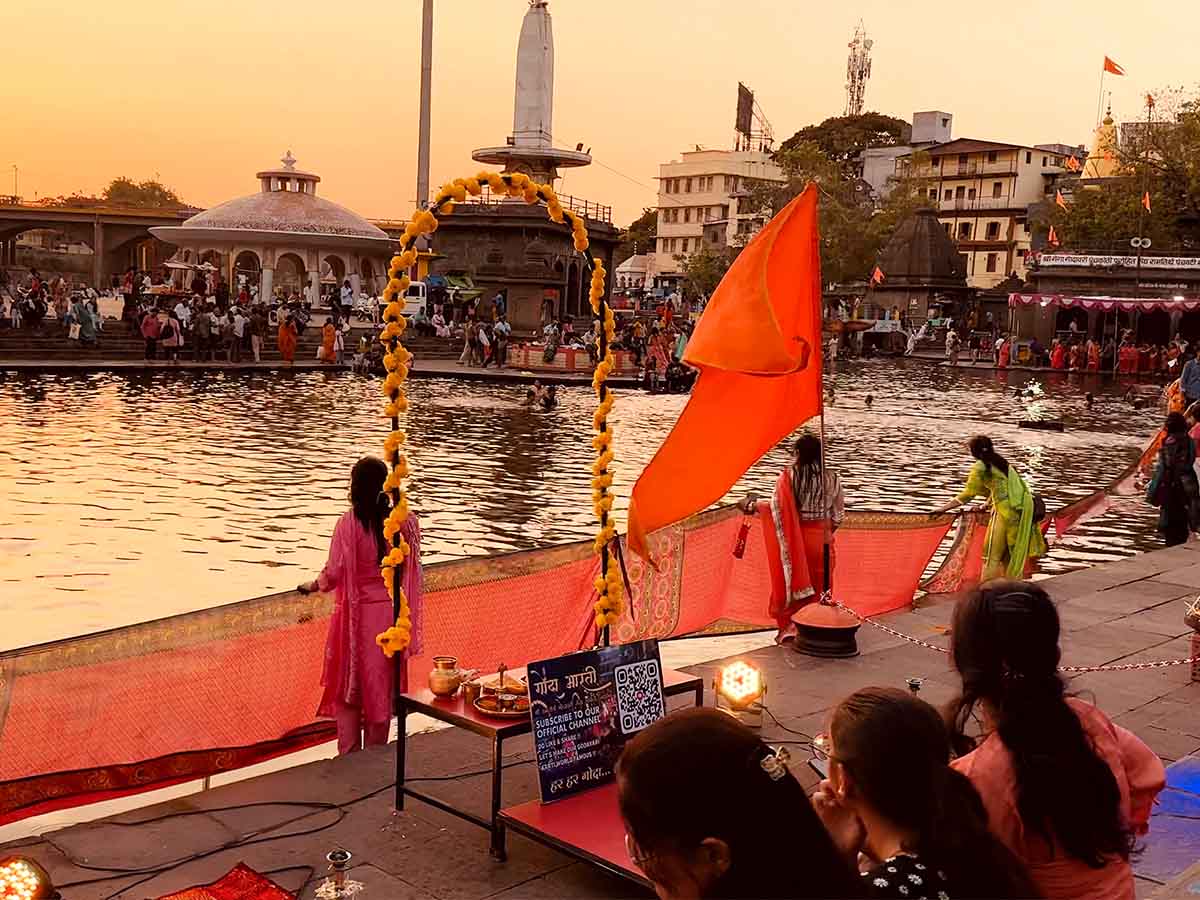
Shri Ramtirth Godavari Seva Samiti and the Grand Godavari Aarti
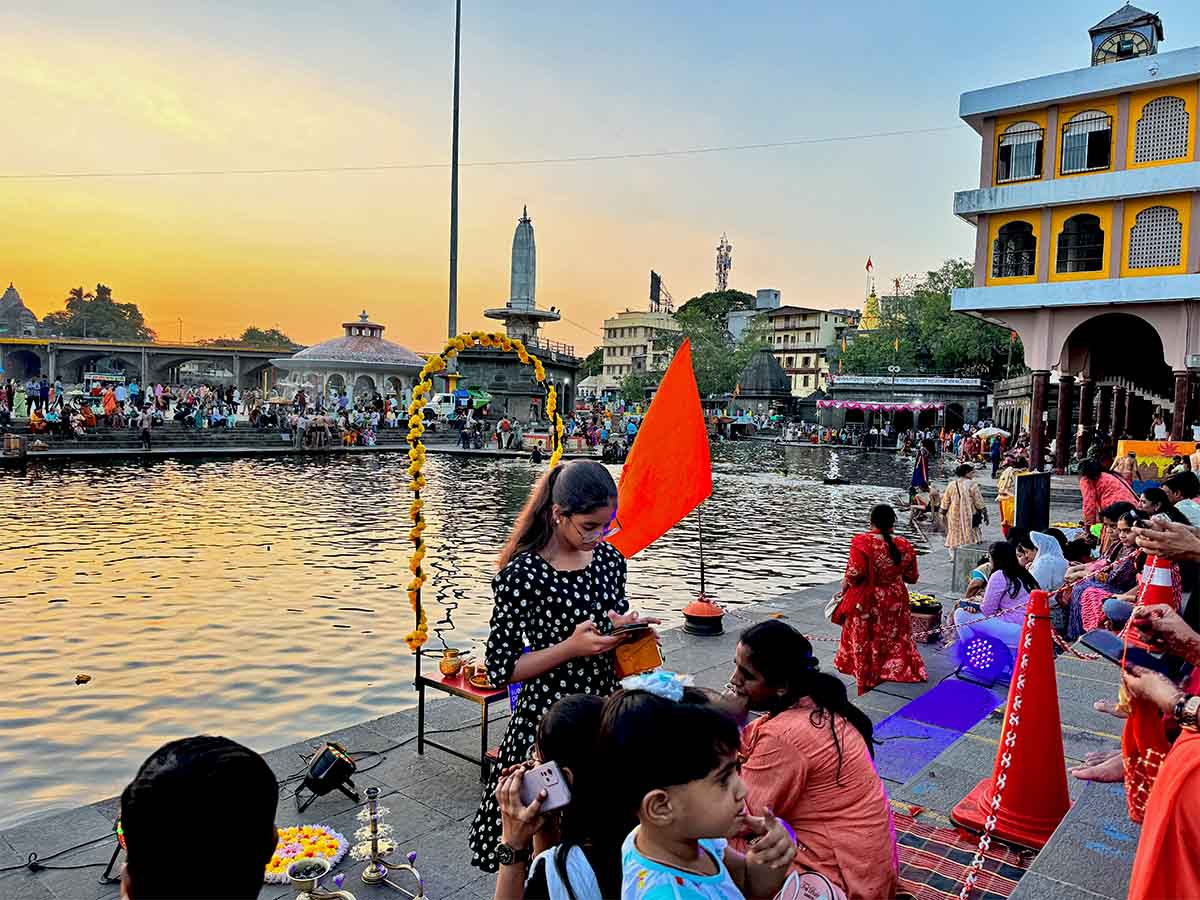
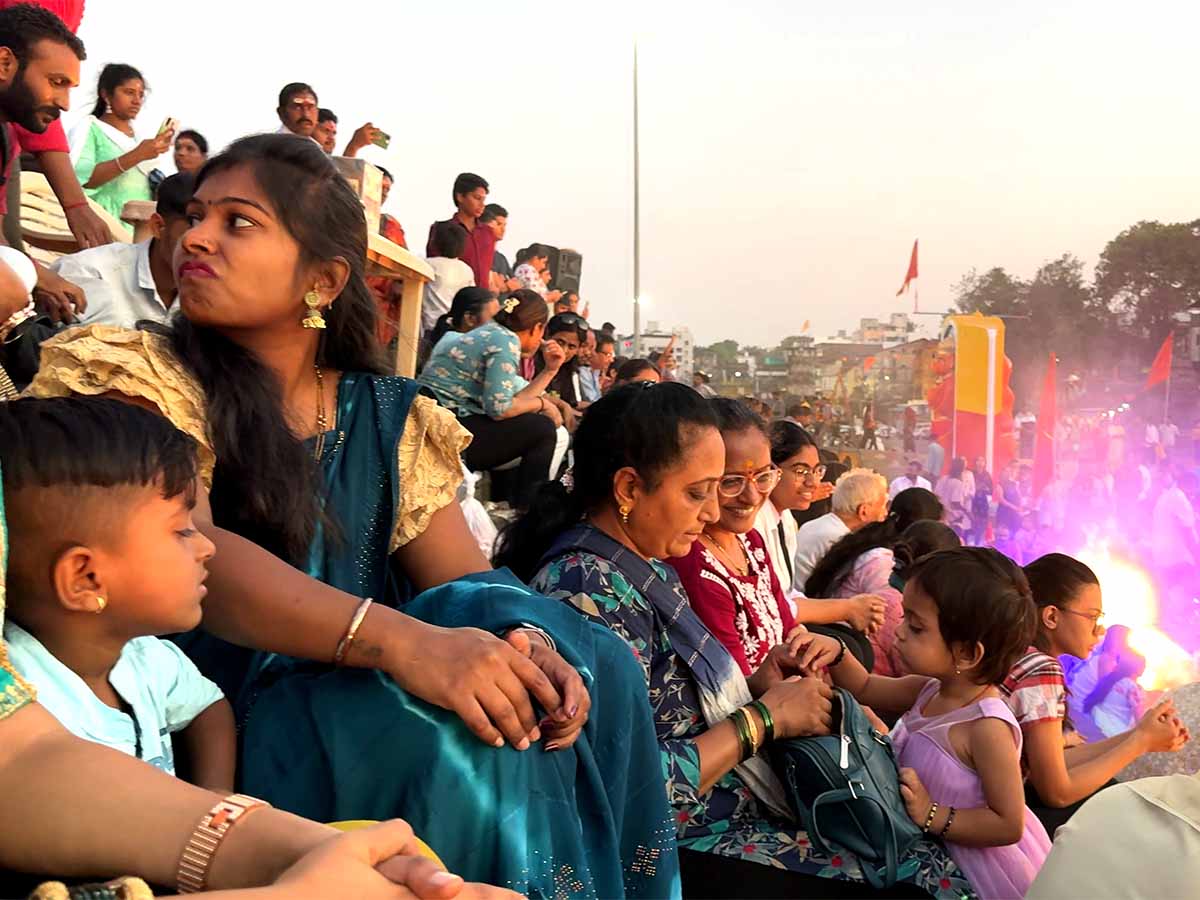
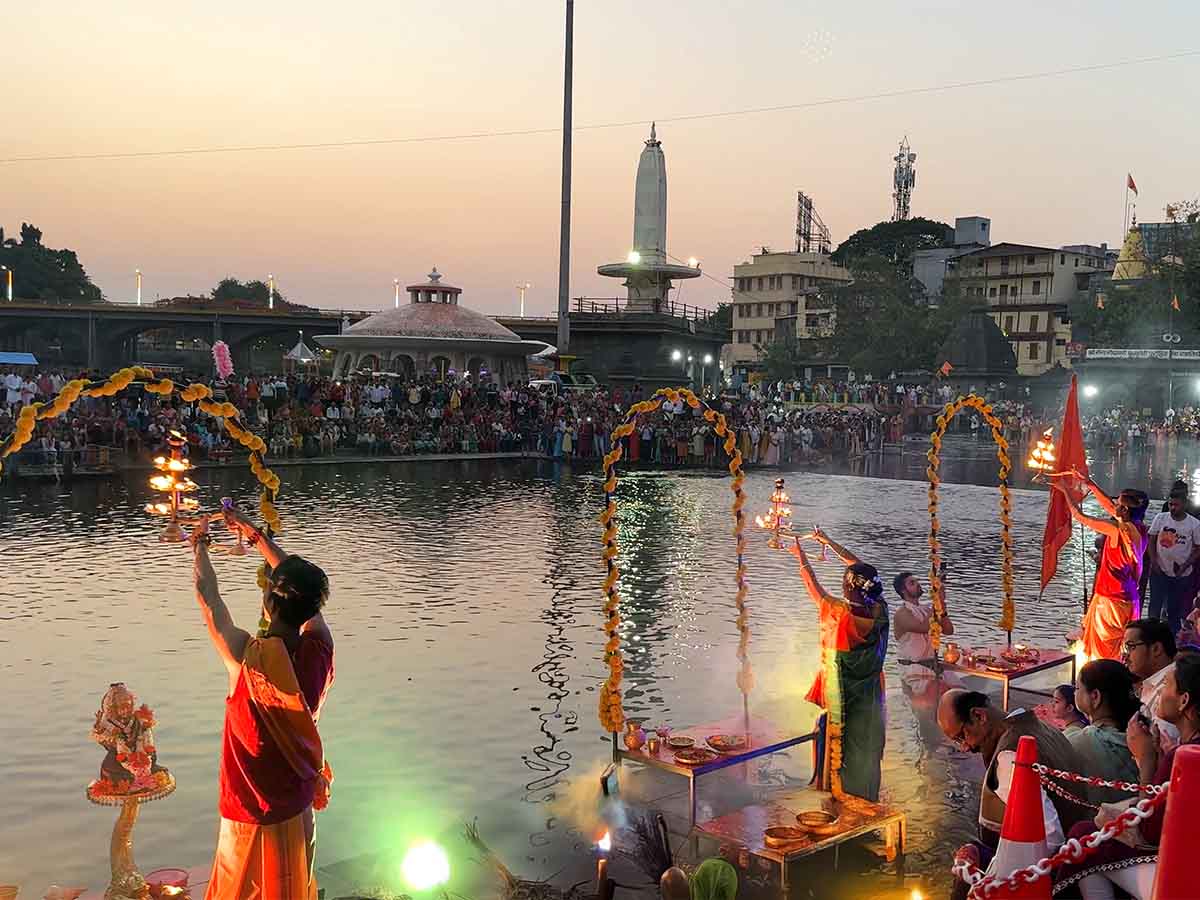
Shri Ramtirth Godavari Seva Samiti has played a significant role in popularising the spectacular evening Godavari Aarti that has become one of Nashik’s most cherished spiritual attractions.
Conducted on the banks of the Godavari near the Dutondya Maruti area, the ceremony draws large gatherings of devotees and visitors every evening.
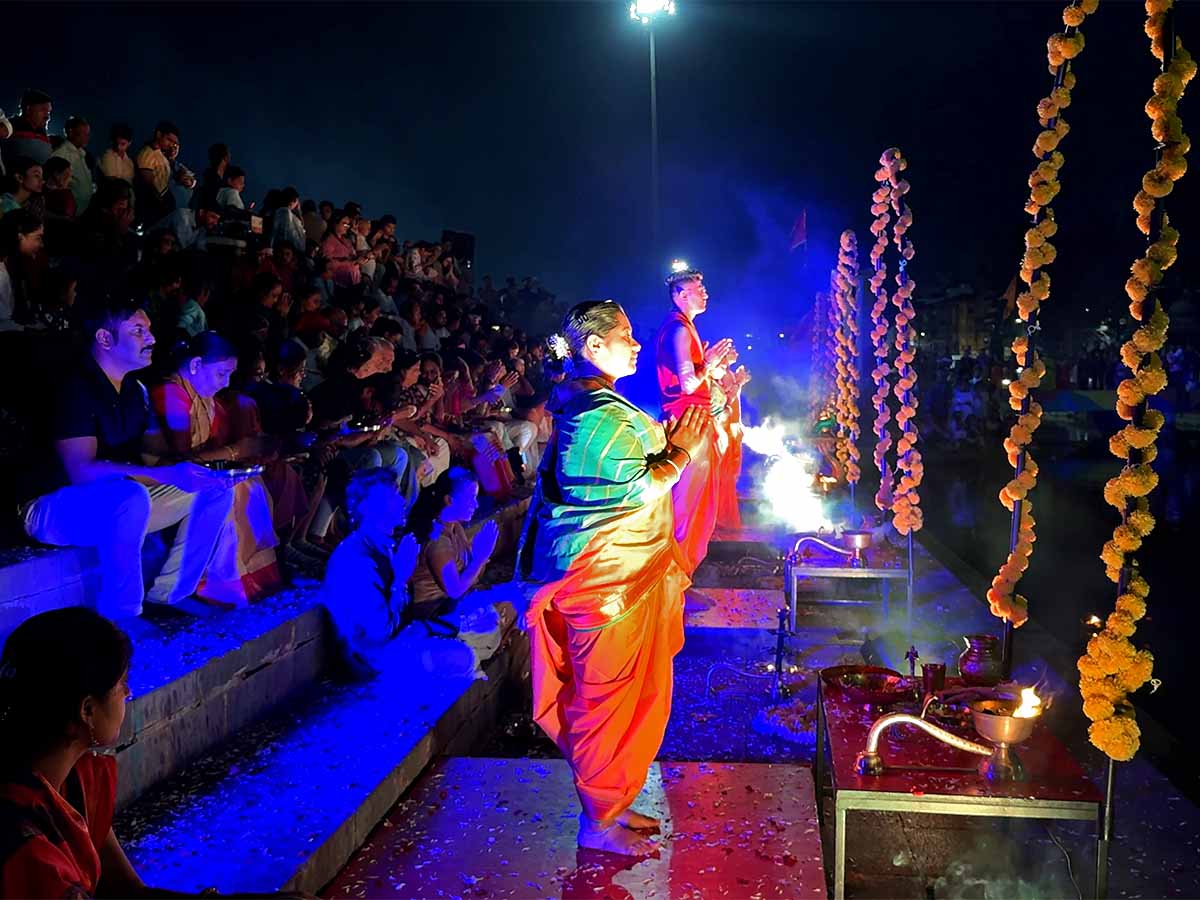
This grand ceremony is organised on a larger scale with multiple priests offering aarti with synchronised lamps to the sacred river amid devotional music, Vedic chants, conch shells and the rhythmic ringing of bells.
The sight of illuminated diyas reflected in the waters of the Godavari creates a deeply moving atmosphere and has become a highlight for many pilgrims visiting Panchavati.
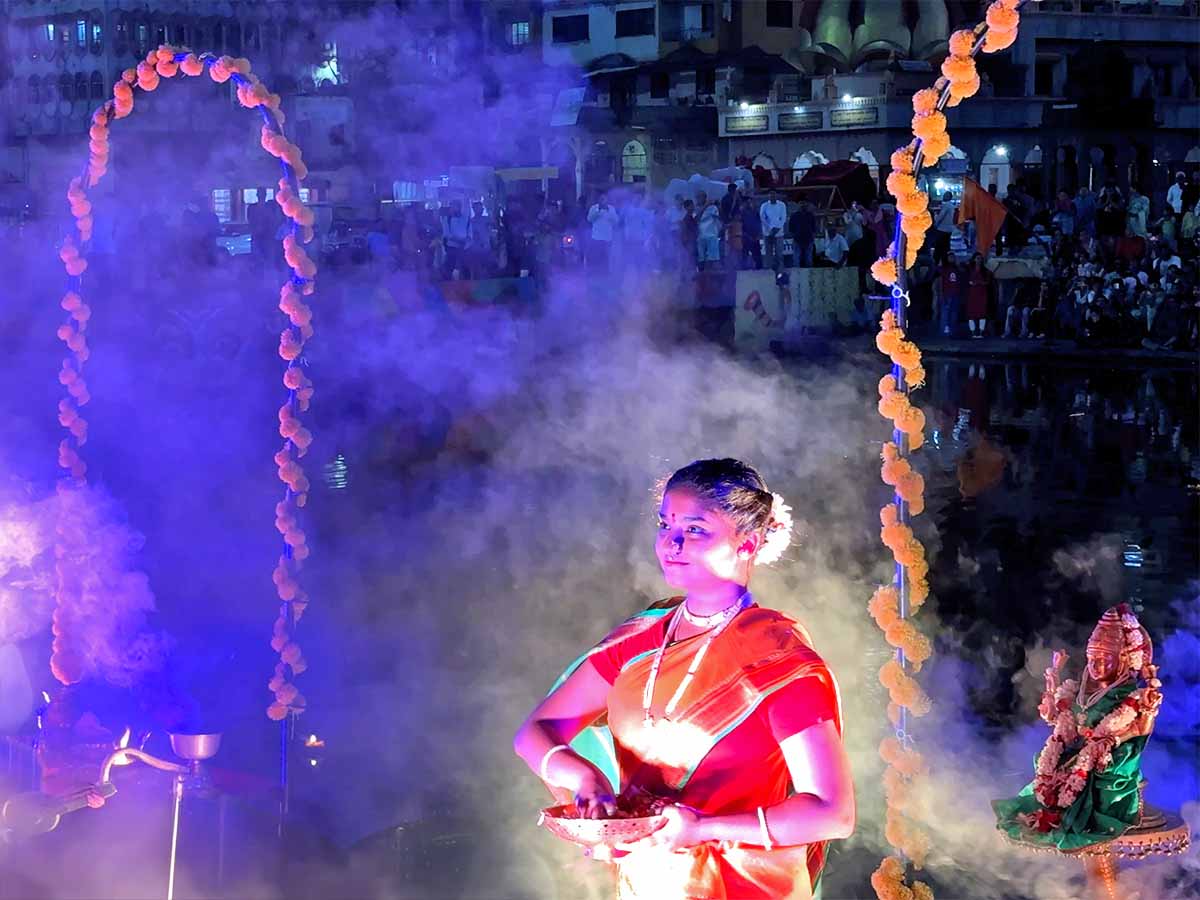
Beyond the daily aarti, the Samiti actively promotes reverence for the Godavari River, cleanliness drives, and encourages devotees to participate in collective worship and cultural programmes celebrating Nashik’s spiritual heritage.
Shri Ganga Godavari Aarti Video
Temples on the Banks of Ramkund Nashik
The spiritual significance of Ramkund extends far beyond the sacred waters of the Godavari. Lining both banks of the river are several ancient temples and shrines that together create one of the most revered religious landscapes in Nashik.
A leisurely walk along the ghats reveals centuries of devotion, architecture and local traditions preserved in stone.
Dominating the riverfront is the Ganga Godavari Mandir, regarded as one of the most sacred shrines associated with the Godavari River and opened to devotees only during the Simhastha Kumbh Mela.
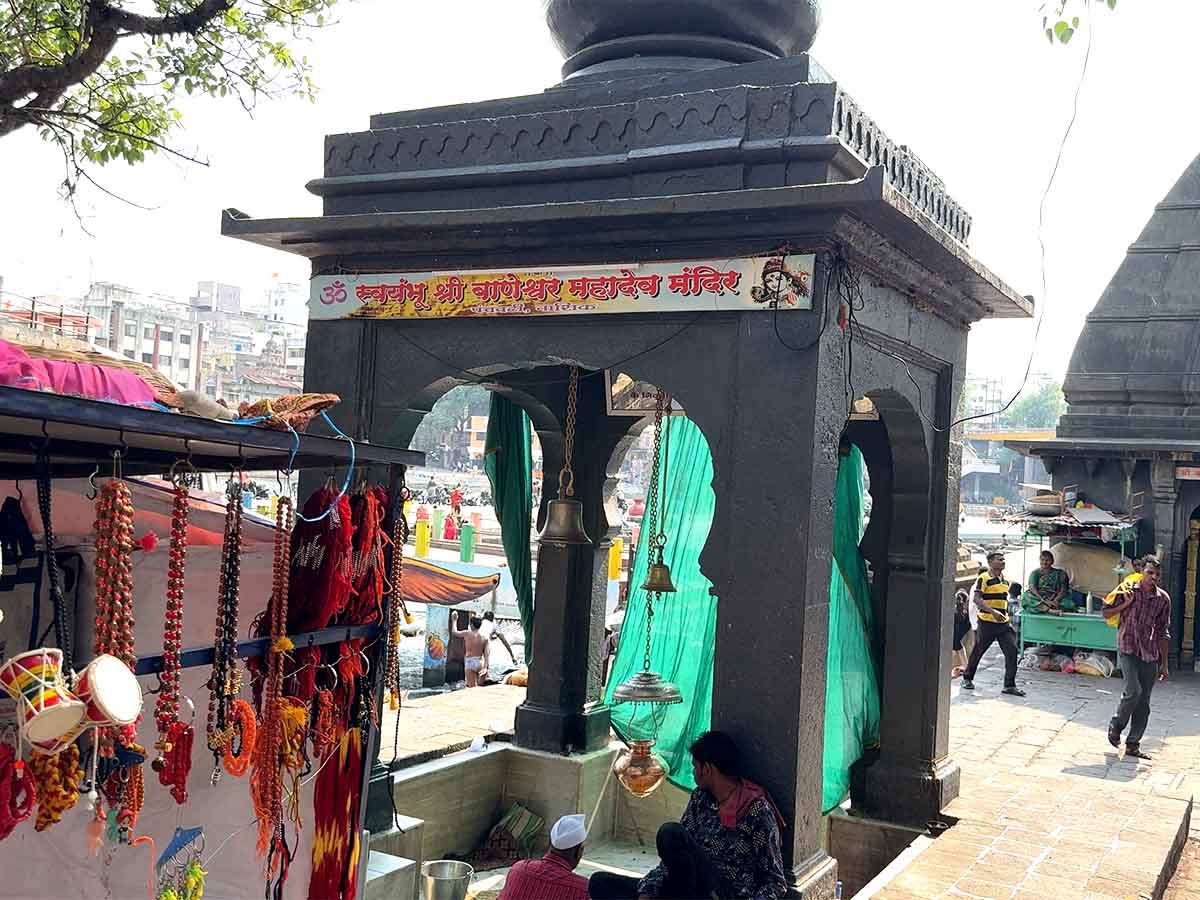
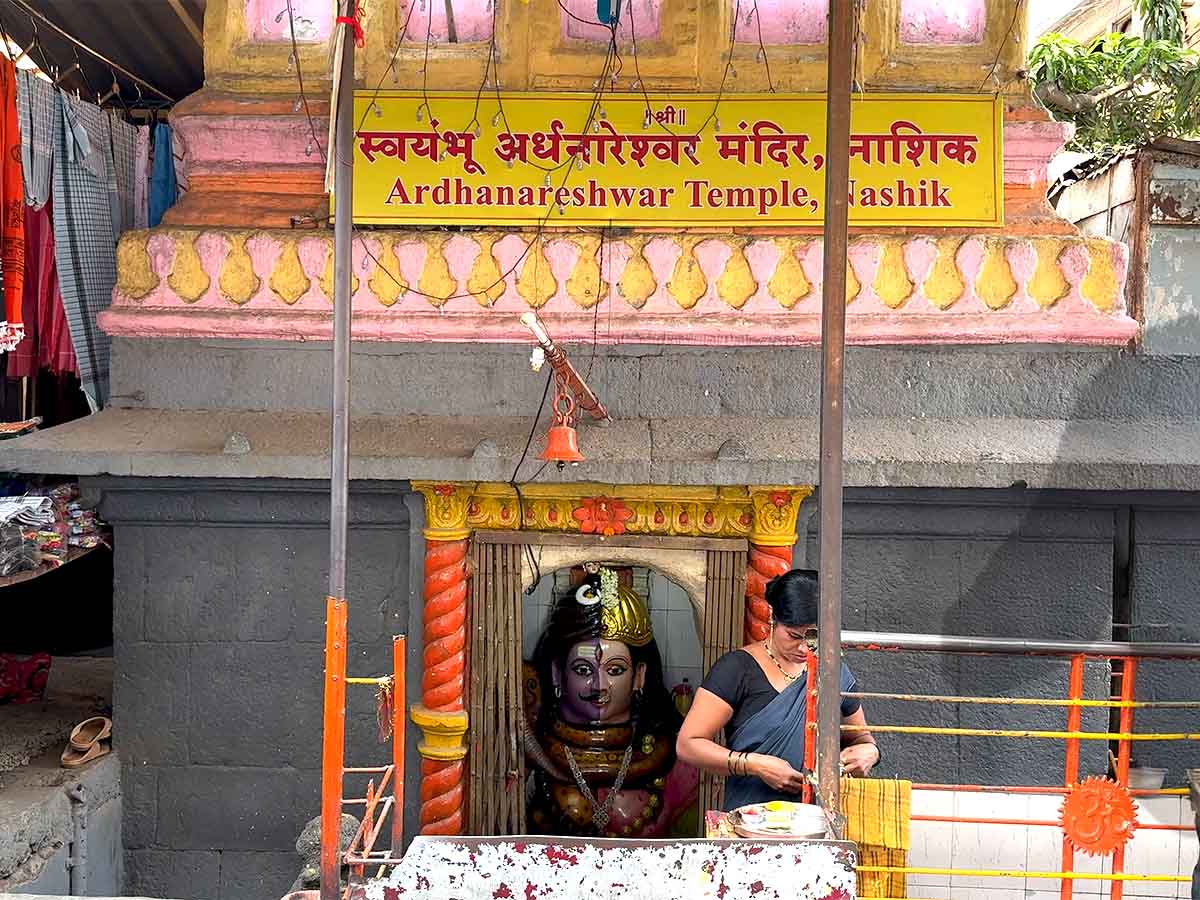
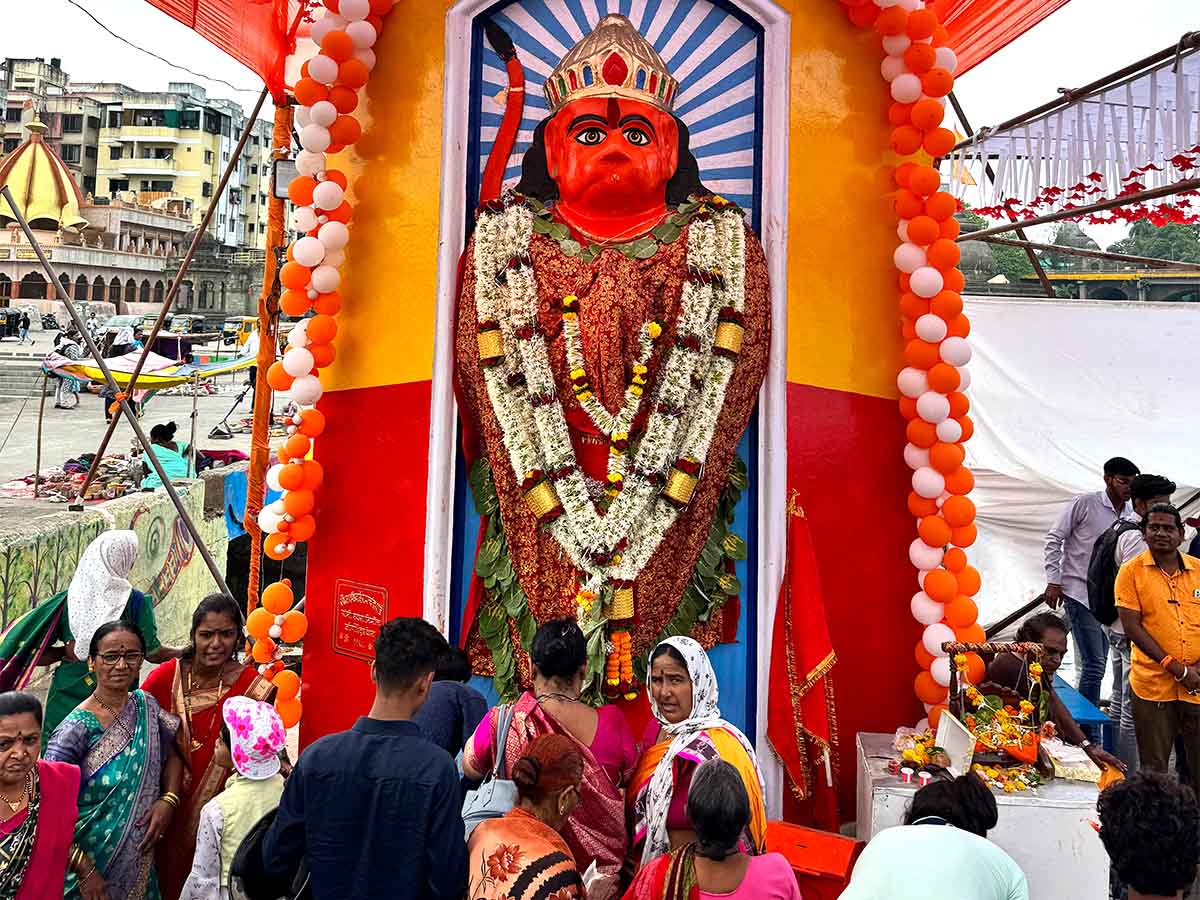
Nearby stand the historic Baneshwar Mahadev Mandir and Ardhanareshwar Mandir, while the Shri Vishweshwar Mandir on the left bank continues to be an important place of worship for devotees of Lord Shiva and the Dutondya Maruti idol is one of the most popular landmarks at the Ramkund Ghat temple complex.
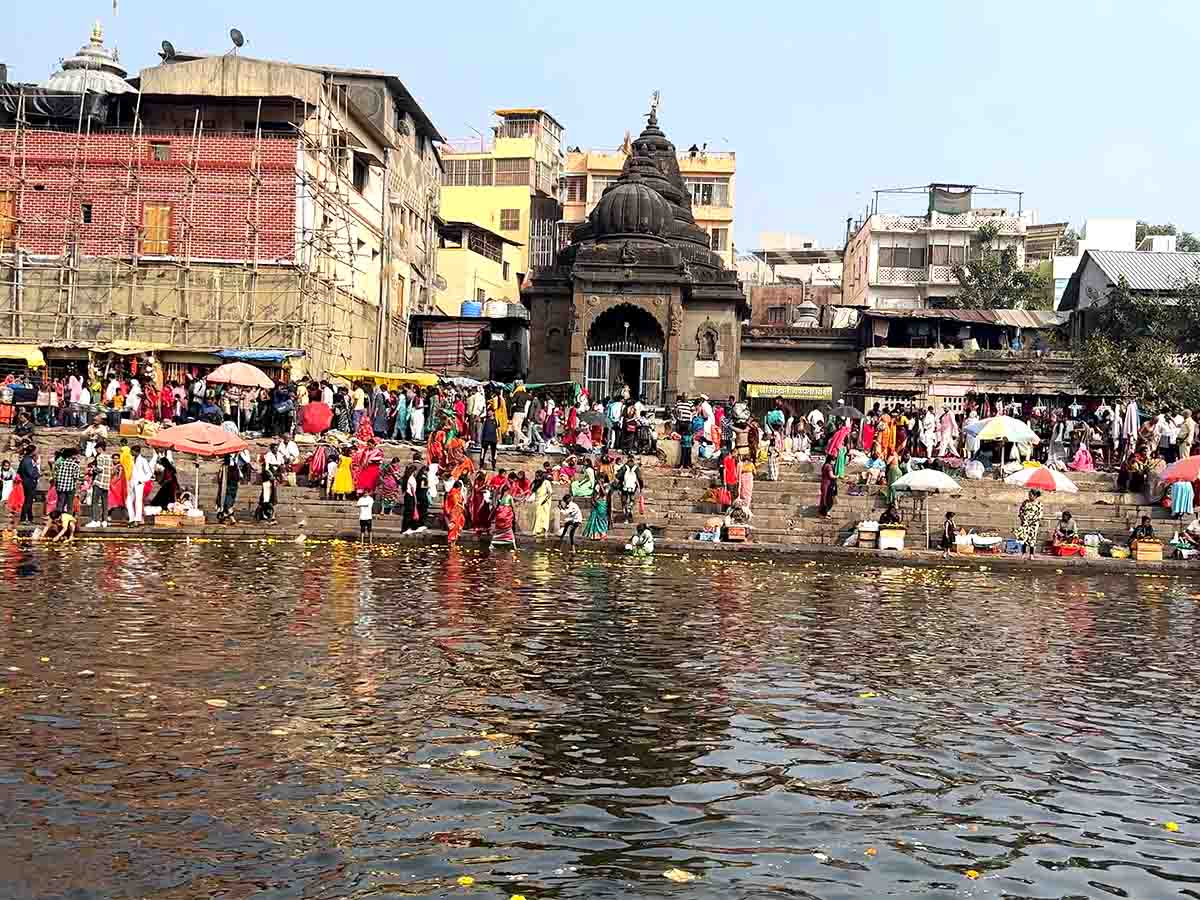
On the opposite bank, visitors encounter the Yashwant Maharaj Mamledar Mandir, dedicated to the revered saint remembered for his compassion and public service.
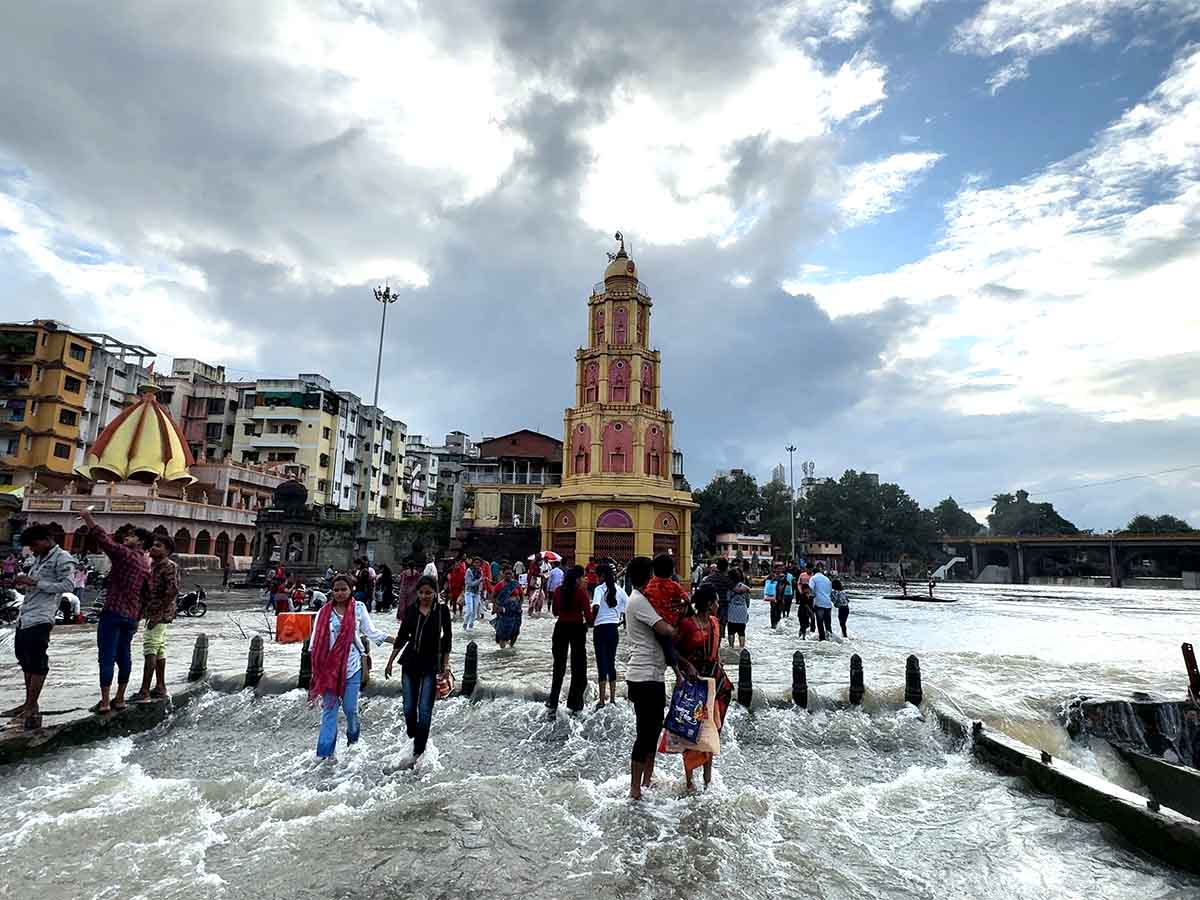
Continuing towards the Gandhi Talav area, pilgrims can also visit the highly revered Ekmukhi Datta Mandir, an important centre of Datta worship that attracts devotees throughout the year.
Proceeding a little further along the riverfront leads to the Nilkantheshwar Mandir, another significant Shiva shrine that quietly overlooks the sacred waters of the Godavari.
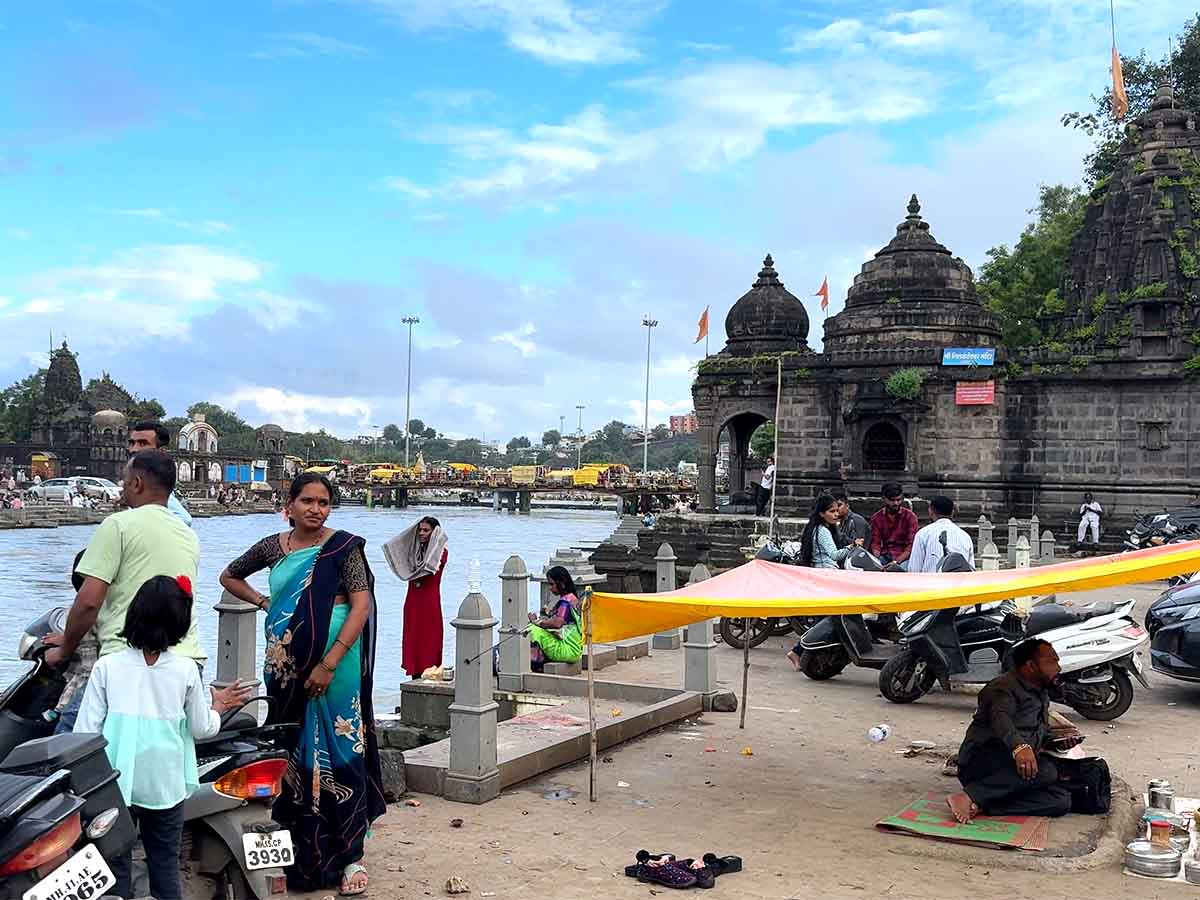
Further downstream, near the Ram Setu Bridge, stand the Sandvyavarchi Devi (Durga) Temple and the historic Naroshankar Temple, both of which contribute to the rich spiritual and architectural heritage of the Godavari riverfront.
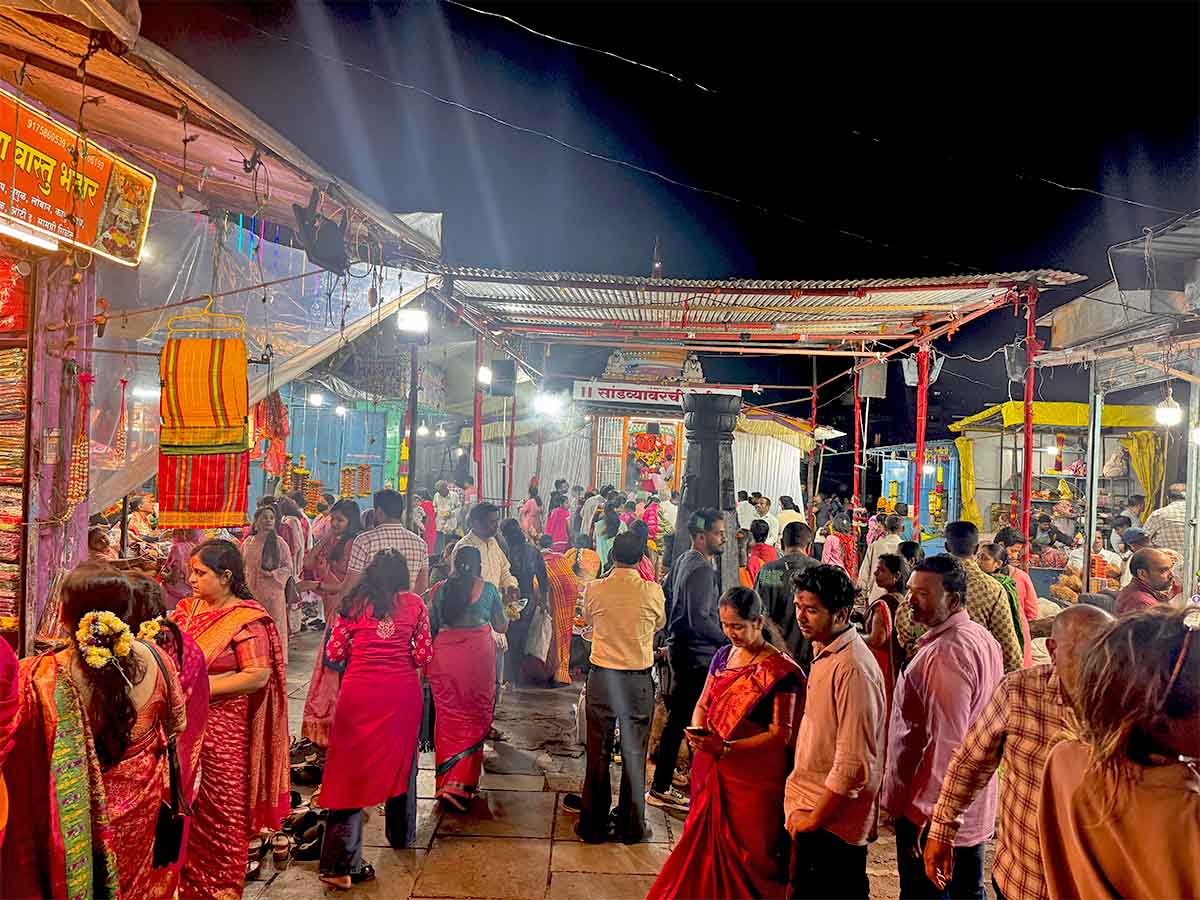
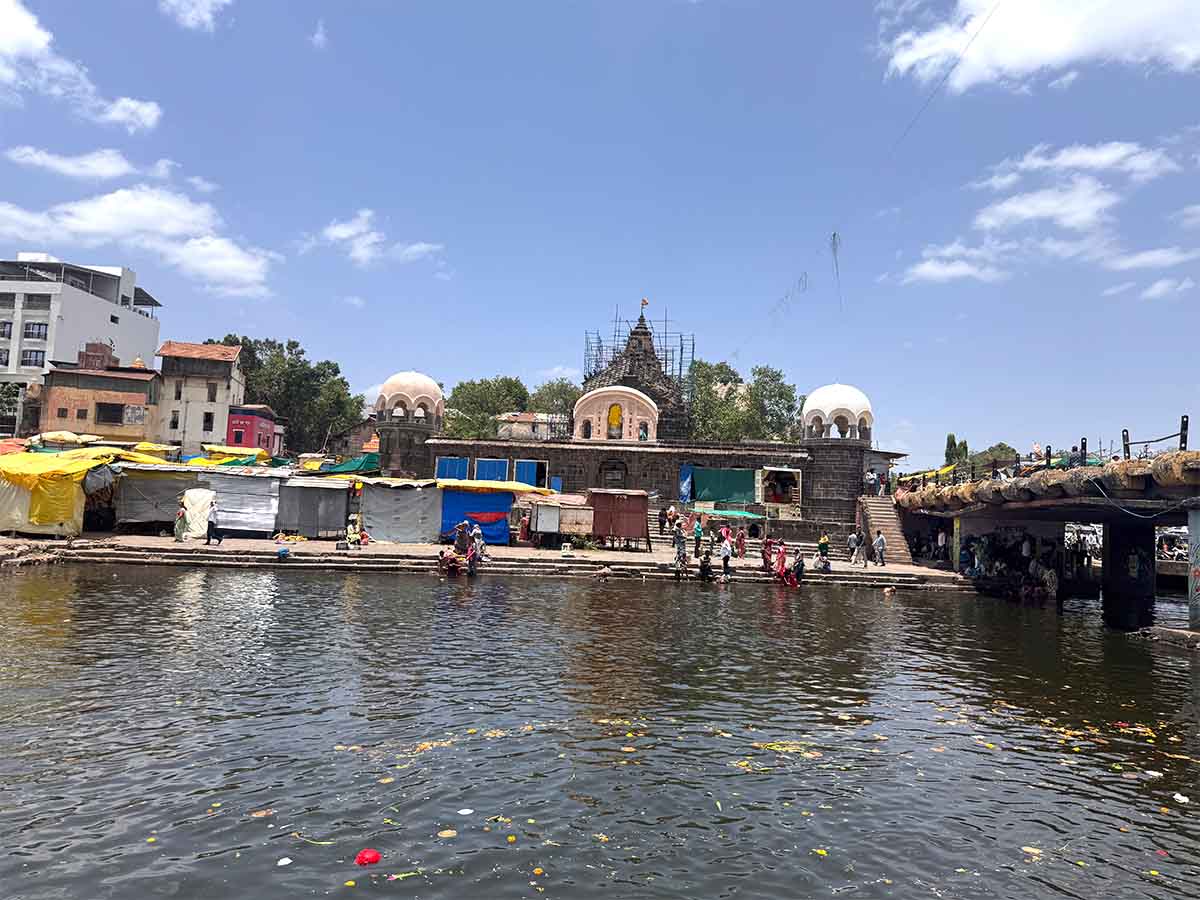
Together, these temples transform a visit to Ramkund into far more than a single stop. They form a continuous sacred corridor where every few steps reveal another shrine, legend or place of worship, offering pilgrims an immersive experience of Nashik’s timeless religious traditions.
Major Nearby Temples and Attractions
A visit to Ramkund is rarely complete without exploring the many historic temples and sacred sites that surround it in the ancient region of Panchavati. Most of these landmarks are located within walking distance, allowing pilgrims to experience several places associated with the Ramayana and Nashik’s rich spiritual heritage in a single visit.
Situated across the road from the main Ramkund entrance is the ancient Kapaleshwar Mahadev Temple, dedicated to Lord Shiva. According to local tradition, it is one of the very few Shiva temples where Nandi is absent before the sanctum, reflecting the unique legend associated with the shrine.
A little further away on the banks of the Godavari at one end of the Ahilyabai Holkar Bridge (formerly Victoria Bridge) stands the elegant Sundar Narayan Temple, celebrated for its beautifully carved stone architecture and fascinating astronomical alignment during the equinox.
Just a short walk from Ramkund stands the magnificent Kalaram Mandir, one of Maharashtra’s most revered temples dedicated to Shri Ram. Built from black basalt stone and renowned for its striking architecture, the temple is also remembered for its role in the historic Kalaram Temple Satyagraha.
Kalaram Temple Nashik: Shriram temple and site related to the Ramayana
Close by is the sacred Sita Gufa, traditionally believed to be the cave where Mata Sita spent time during the exile. The site remains one of the most visited Ramayana landmarks in Panchavati and holds deep emotional significance for devotees.
Sita Gufa Nashik: Cave temple where Mata Sita used to worship Lord Shiva while living in exile
Together with Ramkund, these sacred places form the spiritual heart of Panchavati and offer visitors an opportunity to experience the living legacy of the Ramayana, ancient Puranic traditions and centuries of devotional heritage preserved in Nashik.
Festivals and Sacred Occasions at Ramkund
While Ramkund is a place of worship every day of the year, it comes alive with exceptional spiritual energy during major Hindu festivals and sacred bathing occasions. Thousands of devotees gather on its ghats to perform rituals, take a holy dip in the Godavari and participate in centuries-old traditions that continue to define Nashik’s religious life.
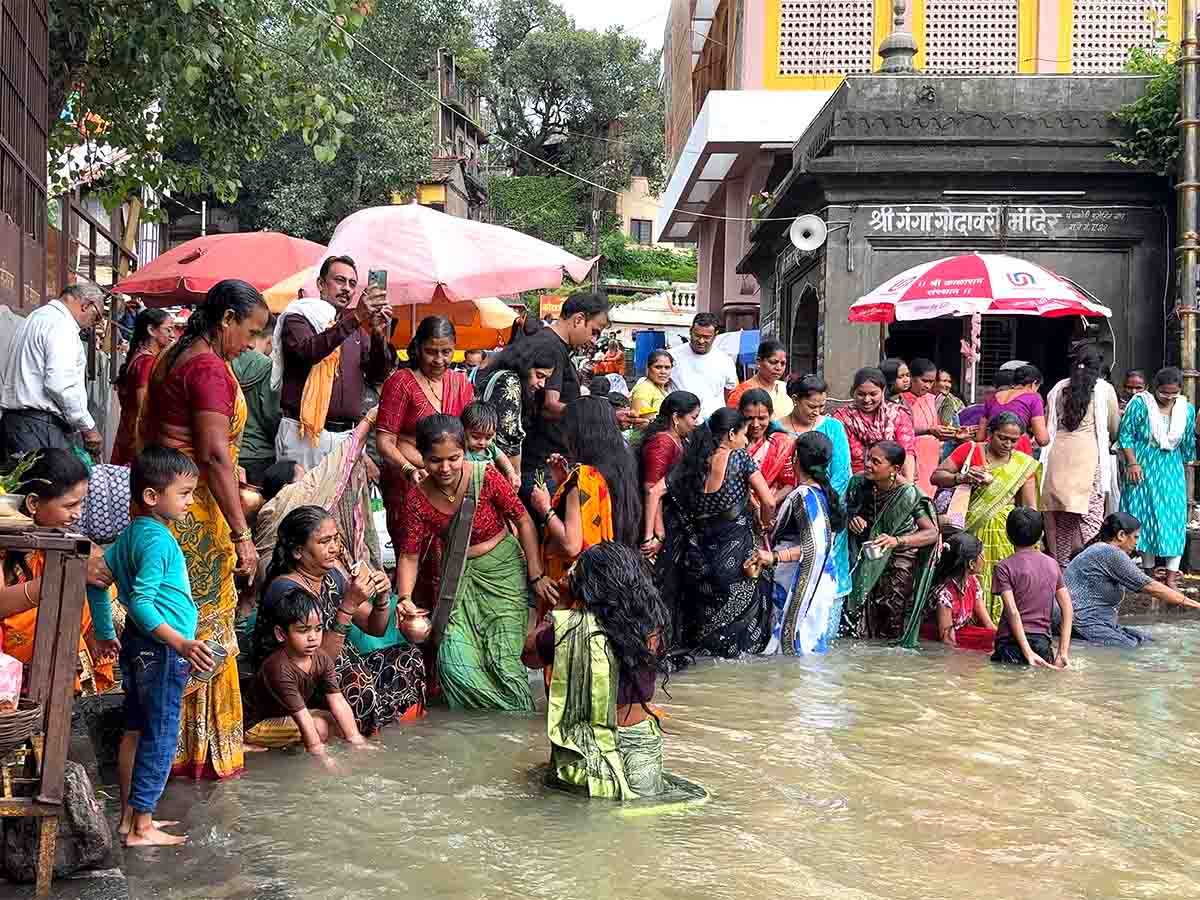
Makar Sankranti marks one of the most important bathing festivals at Ramkund. From the early hours of the morning, devotees flock to the sacred waters believing that a ritual bath on this auspicious day brings spiritual merit and purification.
Another significant occasion is Mauni Amavasya, when pilgrims observe silence, perform prayers and take a holy dip in the Godavari. The ghats witness a large influx of devotees seeking inner reflection and blessings on this spiritually important day.
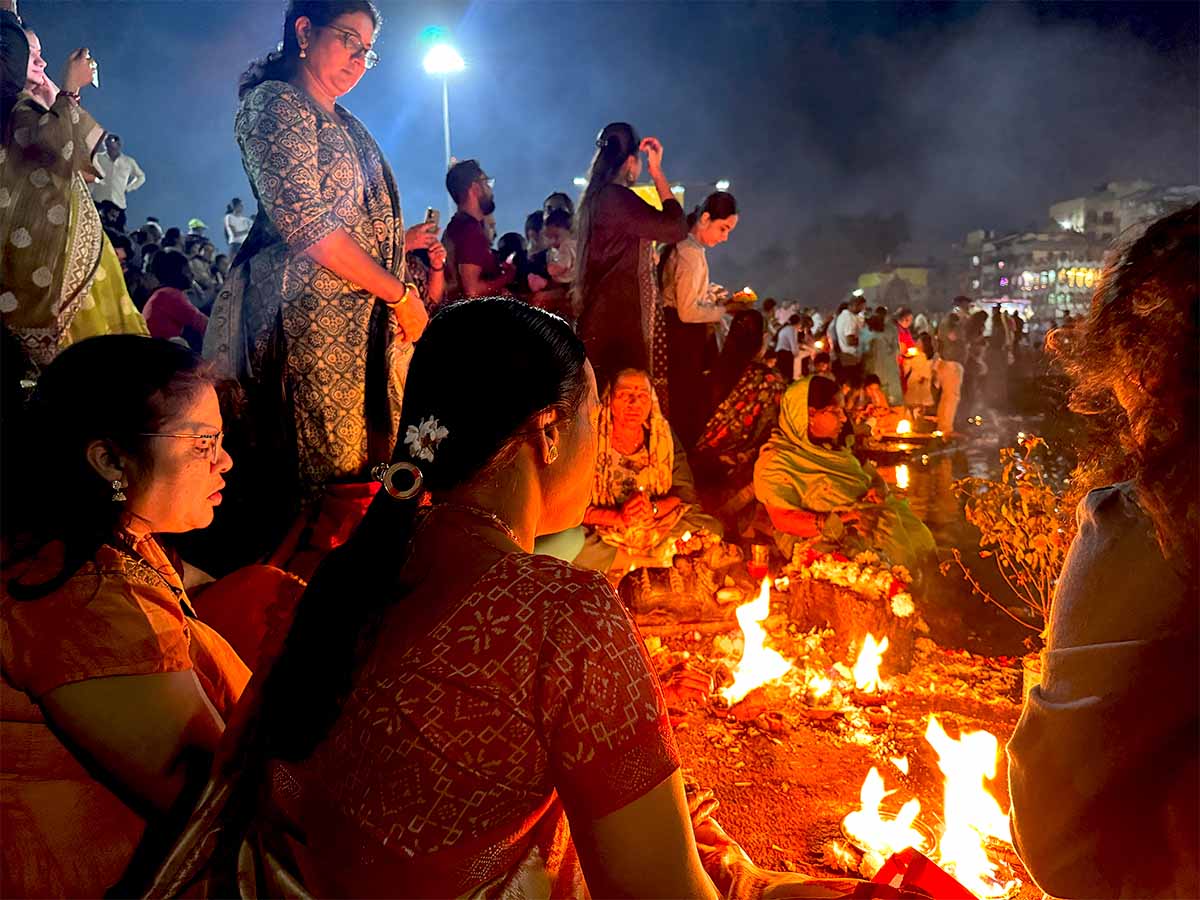
During Kartik Purnima, also celebrated as Dev Deepawali, the atmosphere around Ramkund becomes particularly enchanting. Rows of illuminated lamps adorn the riverfront, creating a breathtaking sight as devotees offer prayers to the sacred Godavari and nearby temples.
The nearby Ekmukhi Datta Mandir makes Datta Jayanti another important observance in the area, drawing devotees who combine their visit with prayers at Ramkund and other shrines along the river.
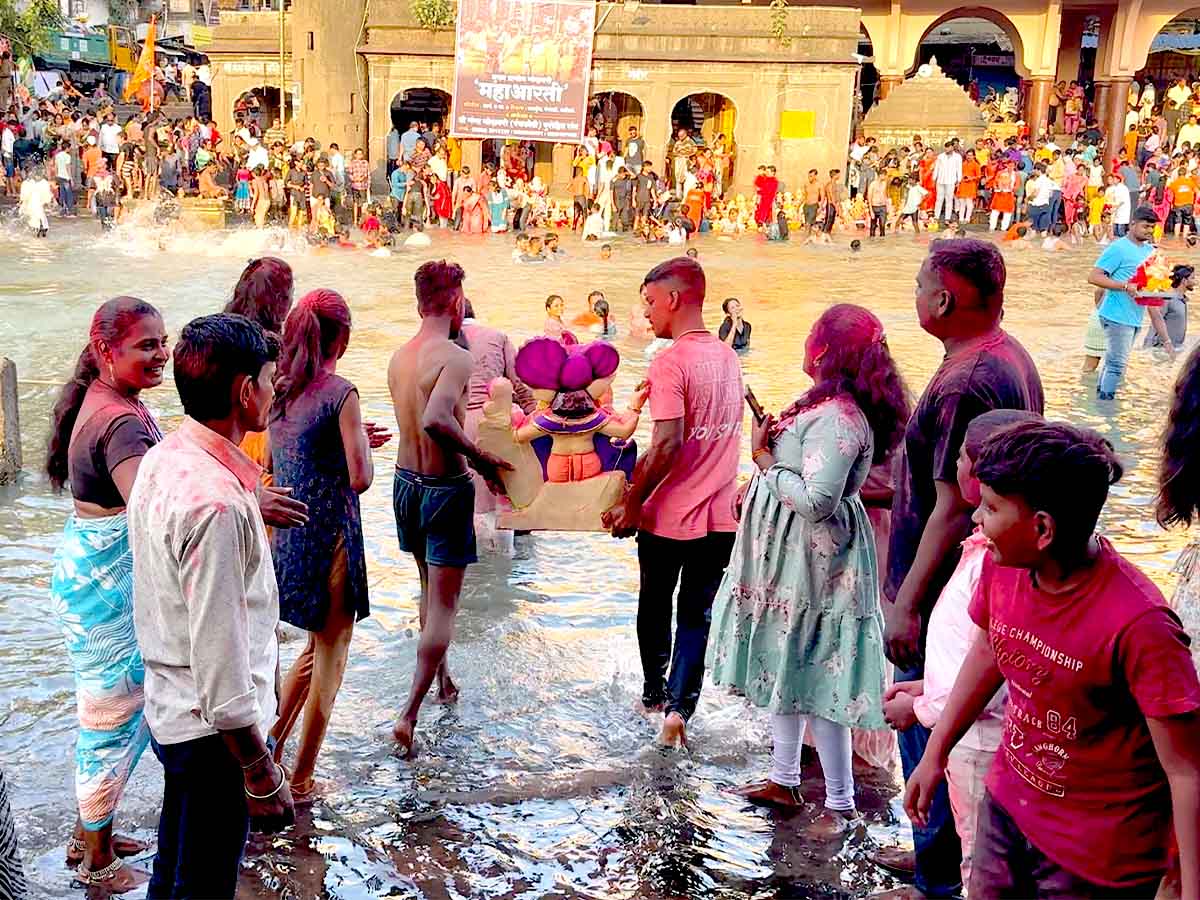
On Anant Chaturdashi, the Godavari ghats around Ramkund see massive crowds and become an important destination for Ganpati Visarjan (the immersion of Lord Ganesha idols), marking the culmination of the Ganesh festival with devotional processions and traditional rituals.
Although discussed separately in detail, the Simhastha Kumbh Mela remains the grandest religious gathering associated with Ramkund, transforming the sacred precinct into one of the world’s largest centres of pilgrimage and spiritual activity.
Throughout the year, these festivals ensure that Ramkund remains not only a historic landmark but also a living centre of faith where ancient customs continue to be observed with deep devotion and reverence.
Ramkund and the Local Economy of Nashik
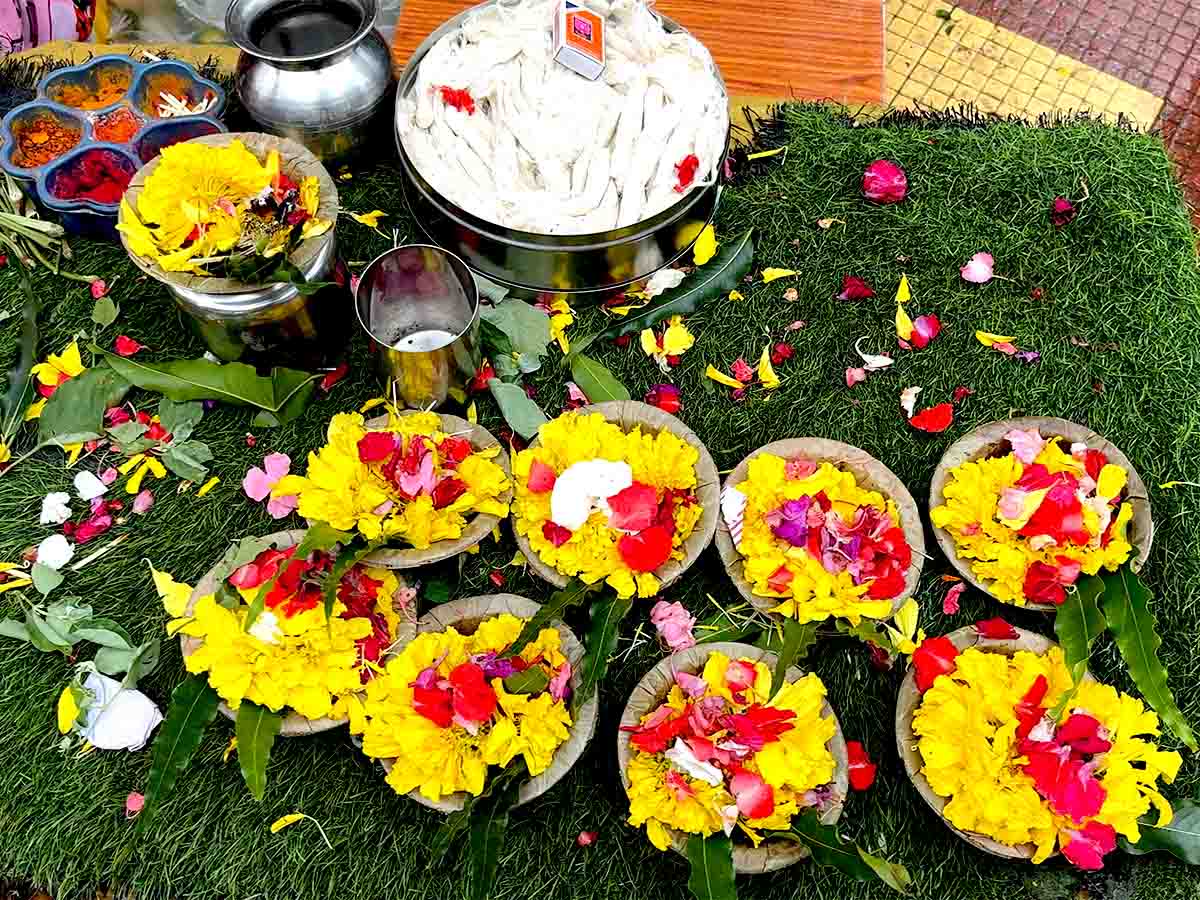
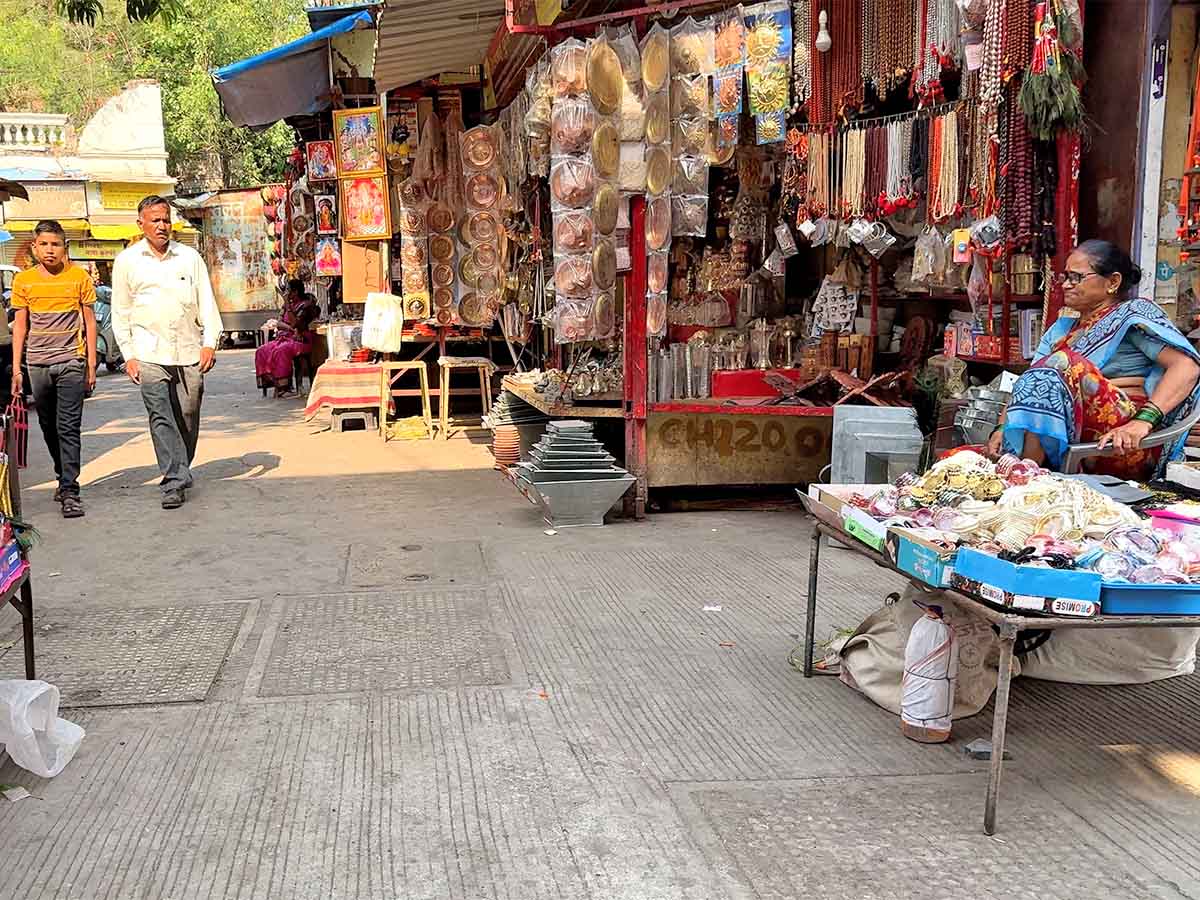
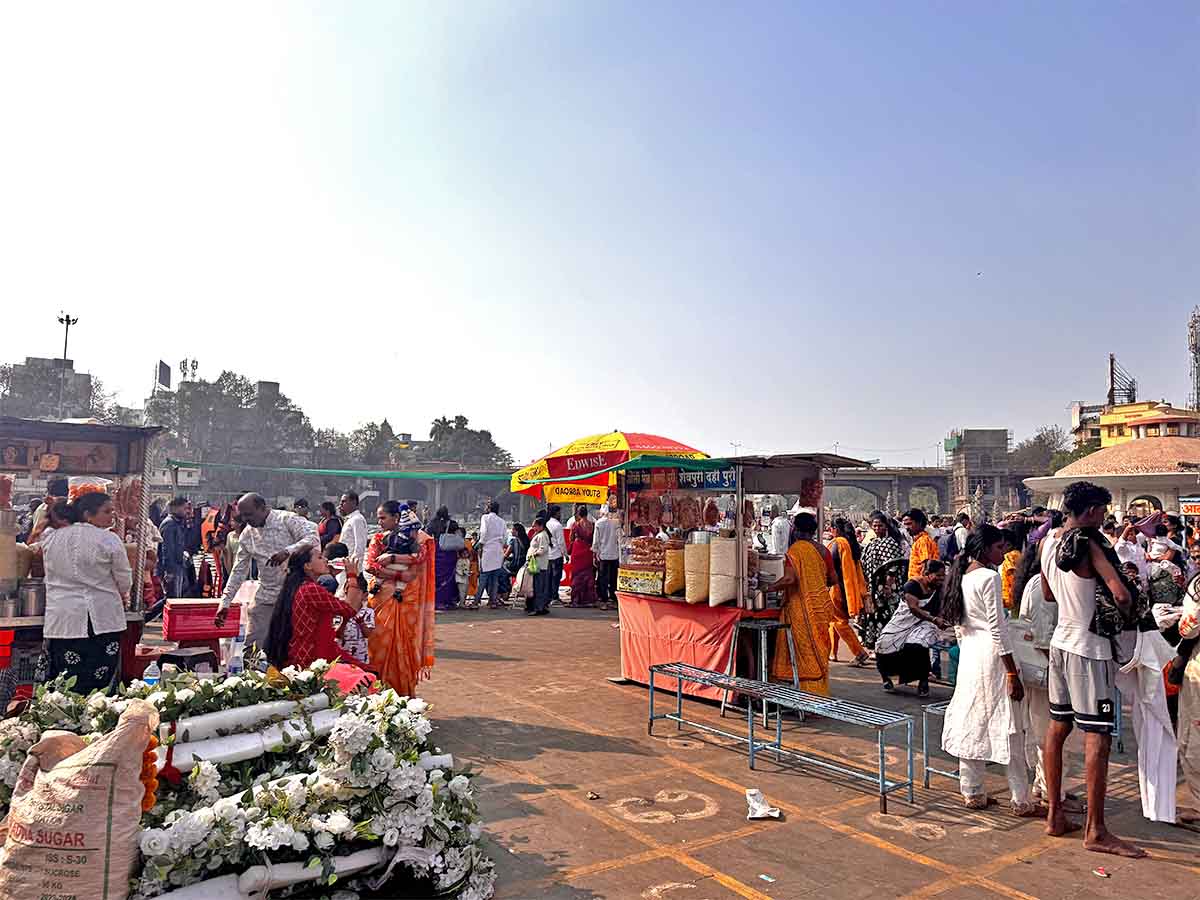
Hundreds of devotees arriving daily at Ramkund create demand for a wide range of goods and services. Along the ghats and surrounding lanes, flower sellers, incense sellers, and shops selling coconuts, kumkum, lamps, and other puja materials cater to the needs of pilgrims.
Numerous priests and purohits assist visitors with rituals ranging from simple offerings and sankalpa pujas to elaborate shraddha and asthi visarjan ceremonies. The influence of Ramkund extends far beyond the immediate riverfront.
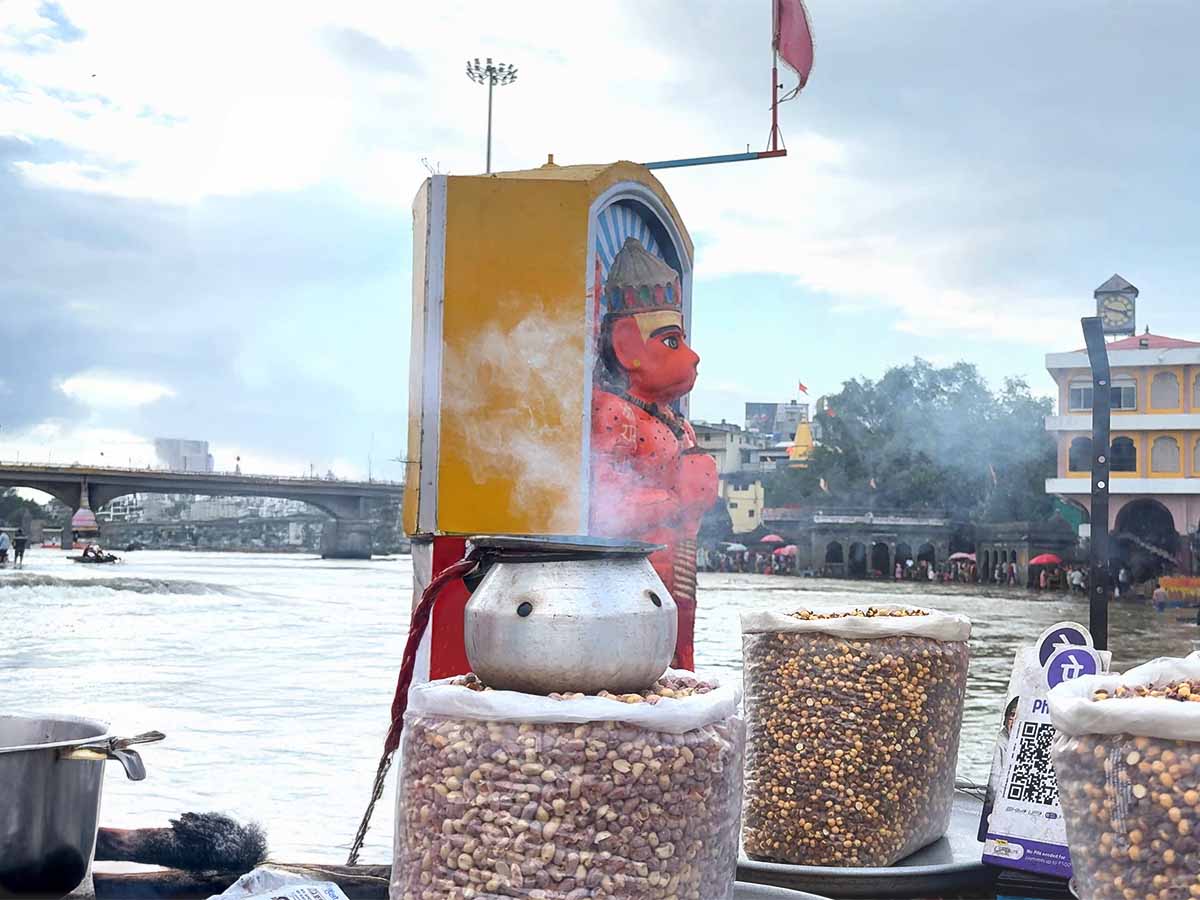
Tea stalls, snack vendors, fruit sellers, sweet shops, and local restaurants depend on the steady flow of visitors throughout the year. During major religious occasions such as Kumbh Mela, Shravan, Pitru Paksha, Ram Navami, and various Amavasyas, this economic activity increases dramatically as lakhs of devotees visit the city.
Many auto-rickshaw drivers and taxi operators earn a significant portion of their income by transporting pilgrims between Ramkund and other important religious sites such as Kalaram Mandir, Sita Gufa, Kapaleshwar Mahadev Mandir, Panchavati, Tapovan, and Trimbakeshwar.
Hotels, guest houses, lodges, and dharmashalas also benefit from the constant movement of pilgrims who visit Nashik as a major spiritual destination.
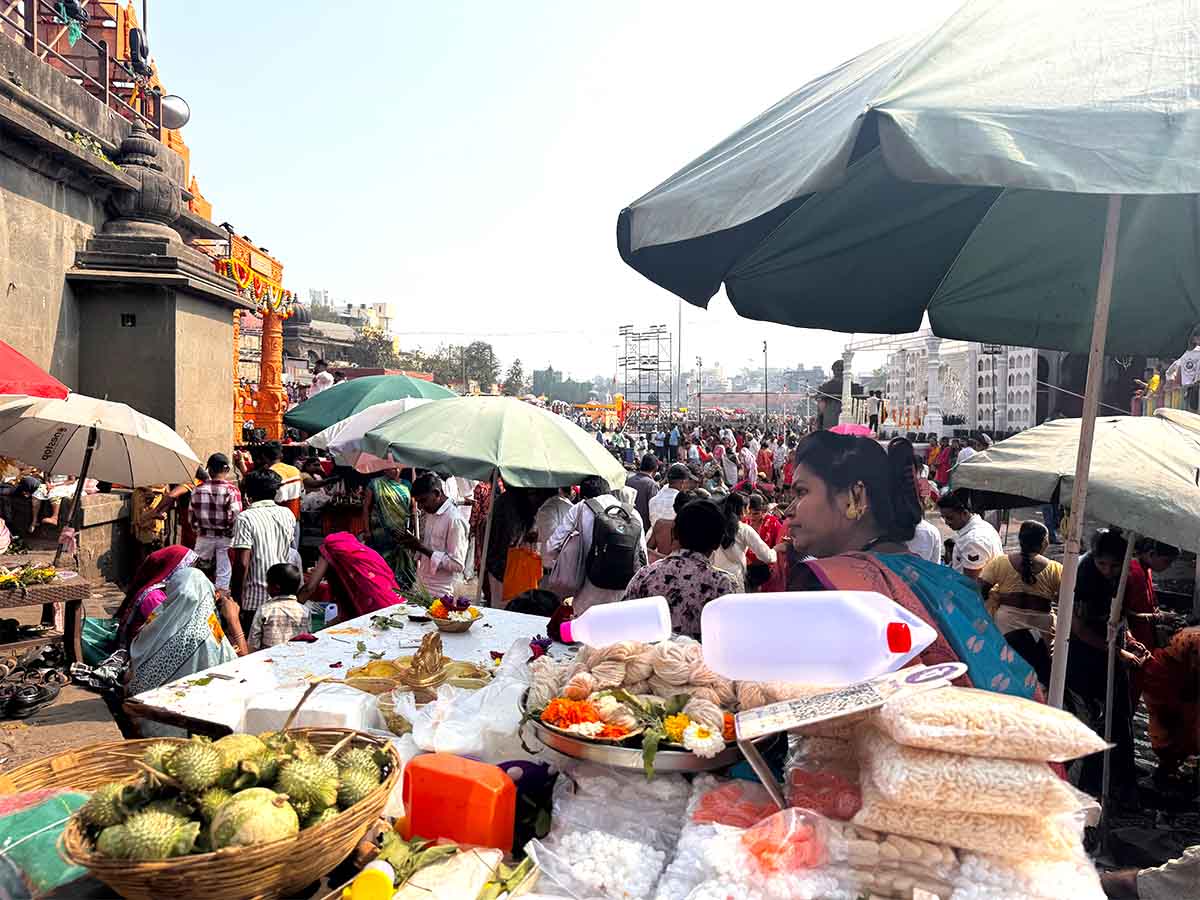
For the people of Nashik, the Godavari is far more than a river flowing through the city. She is Goda Mai or Godavari Mata – a mother whose blessings extend beyond ritual and worship.
Her waters attract pilgrims, sustain traditions, create livelihoods, and support countless families whose sustenance is linked to Ramkund and the sacred geography surrounding it. Just as a mother quietly nurtures her children, the Godavari continues to nourish both the spiritual and economic life of Nashik!
Ramkund Panchwati: Location, Parking, Timings and Travel Tips
Location
Ramkund is located in the historic locality of Panchavati in Nashik, Maharashtra, on the banks of the sacred Godavari River. It lies in the heart of the old city and is easily accessible from all major parts of Nashik.
Parking and Accessibility
A dedicated parking space is available near Ramkund at the Padwa Patangan ground which was formerly the old vegetable market space. This parking area is just a 1 minute walk along the riverbank from the main Ramkund ghat.
How to Reach Ramkund
- By Rail: Nashik Road Railway Station is approximately 10 kilometres from Ramkund and is well connected to major cities across India.
- By Road: Ramkund is easily accessible by taxi, auto-rickshaw and city bus services. It is only a short drive (15 mins) from the Mumbai-Agra Highway.
- By Air: The nearest airport is Nashik (Ozar) Airport, located about 25 kilometres away.
Best Time to Visit
Ramkund can be visited throughout the year. However, the months from October to March offer the most pleasant weather for sightseeing and pilgrimage. Visitors seeking a vibrant spiritual atmosphere may also plan their trip around occasions such as Makar Sankranti, Mauni Amavasya, Kartik Purnima or the Simhastha Kumbh Mela.
Accommodation Near Ramkund
A wide range of hotels, dharmashalas and guest houses are available in and around Panchavati and central Nashik, catering to pilgrims as well as tourists. Visitors planning an early morning ritual or extended temple circuit may find it convenient to stay within or nearby the Ramkund area.
Ramkund Nashik Redevelopment: State of Affairs (July 2026)
Ramkund is currently undergoing one of the most significant redevelopment projects in its recent history. As part of the preparations for the upcoming Simhastha Kumbh Mela 2027, the Maharashtra Government and Nashik Municipal Corporation have launched the Ram Kal Path project to improve the pilgrim experience and restore the historic riverfront.
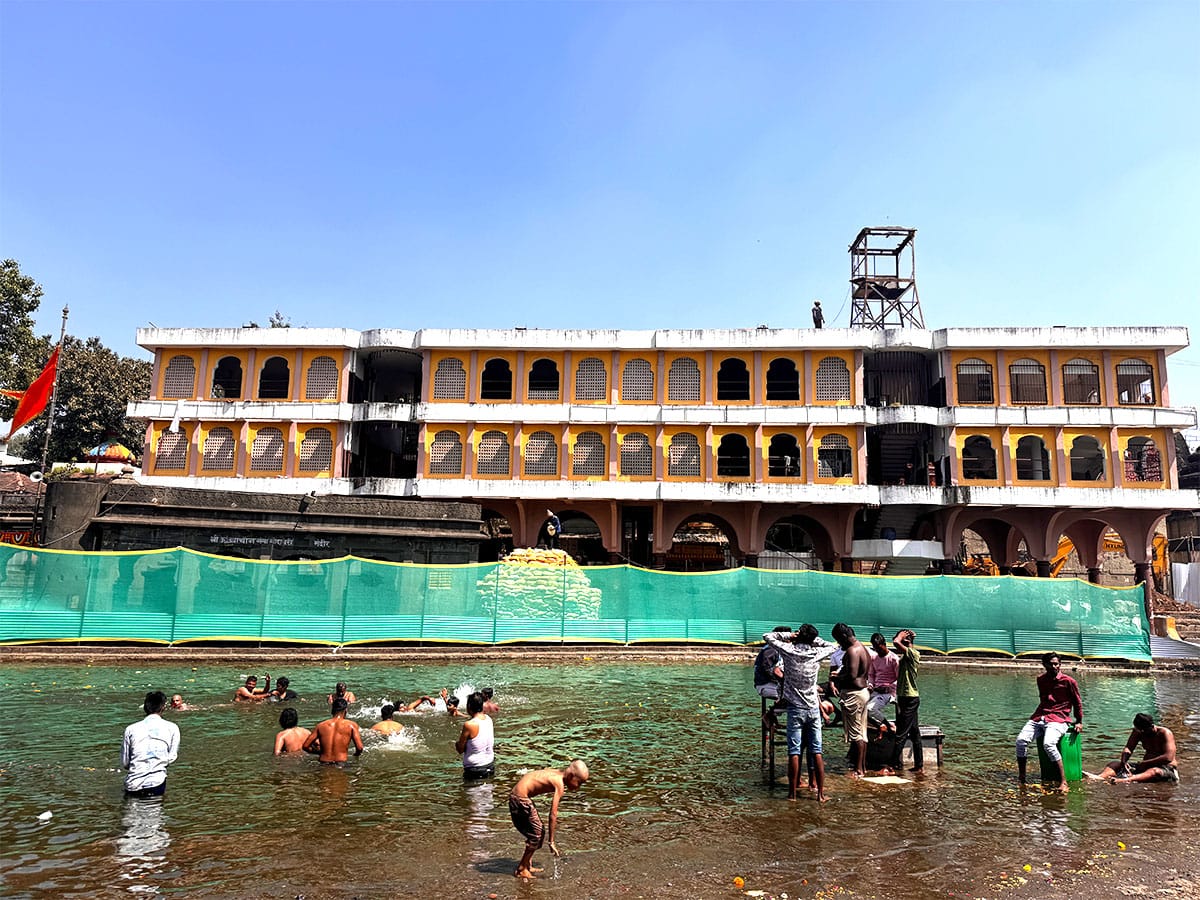
The project includes the widening and beautification of the Godavari riverfront, improved pedestrian pathways, upgraded public amenities, restoration of the ancient ghats, better lighting, landscaping, and improved crowd management infrastructure.
Several old commercial structures and buildings around Ramkund have been acquired and demolished to make way for the new riverfront corridor.
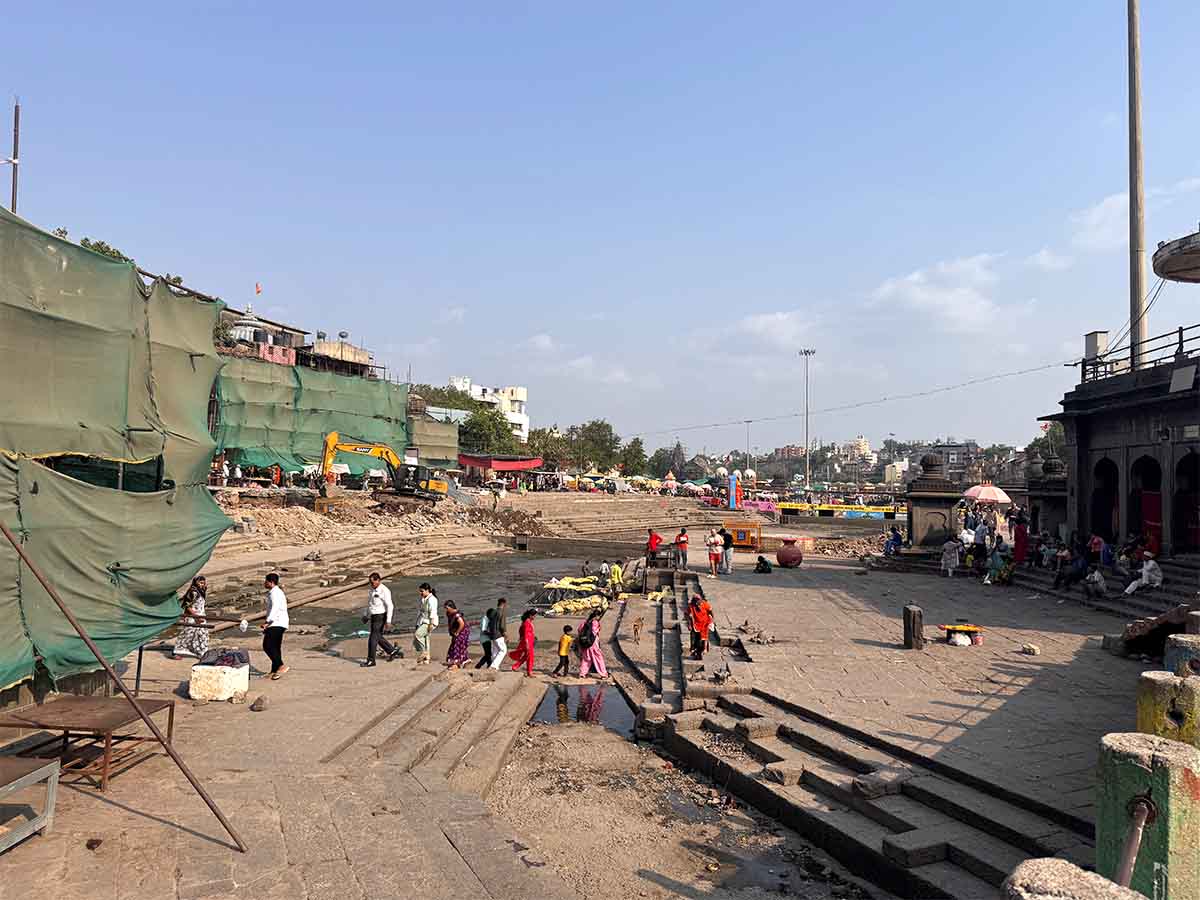
While these works have temporarily altered the familiar appearance of the area and caused some inconvenience to devotees and local businesses, the objective is to preserve Ramkund’s sacred heritage while creating safer and more accessible facilities for the millions of pilgrims expected during Simhastha Kumbh Mela 2027.
Also read Ram Kal Path Nashik: Kumbh Mela Preparations and Route Tour
As redevelopment progresses, the appearance of Ramkund will continue to evolve. Visitors planning a pilgrimage should expect ongoing construction activity in certain areas until the project is completed.
The Spirit of Sanatana Dharma
Ramkund is a living embodiment of Nashik’s spiritual heritage. From its timeless association with Shri Ram and the sacred Godavari to the pooja vidhi, temples, and traditions that continue on its ghats every day, it remains one of India’s most revered tirthas.
Whether you arrive in search of devotion, history or cultural discovery, a visit to Ramkund offers an experience that resonates long after you leave its sacred waters.
In a rapidly modernizing world, Ramkund Tirthsthan continues to stand as a serene reminder of the enduring power of Dharma and the timeless allure of India’s cultural landscapes!
Ramkund Nashik FAQs
What is the significance of Ramkund in Nashik?
Ramkund is the most sacred ghat on the Godavari River in Nashik. According to tradition, Shri Rama used to bathe here while living in exile in Panchavati. It is regarded as one of India’s most important pilgrimage sites for holy bathing, Shraadha, Tarpan and asthi visarjan rituals.
What is Asthi Vilay Tirth at Ramkund?
Asthi Vilay Tirth is a sacred section of Ramkund where immersed ashes and bone fragments are traditionally believed to dissolve rapidly in the waters of the Godavari. It is one of the reasons Ramkund is highly revered for asthi visarjan ceremonies.
Why do people perform Shraddha and Tarpan at Ramkund?
Ramkund is considered one of the most auspicious places in India for honouring ancestors due to the tradition of Shriram having performed Shraadha for his father here. Devotees visit throughout the year to perform Shraddha, Tarpan and other Pitru rituals, with the largest gatherings occurring during Pitru Paksha.
What is the connection between Ramkund and Kumbh Mela?
Ramkund is one of the principal bathing ghats used during the Nashik-Trimbakeshwar Simhastha Kumbh Mela. Millions of pilgrims and ascetics gather here to take the sacred Snan in the Godavari River.
Which temples are located near Ramkund?
Several important temples surround Ramkund, including Ganga Godavari Mandir, Baneshwar Mahadev Mandir, Vishweshwar Mandir, Yashwant Maharaj Mamledar Mandir, Nilkantheshwar Mandir, Ekmukhi Datta Mandir, Naroshankar Temple and Sandvyavarchi Devi Temple. Nearby landmarks include Kapaleshwar Mahadev, Kalaram Mandir and Sita Gufa.
How do we attend the Godavari Aarti at Ramkund?
Visitors can witness the traditional Godavari Aarti performed by the Shri Ganga Godavari Panchkothi Purohit Sangh as well as the larger evening aarti organised by the Shri Ramtirth Godavari Seva Samiti at 6.30pm daily.
What are the timings of Ramkund Nashik?
Ramkund remains accessible throughout the day, with the most active period being early morning when devotees arrive for holy bathing, puja and ritual ceremonies. Major festivals and auspicious dates attract particularly large crowds.
What is the significance of the Godavari River at Ramkund?
The Godavari, often called the Dakshin Ganga (Ganges of the South), is central to the spiritual importance of Ramkund. Originating at Brahmagiri near Trimbakeshwar, the river is revered for holy bathing, ancestral rites and major religious festivals.