Guru Purnima is one of the most sacred festivals in Sanatana Dharma, dedicated to expressing gratitude towards the Guru – the enlightened guide who dispels ignorance and illuminates the path of wisdom.
Observed on the full moon (Purnima) of the Hindu month of Ashadha, the festival honours the timeless Guru-Shishya Parampara (teacher-disciple tradition) that has preserved India’s spiritual knowledge, scriptures, philosophy, yoga, and culture for thousands of years.
The day is celebrated across India by offering prayers to one’s Guru, remembering the immense contributions of Maharishi Ved Vyasa, and reflecting upon the invaluable role of teachers, saints, and spiritual masters in shaping both individual lives and civilisation itself.
Also read Hartalika Tritiya 2026: Date, Story & Celebrations
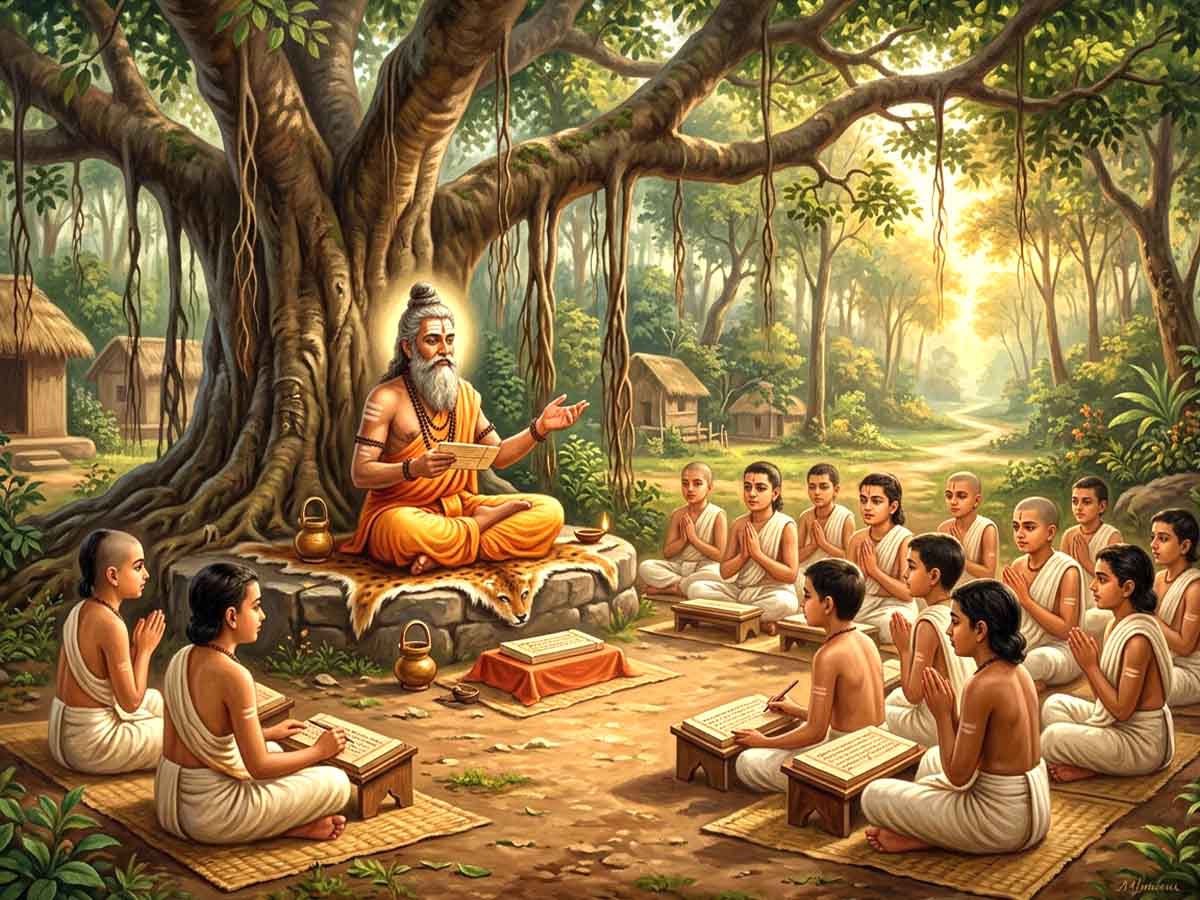
When is Guru Purnima in 2026?
Guru Purnima will be celebrated on Wednesday, 29 July 2026 which is the full moon day of the month of Ashadha (July- August).
Guru Purnima 2026
- Guru Purnima Date : 29 July 2026
- Purnima Tithi starts : 6:18pm on 28 July 2026
- Purnima Tithi ends : 8:07pm on 29 July 2026
- Shubh Muhurat : 5:41am to 9:04am 29 July 2026
As per the Udayatithi principle (day on which the tithi sees the sunrise), Guru Purnima will be observed on 29 July 2026.
Ramkund: Sacred Ghat on the banks of the Godavari
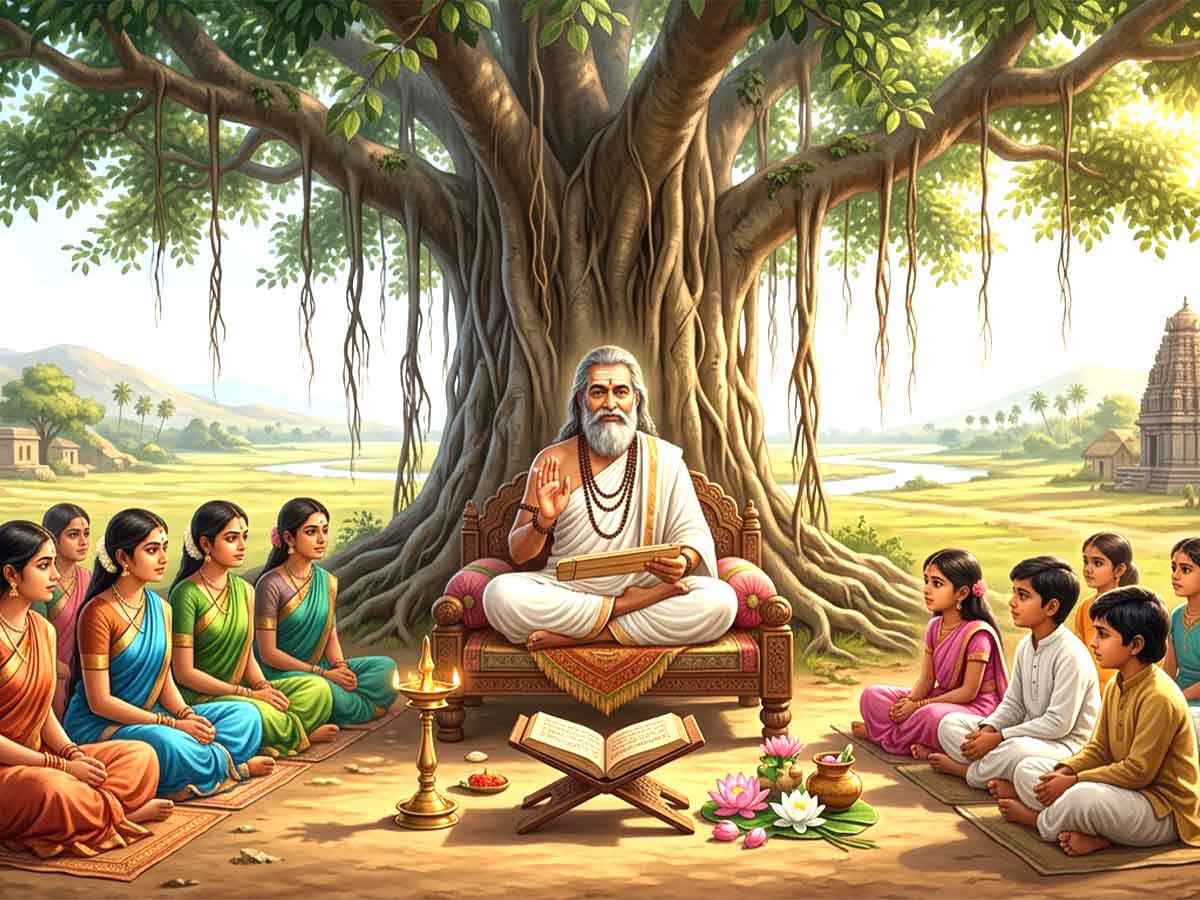
Guru Purnima Rituals and Puja Vidhi
Guru Purnima is observed with devotion, gratitude, and self-reflection. While traditions differ across India, the day is dedicated to honouring the Guru and seeking blessings for wisdom, righteous living, and spiritual progress.
Snaan – sacred bath
The day traditionally begins with a holy bath during the early morning, followed by wearing clean or traditional clothes. Devotees prepare themselves physically and mentally before beginning worship.
Aashirwad – Blessings of Parents and Guru
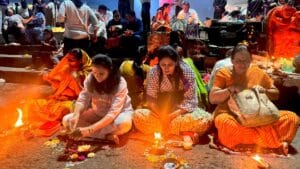
Many families first seek the blessings of parents and elders, who are regarded as a child’s first Gurus. Devotees then offer flowers, fruits, incense, lamps, and prayers to their Guru or Guru Padukas.
Sita Gufa: Cave shring of Mata Sita in Panchavati Nashik
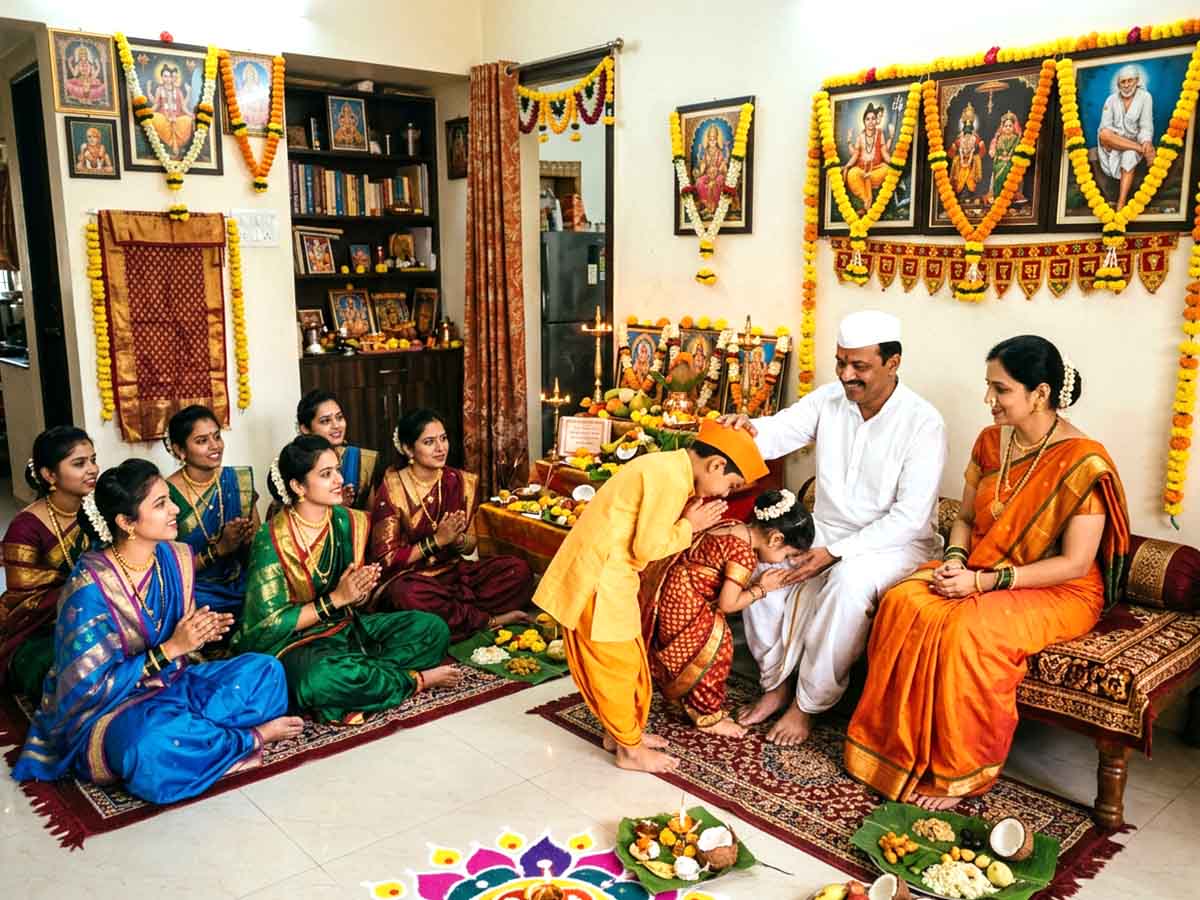
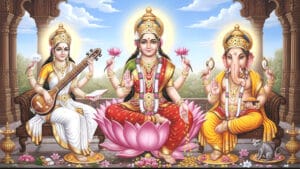
Pooja – Worship of Lakshmi Narayana
In many Hindu households, Lord Vishnu and Goddess Lakshmi are worshipped on Guru Purnima. Where possible, families perform Shri Satyanarayana Puja and Katha. If this is not feasible, simple worship using Tulsi, Dhoop, Deepa, yellow flowers, and yellow fruits is considered equally devotional. After performing Aarti, prasad is shared with family members and visitors.
Daan – helping the needy
Offering food, clothes, books, or helping those in need is regarded as especially meritorious on Guru Purnima. Charity reflects the Guru’s teachings of compassion, humility, and selfless service.
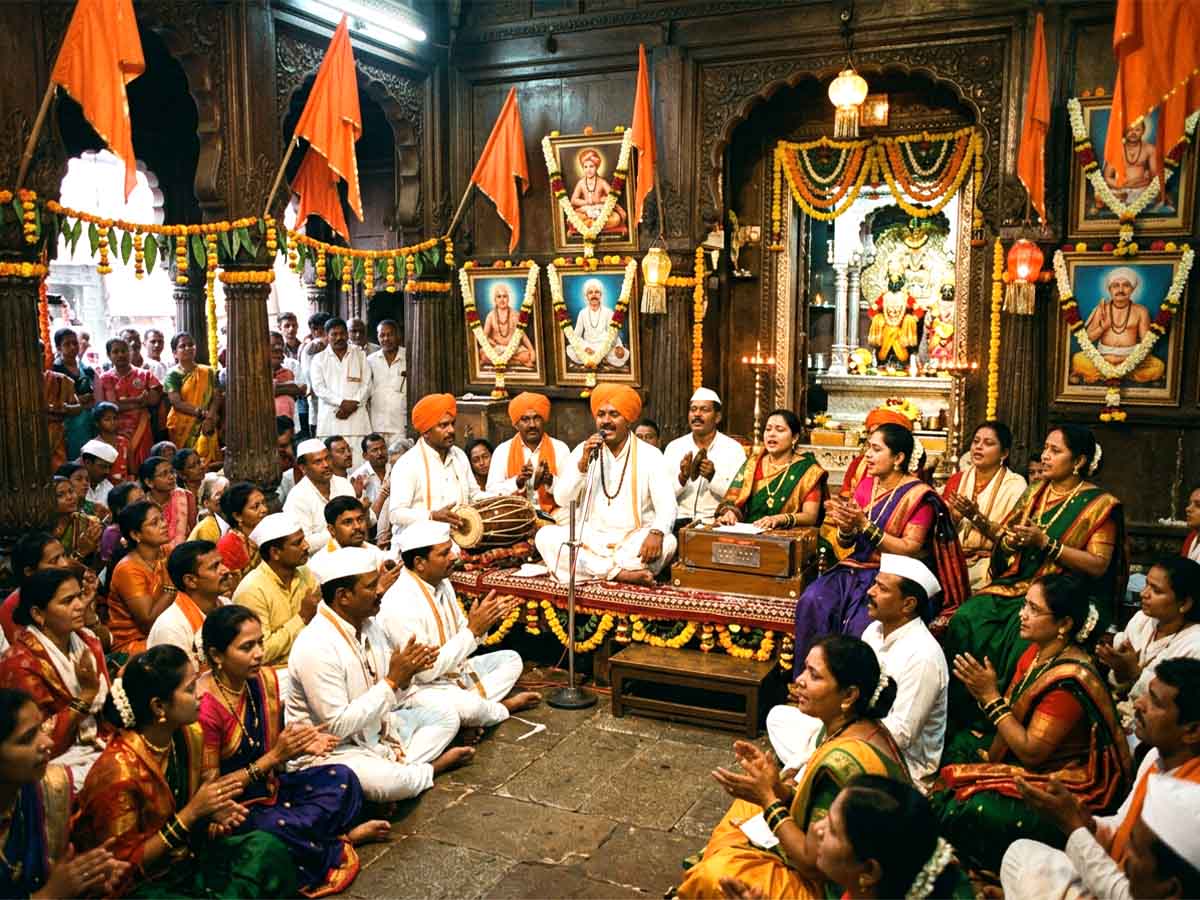
What is the Significance of Guru Purnima?
Guru Purnima is celebrated to express gratitude towards those who guide us from ignorance to knowledge and from darkness to wisdom.
In the Indian tradition, learning is considered a sacred journey that transforms the mind, refines one’s character, and ultimately leads towards self-realisation. At the heart of this journey stands the Guru, whose guidance enables the disciple to discover truth through knowledge, discipline, and experience.
Guru Purnima celebrates an eternal ideal. It reminds us that every generation inherits its wisdom because countless Gurus dedicated their lives to preserving and transmitting knowledge.
From the Vedic sages who safeguarded the scriptures through oral tradition to modern teachers who inspire future generations, Guru Purnima honours the unbroken lineage of learning that continues to shape Indian civilisation. People express gratitude to parents, teachers, mentors, saints, and all those whose guidance has enriched their lives.
Meaning of Guru in Sanatana Dharma
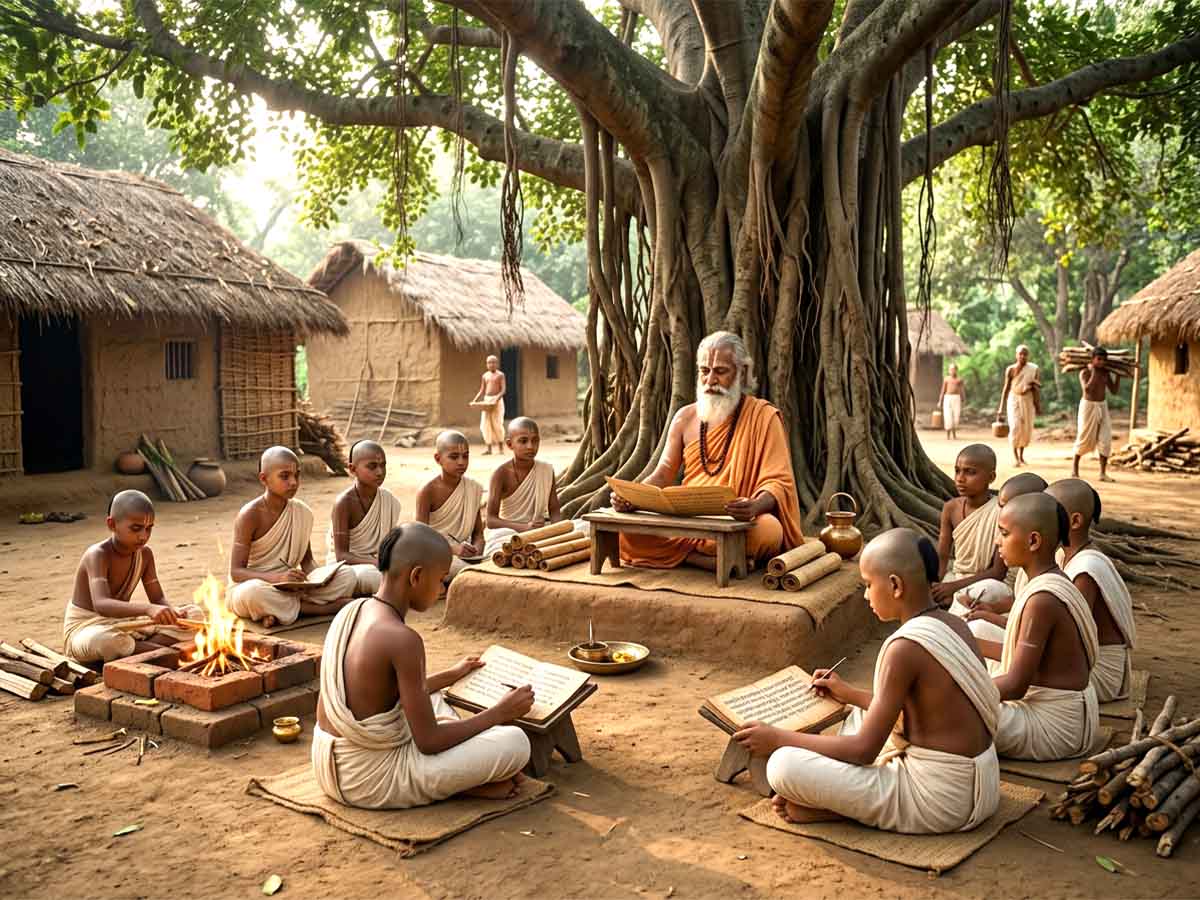
The word Guru is one of the most revered terms in Sanatana Dharma. Although often translated simply as “teacher,” its meaning is far deeper. A Guru is one who guides an individual from ignorance to wisdom, helping them grow intellectually, morally, and spiritually.
According to the traditional Sanskrit interpretation: Gu means darkness or ignorance and Ru means remove or dispeller.
Together, Guru means “the one who removes the darkness of ignorance and leads the seeker towards the light of knowledge and inspires to walk the path of Dharma and ultimately realise the truth of the Self..”
This profound relationship is beautifully expressed in the famous verse from the Guru Gita:
Gurur Brahma Gurur Vishnu
Gurur Devo Maheshwarah
Gurur Sakshat Parabrahma
Tasmai Shri Gurave Namah
Meaning: The Guru embodies the creative wisdom of Brahma, the sustaining grace of Vishnu, and the transformative power of Maheshwara (Shiva). The Guru is the manifestation of the Supreme Reality itself. Salutations to that revered Guru.
Guru Purnima reminds us that throughout life we are blessed with many Gurus-parents, teachers, mentors, saints, and spiritual masters-each helping us progress in different ways. Honouring them with gratitude is the very essence of this sacred festival.
Guru-Shishya Parampara: India’s Timeless Tradition of Learning
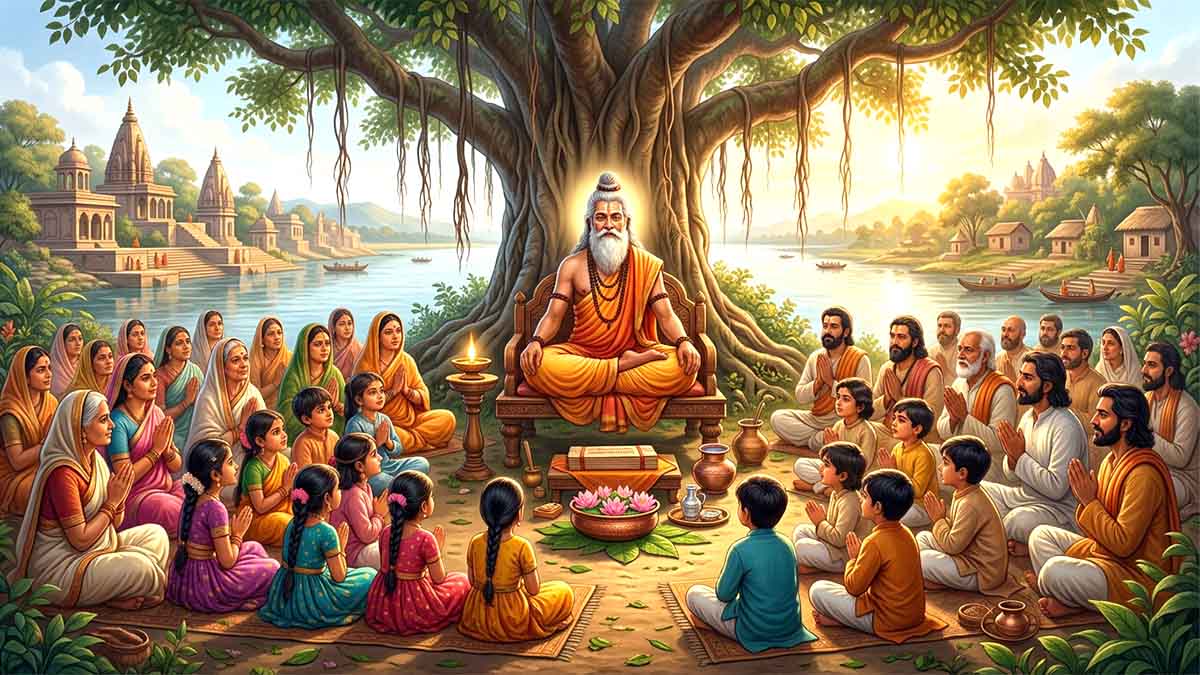
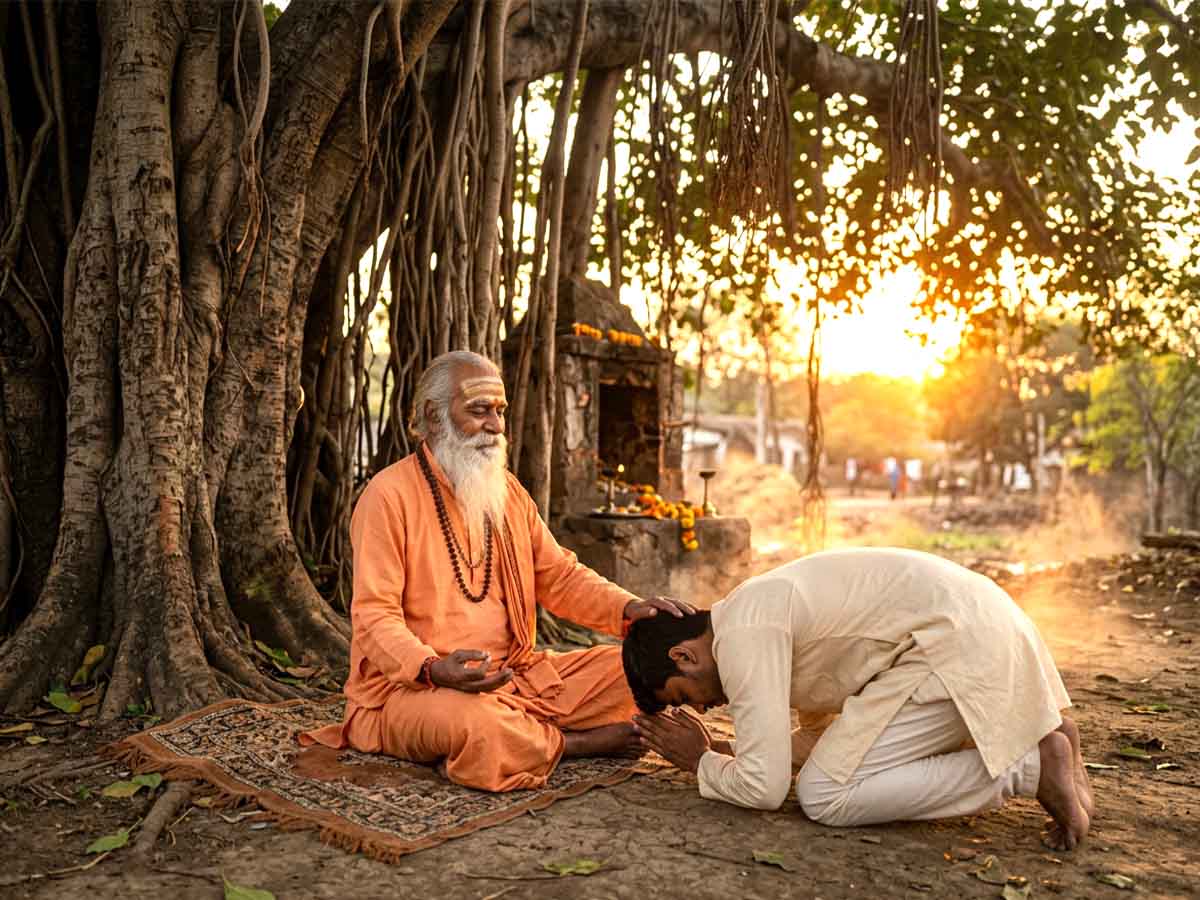
Long before schools and universities existed, knowledge in India was preserved through the sacred Guru-Shishya Parampara (teacher-disciple tradition). In this unique system, students lived with their Guru in Gurukuls, where education extended far beyond reading scriptures. Along with the Vedas, they learnt discipline, ethics, self-reliance, meditation, arts, sciences, and the principles of righteous living.
The Guru–Shishya tradition became the foundation upon which India’s spiritual and intellectual heritage flourished. For centuries, sacred texts such as the Vedas, Upanishads, and many philosophical teachings were carefully transmitted from Guru to disciple through oral recitation, ensuring their preservation long before they were written down.
Guru Purnima celebrates this timeless tradition by reminding us that every generation inherits its wisdom because countless Gurus dedicated their lives to preserving and sharing knowledge.
Even today, the spirit of the Guru-Shishya Parampara continues in schools, classical music and dance, yoga, spiritual lineages, and every place where knowledge is passed on with dedication and reverence.
Among all the revered Gurus in Indian tradition, Maharishi Ved Vyasa holds a unique place. His extraordinary contribution to preserving Vedic knowledge is the reason Guru Purnima is also celebrated as Vyasa Purnima.
Kalaram Mandir Nashik: Ancient temple in Nashik dedicated to Shriram
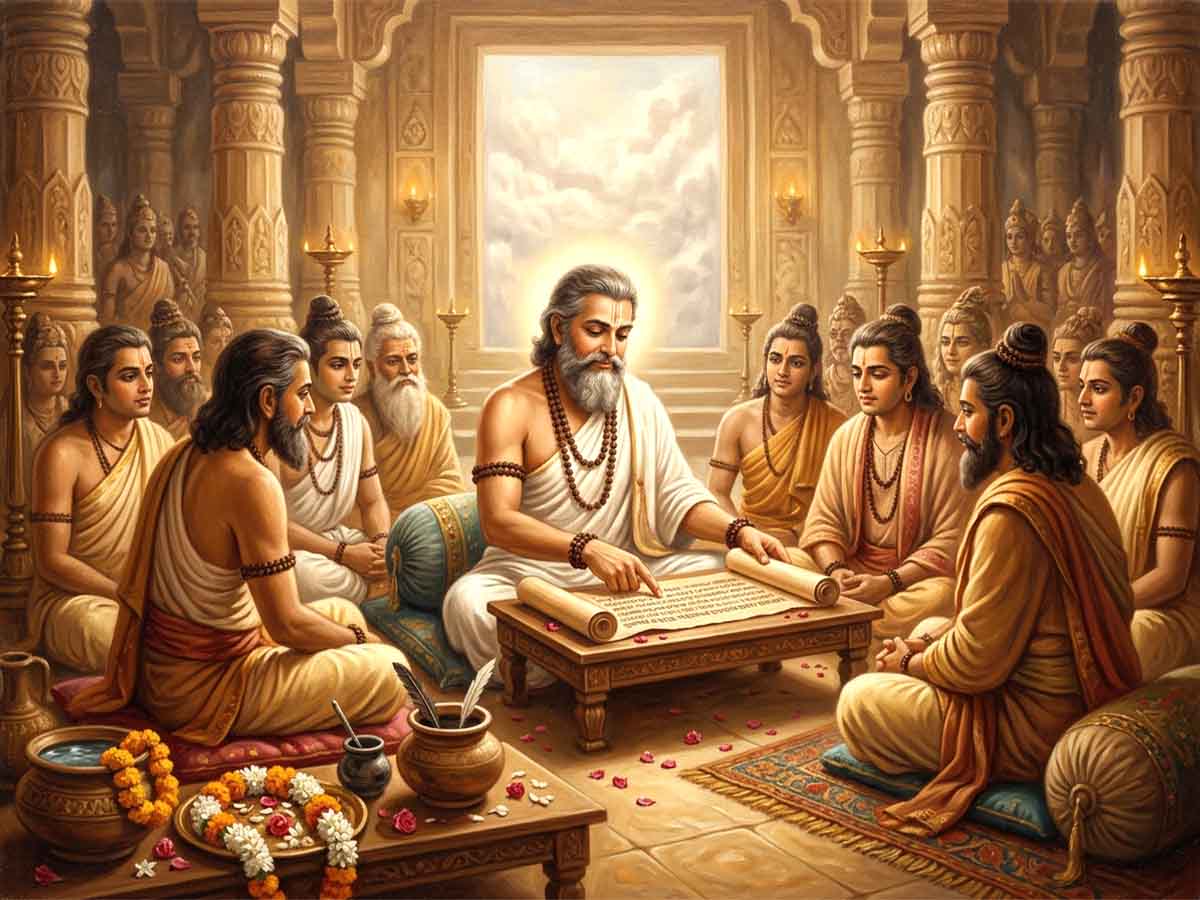
Maharishi Ved Vyasa: The Eternal Guru
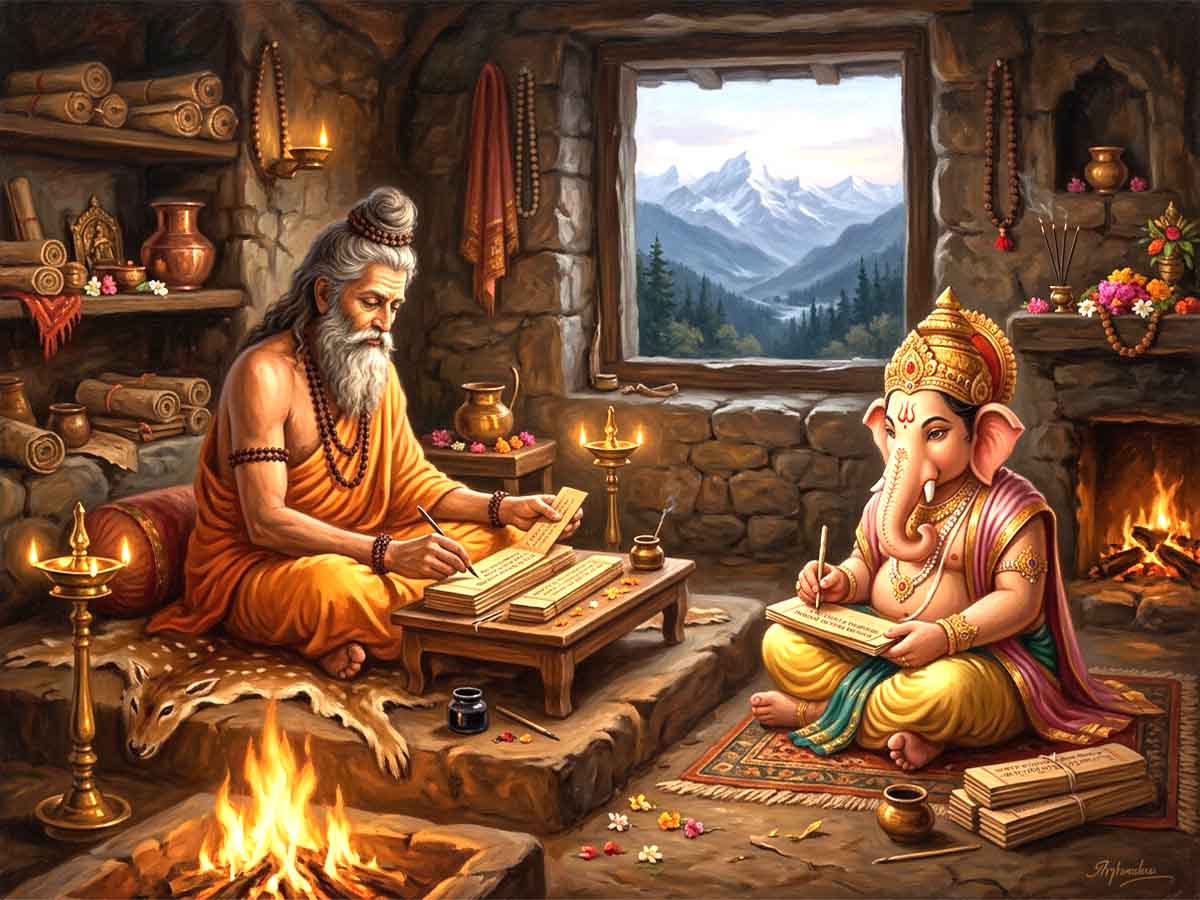
Guru Purnima is also known as Vyasa Purnima because it commemorates the birth anniversary of Maharishi Ved Vyasa, one of the greatest sages in Indian history. His unparalleled contribution to preserving and organising Vedic knowledge earned him the status of the eternal Guru, making this day a tribute to both him and the timeless Guru tradition.
Born to Sage Parashara and Satyavati, Ved Vyasa is traditionally credited with dividing the single Veda into the Rigveda, Yajurveda, Samaveda, and Atharvaveda, making sacred knowledge easier to preserve and study. He also composed the Mahabharata, authored the Brahma Sutras, and compiled the eighteen Puranas, ensuring that the spiritual wisdom of Sanatana Dharma reached future generations.
Beyond being a great scholar, Maharishi Ved Vyasa was a visionary who understood that knowledge must be preserved and shared for the welfare of humanity. His life’s work laid the foundation for much of Hindu philosophy, scripture, and spiritual practice as we know it today.
For this reason, devotees honour Maharishi Ved Vyasa on Guru Purnima with deep reverence, remembering him as the ideal Guru whose wisdom continues to guide millions even after thousands of years.
Adi Guru Shiva: The First Guru
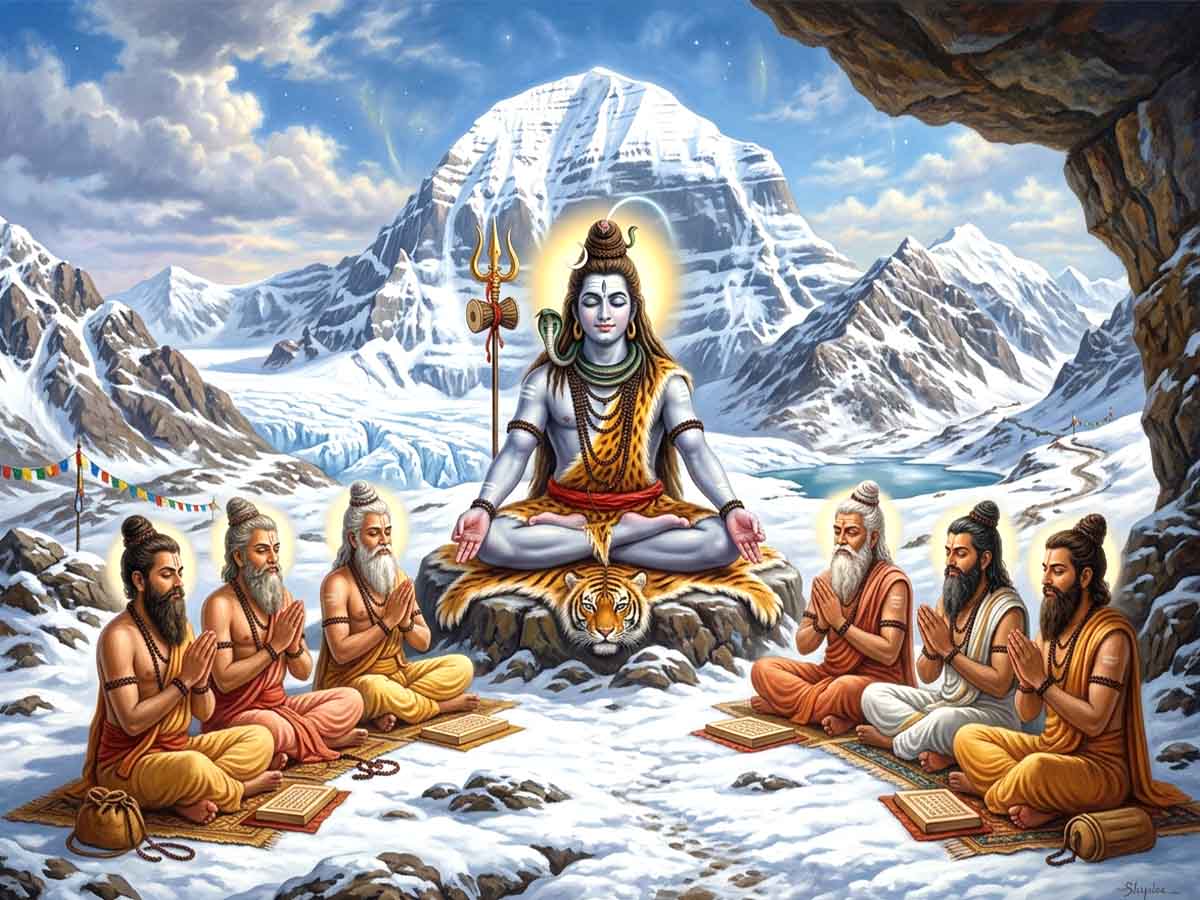
In many Hindu traditions, Lord Shiva is revered as the Adi Guru or the first Guru. According to ancient yogic tradition, after attaining supreme knowledge, Shiva imparted the science of yoga and spiritual wisdom to the Saptarishis (Seven Sages), who later carried these teachings across the Indian subcontinent and beyond.
As the Adi Guru, Lord Shiva symbolises the origin of spiritual knowledge and the eternal source of wisdom. His teachings laid the foundation for many yogic and philosophical traditions that continue to inspire seekers even today.
Devguru Brihaspati: Guru of the Devas
Devguru Brihaspati is regarded in Hindu scriptures as the Guru and spiritual advisor of the Devas (celestial beings). Revered for his wisdom, righteousness, and deep knowledge of the Vedas, Brihaspati represents the ideals of learning, moral guidance, and sound judgement.
In Vedic astrology, the planet Jupiter (Guru) is named after Brihaspati and is associated with knowledge, spirituality, prosperity, and higher learning. On Guru Purnima, many devotees also remember Devguru Brihaspati as an embodiment of divine wisdom and the guiding force behind righteous living.
Who Can Be a Guru?
In Sanatana Dharma, the Guru is not limited to a spiritual master alone. Anyone or anything that removes ignorance, imparts wisdom, or inspires righteous living can become a Guru. A child’s first Gurus are often the parents, followed by teachers, mentors, saints, and enlightened spiritual masters who guide them at different stages of life.
The Guru principle also teaches that wisdom can be found beyond human beings. Time teaches patience, change, and the value of every moment. Nature demonstrates balance, harmony, and selfless service, while life’s experiences – both joyful and difficult – often become our greatest teachers. A sincere seeker learns with humility from every experience that helps them grow in knowledge and character.
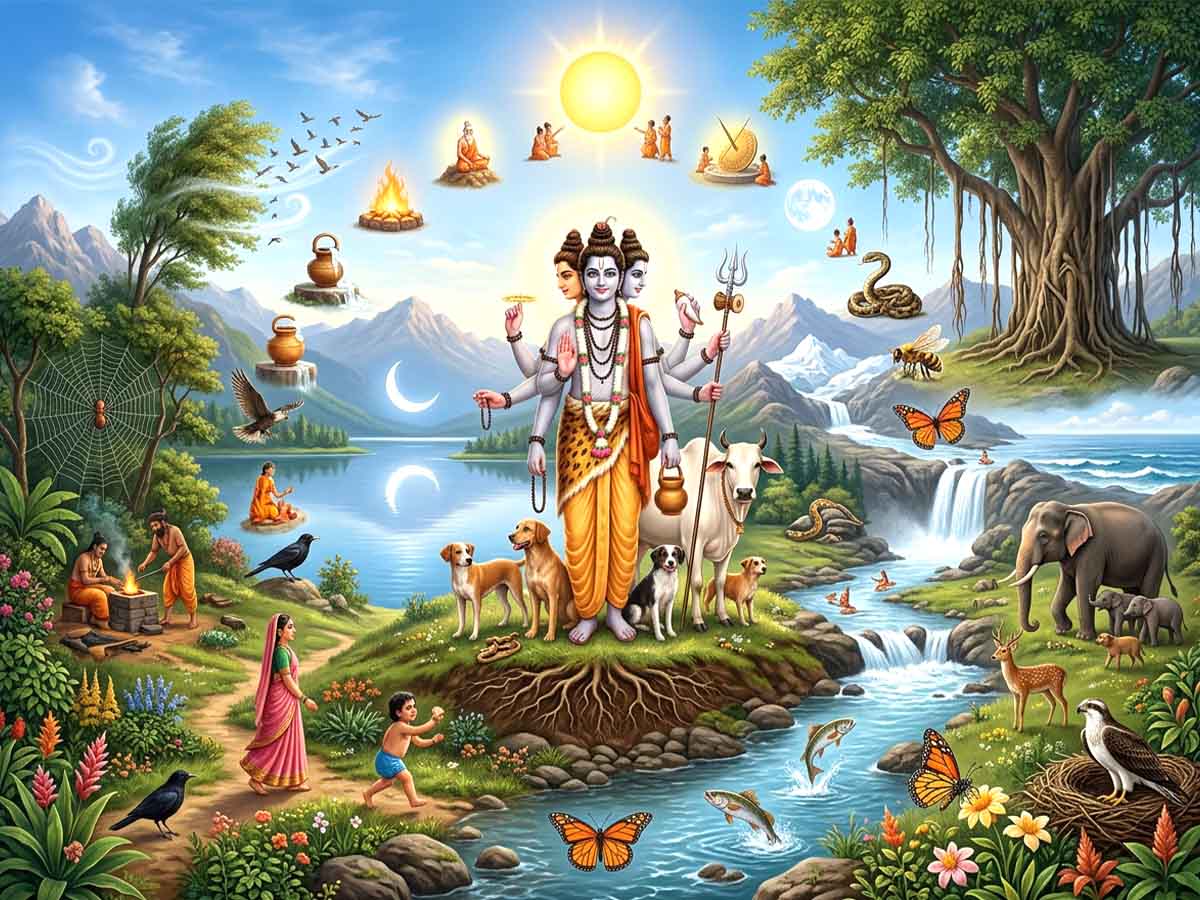
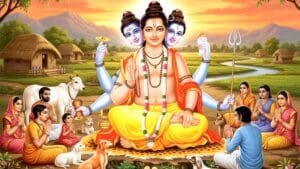
Bhagwan Dattatreya
This timeless idea is beautifully illustrated through the life of Lord Dattatreya, who is said to have accepted twenty-four Gurus from the natural world. His Gurus included the Earth, Water, Fire, Air, Sky, Sun, Moon, Ocean, Python, Honeybee, Elephant, Child, Spider, and many other elements of creation. Each taught him a unique lesson about life, detachment, perseverance, purity, or spiritual wisdom.
The story of Lord Dattatreya reminds us that learning never ends. A true seeker remains humble enough to recognise wisdom wherever it appears. Guru Purnima therefore encourages us not only to honour our Gurus but also to cultivate the openness to learn from parents, teachers, saints, scriptures, nature, time, and every experience that brings us closer to truth.
Guru Purnima in Maharashtra
Guru Purnima holds a special place in Maharashtra, a land that has nurtured saints, philosophers, yogis, and spiritual traditions for centuries. From the Nath Sampradaya to the Varkari movement and modern saints such as Sai Baba and Swami Samarth, the Guru tradition continues to shape the spiritual life of millions of devotees across the state.
The Nath Sampradaya
The Nath Sampradaya is one of India’s oldest yogic traditions and has profoundly influenced Maharashtra’s spiritual heritage. The lineage traces its origins to Adi Guru Shiva, followed by great yogis such as Matsyendranath and Gorakhnath, whose teachings emphasised yoga, self-discipline, and spiritual realisation.
The tradition reached Maharashtra through Nivruttinath, the Guru and elder brother of Sant Dnyaneshwar, making Guru–disciple relationships central to Maharashtra’s spiritual identity.
The Bhakti Tradition of Maharashtra
Guru Purnima also celebrates the rich Bhakti tradition of Maharashtra. Saints such as Sant Dnyaneshwar, Sant Muktabai, Sant Namdev, Sant Eknath, and Sant Tukaram inspired generations through devotion, humility, and the guidance of their Gurus.
Their teachings continue to be sung in Abhangs and remembered by millions of devotees, especially through the Varkari tradition.
Modern Saints Revered as Gurus
Many devotees also remember modern spiritual masters on Guru Purnima, including:
- Shri Sai Baba of Shirdi
- Shri Swami Samarth of Akkalkot
- Shri Gajanan Maharaj of Shegaon
Temples and Ashrams dedicated to these saints witness special prayers, bhajans, satsangs, Guru Pujas, and community service on this sacred day.
Guru Purnima in Nashik
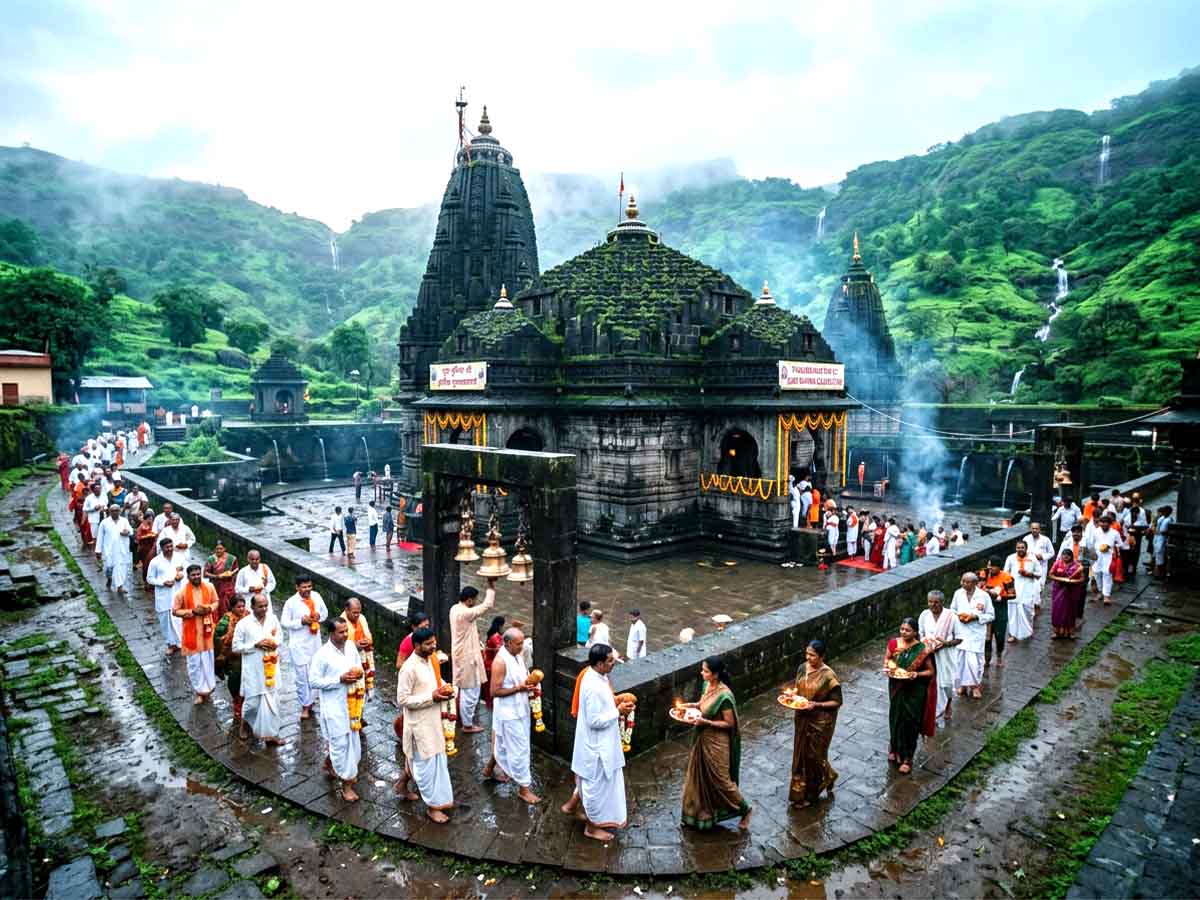
Known as one of India’s oldest pilgrimage cities, Nashik has been a centre of spiritual learning and devotion for centuries. Sacred places such as Trimbakeshwar Jyotirlinga, Panchavati, Ramkund, and Tapovan continue to attract saints, pilgrims, and seekers from across the country, making Guru Purnima an important spiritual occasion in the region.
On Guru Purnima, temples, ashrams, and spiritual organisations across Nashik organise Guru Pujas, bhajans, satsangs, scriptural discourses, and charitable activities. Devotees gather to seek the blessings of their Gurus, honour saints, and participate in community prayers.
Many pilgrims also visit Trimbakeshwar Temple, one of the twelve Jyotirlingas, to offer prayers and begin the day with a sacred darshan. The festival beautifully reflects Nashik’s enduring connection with the Guru–Shishya tradition and its rich spiritual heritage.
Guru Purnima in Buddhism and Jainism
While Guru Purnima has its roots in Sanatana Dharma, the festival is also observed with great reverence in Buddhism and Jainism, reflecting the universal importance of the Guru in Indian spiritual traditions.
For Buddhists, Guru Purnima marks the day when Lord Buddha delivered his first sermon at Sarnath after attaining enlightenment. This historic discourse, known as the Dhammacakkappavattana Sutta, laid the foundation of the Buddhist Sangha and the spread of the Buddha’s teachings.
In Jainism, the day is associated with Lord Mahavira accepting Gautam Swami as his first disciple. Guru Purnima is therefore observed as an occasion to honour spiritual teachers and express gratitude for their guidance on the path of truth and self-realisation.
Although the customs may differ, the underlying message remains the same-to respect those who illuminate the path of wisdom and inspire a life of righteousness.
Guru Purnima Wishes in English
May the blessings of your Guru illuminate your life with wisdom, peace, and the strength to walk the path of truth. Happy Guru Purnima!
On this sacred Guru Purnima, let us express heartfelt gratitude to every teacher, mentor, and guide who has shaped our lives through knowledge and compassion.
May the light of knowledge remove every darkness from your life and inspire you to grow in wisdom and humility. Happy Guru Purnima 2026!
A true Guru opens the eyes of the soul. Wishing you a blessed Guru Purnima filled with devotion, learning, and inner peace.
May Guru Purnima remind us that the greatest wealth in life is the guidance of those who lead us towards truth and righteousness.
Guru Purnima Quotes in English
- “A Guru does not simply teach; a Guru transforms.”
- “Knowledge becomes wisdom only when guided by a true Guru.”
- “The greatest journey begins with the humility to accept a Guru.”
- “A Guru lights a lamp that continues to shine long after the lesson is over.”
- “The greatest tribute to a Guru is not praise, but living by their teachings.”
गुरु पौर्णिमा शुभेच्छा (Guru Purnima Wishes in Marathi)
गुरुंचे आशीर्वाद सदैव आपल्या जीवनाला ज्ञान, सद्बुद्धी आणि यशाचा मार्ग दाखवत राहो. गुरु पौर्णिमेच्या हार्दिक शुभेच्छा!
गुरुंच्या कृपेने अज्ञानाचा अंधार दूर होवो आणि जीवन ज्ञान, संस्कार व आनंदाने उजळून निघो. गुरु पौर्णिमेच्या मंगलमय शुभेच्छा!
ज्यांनी आपल्याला जीवन जगण्याची दिशा दिली त्या सर्व गुरुजनांना कृतज्ञतापूर्वक वंदन. गुरु पौर्णिमेच्या शुभेच्छा!
गुरुंचे मार्गदर्शन, पालकांचे संस्कार आणि संतांचे आशीर्वाद सदैव आपल्या जीवनात राहोत. गुरु पौर्णिमेच्या शुभेच्छा!
ज्ञान, नम्रता आणि सेवाभाव या गुरुंच्या शिकवणीने आपले जीवन समृद्ध होवो. सर्वांना गुरु पौर्णिमेच्या हार्दिक शुभेच्छा!
गुरु पौर्णिमा कोट्स (Guru Purnima Quotes in Marathi)
- “गुरु म्हणजे अज्ञानातून ज्ञानाकडे नेणारा प्रकाश.”
- “गुरुंच्या चरणी नम्रता असते, आणि त्या नम्रतेतच खरे ज्ञान जन्म घेते.”
- “ज्याच्या आयुष्यात गुरु आहेत, त्याच्या आयुष्याला योग्य दिशा आहे.”
- “गुरुंची शिकवण हीच जीवनातील सर्वात मोठी संपत्ती आहे.”
- “गुरुंचा आशीर्वाद हा यशापेक्षा मोठा आणि संपत्तीपेक्षा मौल्यवान असतो.”
The Timeless Message of Guru Purnima
Guru Purnima is a timeless reminder that every step towards knowledge begins with humility and gratitude.
From Maharishi Ved Vyasa, who preserved the wisdom of the Vedas, to parents who teach us our first values, to teachers, saints, and spiritual masters who guide us throughout life, every Guru plays a vital role in shaping our character and illuminating our path.
As we celebrate Guru Purnima, may we honour our Gurus through prayers and rituals and also by practising the values they have taught us – truth, compassion, discipline, selfless service, and the lifelong pursuit of wisdom. In doing so, we keep alive the sacred Guru-Shishya Parampara, one of the greatest gifts of India’s Vedic civilisation!
Guru Purnima FAQs
When is Guru Purnima in 2026?
Guru Purnima will be observed on Wednesday, 29 July 2026, the Ashadha Purnima according to the Hindu lunar calendar.
Why is Guru Purnima celebrated?
Guru Purnima is celebrated to honour Gurus, teachers, parents, saints, and spiritual guides who illuminate the path of knowledge, wisdom, and righteous living.
Why is Guru Purnima also called Vyasa Purnima?
The festival commemorates Maharishi Ved Vyasa, who compiled the Vedas, composed the Mahabharata, and preserved the spiritual heritage of Sanatana Dharma.
Who is considered a Guru?
n Sanatana Dharma, parents, teachers, mentors, saints, spiritual masters, and anyone who removes ignorance and inspires wisdom can be regarded as a Guru.
How is Guru Purnima celebrated?
Devotees observe Guru Purnima through Snaan (holy bath), Guru Puja, worship of Lord Vishnu and Goddess Lakshmi, charity (Daan), prayers, meditation, and seeking the blessings of parents, teachers, and Gurus.
Is Guru Purnima only a Hindu festival?
While Guru Purnima originates in Sanatana Dharma, it is also observed in Buddhism and Jainism, each tradition honouring its own revered teachers.
What is the significance of Guru Purnima?
Guru Purnima celebrates the timeless Guru–Shishya Parampara, expressing gratitude to those who preserve and transmit knowledge from one generation to another.
What is the meaning of Guru?
The Sanskrit word Guru is traditionally explained as Gu (darkness) and Ru (remover), meaning “the one who removes the darkness of ignorance.”
Why is Lord Shiva called Adi Guru?
Lord Shiva is revered as Adi Guru, the first Guru, who is believed to have imparted the science of Yoga and spiritual wisdom to the Saptarishis.
How is Guru Purnima celebrated in Maharashtra?
Across Maharashtra, devotees visit temples and ashrams, honour saints and Gurus, perform Guru Puja, participate in satsangs and bhajans, and seek the blessings of parents and teachers.