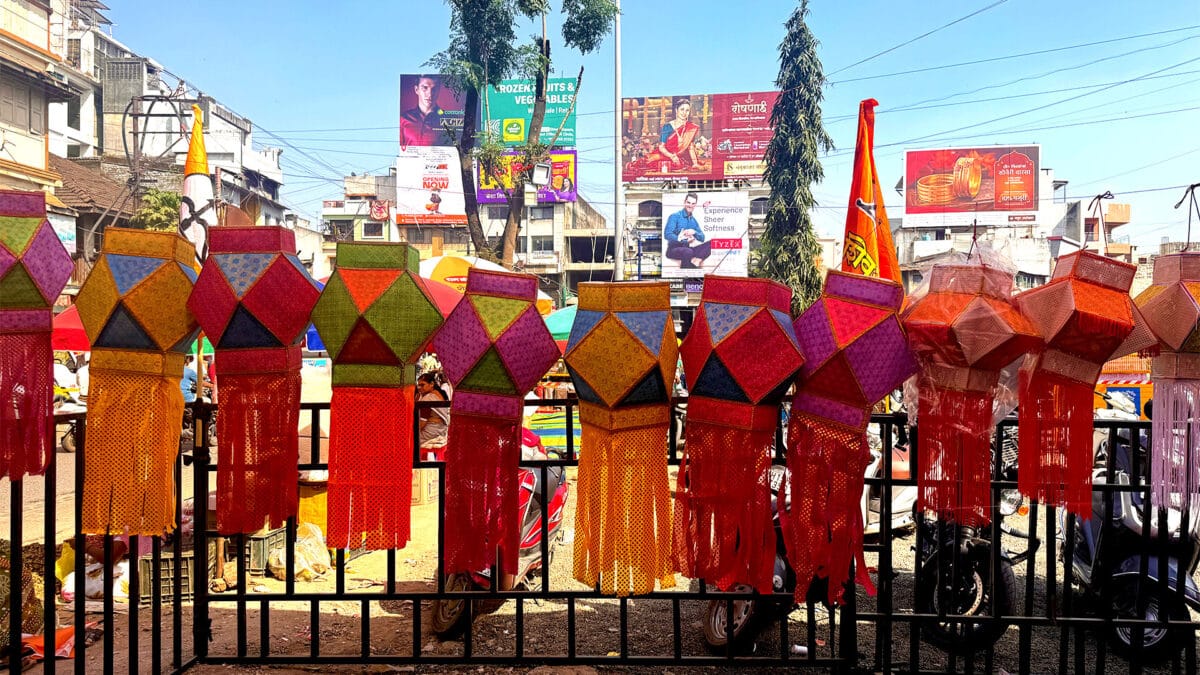
Diwali, or Deepavali (meaning “a row of lamps”), is the most important and popular festival in India and will be celebrated from 5 November 2026 to 11 November 2026 in Maharashtra.
Rooted in the Ramayana, the festival commemorates the joyous homecoming of Bhagwan Shriram with Mata Sita and Lakshman to Ayodhya after 14 years of exile.
According to tradition, the people of Ayodhya welcomed them by lighting countless diyas (clay lamps), symbolizing the triumph of Dharma over Adharma and light over darkness.
Since then, the lighting of lamps has become the soul of Diwali celebrations – dispelling ignorance and ushering in knowledge, purity, and auspiciousness.
In Maharashtra, the festival begins with Vasu Baras (वसुबारस) and concludes with Bhaubeej (भाऊबीज).
You may like to check the Maharashtra Tourism Diwali Guide.
Diwali 2026 – Dates in Maharashtra
- Vasubaras : 5 November 2026
- Dhantrayodashi : 6 November 2026
- Lakshmi Pujan : 8 November 2026
- Bali Pratipada : 10 November 2026
- Bhaubeej : 11 November 2026
Lakshmi Pujan Shubh Muhurat (Pradosh Kaal & Vrishabha Lagna) : 6:27 pm to 8:27 pm on 8 November 2026
This year Narak Chaturdashi will be observed on the same day as Lakshmi Puja on 8 November 2026. Dates are as per the Amanta Hindu Calendar followed in Maharashtra.
Diwali Celebrations in Nashik Maharashtra
Nashik, one of Maharashtra’s oldest and holiest cities, glows with divine energy during Diwali. From the lanes of Panchavati and Godavari ghats to the bustling markets of Main Road and College Road, the city transforms into a landscape of lights, devotion, and cultural heritage.
While Diwali is celebrated throughout India, Nashik adds its own spiritual depth to it – rooted in its ancient connection with Sanatana Dharma and the Ramayana. The presence of sacred temples like Kalaram Mandir, Saptashrungi Temple, Kapaleshwar, and Sita Gufa makes Diwali here both a festival of joy and celebration of ancient Indian culture.
This article is part of our Festivals series covering Hindu festivals throughout the year.
Vasu Baras (वसुबारस): Honouring the Cow, Calves and Motherhood
The first day of Diwali in Maharashtra is Vasu Baras, also known as Govatsa Dwadashi, which will be observed on 5 November 2026 (Thursday). It marks the worship of the cow (Gau Mata) and her calf, symbolizing motherhood, nourishment, and the cycle of life.
In Nashik’s rural and suburban temples – especially around Panchavati, Satpur, and the surrounding villages, and across rural Maharashtra – women perform rituals where they offer turmeric, kumkum, festive feasts and flowers to cows. This act signifies gratitude to the cow as a giver of prosperity and sustenance.
Families also begin cleaning and decorating their homes on this day. It is believed that performing Gau Puja on Vasu Baras ensures abundance and removes negative energy from the household before Diwali.
Dhanteras (धनत्रयोदशी): The Auspicious Beginning
Dhanteras 2026 falls on 6 November 2026 (Friday). The day is dedicated to Lord Dhanvantari, the deity of health and the divine physician, who emerged from the ocean during Samudra Manthan carrying a pot of nectar.
In Nashik, devotees visit temples of Lord Vishnu and perform Dhanvantari Puja. It is also the most popular day for purchasing gold, silver, and new utensils – symbolic of bringing health, wealth, and prosperity into the home.
A unique aspect in Nashik is the Yam Deep Daan (यम दीपदान) ritual – families light a small diya facing south in memory of ancestors and for protection from untimely death (Yama devata). You can often see rows of glowing lamps on doorsteps and balconies across Nashik on this evening.
Narak Chaturdashi (नरक चतुर्दशी) & Abhyang Snan
Narak Chaturdashi 2026 will be observed on 8 November 2026 (Sunday). This day commemorates Lord Krishna’s victory over the demon Narakasura, symbolizing the victory of light over darkness and purity over impurity.
In Maharashtra, the morning of Narak Chaturdashi is celebrated as Abhyang Snan, a sacred oil bath taken before sunrise. The ritual begins with applying fragrant ubtan made from sandalwood, gram flour, and sesame oil.
In Nashik, the aroma of freshly made faral (traditional Diwali snacks) like chivda, chakli, and karanji fills the air on this day.
Local markets such as Saraf Bazaar, Panchavati Karanja, and Mahatma Nagar are beautifully lit. Households start lighting earthen lamps (diyas) symbolizing the removal of darkness.
Lakshmi Puja (लक्ष्मीपूजन) in Nashik
This year the main Diwali evening too falls on 8 November 2026, when Goddess Lakshmi – the goddess of wealth and prosperity – is worshipped with grandeur across Nashik.
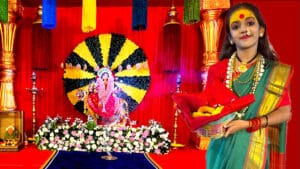
Homes are decorated with rangolis, flowers, and strings of diyas. The sound of bells and mantras echoes from the temples.
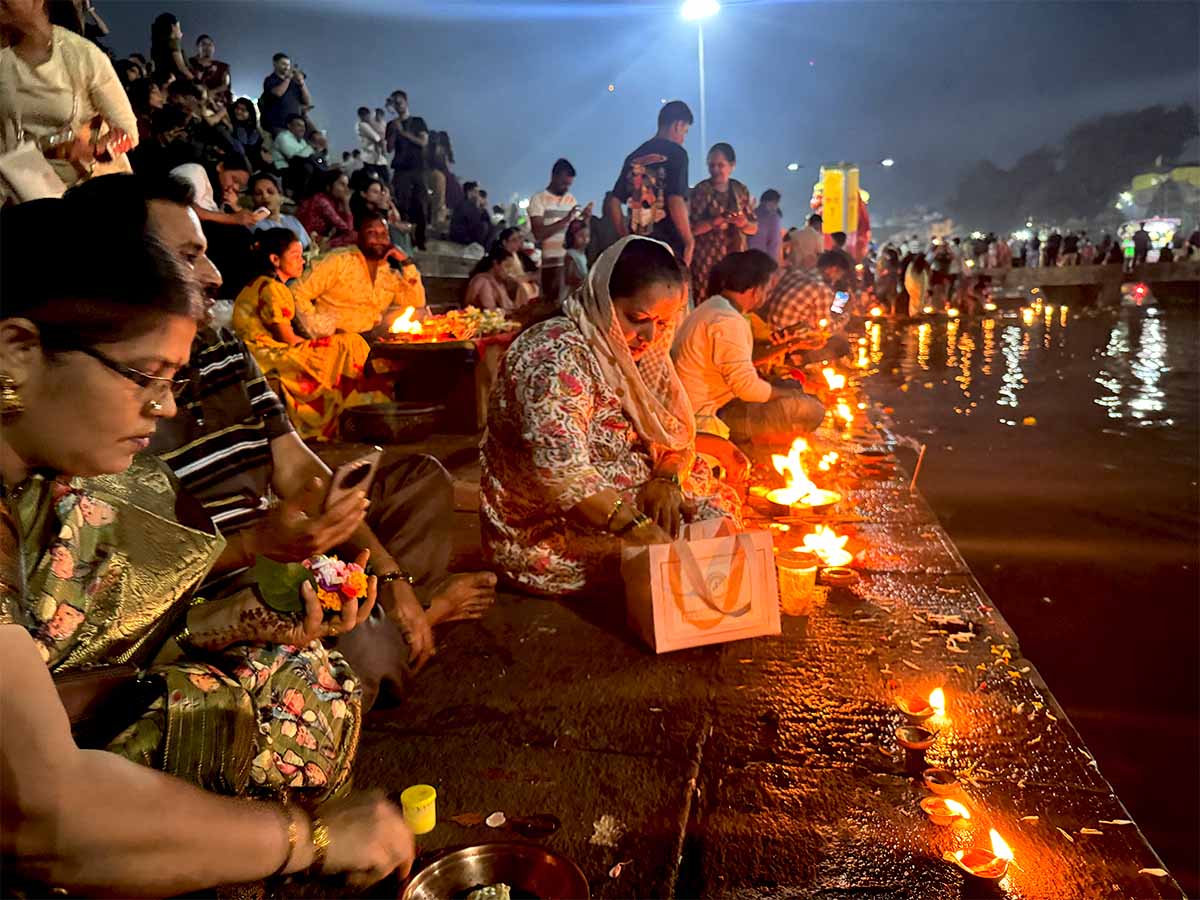
Many devotees visit Kalaram Mandir and Kapaleshwar Temple, lighting lamps along the Godavari riverbanks – a breathtaking sight unique to Nashik.
The Lakshmi Pujan Muhurat for Maharashtra is between 6:27 PM and 8:27 PM, however devotees should also confirm the exact tithi-based time locally.
Offerings include lotus flowers, coins, sweets, puffed rice, and sugar candies (called Lahya & Battase in Marathi) – symbolic of happiness and prosperity. Families perform Kuber Puja and Ganesha Puja alongside Lakshmi Aarti.
Diwali Padwa (पाडवा) or Balipratipada
Padwa, also known as Balipratipada, will be celebrated on 10 November 2026 (Tuesday).
According to legend, this day marks the return of King Bali to earth. Husbands traditionally gift sarees or jewelry to their wives, and in return, wives offer aarti and seek blessings for longevity.
In Nashik, many families visit nearby temples such as Sundarnarayan Mandir or Trimbakeshwar for prayers. The day also marks the start of a new financial year for many Marathi businesses – shopkeepers perform Chopda Pujan, worshipping ledgers and seeking prosperity for the coming year.
Bhaubeej (भाऊबीज): The Festival of Sibling Love
The final day of Diwali, Bhaubeej, will be celebrated on 11 November 2026 (Wednesday). Sisters invite their brothers home, perform tilak, and pray for their well-being. Brothers, in turn, offer gifts and promise protection.
In Nashik, this festival is observed with warmth in every home. Local sweet shops brim with pedas and barfis, while markets are decorated with flowers and marigold garlands.
Traditional Diwali Markets of Nashik
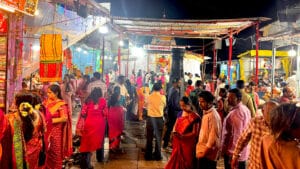
I recently walked through some of the oldest and most vibrant marketplaces of Nashik city, soaking in the festive spirit that fills the air before Diwali.
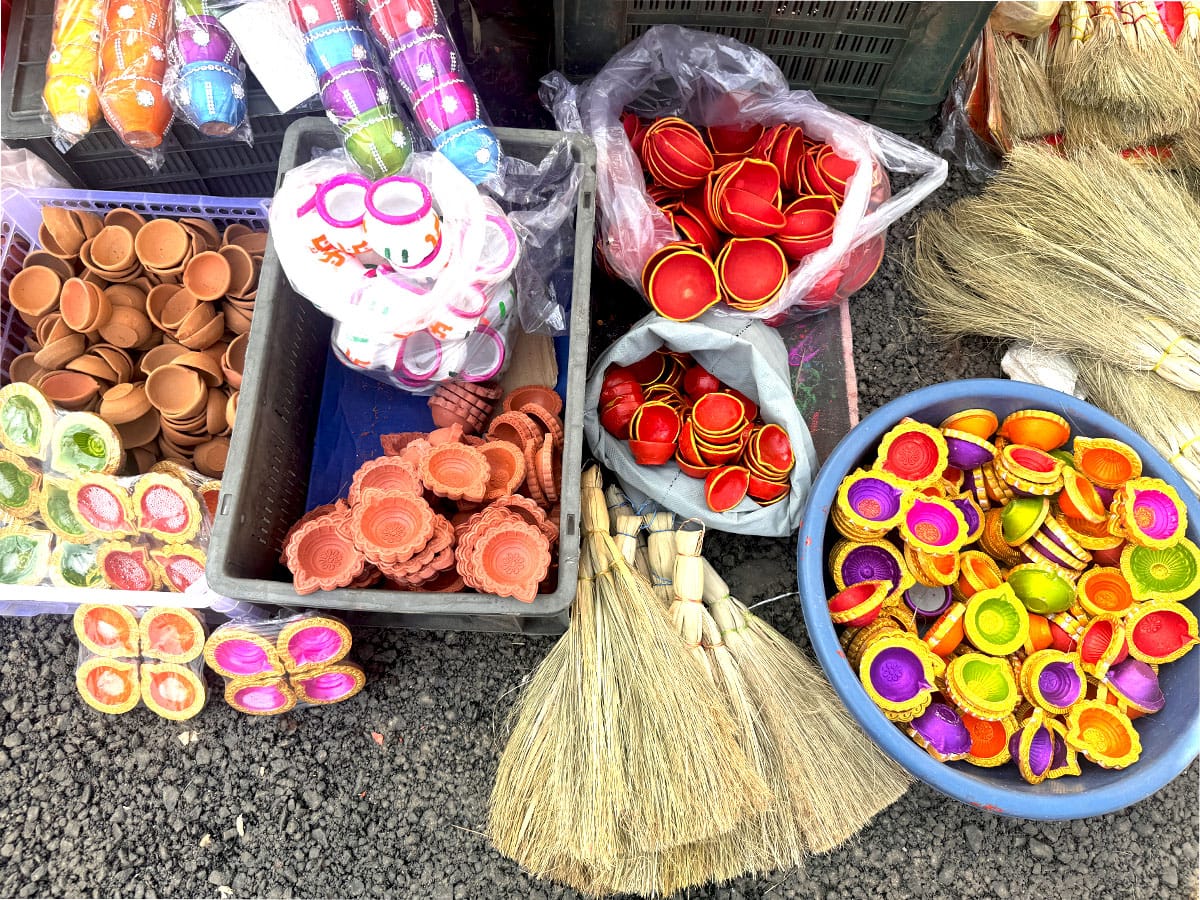
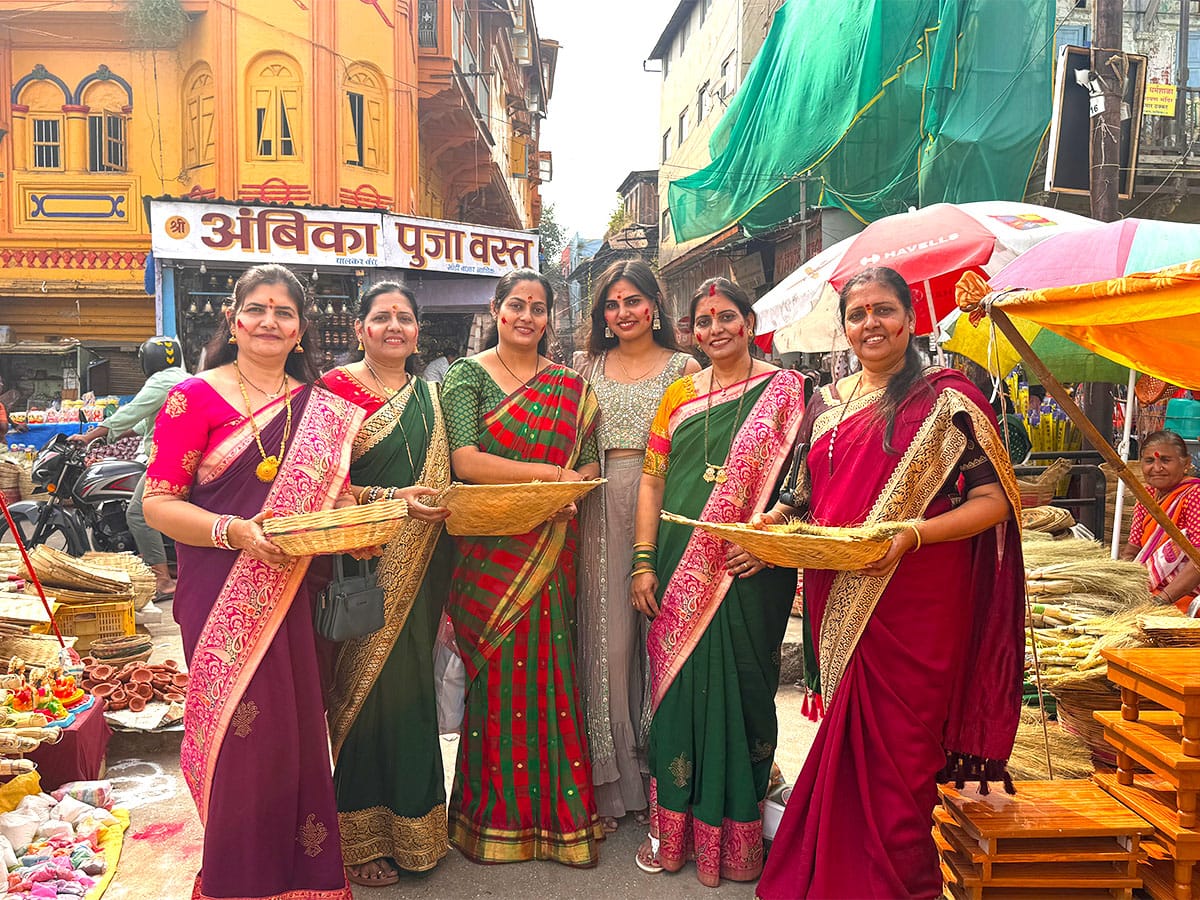
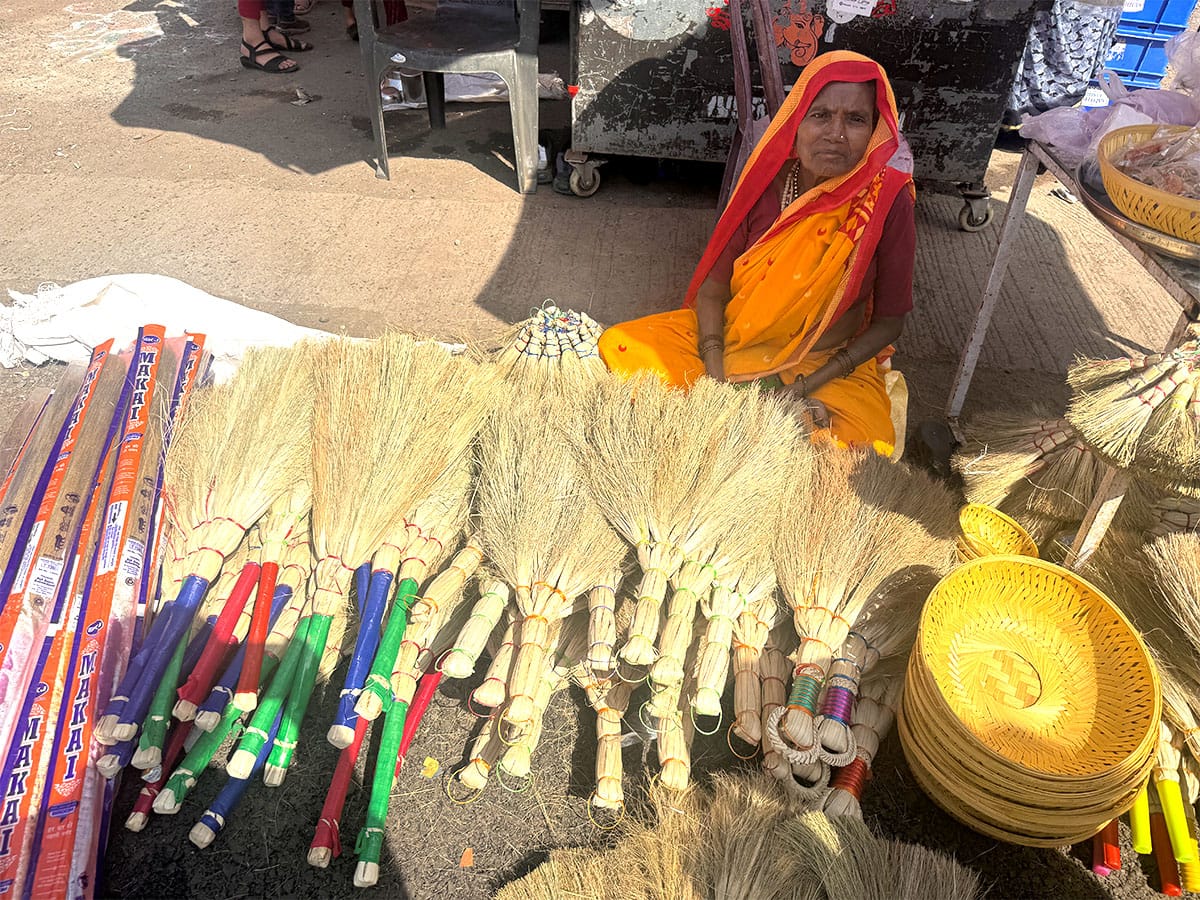
My journey began at the Ram Setu bridge over the Godavari in Panchavati, where rows of vendors lined the streets selling chaurangs – the low wooden tables used for arranging the Diwali puja – along with brooms, which are seen as a gift or blessing of Mata Lakshmi and are accorded a place of honor during Lakshmi Pujan for their symbolism of purity and prosperity.
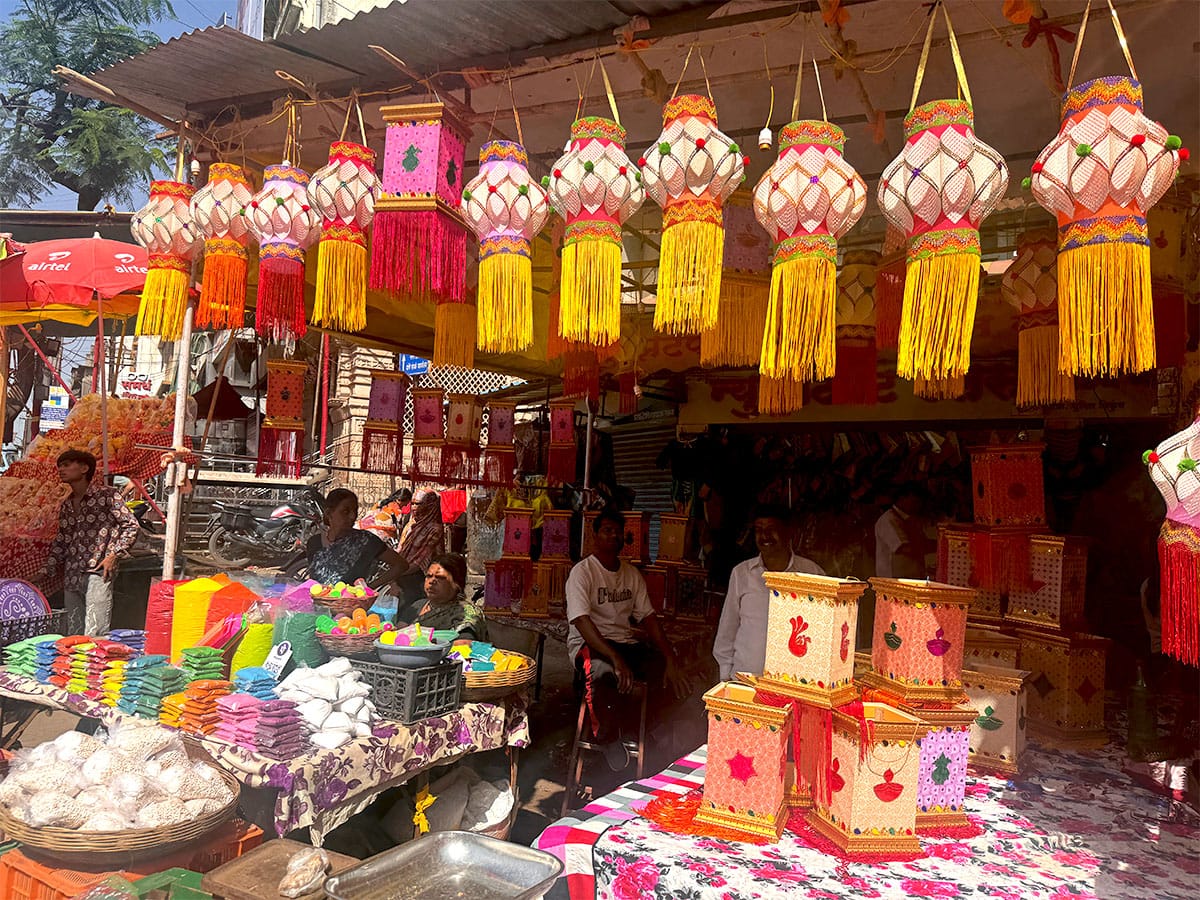
Stalls glowed with the warm light of diyas and decorative lamps, ready to illuminate homes and temples across the city.
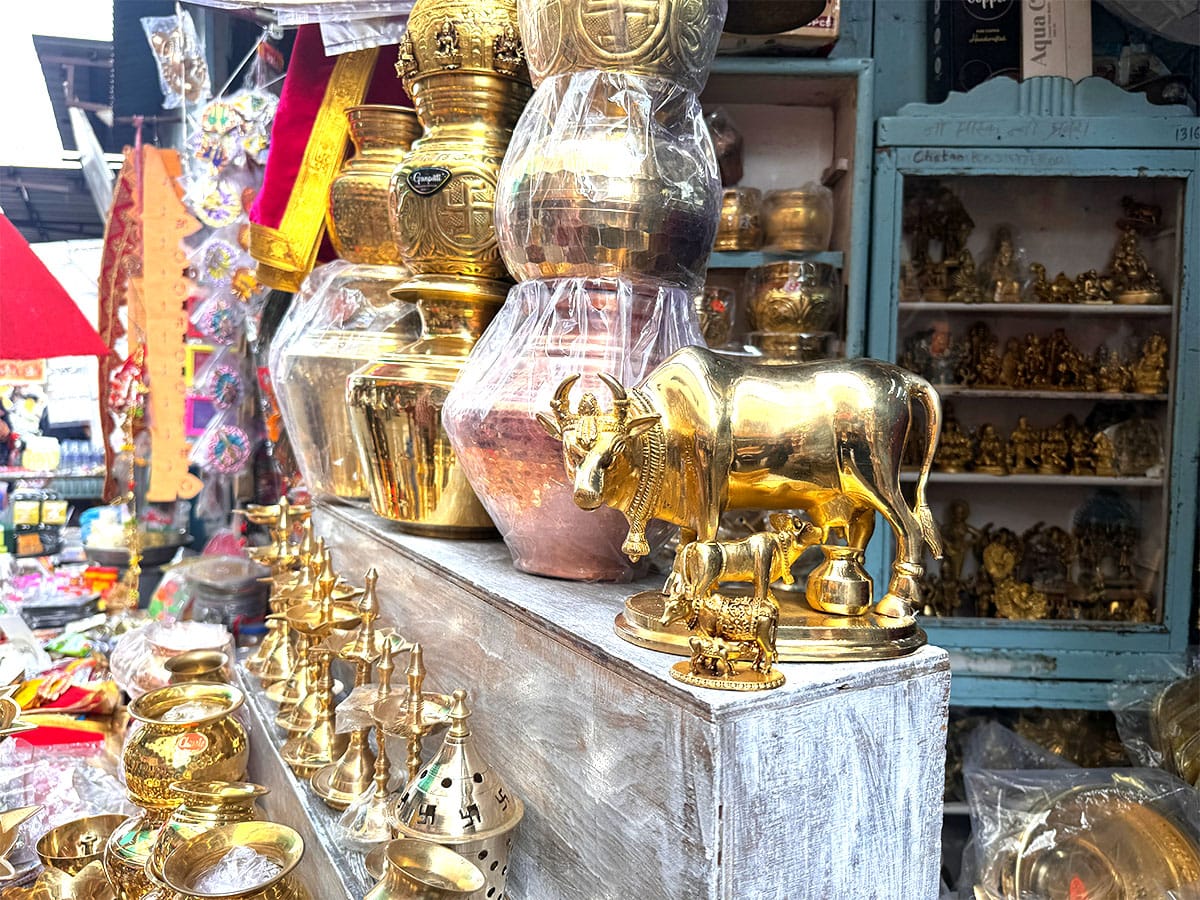
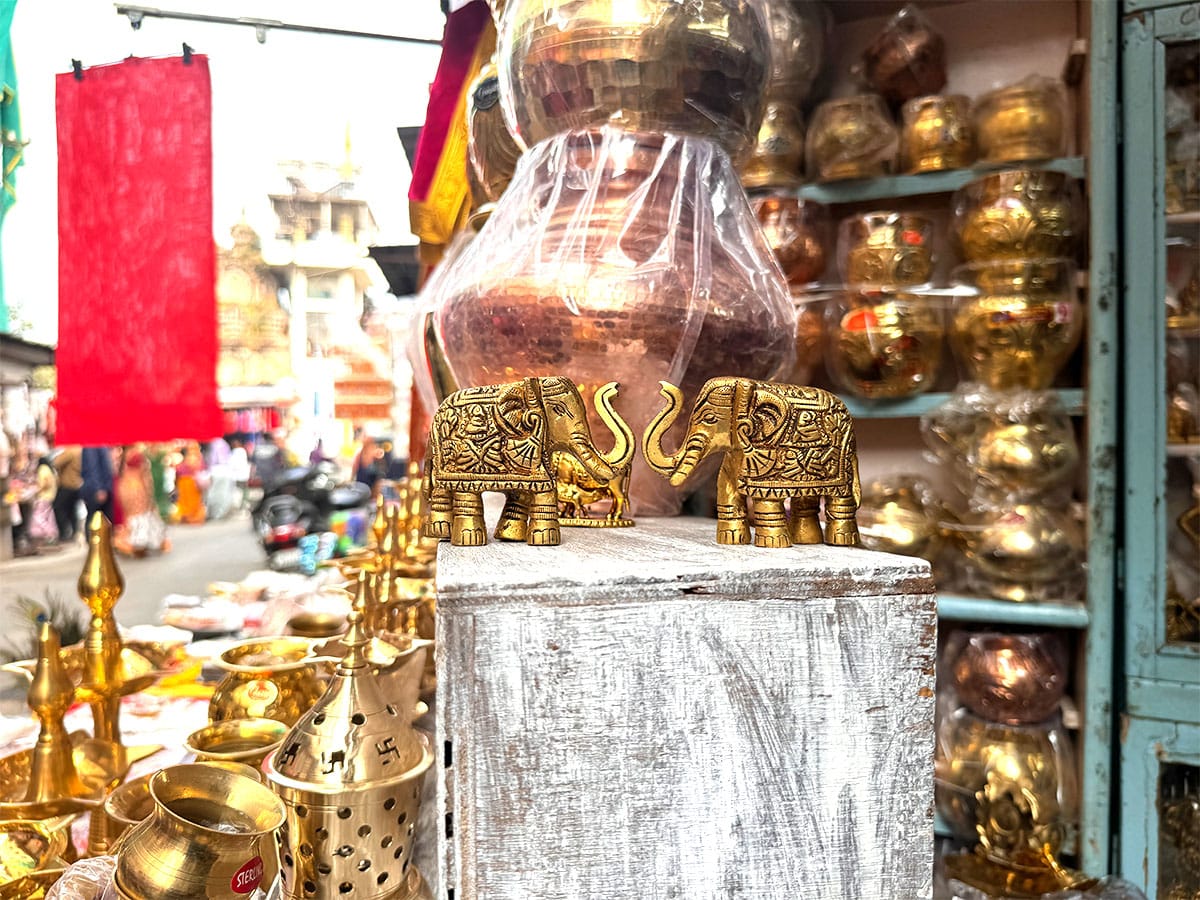
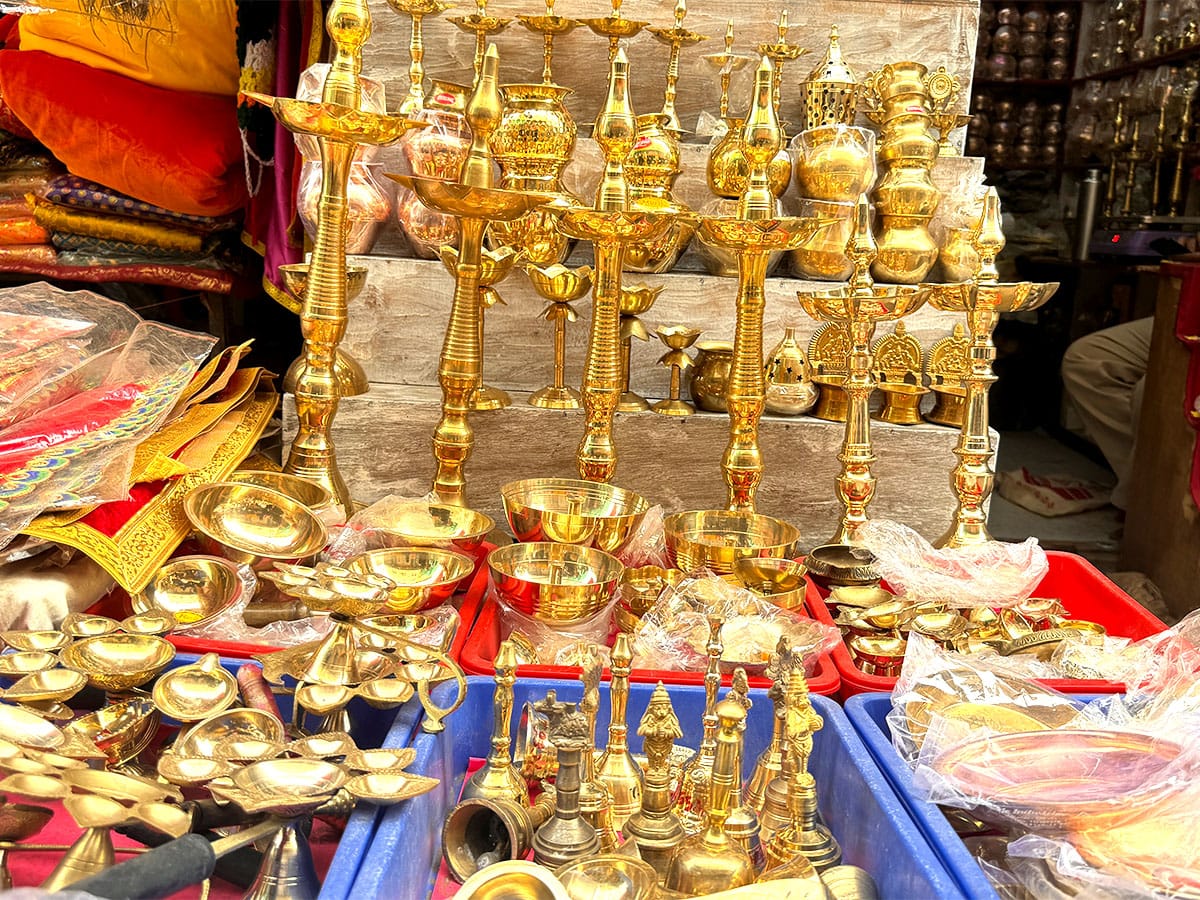
From there, I entered the bustling lane of Bhandi Bazaar, where the fragrance of polished metal and incense mingled in the air. The old brass and copper shops were crowded with devotees purchasing idols of Gaai Vaasru (the auspicious cow and calf), Lord Dhanwantari, Mahalakshmi Mata, Kuber, and other shubh chinhas – auspicious symbols believed to invite wealth and good fortune.
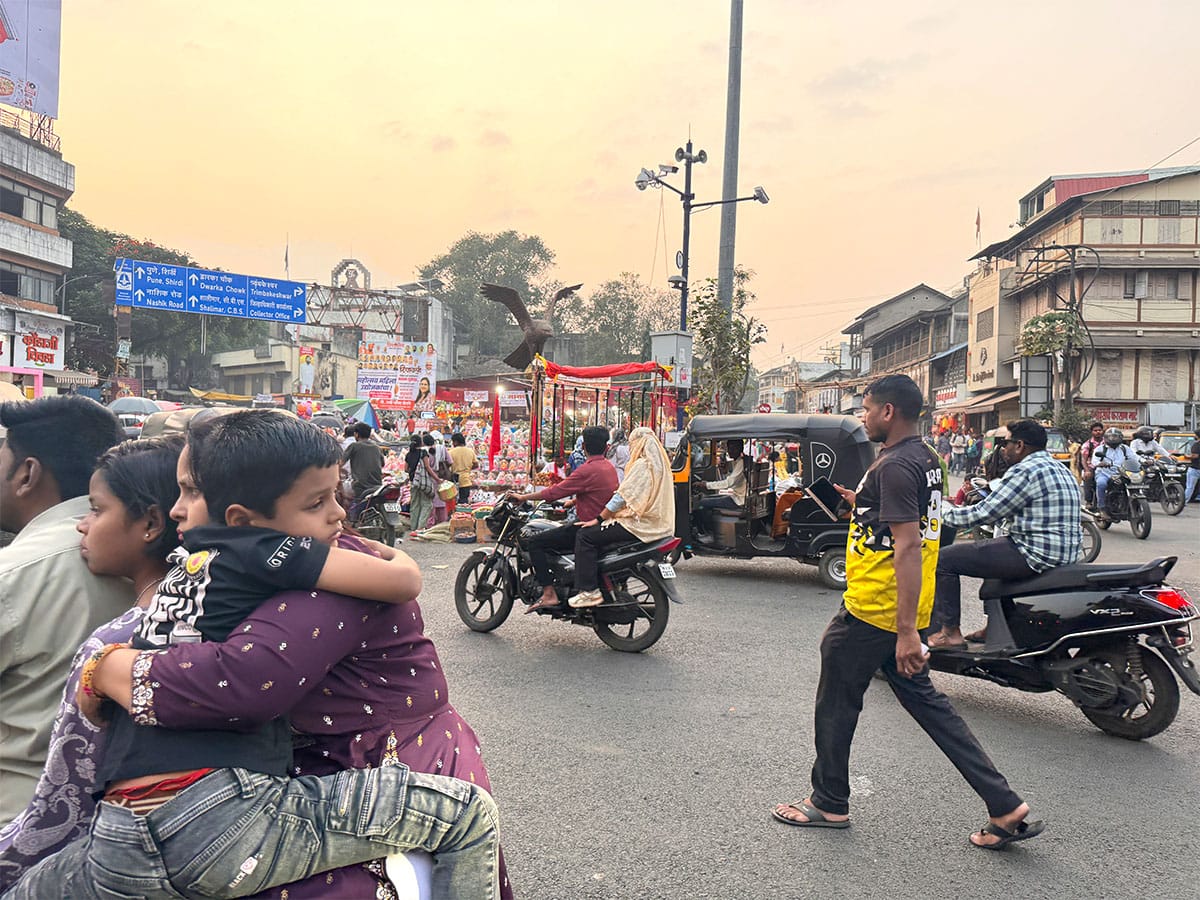
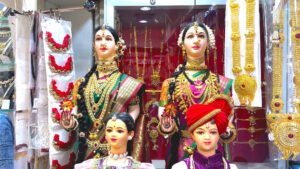
Nearby, garment shops displayed colorful Devi mukhavatas (faces of the goddess), toranas for doorways, and kavadi malas – delicate shell garlands used in festive decoration.
As I moved through Bhorpatti Lane adjoining the historic Sarkarwada, I saw vendors from Gujarat had set up their stalls, offering a dazzling variety of dry fruits, spices, and sweets – their voices blending into the rhythmic pulse of Diwali shopping.
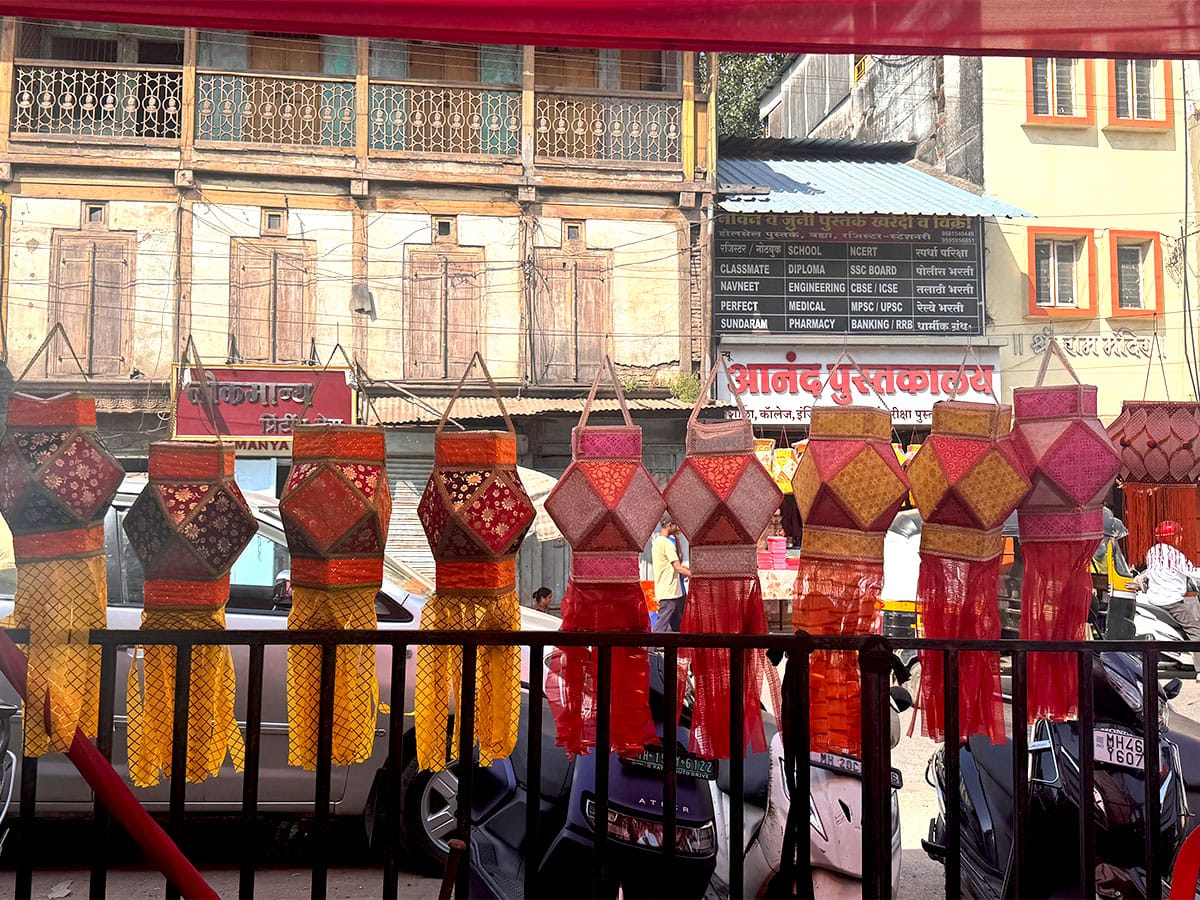
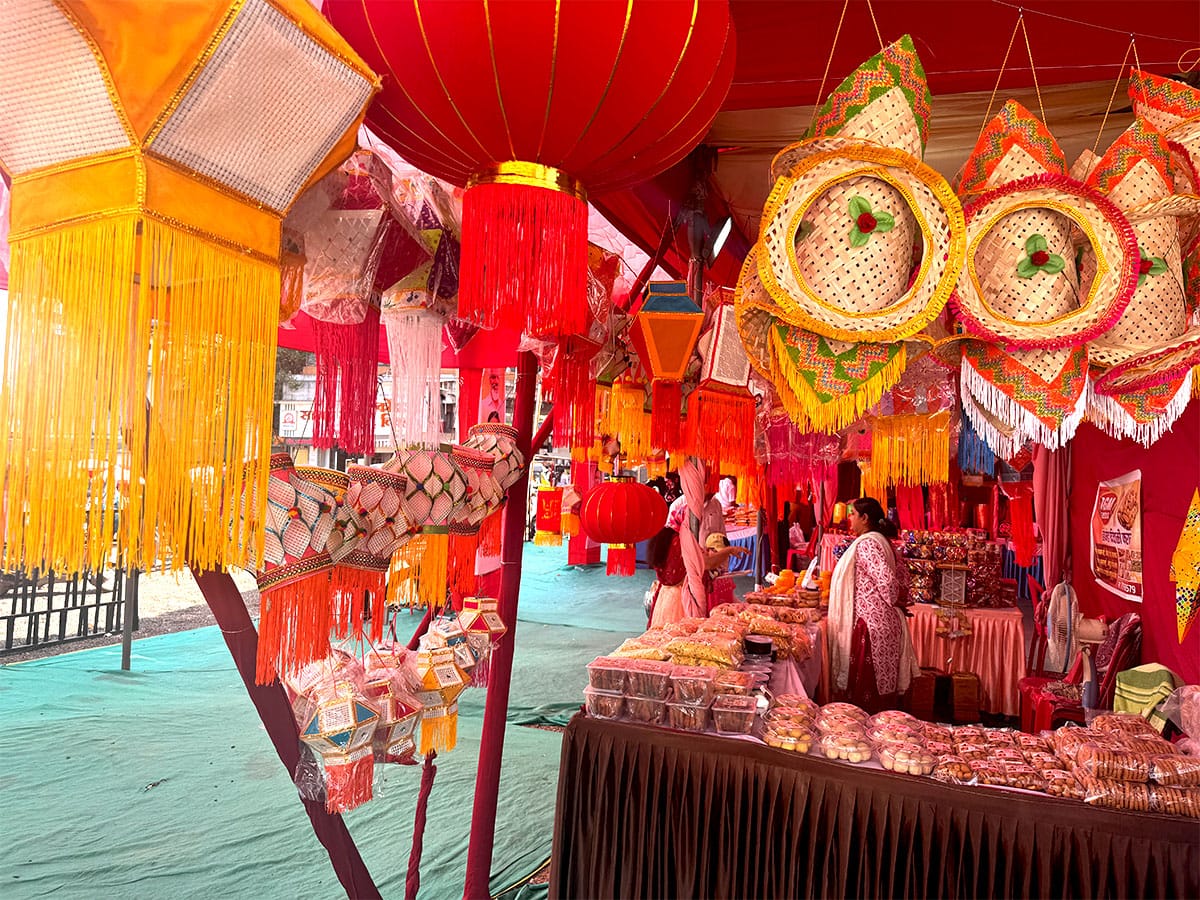
Finally, I reached Raviwar Karanja, which had transformed into a grand fairground, alive with color and devotion. Here, every corner was filled with the essence of the festival – Lakshmi Mata idols, kandils, lahya battase (traditional puffed rice sweets), flowers, and garlands – all coming together to paint a picture of Diwali in its most traditional and joyous form.
Rangoli Decorations
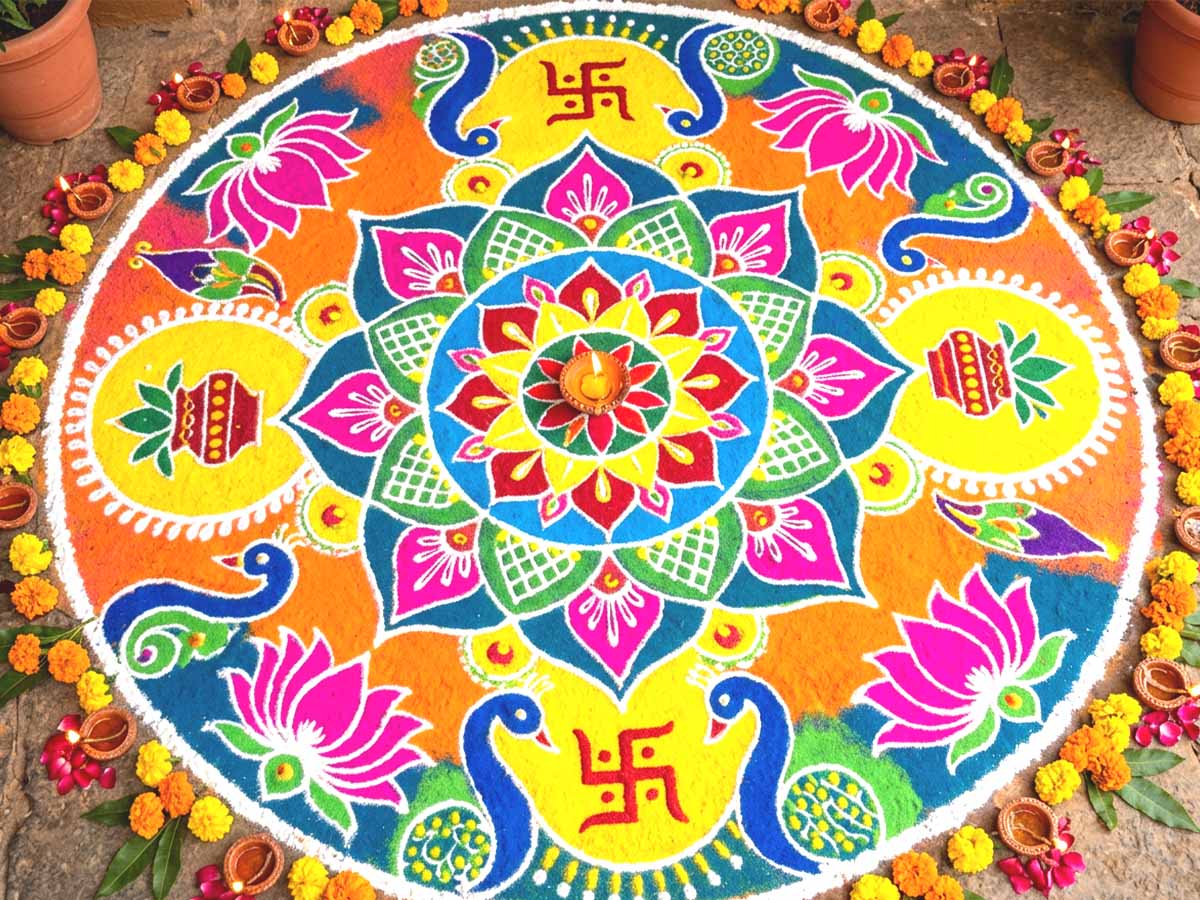
Homes across Nashik come alive with rangoli in the days before Lakshmi Puja – intricate floor designs made from colored powders, flower petals, and rice flour, drawn at doorways and courtyards to welcome the goddess.
Traditional motifs like lotuses, diyas, and geometric patterns are common, though many households now blend these with modern designs using stencils and LED accents.
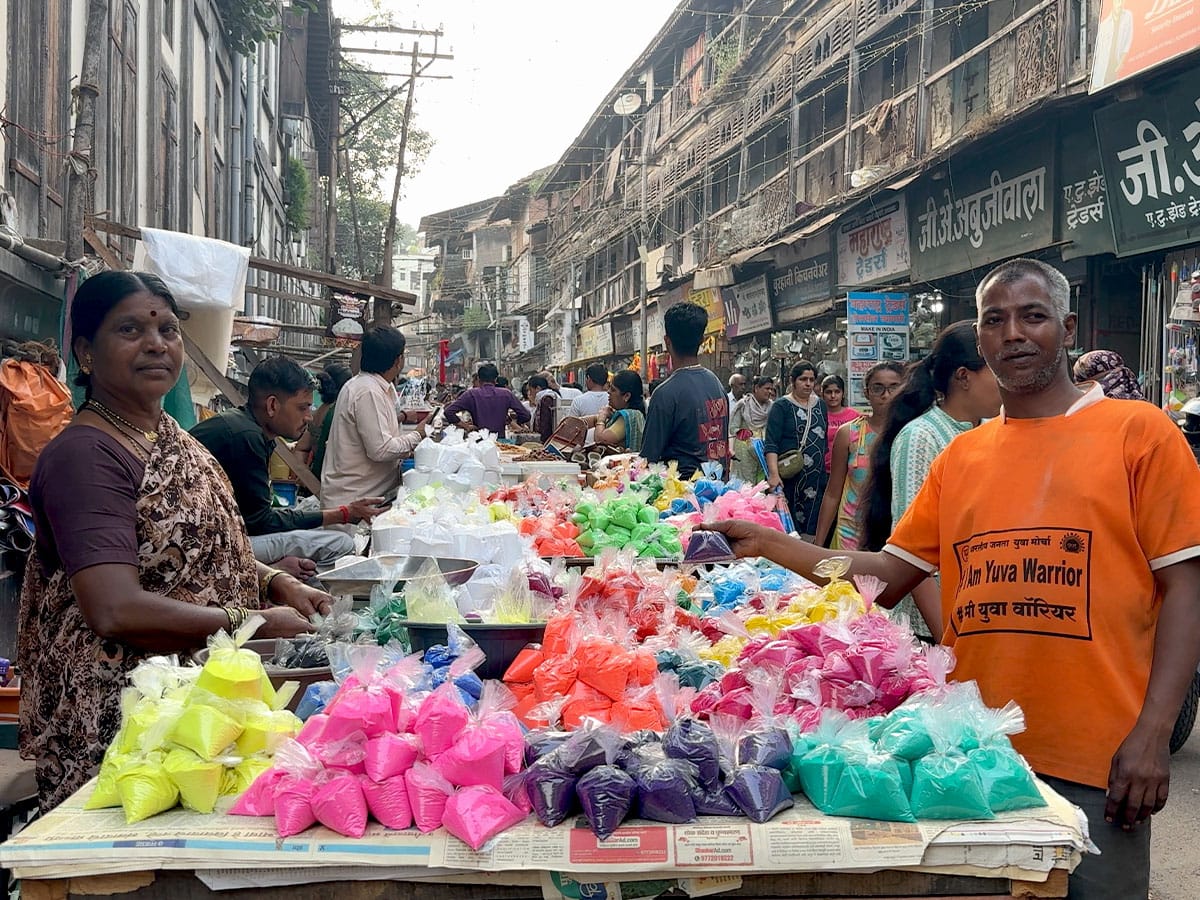
Vendors at markets like Raviwar Karanja do brisk business in rangoli colours and stencils in the days leading up to the festival, alongside the flowers, diyas, and puja items already crowding their stalls.
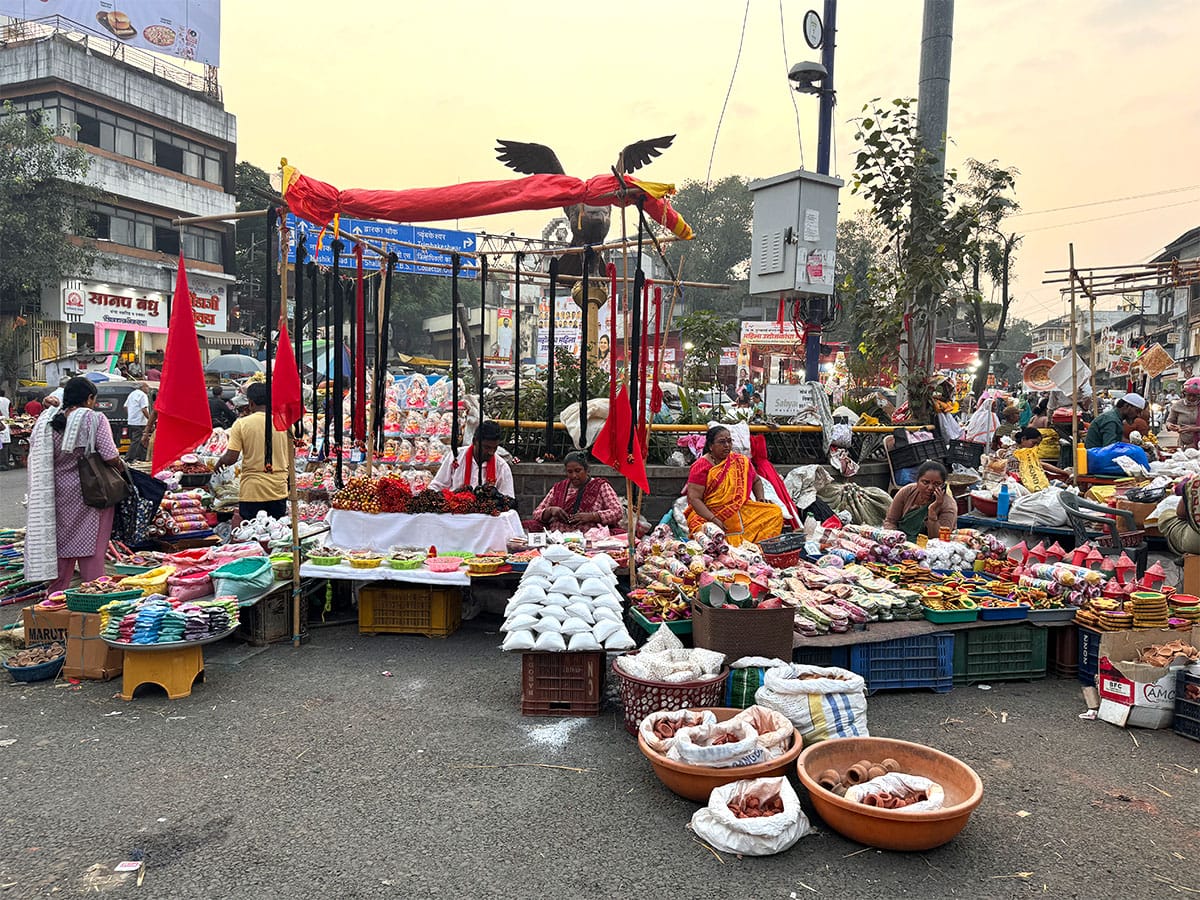
These vibrant scenes from Nashik’s marketplaces are not just about festive shopping – they are a living reflection of our Sanatana Dharma and its continuity through everyday traditions.
Each item sold – the chaurang, the Gaai Vaasru idol, the humble broom, or the glowing diya – carries within it a spiritual symbolism that links the devotee to divinity.
In Nashik, where every lane echoes with the footsteps of sages and the river Godavari bears timeless sanctity, Diwali becomes much more than a celebration of lights; it is a renewal of faith, prosperity, and dharma.
The age-old bazaars of Panchavati, Bhandi Bazaar, and Raviwar Karanja thus stand as silent custodians of a living heritage – keeping alive the same spirit that once welcomed Mata Sita, Shriram, and Lakshman back to Ayodhya, with lamps lit in devotion and joy.
Diwali Food and Festivities in Nashik
Diwali in Nashik is also synonymous with Faraal – the traditional festive spread. Households prepare a variety of snacks and sweets including chakli, karanji, anarse, shankarpali, shev, chivda, and besan ladoo.
Special stalls in Nashik’s Panchavati, College Road, and Mahatma Nagar come alive with mithai, dry fruits, and festive décor.
Temples such as Kalaram Mandir and Kapaleshwar are illuminated with hundreds of diyas. The glow along Ramkund and Godavari Ghats is one of the most divine sights during Diwali week – attracting both devotees and photographers.
Eco-Friendly Diwali in Nashik
In recent years, Nashik has been actively promoting eco-friendly Diwali celebrations. Local NGOs and municipal drives encourage:
- Using clay diyas instead of plastic lights
- Avoiding high-decibel crackers
- Sharing sweets and food with underprivileged families
- Participating in temple annadan (food donation) drives
This reflects the city’s spirit of celebrating with joy, devotion, and social responsibility.
Diwali brings hope, happiness & reassurance
Diwali 2026 (दिवाळी 2026) in Nashik will be celebrated from 5 November 2026 to 11 November 2026, with Lakshmi Pujan on 8 November 2026. The festival beautifully blends spiritual devotion, family traditions, and cultural heritage.
Whether it’s the gau puja on Vasu Baras, the glittering markets of Dhanteras, the oil lamps along Ramkund, or the heartfelt Bhaubeej rituals – Nashik’s Diwali captures the timeless essence of light, dharma, and prosperity.
We wish all our readers a very Happy Diwali !
Diwali 2026 FAQs
When will Diwali be celebrated in 2026?
Diwali (Lakshmi Puja) will be celebrated on Sunday, 8 November 2026, according to the Hindu lunar calendar followed in Maharashtra. The festival lasts five days – starting with Dhanteras and ending with Bhai Dooj.
What is the significance of Diwali in Hindu culture?
Diwali, also known as Deepavali, is one of the most important Hindu festivals symbolizing the victory of light over darkness and good over evil. It marks Lord Rama’s return to Ayodhya after defeating Ravana, and is celebrated with diyas, sweets, prayers, and fireworks across India.
What are the main rituals performed during Diwali?
Common Diwali rituals include Lakshmi Puja, lighting diyas (oil lamps), Ganesha Puja, decorating homes with rangoli, and exchanging sweets. Business owners also perform Chopda Pujan (account book worship) for prosperity in the coming year.
What are the five days of Diwali and their importance across India?
Day 1 – Dhanteras: Worship of Lord Dhanvantari for good health and prosperity.
Day 2 – Naraka Chaturdashi (Chhoti Diwali): Cleansing rituals and lighting lamps.
Day 3 – Lakshmi Puja (Main Diwali): Worship of Goddess Lakshmi and Lord Ganesha.
Day 4 – Govardhan Puja: Offering food to Lord Krishna and Govardhan Hill.
Day 5 – Bhai Dooj: Celebration of brother-sister bond.
Which day is considered most auspicious for Lakshmi Puja?
The Amavasya tithi of Kartik month (the main Diwali day) is considered the most auspicious time to perform Lakshmi Puja, ideally during the Pradosh Kaal (evening hours after sunset).
How is Diwali celebrated in Nashik?
Diwali in Nashik is celebrated with temple visits, rangoli decorations, lighting oil lamps, enjoying festive feasts, and shopping at local markets such as Raviwar Karanja, Main Road, and Panchavati. People visit temples like Kalaram Mandir, Trimbakeshwar Temple, Kapaleshwar Temple and other temples in and around Nashik City.
What are some traditional Diwali sweets and foods enjoyed in Nashik?
Popular Diwali delicacies in Nashik include chakli, karanji, laddoo, shankarpali, chivda, and anarsa. Many Nashik households prepare these homemade snacks as part of the festive “Faral” tradition.
Where can I shop for Diwali decorations and diyas in Nashik?
For Diwali shopping, Nashik’s Raviwar Karanja Market, Saraf Bazaar, and College Road are the best places to buy diyas, lanterns (akash kandil), idols, lights, and festive clothes.
What are eco-friendly ways to celebrate Diwali in Nashik?
Opt for clay diyas instead of plastic lamps, avoid loud crackers, and use natural rangoli colors. Many Nashik residents now celebrate a green Diwali by donating sweets, planting trees, and using solar lighting.