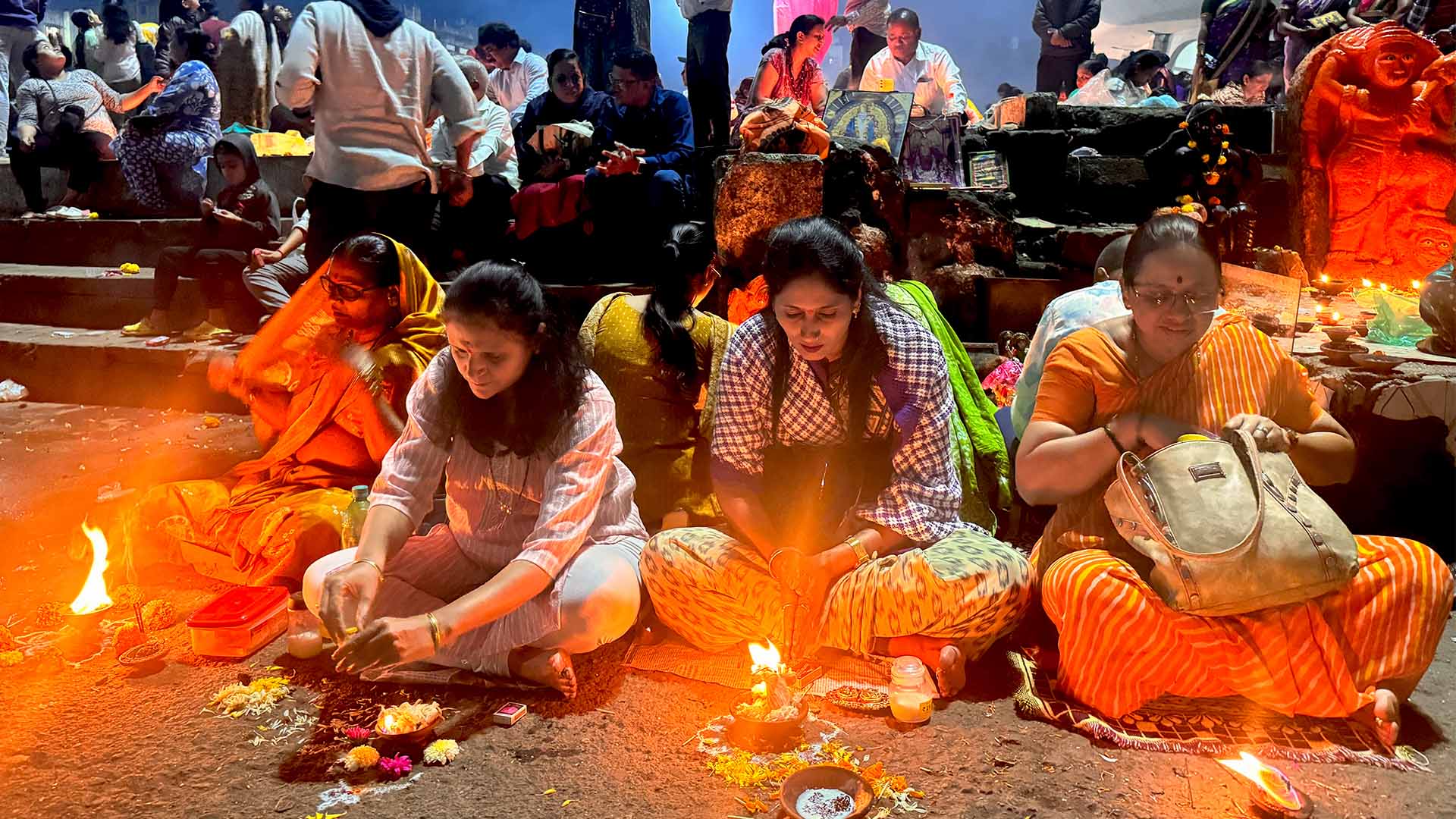
On 5 November 2025, the holy festival of Kartik Purnima, also known as Tripurari Purnima or Dev Diwali, was celebrated with immense devotion across India.
From Varanasi and Pushkar to Panchavati in Nashik, lakhs of devotees gathered at rivers and temples to offer prayers, perform Deep Daan (lamp offering), and celebrate the divine victory of light over darkness.
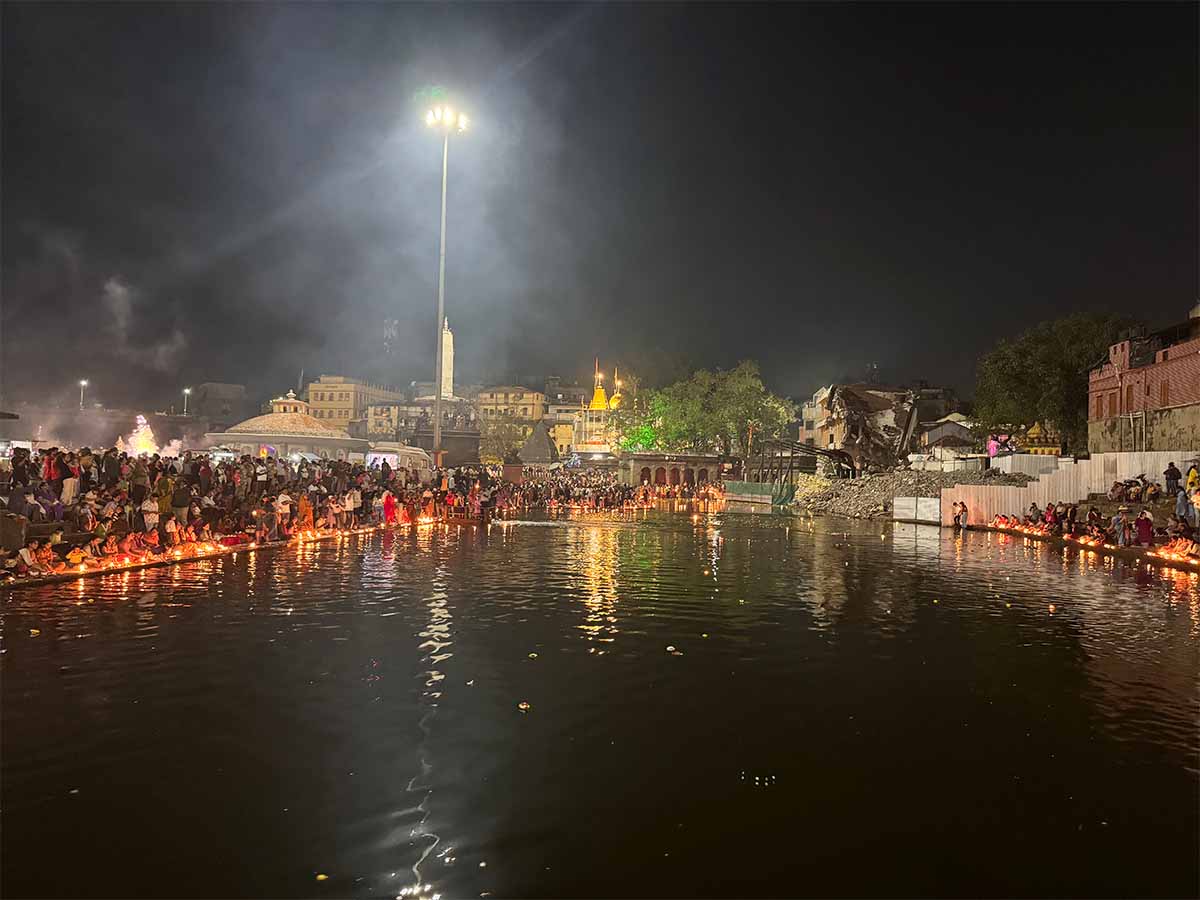
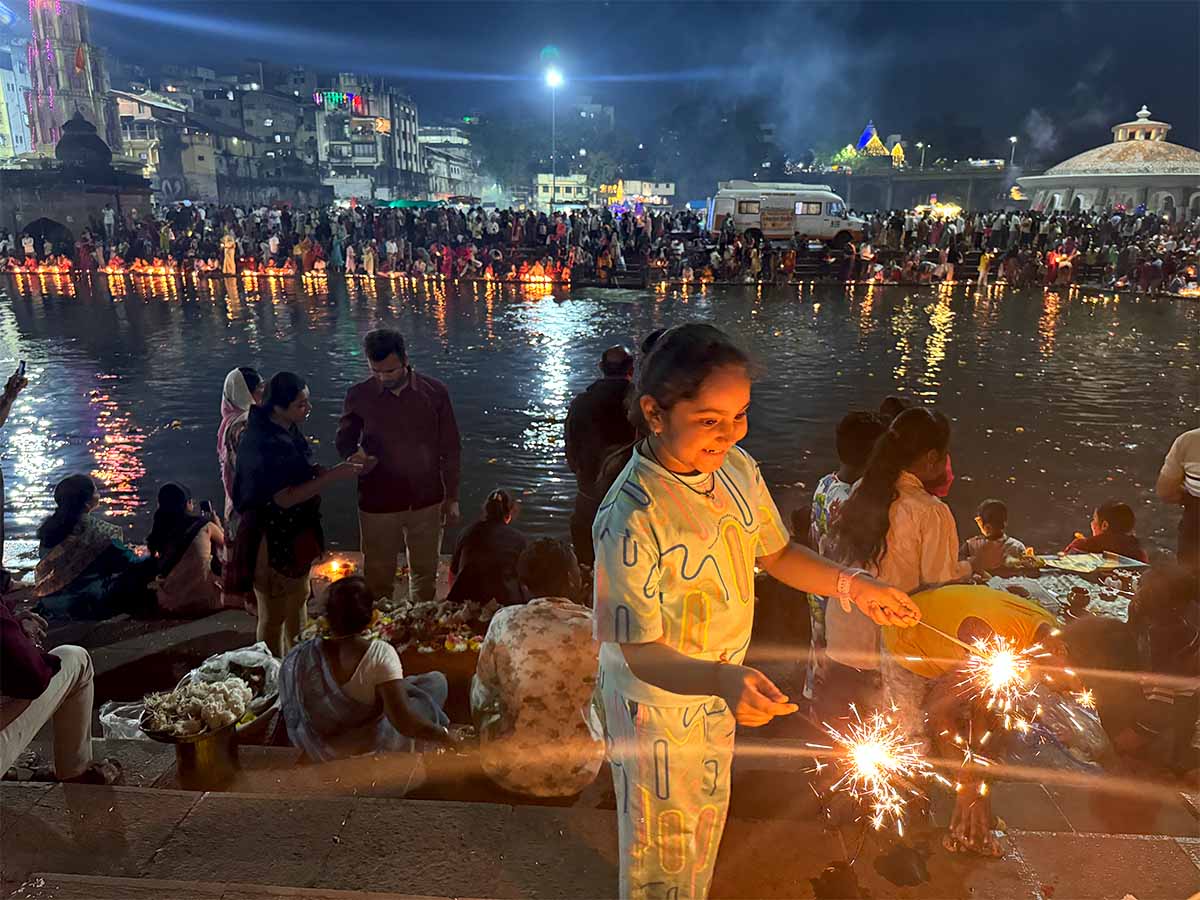
In Nashik, the sacred Ramkund and Godavari ghats glowed with the light of thousands of diyas as devotees marked this auspicious Purnima (full moon day), the culmination of the holy Kartik month in the Hindu calendar.
Significance of Kartik Purnima
Kartik Purnima, also called Kartiki Purnima, the full moon of the Kartik month, holds profound spiritual importance in Hindu tradition.
It marks the culmination of the holy Kartik month, considered the most sacred period for Daan (charity) and Bhakti (devotion).
A few days earlier, on Kartik Shukla Ekadashi, devotees observed Prabodhini Ekadashi, the day when Lord Vishnu awakens from His four-month Yoganidra that began on Devshayani Ekadashi in Ashadha.
The days between Ekadashi and Purnima are regarded as highly auspicious, concluding with Kartik Purnima – a day of Dharma, Bhakti, and Sanskriti.
The day is also revered as Tripurari Purnima, commemorating the triumph of Lord Shiva over the demon Tripurasura.
According to the Puranas, the demon Tripurasura had created three invincible cities – collectively called Tripura – from which he and his forces terrorized the universe.
On Kartik Purnima, Lord Shiva destroyed these cities with a single arrow, ending the tyranny and restoring cosmic balance. Hence, he was called Tripurari, “the destroyer of Tripura.”
To this day, Hindus celebrate this victory by lighting lamps – symbolizing the destruction of darkness (ignorance and adharma) and the re-emergence of divine light and dharma.
This celebration of light is why Kartik Purnima is also known as the Dev Diwali – the Diwali of the Gods.

A Festival Across Sanatana Traditions
Beyond its Shaiva and Vaishnava roots, Kartik Purnima has a wide cultural and spiritual resonance. It is a day when devotees of Lord Vishnu, Lord Shiva, and Lord Kartikeya perform special rituals and baths in sacred rivers.
The day also holds significance in Jain and Sikh traditions.
For Jains, it marks the day when Lord Mahavira’s first disciple, Gautam Swami, attained keval-jnana (supreme knowledge).
For Sikhs, Kartik Purnima often coincides with Guru Nanak Jayanti, the birth anniversary of Guru Nanak Dev Ji, depending on the lunar calendar alignment.
Across India, different regions celebrate it in unique ways – in Pushkar (Rajasthan), thousands bathe in the holy lake;
in Varanasi (Uttar Pradesh), the Dev-Diwali of Kashi transforms the ghats into a glowing spectacle of thousands of diyas.
In Nashik, Maharashtra, devotees gather at the banks of the Godavari River – believed to be as sacred as the Ganga – for deep daan and evening aarti.
Spiritual and Natural Harmony – The Cosmic Message of Kartik Purnima
Kartik Purnima also carries a deeper ecological and spiritual symbolism. It comes at the time when the monsoon’s humidity has passed, the skies clear, and nature returns to balance.
The lighting of diyas during this season represents the restoration of clarity after the damp, dormant months, both in nature and in the inner self.
The full moon of Kartik is considered the brightest and most benevolent of the year – a symbol of the divine light shining after the period of rest, echoing the awakening of Vishnu and the destruction of darkness by Shiva.
In this sense, Kartik Purnima represents not just a mythological victory but a celebration of natural cycles – the rhythm of creation, rest, and renewal that governs both the cosmos and human life.
Tripurari Purnima – Lamps of Devotion at Ramkund Nashik
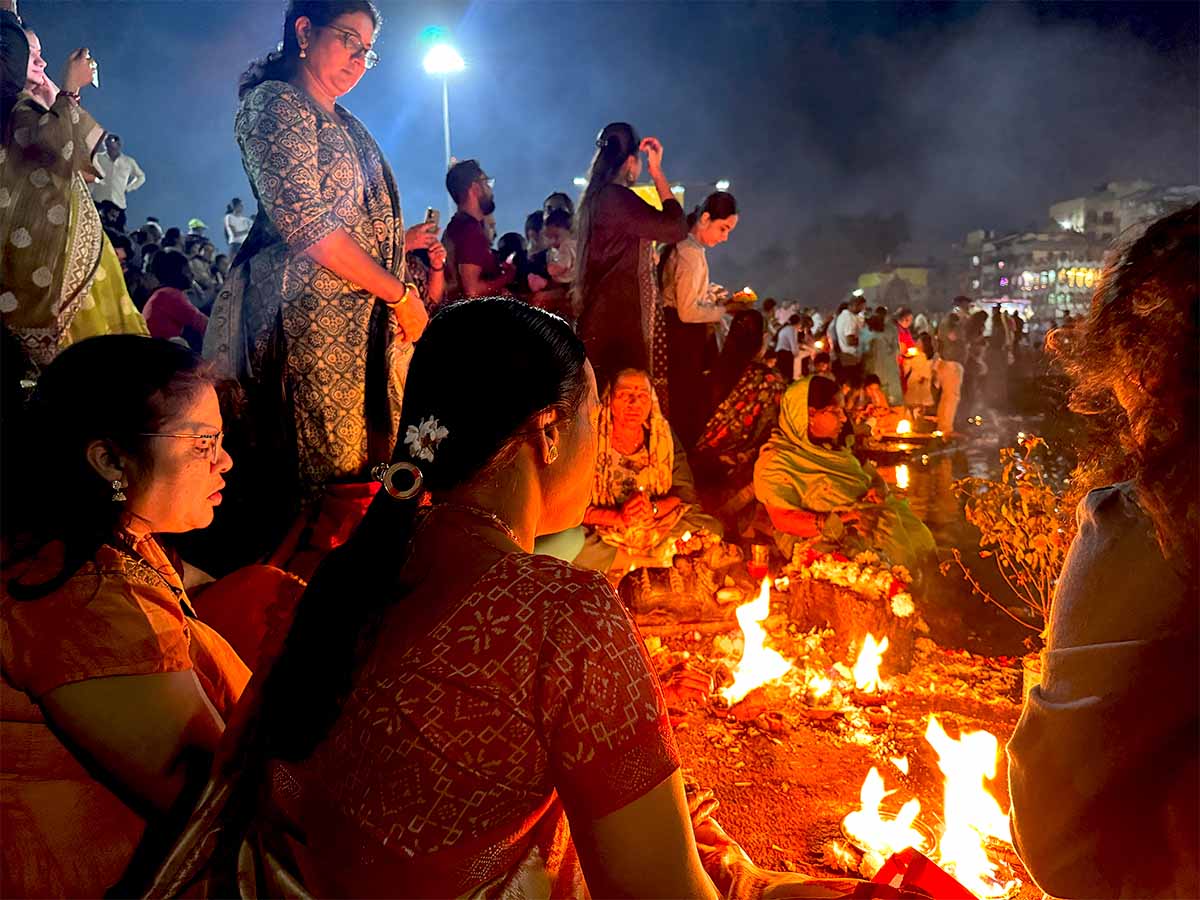
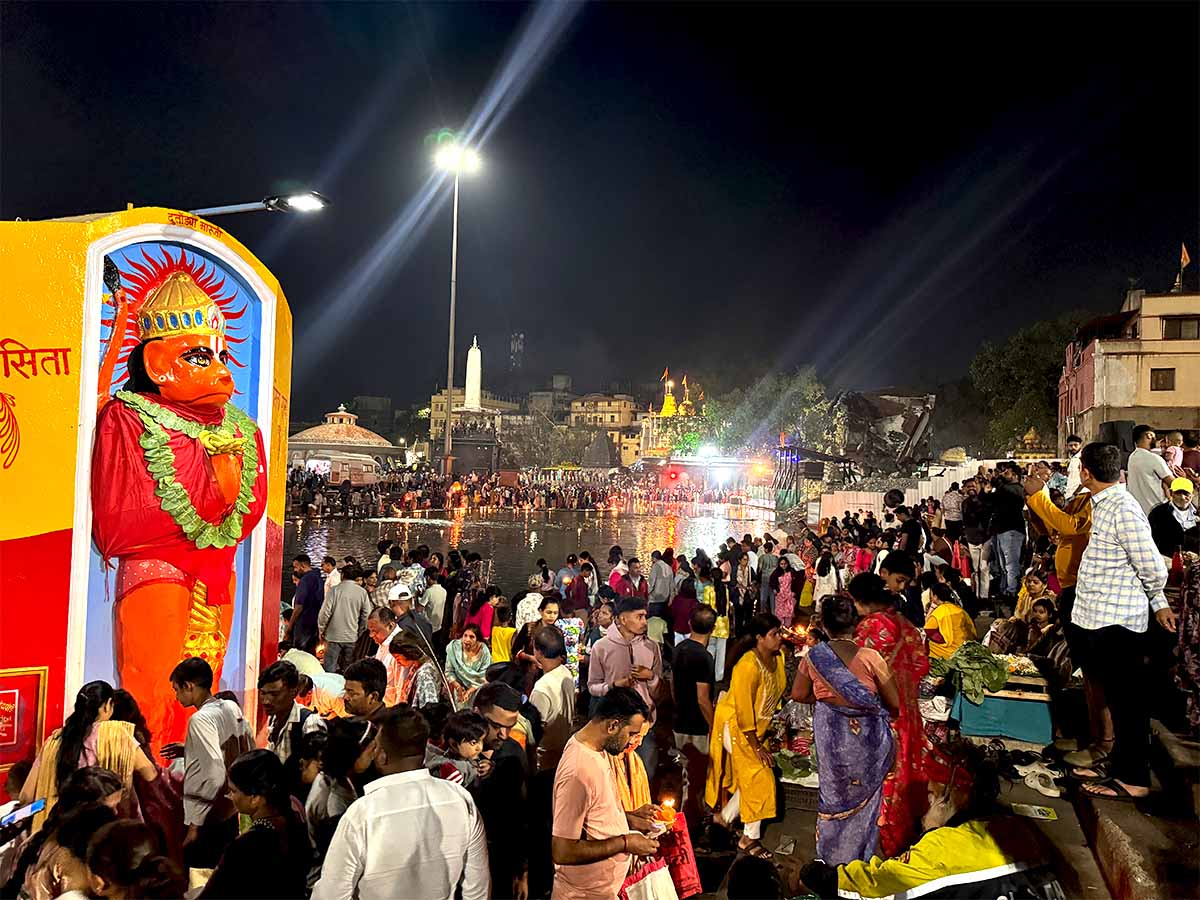
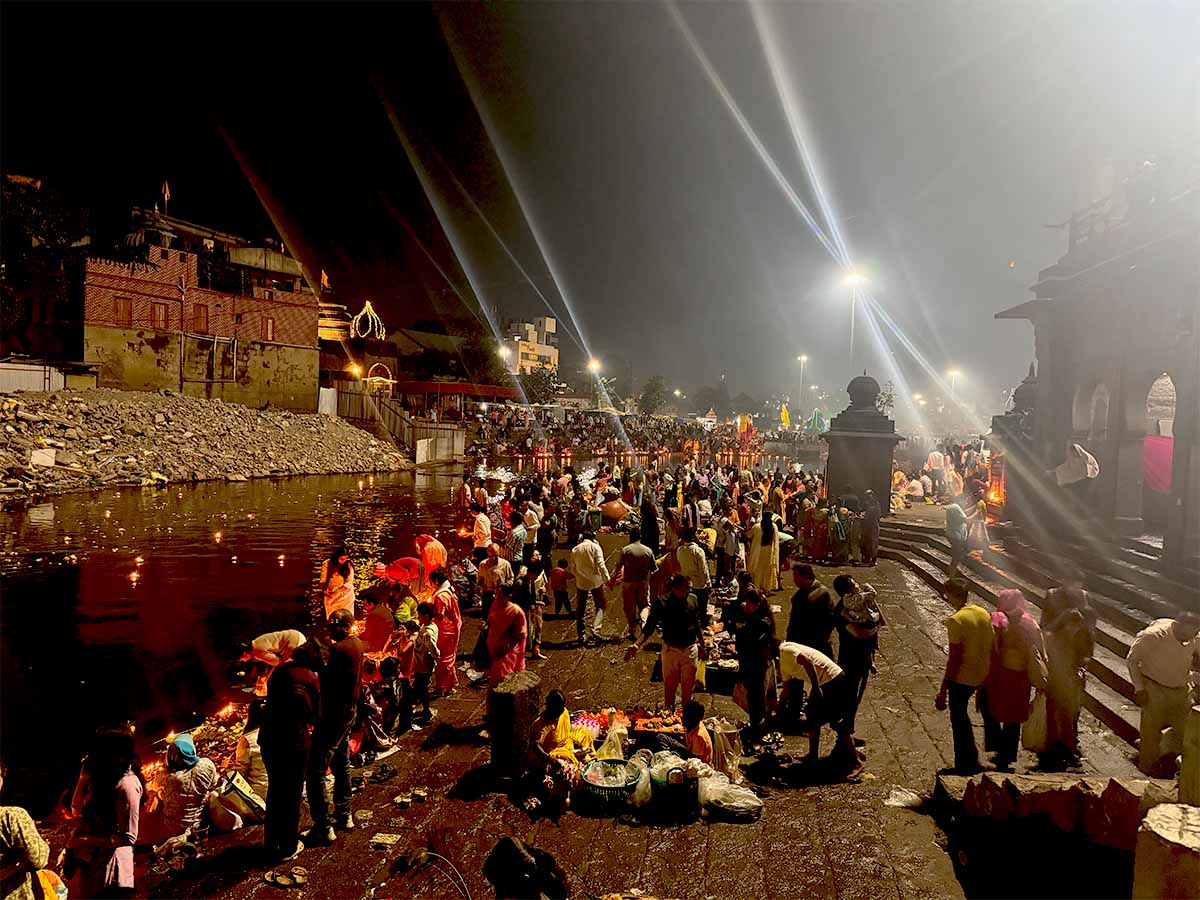
On the evening on 5 November 2025, the Panchavati area of Nashik had transformed into a vibrant sea of Bhakti.
Tens of thousands of devotees from across the city and nearby towns gathered along the Ramkund and Godavari ghats to celebrate Tripurari Purnima.
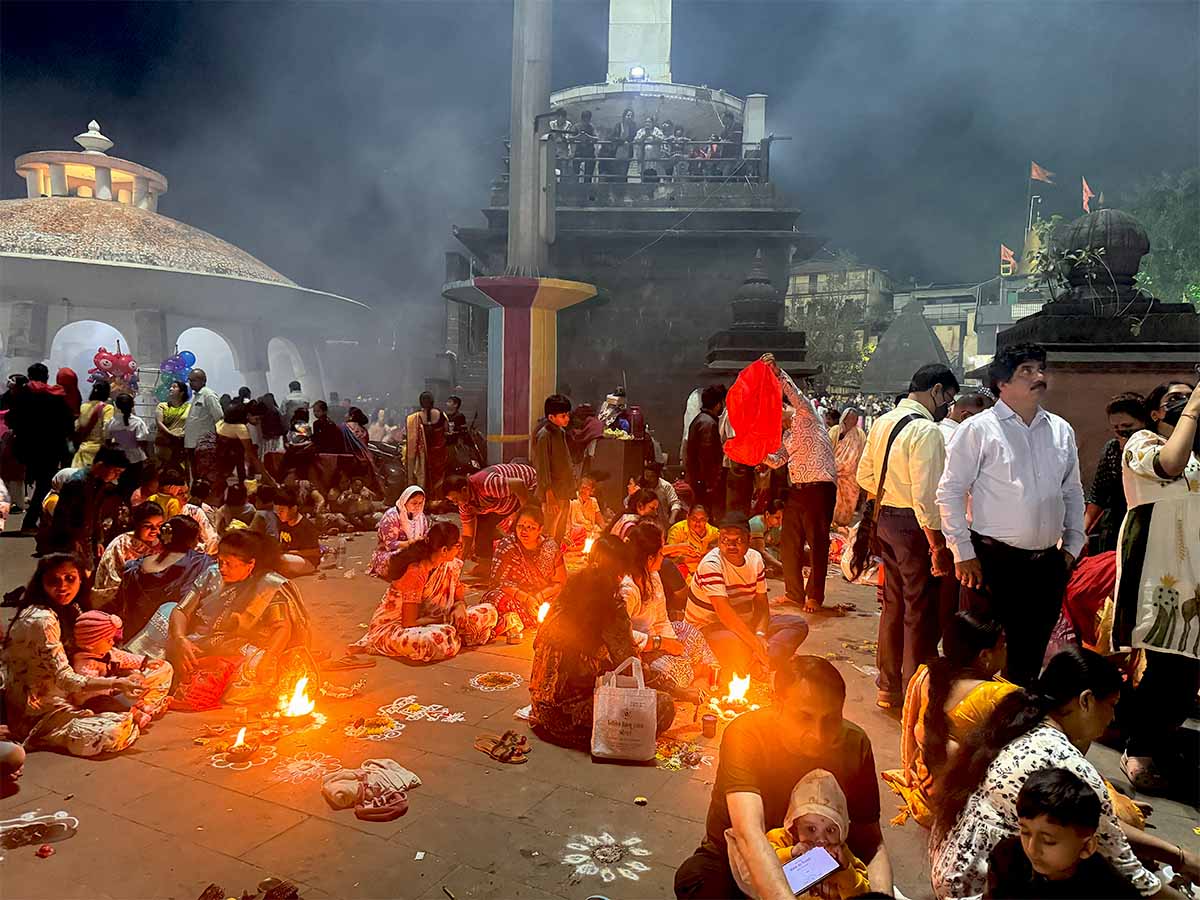
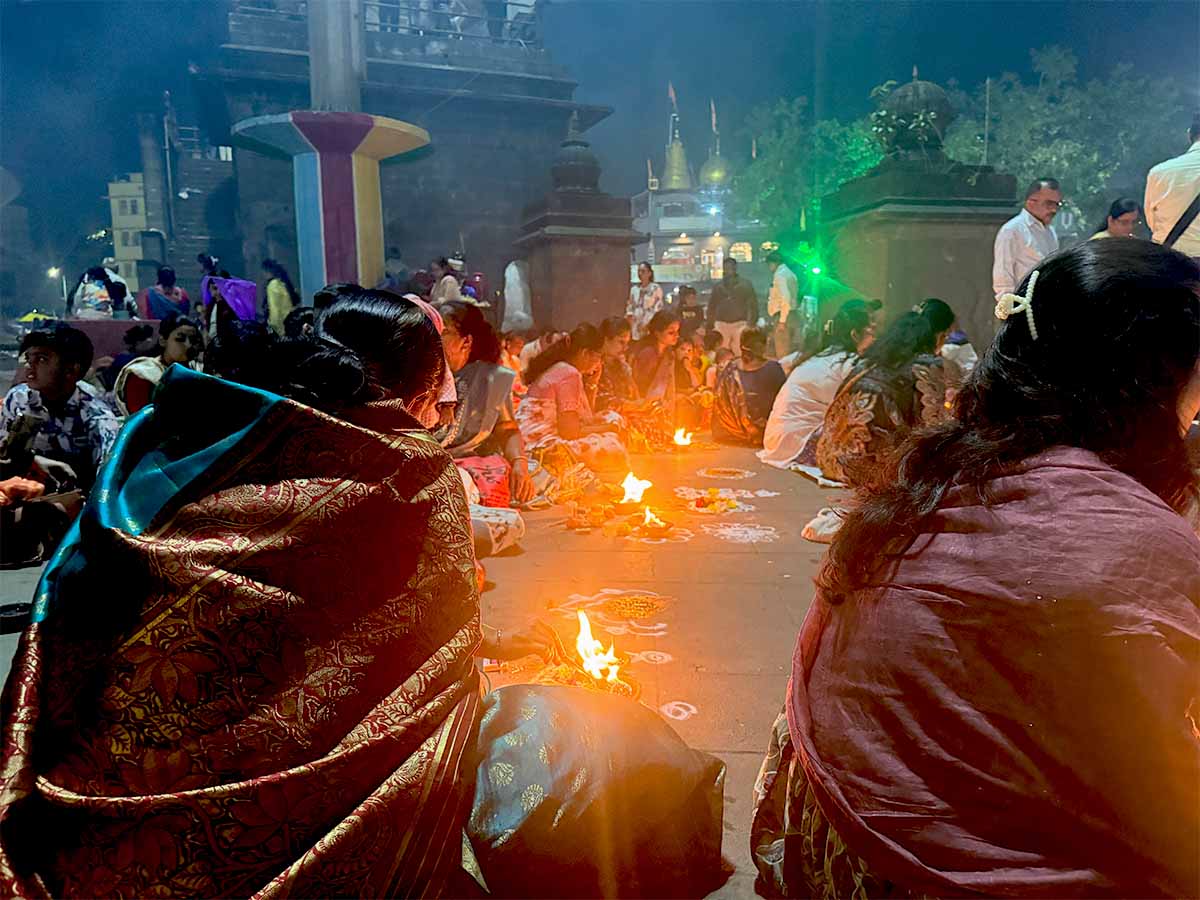
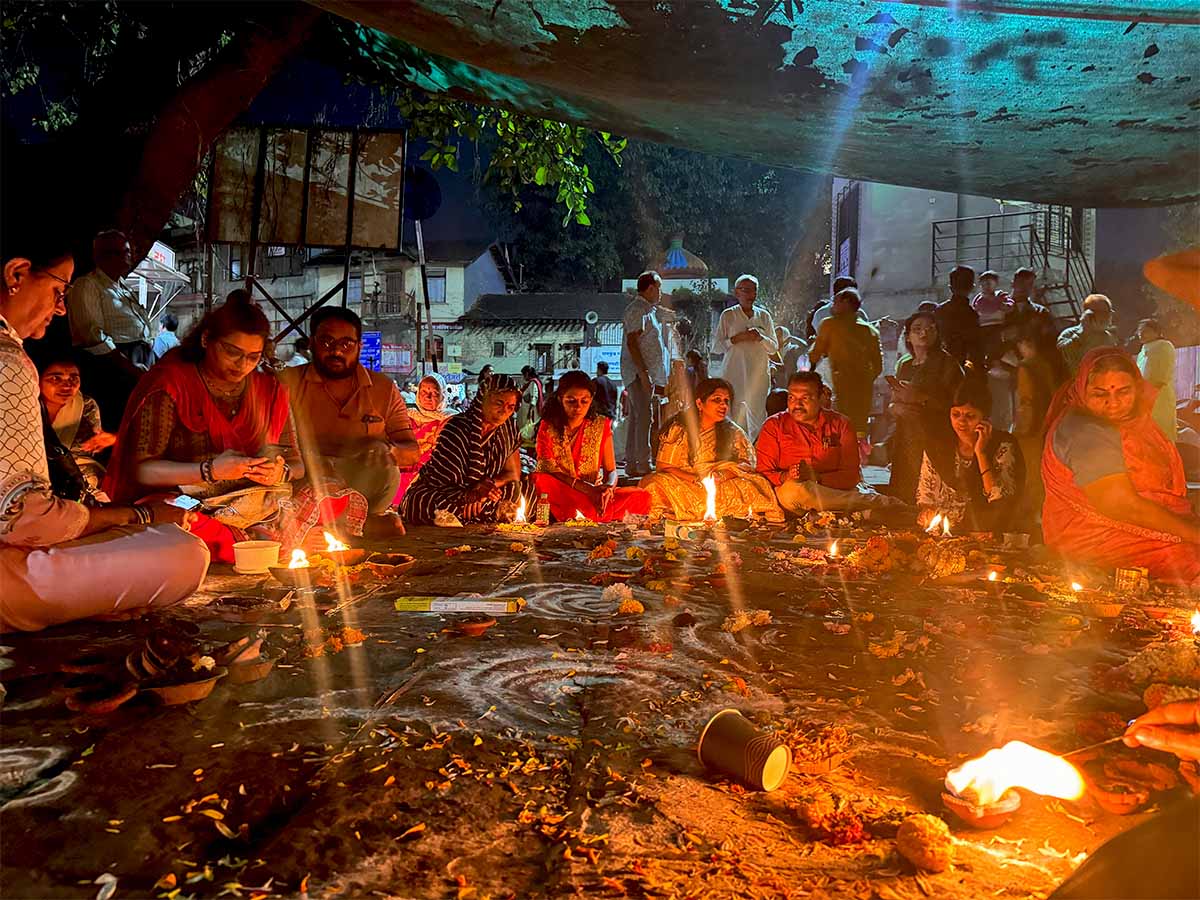
As the sun dipped below the horizon, the atmosphere grew increasingly divine. Women dressed in colourful sarees carefully lit earthen diyas – divas – and worshipped Lord Mahadev.
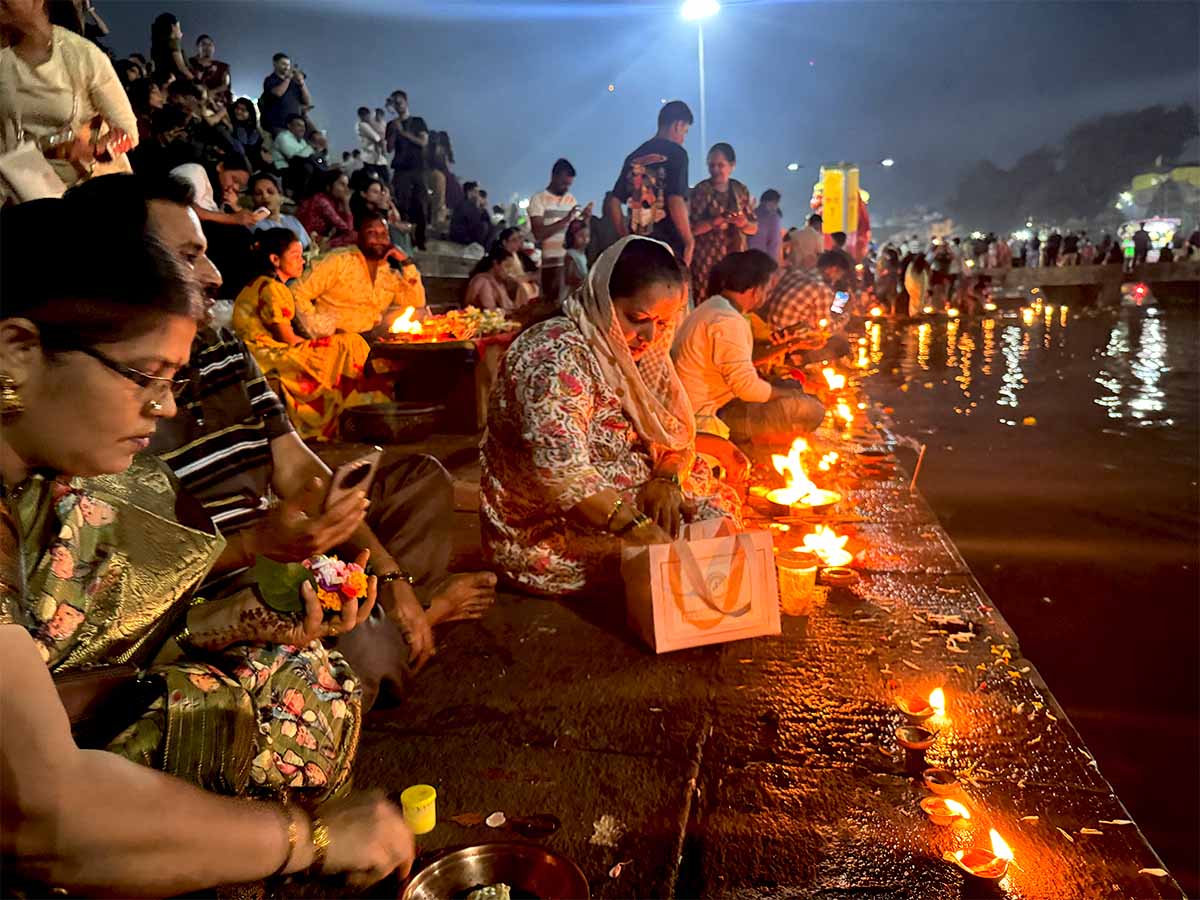
Many also placed drona divas made of leaves in the flowing waters of the Godavari, sending countless flickering flames downstream.
The river shimmered with light, reflecting the devotion of thousands of hearts. Food vendors, toy sellers, and chaat and sweet stalls lined the ghats, adding to the festive air.
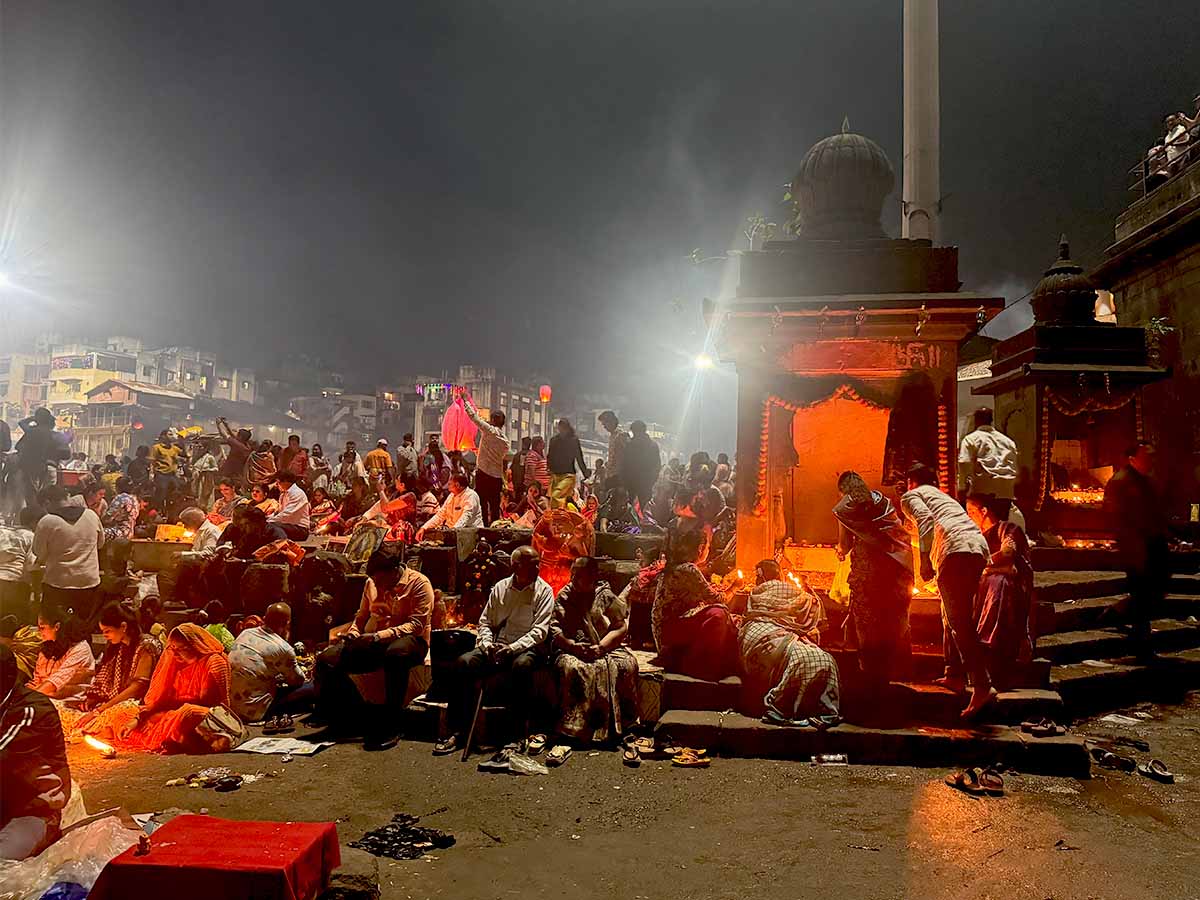
Families sat on the steps watching the lamps drift away, while chants of “Har Har Mahadev” and “Har Har Tripurari” echoed from the Kapaleshwar Mahadev Temple, Nashik’s oldest shrine dedicated to Lord Shiva.
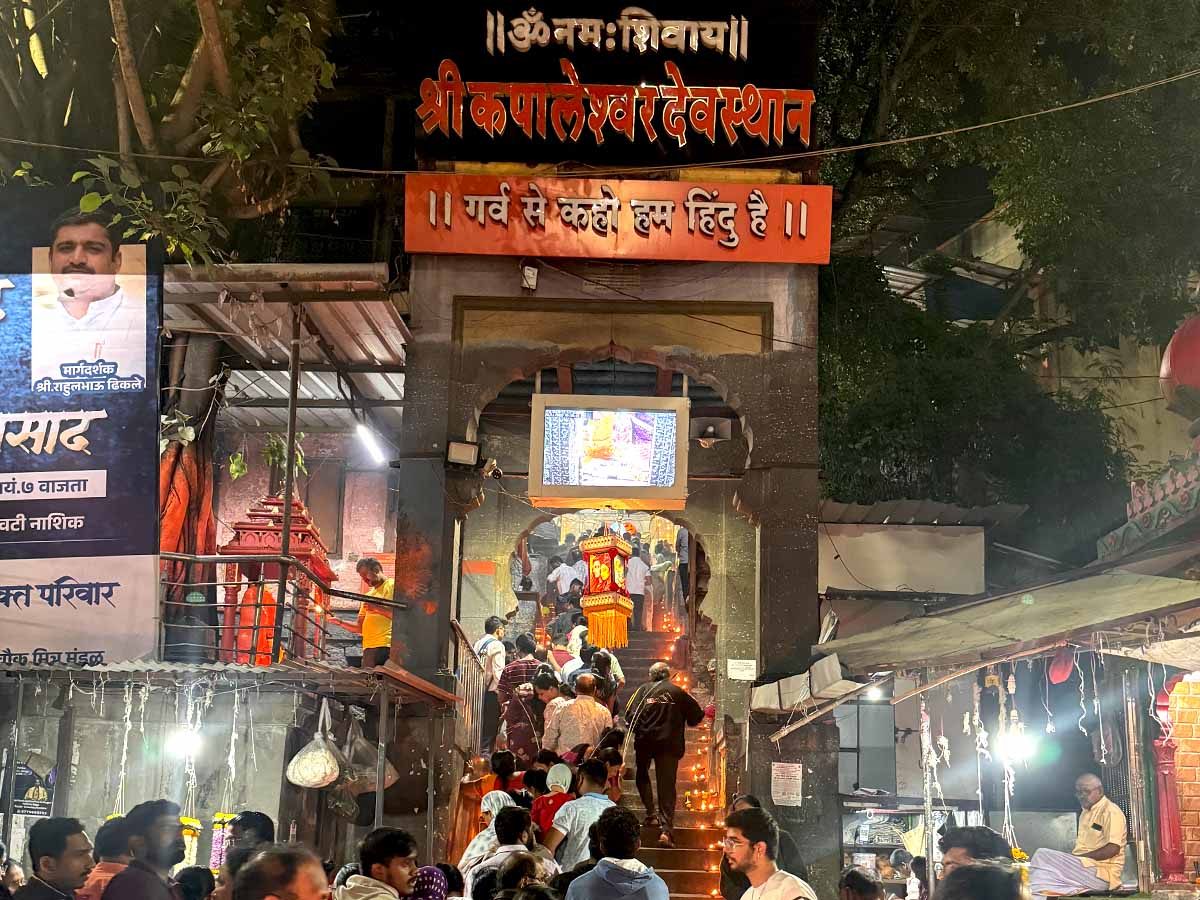
Devotees at Kapaleshwar Mahadev Temple
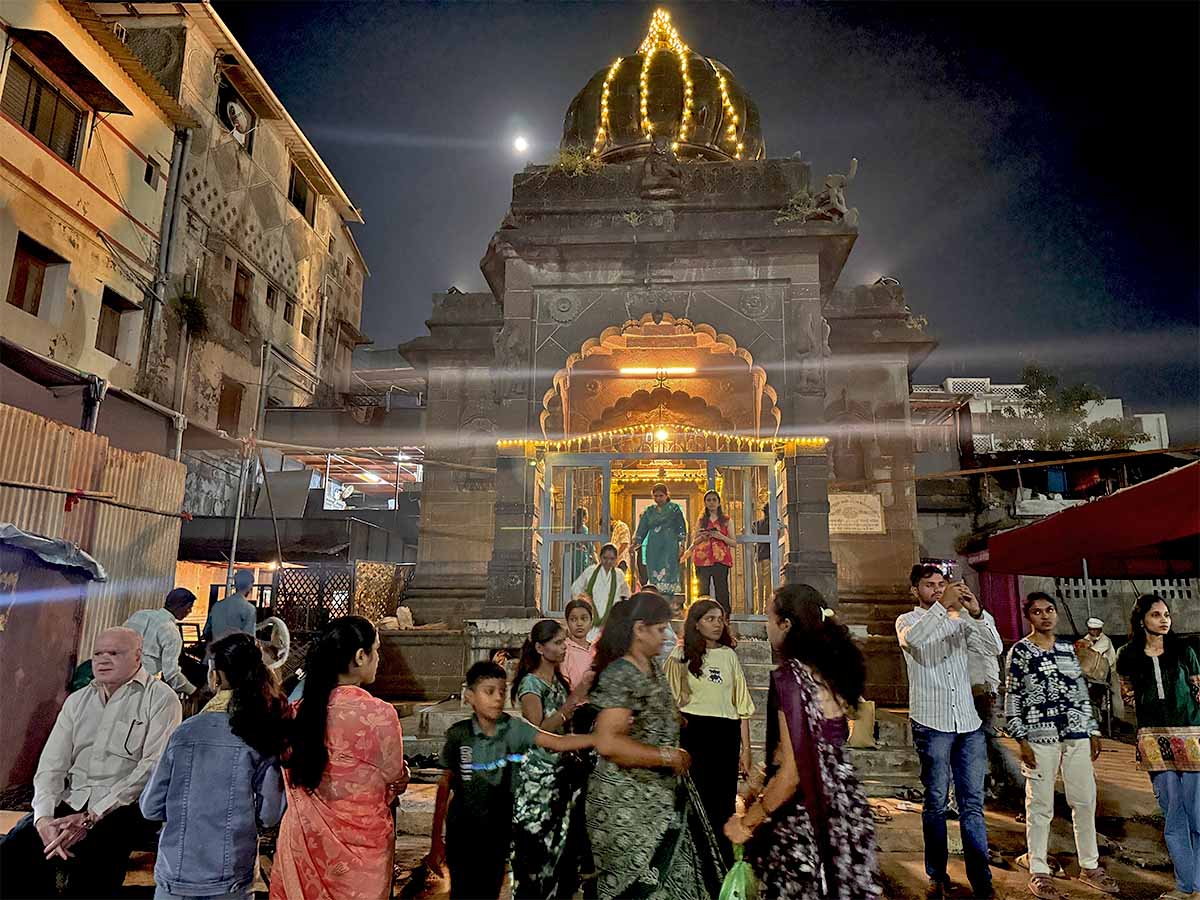
The Kapaleshwar Mahadev Mandir, located near Ramkund, became the central focus of worship. A continuous stream of devotees queued up to offer prayers to Lord Shiva – the Tripurari – who, according to legend, destroyed the three demon cities on this day.
By the time of the evening aarti, the temple premises were overflowing, yet the queue moved smoothly, managed by volunteers and temple authorities.
Inside the sanctum, the rhythmic ringing of bells and chants of the Shiva Panchakshari Mantra – Om Namah Shivaya – filled the air with spiritual intensity.
The sight of so many devotees praying together, the fragrance of incense, and the sound of bhajans created a powerful sense of community and sacred connection – an embodiment of faith that transcends caste, class, and region.
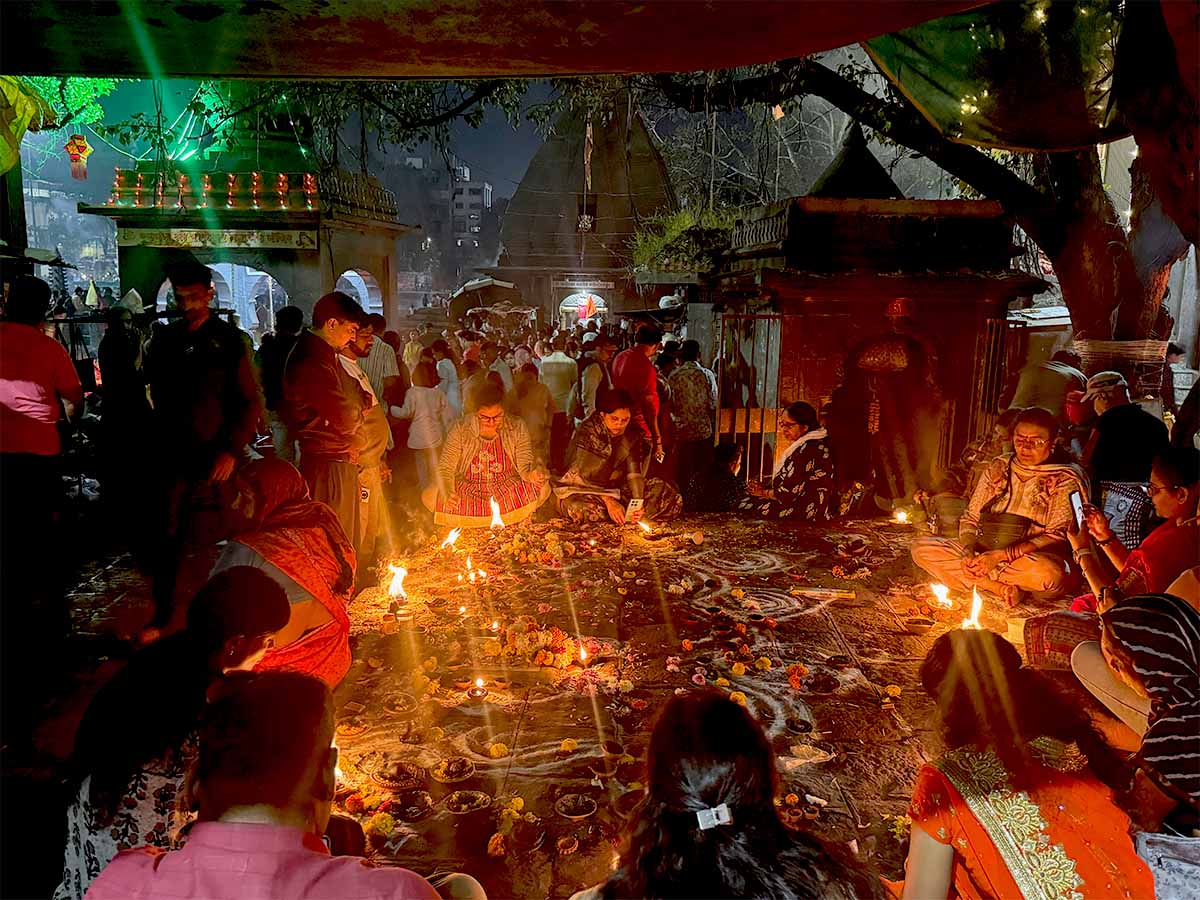
The Scene at the Godavari Ghats at Ramkund Nashik
Walking along the ghats, one could feel the pulse of the festival in every step. Groups of women were seen lighting hundreds of diyas in small clay trays, whispering prayers for family well-being and prosperity.
Children helped their parents float the lamps, fascinated by how the flames danced on the water’s surface. The Godavari — called Dakshin Ganga — seemed alive, carrying the luminous offerings downstream.
Vendors sold steaming bhuttas, farsan, and sweets, while others offered colourful diyas and small idols for worship. It was a blend of devotion and festivity – where spiritual celebration met local culture, creating an atmosphere that was both sacred and joyous.
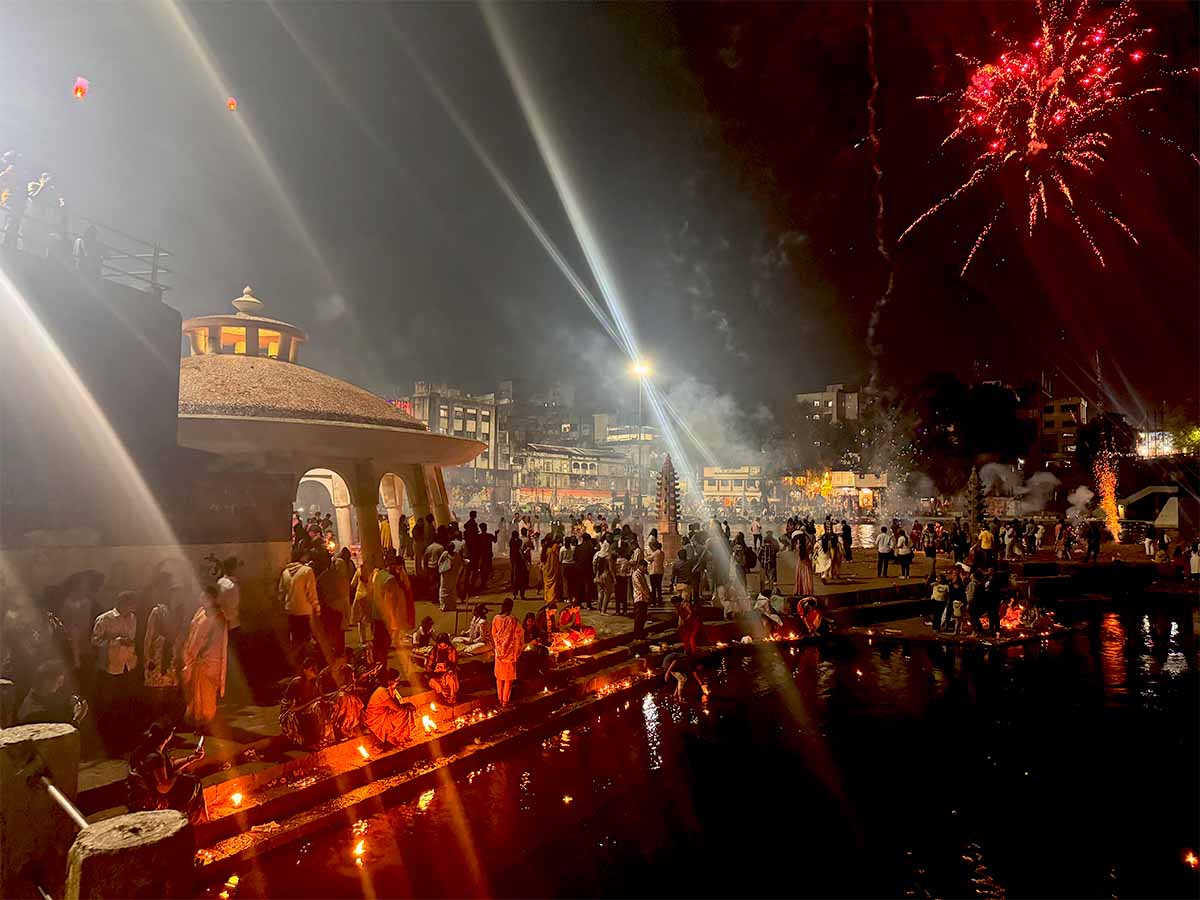
Tripurari Purnima and the Spirit of Nashik
Nashik’s identity as a spiritual city is inseparable from the Godavari and its ghats. Every major Hindu festival – from Makar Sankranti to Kumbh Mela – finds a deep expression here. But Tripurari Purnima holds a special place because it combines Shaiva devotion with the light symbolism of Diwali.
For many Nashikites, this day is also a time to remember ancestors, offer prayers for family prosperity, and reaffirm faith in the cyclical balance of life.
As one elderly devotee mentioned while floating a diya,
“On this night, Lord Shiva gives light to the world — we light our diyas to remind ourselves that even after darkness, dharma will always shine again.”
The Broader Cultural Context – From Varanasi to Panchavati
Across India, the celebration of Kartik Purnima mirrors this same spiritual essence in varied forms.
In Varanasi, the ghats are lit with millions of diyas in the grand Dev Diwali – one of the most photographed spiritual spectacles in the world.
In Pushkar, thousands bathe in the lake to mark the end of the annual Pushkar Mela, a festival that blends commerce, devotion, and folk tradition.
Nashik, with its riverfront temples and mythological ties to Lord Ram’s exile (Panchavati), carries that same sacred geography. Here too, light and devotion converge, linking the city’s spiritual heritage with the timeless rhythm of Indian festivals.
Vedic Culture and Indian Civilisation
Even after the aarti ended and lamps were drifting away, the ghats remained alive – many diyas still flickering against the night breeze.
Families lingered to take photographs, children played near the steps, and the sound of conch shells echoed softly from the Kapaleshwar temple.
The celebration of Tripurari Purnima 2025 in Nashik was not just a religious gathering; it was an expression of Aastha – collective faith and continuity – proof that despite modern life’s rush, ancient traditions still pulse vibrantly in the heart of the city.
As the Godavari carried the last lamps downstream, it also seemed to carry the prayers of thousands – for peace, prosperity, and light in every home.
Dev Diwali – The festival of light that connects us all
In the glow of countless diyas reflected upon the Godavari, one could sense the timeless truth of Kartiki Purnima: that light – divine or human – always finds its way through darkness.
Whether celebrated as Tripurari Purnima, Dev Diwali, or Kartik Purnima, this festival unites the spiritual and natural worlds in harmony.
For Nashik, the night of 5 November 2025 was a reaffirmation of its cultural legacy – where the rivers, the temples, and the people came together to celebrate the eternal victory of light, knowledge, and dharma!.
Margashirsha Month 2025: Mahalakshmi Guruvar Vrat Katha Pooja Dates & Significance
Kartik Purnima FAQs
What is Kartik Purnima and why is it celebrated?
Kartik Purnima, also known as Kartiki Purnima in Maharashtra and Tripurari Purnima, is celebrated on the full moon day of the Kartik month. It marks the victory of Lord Shiva over the demon Tripurasura and also commemorates the end of the auspicious Kartik month – a time dedicated to Vishnu bhakti, daan, and deepdan. On this day, devotees take a holy bath in sacred rivers, light diyas, and visit temples.
Is Kartik Purnima and Dev Diwali the same?
Yes. In many parts of India, especially Varanasi, Nashik, and other holy cities, Kartik Purnima is also called Dev Diwali – the “Festival of Lights of the Gods.” It is believed that the Devas (celestial beings) descend to Earth on this night to celebrate Lord Shiva’s victory over adharma, filling rivers and temples with divine radiance.
What rituals are performed on Kartiki Purnima in Maharashtra?
In Maharashtra, devotees bathe in rivers like the Godavari at Ramkund in Nashik, perform deepdan (offering of lamps), and worship Lord Shiva and Lord Vishnu. The Kapaleshwar Mahadev Mandir in Nashik witnesses thousands of devotees lighting lamps and offering prayers. Many also observe fasts, perform charity, and visit temples during the evening aarti.
What is the legend of Tripurari Purnima?
According to the Shiva Purana, three demon brothers – Tripurasura – became invincible and built three aerial cities. The devas prayed to Lord Shiva, who destroyed all three cities with a single arrow on Kartik Purnima. Hence, Shiva is called Tripurari, and the day is observed as Tripurari Purnima, symbolizing the victory of dharma over adharma.
How is Kartik Purnima celebrated in Nashik?
In Nashik, thousands of devotees gather at Ramkund and the Godavari ghats to offer prayers, float diyas, and perform rituals. The entire area glows with countless earthen lamps, vendors, and joyous devotees – creating a divine, festive atmosphere. The Kapaleshwar Mahadev Mandir becomes the focal point for the celebration.
When was Kartik Purnima celebrated in 2025?
Kartik Purnima 2025 was observed on Wednesday, 5 November 2025. Devotees across India, including those in Nashik, Varanasi, and Pushkar, celebrated this auspicious day with deepdan, temple visits, and prayers to Lord Shiva and Lord Vishnu.