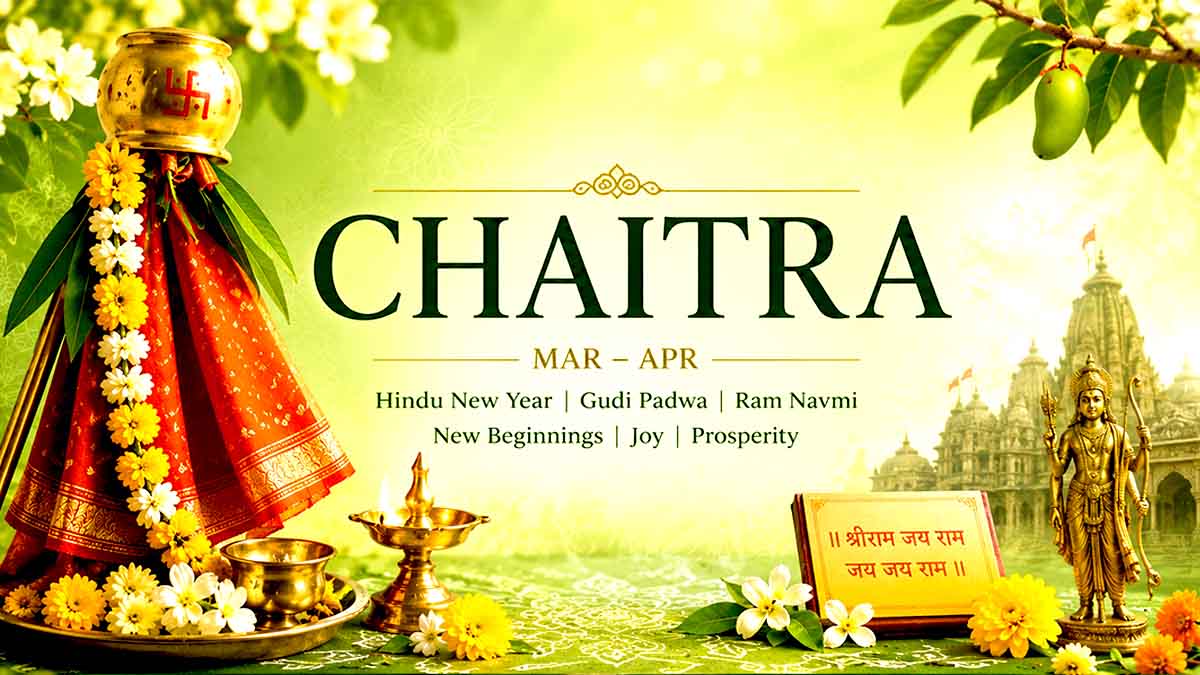
As winter slowly fades and the first signs of spring begin to appear across the Indian subcontinent, the month of Chaitra arrives with a quiet sense of renewal.
Trees begin to flower, the air grows warmer, and across homes, temples, villages, and cities, preparations begin for the Hindu New Year.
Regarded as the first month of the Hindu calendar, Chaitra occupies a deeply important place in Hindu and Marathi traditions.
Rooted in ancient observations of the moon, stars, and changing seasons, the month reflects a civilisational understanding of time in which astronomy, spirituality, nature, and daily life remained closely interconnected.
Even today, festivals such as Gudi Padwa, Chaitra Navratri, Ram Navami, and Hanuman Jayanti fill this sacred month with devotion, celebration, and cultural vibrancy across Maharashtra and many parts of India.
Chaitra is followed by Vaishakha, the second month of the Hindu Calendar
What Does Chaitra Mean?
The name “Chaitra” is derived from the Chitra Nakshatra, one of the 27 lunar constellations described in ancient Indian astronomy. The month receives its name because the full moon during this period appears near the Chitra Nakshatra.
The path along which the Moon travels in the sky orbiting the Earth is divided into 27 parts and each one of them is called a Nakshatra (constellation) and the word “Chitra” means the bright one.
For centuries, Indian scholars and rishis carefully observed the movement of the moon through the night sky and associated different lunar months with specific nakshatras.
The naming of Chaitra therefore reflects not only spiritual tradition, but also the remarkable astronomical knowledge preserved within the Hindu calendar.
Chaitra 2026 Dates and Major Festivals
Chaitra usually falls between March and April, with slight variations depending upon regional calendar traditions and lunar calculations.
- Chaitra Begins: 19 March 2026
- Chaitra Ends: 16 April 2026
- Gudi Padwa: 19 March 2026
- Ram Navami: 26 March 2026
- Hanuman Jayanti: 2 April 2026
Chaitra and the Beginning of the Hindu New Year
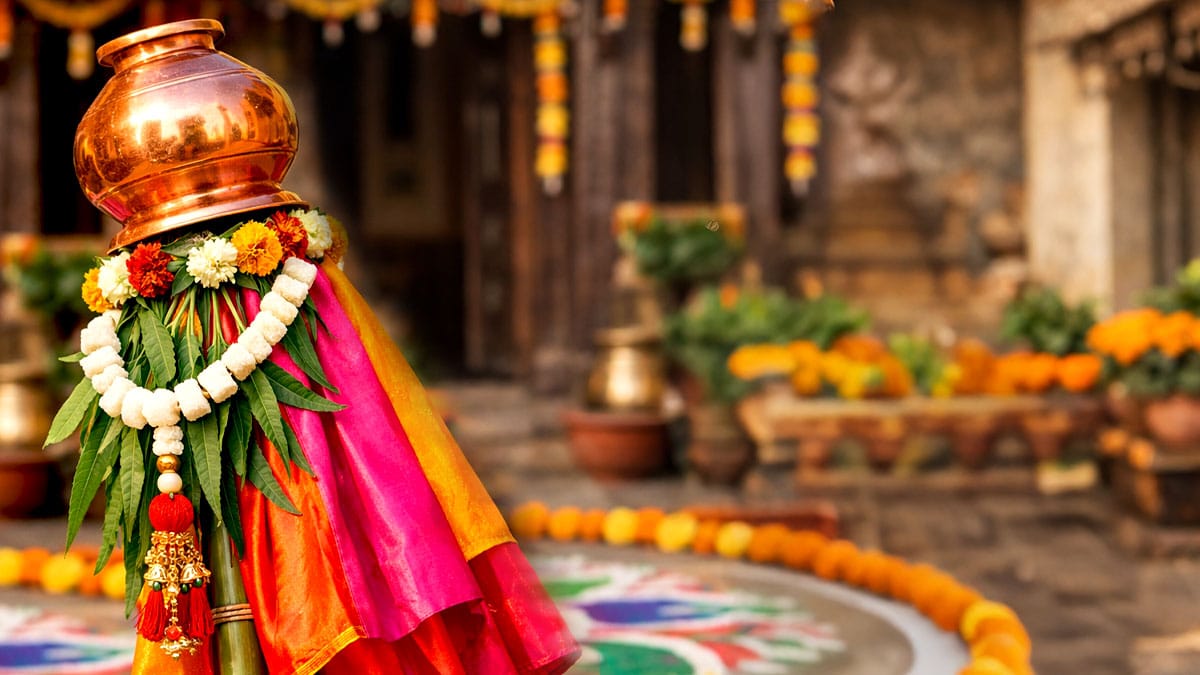
Chaitra marks the beginning of the Hindu New Year across several traditions in India. In Maharashtra, this new year is celebrated as Gudi Padwa, one of the most culturally significant festivals in the Marathi calendar.
On this day, Gudis, which are decorated staffs adorned with silk cloth, neem leaves, mango leaves, and inverted vessels, are raised outside homes as symbols of victory, prosperity, and auspicious beginnings.
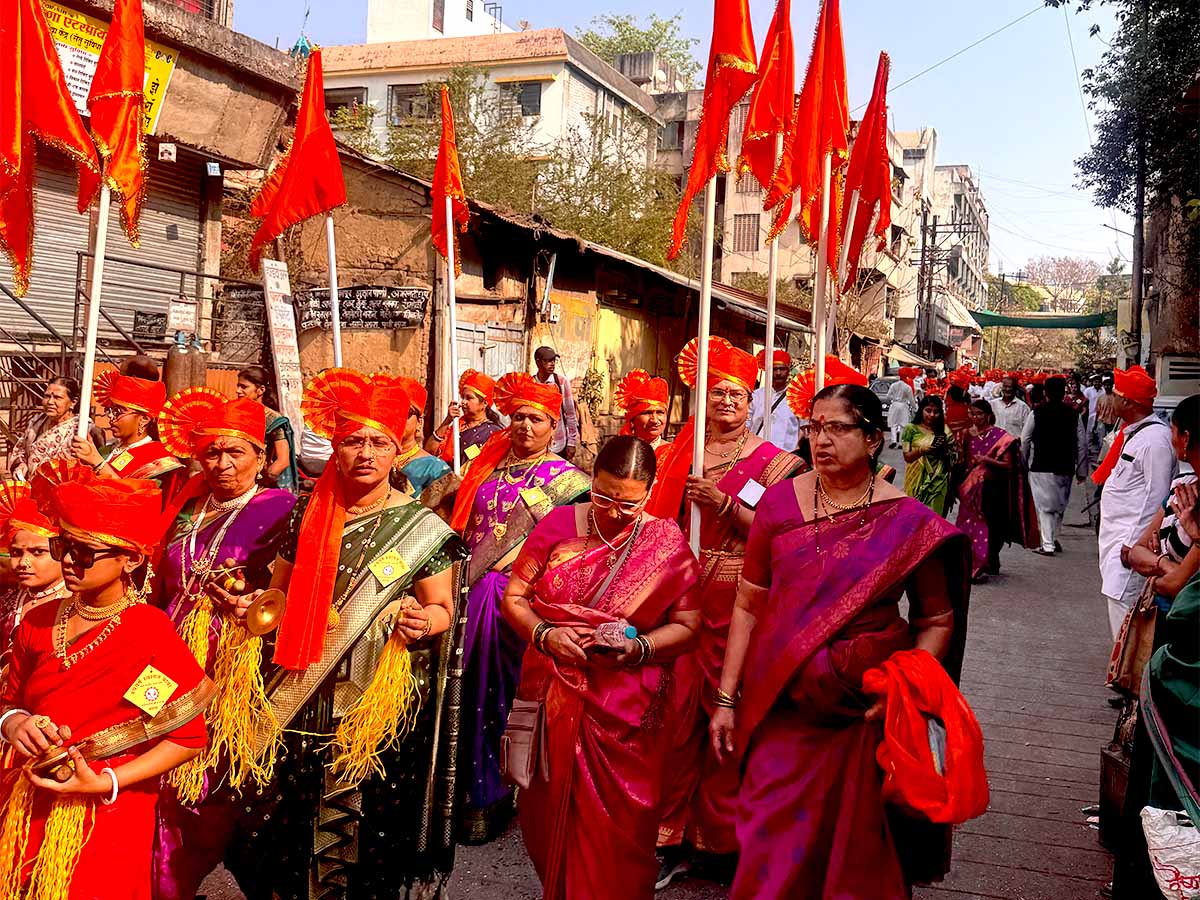
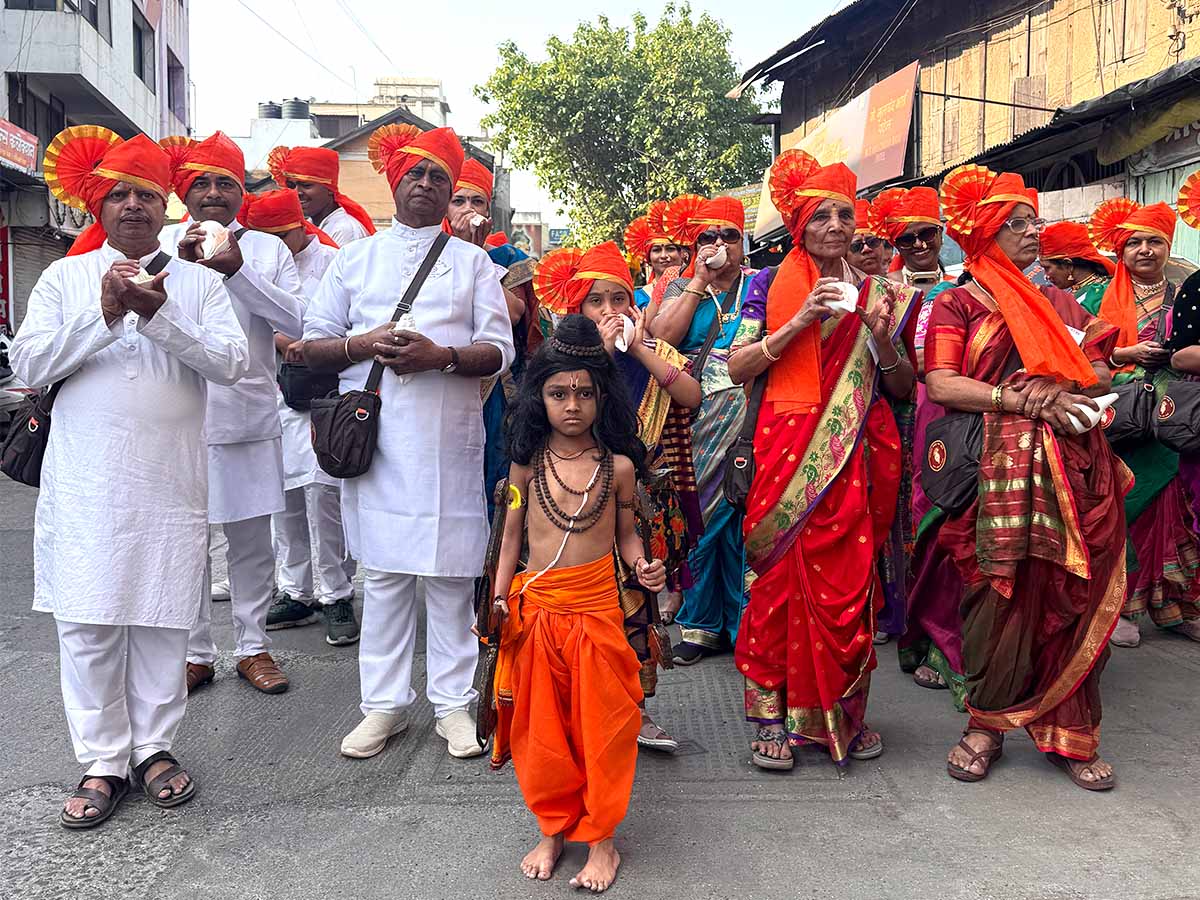
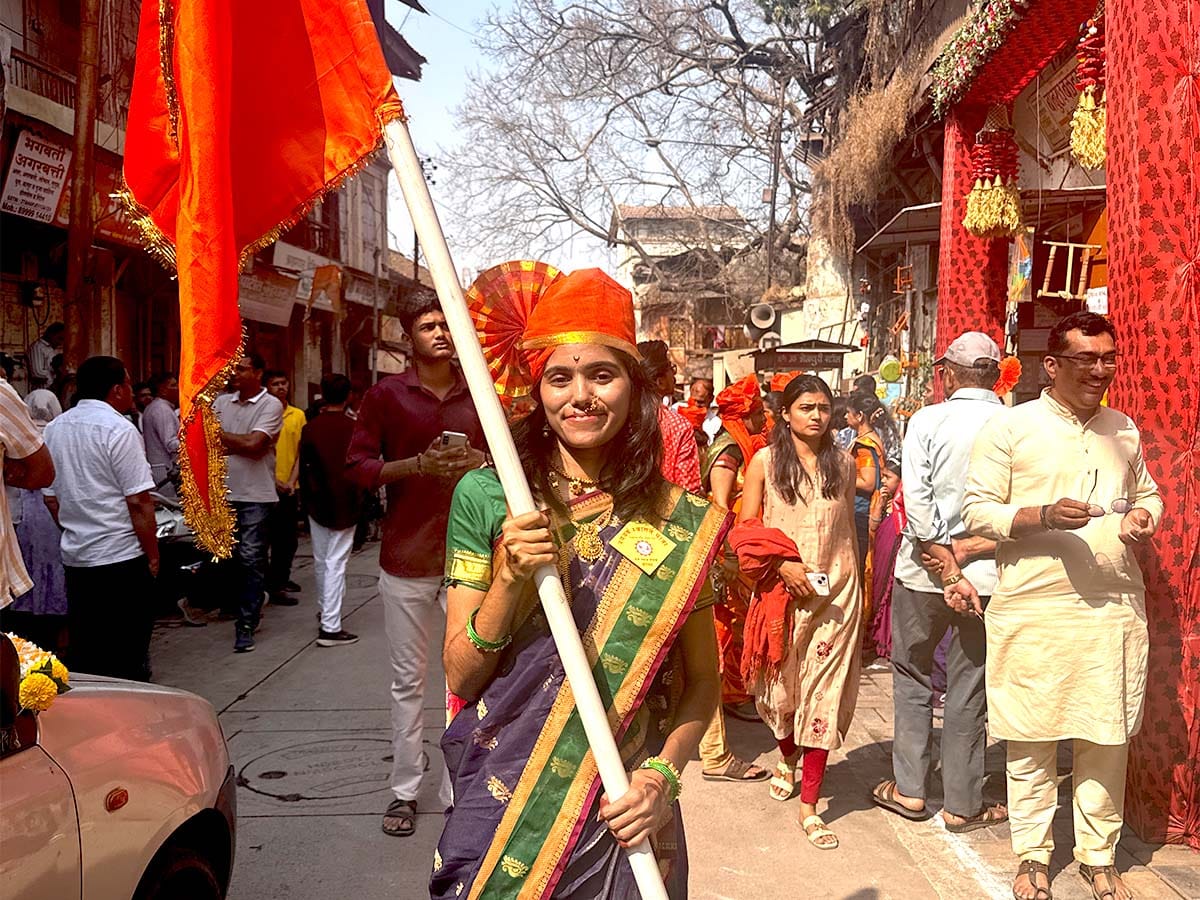
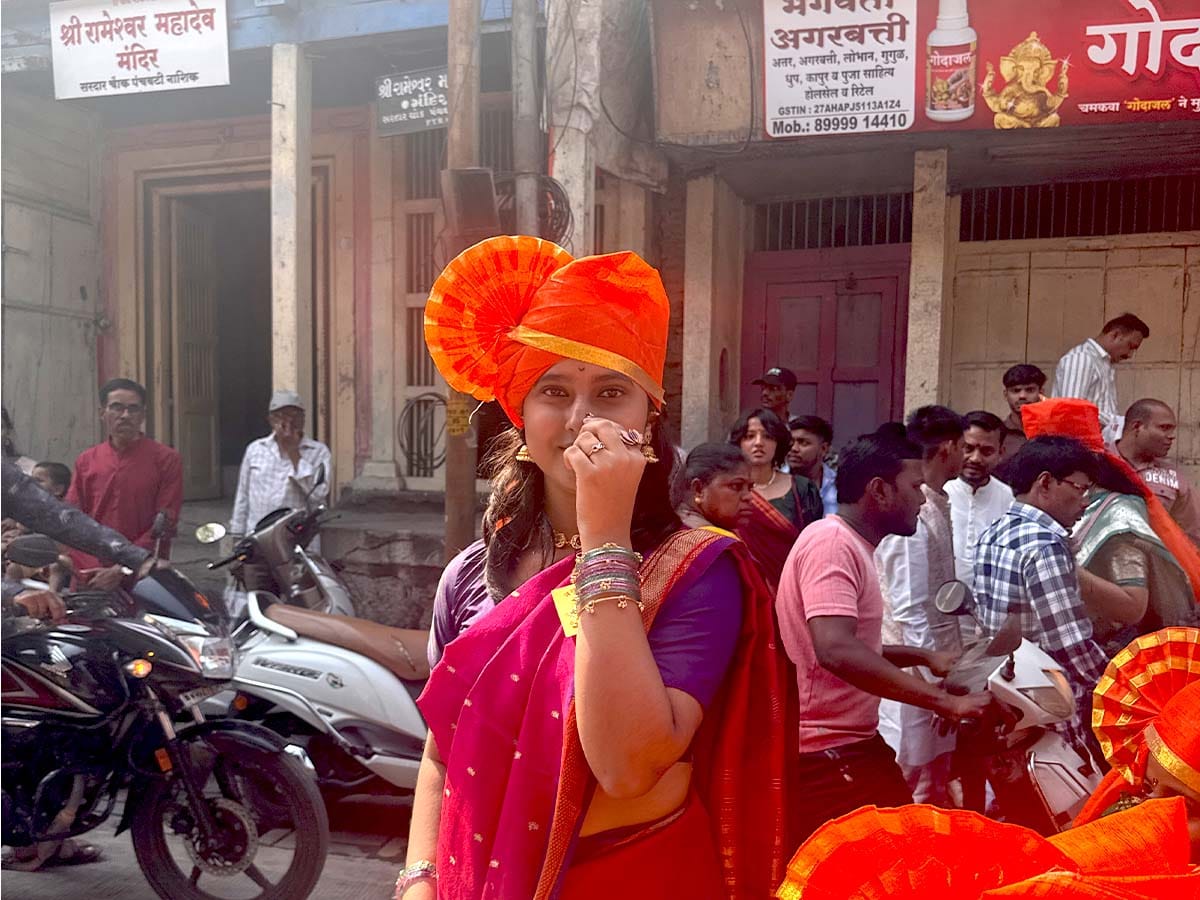
Homes are cleaned, rangolis are drawn, traditional foods are prepared, and families gather together and vibrant Shobha Yatra processions are carried out to welcome the new year.
The beginning of Chaitra and the Hindu New Year is celebrated under different names across India:
- Ugadi in Karnataka, Andhra Pradesh, and Telangana
- Vishu in Kerala
- Puthandu in Tamil Nadu
- Cheti Chand among Sindhis
- Navreh in Kashmir
Though customs and regional traditions differ, the underlying idea remains similar – the beginning of a new cycle of time, renewal, and spiritual reflection.
Chaitra Navratri and Ram Navami
One of the most important observances during this month is Chaitra Navratri, the nine-day festival dedicated to Goddess Durga in her various forms.
Beginning on the first day of Chaitra, this Navratri carries deep spiritual significance across many parts of India.
Temples witness special prayers and devotional gatherings, while many devotees observe fasting and spiritual discipline during these days.
The festival culminates with Ram Navami, celebrating the birth of Prabhu Shri Ram, whose life and ideals continue to occupy a central place in Hindu civilisation and spiritual thought.
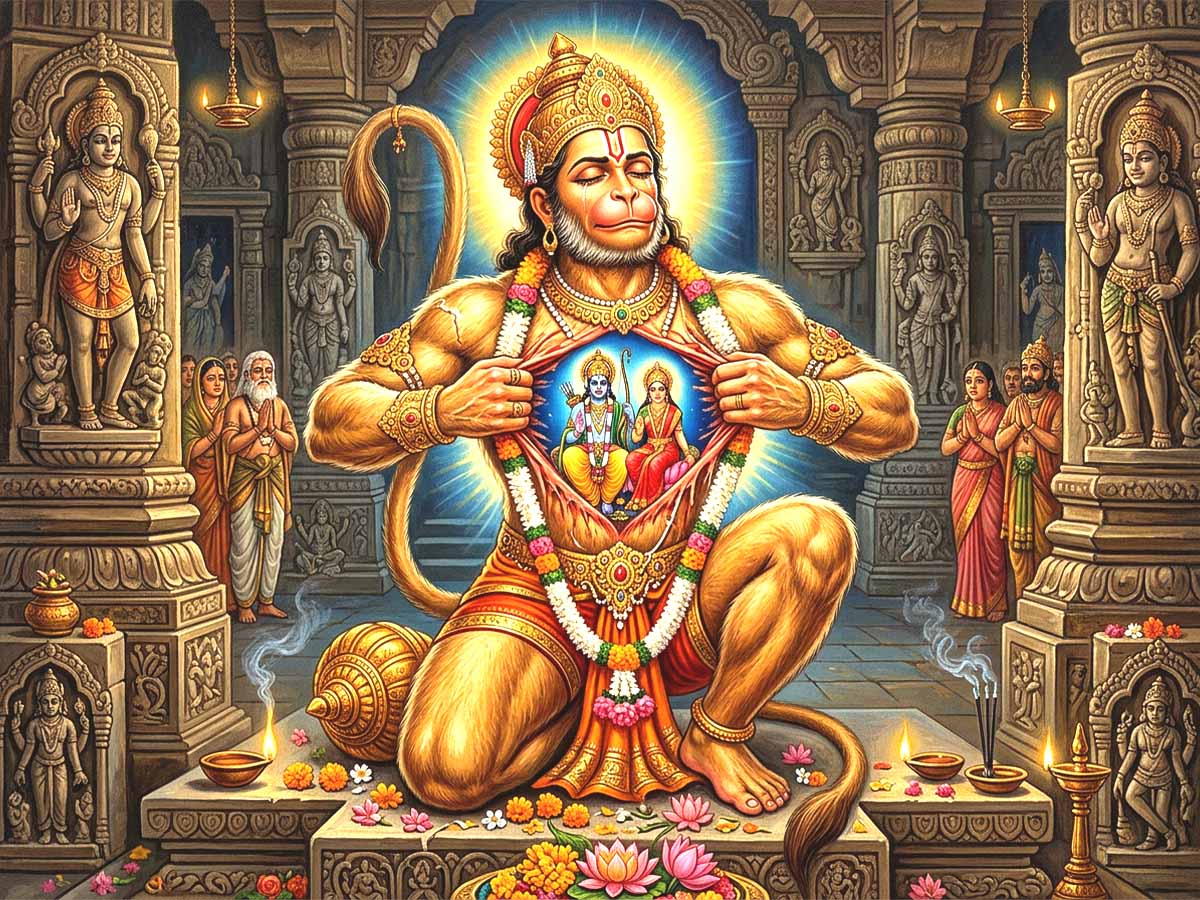
Hanuman Jayanti, observed later in the month, further adds to the devotional atmosphere across temples and households.
Seasonal and Spiritual Significance of Chaitra
Arriving during the Indian spring season, Chaitra carries an atmosphere of renewal and awakening. Flowering trees begin to bloom, the harshness of winter recedes, and nature itself appears to slowly rejuvenate.
This seasonal transition is deeply reflected in the spiritual meaning of the month as well. Across many Hindu traditions, Chaitra symbolises fresh beginnings, prayer, discipline, and inner renewal.
The beginning of the Hindu New Year during this period reflects an ancient understanding that human life should remain aligned with the rhythms of nature and the cosmos.
Chaitra in Maharashtrian Culture and Daily Life
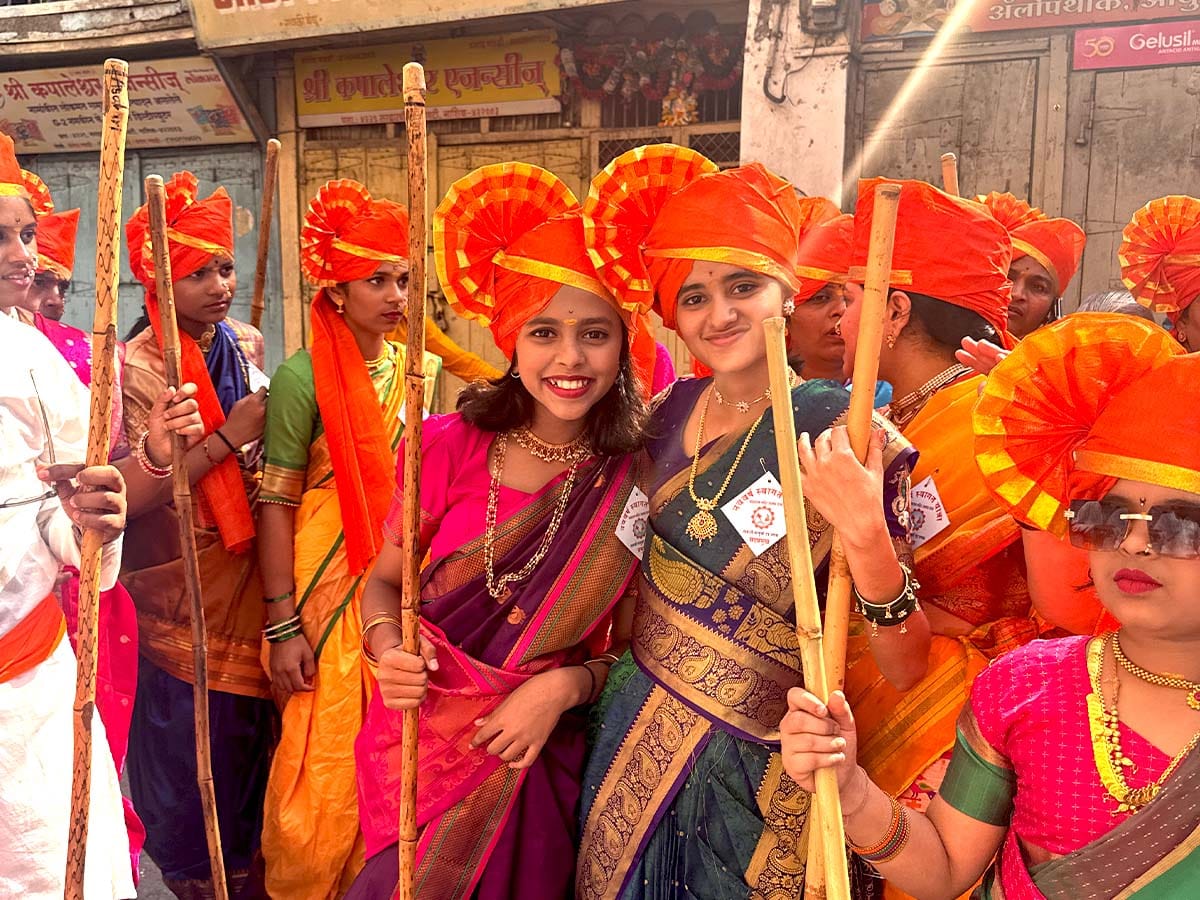
In Maharashtra, Chaitra carries a deeply familiar cultural atmosphere. The arrival of Gudi Padwa transforms homes and neighbourhoods with festive decorations, rangolis, traditional attire, and community celebrations.
Traditional Maharashtrian households often prepare foods associated with seasonal transition, including neem and jaggery based preparations believed to symbolise balance between life’s joys and difficulties.
Temples witness increased devotional activity, while markets begin filling with festive items, flowers, fabrics, utensils, and sweets.
In older localities and traditional marketplaces especially, the spirit of the Marathi New Year becomes vividly visible.
The sounds of devotional songs, festive marketplaces, and Gudis fluttering outside homes continue to connect modern Maharashtra with centuries of inherited cultural tradition where ancient festivals still thrive amid expanding cities, modern housing societies, and changing lifestyles.
Ancient Indian Knowledge and the Observation of Time
The Hindu calendar, or Panchang, reflects the importance ancient Indian civilisation placed upon learning, observation, and the preservation of knowledge.
Long before modern astronomy developed advanced instruments, Indian scholars carefully studied lunar cycles, constellations, eclipses, seasonal shifts, and the movement of celestial bodies.
Over generations, this accumulated knowledge shaped calendars, agricultural practices, festivals, rituals, and social life across the Indian subcontinent.
The naming of Chaitra after the Chitra Nakshatra forms part of this much older intellectual tradition, one that viewed the sky not merely with curiosity, but with discipline, continuity, and reverence for knowledge itself.
The Continuing Significance of Chaitra
Chaitra month represents the start of renewal in nature, in spiritual life, and in the cultural rhythms that continue to shape Hindu society even today.
From the observation of the stars and lunar cycles to the celebrations of Gudi Padwa, Chaitra Navratri, and Ram Navami, the month preserves fragments of an ancient civilisational wisdom that viewed time itself as something sacred and deeply connected with the cosmos.
Even today, as Gudis rise above homes and temples fill with devotion, Chaitra continues to mark the beginning of the Hindu New Year and also the continuation of a timeless cultural and spiritual heritage carried forward across generations.
Explore the Marathi Months Series
This article forms part of a continuing series exploring the Hindu and Marathi months: their festivals, seasonal rhythms, astronomical wisdom, and cultural traditions.
Beginning with Chaitra, the journey moves through the sacred cycle of the Hindu year, reflecting the enduring connection between nature, spirituality, and Indian civilisation.
Chaitra Month – FAQs
What is the significance of Chaitra in the Hindu calendar?
Chaitra is the first month of the Hindu calendar and marks the beginning of the Hindu New Year in several traditions across India. It usually falls between March and April in the English calendar.
Why is the month called Chaitra?
The month is named after the Chitra Nakshatra, one of the 27 lunar constellations described in ancient Indian astronomy. The full moon during this period appears near the Chitra Nakshatra.
When does Chaitra month begin and end in 2026?
In 2026, Chaitra month begins on 19 March 2026 and ends on 16 April 2026, though slight regional variations may occur according to different Panchang traditions.
Which major festivals are celebrated during Chaitra?
Several important Hindu festivals are celebrated during Chaitra, including:
Gudi Padwa
Chaitra Navratri
Ram Navami
Hanuman Jayanti.
These festivals make Chaitra one of the most spiritually significant months in the Hindu calendar.
What is the significance of Chaitra Navratri?
Chaitra Navratri is a nine-day festival dedicated to Goddess Durga and her various forms. It begins on the first day of Chaitra and concludes with Ram Navami, celebrating the birth of Prabhu Shri Ram.
Is Chaitra connected with spring season?
Yes. Chaitra arrives during the Indian spring season and is associated with renewal in nature, flowering trees, warmer weather, and the beginning of a new agricultural and spiritual cycle.