As the moon continues its eternal journey across the night sky and the seasons move through their eternal cycles, once every few years, the Hindu Calendar welcomes a rare and sacred phenomenon – an entire extra month known as the Adhik Maas.
Arriving almost like a celestial pause within the flow of time itself, this sacred month carries the quiet rhythm of the universe, the earth, and the changing seasons.
The concept of Adhik Maas reflects the profound wisdom of ancient Indian civilisation, generations of rishis and scholars who carefully observed the moon, the sun, and the cosmos to preserve harmony between nature and human life.
Known also as Purushottam Maas, and in Maharashtra affectionately called Dhondhyacha Mahina, Adhik Maas is far more than a calendar adjustment.
It is a reminder of a civilisation that viewed time not merely as the counting of days, but as a sacred rhythm woven into spirituality, family life, and the cosmic order itself.
Adhik Maas 2026 Start and End Date
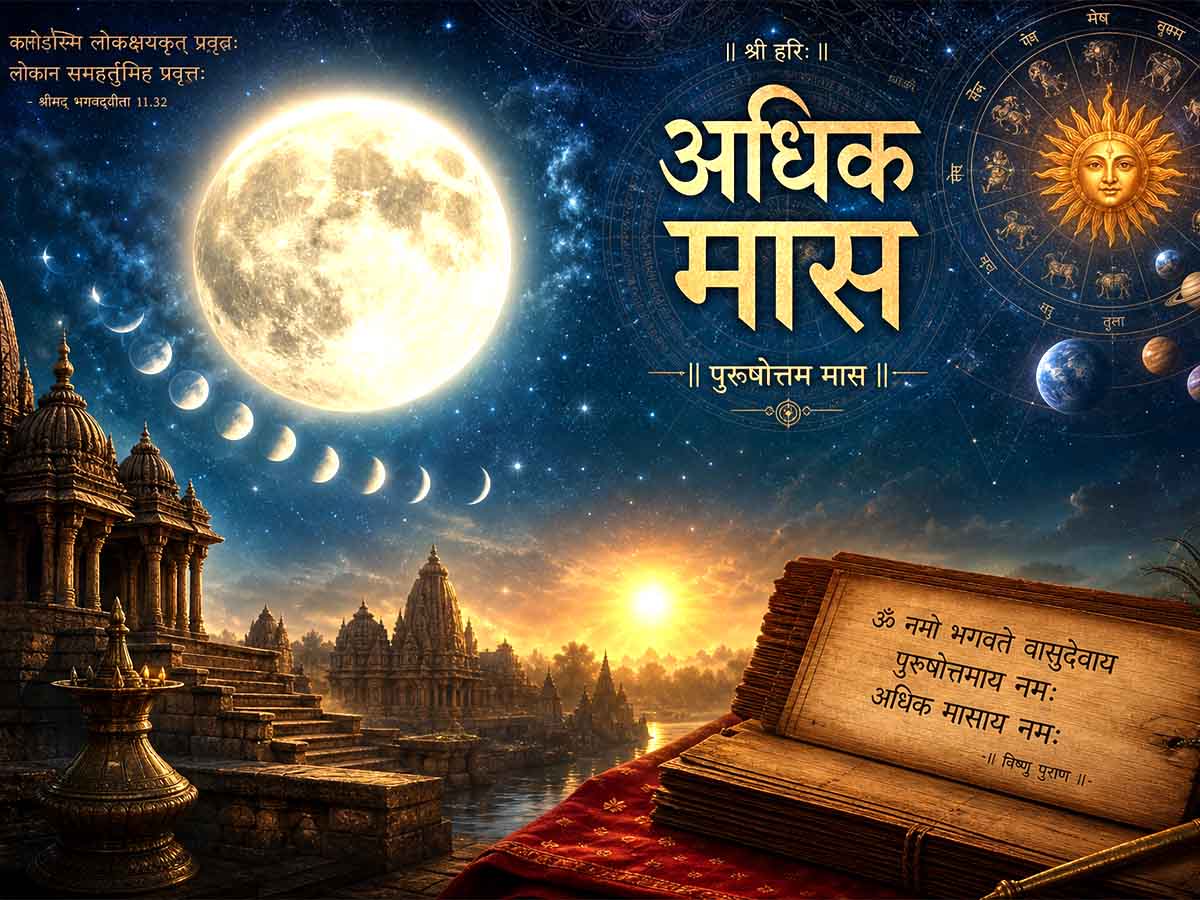
In 2026, Adhik Maas begins on 17 May 2026 and ends on 15 June 2026. This year, an extra Jyeshtha month is added to the Hindu calendar, and therefore the period is known as Adhik Jyeshtha.
Adhik Maas Dates
- Start Date : 17 May 2026
- End Date : 15 June 2026
Because the Hindu calendar follows lunar cycles while also remaining aligned with the solar year and seasons, Adhik Maas appears roughly once every 32 to 33 months.
What is Adhik Maas?
The word Adhik means “extra” or “additional.” Adhik Maas therefore refers to an additional lunar month inserted into the Hindu calendar at regular intervals.
Unlike the Gregorian calendar, which follows the solar year, the traditional Hindu calendar primarily follows the moon.
A lunar year contains around 354 days, while the solar year contains approximately 365 days. This difference of about eleven days gradually accumulates over time.
To maintain balance between lunar months and the solar cycle, an additional month is inserted periodically. This extra month is known as Adhik Maas.
What appears today as a simple calendar adjustment actually reflects generations of careful astronomical observation preserved by ancient Indian scholars and rishis.
The Ancient Wisdom Behind Adhik Maas
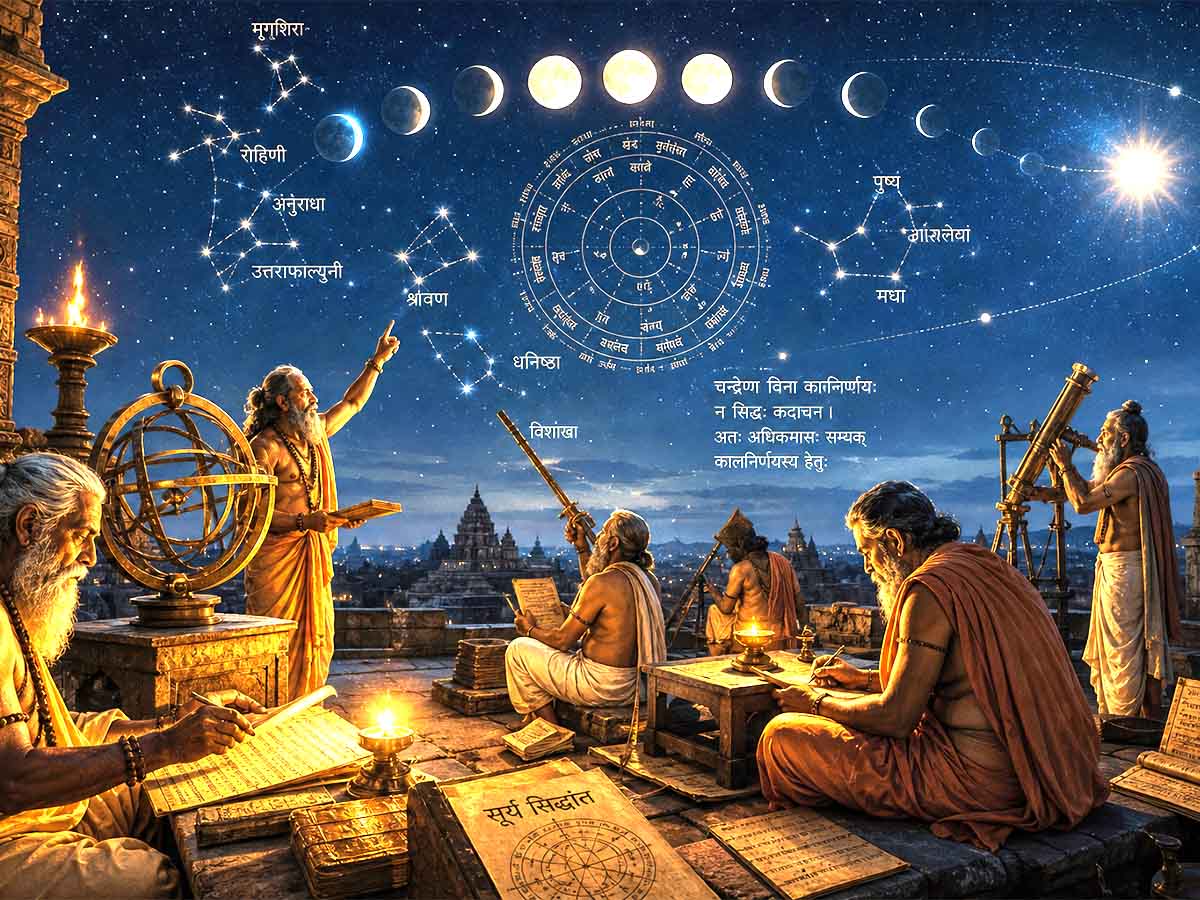
Long before modern observatories and astronomical instruments existed, Indian scholars closely observed the movement of celestial bodies and developed sophisticated systems for measuring time.
The Hindu calendar emerged from this continuous observation of:
- lunar phases,
- solar transitions,
- constellations,
- seasonal cycles,
- and agricultural rhythms.
Adhik Maas is one of the clearest examples of this knowledge. It demonstrates how ancient Indian civilisation understood that calendars could not remain disconnected from nature and the cosmos.
This deeper harmony between astronomy, spirituality, and everyday life remains one of the most remarkable aspects of the Hindu calendar even today.
Why is it also Called Purushottam Maas?
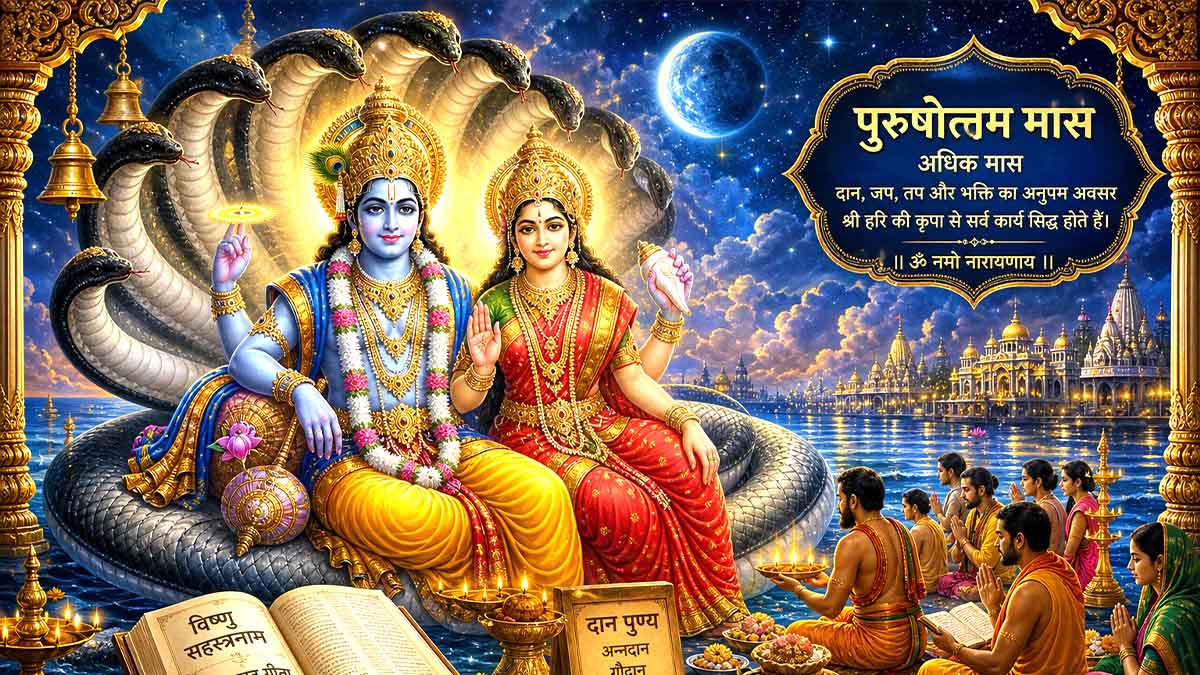
Adhik Maas is also known as Purushottam Maas, a name associated with Lord Vishnu, who is revered as Purushottam – the Supreme Being.
Traditionally, this month is regarded as a period devoted more toward:
- Vishnu Bhakti
- self-discipline
- charity and devotion
- reflection and spiritual growth.
Many devotees increase recitation of sacred texts, perform daan-dharma, visit temples, and dedicate more time to worship during this period.
Rather than focusing on worldly celebrations and material beginnings, Purushottam Maas encourages inward reflection and spiritual balance.

Why are Weddings and Auspicious Ceremonies Avoided During Adhik Maas?
One of the most commonly asked questions about Adhik Maas is why marriages and certain auspicious ceremonies are traditionally avoided during this period.
In many Hindu traditions, Adhik Maas is viewed not as an “inauspicious” month but more as a sacred pause reserved for spiritual practices rather than social or material celebrations.
Because of this, ceremonies such as marriages, Munja (sacred thread ceremony), Vaastu Shanti, Griha Pravesh, and major new beginnings are generally postponed until the completion of the month.
The emphasis instead remains upon simplicity, devotion, prayer, and acts of charity.
Important Observances During Adhik Maas 2026
Several spiritually significant observances fall during Adhik Maas 2026, especially for devotees of Lord Vishnu.
Key Dates During Adhik Maas 2026
- Adhik Maas Begins – 17 May 2026
- Purnima – 31 May 2026
- Amavasya – 15 June 2026
Across temples and households, these days are observed with fasting, prayers, bhajans, recitation of sacred texts, and charitable acts.

Adhik Maas in Maharashtra: Dhondhyacha Mahina
In Maharashtra, Adhik Maas carries a distinctly warm and familial cultural character and is popularly known as Dhondhyacha Mahina.
One of the most cherished traditions associated with this period is the welcoming and honouring of the son-in-law at his wife’s maternal home.
In Maharashtrian culture, the son-in-law is affectionately regarded as the person who cares for and supports the family’s daughter in her new household, and therefore he is welcomed with deep respect and affection.
Families often organise special meals and present gifts such as clothes, silver utensils, sweets, and traditional offerings known as Vaan.
Among the most recognisable customs is the preparation of special festive foods such as Dhonde which are also known as Anaarse. In some regions Mysore Pak or Battashe are also offered instead.
In many households, women also purchase new Jodve during this period as a fond cultural memory associated with Adhik Maas.
These traditions beautifully reflect how Hindu observances often combine spirituality with human relationships, gratitude, and familial bonds.
More Than an Extra Month
Adhik Maas is far more than an additional month inserted into a calendar. It represents a civilisation that patiently observed the skies, valued knowledge, and sought to align human life with the rhythms of nature and the cosmos.
At the same time, the traditions surrounding this sacred month also reveal another enduring truth of Indian culture – that spirituality remains united with compassion, family relationships, charity, and social harmony.
Even today, Adhik Maas continues to preserve that rare balance between astronomical wisdom, devotion, and cultural life.
In an increasingly hurried world, this sacred pause in the Hindu calendar remains a reminder that time itself can also be used for reflection, gratitude, and spiritual renewal.
In the gentle warmth of these Adhik Maas traditions lives an ancient and beautiful belief – that the husband and wife together reflect the eternal union of Lakshmi and Narayana, where affection, devotion, prosperity, and companionship flow together in sacred harmony, much like the timeless balance between the earth, the heavens, and the cosmic rhythms that guide life itself.
Adhik Maas FAQs
What is Adhik Maas?
Adhik Maas is an extra lunar month added periodically to the Hindu calendar to maintain alignment between the lunar year and the solar year. It is also known as Purushottam Maas and is regarded as a spiritually significant period in Hindu traditions.
Why does Adhik Maas occur?
Adhik Maas occurs because a lunar year contains around 354 days, while the solar year has approximately 365 days. This difference gradually accumulates, and an extra month is added every few years to preserve seasonal and calendar balance.
When is Adhik Maas in 2026?
Adhik Maas in 2026 begins on 17 May 2026 and ends on 15 June 2026. This year, the extra month is observed as Adhik Jyeshtha.
What is Dhondhyacha Mahina in Maharashtra?
In Maharashtra, Adhik Maas is affectionately known as Dhondhyacha Mahina. One of its notable traditions involves welcoming and honouring the son-in-law with gifts, festive meals, sweets, and special offerings known as Vaan.