Ashadhi Ekadashi 2026 will be celebrated on Saturday, 25 July 2026, marking one of the most important and widely observed festivals in Maharashtra and the grand culmination of the sacred Pandharpur Wari pilgrimage.
On this auspicious day, lakhs of devotees from across India will gather in Pandharpur to seek the blessings of Shri Hari Vitthal, the beloved deity of the Warkari tradition, at the revered Vitthal Rukmini Mandir, while millions more will observe fasting, prayers, bhajans, and devotional practices in their homes and local temples.
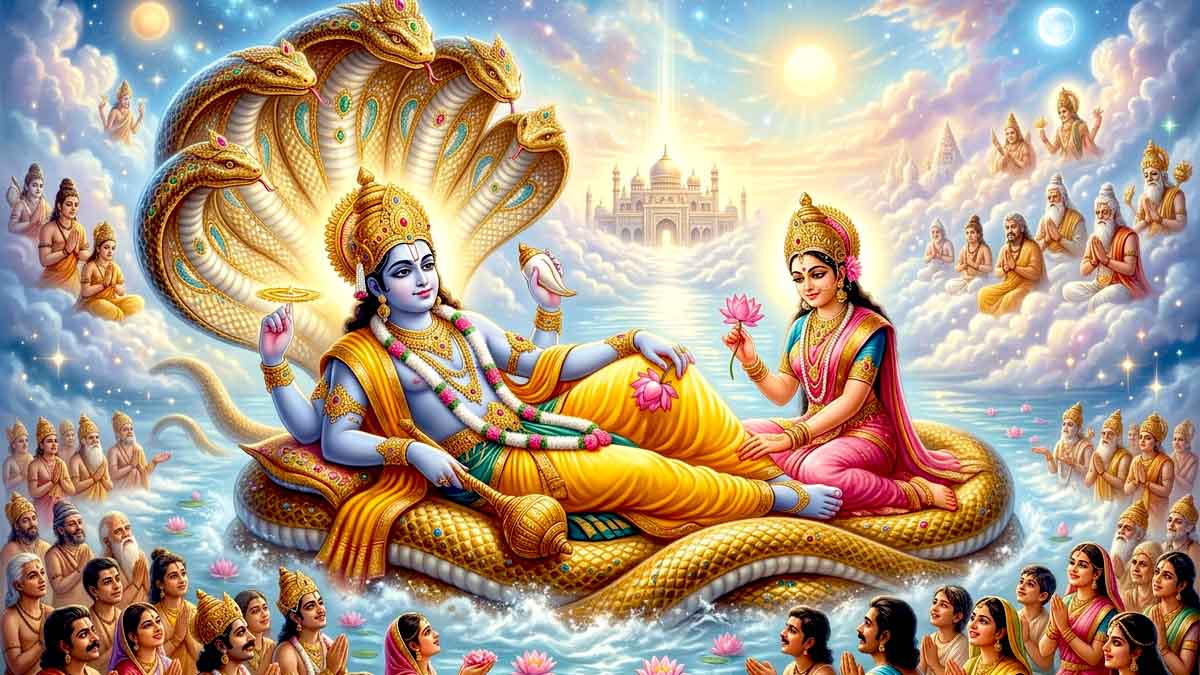
Celebrated predominantly in Maharashtra, this day signals the beginning of Chaturmas fasting, the culmination of the Warkari pilgrimage to Pandharpur, and the start of the Yoga Nidra (cosmic sleep) of Shri Hari Vishnu.
Ashadhi Ekadashi Quotes, Messages, Rangoli आषाढी एकादशीच्या शुभेच्छा संदेश रांगोळी मराठी भाषेत वाचा
Ashadhi Ekadashi 2026 Date and Tithi
- Ashadhi Ekadashi Date : 25 July 2026
- Ekadashi Tithi begins : 9:12 am on 24 July 2026
- Ekadashi Tithi ends : 11:34 am on 25 July 2026
- Parana : 5:55 am to 8:35 am on 26 July 2026
All timings are as per Indian Standard Time (IST)
Following centuries-old traditions, the early hours of the main festival day (at about 2.20am) will also witness the official Shaskiya Mahapuja at the temple, performed jointly by the Chief Minister of Maharashtra with his wife and a designated Warkari family.
Guru Purnima: Date, Tithi, Significance and Traditions
Understanding Ekadashi and Its Spiritual Significance
Ekadashi, which means the 11th lunar tithi or day in Sanskrit, represents a highly revered point in time for aligning our body and soul with Nature or higher consciouness.
Occurring on the eleventh day of both the bright and dark cycles of the Moon, this sacred day is designed to help humanity master the eleven elements of human perception: the five senses of action, the five senses of perception, and the mind.
By abstaining from food and worldly distractions on this day, devotees intentionally withdraw their energy from the material world, creating a spiritual vacuum that is filled with devotion and a deeper alignment with Shri Vishnu, the preserver of the universe.
Ashadhi Ekadashi, also called Devshayani Ekadashi, is especially significant as it marks the start of Vishnu’s four-month slumber during the monsoon, known as Chaturmas.
As the monsoon clouds gather over Maharashtra, the festival of Ashadhi Ekadashi awakens the hearts of millions, marking a pivotal moment in the Hindu religious calendar.
Vishnu’s Cosmic Sleep or Yoga Nidra: Symbolism in the Monsoon
During the monsoon season, when moisture, dampness, and limited sunlight prevail, Lord Vishnu or Nature is believed to enter a state of divine rest or Yoga Nidra.
As the skies turn heavy and the earth settles into a moist, humid inertia, the external world experiences a physical stagnancy-rivers swell, paths muddy, and outward material activity naturally grinds to a halt.
This period symbolizes a cosmic pause, proving that what looks like stagnation on the outside is actually a period of profound creation on the inside.
By withdrawing into this quiet stillness, Nature secretly replenishes the soil, encouraging devotees to similarly slow down, internalize their energy, and focus on inner spiritual practice rather than external rituals.
The Warkari Tradition and the Sacred Palkhi Processions
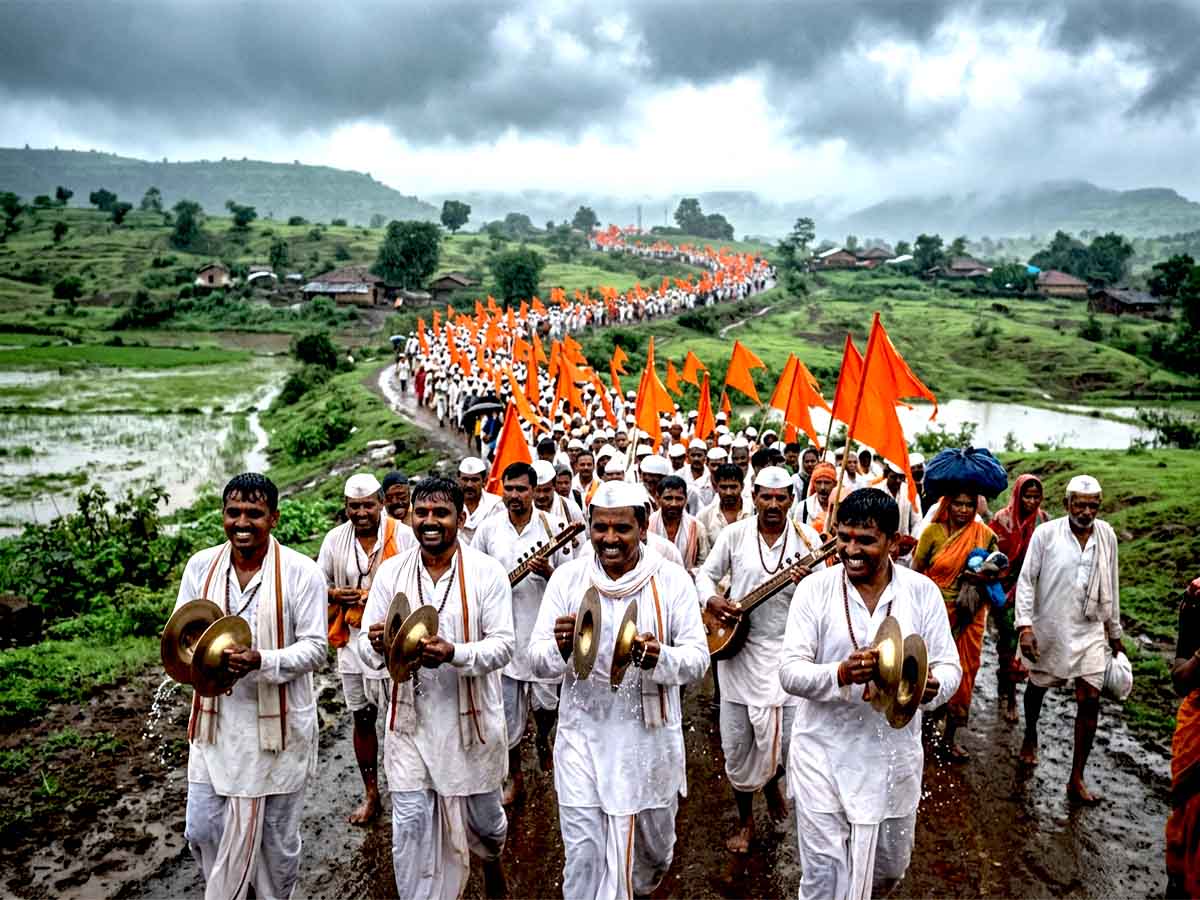
At the heart of Ashadhi Ekadashi is the vibrant Warkari pilgrimage, where millions of devotees join the palkhi processions carrying the sacred padukas (symbolic sandals) of revered Marathi saints like Sant Dnyaneshwar, Sant Tukaram, and others.
These palkhis (palanquins) depart from the saints’ native villages, traversing hundreds of kilometers on foot to reach the Vitthal temple in Pandharpur.
The journey is marked by continuous singing of abhang devotional songs, an integral part of the Bhakti movement in Maharashtra.
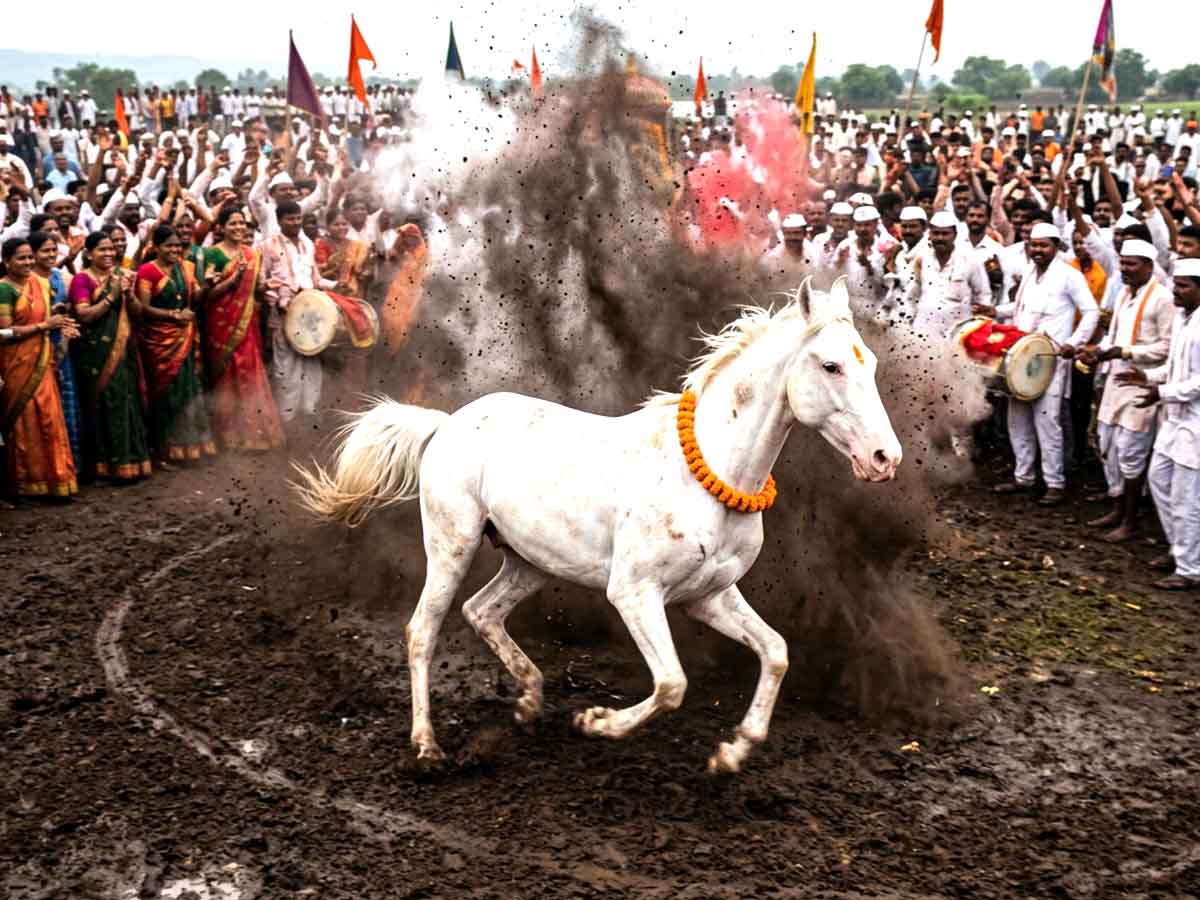
The spiritual peak of this long march is marked by the breathtaking Ringan rituals. In these sacred circles, the unmounted horse of the saints – Maulincha Ashwa – gallops freely through thousands of cheering pilgrims, igniting an incomparable wave of ecstatic devotion.
This pilgrimage is more than a physical journey – it is a collective act of devotion that breaks barriers of caste and creed, fostering unity and spiritual growth.
Major Palkhis Travelling to Pandharpur
- Sant Dnyaneshwar – great saint and fountainhead of the Bhakti movement in Maharashtra. Wrote the Dnyaneshwari. His palkhi departs from Alandi (Pune)
- Sant Tukaram – renowned saint of the warkari tradition. His palkhi departs from Dehu (Pune)
- Sant Nivruttinath – Elder brother and guru of Sant Dnyaneshwar. Palkhi starts from Trimbakeshwar (Nashik)
- Sant Sopandev – younger brother of Sant Dnyaneshwar, wrote the Sopandevi – a marathi translation of the Bhagwad Gita. Palkhi starts from Saswad (Pune)
- Sant Muktai – sister of Sant Dnyaneshwar and youngest of the siblings. Palkhi starts from Kothli, Muktainagar (Jalgaon) ~ 560 km, the longest distance of all the palkhis
- Sant Eknath – Devotee of Vitthal and major sant of the Bhakti tradition, palkhi starts from Paithan (Ch. Sambhajinagar)
- Sant Gajanan Maharaj – great saint of the Bhakti tradition, huge number of followers especially in the Vidarbha region, palkhi leaves from Shegaon (Buldhana)
- Sant Chokhamela – A defining voice of the Bhakti movement whose abhangas shattered social barriers; his samadhi sits right at the footsteps of the Vitthal temple.
- Sant Janabai – A revered maidservant and poetess whose profound verses transformed daily household chores into an absolute expression of love for Vithoba.
Pandharpur: The Spiritual Capital of Bhakti
Nestled on the banks of the holy Bhima River in southeastern Maharashtra, Pandharpur transforms into the ultimate spiritual epicenter of Western India during Ashadhi Ekadashi.
Known affectionately as Bhooloka Vaikuntha (Heaven on Earth), this sacred town is not just a geographical destination, but a timeless sanctuary of the egalitarian Bhakti movement.
For centuries, it has served as the divine magnetic pole pulling millions of barefoot pilgrims (Warkaris) from every stratum of society together to experience absolute unity, humility, and unconditional love at the feet of their beloved Vithoba.
Vitthal Rukmini Mandir: Heart of the Wari Pilgrimage
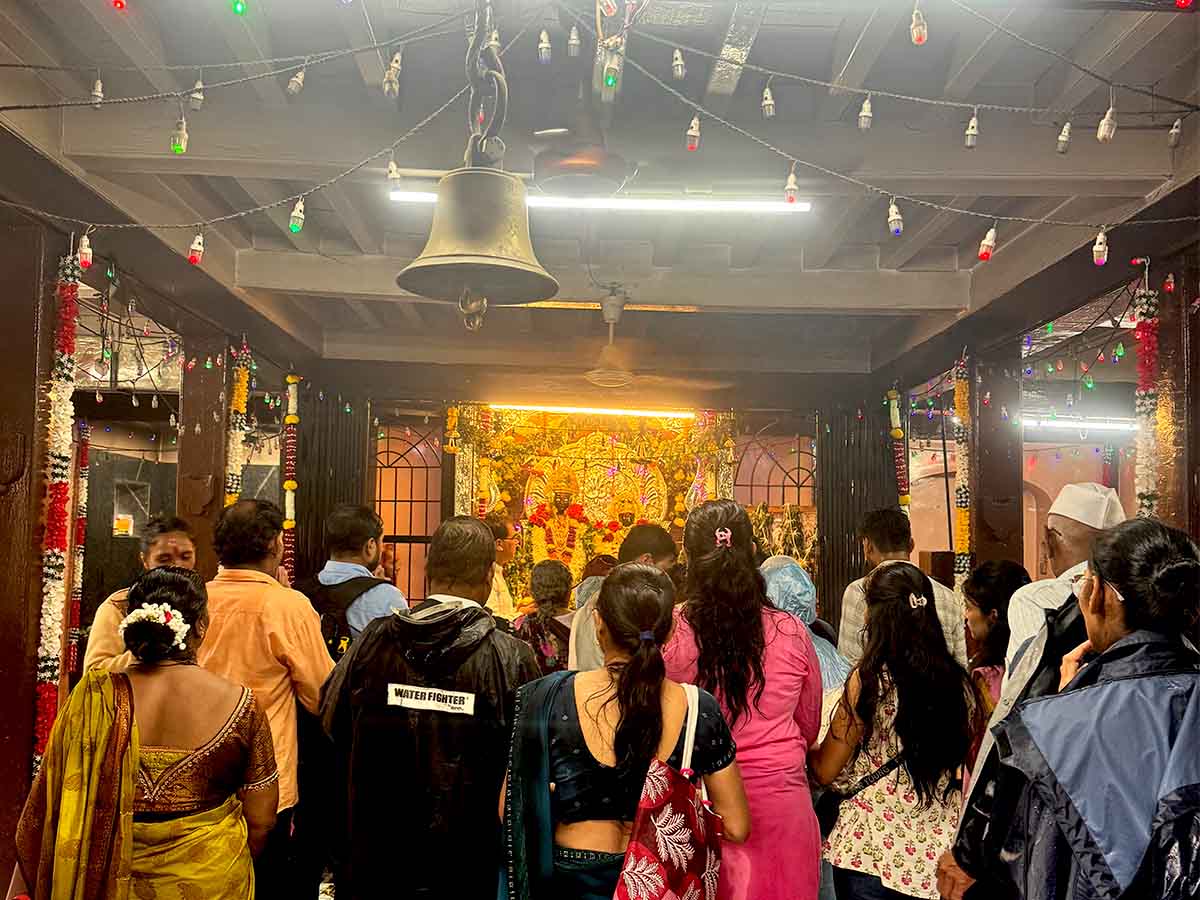
At the destination of this monumental journey stands the Vitthal Rukmini Mandir in Pandharpur, a spiritual fortress of the Warkari Sampraday.
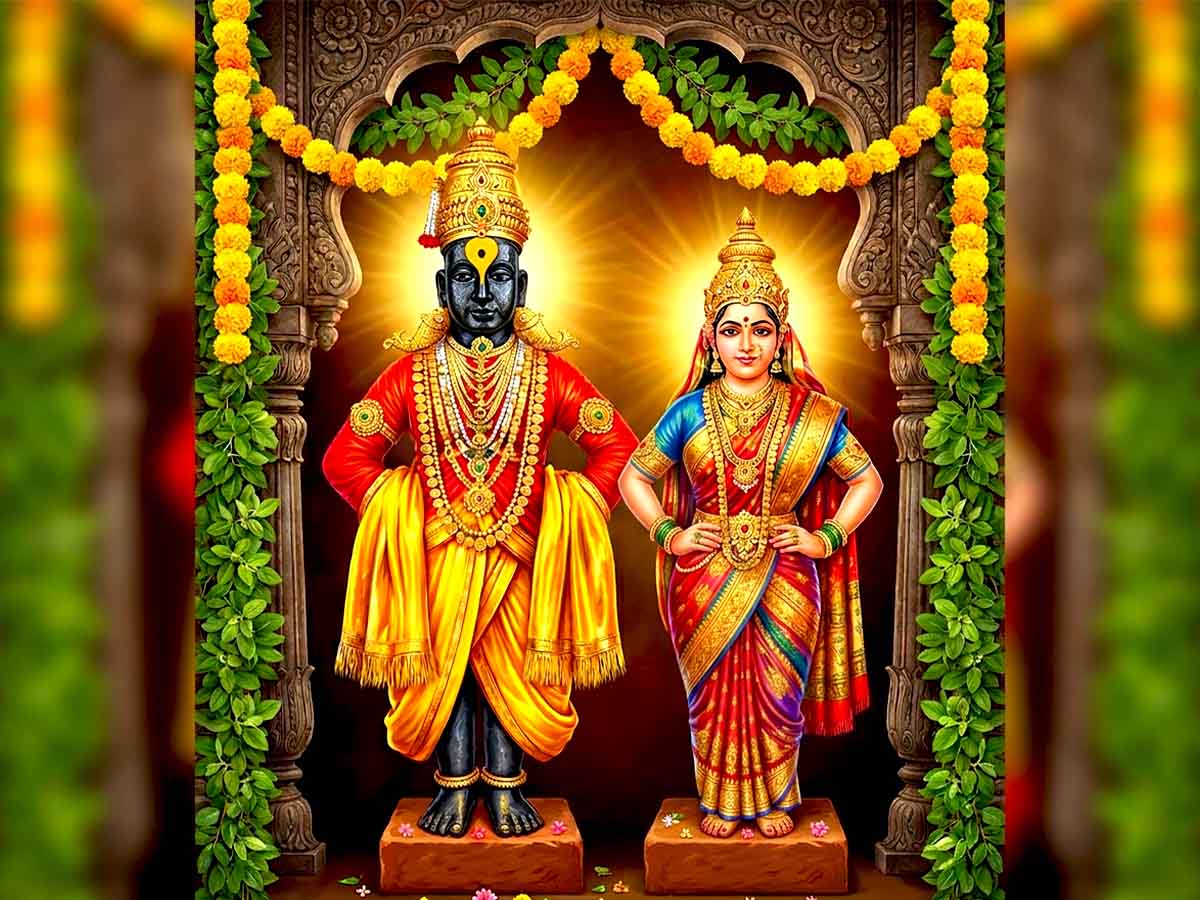
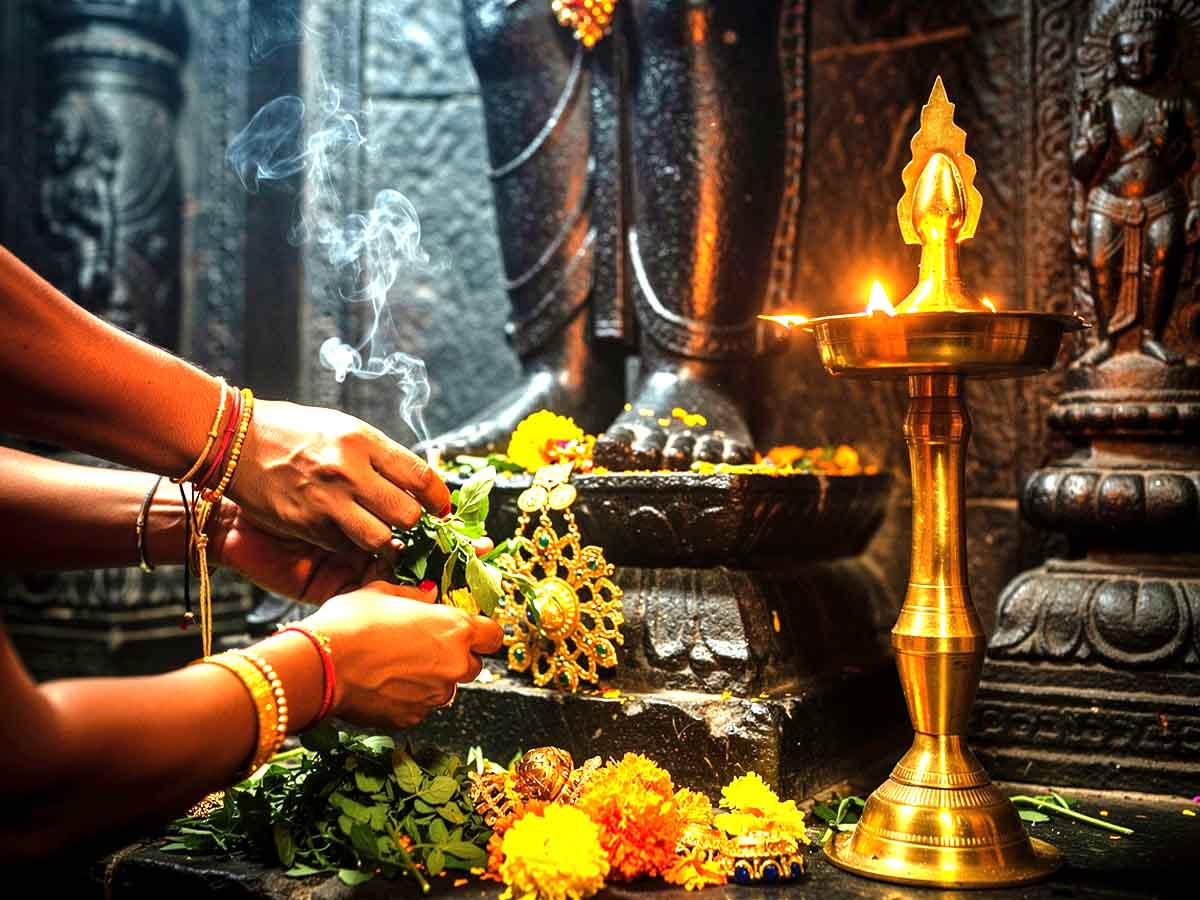
Unlike many ancient Hindu temples where deities remain distant, the Vithoba temple is globally unique for its tradition of Charan Sparsh, allowing every single pilgrim, regardless of caste, creed, or status, to physically touch the feet of Lord Vitthal.
The temple layout features separate shrines for Lord Vitthal (Mauli) and Goddess Rukmini (Rakhumai). Devotees wait in queues for hours, driven entirely by the longing to catch a glimpse (mukh darshan) of the deity standing timelessly on a brick, hands on his waist.
Ritual Dip in the Chandrabhaga River
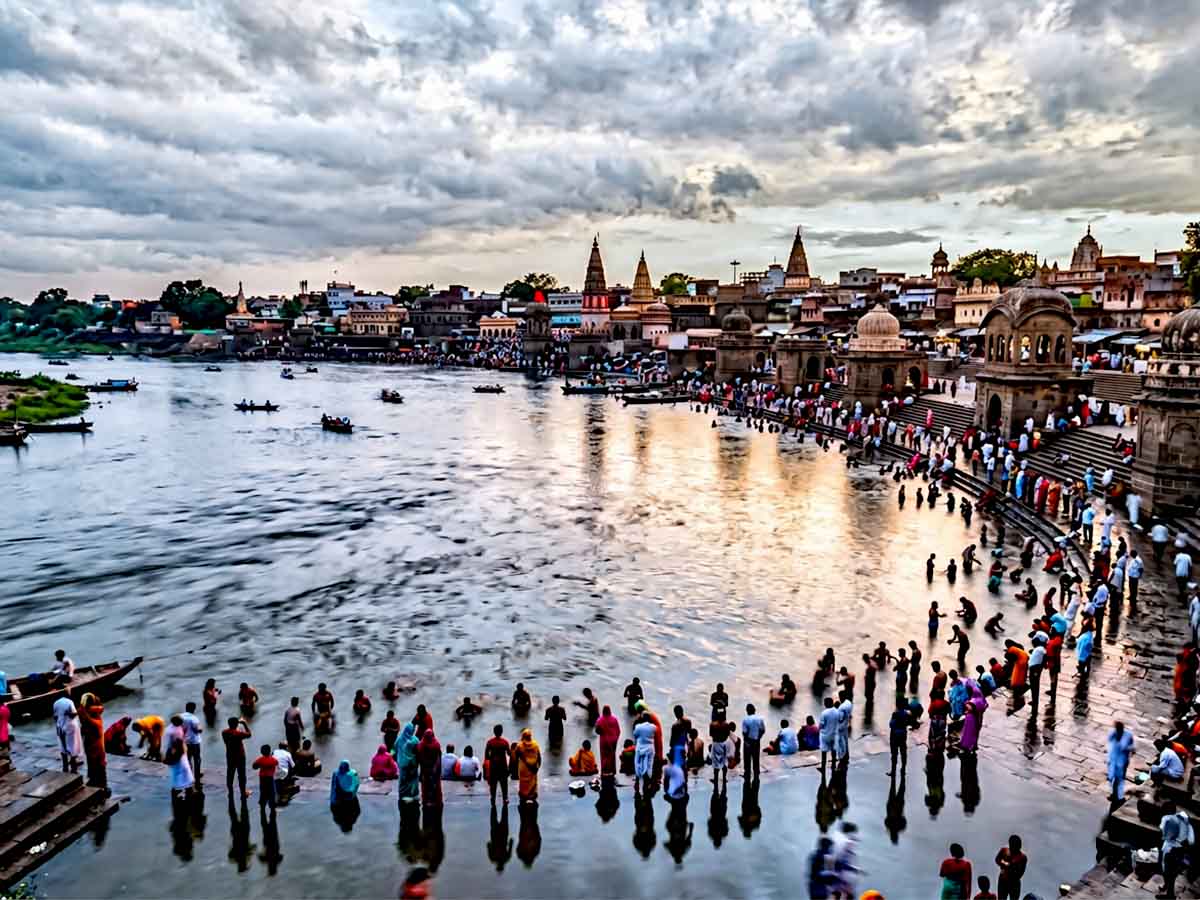
Before crossing the threshold of the Vitthal temple, every Warkari performs a vital purification ritual: a holy dip in the Chandrabhaga River.
The Bhima River takes a distinct, beautiful crescent shape resembling a half-moon as it flows through Pandharpur, earning its sacred local name, Chandrabhaga.
Bathing in its waters on Ashadhi Ekadashi is believed to wash away lifetimes of sins and calm the restless mind. The river ghats come alive on this day with thousands of families performing pujas, floating earthen lamps (diyas), and singing abhangas at the water’s edge
Ashadhi Ekadashi Rituals, Fasting & Collective Devotion
Devotees traditionally observe nirjala (no-water) fasts or phalahar (fruit-only). Daytime is filled with Tulsi puja, chanting “Vitthal Vitthal,” and night-time with bhajans and kirtans.
The fast concludes at dawn on the 12th lunar day (Dwadashi) which would be 26 July, 2026 this year.
Vrat Traditions Regarding Food
Foods to Avoid: Strict avoidance of all grains (rice, wheat, lentils), beans, onions, garlic, and heavy spices. Rice is completely prohibited across all traditions on Ekadashi.
Permitted Fasting Foods (Phalahar): Sabudana (tapioca pearls) khichdi, bhagar (barnyard millet), potatoes, sweet potatoes, nuts, milk products, and fresh fruits.
Breaking the Fast (Parana): The spiritual merit of the fast is only complete when it is broken during the designated Parana time on Dwadashi morning, which for 2026 is strictly between 5:55 AM and 8:35 AM on 26 July 2026.
Spiritual & Cultural Resonance
The festival exemplifies unity in diversity, bridging social divides. It emphasizes humility (Pundalik), discipline (fasting), and selfless love (maha prasad and charity). Abhangas by saints like Tukaram and Dnyaneshwar fill the pilgrimage route with heartfelt devotion and spiritual fervor.
Warkari Tradition: Dindis, Wari, and the spirit of Mauli
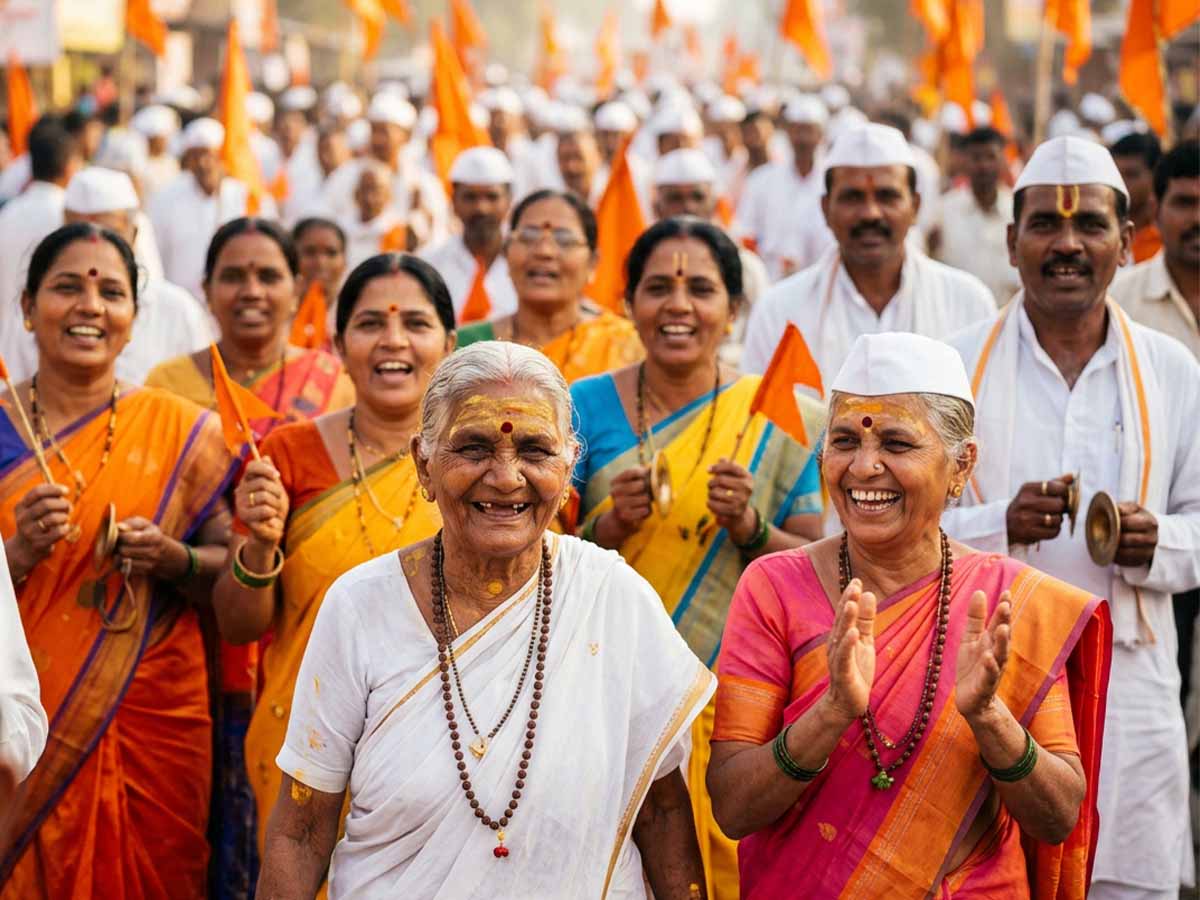
Among the most heart-stirring elements of the Pandharpur Wari are the Dindis – disciplined, collective groups of Vitthal devotees who walk together, often for hundreds of kilometers, towards Pandharpur.
These groups are organized with remarkable spiritual order and camaraderie. Each Dindi includes men, women, elders, and children – called Warkaris – who walk in sync, sing abhangas, and carry saffron flags, tulsi garlands, and images and idols of their beloved Vitthal Rukmini.
As they walk, the air vibrates with their ceaseless chants of “Jai Hari Vitthal” and “Shri Hari Vitthal”, invoking the divine presence with every step.
What’s truly beautiful is how Warkaris address one another as “Mauli”, meaning mother – a loving nod to Sant Dnyaneshwar, who saw the divine in everyone.
The Dindi isn’t just a group – it’s a walking, breathing temple of bhakti, where every footstep is a prayer and every voice echoes the unity of Sanatana Dharma.
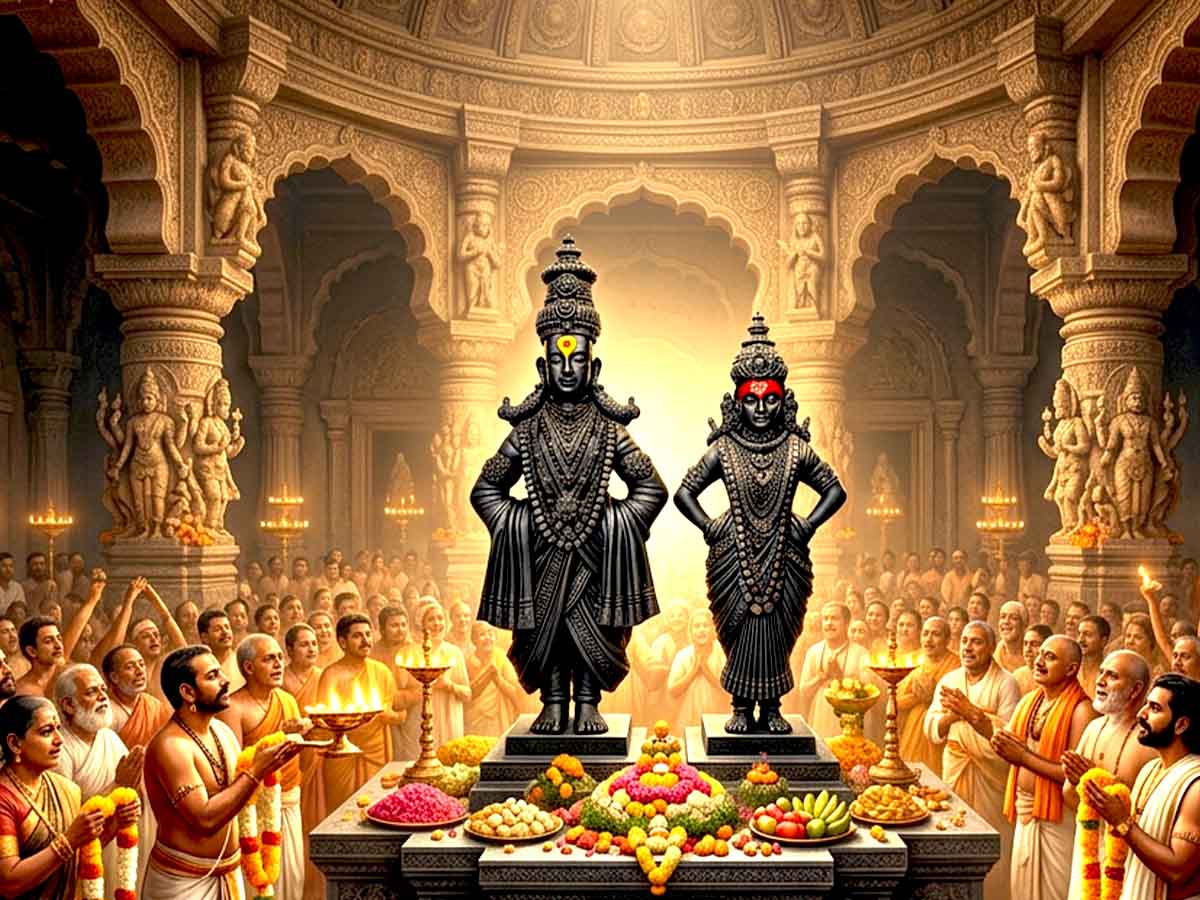
(representative image)
Legend of Bhakta Pundalik & the Standing Vitthal
The legend of Bhakta Pundalik captures the essence of parental devotion. As the story goes, Krishna came to physically meet Pundalik, who was busy caring for his elderly parents.
Pundalik, humbly, placed a brick (vit) under Krishna’s feet and requested him to wait.
Since then, Vitthal stands on a brick, hands on waist, eternally waiting to bless all devotees. Hence, the aarti proclaims:
“Yuge atthāvis, viṭhevari ubhā”
(He stands on the Brick for 28 ages)
This very act gave the deity his beloved name, Vitthal-derived from the Marathi word ‘Vit’, meaning the One who stands timelessly upon a brick. To this day, millions echo the ultimate proclamation of surrender: ‘Pundalik Varada Hari Vitthal!’
Vithu Rakhumai Mauli
Ashadhi Ekadashi is where cosmic rhythm and human devotion intertwine, a sacred temporal junction marking Lord Vishnu’s transition into deep slumber amid the cleansing monsoons, and mirroring Lord Krishna’s timeless patience as He stands upon a brick, honoring selfless parental love.
As the heavens open to drench the earth, the physical boundaries between the mortal and the divine seem to dissolve into the rhythmic mud of the path to Pandharpur.
The grand, miles-long pilgrimage, the resonant echo of evening aartis, and the unyielding collective spirit of the Warkaris reflect a living, breathing Sanatana Dharma.
It is a tradition that completely bypasses societal divides, celebrating the quiet strength of humility, the endurance of ancestral traditions, and the profound, beautiful promise of inner renewal. In the simple, joyous cry of “Mauli,” every seeker ultimately finds their way back home.
|| जय जय राम कृष्ण हरी माऊली ||
Ashadhi Ekadashi 2026 FAQs
What is the date and tithi of Ashadhi Ekadashi 2026?
Ashadhi Ekadashi 2026 will be celebrated on Saturday, 25 July 2026. The sacred Ekadashi Tithi officially begins at 9:12 AM on Friday, 24 July 2026, and concludes at 11:34 AM on Saturday, 25 July 2026.
What are the strict Parana (fast-breaking) times for 2026?
To earn the complete spiritual merits of the vrat, the fast must be broken during the designated Parana window on Dwadashi morning. For 2026, the strict Parana time is between 5:55 AM and 8:35 AM on Sunday, 26 July 2026.
What is Ashadhi Ekadashi and why is it important?
Ashadhi Ekadashi, also known as Devshayani Ekadashi, is a highly revered day in the Hindu calendar when Lord Vishnu enters Yoga Nidra (cosmic sleep) for four months. It marks the beginning of Chaturmas and holds immense spiritual significance, especially in Pandharpur, where millions of Warkaris gather to seek the blessings of their beloved Vitthal and Rukmini.
Where is the Vitthal Rukmini temple located?
The sacred Vitthal Rukmini temple is located in Pandharpur city, Maharashtra, on the banks of the Chandrabhaga River. It’s the central shrine for devotees of Vithoba, a form of Lord Krishna/Vishnu, and becomes the epicenter of devotion during Ashadhi Ekadashi.
What is the Pandharpur Wari?
Pandharpur Wari is a centuries-old spiritual pilgrimage in Maharashtra where lakhs of Warkaris walk in groups called Dindis to Pandharpur, chanting “Jai Hari Vitthal” and “Shri Hari Vitthal.” It culminates on Ashadhi Ekadashi, when devotees gather at the Vitthal temple for darshan.
Who are the Warkaris and what are Dindis?
Warkaris are devotees of Shri Hari Vitthal who walk on foot to Pandharpur as a form of penance and devotion. They travel in organized spiritual groups called Dindis, each maintaining discipline, chanting bhajans, and spreading the message of unity and bhakti.
What is the meaning of “Mauli” in the Wari tradition?
In the Warkari Sampradaya, devotees lovingly address each other as “Mauli”, meaning mother. It symbolizes mutual respect, equality, and the divine essence in every soul, inspired by Sant Dnyaneshwar, who called God and humanity by the same endearing name.
What is the story of Bhakta Pundalik and Lord Vitthal?
According to legend, Shri Krishna appeared before his great devotee Pundalik, who was serving his elderly parents. Pundalik, not wanting to interrupt his service, offered Shrikrishna a brick (Vit) to stand on. Touched by his devotion, the Lord stayed there – standing on the brick for 28 yugas – as Vitthal. This moment is captured in the chant: “Yuge atthāvis, viṭhevari ubhā.”
Can anyone join the Pandharpur Wari or Dindis?
Yes! The Pandharpur Wari is open to all. Anyone with devotion can walk with a Dindi, regardless of caste, creed, or age. It’s a vibrant, inclusive movement of bhakti (devotion) and seva (service).
What are the best ways to reach Pandharpur?
MSRTC runs special buses and Indian Railways schedules additional trains to Pandharpur from cities like Nashik, Pune, Mumbai, Nagpur, and Ch. Sambhajinagar. It’s advised to plan travel early due to high demand.
What unique rituals happen during the Pandharpur Wari pilgrimage?
The grand culmination of the Wari pilgrimage features the legendary Ringan rituals, where the sacred unmounted horse of the saints (Maulincha Ashwa) gallops through crowds of ecstatic Warkaris. Additionally, millions perform a holy purification dip in the crescent-shaped Chandrabhaga River before entering the Vitthal Rukmini Mandir.