Vasu Baras begins the festive Diwali season in Maharashtra with a quiet and deeply rooted tradition long before the first string of lights goes up.
Din Din Diwali, Gaayi Mhashi Owali (दिन दिन दिवाळी, गायी म्हशी ओवाळी) – that old, rhythmic folk refrain captures how generations of Maharashtrian households welcome the festival by honouring the cow and her calf.
Vasu Baras 2026
Vasu Baras falls on Thursday, November 5, 2026 – marking the Dwadashi (twelfth day) of Kartik Krishna Paksha (dark fortnight). The Dwadashi tithi spans from early morning on November 5 through the following morning, with the traditional Pradoshkala evening window serving as the ideal time for the puja.
Also known more popularly as Govatsa Dwadashi across India, Gujarat knows it as Vagh Baras, and parts of North India call it Nandini Vrata or Bach Baras, Maharashtra’s native title – Vasu Baras – introduces an extra layer of meaning.
Vasu translates to wealth or abundance and Baras means the twelfth day, framing the evening not just as an act of ritual duty, but as a deliberate welcoming of prosperity into the home.
Also read Diwali 2026: Dates, Rituals, & Celebrations
Vasu Baras: Roots in the Puranas
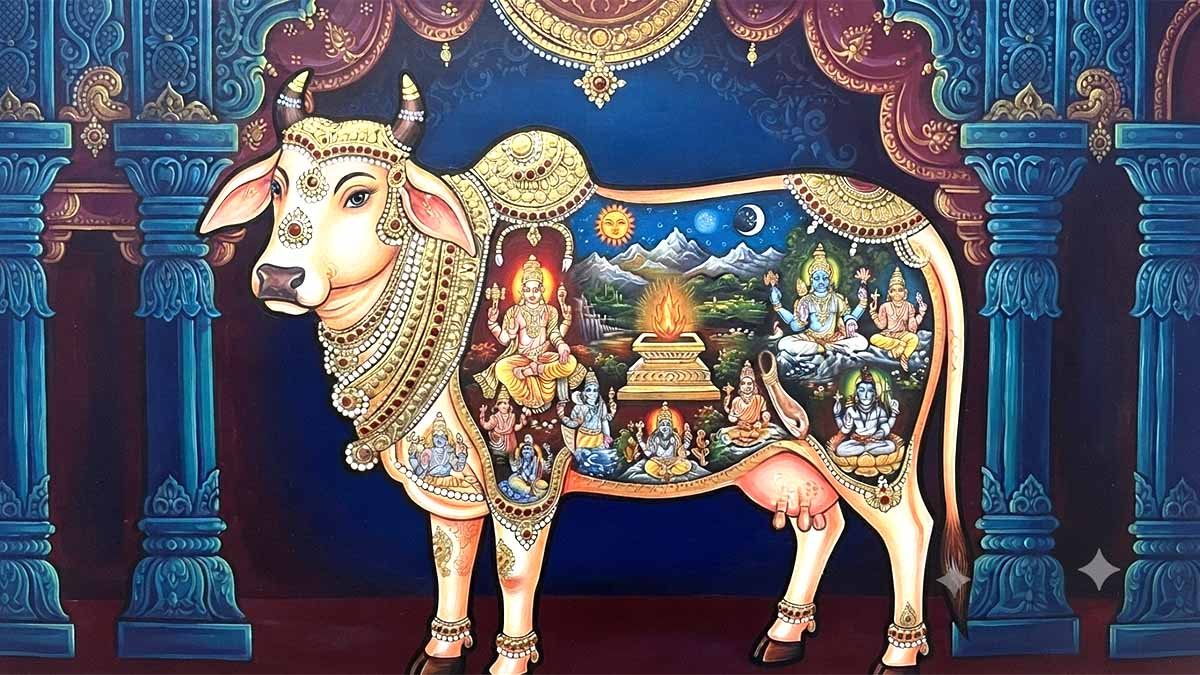
When the Devas and Asuras churned the cosmic ocean (Kshira Sagar) for the nectar of immortality, several divine entities emerged alongside it. Among them was Kamadhenu (Surabhi), the primordial, wish-granting cow who was subsequently entrusted to the ancient sages to fuel their sacred fire-sacrifices.
The texts branch into fascinating detail regarding her lineage. In the Epics and the Devi Bhagavata Purana, a sacred cow named Nandini appears, sometimes identified as Kamadhenu herself, and elsewhere described as her direct daughter.
A King’s desire to forcibly acquire the celestial cow Nandini’s forms the root cause of the epic struggle between two great luminaries of ancient India. Belonging to Sage Vashishtha, she possessed such boundless abundance that she effortlessly hosted King Vishwamitra and his entire army during a royal visit.
Astounded by her powers, Vishwamitra demanded her possession, and when refused, tried to seize her by force. Yet even under violent coercion, Nandini refused to leave the ashram.
That single confrontation – a king’s absolute military might colliding with a sage’s spiritual resilience – changed ancient history. The profound humiliation of failing to subdue a cow drove Vishwamitra to abandon his throne entirely, setting him on the rigorous path of penance that ultimately transformed him into a Brahmarishi.
To understand the traditional legends, such as the significance of the Nandini Vrat and the worship of the divine cow, you can read more in this detailed guide on Govatsa Dwadashi
How Maharashtra Observes Vasu Baras
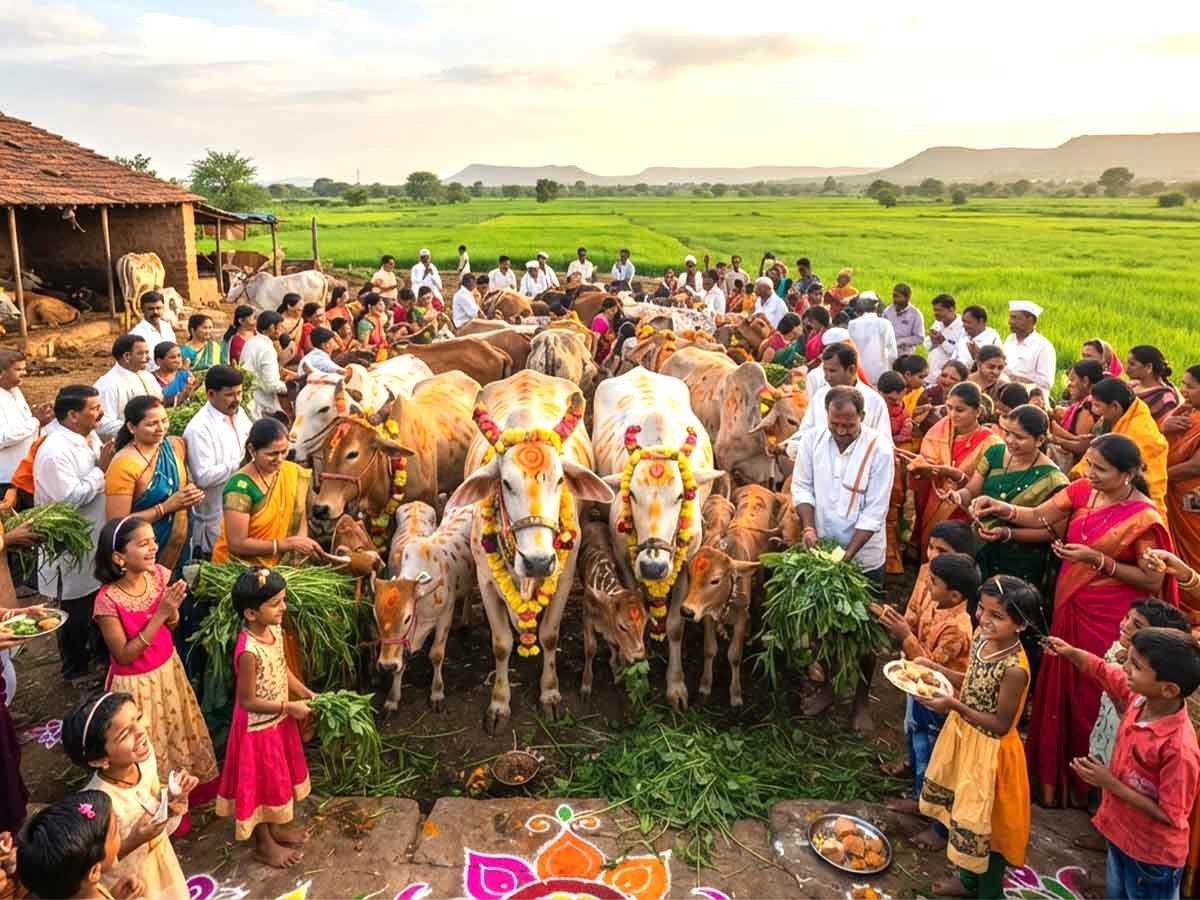
Vasu Baras is observed with great enthusiasm across rural Maharashtra and especially by the farming communities.
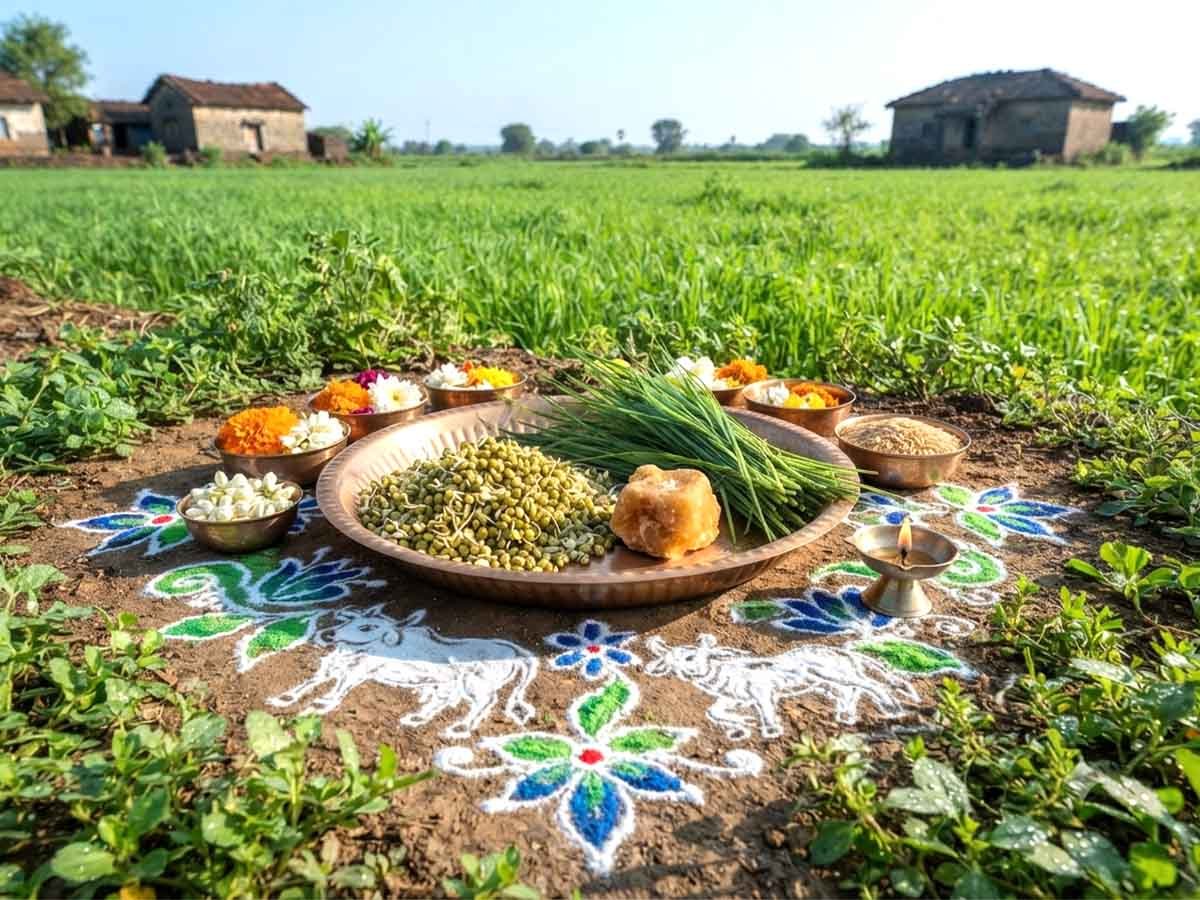
The Puja and Offering: Households wash and decorate a cow and calf with turmeric (haldi), vermillion (kumkum), and fresh flower garlands, feeding them by hand with sprouted moong (mung beans) and green fodder. For urban families without direct access to livestock, visiting a local gaushala or setting up a traditional decorated metal or clay Gaai Vaasru idol at home serves as the focal point.
The Nandini Vrat: Married women traditionally observe a strict single-meal fast (vrat) on this day, reciting prayers specifically for the protection, health, and longevity of their children.
Dietary Abstention: Out of respect for the animal being honored, many households set aside wheat and cow-milk products for the day, consciously holding off on consuming dairy until the evening worship is complete.
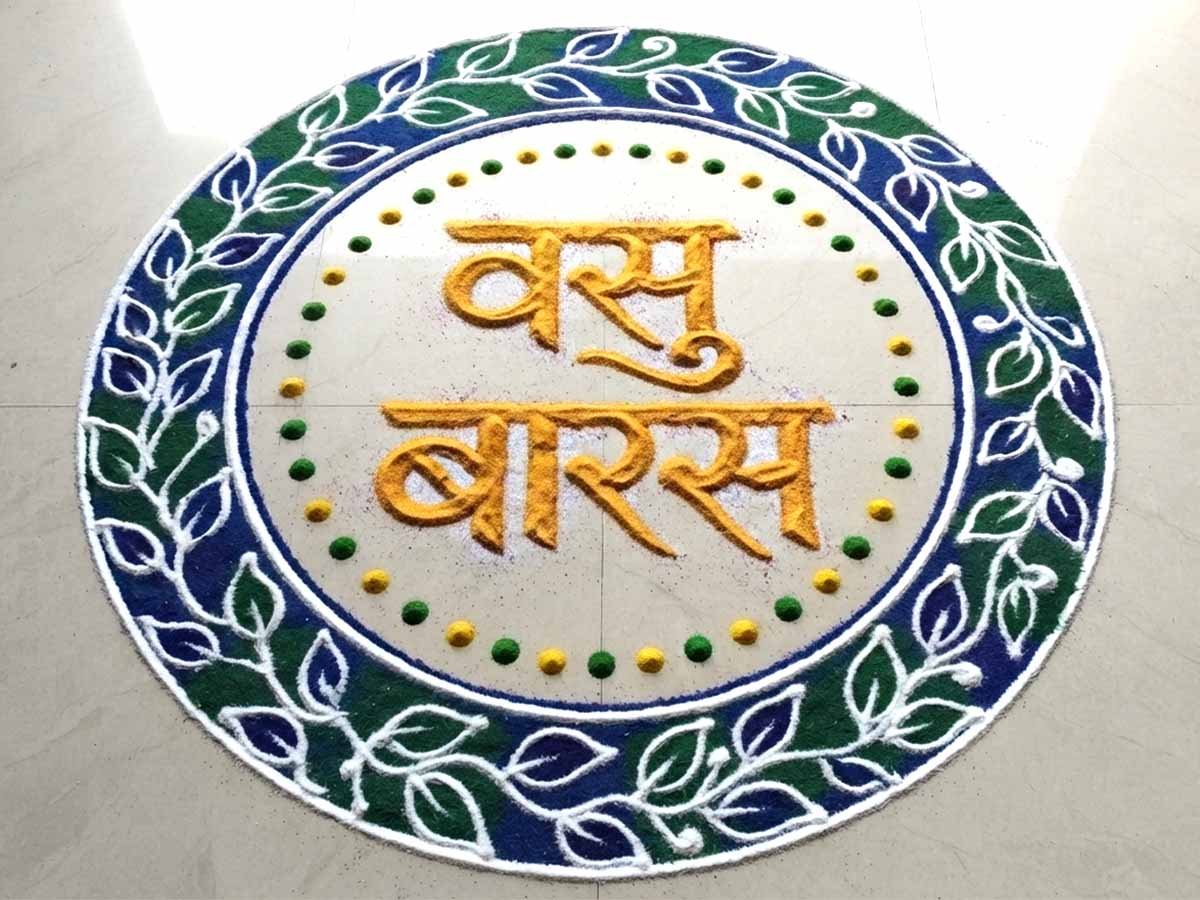
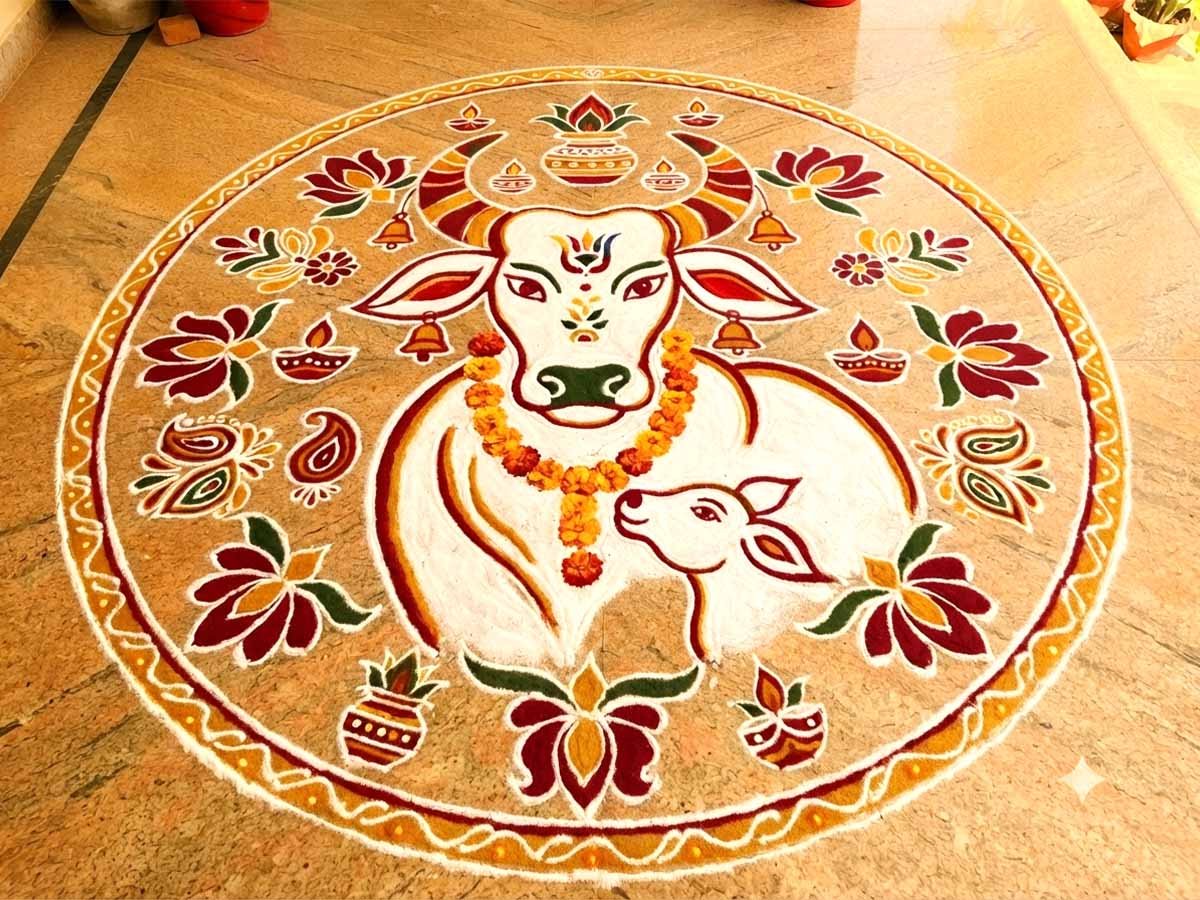
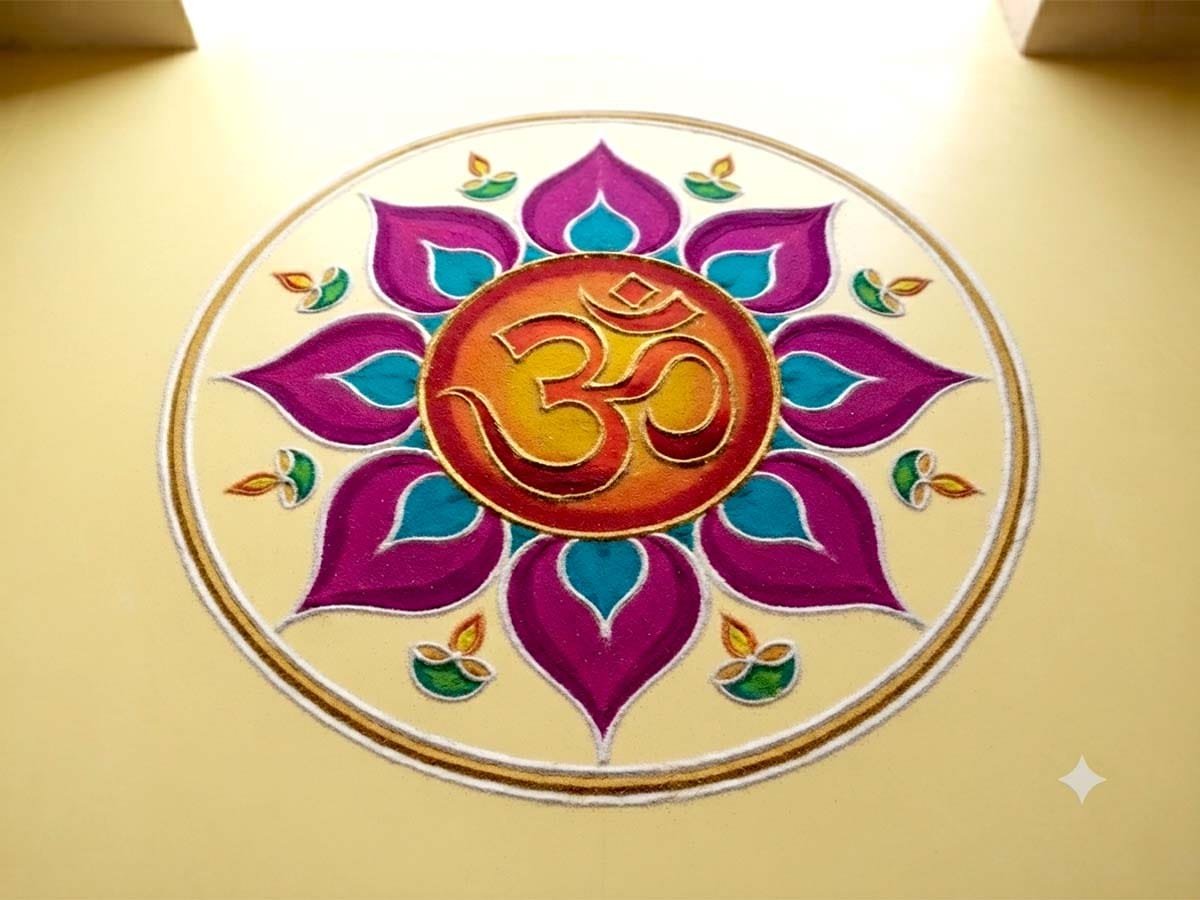
Courtyard Art: Drawing specialized, intricate rangolis featuring cow-and-calf motifs at the threshold marks the formal beginning of the festive season.
Vasubaras Rangoli
Vasu Baras: Living in Harmony with Nature
As the evening lamps are lit and courtyard rangolis are completed, Vasu Baras anchors the festive calendar in a profound sense of emotional warmth and gratitude. Long before gold coins are counted on Dhanteras or fireworks light up the Nashik skies, this quiet opening act reminds households of the sacred bond between humanity and nature.
It is an evening to honour our coexistence with animals – acknowledging the gentle creature that sustains entire communities by nurturing us with her milk as a mother, providing the ghee and butter that fuel our homes and rituals, and offering a timeless lesson in living in quiet harmony with the natural creation around us.
Vasu Baras FAQs
Is Vasu Baras the same as Govatsa Dwadashi?
Yes – Govatsa Dwadashi is the pan-India Sanskrit name for the same Dwadashi tithi; Vasu Baras is the Marathi name used specifically in Maharashtra.
Why do people avoid milk and wheat on Vasu Baras?
Out of respect for the cow being honoured that day, many households hold off on consuming her products until after her own worship is complete.
Is Nandini the same as Kamadhenu?
The texts genuinely differ on this. Some name Nandini as Kamadhenu herself; others describe her as Kamadhenu’s daughter. Both readings are textually attested, and there isn’t one settled answer.