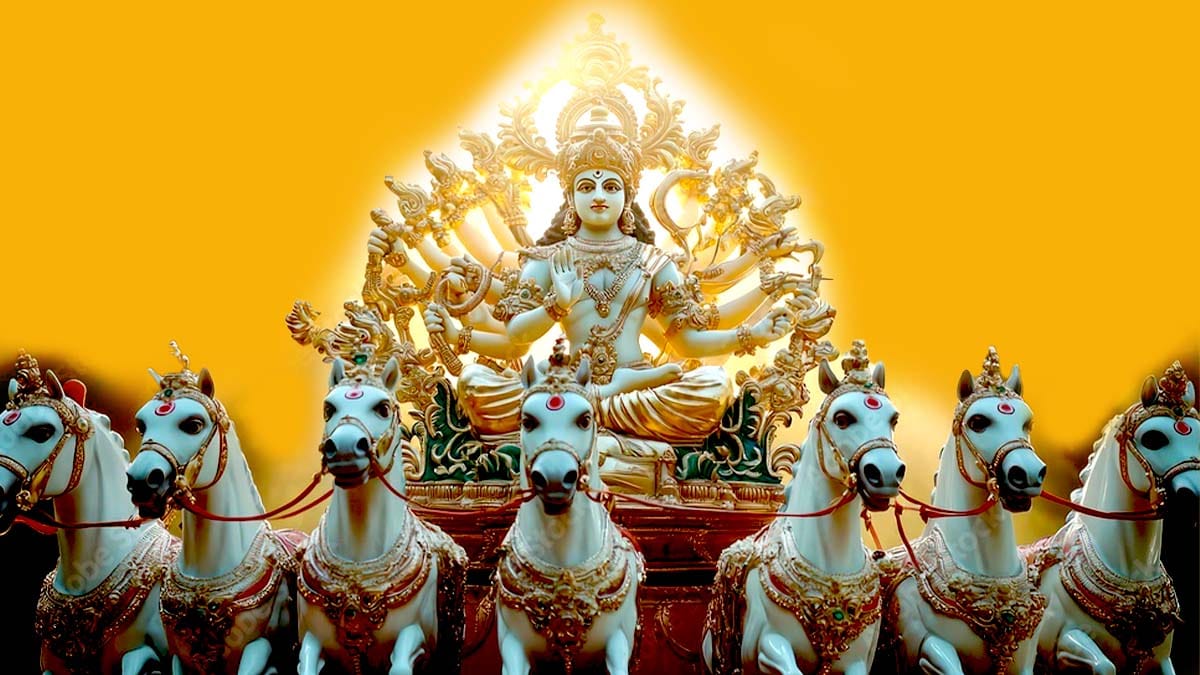
Ratha Saptami, also known as Bhanu Saptami and Surya Jayanti, is one of the most sacred Hindu festivals dedicated to Surya Devata, the Sun God.
Observed on the seventh day (Saptami) of the Shukla Paksha in the month of Magha, this festival marks the symbolic turning of the Sun’s celestial chariot toward the northern hemisphere, signifying renewal, health, and spiritual awakening.
As the manifest source of light, vitality, and nourishment, the Sun deity was worshipped by all ancient civilizations as the sustainer of life, seasons, and the rhythm of creation.
Ratha Saptami will be observed on 25 January 2026.
Ratha Saptami 2026: Date and Time
- Ratha Saptami Date: 25 January 2026
- Saptami Tithi Begins: 12:39 AM
- Saptami Tithi Ends: 11:10 PM
- Snaan Muhurat: 5:32 AM to 7:14 AM
- Suryodaya (Sunrise): 7:14AM
Ratha Saptami rituals are ideally performed during early morning hours after sunrise, as Surya is worshipped at dawn.
Ratha Saptami follows the festivals of Makar Sankranti and Vasant Panchami which are celebrated around 14 January and 23 January respectively.
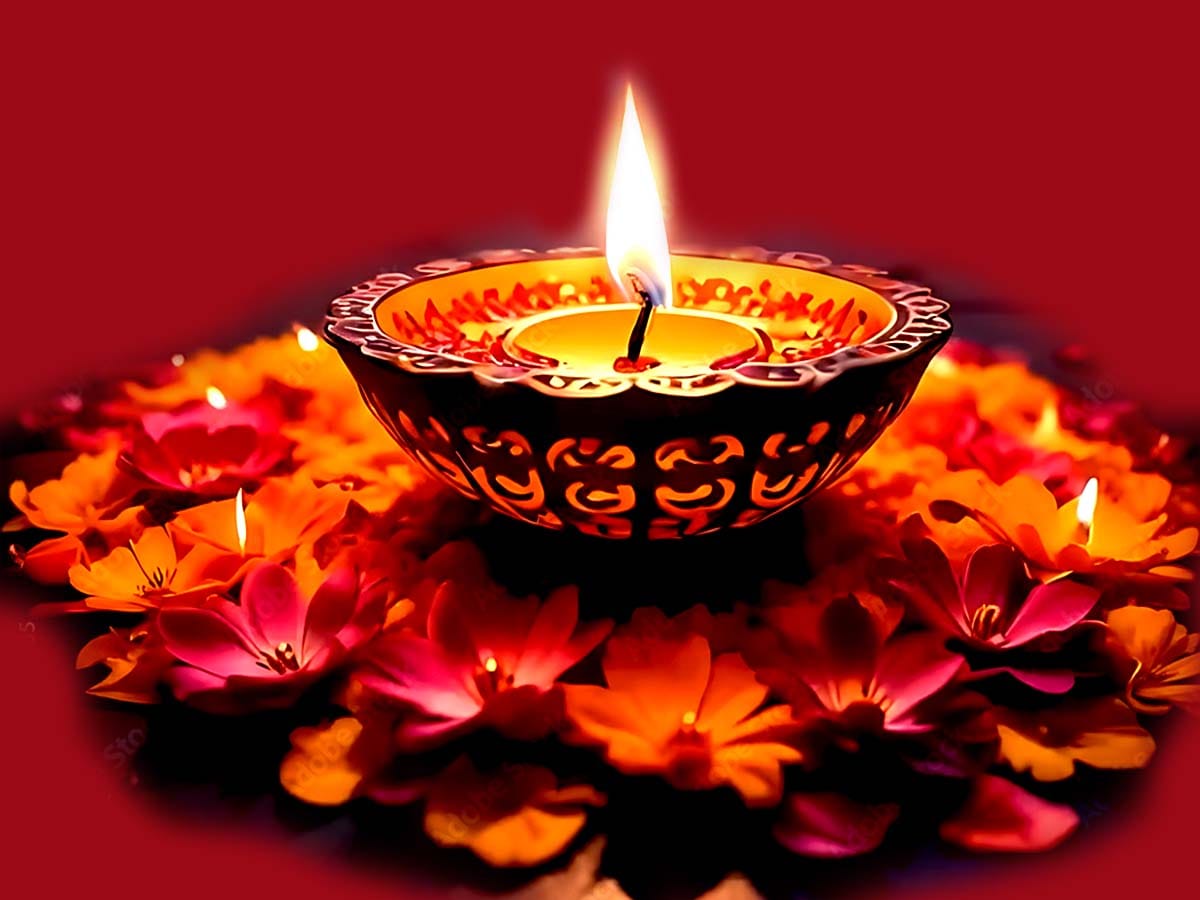
Why is Ratha Saptami Celebrated
The significance of Ratha Saptami lies in its deep astronomical, agricultural, and spiritual symbolism.
According to Hindu belief, on this day Surya begins his cosmic journey northward, riding his radiant chariot (Ratha) drawn by seven horses, representing the seven colours of light and seven days of the week.
Ratha Saptami is also the tithi when Surya was born to the great Rishi Kashyap and Mata Aditi and hence this festival is also known as Surya Jayanti and Bhanu Jayanti.
Ratha Saptami Rituals and Traditions
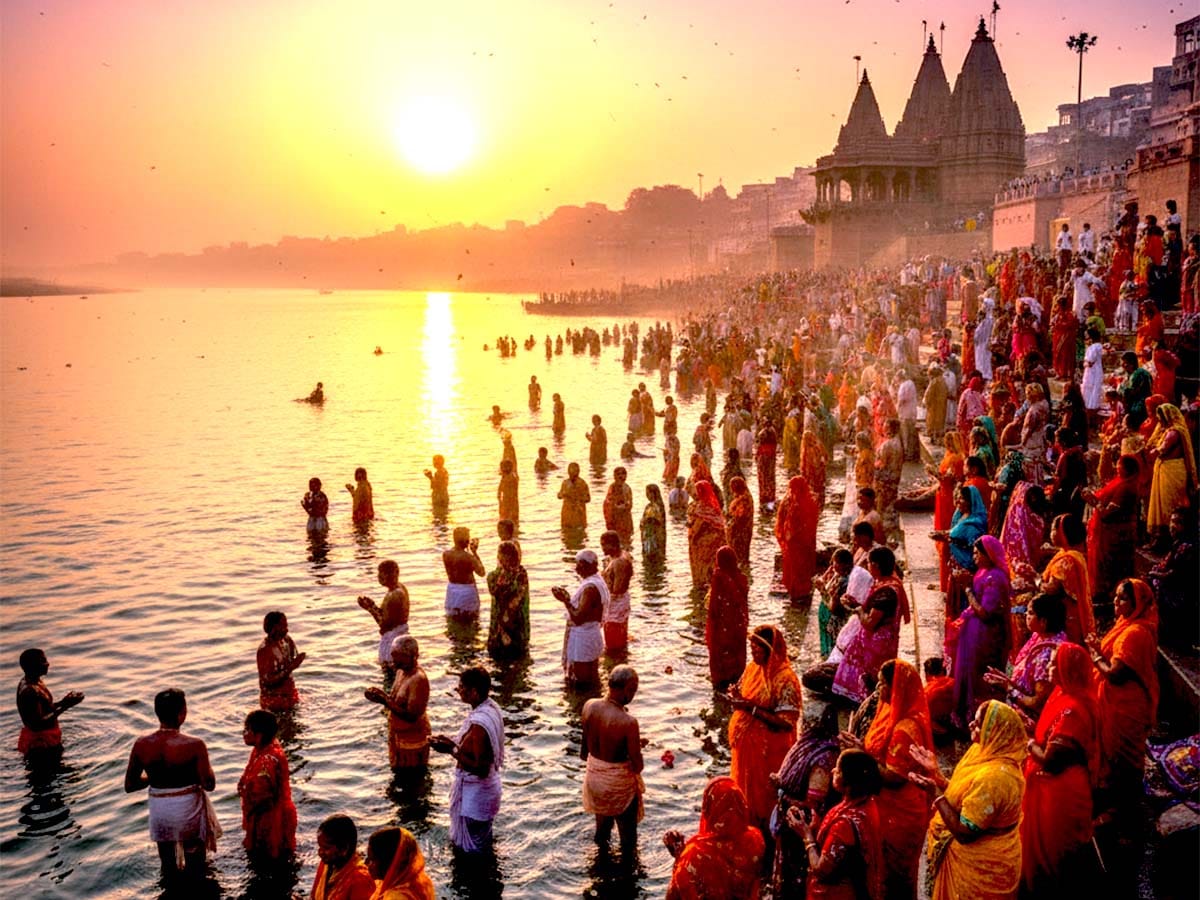
Snaan: Ritual Bath
Ratha Saptami is observed with great reverence as a sacred day of Surya Aradhana. The rituals begin before sunrise, symbolising the devotee’s alignment with the cosmic journey of the Sun and his chariot.
The day traditionally starts with waking up during Brahma Muhurta, much before sunrise. After attending to daily duties, devotees perform a ritual snaan (holy bath).
In many households, especially in Maharashtra and South India, this bath is taken with seven types of leaves or symbolic substitutes placed on the head, signifying purification of the body and mind under the grace of Surya.
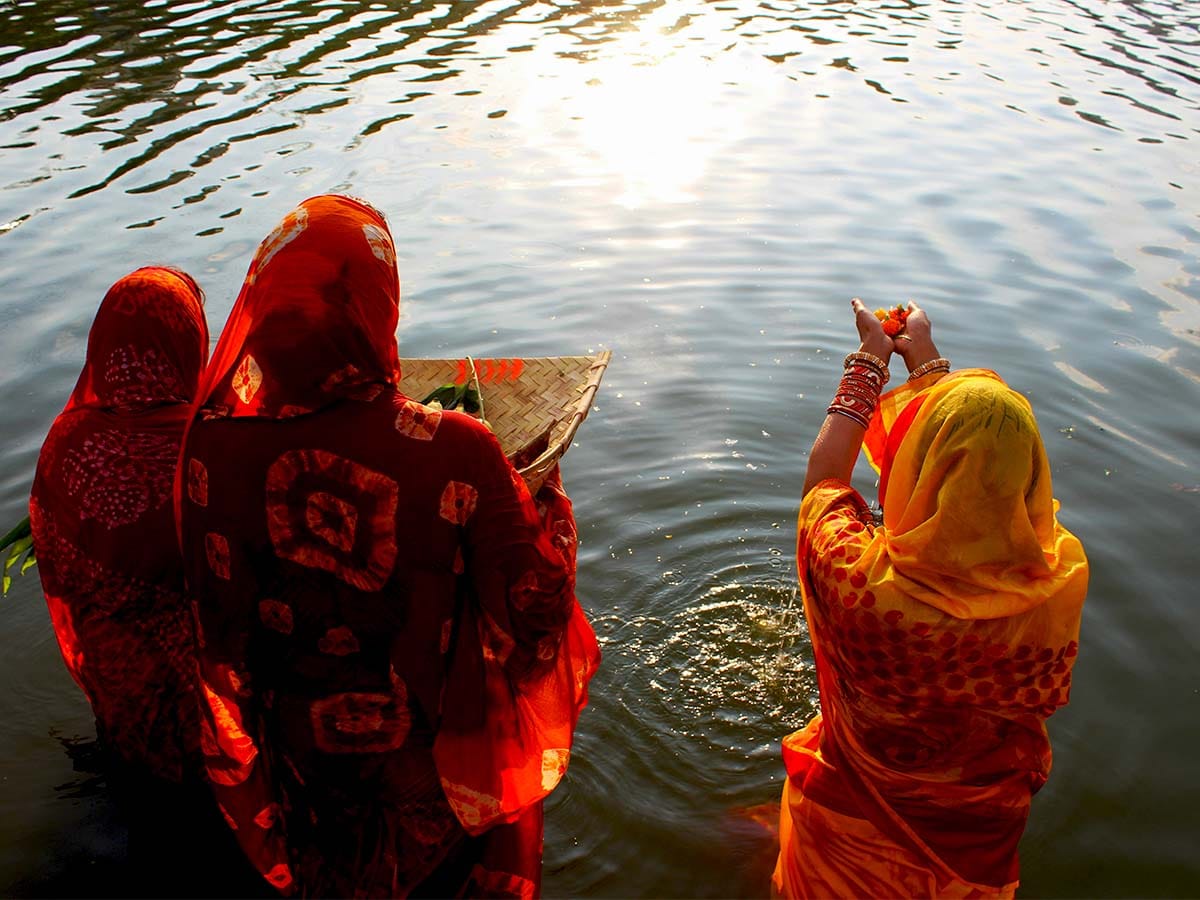
Arghya: Offering Water to the Sun
After the bath, devotees step outside or near a window or open space facing the east and offer Arghya to the rising Sun. Clean water mixed with red flowers, akshata (rice), or a pinch of sandalwood, is slowly poured from cupped hands while gazing at the Sun.
This moment is considered the most sacred part of Ratha Saptami, marking gratitude to Surya Narayana for life, health, seasons, and nourishment and Surya Mantras are chanted at this time.
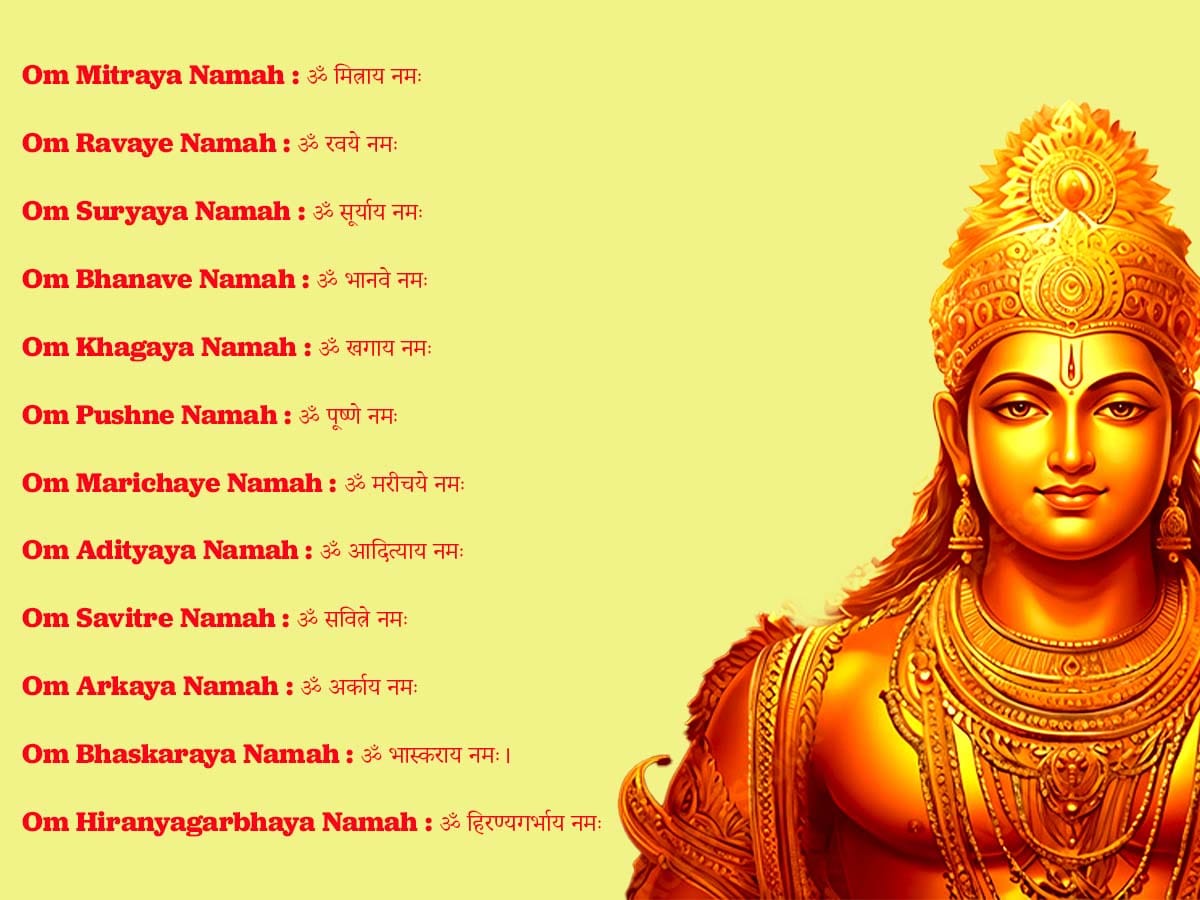
Surya Mantras
For simple recitation, you may chant the Surya Narayana Mool Mantra – Om Suryaya Namaha – ॐ सूर्याय नमः or you may chant all the 12 names of Surya Devata as given below.
- Om Mitraya Namah : ॐ मित्राय नमः
- Om Ravaye Namah : ॐ रवये नमः
- Om Suryaya Namah : ॐ सूर्याय नमः
- Om Bhanave Namah : ॐ भानवे नमः
- Om Khagaya Namah : ॐ खगाय नमः
- Om Pushne Namah : ॐ पूष्णे नमः
- Om Marichaye Namah : ॐ मरीचये नमः
- Om Adityaya Namah : ॐ आदित्याय नमः
- Om Savitre Namah : ॐ सवित्रे नमः
- Om Arkaya Namah : ॐ अर्काय नमः
- Om Bhaskaraya Namah : ॐ भास्कराय नमः।
- Om Hiranyagarbhaya Namah : ॐ हिरण्यगर्भाय नमः
Pooja Vidhi: Setting Up the Ratha Saptami Worship
After offering Arghya, the Ratha Saptami pooja is performed, usually in the morning hours. A small low wooden table (pat) is placed in the pooja area, a yellow, orange, or red cloth, colours associated with the Sun, is spread over it.
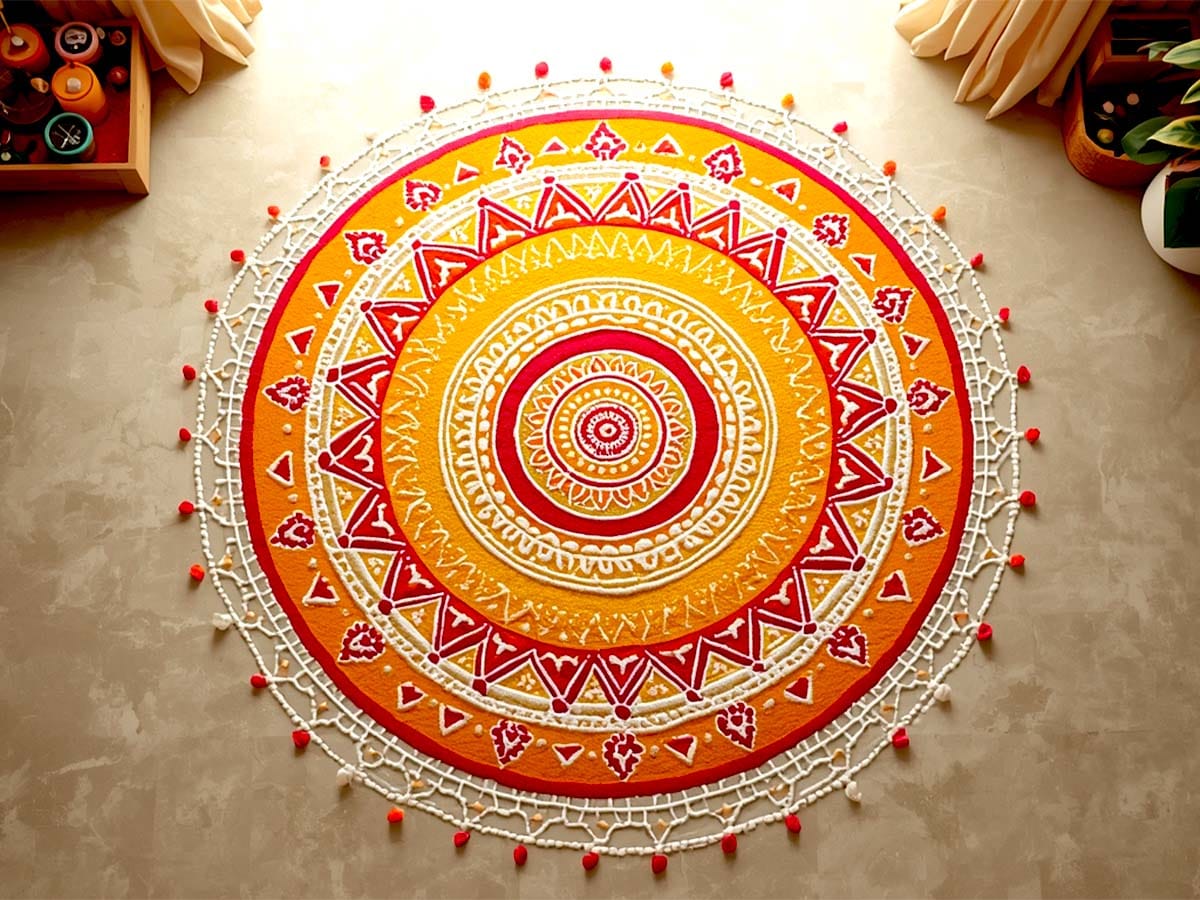
At the centre, an idol or image of Surya Devata is placed. In many traditional homes, instead of an idol, a rangoli depicting Surya or a Ratha (chariot) is drawn using coloured powders, rice flour, or turmeric and kumkum. In some traditions, chandan (sandalwood paste) is used to draw the symbolic form of Surya Narayana or his chariot directly on the wooden platform.
A betel leaf (paan) with betel nut (supari) is placed, along with a small Ganesh idol or image, as Lord Ganapati is first invoked to remove obstacles. Flowers, akshata, haldi, kumkum, and fresh leaves are offered, and Ganapati puja is performed before proceeding further.
A bowl or kalash filled with milk is kept near the deity, along with seven or twelve types of grains, symbolising prosperity, agriculture, and Surya’s role in sustaining crops and life. Red or seasonal fruits, incense sticks (dhoop), and a lamp are arranged as part of the worship.
During the pooja, devotees chant the twelve names of Surya or repeatedly recite “Om Suryaya Namah”, while offering flowers and lighting incense. The atmosphere is kept calm, devotional, and sun-facing as much as possible.
Milk Offering, Daan, and Fasting Observance
One of the most symbolic rituals of Ratha Saptami is the boiling of milk, representing abundance and the overflowing grace of the Sun.
Traditionally, cow dung cakes (gavri) are used as fuel, lit with ghee or camphor, and the milk is allowed to boil and gently overflow. Where space or resources do not permit this, the milk may be boiled on a gas stove, maintaining the same intent and devotion.
Many devotees observe a fast (vrata) on this day, either complete or partial, consuming only simple sattvic food after the pooja.
The grains collected for the ritual, often twelve types corresponding to the Sun’s twelve names, are later given as Daan (charity) along with food, milk, fruits, or other essentials to the poor, needy or temples.
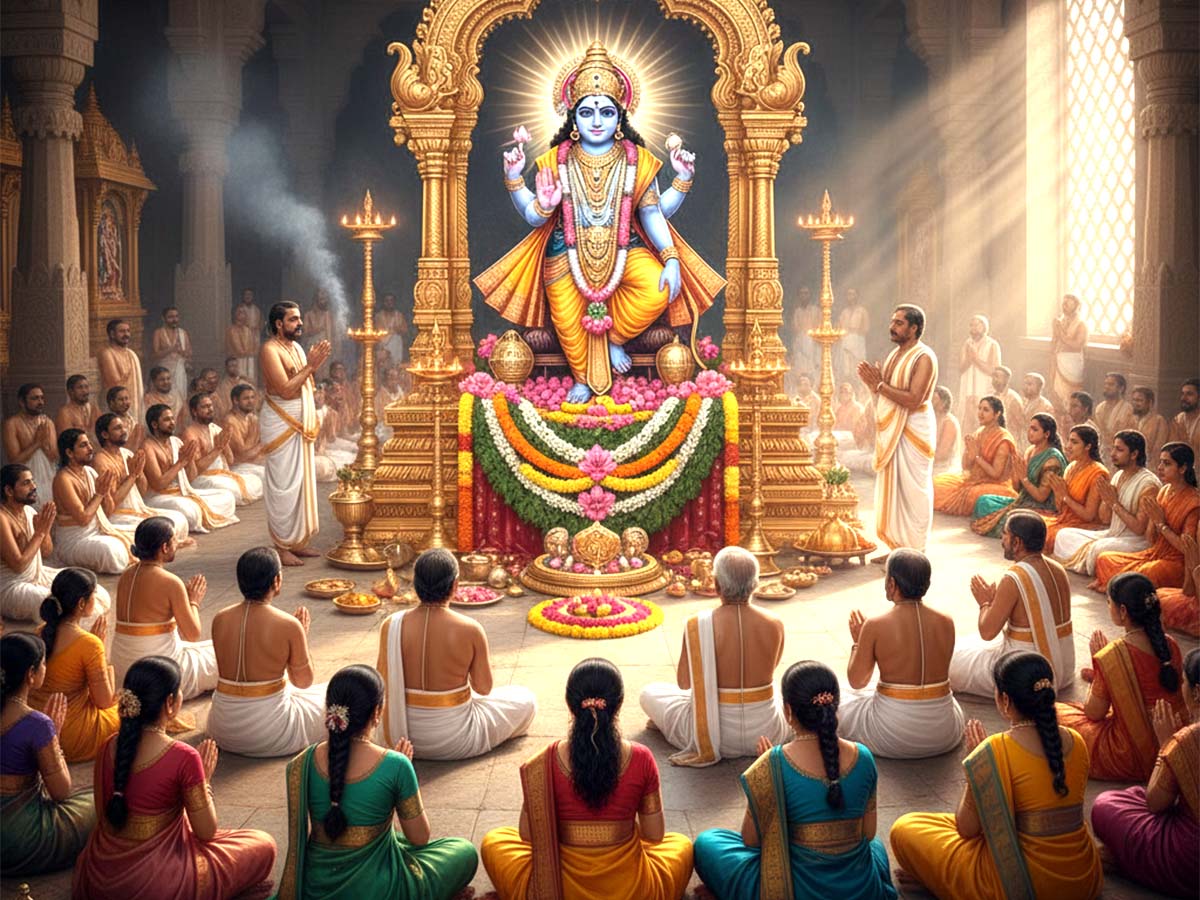
Ratha Saptami Celebrations at Tirumala Tirupati
One of the grandest celebrations of Ratha Saptami takes place at Tirumala Tirupati, where the festival is observed as “Surya Jayanti”. The rituals performed are:
- Lord Venkateswara is taken in procession on seven different vahanas from morning till night
- The entire Tirumala temple complex becomes a centre of devotion and spiritual energy
- Thousands of devotees gather for darshan, making it one of the most important temple festivals of the year
This association further strengthens the festival’s link with health, prosperity, and divine grace.
Ratha Saptami Rangoli and Cultural Observances
- Ratha Saptami rangoli designs featuring the Sun, chariot, lotus, and rays are drawn at entrances
- Houses are cleaned and decorated in preparation for the auspicious day
- Simple sattvic meals are prepared after worship
Makar Sankranti & Ratha Saptami: What is the Difference?
Makar Sankranti marks the astronomical transition of the Sun into Makara Rashi (Capricorn Zodiac) and the beginning of Uttarayana, celebrating seasonal change, harvest, and social festivities.
Ratha Saptami, on the other hand, is a purely devotional festival dedicated to Surya Narayana, highlighting the Sun as the source of light, energy, health, and life on Earth, and emphasising ritual worship, Arghya, and spiritual purification.
In essence, Makar Sankranti celebrates the Sun’s apparent movement and change of seasons, while Ratha Saptami venerates the Sun as the sustainer of life on Earth.
Sun Worship in All Ancient Civilisations
Since the earliest phases of human civilization, the Sun was universally worshipped as the visible sustainer of life – the source of light, warmth, energy, seasonal rhythm, fertility of the fields, growth of crops, and the very continuity of greenery on Earth.
India
In Bhartiya tradition, this life-giving principle is revered as Surya, the Aditya and Pratyakṣa Devata whose daily journey across the sky sustains Rita (cosmic order), nourishes all life, governs time, seasons, and vitality and whose rays nurture crops, seasons, and human well-being.
Egypt and West Asia
In ancient Egypt, the Sun was worshipped as Ra and later Amun-Ra; in Sumer and Akkad as Utu or Shamash, the upholder of cosmic order; in Anatolia as the Sun Goddess of Arinna, and in Persia as Mithra, guardian of truth and contracts.
Europe
Among European traditions, in Greece the Sun deity was worshipped as Helios and later Apollo; and in Rome as Sol Invictus, the unconquered Sun.
The Germanic peoples revered Sol, the Slavic cultures worshipped Dazhbog, the Celtic people worshipped the sun deity Lugh, and the Baltic traditions honoured Saule, all embodying the Sun as the nourisher of land, harvest, sustainer of life and human vitality.
North America
In North America, the plains tribes such as the Lakota and Cheyenne worshipped the Sun as the sustainer of vitality and moral order, the Hopi honoured the Sun as Tawa, while the Navajo revered Johonaa-ei, the ruler of the day and source of harmony.
South America
The native South American Inca, Quechua, and Aymara peoples worshipped the Sun deity as Inti, the divine source of warmth, crops, and cosmic order.
Though expressed through diverse names and mythologies, this universal Sun Worship reflects a shared civilizational understanding of the Sun as the eternal giver of life, energy, and sustenance.
Ratha Saptami Dates in Recent Years
- Ratha Saptami 2026 : 25 January 2026
- Ratha Saptami 2025 : 04 February 2025
- Ratha Saptami 2024 : 16 February 2024
- Ratha Saptami 2023 : 28 January 2023
Ratha Saptami Celebrations in the USA
Ratha Saptami is observed by Hindu communities across the United States through temple-led rituals and community gatherings, reflecting the growing efforts of the diaspora to preserve traditional Surya worship.
Although not a public holiday, many temples organise early-morning Surya Arghya, mantra chanting, and special poojas dedicated to Surya Devata, emphasising his role as the sustainer of life and cosmic order.
Institutions such as the India Cultural Center and Temple (ICCT) and the Kanchi Kamakoti Temple mark Ratha Saptami with structured religious observances, spiritual discourses, and community participation.
These celebrations adapt classical practices to local conditions while retaining their Vedic essence, offering devotees – especially younger generations – a meaningful connection to ancient Sun-worship traditions.
For the Hindu diaspora, Ratha Saptami in the USA stands as both a sacred observance and a cultural anchor, reaffirming Surya as Pratyaksha Devata – the visible source of energy, vitality, and dharma.
Ratha Saptami: Honouring the Eternal Source of Life
Ratha Saptami is a reminder of humanity’s timeless reverence for the Sun as the visible source of life, order, and renewal. In the Indian tradition, Surya is worshipped as Pratyaksha Devata – the deity who is directly perceptible and whose grace sustains all living beings, seasons, crops, and rhythms of existence.
Through ritual bathing, arghya, mantra chanting, and acts of charity, devotees align themselves with the cosmic principle of light overcoming inertia and vitality prevailing over decline.
Observed across centuries and geographies, Ratha Saptami continues to hold relevance even today, whether celebrated at ancient temples in India or by Hindu communities across the world.
It stands as a sacred occasion to express gratitude to the Sun – not as a distant celestial body, but as the eternal nourisher of life, consciousness, and dharma.
Frequently Asked Questions (FAQs) on Ratha Saptami
What is Ratha Saptami and why is it celebrated?
Ratha Saptami is a sacred Hindu festival dedicated to Surya Dev (the Sun God), observed on the seventh day (Saptami) of the bright half of the Magha month. It symbolises the Sun as the sustainer of life, energy, health, and prosperity, and marks an auspicious phase of renewed vitality and spiritual awakening.
When is Ratha Saptami in 2026?
Ratha Saptami will be celebrated on 25 January 2026 which is Magh Shukla Saptami (seventh day of the bright fortnight of the month of Magh)
What is the difference between Ratha Saptami and Makar Sankranti?
Makar Sankranti marks the Sun’s astronomical transition into Makara Rashi (Capricorn), whereas Ratha Saptami celebrates Surya as the life-giver and sustainer of order, seasons and nature harmony.
How is Ratha Saptami celebrated traditionally?
Ratha Saptami is traditionally observed by waking before sunrise, taking a ritual bath, offering Arghya (water offering) to the Sun, chanting Surya mantras, performing Surya Puja, observing a fast, and engaging in charity and daan to the poor and needy.
Is Ratha Saptami celebrated outside India?
Yes, Ratha Saptami is celebrated by Hindu communities worldwide, including in the USA, where temples and cultural organisations conduct Surya Puja, mantra chanting, and community gatherings, especially at major temples and Hindu cultural centres.