Chaitra Navratri is one of the most sacred Hindu festivals ushering in the Hindu New Year and celebrated during the Chaitra month, the first month of the Hindu lunar calendar.
The festival lasts nine days, during which devotees worship the nine divine forms of Goddess Durga and it culminates on the ninth day with Ram Navami (birth of Prabhu Shriram).
Chaitra Navratri will be celebrated with traditional rituals, fasting, and prayers across India from 19 March 2026 till 27 March 2026.
The festival coincides with the Hindu New Year and is celebrated with different names such as Gudi Padwa, Ugadi, Vishu, and Baisakhi across the country.
Ramkund Nashik: Sacred Godavari Ghat Related To The Ramayana
Chaitra Navratri 2026 Date
Chaitra Navratri 2026 will begin on 19 March 2026 with Chaitra Shukla Pratipada and it ushers in the Hindu New Year according to the Vedic calendar.
Chaitra Shukla Pratipada
- Tithi begins : 6.52 am on 19 March 2026
- Tithi ends : 4.52 am on 20 March 2026
The most important days during Navratri include Durga Ashtami and Ram Navami. These days are considered extremely auspicious for worship and spiritual practices.
Chaitra Shukla Pratipada is the first day of the bright half of the month of Chaitra
Chaitra Navratri Dates (Past and Future Years)
- Chaitra Navratri 2023 – 22 March 2023
- Chaitra Navratri 2024 – 9 April 2024
- Chaitra Navratri 2025 – 30 March 2025
- Chaitra Navratri 2026 – 19 March 2026
- Chaitra Navratri 2027 – 7 April 2027
- Chaitra Navratri 2028 – 27 March 2028
Also read Gudi Padwa 2026: Significance and Marathi New Year Traditions
What is Chaitra Navratri? (Meaning and Significance)
The word Navratri literally means “nine nights”, dedicated to the worship of Goddess Durga and her divine forms.
During these nine days, devotees observe fasting, perform Durga Puja, chant sacred mantras, and seek the blessings of the Goddess for prosperity, strength, and protection.
The spiritual meaning of Chaitra Navratri is the victory of good over evil and the awakening of divine energy within devotees.
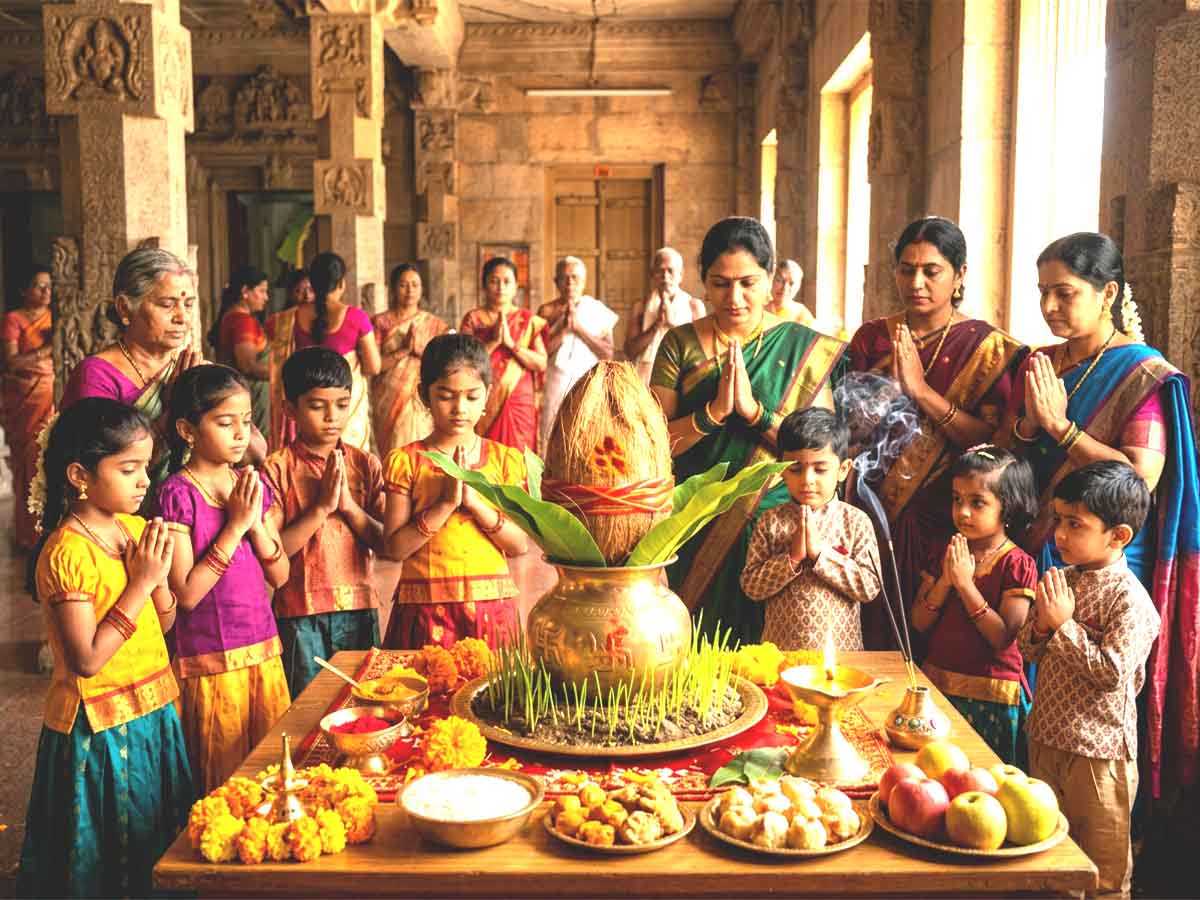
Ghatasthapana: The Sacred Beginning of Navratri
The festival begins with Ghatasthapana, a sacred ritual that marks the invocation of Goddess Durga. It is performed on the first day of Navratri during an auspicious muhurat.
Ghatasthapana Date (19 March 2026)
- Shubh Muhurat : 6.52 am to 7.43 am
- Abhijit Muhurat : 12.05 pm to 12.53 pm
Ghatasthapana Vidhi
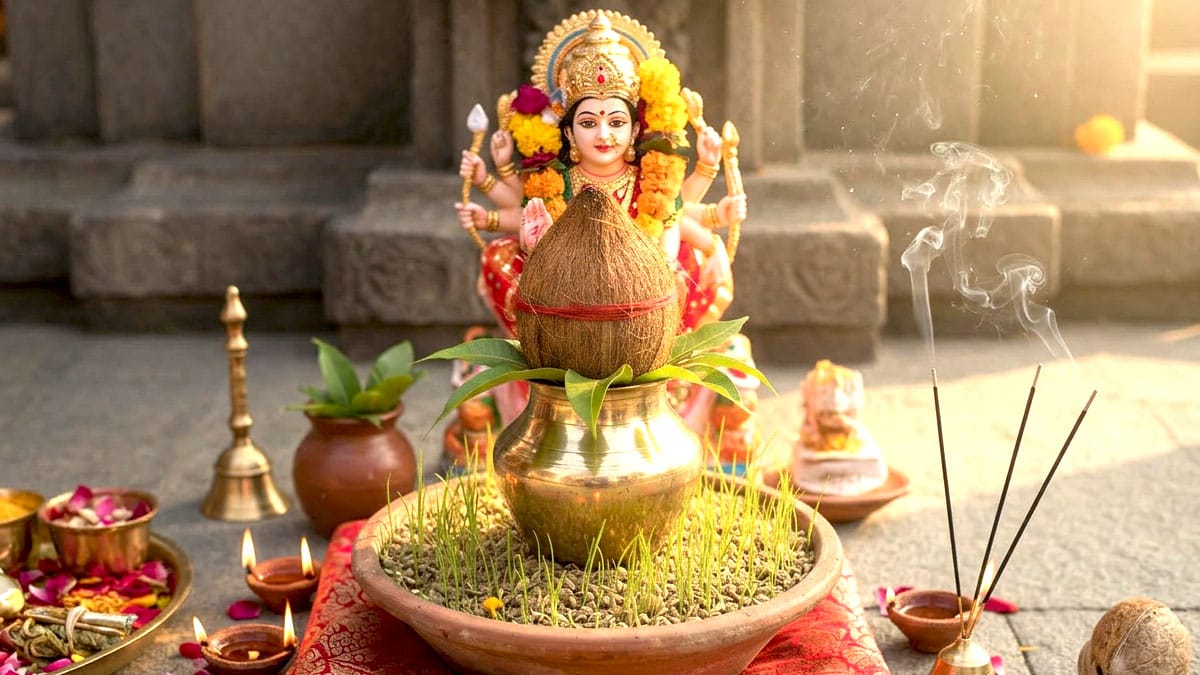
Chaitra Navratri begins with the sacred ritual of Ghatasthapana, also known as Kalash Sthapana, which symbolises the invocation of Goddess Durga into the home for the nine days of Navratri.
During this ritual, a clay plate is prepared with a layer of soil in which fresh grains such as barley are sown. A decorated kalash (sacred clay pot) marked with an auspicious swastik is placed in the centre.
Before beginning the puja, devotees perform Aachman, a purification ritual in which a small amount of water is sipped while chanting sacred names of Lord Vishnu, symbolising physical and spiritual cleansing.
The kalash is then filled with water and adorned with turmeric, kumkum, betel nut, coins, and five sacred leaves. A coconut decorated with flowers is placed on top of the kalash.
Devotees take a Sankalp for the well-being and prosperity of their family and offer flowers, incense, and lamps to the Goddess. The ritual concludes with Aarti, marking the formal beginning of the nine days of Navratri worship.
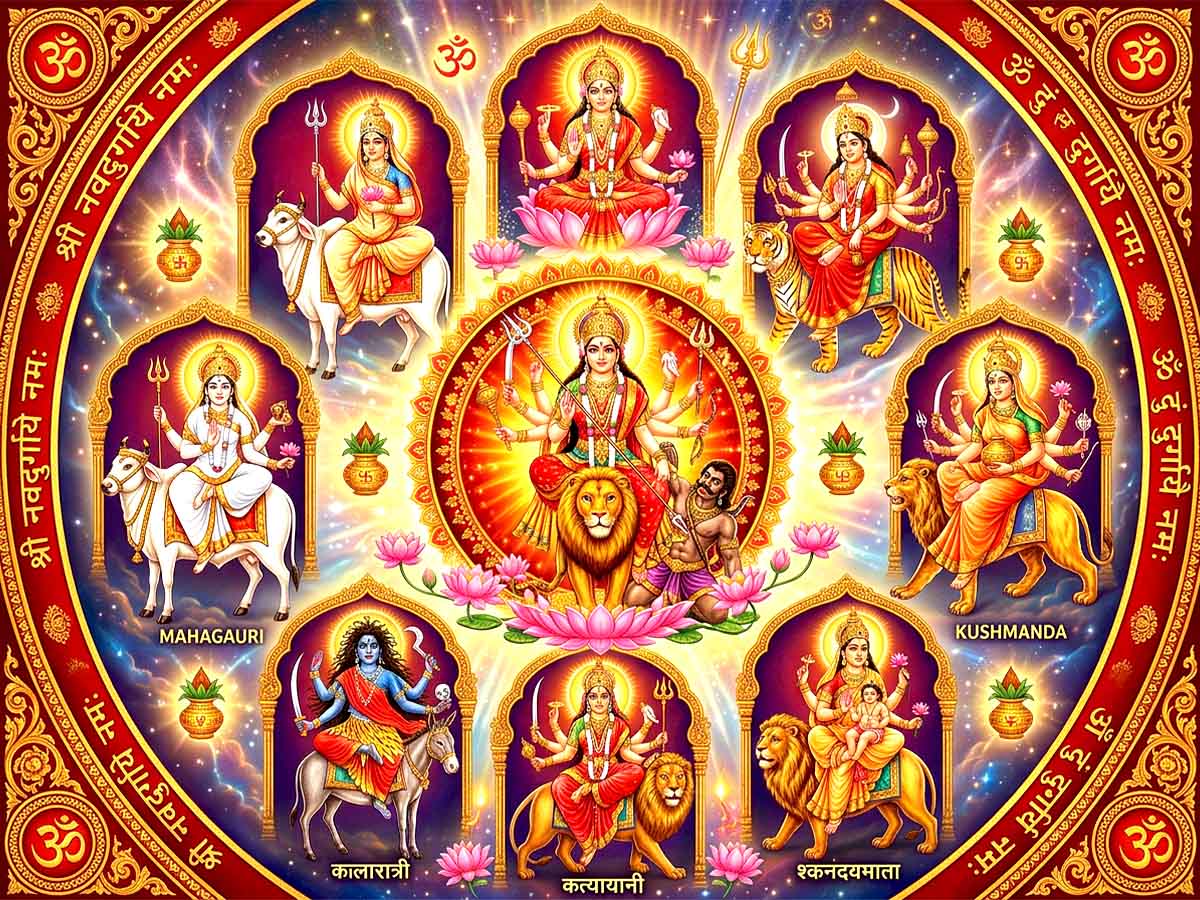
The Nine Forms of Maa Durga and Chaitra Navratri colours
During Chaitra Navratri, devotees worship the nine divine forms of Durga Mata, collectively known as Navadurga. Each of the nine days of Navratri is dedicated to a different manifestation of the Goddess.
Many devotees also observe Navratri day-wise colours, wearing a specific colour each day as a symbol of devotion, positivity, and spiritual energy.
Below are the 9 forms of Durga worshipped during Navratri along with the traditional colours associated with each day.
Day 1 – Maa Shailaputri (Yellow)
The first day of Navratri is dedicated to Shailaputri, the daughter of the Himalayas. She symbolises strength, stability, and the beginning of the spiritual journey.
Day 2 – Maa Brahmacharini (Green)
Brahmacharini represents devotion, penance, and spiritual discipline. Devotees pray for wisdom and inner strength.
Day 3 – Maa Chandraghanta (Grey)
Chandraghanta symbolises courage and peace. Her blessings are believed to remove fear and negativity.
Day 4 – Maa Kushmanda (Orange)
Kushmanda is believed to be the cosmic creator of the universe. She represents vitality, warmth, and divine energy.
Day 5 – Maa Skandamata (White)
Skandamata, the mother of Lord Kartikeya, symbolises compassion, motherhood, and protection.

Day 6 – Maa Katyayani (Red)
Katyayani represents courage and determination. She is worshipped for strength and protection from evil.
Day 7 – Maa Kalaratri (Royal Blue)
Kalaratri is the fierce form of the Goddess who destroys darkness and removes obstacles.
Day 8 – Maa Mahagauri (Pink)
Mahagauri symbolises purity, serenity, and spiritual growth.
Day 9 – Maa Siddhidatri (Purple)
Siddhidatri grants divine blessings, wisdom, and spiritual fulfilment, marking the completion of the Navratri celebrations.
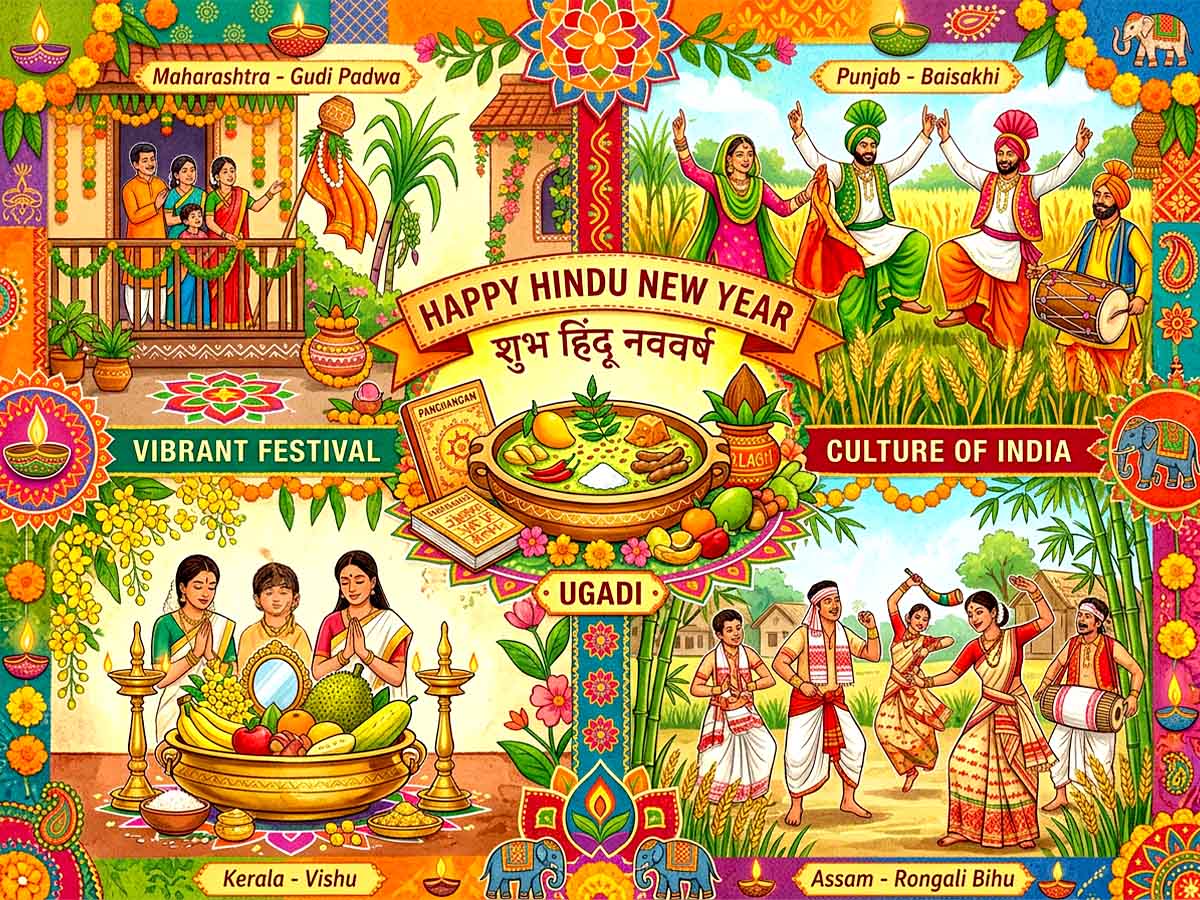
Hindu New Year Celebrations Across India
The beginning of the Hindu lunar month of Chaitra is considered the start of the Hindu New Year in many parts of India. While the spiritual significance is shared across regions, the festival is celebrated under different names and traditions, reflecting the country’s rich cultural diversity.
Gudi Padwa in Maharashtra
In the state of Maharashtra, the New Year is celebrated as Gudi Padwa. Homes are decorated with rangoli, and a Gudi, a decorated flag-like arrangement with a bright cloth, neem leaves, and a copper pot, is hoisted outside houses. The Gudi symbolises victory, prosperity, and the welcoming of a new beginning.
Ugadi in Andhra Pradesh, Telangana and Karnataka
In southern India, particularly in Andhra Pradesh, Telangana, and Karnataka, the New Year is celebrated as Ugadi. A traditional dish called Ugadi Pachadi, made with ingredients representing different flavours of life, is prepared and shared among family members. The day is marked with temple visits, prayers, and festive meals.
Vishu in Kerala
In Kerala, the festival of Vishu marks the beginning of the traditional New Year. A special arrangement called Vishukkani, consisting of fruits, flowers, rice, coins, and a mirror placed before the deity, is prepared the night before. Viewing the Vishukkani at dawn is believed to bring prosperity and good fortune for the year ahead.
Puthandu in Tamil Nadu
In Tamil Nadu, the New Year is celebrated as Puthandu. People decorate their homes with kolam patterns, visit temples, and prepare traditional festive meals. Families also follow the custom of Kanni, an auspicious sight viewed first thing in the morning to bring good luck.
Poila Boishakh in West Bengal
In West Bengal and among Bengali communities, the New Year is celebrated as Poila Boishakh. The day is marked by cultural performances, traditional clothing, festive meals, and the opening of new account books by businesses in a ceremony known as Haal Khata.
Bihu in Assam
In Assam, the spring festival of Bohag Bihu marks the Assamese New Year. The celebrations include traditional music, folk dances, community feasts, and the preparation of special dishes made from rice and coconut.
Baisakhi in Punjab
In Punjab, the harvest festival of Baisakhi coincides with the New Year celebrations. The day is celebrated with community gatherings, traditional dances such as Bhangra and Gidda, and festive meals.
Navreh in Kashmir
Among Kashmiri Pandits, the New Year is celebrated as Navreh. Families prepare a ceremonial thali containing rice, coins, flowers, and religious texts, symbolising prosperity and spiritual wisdom for the coming year.
Cheti Chand by the Sindhi Community
The Sindhi community celebrates the New Year as Cheti Chand, which also marks the birth anniversary of Jhulelal. Devotees offer prayers, participate in processions, and celebrate with devotional songs and community gatherings.
Together, these diverse celebrations highlight the cultural richness of India, where the beginning of the Hindu new year is welcomed with joy, devotion, and regional traditions.
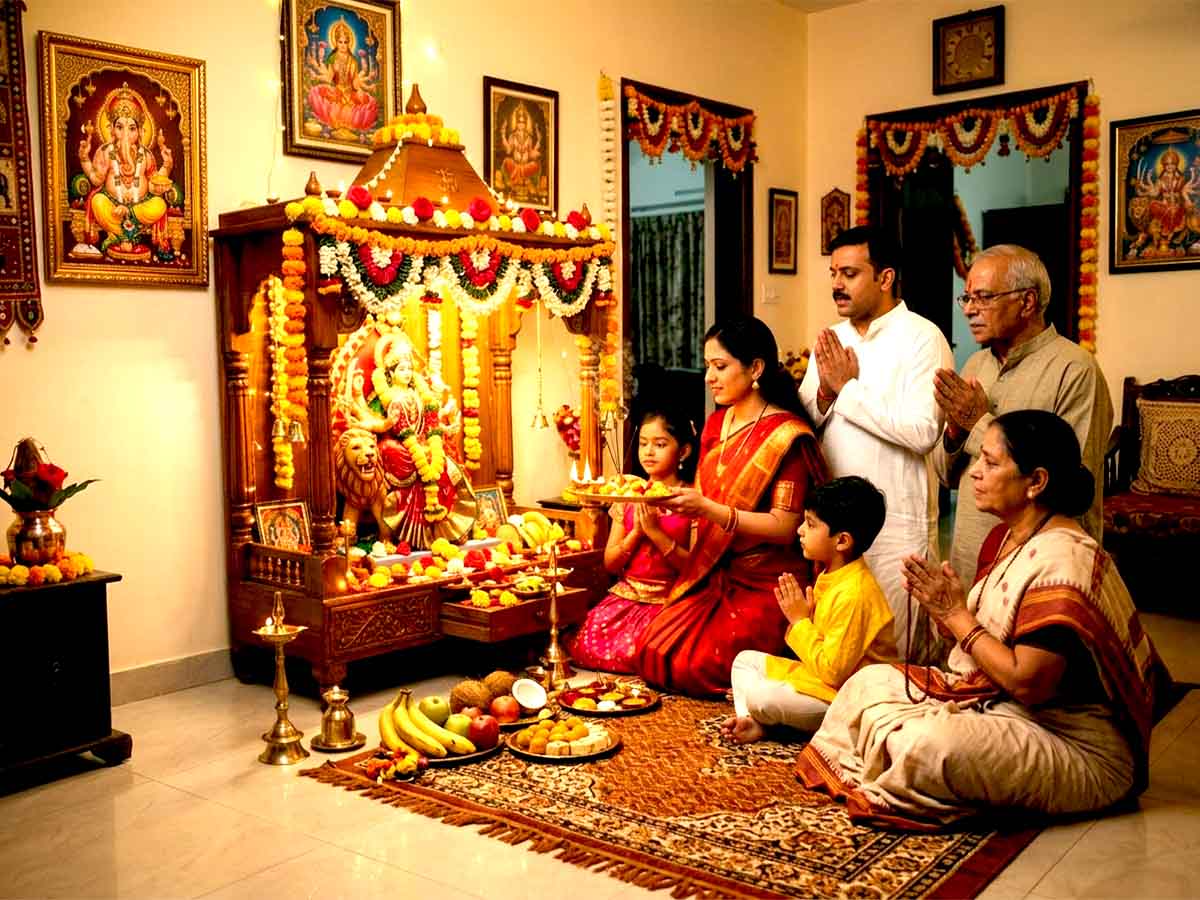
Chaitra Navratri 2026 Wishes
Many people share Happy Chaitra Navratri wishes with family and friends during the festival.
- Happy Chaitra Navratri! May Goddess Durga bless you with strength and prosperity.
- Wishing you a joyful and blessed Navratri filled with devotion and positivity.
- May Maa Durga remove all obstacles from your life.
Chaitra Navratri: An auspicious beginning of the new year
Chaitra Navratri marks the beginning of a sacred and spiritually powerful time in the Hindu calendar. From Ghatasthapana to the worship of the nine forms of Maa Durga, the festival symbolizes faith, devotion, and renewal.
Across India, the Chaitra month is celebrated through various regional new year festivals such as Gudi Padwa, Ugadi, Vishu, Puthandu, Bihu, and Baisakhi, making it one of the most vibrant periods in the Indian cultural calendar.
As devotees prepare for Chaitra Navratri 2026, the festival continues to inspire millions with its message of hope, strength, and new beginnings.
We wish all our readers a Happy Chaitra Navratri!
Chaitra Navratri FAQs
When is Chaitra Navratri in 2026? (Navratri kab se shuru hai)
Chaitra Navratri in 2026 will begin on 19 March 2026 and continue for nine days, ending on 27 March 2026 with the celebration of Ram Navami. The festival marks the beginning of the Hindu New Year and is dedicated to the worship of the nine forms of Maa Durga.
What is the significance of Chaitra Navratri?
Chaitra Navratri is a nine-day Hindu festival celebrated during the month of Chaitra to welcome the new year and honour the divine feminine power of Durga. Devotees observe fasting, prayers, and rituals while worshipping the nine forms of Maa Durga, symbolising spiritual growth, renewal, and new beginnings.
What are the 9 forms of Maa Durga worshipped during Navratri?
The nine forms of Durga worshipped during Navratri are:
Shailputri
Brahmacharini
Chandraghanta
Kushmanda
Skandamata
Katyayani
Kalaratri
Mahagauri
Siddhidatri
Each day of Navratri is dedicated to one form of the goddess.
What are the Chaitra Navratri colours?
Each day of Chaitra Navratri is associated with a special colour symbolising spiritual energy and positivity. The common Navratri colours include yellow, green, grey, orange, white, red, royal blue, pink, and purple, worn by devotees during the nine days of worship.
Which festivals mark the Hindu New Year during Chaitra?
The beginning of the Hindu lunar month of Chaitra marks the New Year in many regions of India. It is celebrated through festivals such as:
Gudi Padwa in Maharashtra
Ugadi in Andhra Pradesh, Telangana and Karnataka
Vishu in Kerala
Puthandu in Tamil Nadu
Poila Boishakh in West Bengal
Bohag Bihu in Assam
Baisakhi in Punjab
Navreh in Kashmir
Cheti Chand celebrated by the Sindhi community.