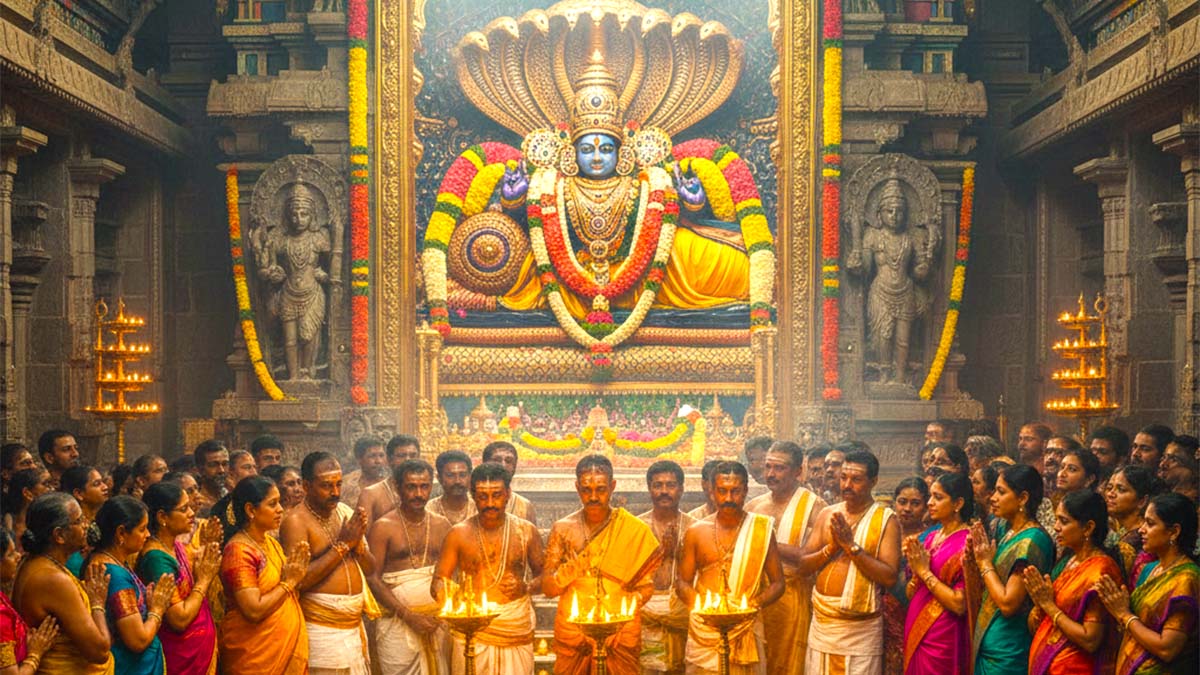
Vaikuntha Ekadashi is regarded as one of the most spiritually significant Ekadashis in the Hindu lunar calendar, particularly within Vaishnava traditions.
The day is associated with Lord Vishnu and the concept of Vaikuntha – the divine abode symbolising liberation, peace, and freedom from worldly bondage.
While its observance varies regionally across India, the underlying spiritual message of Vaikuntha Ekadashi remains rooted in devotion, discipline, and inner awakening.
While Vaikuntha Ekadashi holds immense importance in Vaishnava traditions across southern India, its observance in Maharashtra is relatively subdued, with greater emphasis traditionally placed on Ashadhi and Kartiki Ekadashi associated with the Vitthal tradition.
Nevertheless, the day continues to be recognised in the broader framework of Sanatana Dharma as a sacred occasion dedicated to Lord Vishnu.
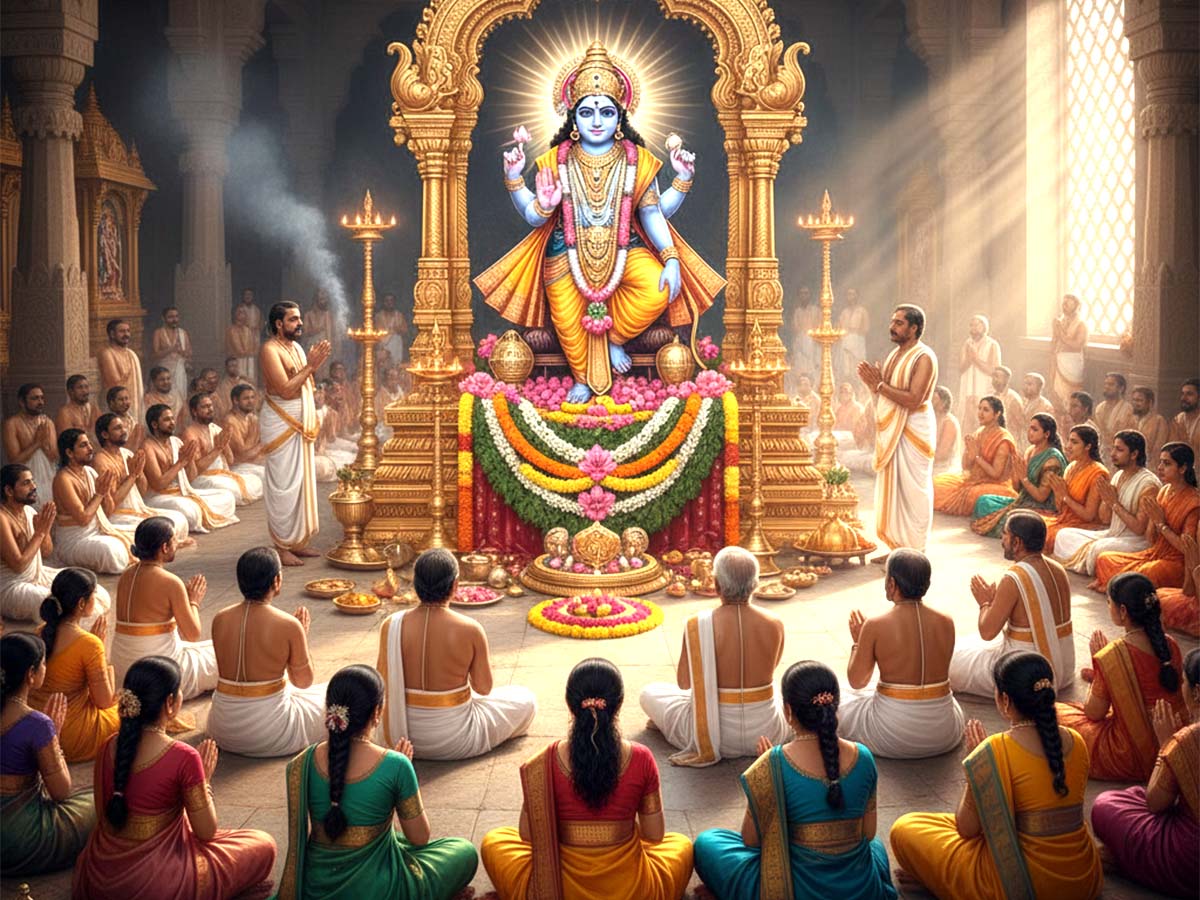
What Is Vaikuntha Ekadashi?
The term Vaikuntha refers to the celestial realm of Lord Vishnu, symbolising a state of eternal bliss and spiritual liberation. Ekadashi is the eleventh lunar day of the fortnight, traditionally observed with fasting, prayer, and restraint.
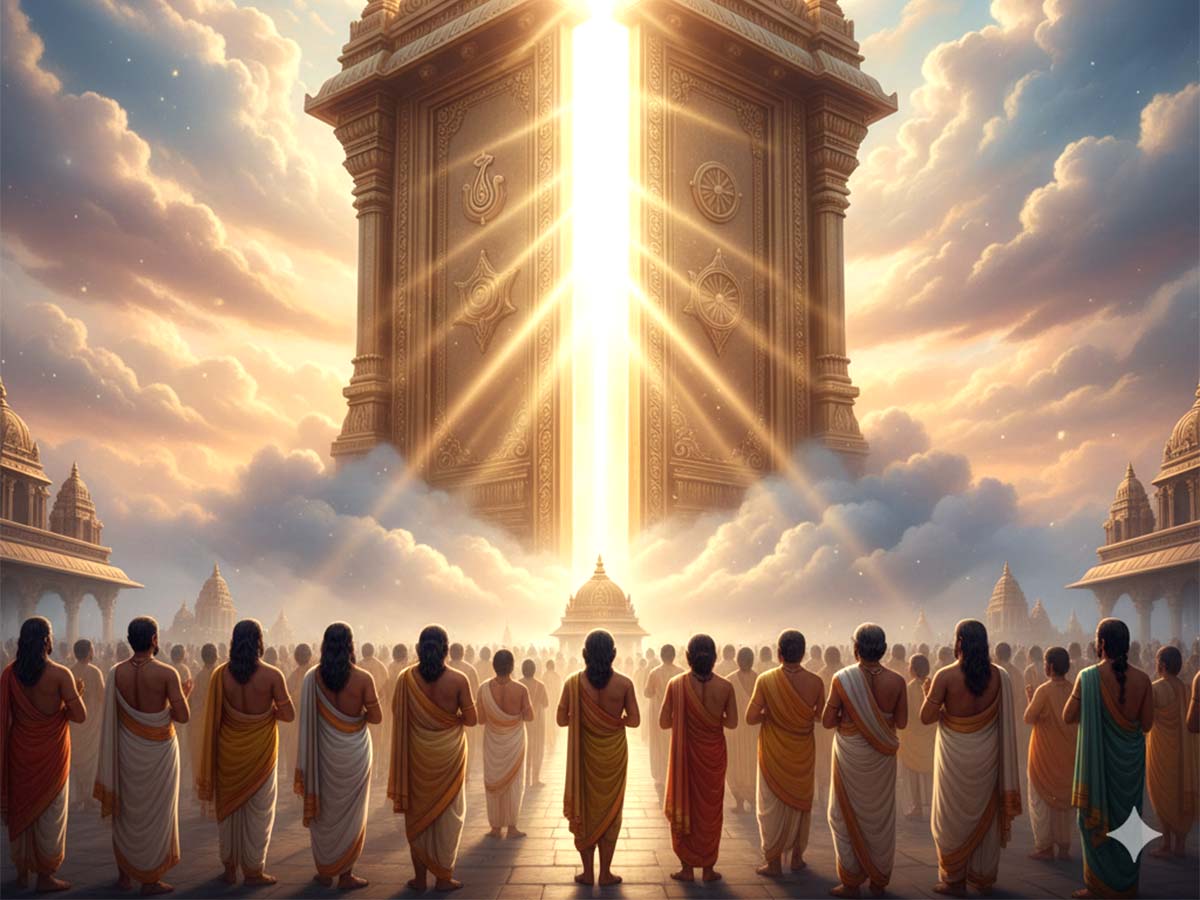
Vaikuntha Ekadashi is believed to be especially auspicious, as it represents the opening of the Vaikuntha Dwara – a symbolic gateway to higher spiritual consciousness.
In Vaishnava belief, observing this Ekadashi with sincerity is seen as an opportunity for purification of mind and conduct, rather than a ritual meant to promise immediate or material outcomes.
Vaikuntha Ekadashi and Mokshada Ekadashi
Vaikuntha Ekadashi is widely identified with Mokshada Ekadashi, the Ekadashi associated with moksha, or spiritual liberation. The term mokshada literally means “that which grants liberation,” reflecting the philosophical emphasis of the day.
Traditional belief associates Mokshada Ekadashi with sacred teachings on dharma and self-realisation. Rather than being interpreted as a guarantee of liberation, the observance symbolises a devotee’s conscious effort to align with dharmic values, devotion (bhakti), and self-discipline.
Significance in Vaishnava Tradition
Vaikuntha Ekadashi holds particular prominence in Vaishnava sampradayas, especially in South India. Major Vishnu temples observe the day with early morning rituals, special darshans, and recitations of Vishnu Sahasranama and other sacred hymns.
The symbolic passing through the Vaikuntha Dwara in temples represents the soul’s journey towards spiritual clarity and detachment. The emphasis remains on devotion and humility, rather than ritual complexity.
Observance and Vrat: Meaning Beyond Fasting
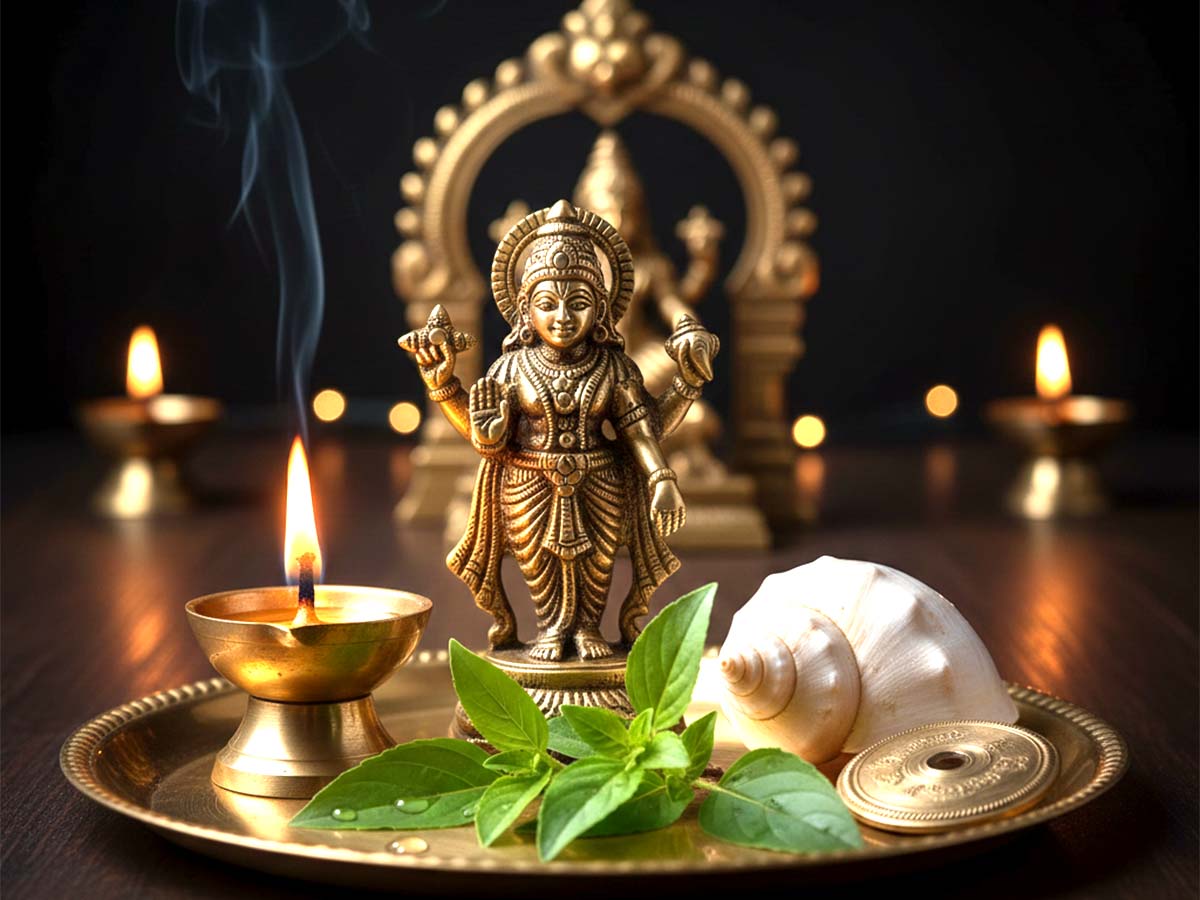
The Ekadashi vrat traditionally involves moderation in food or complete fasting, japa or remembrance of Lord Vishnu, reading or listening to sacred texts, and maintaining simplicity in thought and conduct. The emphasis of the observance lies in cultivating inner discipline and devotional awareness rather than physical austerity alone.
As part of this spiritual practice, devotees often engage in the recitation of Vishnu-related chants and mantras. Commonly recited mantras include the Vishnu Sahasranama, which is considered a comprehensive expression of Vishnu bhakti, as well as simple naam-japa such as “Om Namo Narayanaya” or “Om Namo Bhagavate Vasudevaya.” These chants are valued for their contemplative quality and their role in focusing the mind on devotion and surrender.
In many households and temples, passages from the Bhagavad Gita, Vishnu Purana, or other Vaishnava texts are read or listened to on this day. The observance is thus seen not merely as abstinence from food, but as an opportunity to reduce sensory distractions and turn inward through prayer, reflection, and remembrance of Vishnu.
Vaikuntha Ekadashi in Maharashtra
In Maharashtra, Vaikuntha Ekadashi is acknowledged within religious calendars but is not observed on a large public scale. The devotional landscape of the region places greater collective emphasis on Ashadhi Ekadashi and Kartiki Ekadashi, associated with the Warkari movement and Lord Vitthal of Pandharpur.
Vaikuntha Ekadashi is therefore observed more privately-within households, Vaishnava lineages, or individual spiritual practice-rather than through large pilgrimages or public processions.
Tithi and Calendar Context
According to the Amanta lunar calendar followed in Maharashtra, Vaikuntha Ekadashi (Mokshada Ekadashi) is observed on the Shukla Paksha Ekadashi of the Pausha month, which generally falls during December-January.
Vaikuntha Ekadashi – Tithi Timings
Tithi Begins: 7:50AM on 30 Dec 2025
Tithi Ends: 5:00AM on 31 Dec 2025
Ekadashi observance is traditionally based on sunrise timings, and practices may vary slightly depending on regional Panchangs and sampradayas. Devotees are advised to follow their local calendar traditions while observing the vrat.

The Deeper Spiritual Meaning
At its core, Vaikuntha Ekadashi points towards an inner journey. Vaikuntha is not merely a celestial destination, but a state of consciousness marked by balance, devotion, and freedom from excessive attachment.
Observing the day in the right spirit encourages introspection, ethical living, and sustained spiritual awareness beyond a single ritual or fast.
Vaikuntha Ekadashi stands as a silent reminder that liberation in Sanatana Dharma is not achieved through isolated acts, but through consistent alignment with dharma, devotion, and self-restraint.
Whether observed through fasting, prayer, or quiet reflection, the essence of the day lies in cultivating inner clarity rather than external expectation.