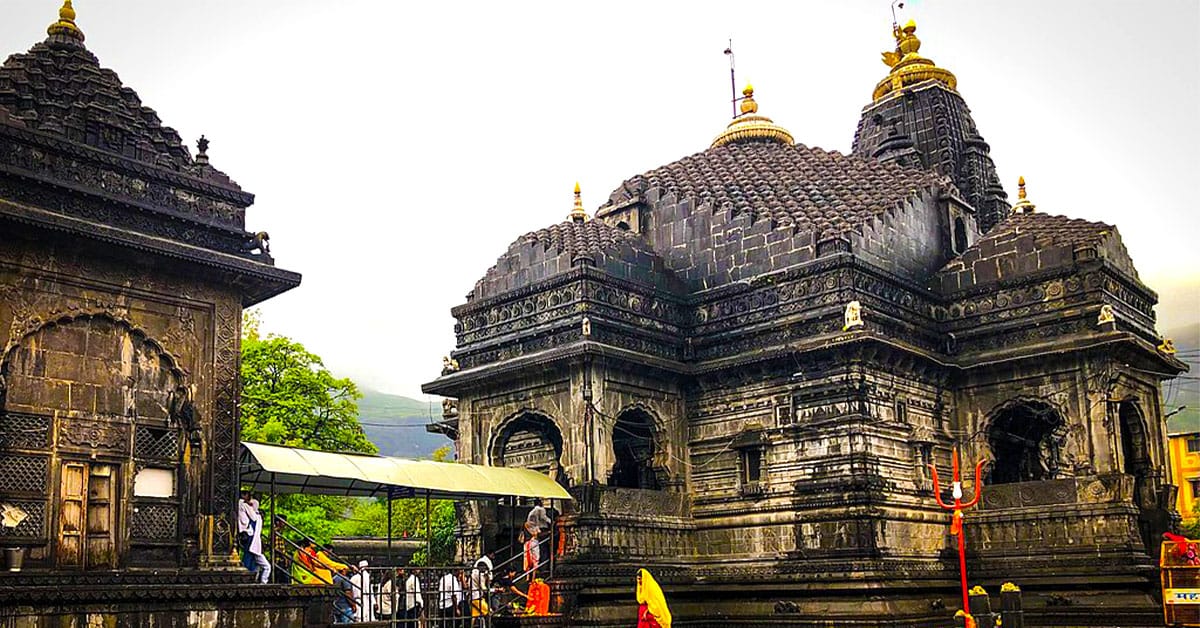
Trimbakeshwar Jyotirlinga is one of the most revered Shiva temples in India and holds a unique place among the twelve Jyotirlingas of Lord Shiva.
Located near Nashik in Maharashtra, this ancient temple is closely associated with spiritual purification, ancestral rituals, and the sacred geography of the Brahmagiri region.
Known for its rare three-faced lingam representing Brahma, Vishnu, and Mahesh, Trimbakeshwar is a powerful centre of devotion that attracts pilgrims from across Bharat and abroad throughout the year.
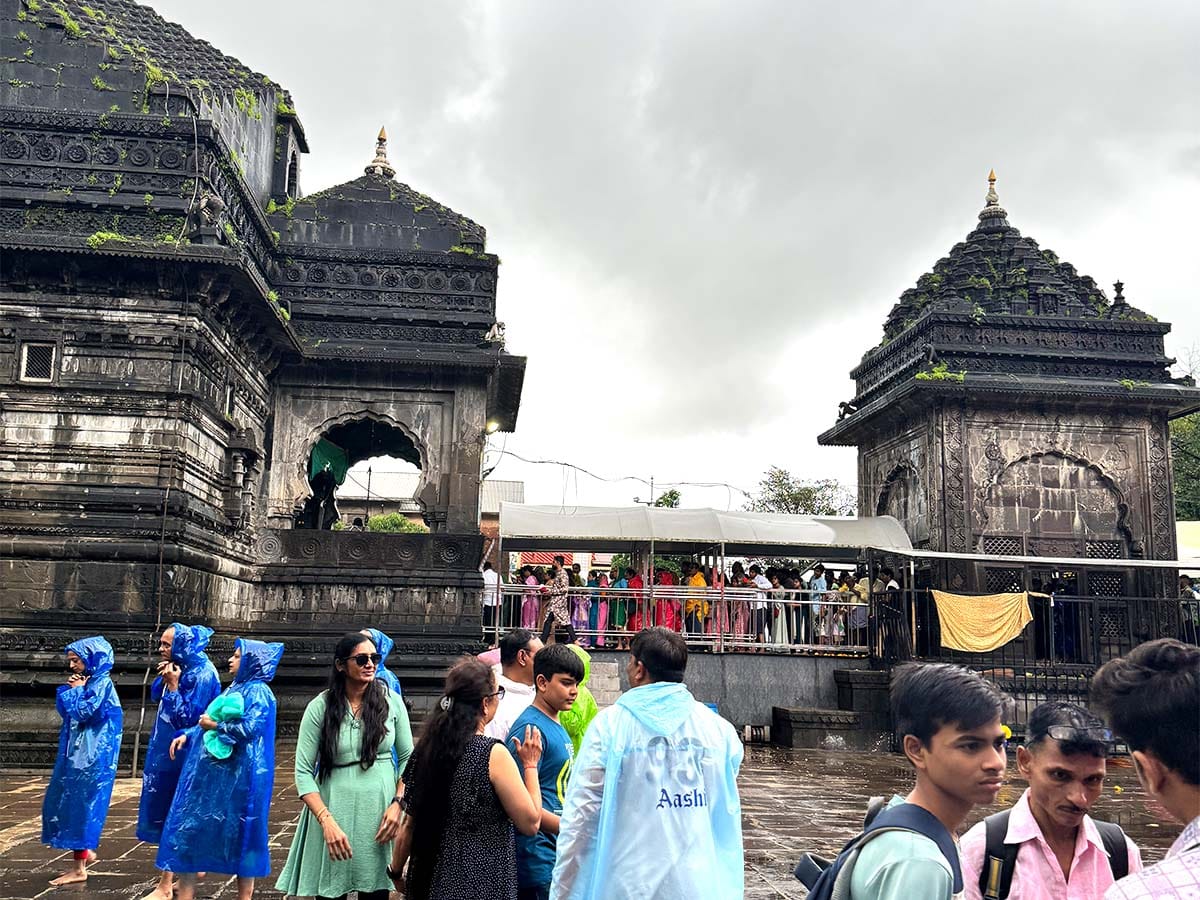
Where Is Trimbakeshwar Temple Located?
Trimbakeshwar Temple is situated in the town of Trimbak, approximately 28 km from Nashik city in Maharashtra.
The entire route starting from the outskirts of Nashik city till Trimbakeshwar is full of scenic greenery with open fields, farms and mountains.
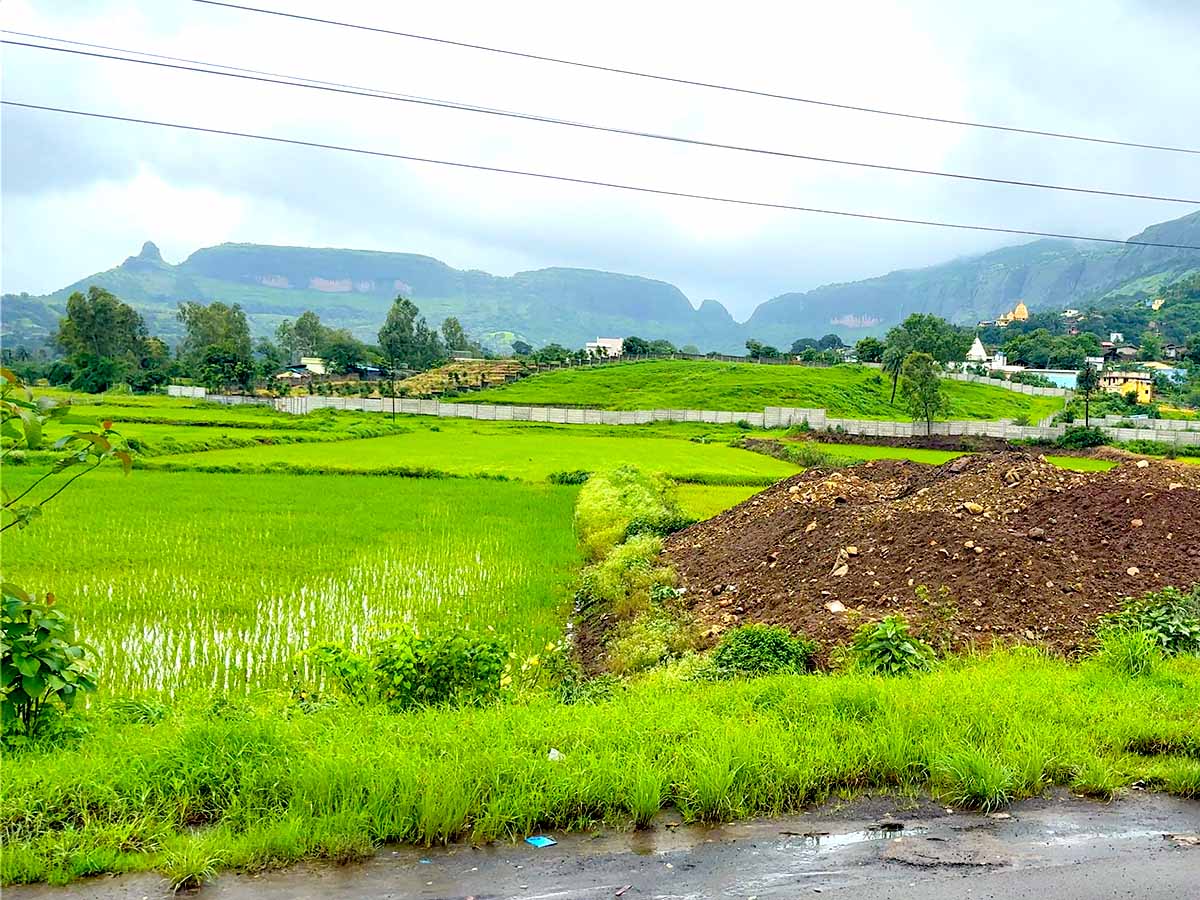
Nestled at the foothills of the Brahmagiri mountain range, the temple stands in a serene and spiritually charged environment that has been revered since ancient times.
Its proximity to Nashik makes it easily accessible, while the surrounding hills and forests preserve its sacred and contemplative atmosphere.
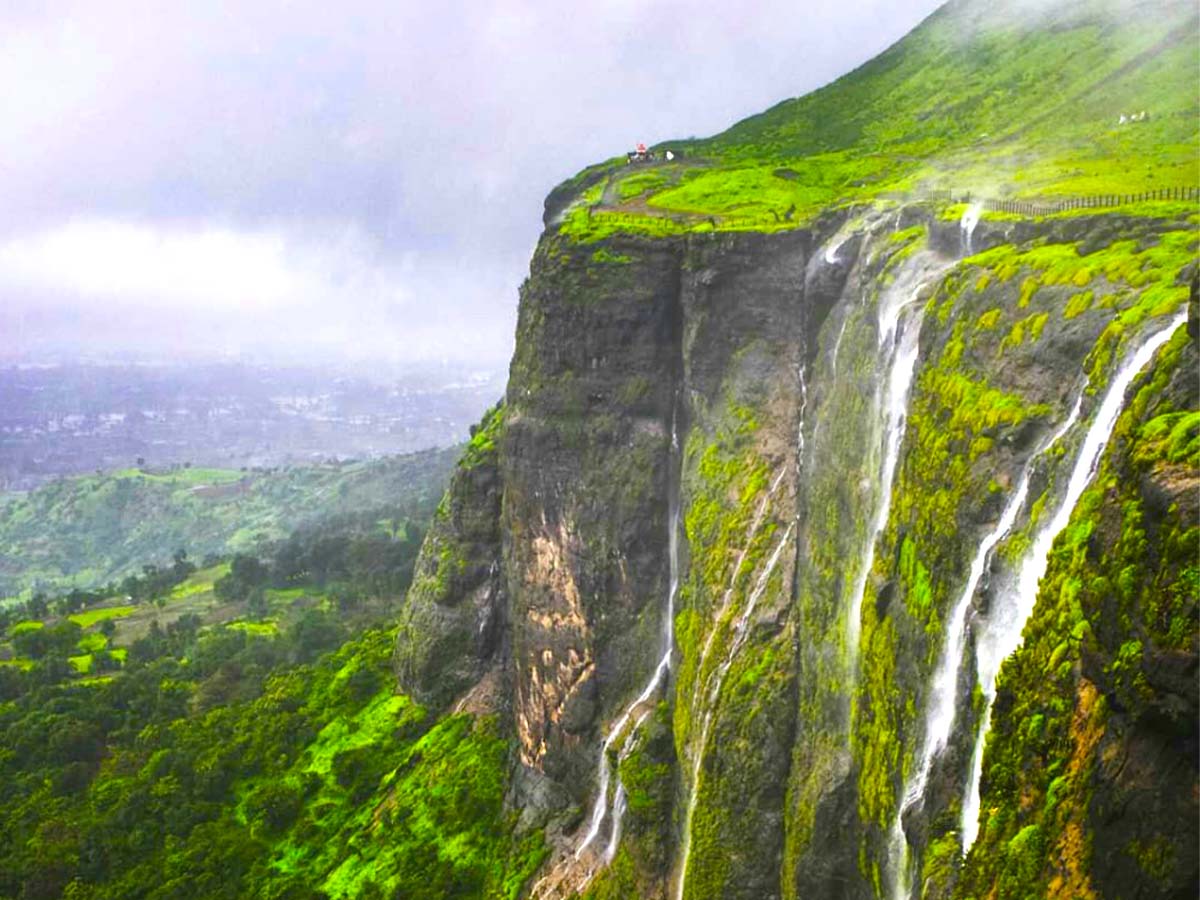
Brahmagiri Hill and the Origin of the Godavari
Brahmagiri Hill, located near Trimbakeshwar, holds immense spiritual importance as the traditional source of the Godavari River.
According to legend, Rishi Gautama with his wife Devi Ahilya performed severe penance leading to the sacred river emerging here for the benefit of humanity.

Brahmagiri Parvat or the sacred Brahmagiri Mountain remains a revered pilgrimage site, especially for devotees visiting Trimbakeshwar Temple and is seen as a physical manifestation of Trimbakraj Mahadev himself.
Also read Brahmagiri Parvat Nashik: Source of the Godavari River near Trimbakeshwar
Kushavarta Kund: The Sacred Water Tank of Trimbakeshwar
Kushavarta Kund is a sacred water reservoir located close to Trimbakeshwar Temple and is traditionally associated with ritual bathing and ancestral rites.
During major religious events, including the Nashik Kumbh Mela, this kund becomes a focal point for ceremonial baths. Its proximity to the Jyotirlinga further enhances its spiritual importance among devotees.
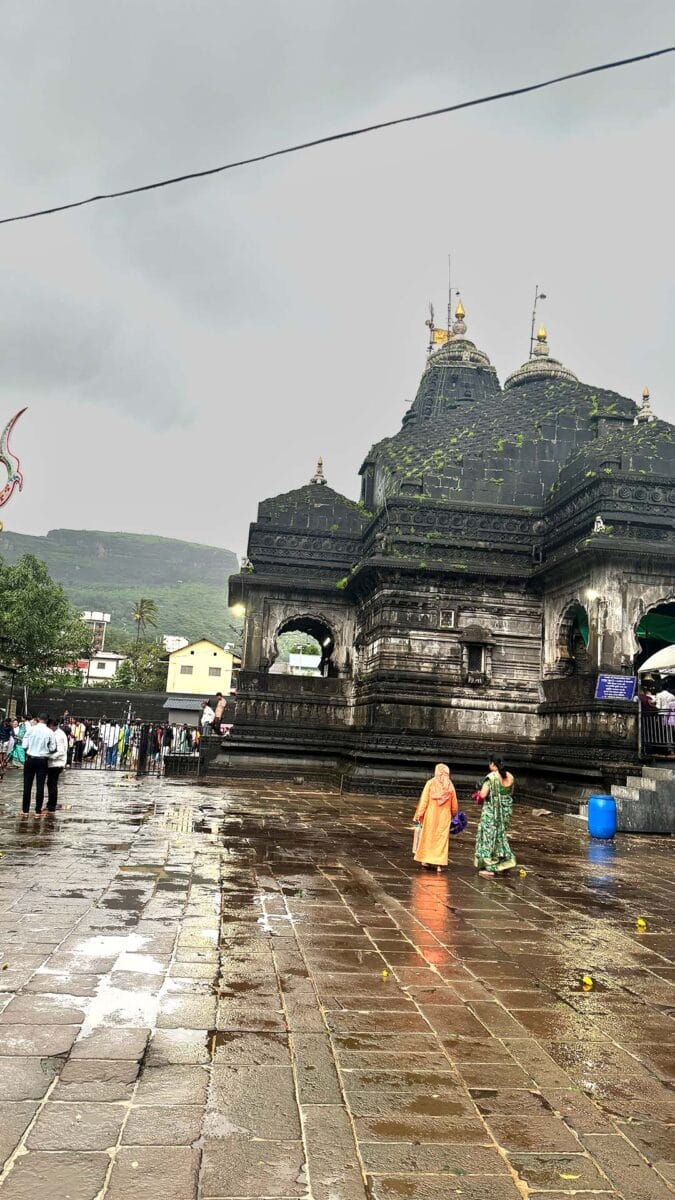
Mythological & Spiritual Significance of Trimbakeshwar
Trimbakeshwar Jyotirlinga occupies a unique spiritual position in Hindu tradition due to its association with the divine trinity of Brahma, Vishnu, and Mahesh.
The name “Trimbakeshwar” is derived from “Trimbak,” and means the Lord with three eyes, symbolising Shiva’s supreme awareness and cosmic balance.
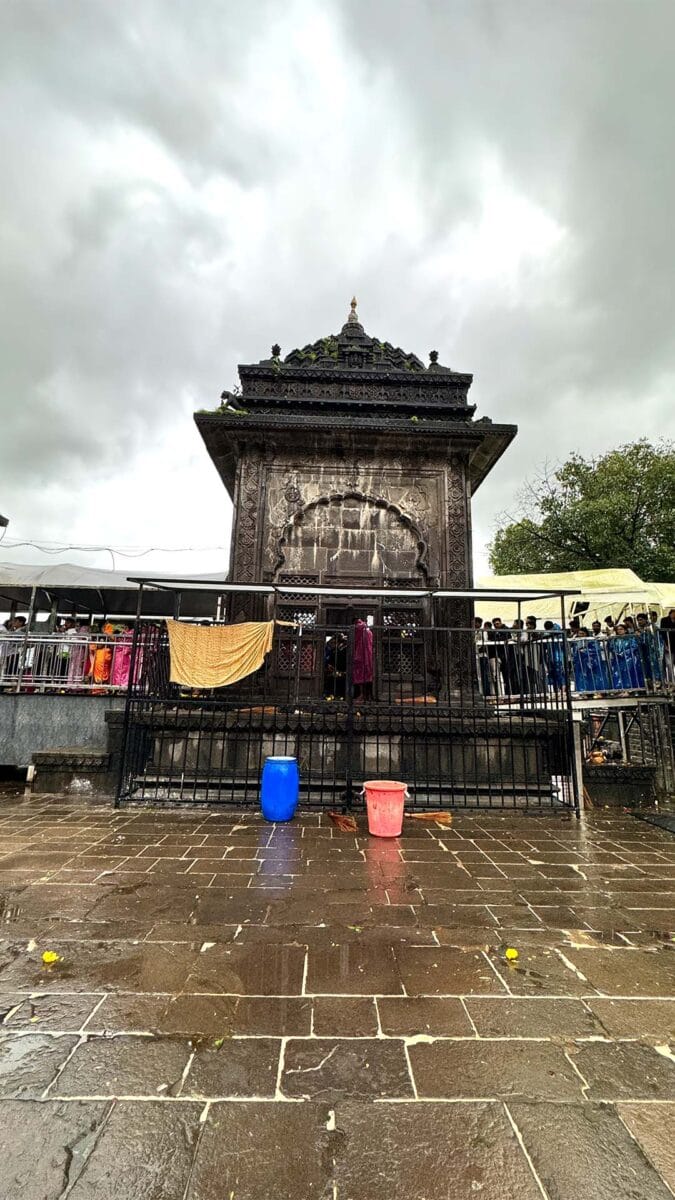
Unlike other Jyotirlingas, the sanctum here houses a rare three-faced lingam that represents the combined energies of creation, preservation, and dissolution.
The continuous flow of sacred water over the Jyotirlinga symbolises the eternal cleansing of the soul. This practice reinforces the belief that Trimbakeshwar is not merely a place of ritual worship, but a living spiritual ecosystem where devotion, penance, and divine grace coexist.
Trimbakeshwar and Sant Nivruttinath Maharaj
Trimbakeshwar also holds deep significance in the Nath Sampradaya due to its association with Sant Nivruttinath Maharaj, the elder brother and spiritual guru of Sant Dnyaneshwar.
It is believed that Sant Nivruttinath attained spiritual realisation in this sacred region after receiving initiation from his guru Gahininath.
The presence of his samadhi near Trimbakeshwar further enhances the temple’s importance as a centre of both Shaiva worship and the Bhakti tradition of Maharashtra.
Major Rituals and Pujas Performed at Trimbakeshwar
Trimbakeshwar is widely regarded as one of the most important centres in India for specific spiritual rituals and remedial pujas. Some of the major rituals performed here include:
- Narayan Nagbali Puja – performed to address ancestral obligations and unresolved karmic influences
- Kaal Sarp Shanti Puja – conducted to reduce the effects of planetary imbalances associated with Kaal Sarp Dosh
- Pitru Dosh Nivaran – rituals aimed at seeking blessings and peace for ancestors
These pujas are performed under strict Vedic guidelines by authorised priests, making Trimbakeshwar a trusted destination for such spiritual observances.
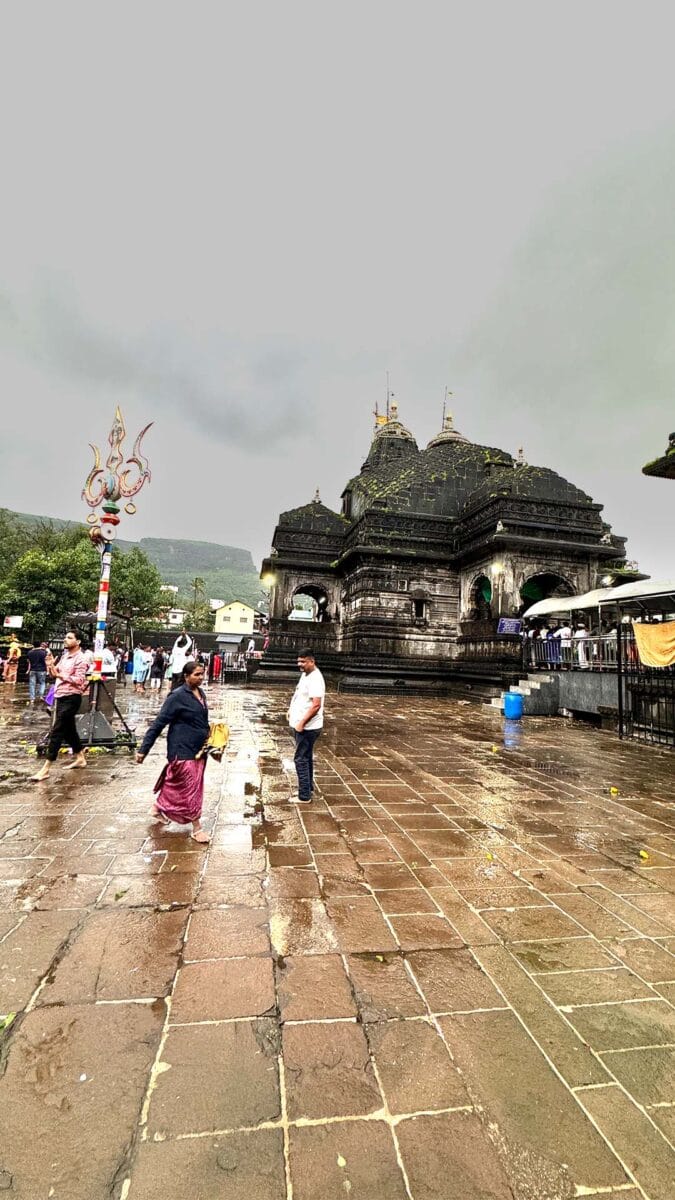
Trimbakeshwar Temple Timings, Darshan & Entry Rules
Trimbakeshwar Temple follows a structured daily schedule for darshan and rituals. The temple generally opens early in the morning and remains accessible to devotees until evening, with breaks for specific rituals.
There is no specific dress code, however, devotees are expected to be dressed modestly. Mobile phones and electronic devices are not permitted to be used inside the temple sanctum.
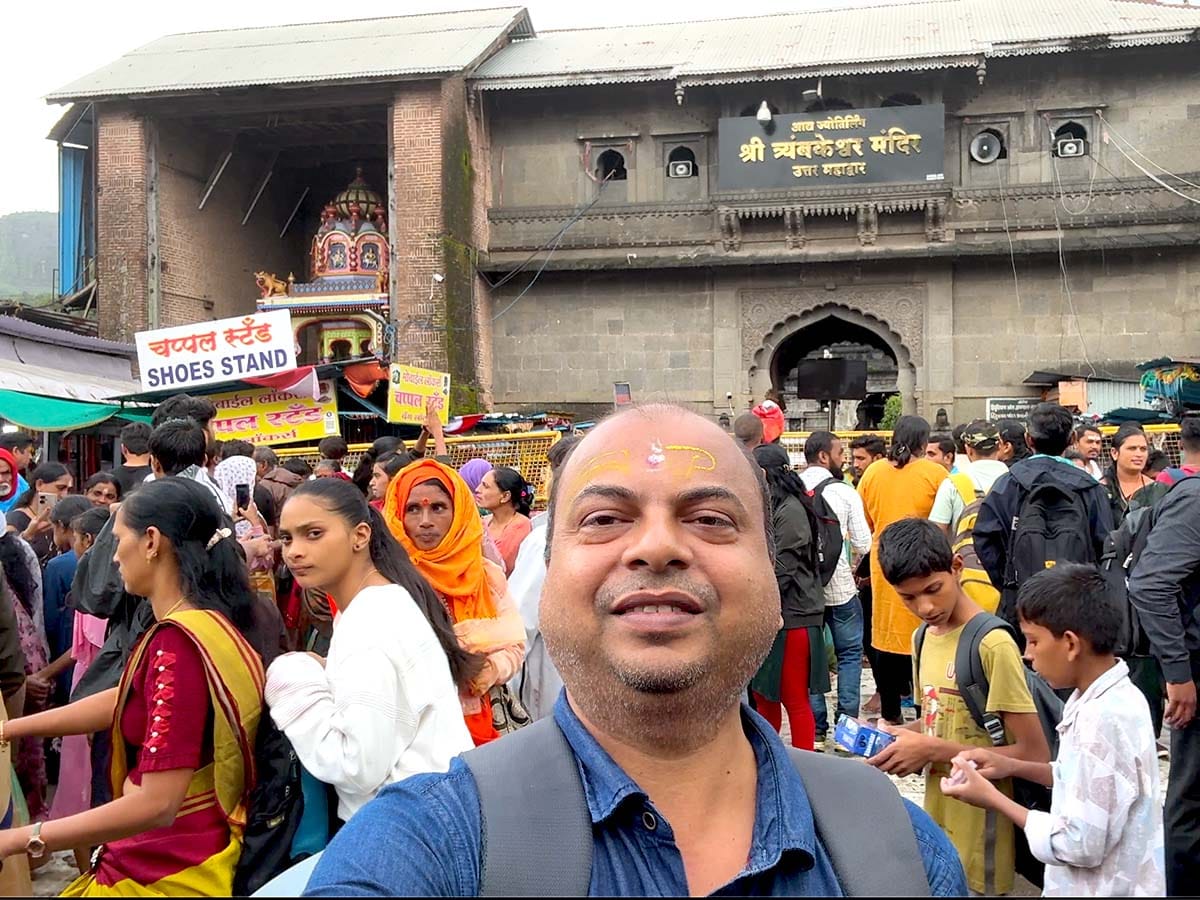
Best Time to Visit Trimbakeshwar Temple
The temple can be visited throughout the year, but certain periods hold special significance.
Shravan month is considered highly auspicious for Shiva worship, attracting a large number of devotees especially on Shravan Somvars (Mondays in the month of Shravan).
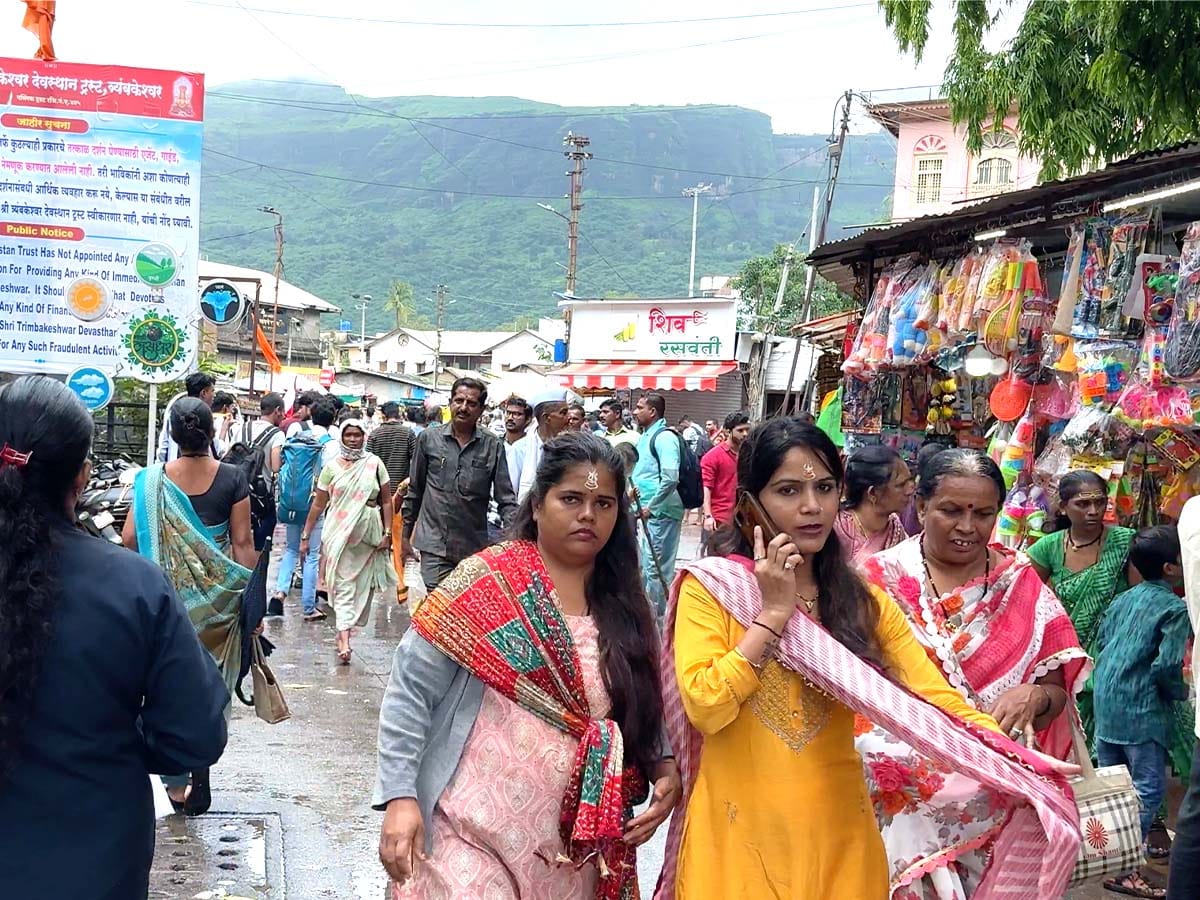
Mahashivratri is another major occasion when the temple witnesses grand celebrations and increased numbers of devotees.
Winter months offer pleasant weather, while monsoon enhances the natural beauty of the surrounding Brahmagiri region, though devotees should plan travel carefully during heavy rains.
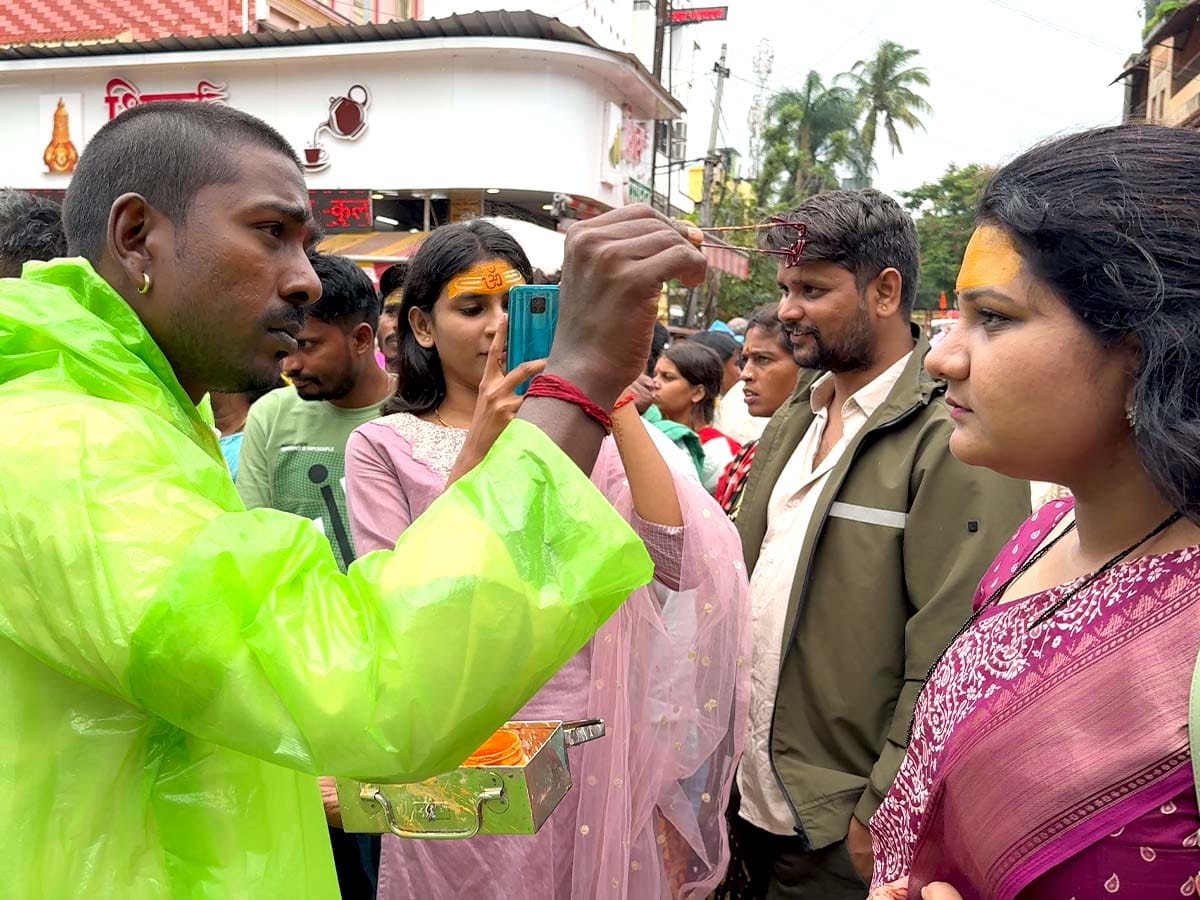
Shravan Somvars at Trimbakeshwar
The holy month of Shravan is considered especially auspicious for Shiva devotees, and Trimbakeshwar witnesses a significant rise in pilgrims during this period.
On Shravan Somvar (Mondays of Shravan), devotees observe fasts and offer sacred water to the Jyotirlinga, believing it brings spiritual merit and fulfilment of wishes.
Also read : Shravan Somvar Celebrations at Trimbakeshwar Mandir
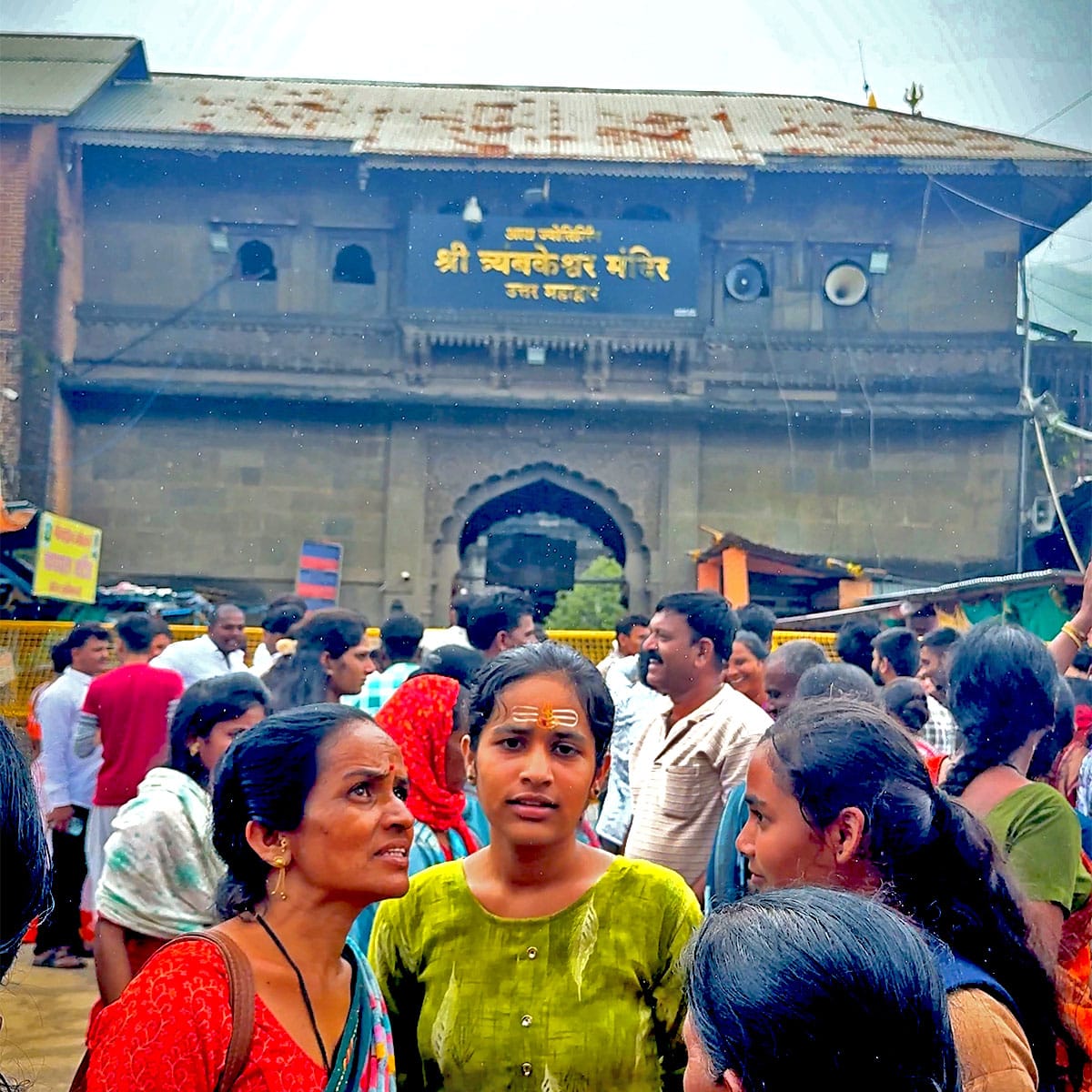
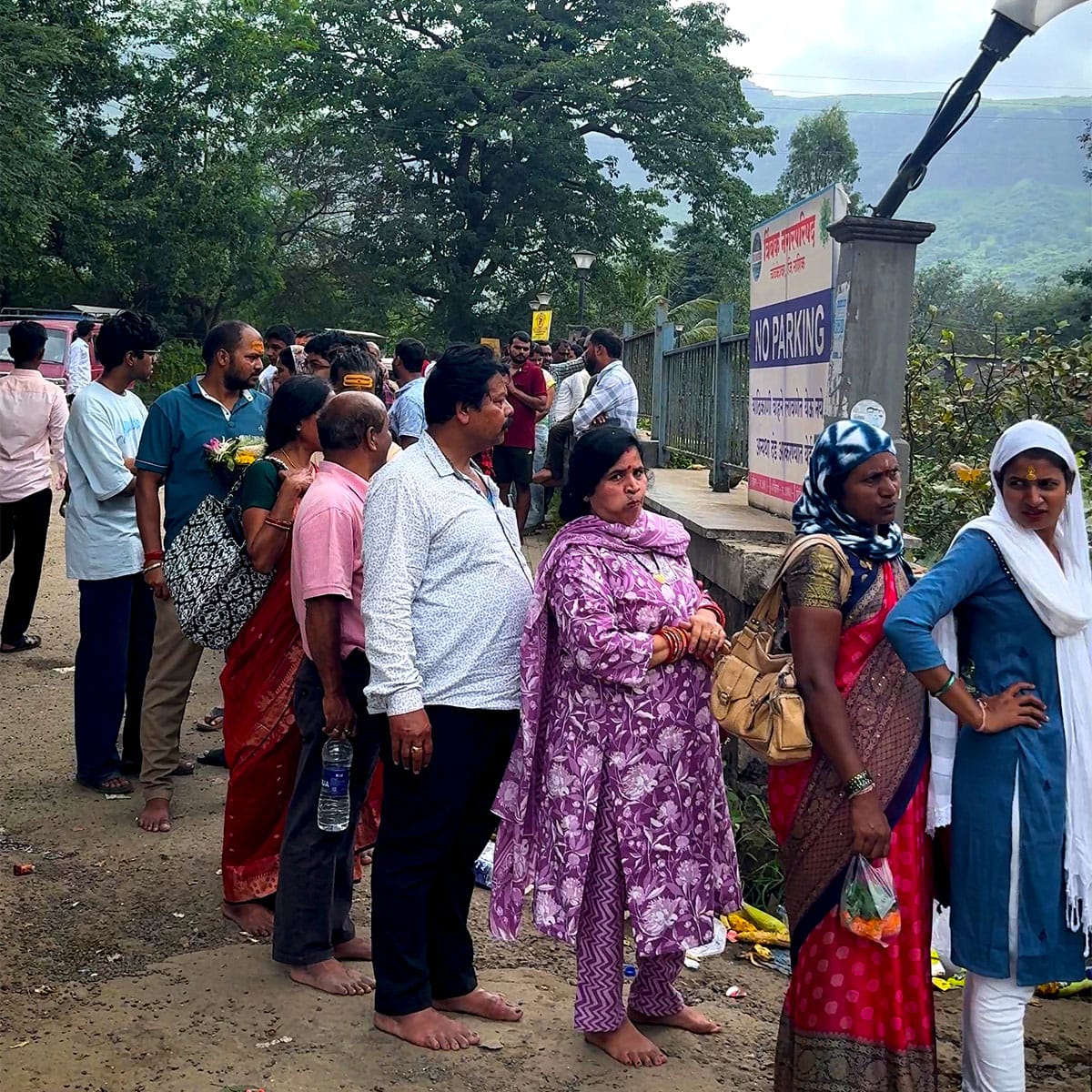
Darshan queues are longer during this time, reflecting the temple’s deep association with Shaivite traditions.
Note: Shravan Somvar darshan queues in 2025 were exceptionally long and darshan took about 7 to 8 hours!

Trimbakeshwar and Nashik Kumbh Mela
Trimbakeshwar plays a crucial role in the Nashik Kumbh Mela, one of the four major Kumbh gatherings in India.
The sacred Kushavarta Kund near the temple serves as a primary bathing site for akhadas and pilgrims during the Simhastha Kumbh.
This association further establishes Trimbakeshwar as a central spiritual axis in the religious landscape of Nashik.
How to Reach Trimbakeshwar from Nashik, Mumbai & Shirdi
- From Nashik: Trimbakeshwar is around 28-30 km away and can be reached by bus, taxi, or private vehicle.
- From Mumbai: The journey can be completed via road or rail up to Nashik, followed by local transport to Trimbak.
- From Shirdi: Trimbakeshwar is often included in pilgrimage circuits connecting Shirdi, Nashik, and other sacred sites.

Distance from nearby cities
- Nashik to Trimbakeshwar : 30 kms
- Shirdi to Trimbakeshwar : 100 kms
- Pune to Trimbakeshwar : 240 kms
- Mumbai to Trimbakeshwar : 180 kms
Hotels and Facilities Near Trimbakeshwar
Trimbakeshwar offers a range of accommodation options, including dharamshalas, budget lodges, and hotels suitable for pilgrims.
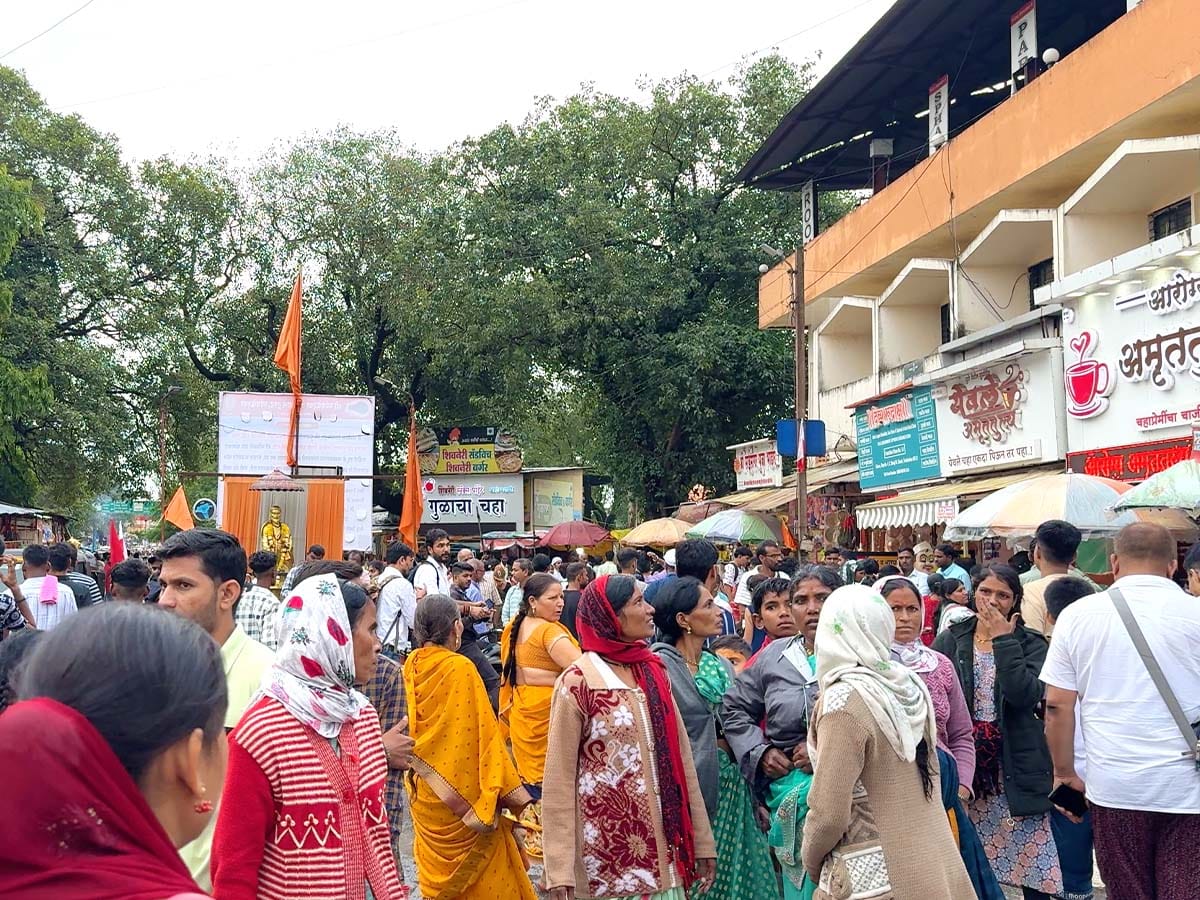
Most facilities are located close to the temple, providing convenience for early morning darshan and ritual participation.
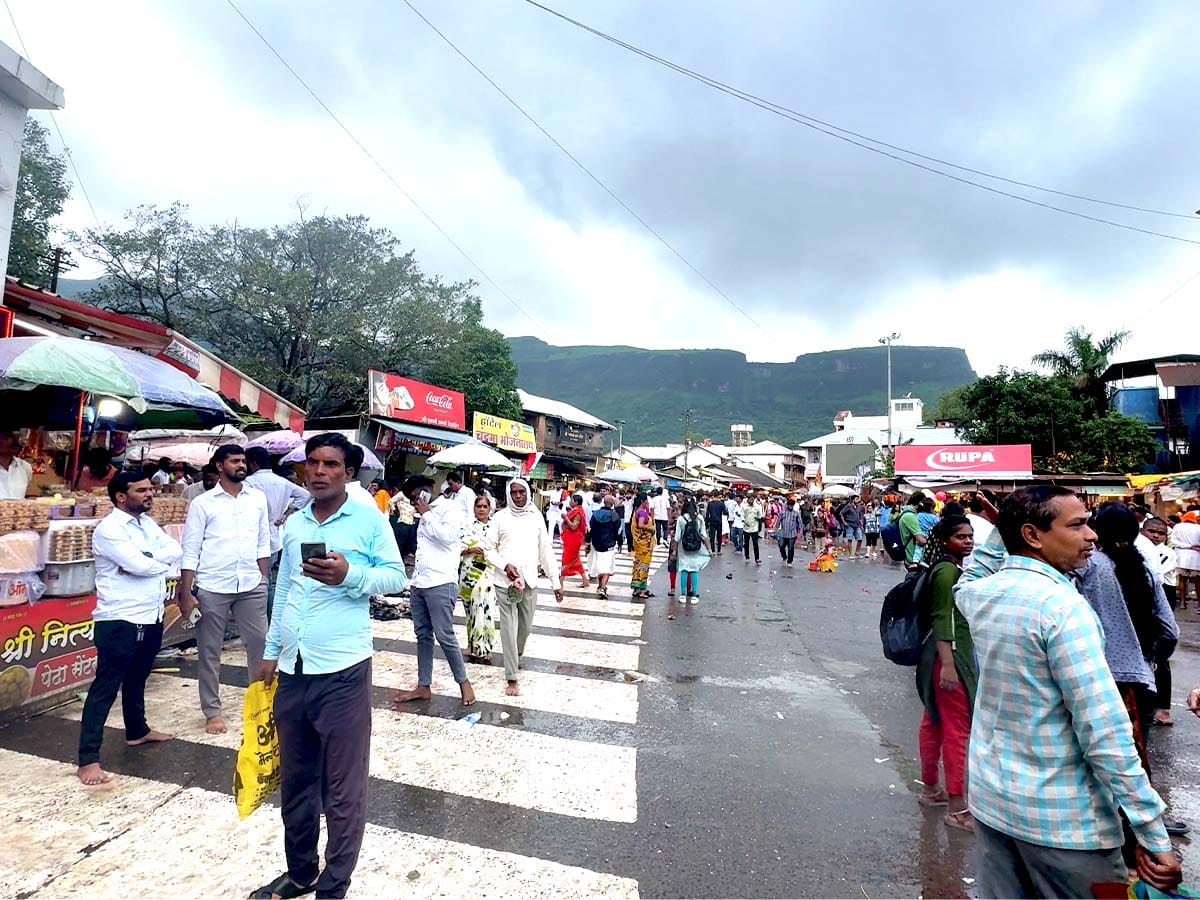
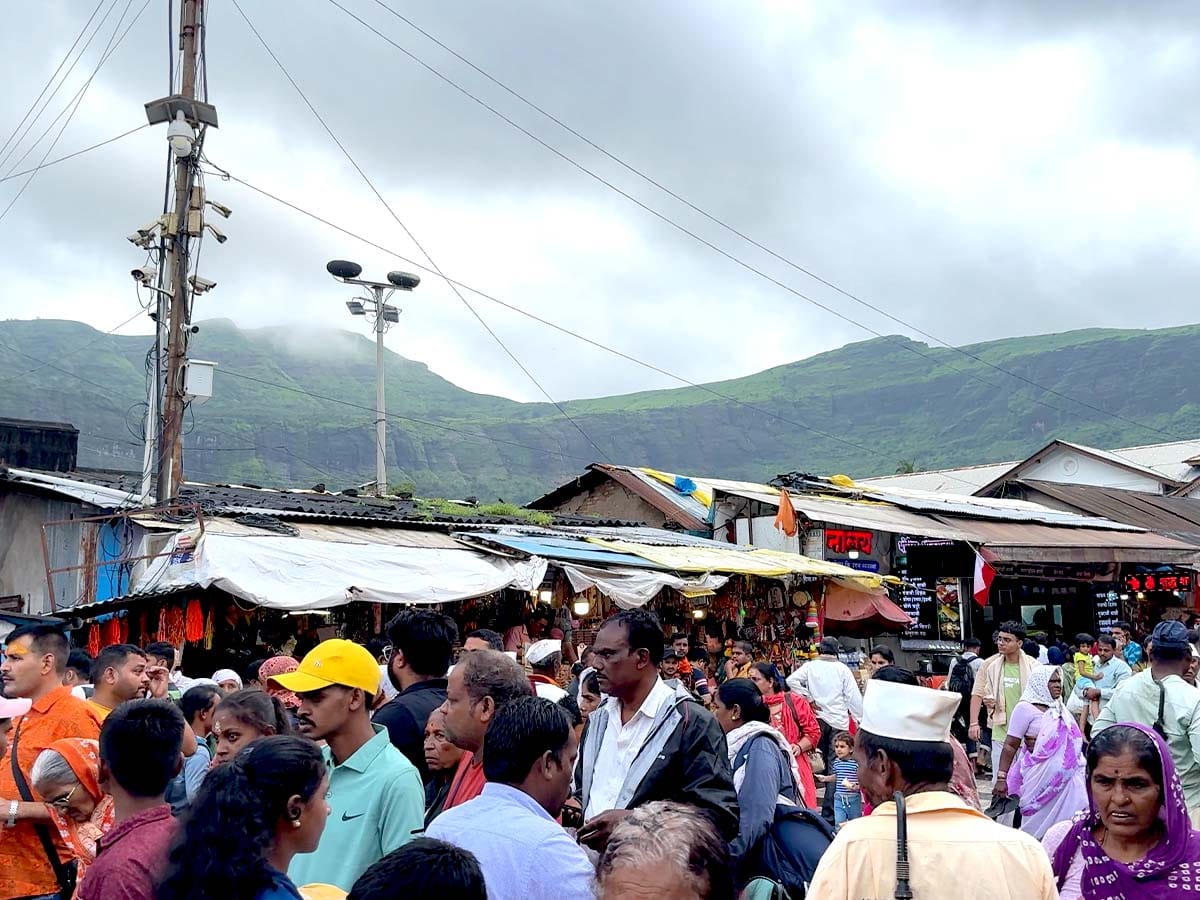
Basic amenities such as food stalls, puja material and prasad shops, and guided services are readily available in the town of Trimbak.
Shri Trimbakeshwar Devasthan Trust is the official body that manages the Trimbakeshwar Temple. They provide online pooja, donation and also room booking services for staying at the trust run Shivprasad Bhaktaniwas through their website.
Trimbakeshwar Temple History in Brief
The present structure of Trimbakeshwar Temple was built during the Maratha period, with significant contributions from the Peshwas.
Over centuries, the temple has remained an important religious centre, preserving its spiritual traditions while adapting to the needs of modern pilgrims.
The Darshan Experience at Trimbakeshwar: Ground Reality and Scope for Improvement
Trimbakeshwar is one of the most sacred Jyotirlingas of Lord Shiva, and devotees willingly endure physical discomforts for the sake of darshan.
However, the on-ground pilgrimage experience often feels challenging and unorganised, especially for first-time visitors.

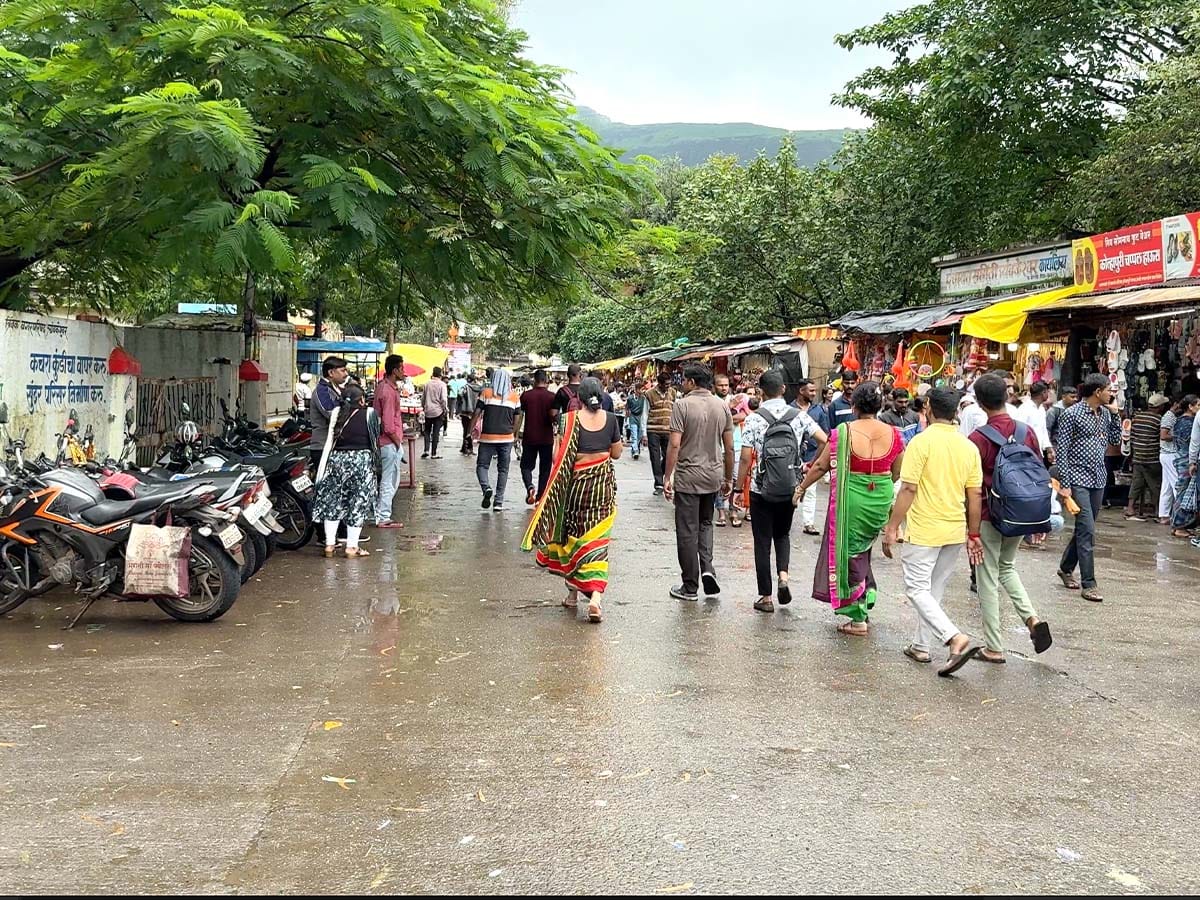
The Approach to Trimbakeshwar Temple
The main public transport drop-off point is located approximately 15-20 minutes away from the temple.
The road leading towards the temple has significant open space on one side, which holds immense potential to be developed into a green, shaded, and pleasant walking pathway for pilgrims.
With proper landscaping and seating, this stretch could become a spiritually uplifting approach to the temple.

Footwear and Basic Facilities for Devotees
Facilities for depositing footwear and personal belongings are mostly handled by small private stalls along the lanes near the temple, which may not always feel secure or systematically managed.
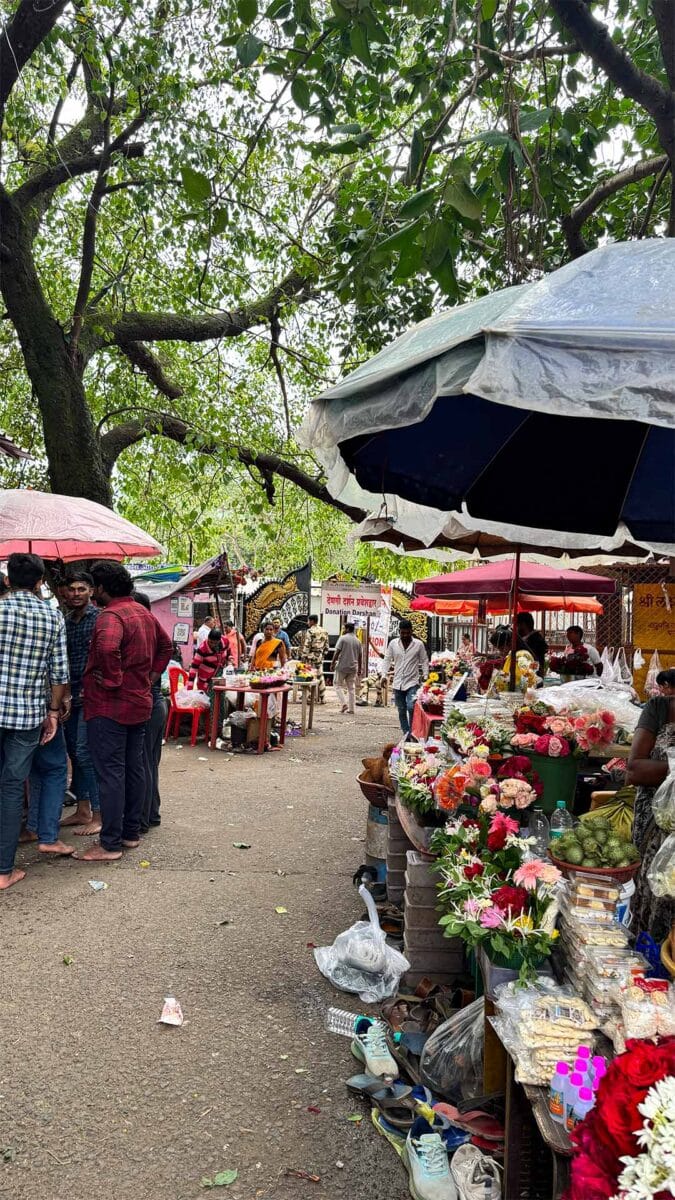
Navigating the Entry and Queue System
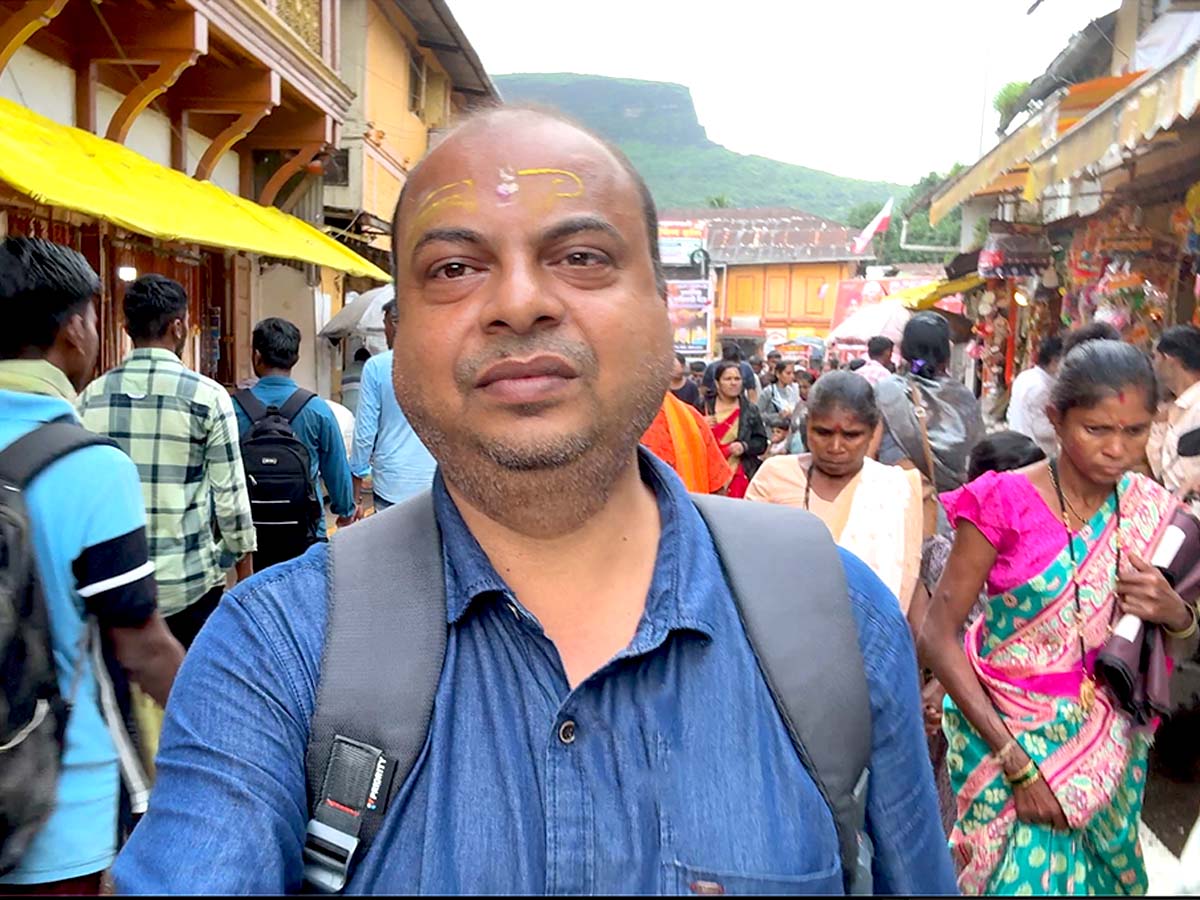
Upon reaching the marketplace near the temple, devotees do not enter through the prominent main gate. Instead, they are directed through narrow lanes that lead to enclosed queue halls fitted with metal barricades.


The experience inside these congested passages can feel physically exhausting and mentally draining, though devotees accept it as part of their Bhakti.
The Darshan Moment Inside the Sanctum
During peak days, the darshan itself is often limited to just a few seconds due to heavy crowds – an understandable situation, but one that leaves little room for a peaceful moment of connection.
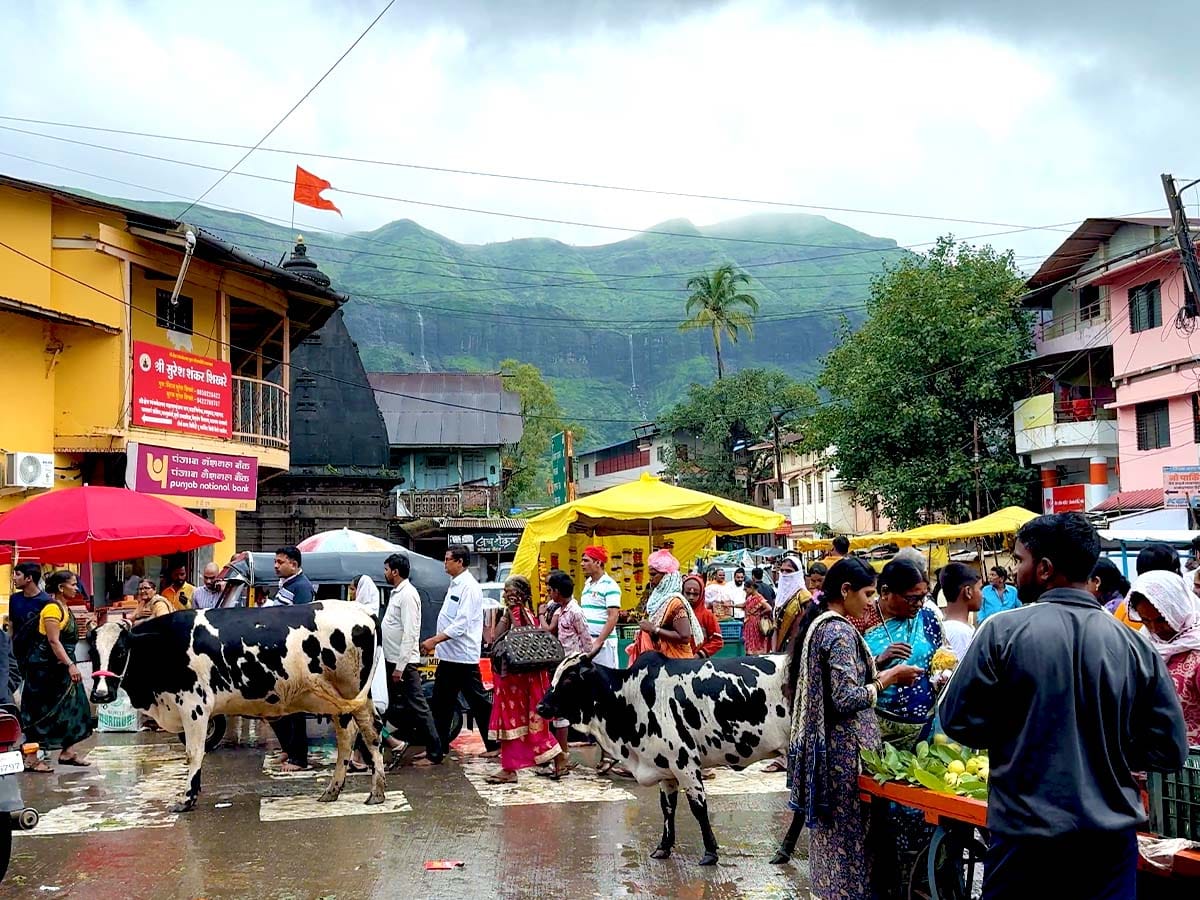
The Temple Exit Area
At present, the exit path requires devotees to walk barefoot over uneven surfaces, stones, and dirt, sometimes near open drainage areas, which can be uncomfortable and risky, particularly after sunset.
Sacred Natural Landscape near the Temple
Another noticeable aspect is the vast open land surrounding the temple, especially behind the sanctum area. With natural surroundings, hills, and open spaces, this area holds tremendous potential to be developed into serene zones for sitting, meditation, and quiet reflection.
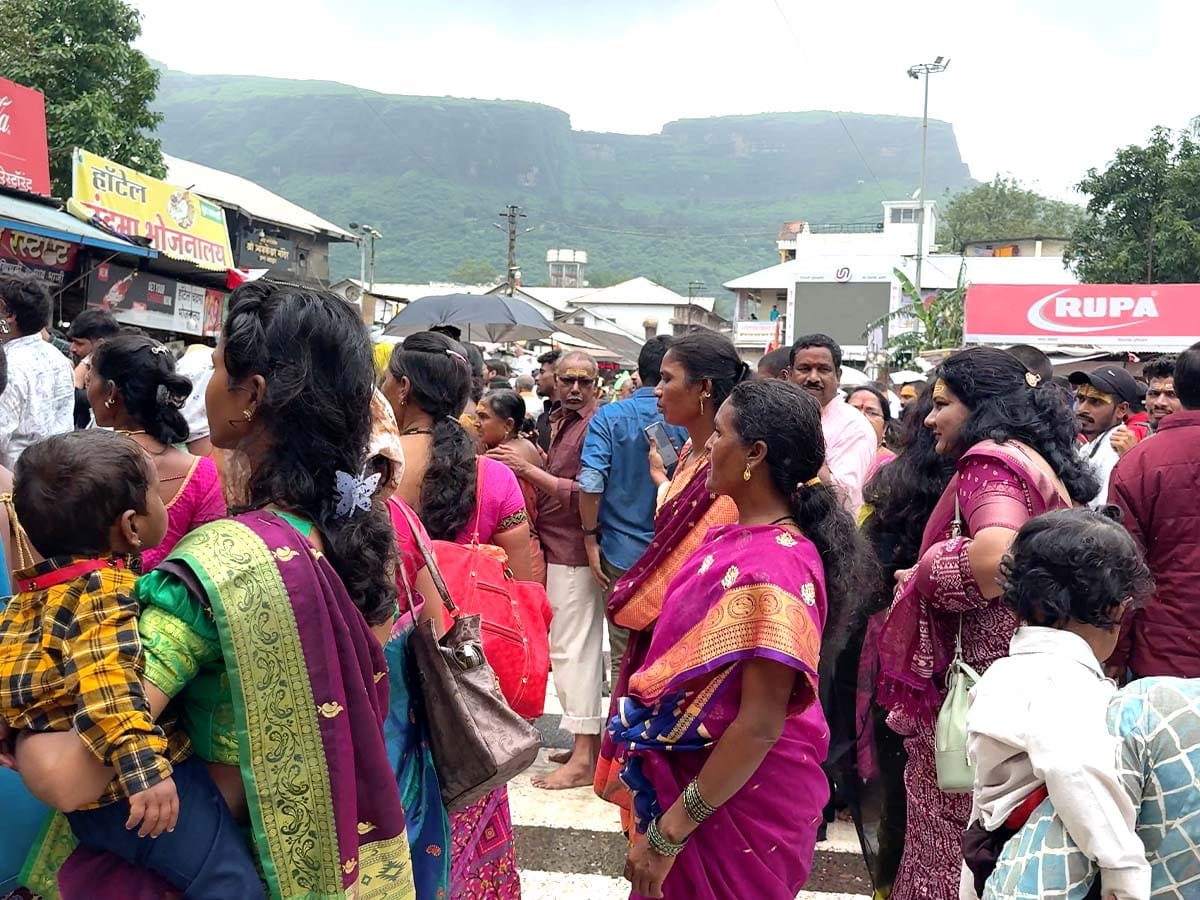
A Devotee’s Hope for a More Peaceful & Satisfying Pilgrimage Experience
Despite these challenges, devotees continue to visit Trimbakeshwar Mandir with unwavering devotion. With thoughtful planning, better crowd flow management, green spaces, organised entry and exit routes, and basic amenities, the pilgrimage experience could be transformed into something far more peaceful, dignified, and spiritually fulfilling – matching the immense sanctity of this sacred place.
Har Har Mahadev 🙏🙏🙏
Trimbakeshwar Temple FAQs
What is the significance of Trimbakeshwar Temple?
Trimbakeshwar is one of the 12 Jyotirlingas of Lord Shiva, where Shiva is worshipped in a unique form representing the Trimurti – Brahma, Vishnu, and Mahesh.
Where is Trimbakeshwar Temple located?
Trimbakeshwar Temple is located near Nashik in Maharashtra, at the foothills of the Brahmagiri hills, close to the origin of the Godavari River.
What is the best time to visit the temple?
The best time to visit Trimbakeshwar is during early mornings for darshan and during the winter months.
Are special pujas like Narayan Nagbali and Kaal Sarp Dosh performed at Trimbakeshwar?
Yes, Trimbakeshwar is well known for rituals such as Narayan Nagbali, Kaal Sarp Dosh Nivaran, and Pitra Dosh pujas, which are performed as per traditional procedures.
Which major festivals are celebrated at the temple?
Trimbakeshwar Temple celebrates Mahashivratri, Shravan Somvar, Nag Panchami, and the Simhastha Kumbh Mela. These occasions attract lakhs of devotees, with special rituals and extended darshan arrangements.
Is accommodation available near the temple?
Yes, accommodation is available near the temple, including private hotels and rooms managed by the Trimbakeshwar Temple Trust, which can be booked through official sources.