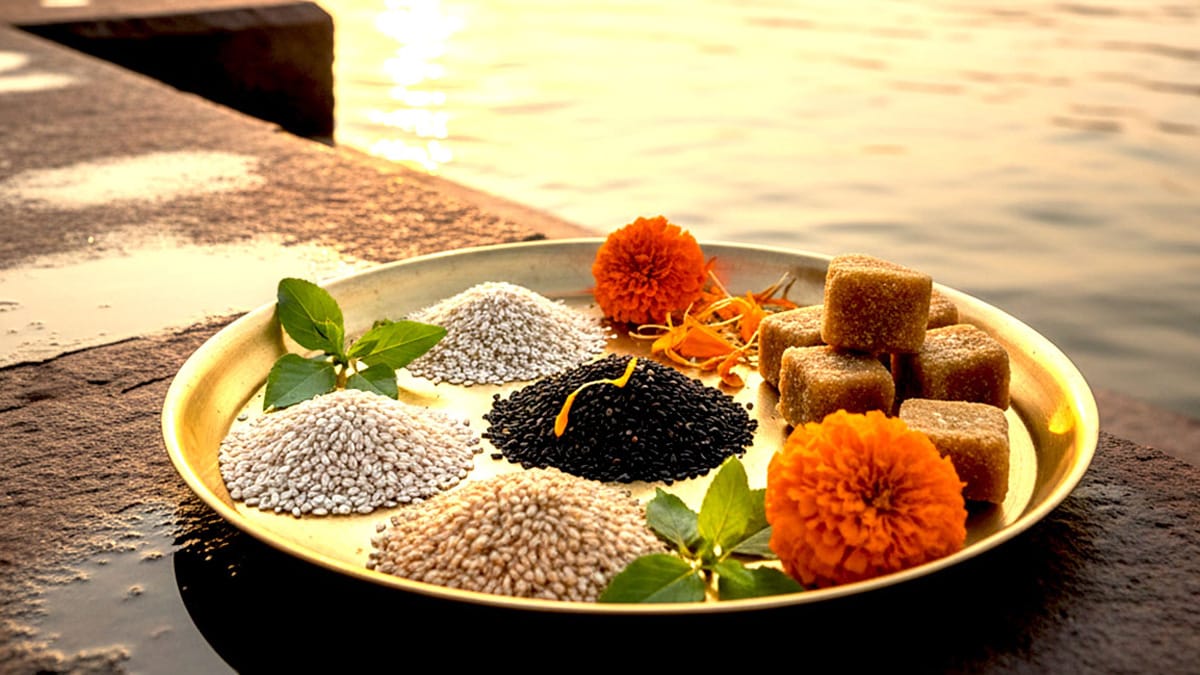
Makar Sankranti is one of the most ancient and widely observed festivals in India, marking a significant transition in both the cosmic and cultural calendar.
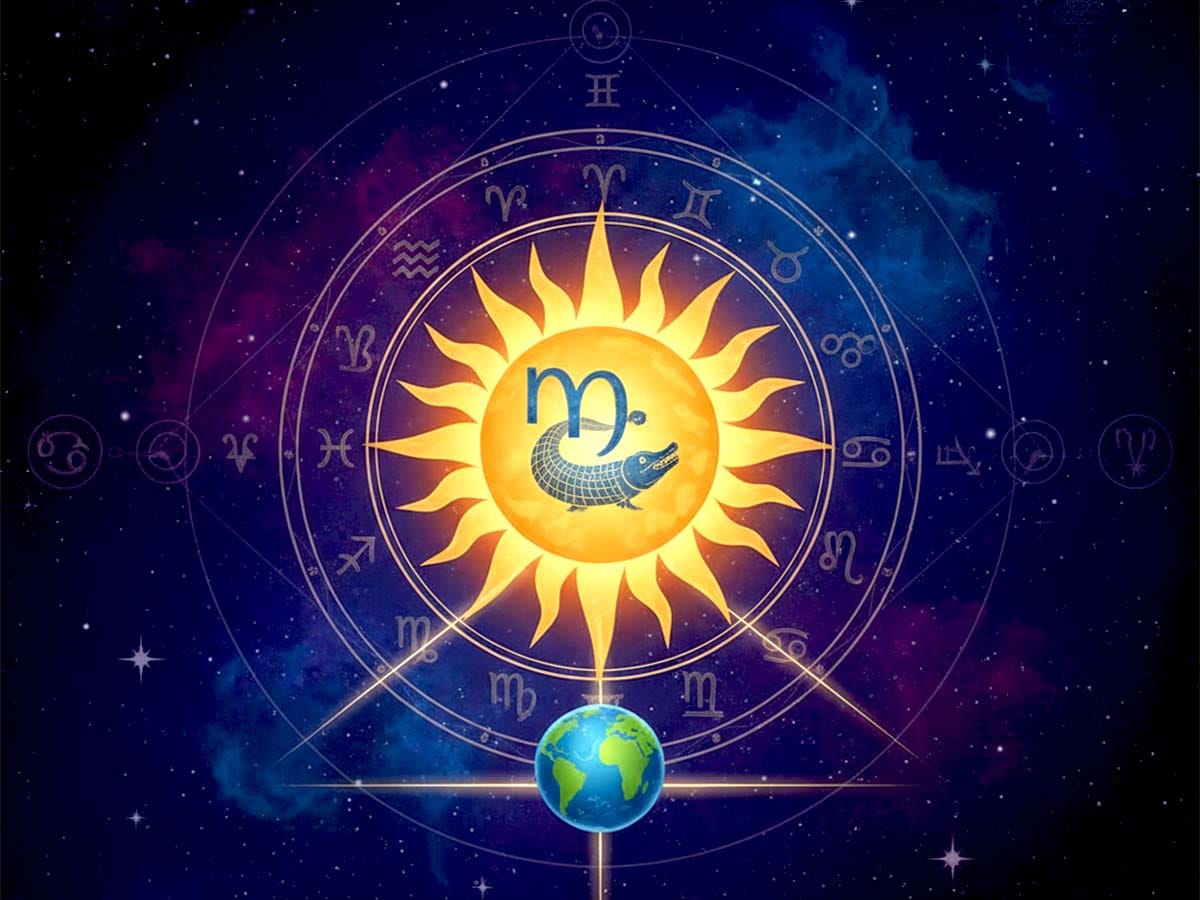
Celebrated every year in mid-January, the festival symbolises the Sun’s movement into the zodiac sign Makara (Capricorn), an event regarded as highly auspicious in Indian tradition.
While most Hindu festivals follow the lunar calendar, Makar Sankranti is based on the solar calendar, which is why it falls on almost the same date every year.
Looking for date, auspicious timings, wishes, and rituals for this year? Here is the related article
What is Makar Sankranti?
Makar Sankranti refers to the day when the Sun (Surya) transitions from the zodiac sign Dhanu (Sagittarius) into Makara (Capricorn). The word Sankranti itself means movement or transition, indicating the Sun’s change of course.
This solar transition marks the beginning of Uttarayana, the Sun’s northward journey, which is considered an auspicious phase in Hindu philosophy. Ancient scriptures regard Uttarayana as a period conducive to spiritual growth, positive action, and inner awakening.
Meaning of Makar Sankranti
The meaning of Makar Sankranti goes beyond astrology. At a symbolic level, it represents a celebration of hope and rejuvenation, signifying the transition toward warmer days, improved climatic conditions, and renewed vitality in nature.
In Indian thought, the Sun is not merely a celestial body but a source of life, discipline, order, and consciousness. Honouring the Sun on this day is seen as an expression of gratitude to nature and cosmic order.
Why is Makar Sankranti Celebrated?
There are several interconnected reasons why Makar Sankranti is celebrated across India with such importance.
1. Astronomical Significance
Makar Sankranti marks the Sun’s entry into Capricorn, ending the period of Dakshinayana and beginning Uttarayana. This transition has been observed since Vedic times and is considered spiritually elevating.
2. Seasonal Transition
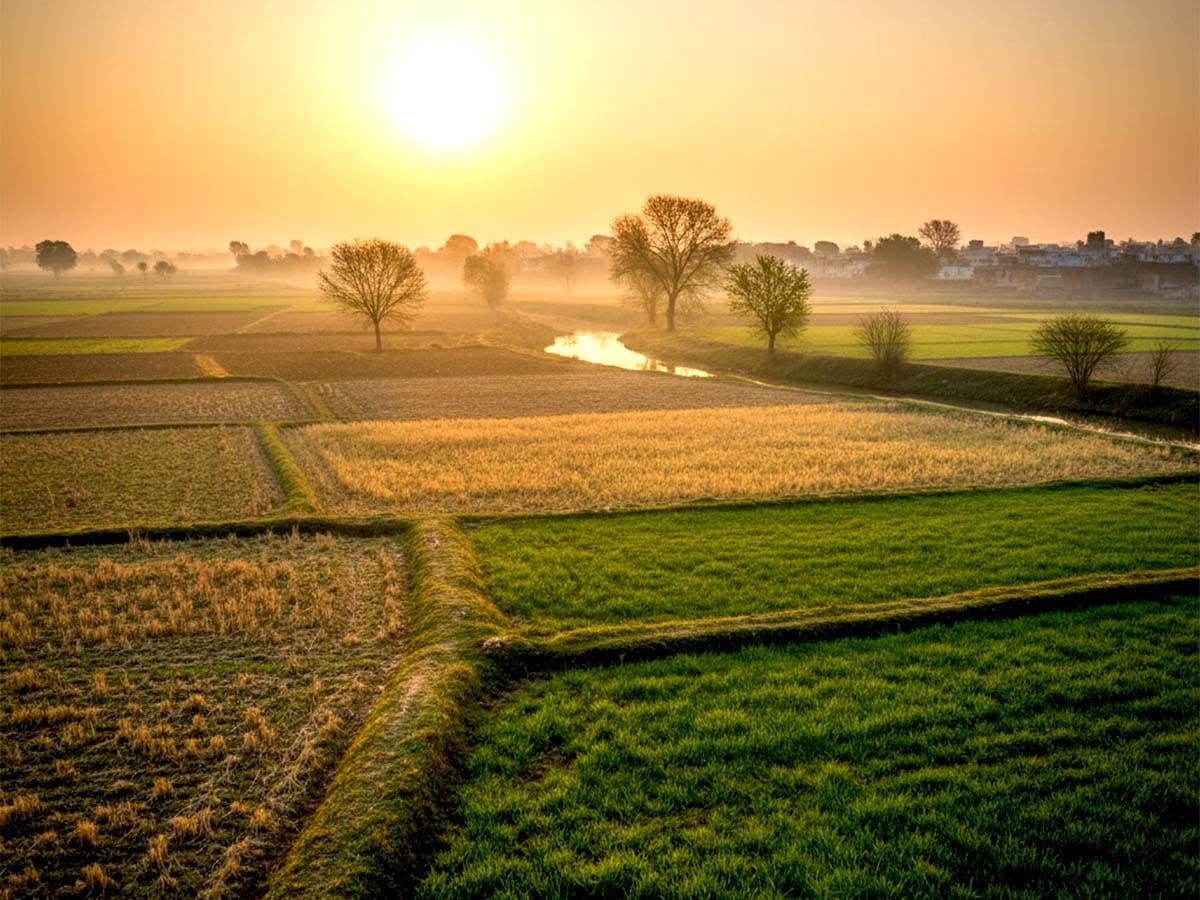
The festival coincides with the gradual end of peak winter and the onset of longer, warmer days. It represents hope, regeneration, and agricultural renewal.
3. Agricultural Importance
For agrarian communities, Makar Sankranti is a harvest festival, celebrating the fruits of hard work and offering gratitude for nature’s abundance.
4. Spiritual Belief
Scriptures state that acts of charity, discipline, and prayer performed during Uttarayana yield lasting merit. Hence, Makar Sankranti is associated with daan (charity), snan (ritual bathing), and restraint.
Significance of Makar Sankranti in Hindu Tradition
The significance of Makar Sankranti lies in its unique blend of cosmic, social, and spiritual elements.
- The Bhagavad Gita mentions Uttarayana as the divine path.
- The Mahabharata narrates that Bhishma Pitamah chose this auspicious period to leave his mortal body.
- Sacred rivers are believed to be especially purifying during this time.
Because of this, bathing in rivers, feeding the needy, and offering prayers to Surya are considered especially meritorious on Makar Sankranti.
Regional Names and Celebrations of Makar Sankranti Across India
While the astronomical event behind Makar Sankranti remains the same across the subcontinent, the festival is known by different names in different regions, shaped by local climate, crops, languages, and cultural traditions. This diversity reflects how a single solar transition has been woven into India’s regional identities in various ways.
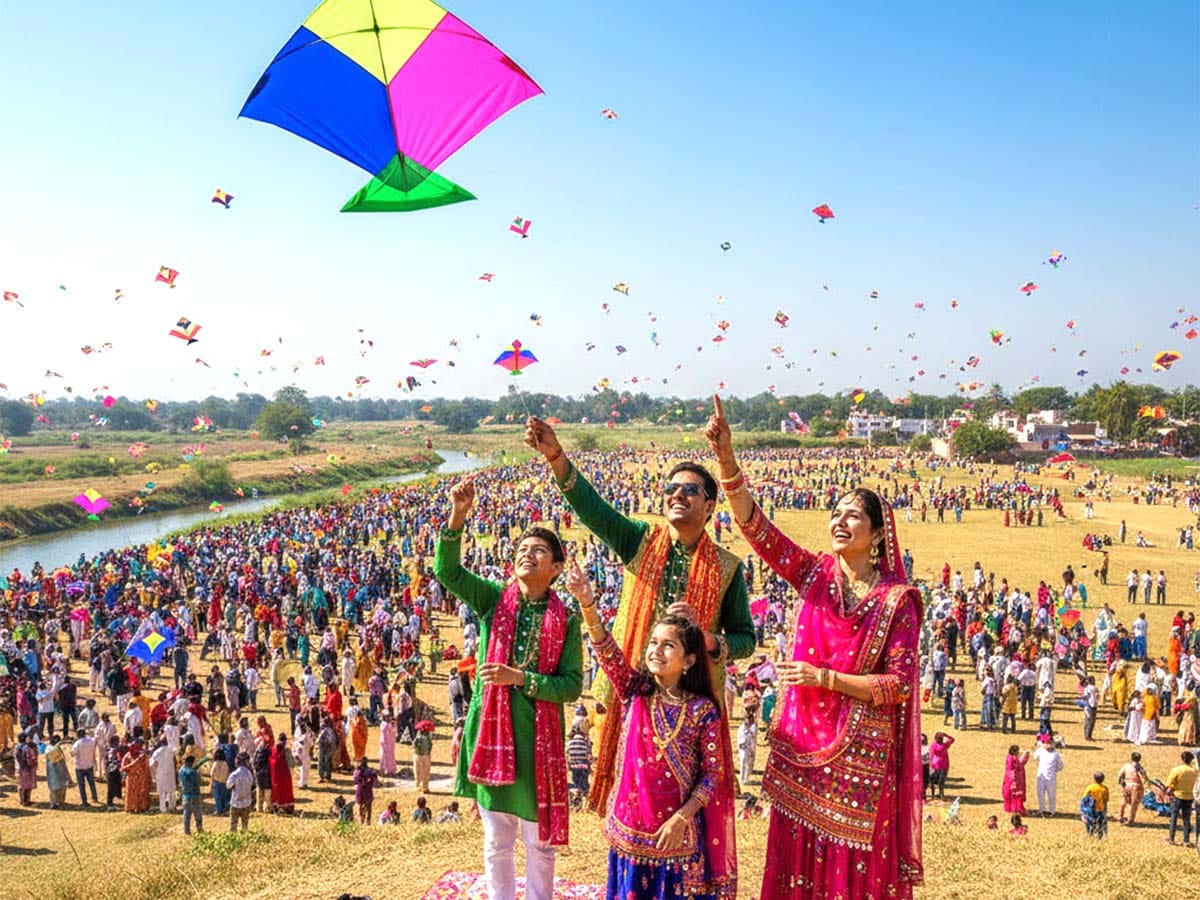
In Maharashtra, Gujarat, Rajasthan the festival is widely known as Makar Sankranti and Uttarayana. It is associated with offerings of sesame (til), jaggery (gud), acts of Daan (charity), Kite flying, and the symbolic message of sweetness and harmony in social relationships.

In Punjab, Haryana, and parts of Himachal Pradesh, the festival is observed as Lohri, usually on the evening before Makar Sankranti. Lohri celebrations revolve around bonfires, folk songs, and gratitude for the winter harvest, especially sugarcane and wheat.
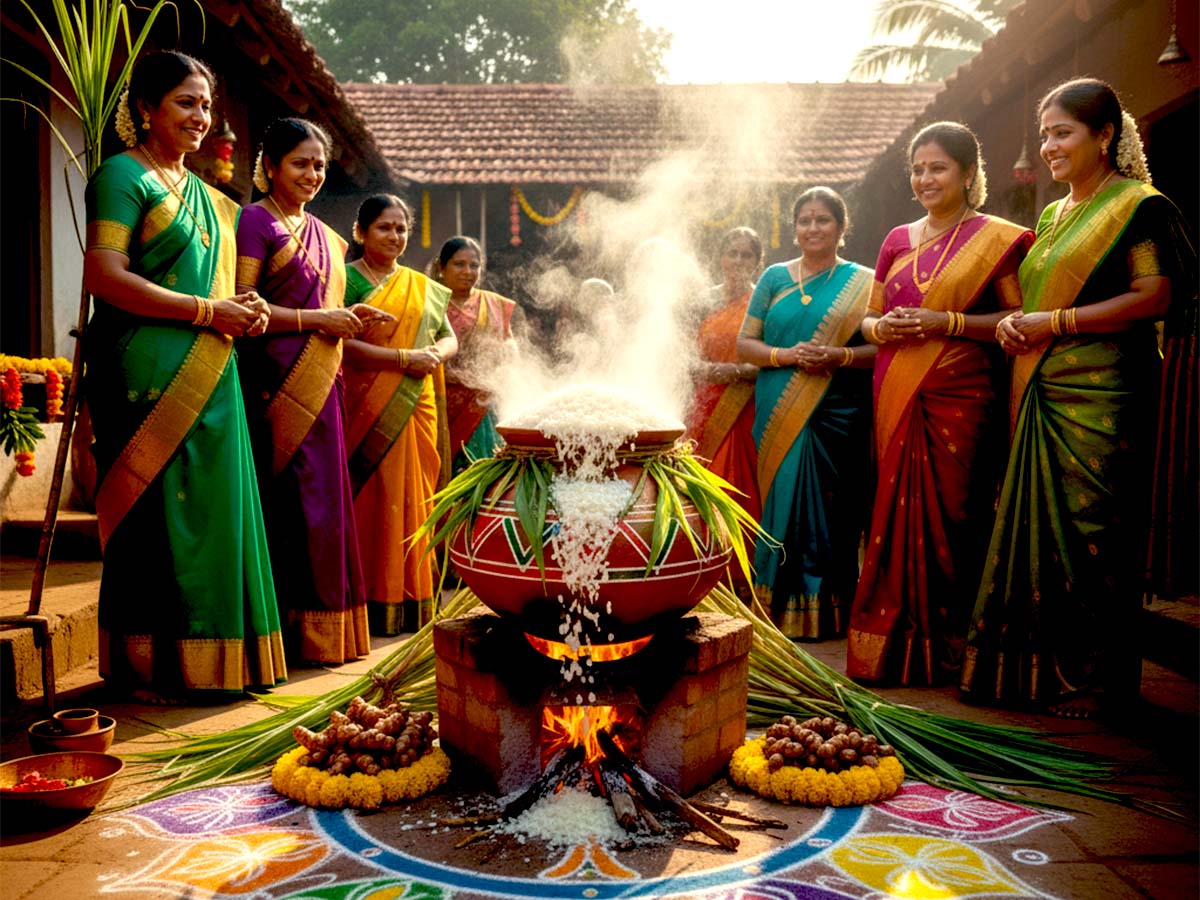
In Tamil Nadu, Makar Sankranti is celebrated as Pongal, a multi-day harvest festival dedicated to Surya. The boiling of freshly harvested rice with milk symbolises abundance, prosperity, and thanksgiving to nature.
In Andhra Pradesh and Telangana, the festival begins with Bhogi, followed by Sankranti and Kanuma. Bhogi marks the discarding of the old and welcoming the new, while Kanuma honours cattle and agrarian life.
In Karnataka, the festival is simply known as Makara Sankranti, where families exchange sesame-based offerings called yellu-bella and perform traditional rituals seeking prosperity and well-being.
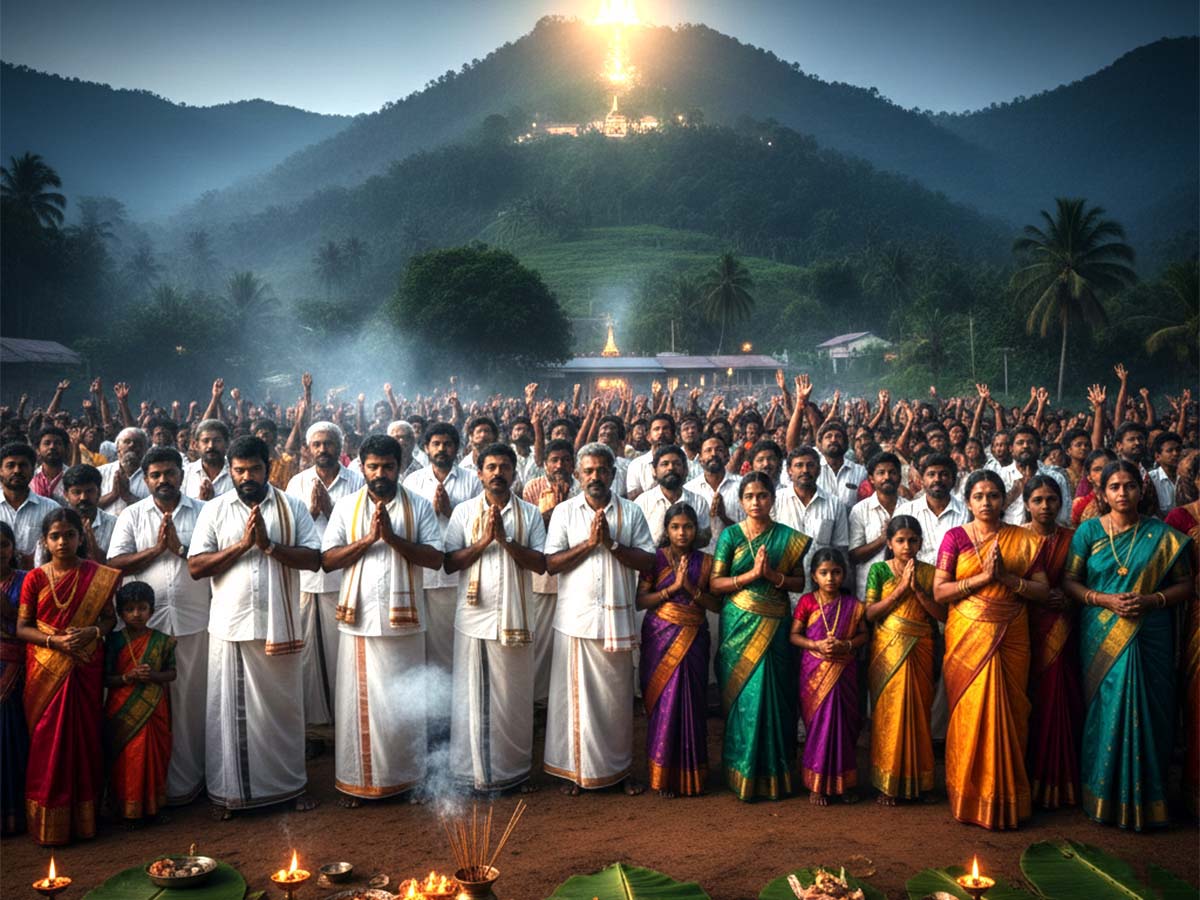
In Kerala, Makara Sankranti is closely associated with Makara Vilakku, an event of immense religious importance linked to Sabarimala and Lord Ayyappa. Observed during the month of Makaram in the Malayalam calendar, this day marks the culmination of the Mandala-Makaravilakku pilgrimage season.
Devotees gather in large numbers at Sabarimala to witness the sacred Makara Jyothi, believed to appear on the hills of Ponnambalamedu. The sighting of this divine light is considered highly auspicious and symbolises spiritual fulfilment, discipline, and devotion.
In Assam, the day is celebrated as Magh Bihu, marking the end of the harvesting season. Community feasts and traditional activities reflect the agrarian roots of the festival.
In West Bengal, it is known as Poush Sankranti, named after the Bengali month of Poush. The day is marked by bathing rituals and the preparation of traditional sweets made from freshly harvested rice and jaggery.
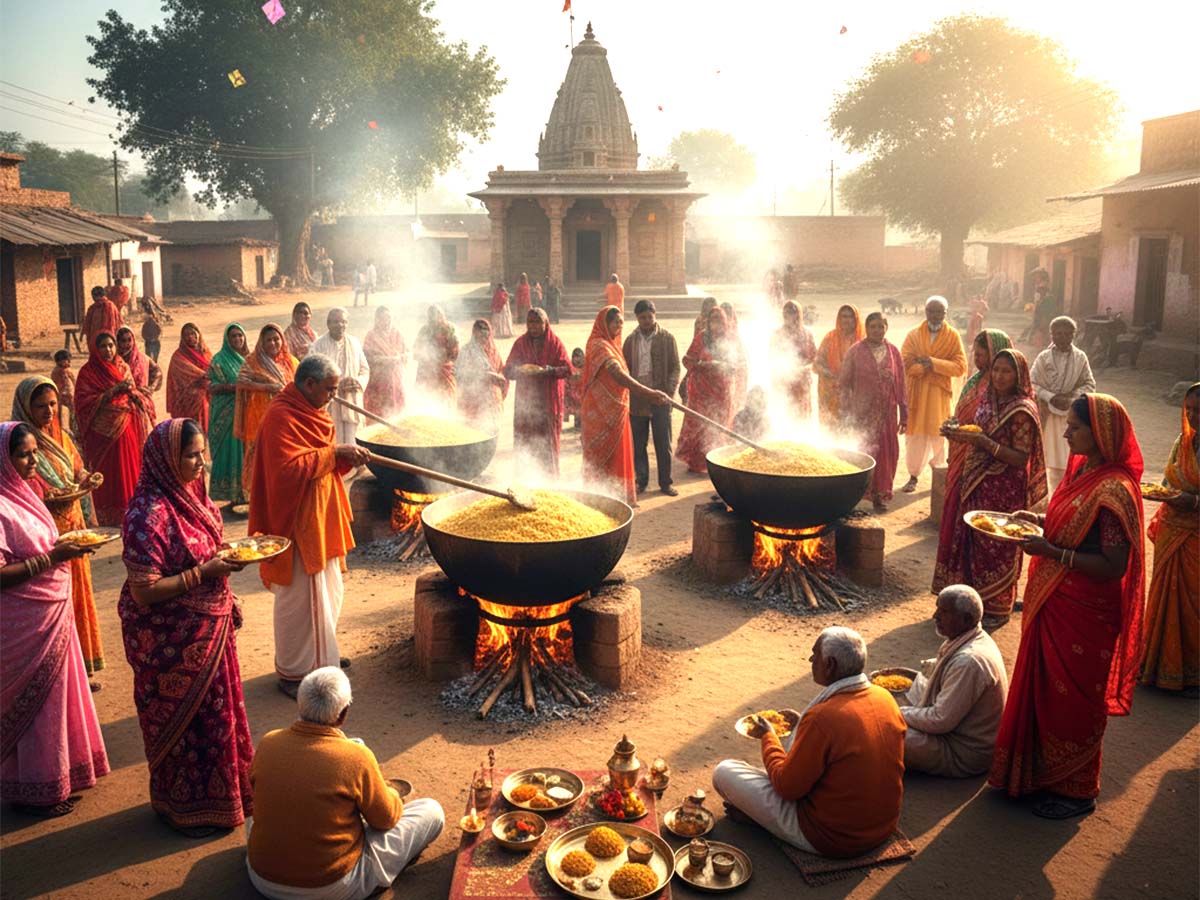
In Uttar Pradesh, Bihar, and Jharkhand, the festival is referred to as Sankranti Khichadi Parva, where rice and lentils are prepared and offered, symbolising nourishment and simplicity.
In Odisha, the festival is observed as Makara Chaula, where newly harvested rice is offered to deities in temples as an expression of gratitude.
Despite regional variations in name and ritual, the essence of the festival remains unchanged across India – the celebration of the Sun’s northward journey, agricultural abundance, and the renewal of life and consciousness.
Makar Sankranti in Maharashtra
In Maharashtra, Makar Sankranti is traditionally observed over three days – Bhogi, Sankranti, and Kinkrant – each carrying its own cultural and social significance.
Bhogi: The Day of Warmth and Togetherness
The festival begins with Bhogi, observed on the day preceding Makar Sankranti. Bhogi is regarded as a celebration of enjoyment and togetherness.
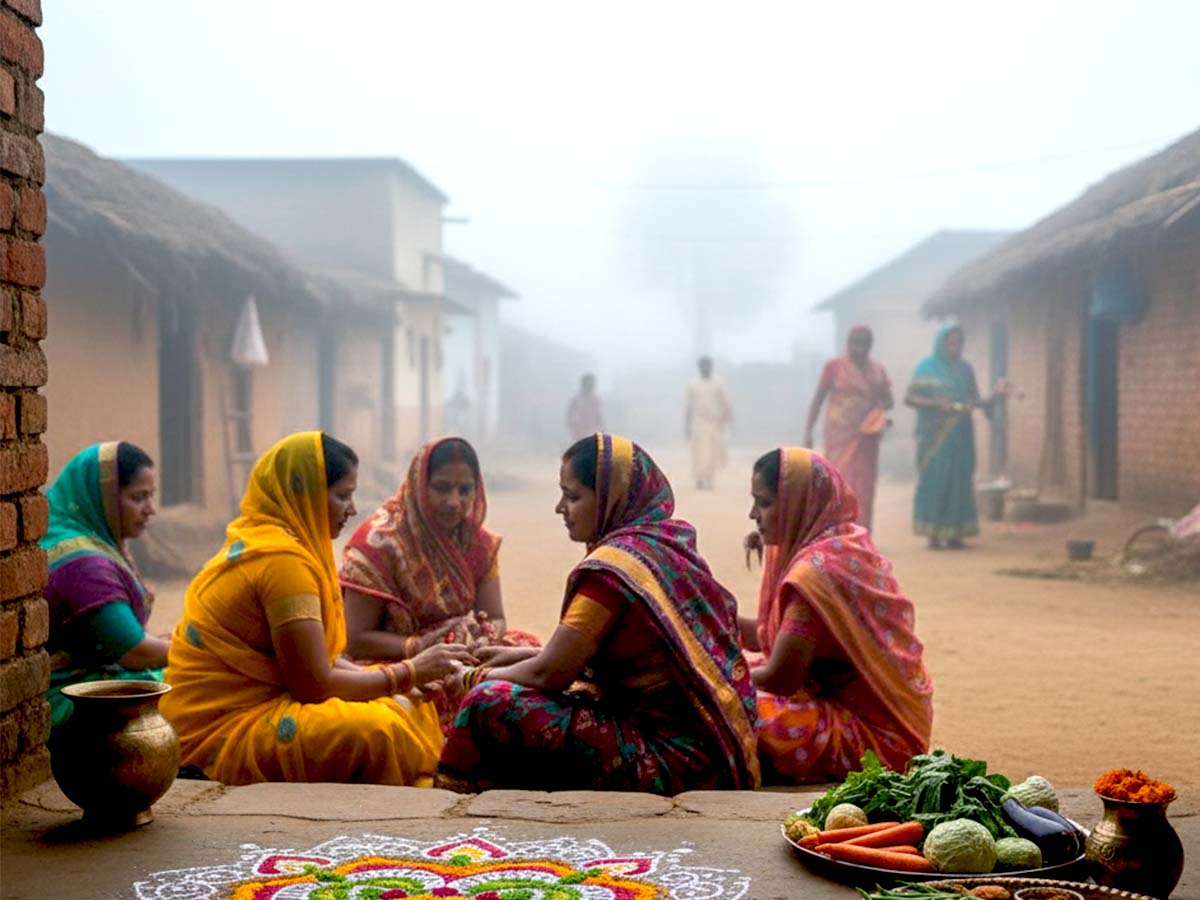
Homes and surroundings are cleaned, colourful rangolis are drawn at the entrance, and family members take Abhyang Snaan (oil massage bath) before wearing new clothes. Married daughters often return to their maternal homes, making Bhogi an occasion for family reunions.
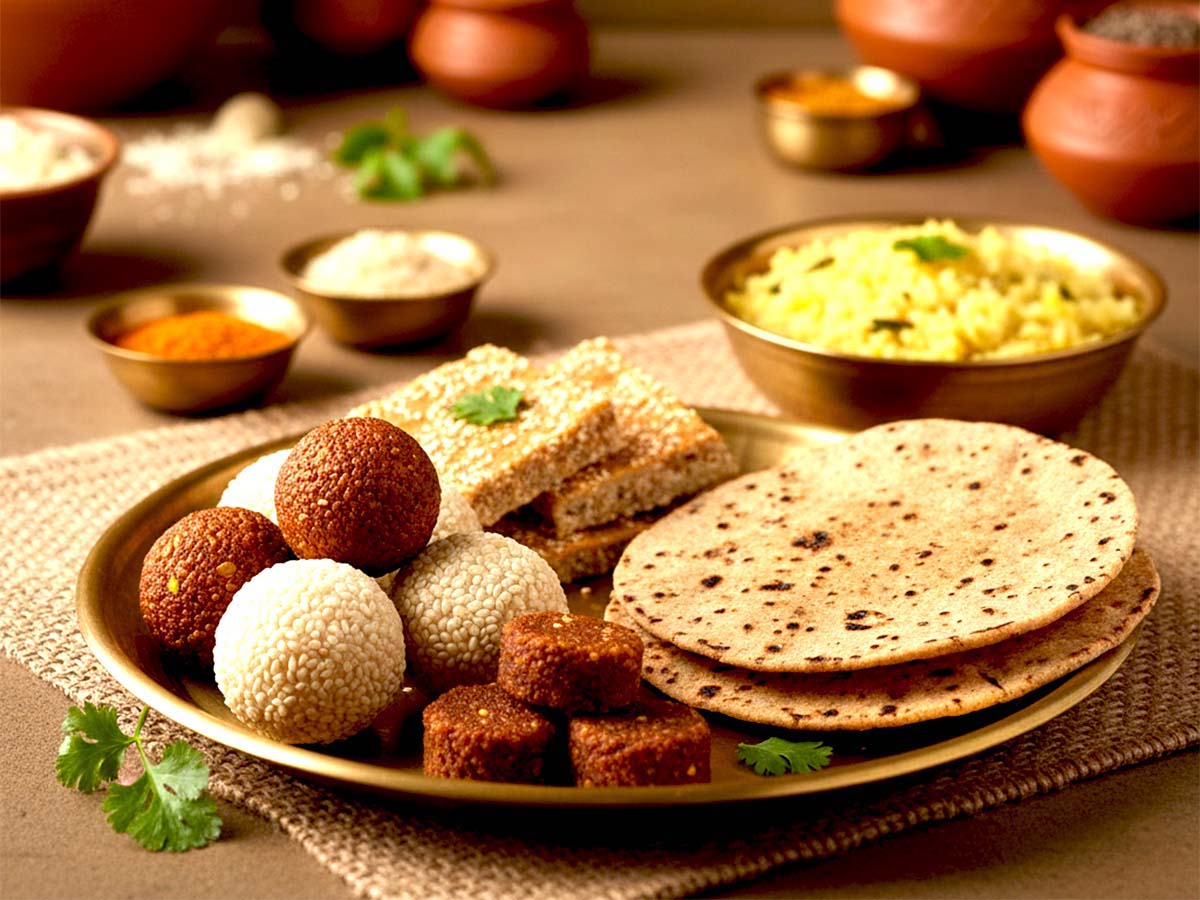
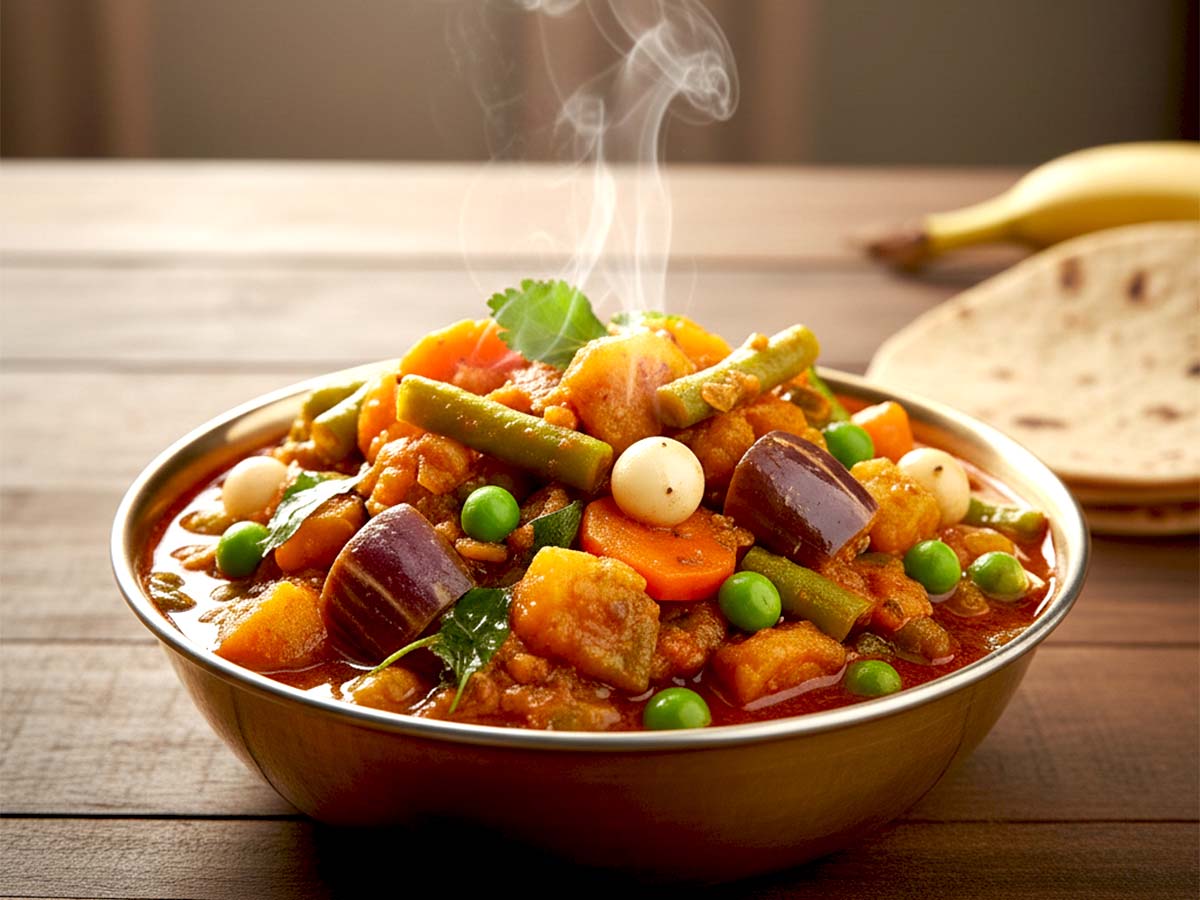
Special foods prepared on this day include Bajra Bhakri with Sesame, fresh butter (loni), moong dal khichadi, papad, chutneys, and the traditional Bhogi Chi Bhaji – a mixed vegetable dish made using seasonal greens, beans, carrots, brinjals, and other winter produce. These dishes are first offered as naivedya and then shared as a family meal, emphasising gratitude and abundance.
Sankranti: Til-Gul, Haldi-Kunku, and Social Harmony
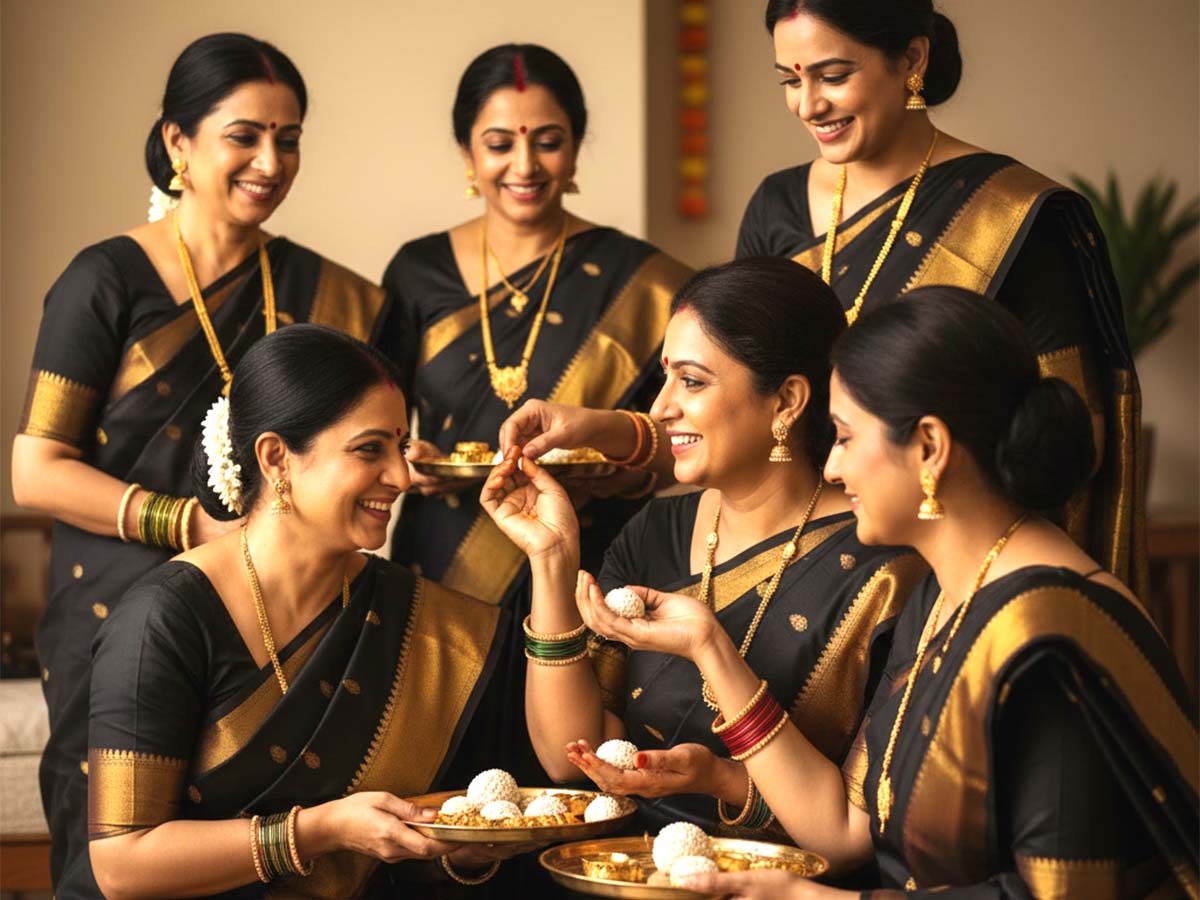
The main day of Makar Sankranti holds special importance for women and social customs in Maharashtra. Women gather for haldi-kunku ceremonies, exchange til-gul, and offer small gifts (Vaan) to one another.
The traditional greeting, “Til-gul ghya ani god god bola”, symbolises the intention to foster sweetness in speech, mend relationships, and strengthen social bonds.
“Til-gul ghya ani god god bola” is a traditional Marathi greeting meaning “Accept sesame and jaggery, and resolve to speak kindly and sweetly with one another.”
Newly married women are honoured with halva jewellery, and sons-in-law are offered til-gul and gifts as part of familial traditions. Wearing black clothing, especially black sarees, is customary – both for warmth during the cold Paush season and as a symbolic farewell to the harsher winter days.
Kinkrant: A Day of Restraint
The third day, known as Kinkrant, commemorates the slaying of the demon Kinkarasura by Sankranti Devi. Traditionally considered a karidin (inauspicious day), it is not chosen for new beginnings or auspicious ceremonies. However, women continue haldi-kunku gatherings, keeping the social aspect of the festival intact.
Til, Food, and Symbolism
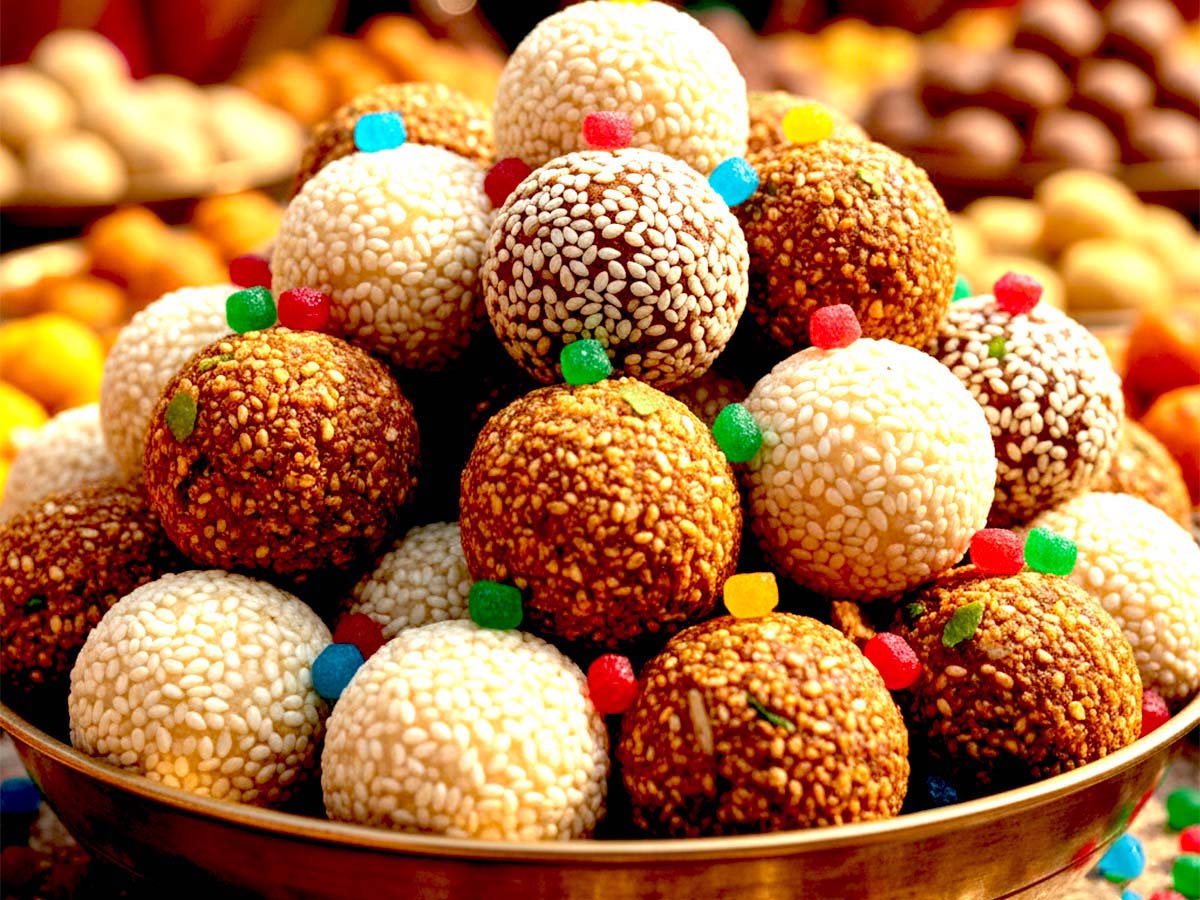
Sesame seeds (til) hold central importance during Sankranti in Maharashtra. Consumed for warmth and nourishment in winter, til is also symbolic of sneha (affection). When combined with jaggery, it represents the sweetness that should accompany human relationships. Foods like til laddoos, til vadi, bajra bhakri, khichdi, brinjal, carrots, and legumes are prepared to suit the seasonal needs of the body.
Tilvan and Bor-Nhaan: Customs for Children
Special rituals are observed for newly married women during their first Sankranti after marriage, including tilvan and haldi-kunku. Young children are also dressed in black clothes and adorned with halva jewellery.
A joyful custom known as Bor-Nhaan involves showering children with a mixture of puffed rice, peanuts, sugarcane pieces, berries, sweets, and nowadays even chocolates – celebrating growth, health, and prosperity.
Overall, Makar Sankranti in Maharashtra is a deeply social and seasonal festival, rooted in food traditions, family ties, and the collective spirit of warmth and reconciliation as winter begins to soften.
Observance and Vrat: Meaning Beyond Fasting
The observance of Makar Sankranti is not limited to external rituals. Traditionally, the day is marked by discipline, mindfulness, and conscious living.
Common practices include:
- Moderation in food or complete fasting
- Remembrance of Lord Vishnu and Surya
- Listening to or reading sacred texts
- Maintaining restraint in thought, speech, and action
Simple Chants and Mantras
Devotees may chant simple mantras such as:
- Om Suryaya Namah
- Om Namo Bhagavate Vasudevaya
These chants are meant to cultivate clarity, gratitude, and spiritual focus rather than ritual complexity.
Is Makar Sankranti Related to the Winter Solstice?
Makar Sankranti is not the same as the winter solstice, though the two are closely related. The winter solstice marks the shortest day of the year (around December 21–22), while Makar Sankranti occurs a few weeks later, when the Sun’s northward movement becomes perceptible in traditional Indian astronomy.
This distinction highlights the precision of ancient Indian calendrical systems, which were based on observable solar movement rather than fixed seasonal dates.
Similar Festivals in Ancient Civilisations
Across many ancient civilisations, the movement of the sun and the gradual transition from winter toward longer days held deep practical and cultural importance.
In ancient Egypt, solar alignments were closely connected to agricultural cycles and the life-giving rhythms of the Nile.
Ancient European cultures observed seasonal festivals marking renewal, fertility, and the return of favourable conditions after winter.
In Persian traditions, seasonal transitions symbolised light, warmth, and the easing of hardship.
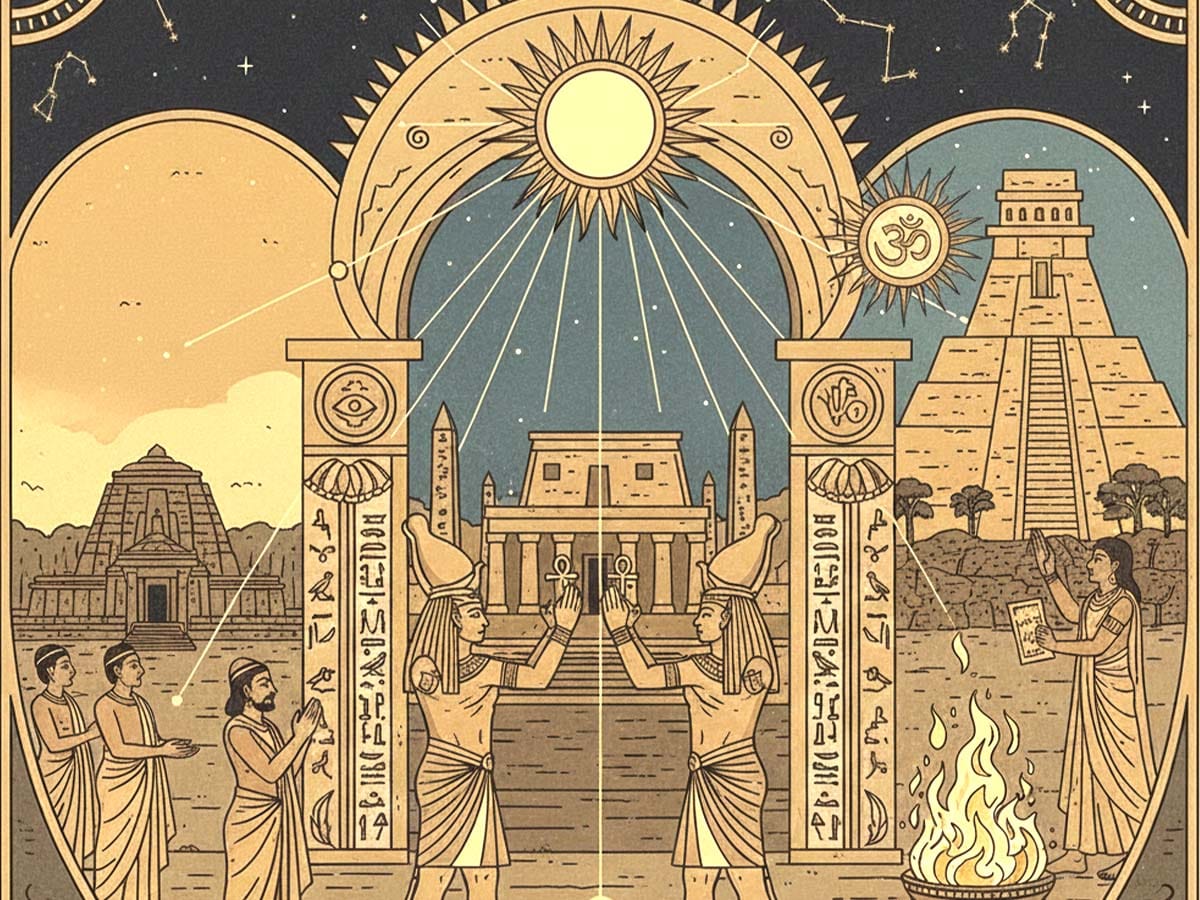
Though expressed differently, these observances reflected a shared human understanding: changes in the sun’s path directly shaped climate, food security, and daily life.
Makar Sankranti represents the Indian subcontinent’s own indigenous response to this universal awareness, grounded in precise astronomical observation and regional cultural expression.
Solar Festivals in Southeast Asia Today
In Southeast Asia, solar-based festivals connected to seasonal change continue to be actively celebrated. Countries such as Thailand, Laos, Cambodia, and Myanmar observe the solar new year as Songkran or Thingyan, marking renewal, cleansing, and the beginning of a new agricultural cycle.
Across parts of East Asia, traditional solar terms historically guided farming, rituals, and food practices, reflecting an ongoing cultural sensitivity to climate and daylight.
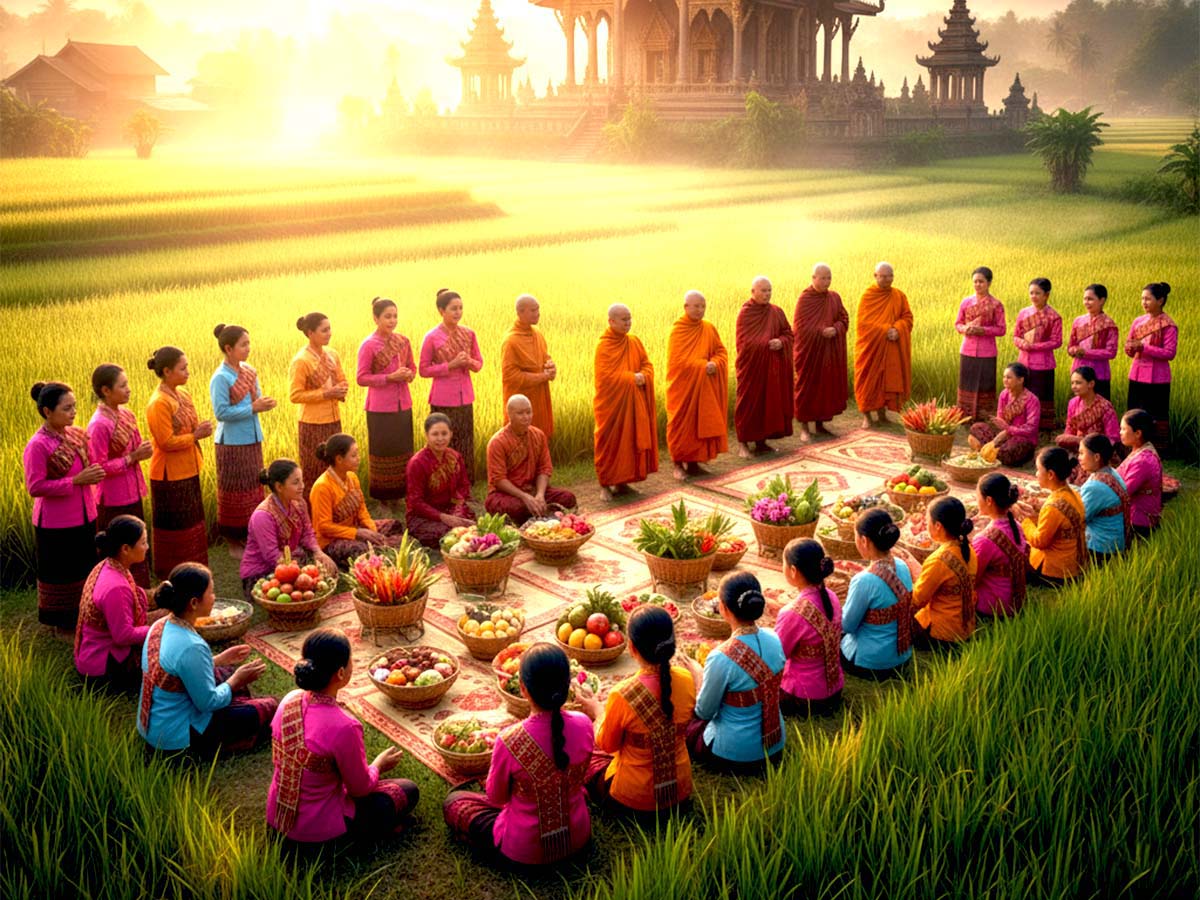
While distinct from Makar Sankranti in form and timing, these celebrations demonstrate how societies across Asia continue to recognise the sun’s movement as central to life, continuity, and renewal.
Importance of Makar Sankranti in Modern Times
In today’s fast-paced world, Makar Sankranti serves as a reminder to:
- Realign with natural rhythms
- Practise gratitude and restraint
- Begin anew with clarity and purpose
While modern celebrations may include rangoli designs, decorations, and greetings, the heart of the festival remains rooted in balance, awareness, and harmony with nature.
The Timeless Relevance of Makar Sankranti
Makar Sankranti is more than a festival – it is a moment of transition, a pause to acknowledge the Sun’s journey and reflect on our own. Its continued relevance lies in its universal message: move towards light, warmth, discipline, and renewal.
As one of the few Hindu festivals governed by the solar calendar, Makar Sankranti stands as a testament to ancient India’s deep astronomical knowledge and its enduring spiritual philosophy!.
Makar Sankranti FAQs
What is Makar Sankranti and why is it celebrated?
Makar Sankranti marks the sun’s transition into the zodiac sign Makara (Capricorn). It is celebrated as a seasonal turning point associated with longer days, improving climate, and renewed agricultural and social activity.
Is Makar Sankranti based on the solar calendar?
Yes, while many Hindu festivals follow the lunar calendar, Makar Sankranti is based on the solar calendar, which is why it usually falls on 14 or 15 January each year.
Why is til-gul exchanged during Makar Sankranti in Maharashtra?
In Maharashtra, sesame (til) and jaggery (gul) are exchanged to symbolise warmth, nourishment, and harmony during the cold Paush season. The tradition reflects the idea of fostering sweetness in relationships and social bonds.
Is Makar Sankranti the same as the winter solstice?
No. The winter solstice marks the shortest day of the year in December, while Makar Sankranti occurs later, when the sun begins its northward journey. The festival is linked more to seasonal transition than the solstice itself.
How is Makar Sankranti celebrated across Indian states?
Makar Sankranti is observed under various regional names such as Pongal in Tamil Nadu, Uttarayan in Gujarat, Magh Bihu in Assam, and Sankranti in Maharashtra, with each region reflecting local climate, crops, and cultural practices.