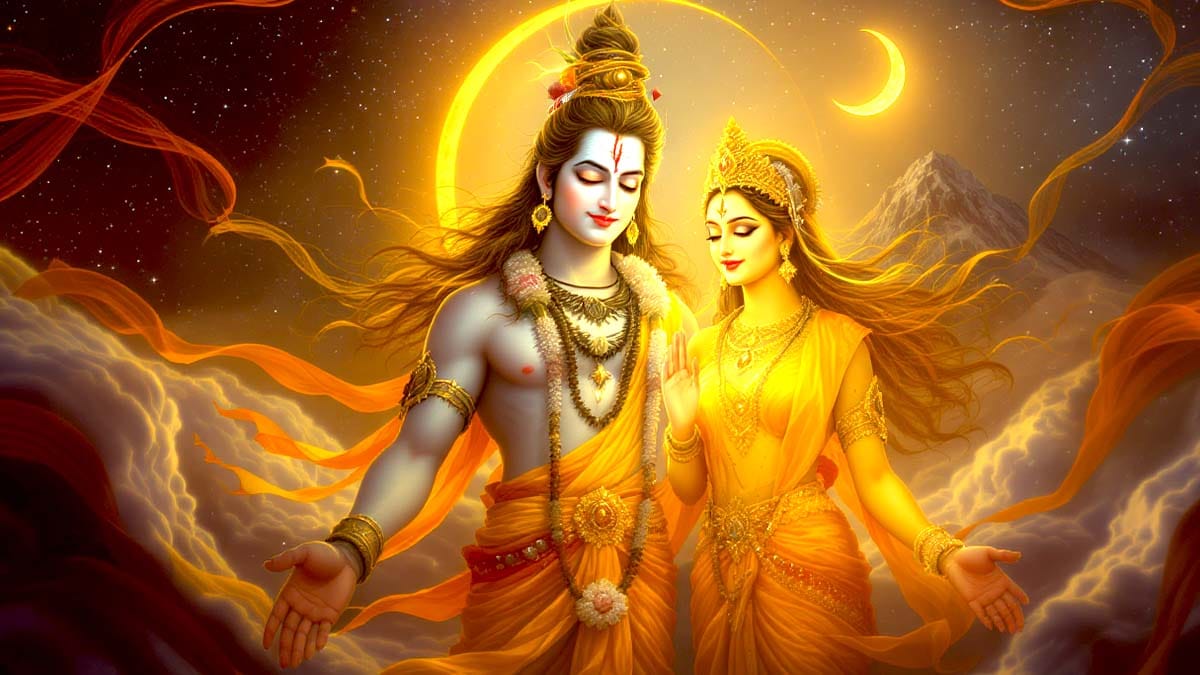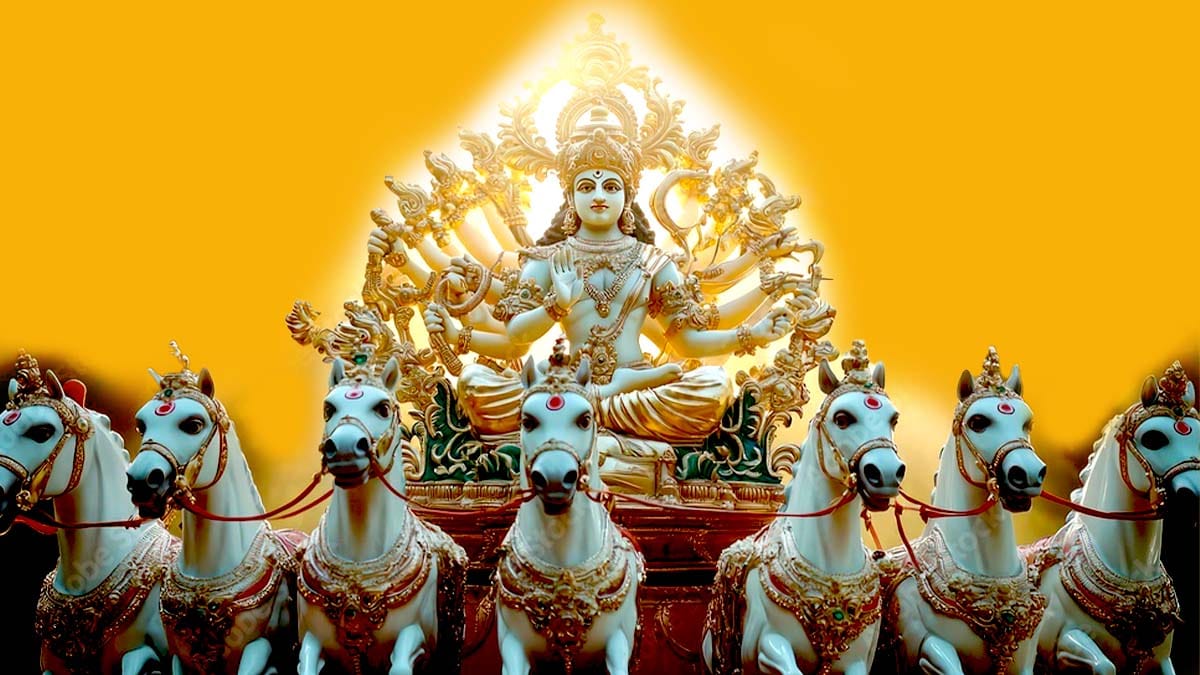
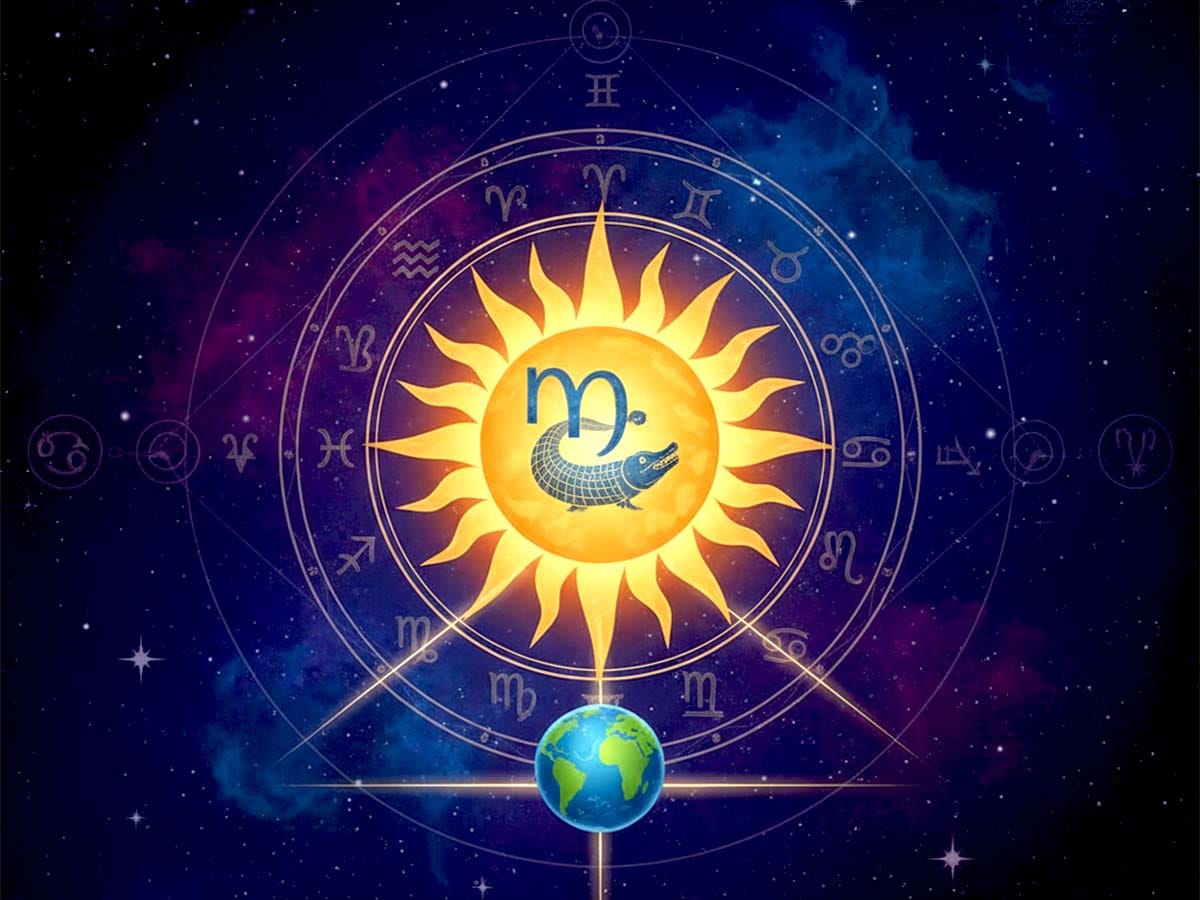
Makar Sankranti 2026 marks one of the most auspicious solar transitions in the Hindu calendar – the moment when the Sun enters Makara Rashi (Capricorn) and begins its northward journey (Uttarayana).
Celebrated across India on 14 January 2026, the festival is an occasion of hope, seasonal transition, movement towards longer days, and renewed vitality in nature and human life.
Makar Sankranti 2026 Date & Auspicious Timings
- Date: 14 January 2026 (Wednesday)
- Sankranti Moment: 3:13 PM
- Punya Kaal: 3:13 PM to 4:58 PM
- Mahapunya Kaal: 3:13 PM to 4:35 PM
These timings are based on traditional Hindu Panchang calculations commonly followed in Maharashtra and many parts of India. Rituals such as charity, tilgul exchange, Daan and holy baths are ideally performed during the Punya Kaal.
Makar Sankranti dates from previous years
- Makar Sankranti 2025 : 14 January 2025
- Makar Sankranti 2024 : 15 January 2024
Also read: Makar Sankranti Wishes in Marathi “मराठीत सुंदर शुभेच्छांसाठी आमचा मकर संक्रांती शुभेच्छा लेख जरूर वाचा.”
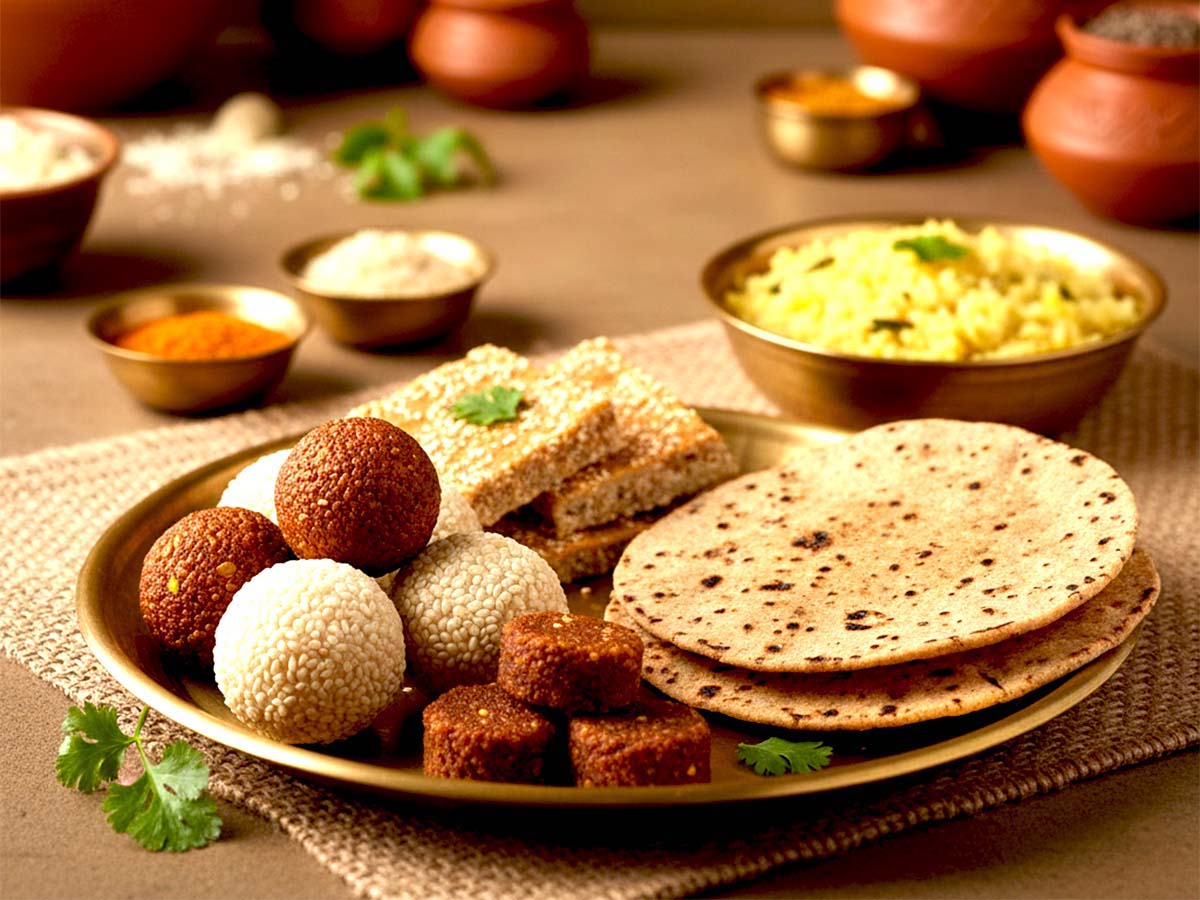
What Is Makar Sankranti?
Makar Sankranti is a solar festival which celebrates the moment when the Sun enters Capricorn (Makara), signalling the end of Dakshinayan and the beginning of Uttarayan – a phase considered highly auspicious in Sanatana Dharma.
In simple terms, Makar Sankranti means the Sun’s transition into Makara Rashi, symbolising spiritual awakening, prosperity, and positive transformation.
Makar Sankranti will be followed by Vasant Panchami which will be celebrated on 23 January 2026
Why is Makar Sankranti Celebrated: Significance of Makar Sankranti
The importance of Makar Sankranti lies in its combined astronomical, agricultural, and spiritual significance:
- Marks the Sun’s northward journey (Uttarayan)
- Indicates longer, warmer days after peak winter
- Celebrates the harvest season across India
- Associated with charity, gratitude, and social harmony
- Spiritually linked to auspicious beginnings and purification
In scriptures, Uttarayan is believed to be the divine path, making Makar Sankranti especially sacred for Daan (charity), Snaan (ritual bath), and Japa (meditation).
हिन्दी भाषा में मकर संक्रांती की शुभकामनाओं के लिये यह लेख पढ़े Makar Sankranti Wishes in Hindi
How Makar Sankranti Is Celebrated in Maharashtra
In Maharashtra, Makar Sankranti is celebrated over three days, each with distinct traditions and meanings.
1. Bhogi
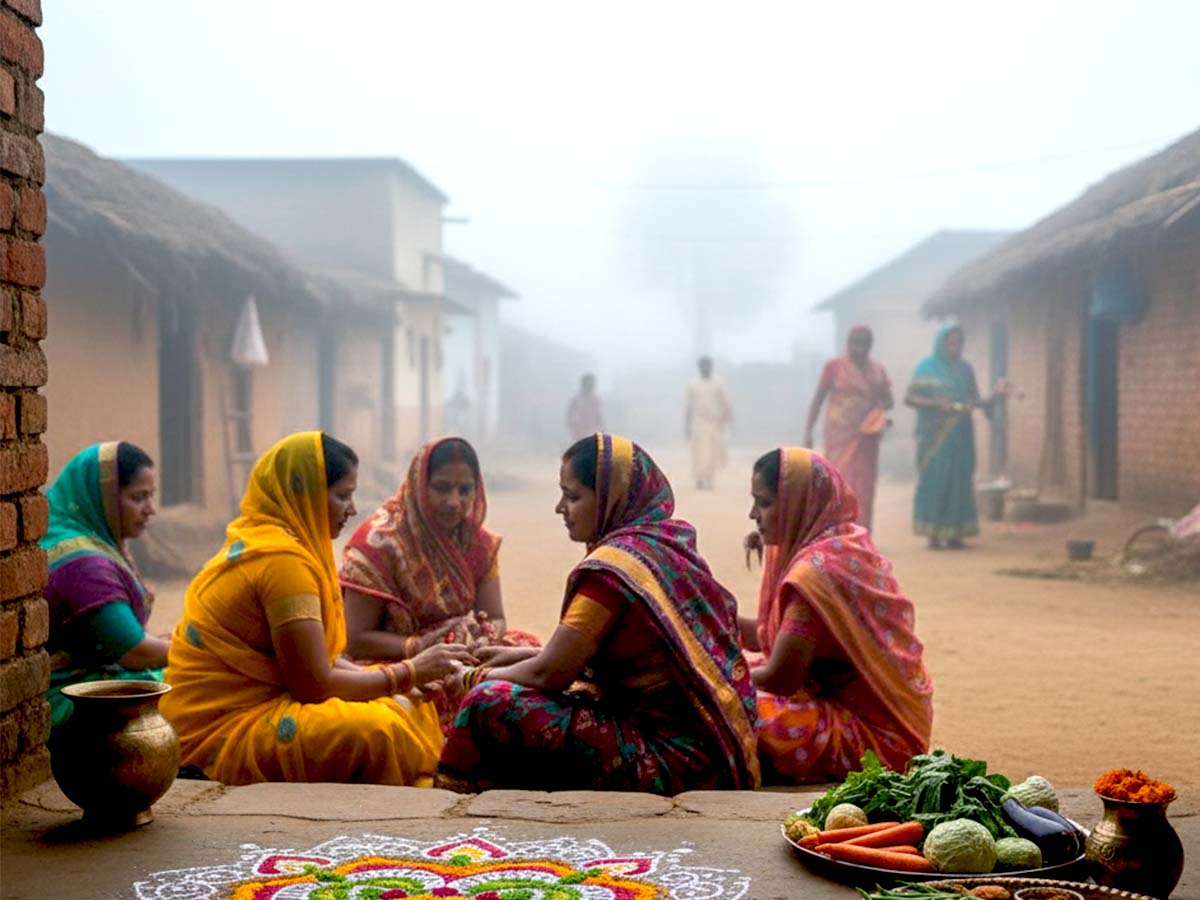
The day before Sankranti is celebrated as Bhogi, a festival of enjoyment and abundance.
- Homes and surroundings are cleaned
- Rangoli is drawn at the doorstep
- Family members take abhyanga snan and wear new clothes
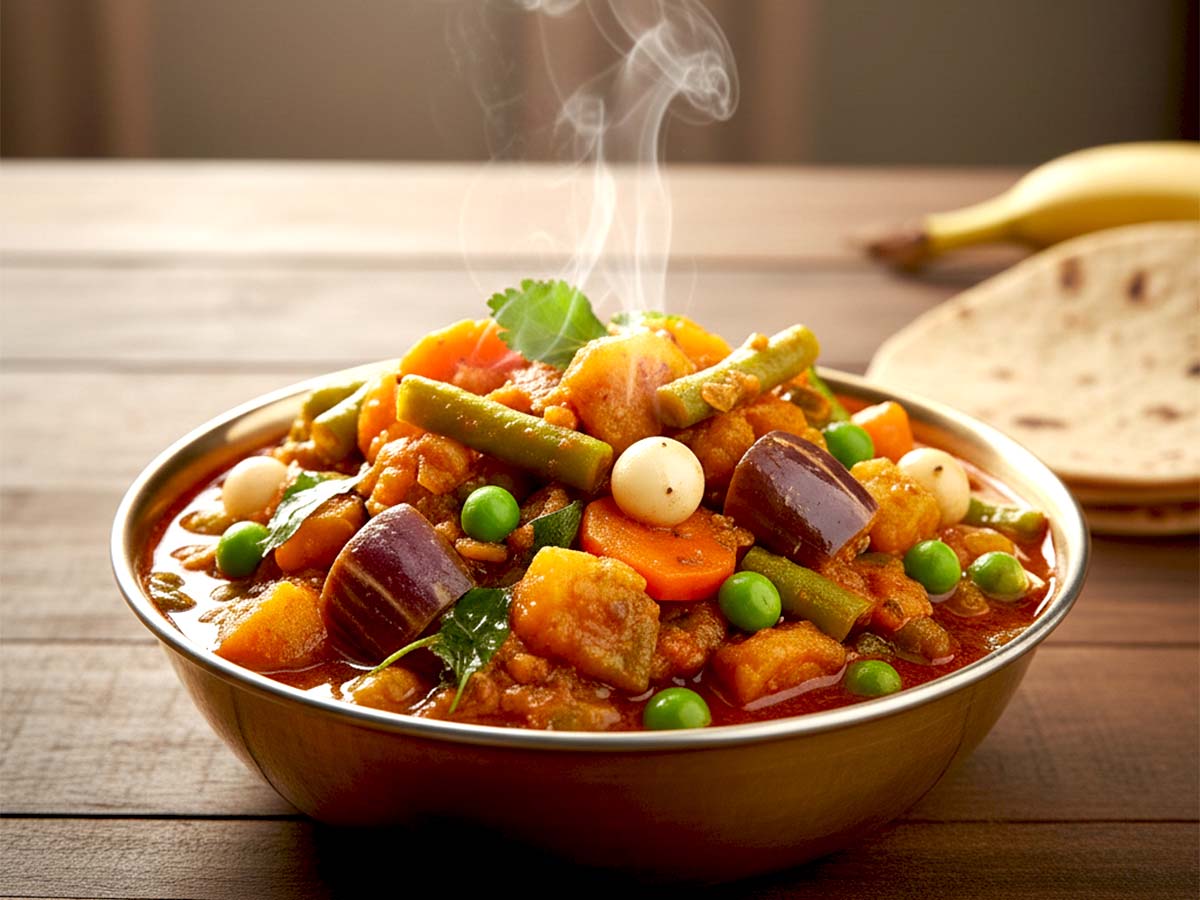
- A special meal includes Bhogi chi bhaji (mixed seasonal vegetables), Bajra bhakri with sesame, Loṇī (butter), khichdi, and chutneys
- Married daughters traditionally visit their maternal homes
2. Makar Sankranti (Main Festival Day)
This is the most important day of the festival.
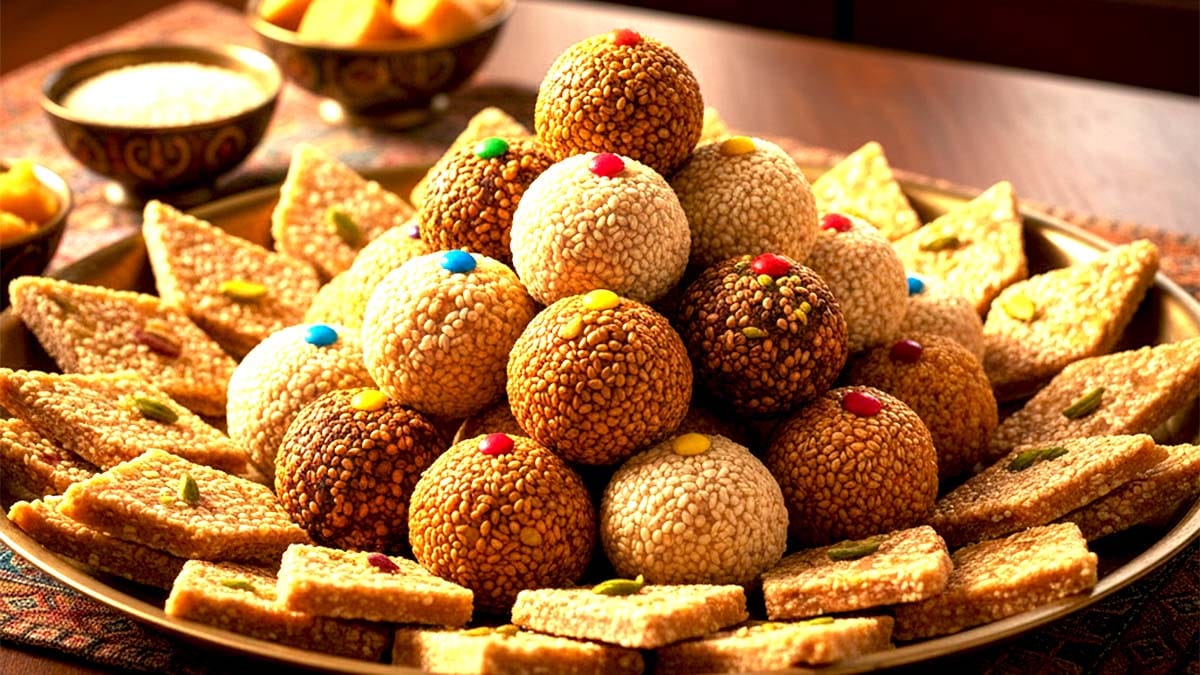
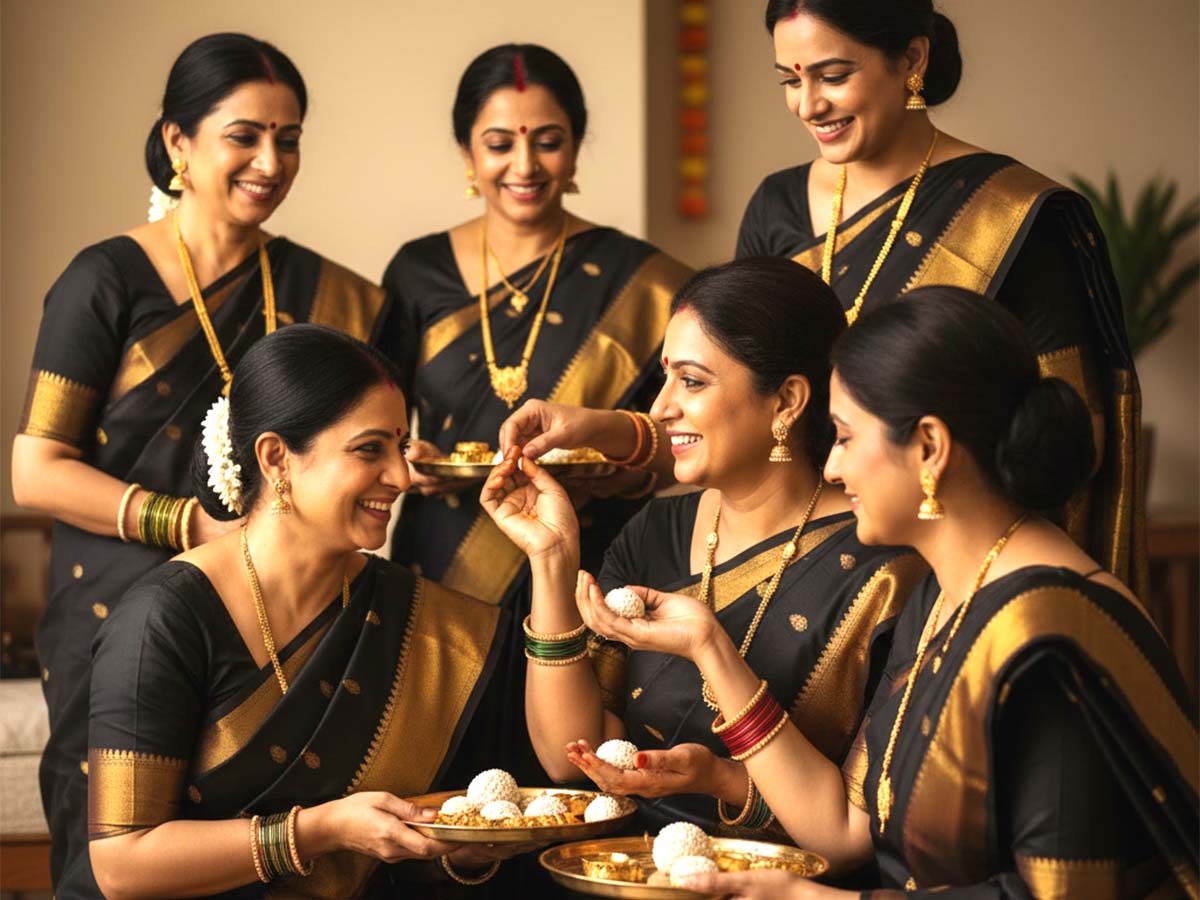
- Tilgul (sesame & jaggery sweets) are exchanged
- Women participate in Haldi-Kumkum ceremonies
- Newly married women receive gifts (vaan) and halwa jewellery
- Women traditionally wear black sarees, symbolising warmth and the farewell to long winter nights
- Children are adorned with halwa ornaments and participate in bor-nhaan rituals
Meaning of Tilgul Tradition
“Til-gul ghya ani god god bola”
This phrase conveys:
Accept these sesame and jaggery sweets, and let sweetness, warmth, and goodwill fill our words and relationships.
3. Kinkranti
The third day is known as Kinkranti, commemorating the legend where Sankranti Devi defeated the demon Kinkarasura, freeing people from his oppression.
- Observed as a symbolic day
- Marked as Karidin in Panchang
- No auspicious ceremonies are performed
- Women may still exchange tilgul and meet socially
Also read: Makar Sankranti Wishes in English
Makar Sankranti Celebrations Across India
Makar Sankranti is celebrated under different names across regions:
- Maharashtra: Makar Sankranti
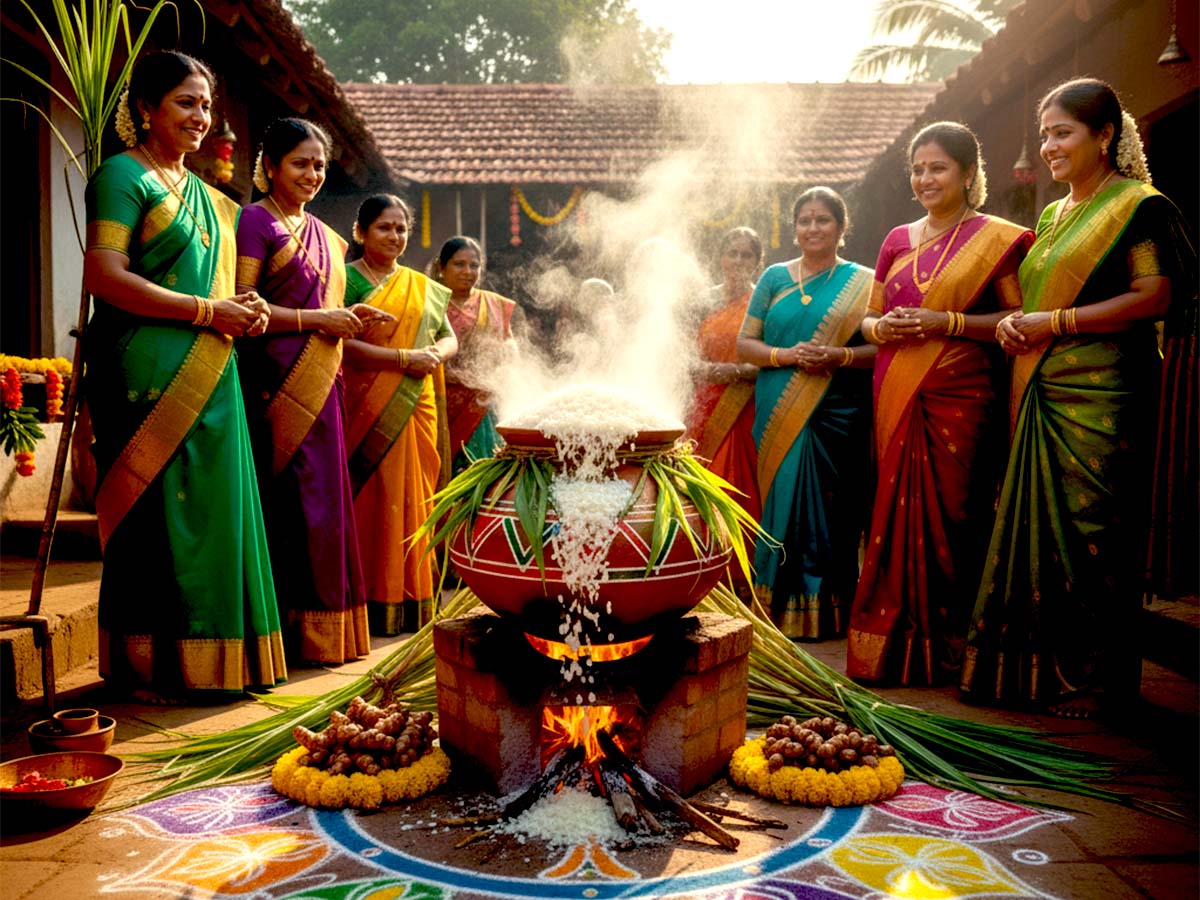
- Tamil Nadu: Thai Pongal
- Andhra Pradesh & Telangana: Sankranti
- Kerala: Makaravilakku
- Punjab: Lohri (eve of Sankranti)
- Assam: Magh Bihu
- Karnataka: Makara Sankramana
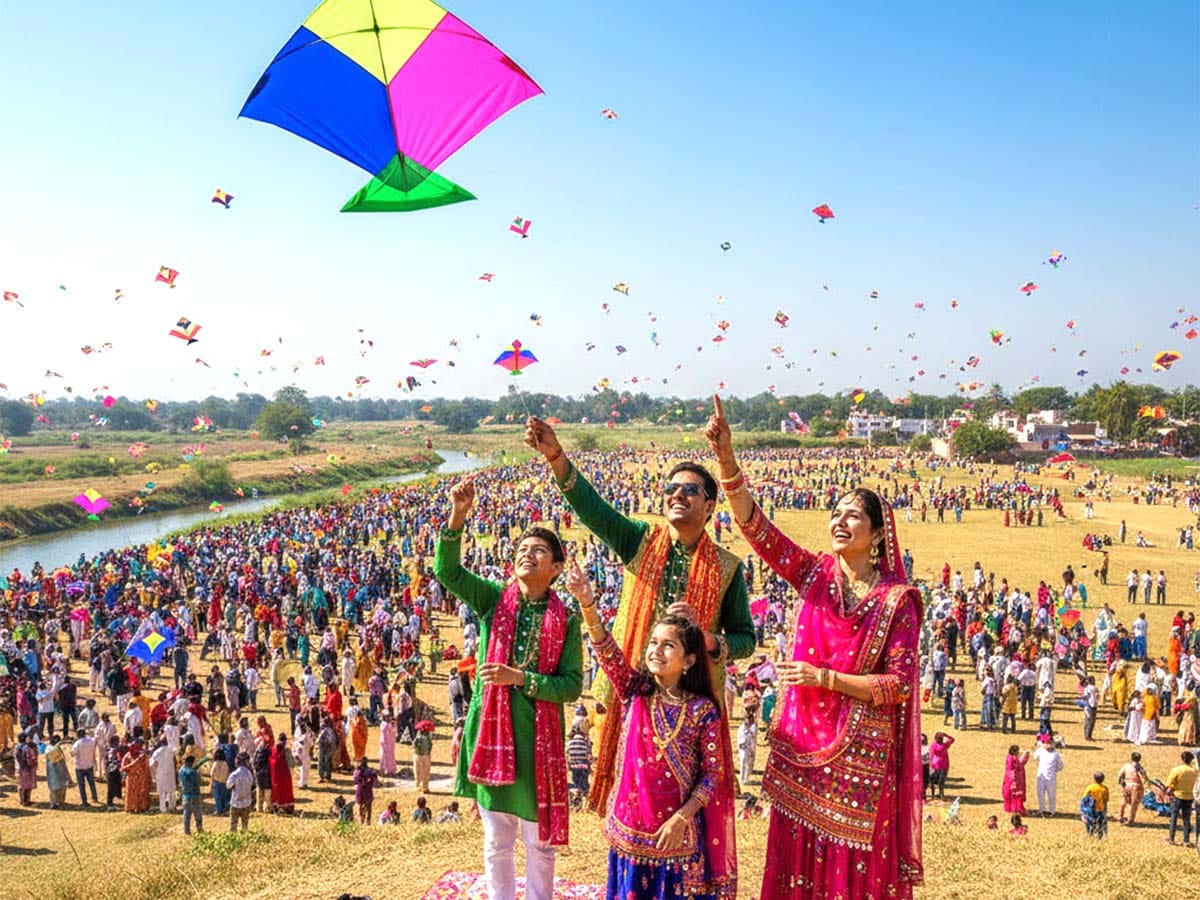
- Gujarat: Uttarayan (kite festival)
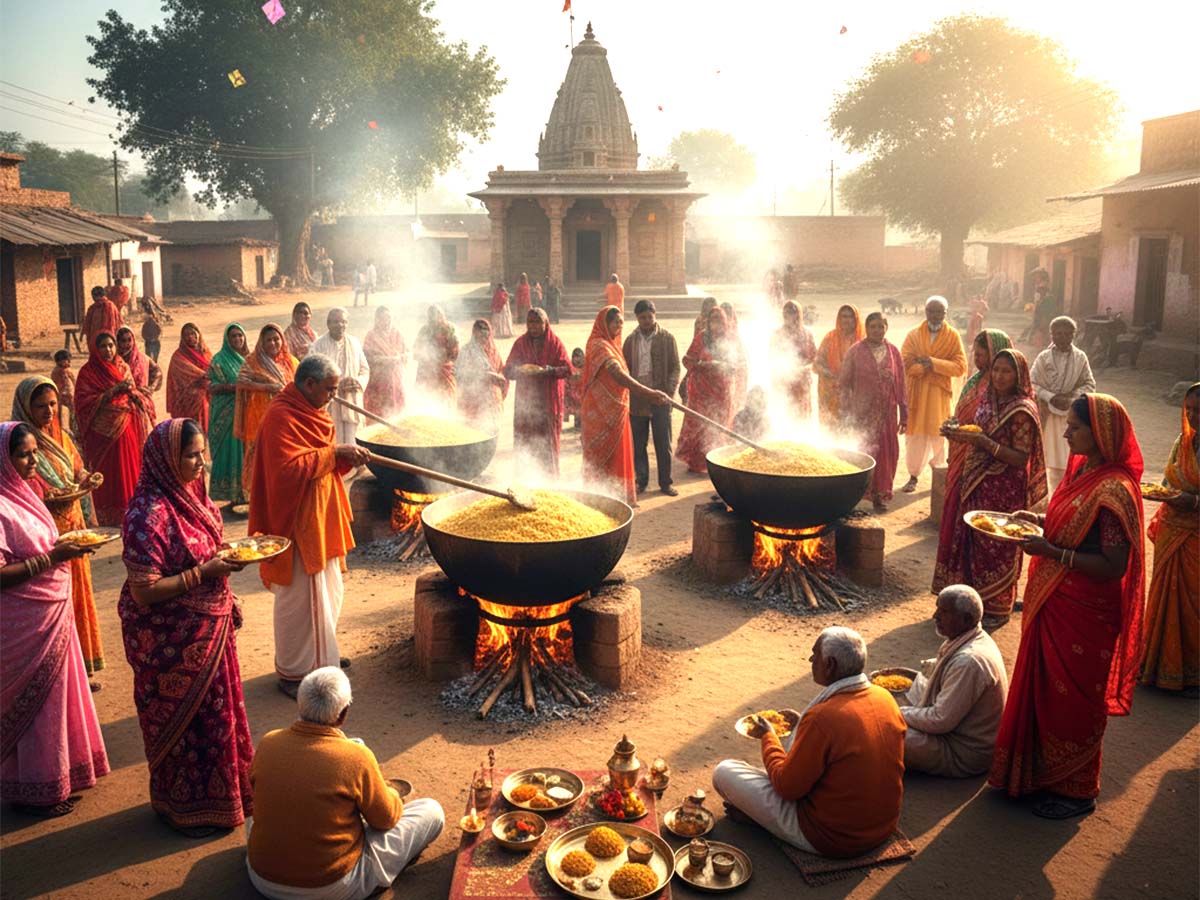
- Uttar Pradesh & Bihar: Khichadi Parva
Despite regional variations, the core theme remains gratitude, transition, and prosperity.

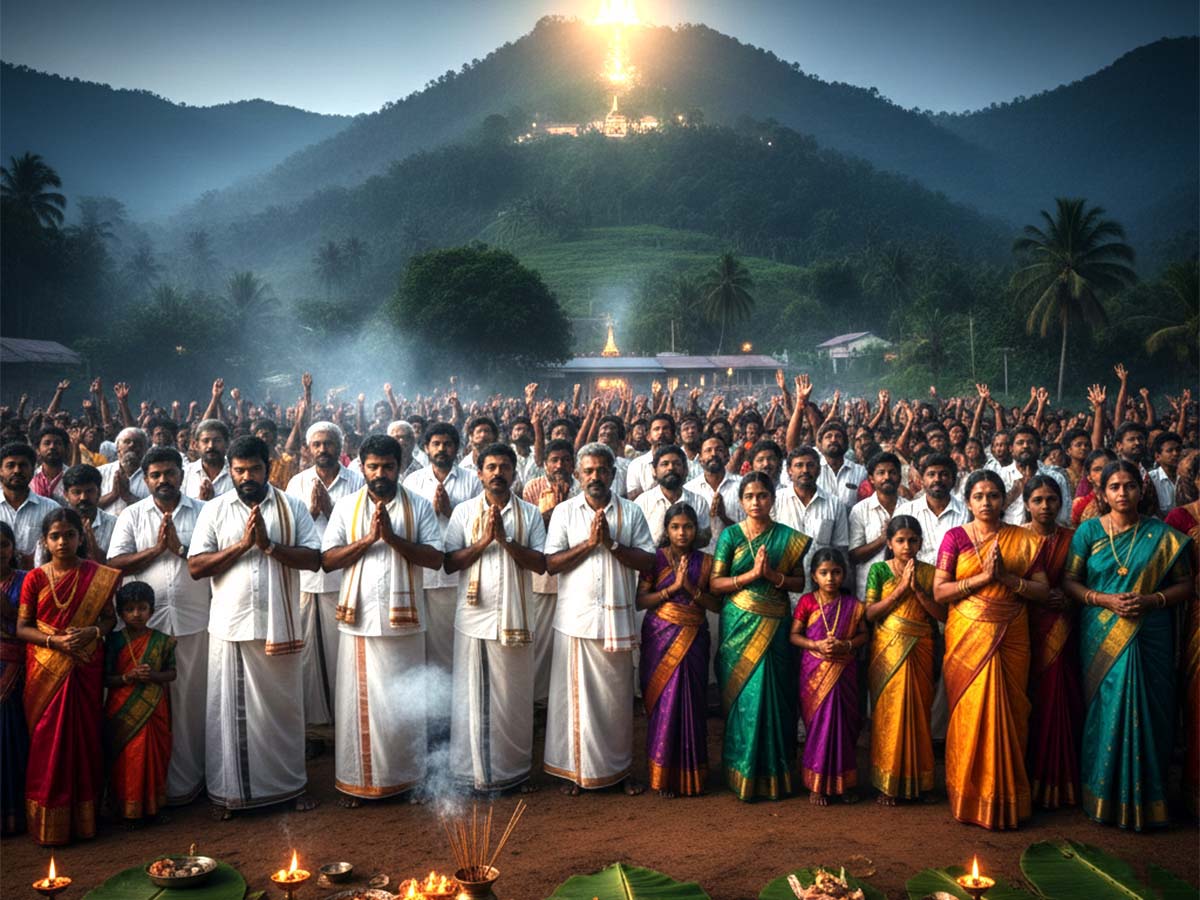
Makar Sankranti 2026 Wishes
- Happy Makar Sankranti 2026!
- Wishing you warmth, joy, and prosperity this Makar Sankranti 2026.
- May the Sun’s northward journey bring success and happiness to your life.
- Let sweetness fill your words and harmony your relationships this Sankranti.
Makar Sankranti Wishes in Marathi
- तिळगूळ घ्या आणि गोड गोड बोला!
- मकर संक्रांतीच्या हार्दिक शुभेच्छा!
- नवीन ऊर्जा, समाधान आणि समृद्धी घेऊन येवो ही संक्रांत.
Temples in Nashik
Makar Sankranti 2026 FAQs
When is Makar Sankranti in 2026?
Makar Sankranti will be celebrated on 14 January 2026 across India. It is a solar festival observed when the Sun enters Makara Rashi (Capricorn).
What is the exact time of Makar Sankranti in 2026?
In 2026, the Sankranti Kshan occurs at 3:13 PM. The Punya Kaal is from 3:13 PM to 4:58 PM, while the Mahapunya Kaal lasts till 4:35 PM, as per traditional Panchang calculations followed in Maharashtra.
How is Makar Sankranti celebrated in Maharashtra?
In Maharashtra, the festival is celebrated over three days:
Bhogi: Marked by abhyanga snan, special food, and family gatherings
Makar Sankranti: Tilgul exchange, haldi-kumkum, black attire, and social harmony
Kinkranti: A symbolic day linked to the legend of Sankranti Devi
What is the significance of Til Gul on Makar Sankranti?
Til (sesame) provides warmth during winter, while gul (jaggery) adds sweetness and energy. Exchanging tilgul symbolises affection, reconciliation, and the strengthening of social bonds, expressed through the saying “Til-gul ghya ani god god bola.”