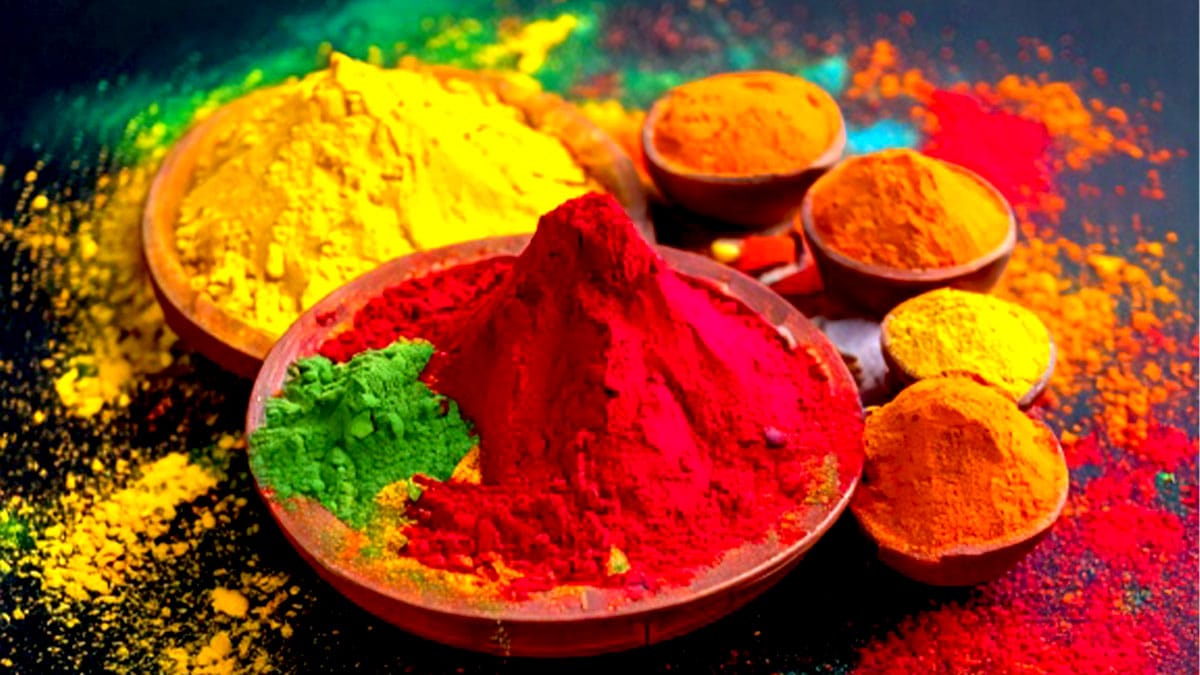
Holi, the festival of colours, is one of India’s most vibrant celebrations, marking the victory of good over evil and the arrival of spring.
However, Holi 2026 is sparking significant debate among devotees and scholars due to a rare astronomical event: a Chandra Grahan (Total Lunar Eclipse) falling on the festival day.
If you are wondering “Holi kab hai?” or looking for the exact Holika Dahan 2026 date, this comprehensive guide covers the timings, the legends associated with the festival and the unique Rangpanchami celebrations in Nashik.
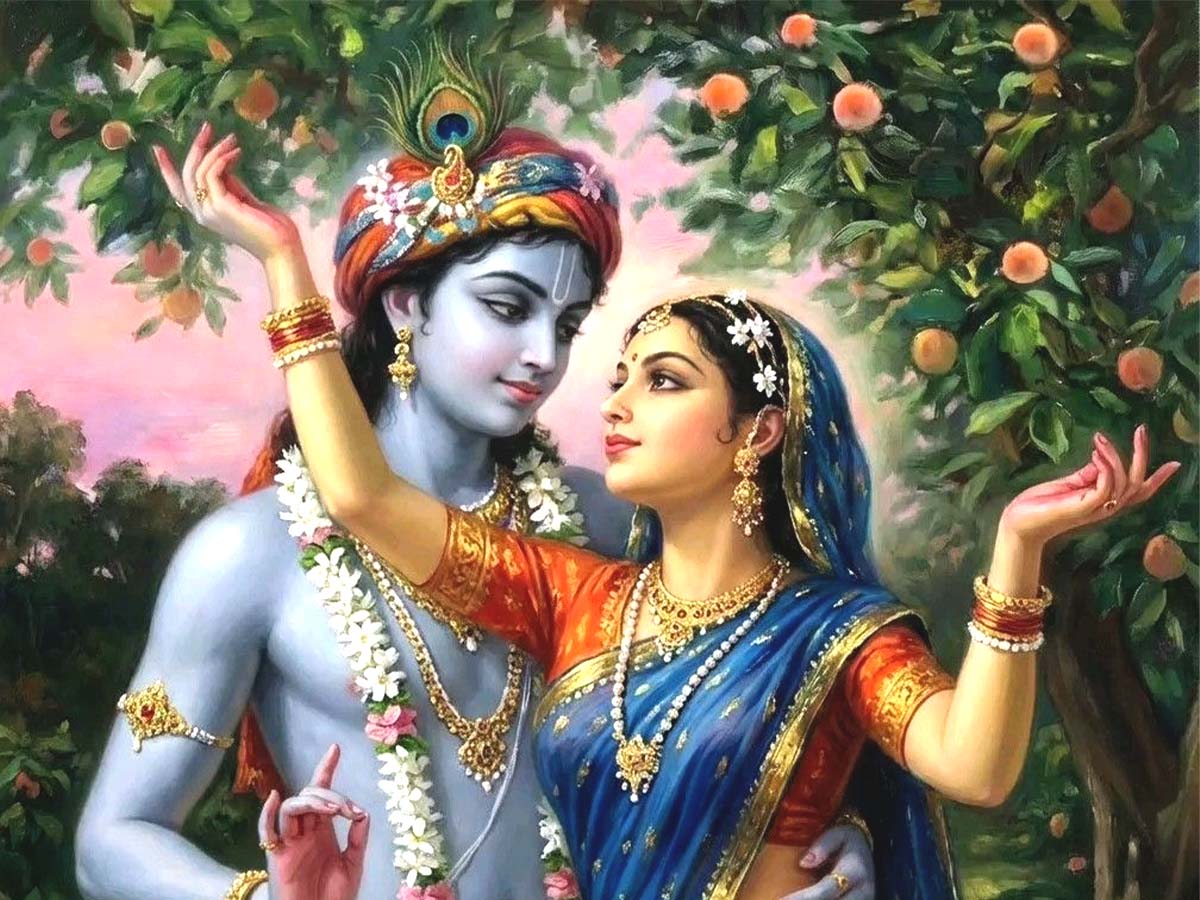
Holi 2026 Date: March 2 or March 3?
The biggest question this year is the date and timing. According to the Vedic Panchang (Shalivahan Samvat), Falgun Purnima Tithi, the full moon begins at 5:55 PM on March 2 and ends at 5:07 PM on March 3, 2026.
The Chandra Grahan & Sutak Kaal Factor
A Total Lunar Eclipse will occur on March 3, 2026 from 3:00 PM to 6:48 PM. In India, the Sutak Kaal (the inauspicious shadow period) begins 9 hours before the eclipse, starting at 6:20 AM on March 3.
To avoid the eclipse and the Bhadra Kaal (an inauspicious period ending late night of 2 March 2026, most Panchang scholars in Maharashtra recommend:
- Holika Dahan 2026: 2 March 2026
- Dahan Shubh Kaal: 6:22 pm – 8:50 pm
- Dhulivandan: 3 March 2026.
The Significance of Holika Dahan
The Holika Dahan story is rooted in the legend of Bhakt Prahlad. The demon king Hiranyakashyap attempted to kill his son, Prahlad, for his devotion to Lord Vishnu.
Prahlad’s aunt, Holika, who had received a boon of being immune to fire, sat in a fire with him. However, by divine intervention, Holika was consumed by the fire, and Prahlad emerged unharmed.
Today, lighting the bonfire symbolizes the burning of our inner “Hiranyakashyap” – ego, greed, and hatred.
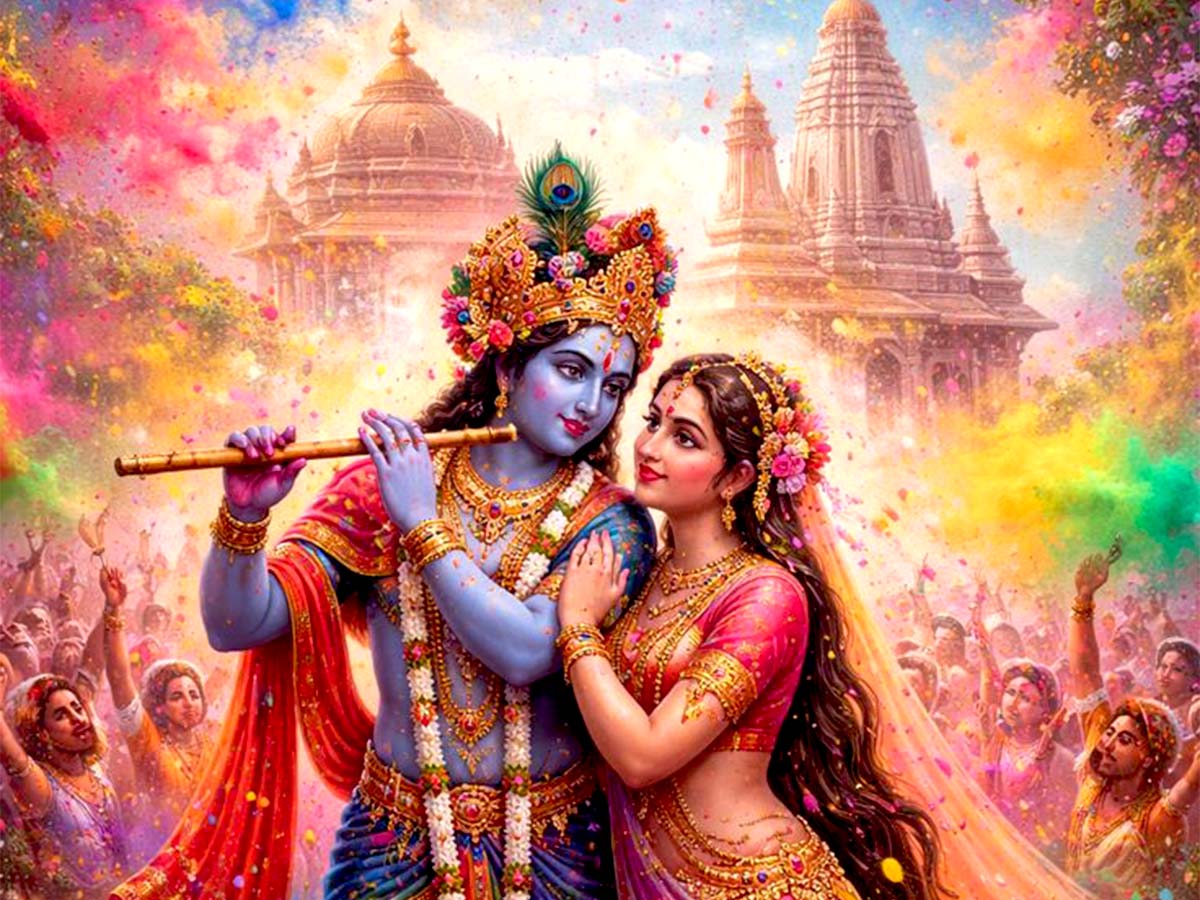
The Divine Love of Shri Radha Rani and Shri Krishna
In the sacred land of Braj, Holi is far more than a seasonal change; it is a profound celebration of the divine love between Shri Radha Rani and Shri Krishna.
Their “Lila” (divine play) transformed the festival into a “Festival of Love,” where colors serve as a medium for spiritual union and equality.
The tradition of applying colors during Holi is deeply rooted in a playful yet profound exchange between the divine couple, originating from a moment of innocent insecurity.
Young Krishna, conscious of his dark, cloud-like complexion, felt a quiet anxiety that the fair-skinned Radha might not accept him or that their physical differences would set them apart.
Seeking a remedy for her son’s troubled heart, Mother Yashoda playfully suggested that he smear Radha’s face with any pigment he desired, effectively bridging the gap between their appearances.
This mischievous act of love transformed into a timeless celebration, as Krishna’s coloring of Radha’s face became a sacred gesture that transcended physical form.
In this divine play, the vibrant hues served to mask all distinctions, symbolizing a spiritual union where only the soul is seen and two distinct identities merge into the singular essence of Radha-Krishna.
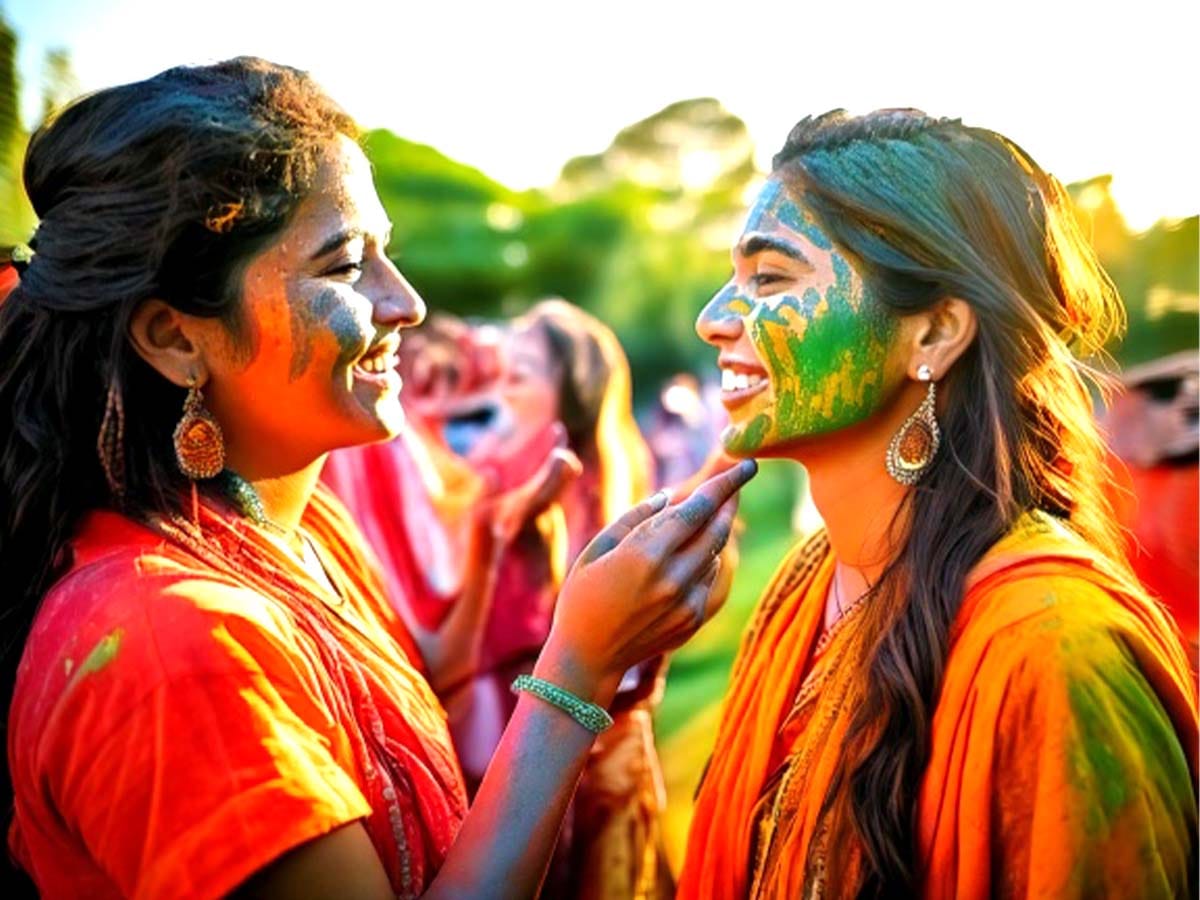
Living Traditions in Braj
The love story is reenacted annually through unique local customs that draw thousands of devotees:
Lathmar Holi (Barsana & Nandgaon): Re-enacts the legend where Krishna visited Radha’s village, Barsana, to tease her and the Gopis. In response, the women of Barsana playfully chase away the men of Nandgaon (Krishna’s village) with sticks (lathis).
Phoolon Ki Holi (Vrindavan): Celebrated primarily at the Banke Bihari Temple, this tradition uses fresh flower petals instead of powders, reflecting the purity and fragrance of divine affection.
Laddu Holi: Originating from a tale of a priest being showered with sweets while delivering a Holi invitation, it marks the start of the festivities with joy and sweetness.
Significance of Holi
Spiritually, the colors of Holi represent the merging of the individual soul (Atman, represented by Radha) with the Supreme Soul (Parmatman, represented by Krishna).
By smearing colors on one another, devotees replicate the divine joy of Vrindavan, breaking down social barriers of caste and status to embrace universal brotherhood and unconditional love.
Nashik Special: From Ramkund to the Ancient Rahads
The ancient temple city of Nashik has a unique way of celebrating Holi. While most of India finishes playing with colours on Dhulivandan, Nashikites wait for Rangpanchami.
Rangpanchami 2026 Nashik
In Nashik, Rangpanchami is more significant than Holi itself and will be celebrated on 8 March 2026.
Rangpanchami (Falgun Krishna Panchami)
- Tithi Begins – 07:17 pm 7 March 2026
- Tithi Ends – 09:10 pm 8 March 2026
The Rahad Tradition: Nashik is famous for its Rahads, centuries-old water tanks in areas like Tiwandha Chowk and Shani Chowk, these are filled with natural colors, and jumping into a Rahad on Rangpanchami is a rite of passage for locals.
Kalaram Temple & Ramkund: Experience the spiritual side of the festival with special prayers at the Kalaram Temple and the traditional Holi lit on the banks of the Godavari at Ramkund.
Flavours of the Festival: From Mathura’s Pedas to Nashik’s Puran Poli
The celebration of Holi is as much a feast for the palate as it is for the eyes, with distinct culinary traditions that bridge the sacred landscapes of Northern and Western India.
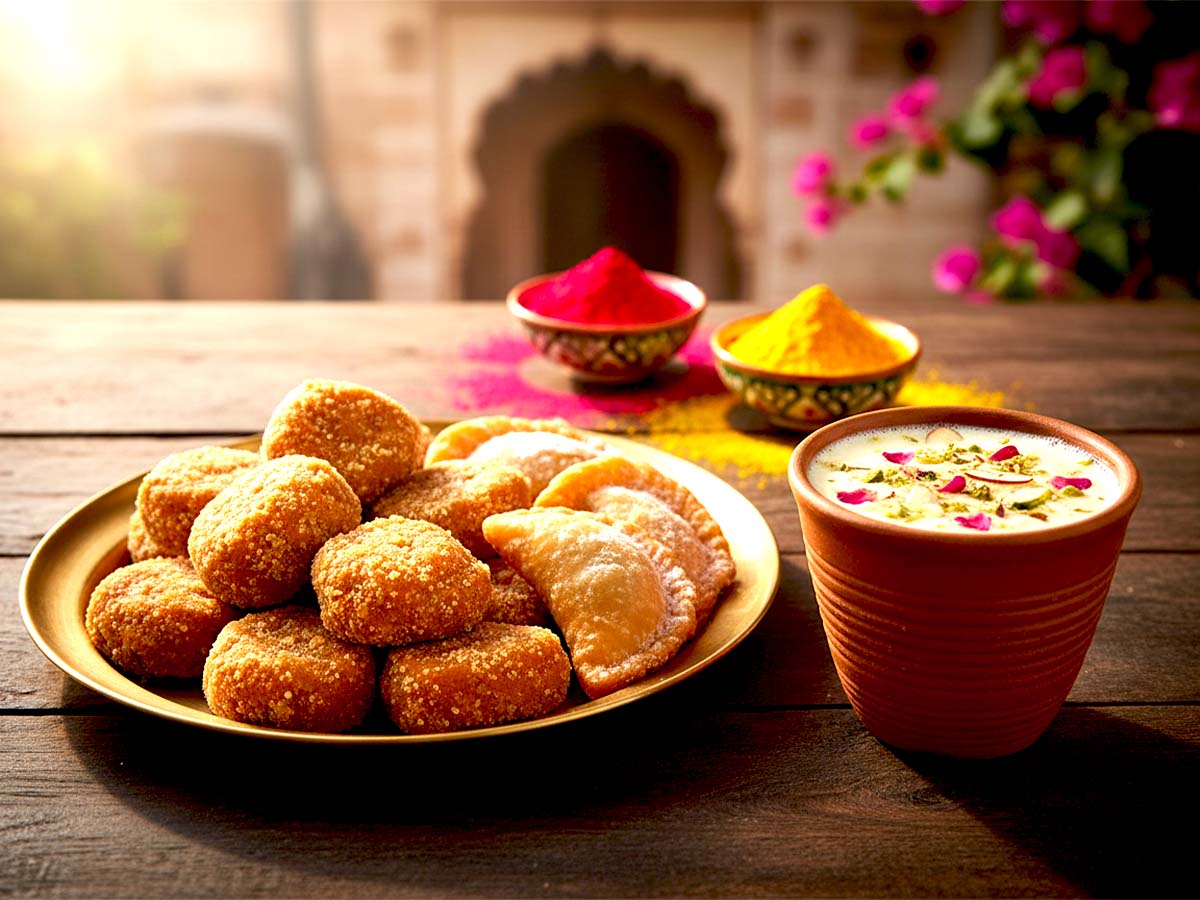
Braj Bhoj: The Sacred Flavours of the land of Krishna.
In the ancient lands of Braj (Mathura and Vrindavan), where the festival finds its spiritual heart, the air is filled with the aroma of Mathura Peda and Makhan Mishri a simple yet divine combination of fresh white butter and rock sugar said to be Lord Krishna’s favorite.
Devotees also flock to local stalls for Bedai (a spicy, deep-fried lentil-stuffed puri) served with potato curry, while cooling glasses of Thandai – infused with almonds, fennel, and saffron – provide essential refreshment during the day’s high-energy colour play.
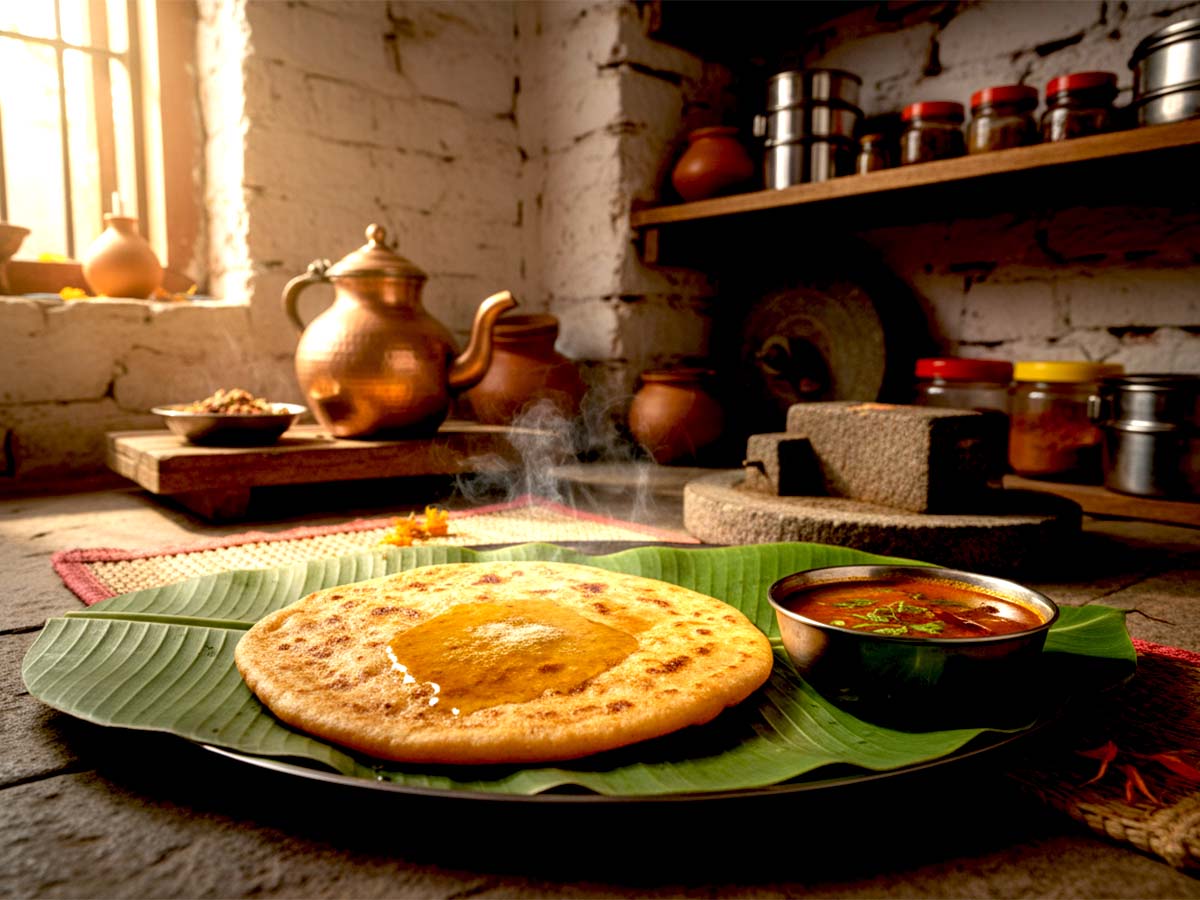
Naivedya of the West: Nashik’s Maharashtrian Traditions
As the festivities extend to Nashik, the culinary focus shifts to the beloved Puran Poli, a quintessential Maharashtrian sweet flatbread that is synonymous with the festival in this region.
This delicate dish, made by stuffing wheat flour with a rich mixture of cooked chana dal and jaggery flavored with nutmeg and cardamom, is traditionally offered as Naivedya during the Holika Dahan fire rituals.
In Nashik’s households, it is most often enjoyed warm with a generous drizzle of ghee and a side of Katachi Amti (a spicy, thin lentil soup) or milk.
Holi Celebrations Across the World
Holi has evolved into a global celebration, transcending borders to become a symbol of multiculturalism and unity.
United States
In the USA, Holi is celebrated with massive public gatherings that often blend traditional rituals with contemporary music.
Spanish Fork, Utah: One of the world’s largest celebrations outside India is organized by the Hare Krishna Temple
(ISKCON) attracting thousands of attendees annually.
California: The Madheshi Association in America (MAA) hosts cultural events in Artesia Park featuring traditional music and non-toxic color play.
North Carolina: The Hindu Society of North Carolina organizes a large Holi Mela with live DJs, local food vendors, and performances.
Houston: The city hosts one of the largest and most vibrant Holi festivals in the country. Traditionally held at venues like Midtown Park, the event draws over 15,000 attendees for a ‘Color Rave’ alongside traditional dhol drumming, Indian street food vendors, and synchronized color throws.
Canada
Canada’s multicultural landscape has made Holi an iconic national event, even reaching the Canadian Parliament.
Ontario: Organizations like Unity in Diversity host inclusive festivals like the Durham Holi Celebration, which includes magic shows and community showcases.
Mississauga: The UPICA (Uttar Pradesh International Community Association) hosts the Holi Milan Samaroh, focusing on traditional “Milan” (meeting) and cultural heritage.
United Kingdom
The United Kingdom has embraced Holi as a mainstream celebration, particularly in cities with large Indian populations like London, Leicester, and Birmingham.
Desi Celebrations, a non-profit community group, organizes large-scale events at venues like The New Bingley Hall.
The North Wales Ethnic Multicultural Association holds festive nights at the Wrexham Memorial Hall, aiming to foster community joy through food and music.
Gloucester: The Hindu Cultural Association Gloucester partners with the ICAG for Holi festivals that feature games and traditional color play.
Germany
Germany has seen a surge in “Holi-themed” events that focus on the “Festival of Colours” concept.
Berlin & Munich: Major cities host organized commercial color festivals often titled “Holi Festival of Colours.” These events focus on synchronized color throws every hour, accompanied by electronic dance music and Indian-inspired food stalls.
Australia
Holi in Australia marks the transition of seasons with vibrant outdoor festivals across major coastal cities.
Melbourne & Sydney: Local Indian community groups and ISKCON temples organize traditional celebrations that include Holika Dahan (bonfires) and organic color play.
Community Events: Many celebrations are hosted by local councils and associations to promote social harmony, often featuring Bollywood dance workshops and multi-genre music.
The Holi Menu: Traditional Flavors in International Celebrations
Holi celebrations across the USA, Canada, UK, Germany, and Australia are incomplete without a vibrant spread of traditional Indian delicacies.
While some organizers provide full meals, most international festivals feature food stalls serving iconic “street-style” snacks and festive sweets that allow attendees to eat while participating in the color play.
Festive Sweets (Mithai)
Gujiya is the undisputed king of the Holi table. These crescent-shaped pastries are filled with a rich mixture of khoya (milk solids), nuts, and coconut, then deep-fried.
- Malpua with Rabri: Often served at community gatherings in the UK and Canada, these sweet pancakes are soaked in saffron syrup and topped with thickened milk.
- Puran Poli: Popular in Maharashtrian community events in Australia and the US, this sweet lentil-stuffed flatbread is served warm with a dollop of ghee.
- Gulab Jamun & Jalebi: Standard fixtures at almost all international Holi melas, often prepared fresh on-site in large iron vats.
Savoury Snacks & Street Food
To balance the sweets, savory items are essential. International festivals often partner with local Indian restaurants to provide:
- Dahi Bhalla/Dahi Vada: Lentil dumplings soaked in thick yogurt and topped with tangy tamarind and spicy mint chutneys. Its cooling nature makes it a favorite after hours of dancing.
- Kachori & Samosas: Flaky pastries stuffed with spiced lentils or potatoes. In cities like Berlin and London, “Samosa Chaat” (crushed samosas with chickpeas and yogurt) is a top-selling item.
- Pakore: Assorted vegetable fritters (onion, potato, or spinach) that are easy to eat while on the move.
- Papdi Chaat & Pani Puri: Interactive street foods that add a “mela” (fair) atmosphere to events in the USA and Australia.
Signature Drinks
- Thandai: This is the most iconic Holi beverage—a chilled, spiced milk drink infused with almonds, fennel seeds, rose petals, cardamom, and saffron. While traditional versions in India may contain bhang, international community events typically serve a non-alcoholic version.
- Lassi & Rose Sharbat: Refreshing yogurt-based drinks or floral syrups served over ice to keep participants hydrated during the energetic celebrations.
Safety Tips for Holi 2026
- Use Eco-Friendly Colors: Opt for herbal Holi colors to protect your skin and the environment.
- The Eclipse: Follow the Sutak Kaal guidelines by avoiding heavy meals and temple visits during the eclipse hours on March 3.
- Stay Hydrated: March heat can be intense; keep drinking water or Sol Kadhi.
- Respect personal boundaries: Never force colors or splash water on those who wish to remain dry, ensuring the joy of Holi remains a shared and comfortable experience for everyone.
Whether you are celebrating in the lanes of Panchavati or the temples of Mathura or any place across the world, Holi is a time for forgiveness and new beginnings.
We wish all our readers a very Happy Holi!